
Everyone has heard of Michelangelo’s David, his Sistine Chapel frescoes, or his touching Pietà. However, his artistic repertoire is much more complex than what we can see only in those showstoppers. A painter, sculptor, and architect, Michelangelo had preoccupations and beliefs that are reflected in unexpected ways in some of the more incognito works. Dive into the works that reveal Michelangelo’s true character.
1. The Torment of Saint Anthony
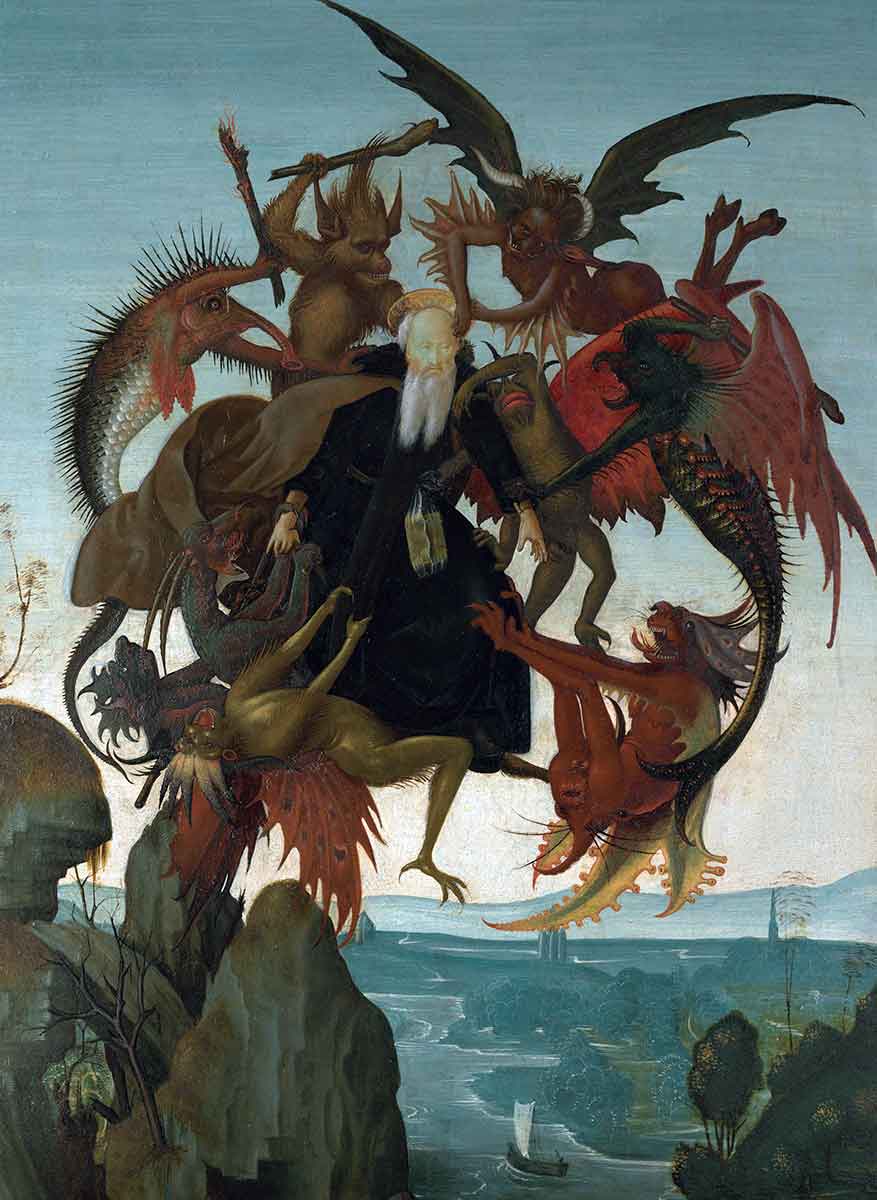
The first artwork on the list is a divisive one. Art historians are split over its attribution to Michelangelo. If it is indeed a work made by Michelangelo, then this painting is the first piece ever produced by him.
It was possibly done under the supervision of Domenico Ghirlandaio in his very first year of apprenticeship when Michelangelo showed immense promise. The young artist drew his inspiration from a print by Martin Schongauer.
The theme of St. Anthony caught in the air by a flock of demons was very popular in the Middle Ages, but it is certainly a strange image to reproduce as a novice and newcomer apprentice. Historians argue that The Torment was produced by Michelangelo as a child based on Ascanio Condivi’s The Life of Michelangelo. In this biography, we find a mention of a St. Anthony painting made by Michelangelo while he was being trained by Ghirlandaio.
This tempera and oil painting leans on Ghirlandaio’s manner, especially when it comes to the backdrop. The style of the landscape has led scholars to believe this is the work Condivi documented. Discussions will remain about attribution, but it is certainly appealing to argue that Michelangelo was a child prodigy who could emulate his master’s hand just moments after joining his workshop. And who knows what led to the choice of subject?
2. The Lost Sleeping Cupid Forgery
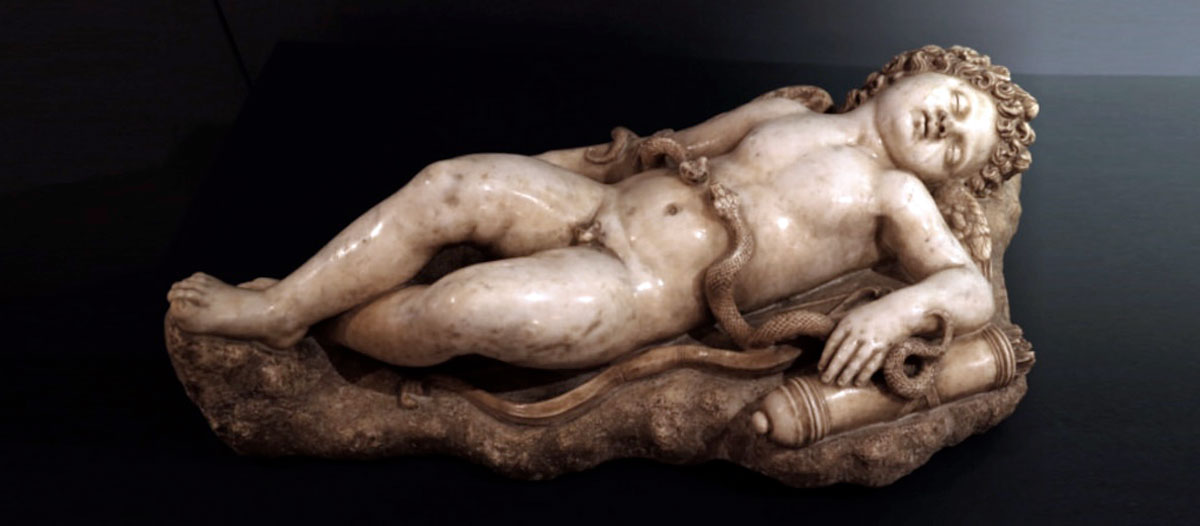
Another work from Michelangelo’s youth, the well-documented Sleeping Cupid, now lost, reveals plenty about the artist’s immense ambitions and skill, and it also shows how obsessed the Renaissance artists were with antiquity.
Michelangelo started to carve this Cupid trying to better his skills in working marble. He began working on the sleeping Cupid in 1495, perhaps inspired by a Hellenistic Eros sculpture he had studied in the Medici Gardens of Lorenzo the Magnificent.
Upon finishing it, Michelangelo gave it to an art dealer, Baldassare del Milanese. This is where it gets interesting. The marble was then sold as an antique to Cardinal Riario, who soon discovered the statue was falsely aged and asked for his money back.
Who was the forger, though? Historical accounts offer two alternative answers. One is that young Michelangelo, a struggling young artist, wanted to exhibit his capacity to emulate antiquity in a most persuasive way: by creating a sculpture that could be taken as an antique.
The other scenario, equally enthralling, cites that Baldassare purposefully buried the statue in his vineyard, left it to age, and then debuted it as a just-found antique.
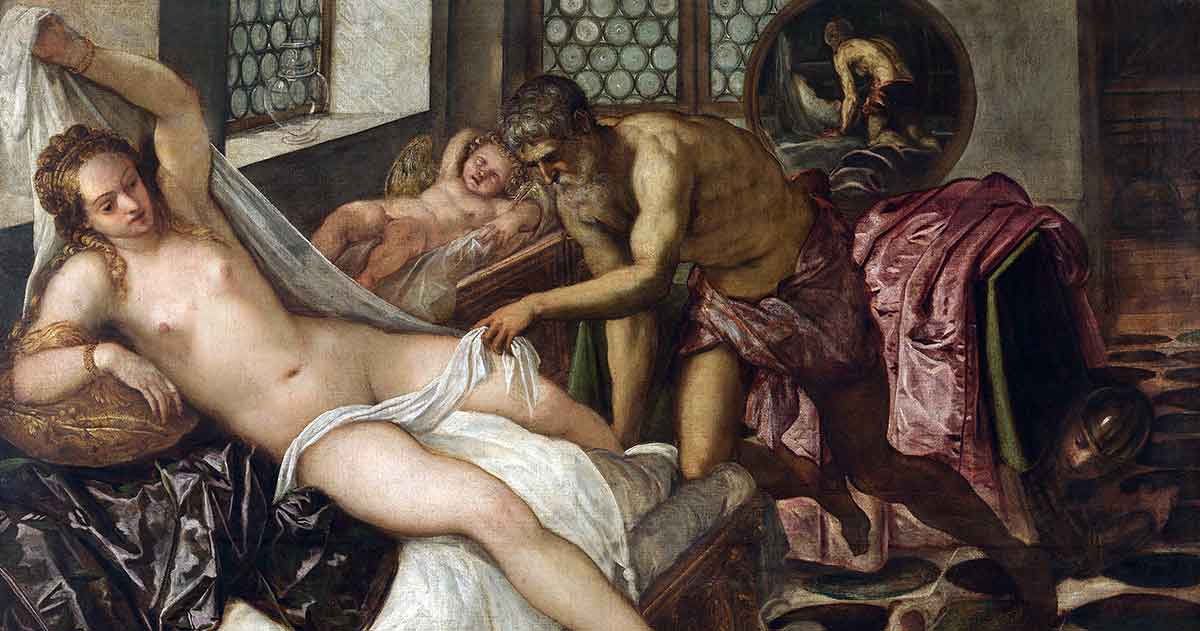
Whoever staged the farce, this anecdote is significant for Michelangelo’s early career because it created a scandal that propelled his talent far and wide. It also earned him an invitation to Rome, where Michelangelo could study newly unearthed ancient sculptures all over town.
The Cupid was later in the possession of Cesare Borgia, who offered it as a gift to Isabella d’Este, who was obsessed with collecting both her contemporary artists and ancient artifacts. The sculpture was sadly lost in a fire in 1698. The Palace of Whitehall, London, burned to the ground, along with many great artworks. The statue only survives in reiterations, among which Giulio Romano and Jacopo Tintoretto’s citations of Michelangelo’s Sleeping Cupid.
3. The Bruges Madonna
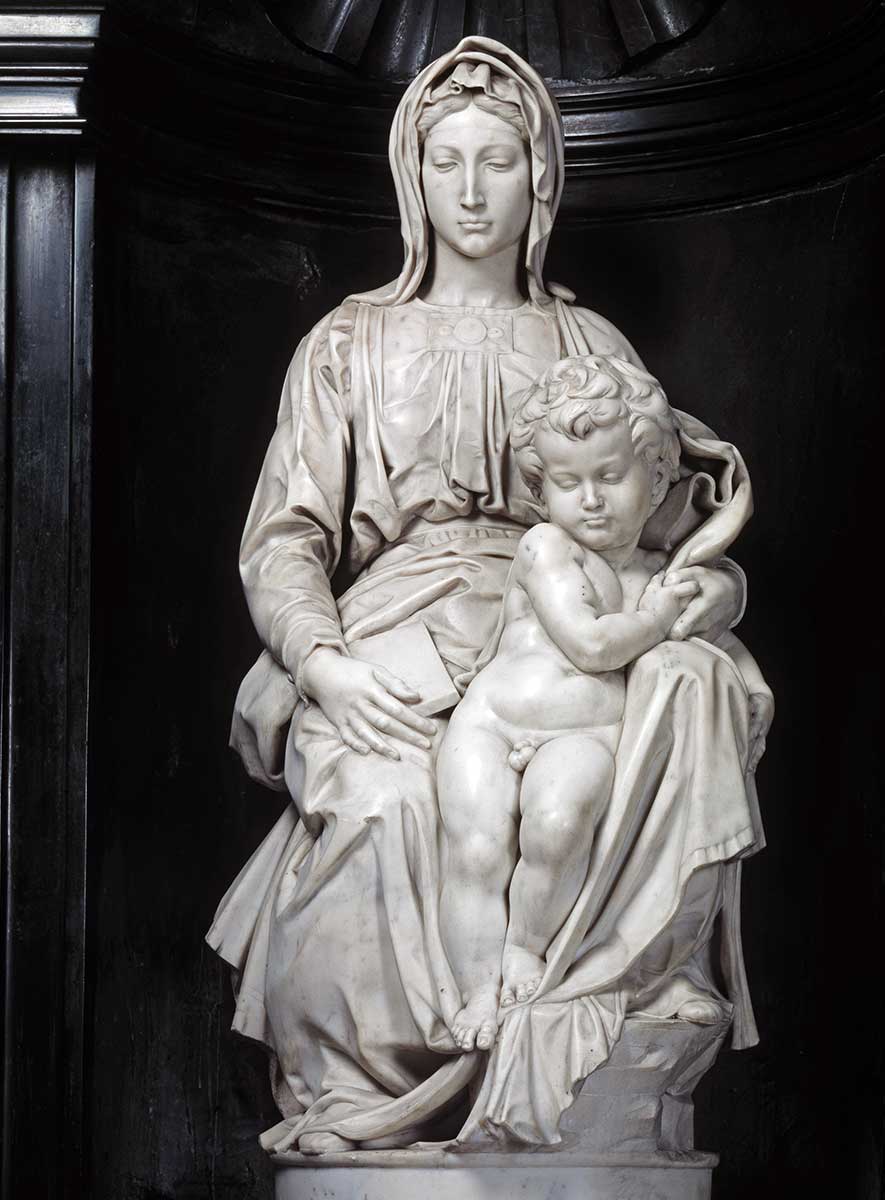
Executed around 1504, the Madonna of Bruges is the only sculpture by Michelangelo to have left Italy during his lifetime. Its patrons were Giovanni and Alessandro Mouscron, rich cloth merchants who were deeply connected to the international Medici network. The statue can now be enjoyed in the Church of Our Lady in Bruges, which was chosen by the Mouscron family.
This Madonna and Child abounds in artistic license. Made around the same time as David, this depiction of Mary and Jesus breaks away from tradition in numerous ways. Typically, Mary was depicted holding baby Jesus in her arms and looking at him piously. The structure of such a composition was usually pyramidal, something Michelangelo had done in his earlier Pietà. But not here.
In this marble, the Virgin barely holds Jesus, who is not as young as we’d expect. He looks rather older. Mary gazes away in a meditative state, while Jesus seems to almost step away from his mother. This theme will become a mainstay in the centuries that follow. This highly unusual iconography demonstrates that Michelangelo wanted to break away from the imagery constructed in the Early Renaissance. His innovation in such a typical religious motif is a speaking example of his cutting-edge vision.
4. The Prisoners
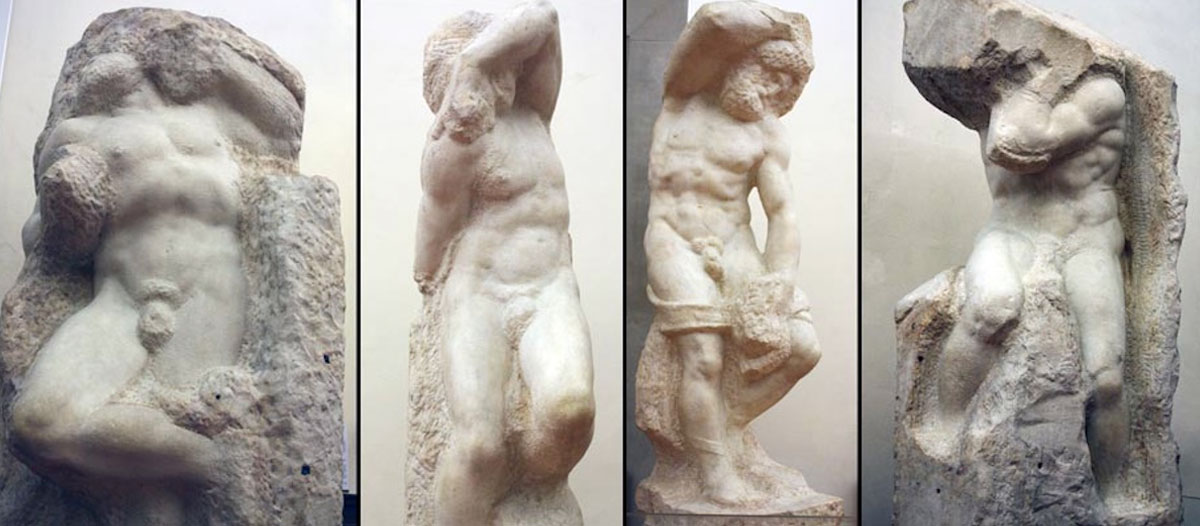
The group of four Slaves or Prisoners was meant to adorn the monumental, three-story free-standing tomb for Pope Julius II della Rovere, designed to contain more than 40 figures. The commission from the Pope was one of the first major projects that Michelangelo was hired to make in Rome. The project, started in 1505, was first delayed, with the Pope getting distracted by his ambitious decoration plans for the new St. Peter Basilica, and then eventually abandoned.
Michelangelo did not carve these four specific unfinished figures until the 1520s–1530s.
The four figures were meant to decorate the first level of the tomb, holding it on their shoulders. Even unfinished, the sculptures are fine examples of Michelangelo’s newfound understanding of anatomy, which he attained by studying Hellenistic monuments.
This project is very revealing for another reason, too. Its problematic patronage demonstrates how much self-respect the young artist possessed. After spending months picking up great quality marble in Carrara, Michelangelo and the Pope get into an argument that led him to return in haste to Florence in 1506. He was so adamant about his grievances that Julius II was forced to issue an order coercing him to go back.
After the Government of Florence got involved and pushed Michelangelo to return to Rome, he was welcomed by the litigious Pope, who then commissioned him to paint the Sistine Chapel. The series of the prisoners thus remained a masterpiece in nonfinito, the unfinished manner which would become fundamental to Michelangelo’s sculpted oeuvre. The four figures thus strikingly reflect the artist’s belief that sculptures liberated forms already embedded in the marble.
5. The Staircase of the Biblioteca Laurenziana
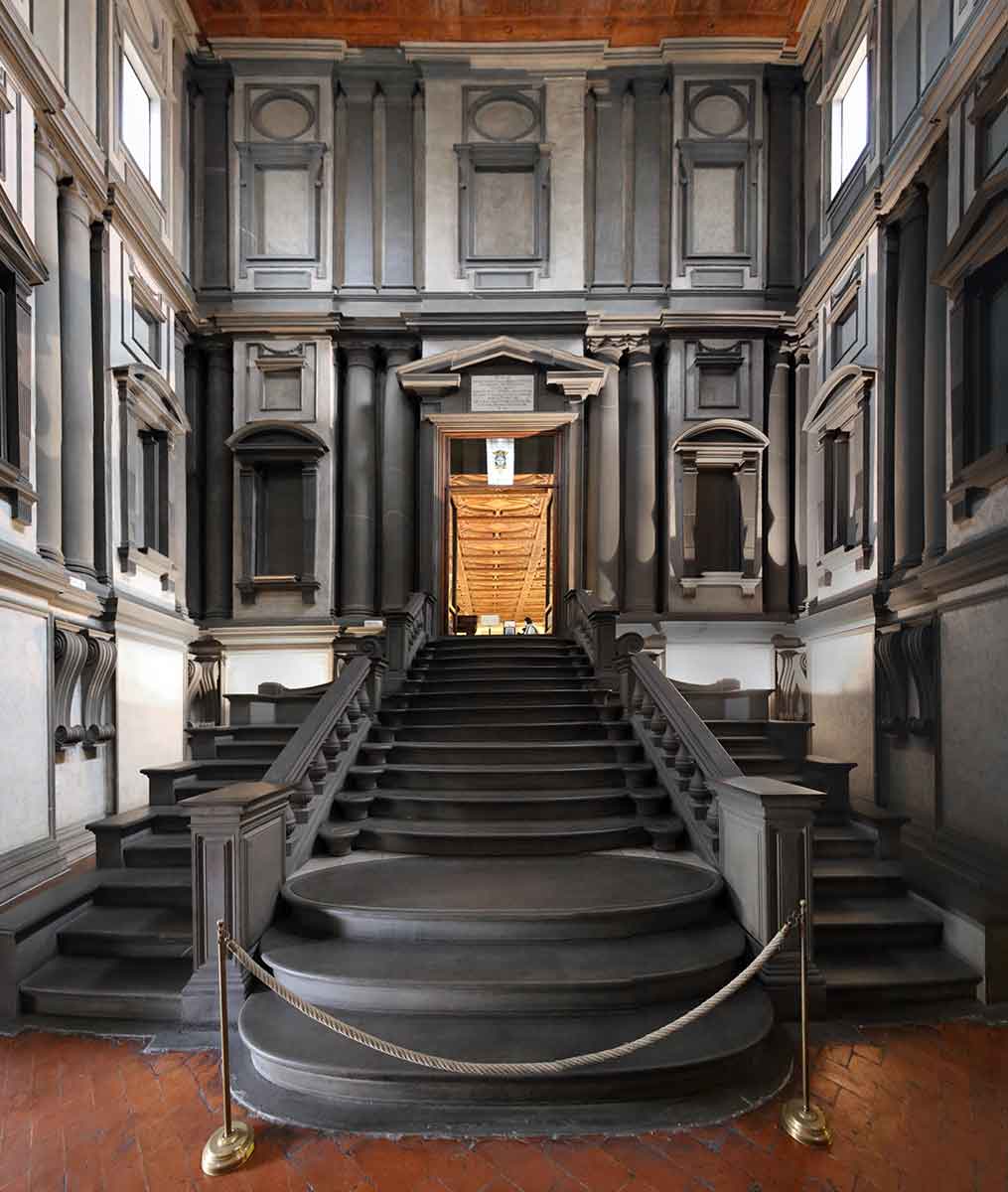
Michelangelo was also an eloquent architect. He revolutionized Renaissance architecture by bringing in Mannerist elements, going against the grain of classical rules. His architectural repertoire can be enjoyed in both Rome and Florence, and it abounds in tension, theatricality, and a new way of symmetry.
A favorite of the Medici family, he was employed to design the staircase and vestibule of the Laurentian Library (Biblioteca Medicea Laurenziana) in Florence. Art historians consider this to be Michelangelo’s most radical architectural project. Michelangelo was commissioned in 1524 by Pope Clement VII de Medici. The library was constructed on top of the San Lorenzo monastery’s cloisters, and it was intended to put together the immense collections of manuscripts owned by the Medici.
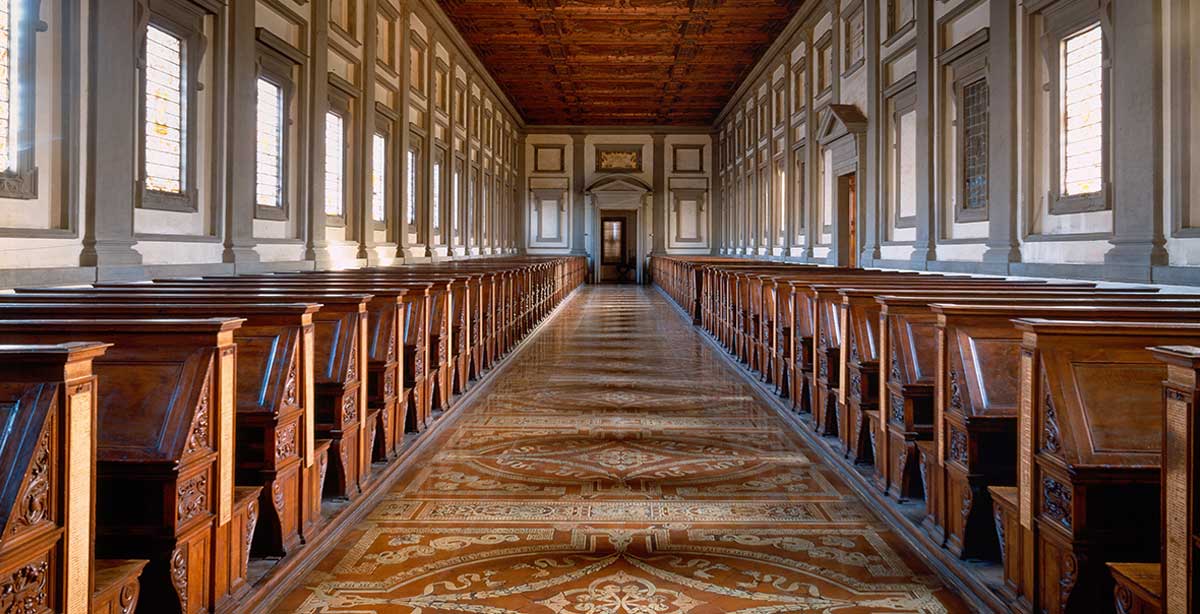
The staircase is the piece de resistance of the ensemble, dominating the vestibule and coalescing as the focal point of the building, a masterclass in Mannerist perspective. The steps have an oval outline, creating the visual impression of a flow. This cascading effect makes the stairs look like a solid waterfall. Another revolutionary element is the design of three parallel flights, which creates a psychological tension. The central steps seem to roll toward the visitor, provoking resistance in their mind. Michelangelo, the architect.
6. Pietà Rondanini: Michelangelo’s Last Work
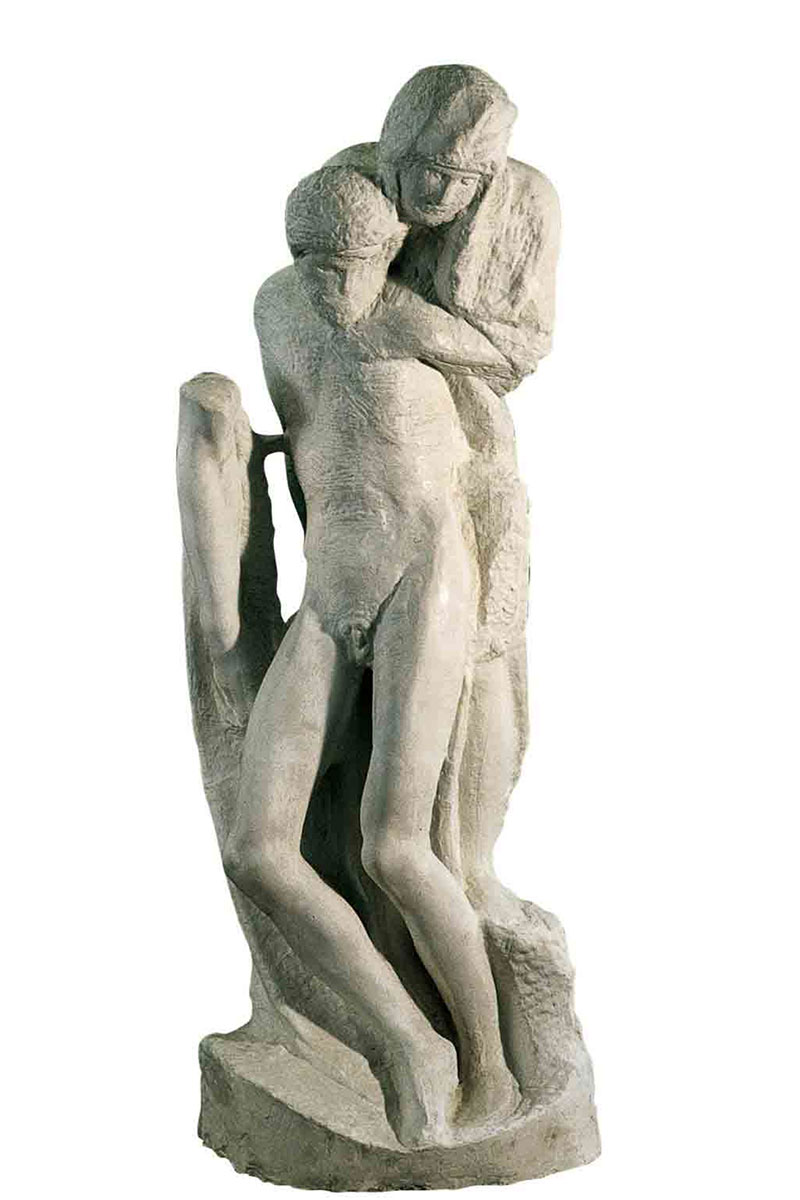
The so-called Pietà Rondanini is the last work of Michelangelo. He started this sculpture in 1552 and worked on it until the last days of his life, in 1564. The last marble of Michelangelo reveals plenty about the philosophy he developed in his mature years, shifting away from humanism and becoming sympathetic to a form of mystical Neoplatonism. Working on it for so many years, Michelangelo made this sculpture a testament to his intimate reasoning as an artist and as a man.
The unfinished statue shows the upright, withered nude male body of Jesus. A severed, muscular arm, witness to the previous versions of the Pietà, rests on the side, giving us a glimpse into Michelangelo’s initial vision of Christ.
Most debates on this statue are, in fact, focused on the attempt to distinguish between the several campaigns of chiseling. Art historians discuss the fascinating contrast between Michelangelo’s starting conception of Christ as a potent, monumental figure and the last vision, portraying him as a nearly decaying body.
The Pietà Rondanini remains an unparalleled record of Michelangelo’s creative process, his faith and his beliefs. Its unusually long gestation turns it into one of the Renaissance’s most endearing masterpieces, which puzzles us as much as it fascinates.