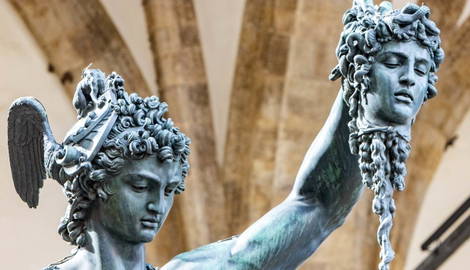

Benvenuto Cellini (1500-1571) worked on his Perseus with the Head of Medusa for almost 10 years at the wish of Duke Cosimo I de’ Medici. In the end, he created one of the seminal Mannerist monuments. His fame was mostly built on this bronze. In this article, we will discuss what makes this sculpture a contentious masterpiece of Renaissance Florence.
1. It Was Cast in Bronze Under Extreme Conditions
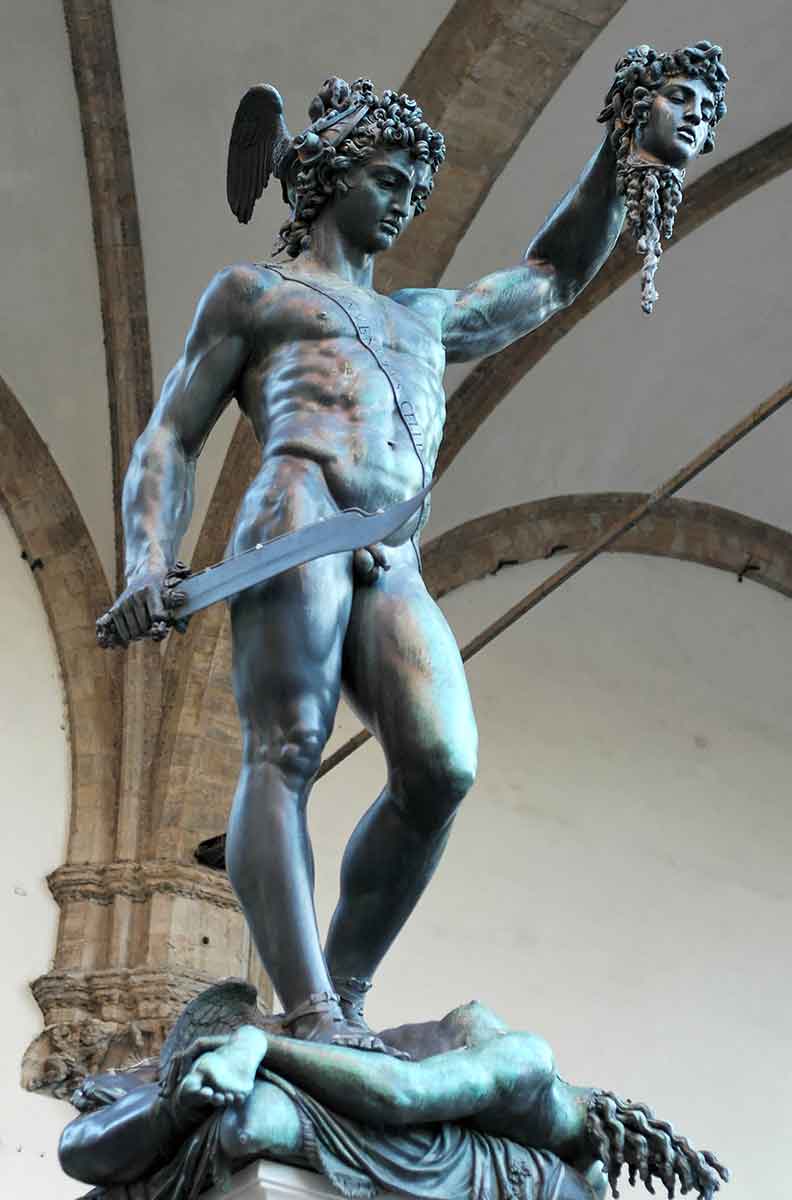
The sculpture is a notable artistic and metallurgical triumph. At the time when Cellini started working on this statue, bronze was a technique that was almost extinct, particularly when it came to building monumental sculptures. With marble becoming the dominant medium for statues after the stellar success of Michelangelo, picking bronze for a work of ambitious size was a daft choice for Cellini. He wanted to impress Cosimo I not only with his artistry and vision, but with his technical skill as well.
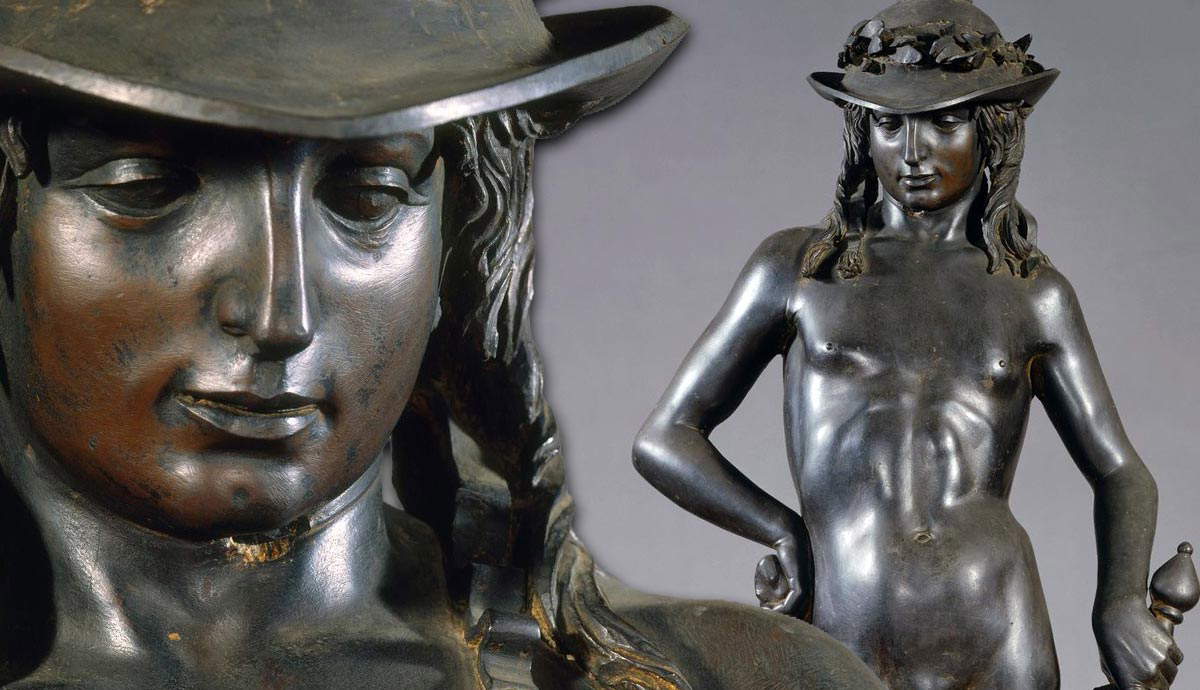
The Loggia dei Lanzi was already decorated by Donatello’s Judith and Holofernes, also made in bronze, and out of several pieces joined together. Cellini’s attempt to cast the figure in only four pours was an extremely difficult task, but it promised structural unity and certain fame.
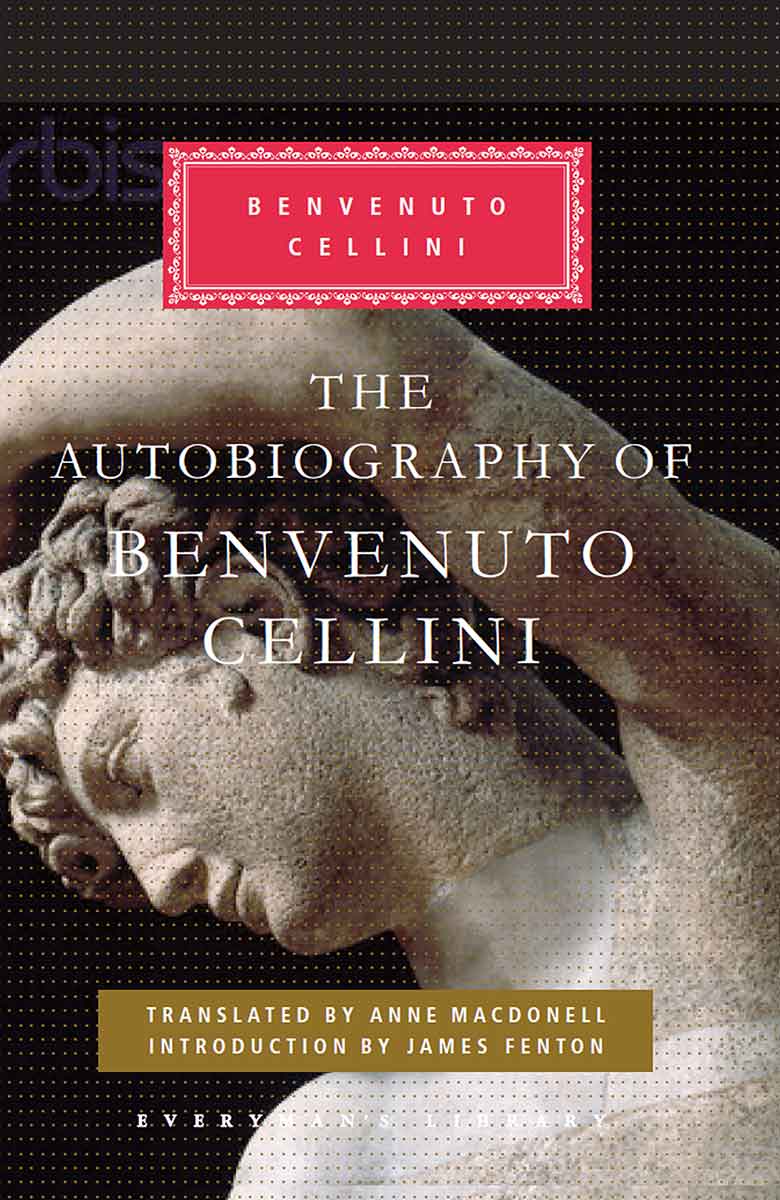
The story of this rule-breaking process was provided by Cellini himself. In his autobiography, he relates how this workshop almost collapsed in a fire, his furnace broke down, and ruffled the feathers of his many assistants.
2. Kitchen Pans Saved the Risky Casting
Despite the intensive preparations, during the critical hours of the bronze pour, the temperature of the furnace dropped too low. The molten bronze started to coagulate prematurely, announcing the failure of the single pour attempt.
If the bronze thickened too fast, it would have left Perseus’ legs empty. Frantically, Cellini found a radical and agile solution: he instructed his assistants to find all the copper and metal in the household and throw it in the fire. Under immense pressure, they managed to put together around 200 pieces of household items such as copper pans and pewter dishware and threw them in the furnace.
The sacrifice of all of Cellini’s metal belongings was a brilliant solution. By adding alloys to the bronze, he managed to change its chemical composition to the point where it lowered the melting point. This metallurgical maneuver, improvised thanks to his solid goldsmith training, saved the molding process.
3. The Statue Was Designed for the Loggia dei Lanzi
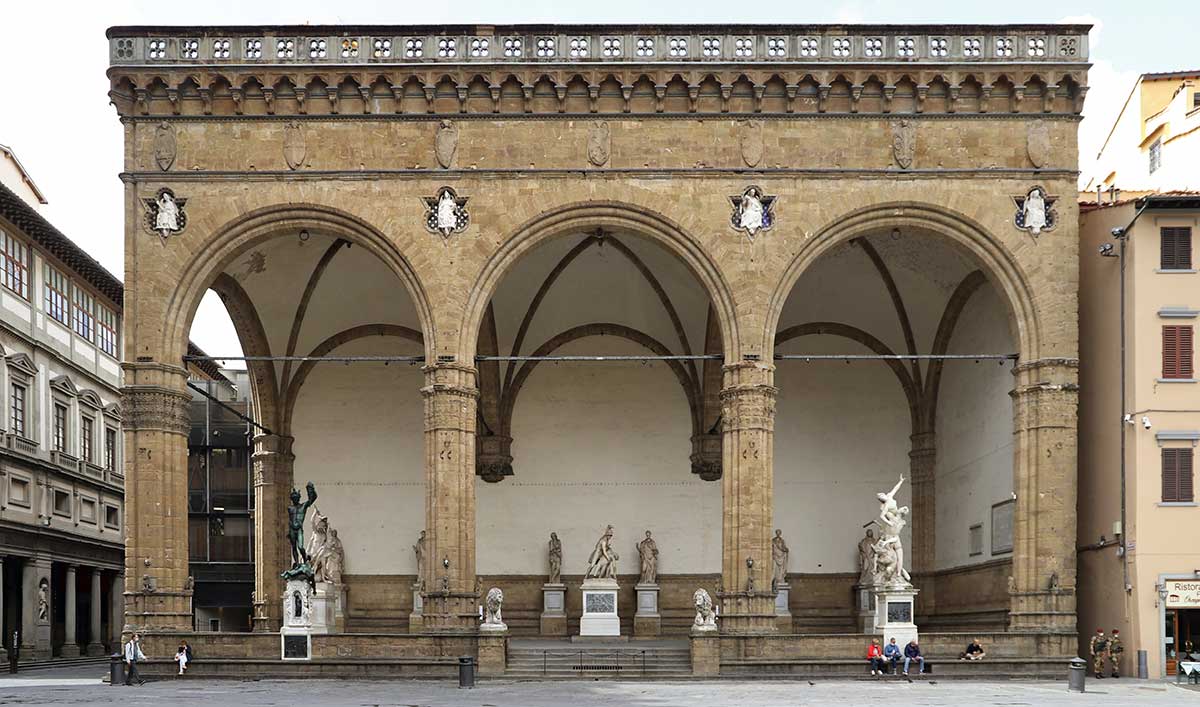
Cellini’s Perseus with the Head of Medusa was the first sculpture to be made specifically for the Loggia dei Lanzi. It was unveiled to the public on April 27, 1554, and it was the first monument engineered to occupy the arcade. The space was mainly used as a stage for civic ceremonies, but Donatello’s Judith had established a precedent for civic sculpture decades earlier. Cellini had this scenographic element in mind when he built the statue.
By placing it on a high pedestal, he made sure that Florentine citizens would see the triumphant rendition of Perseus whenever they entered the Piazza della Signoria. Cellini initially anchored the sculpture in the forward-left arch of the Loggia. It was designed to downplay Donatello’s Judith and Holofernes, which had come to represent the struggles against tyranny that the suppressed Republic had stood for.
4. The Sculpture Is Very Political
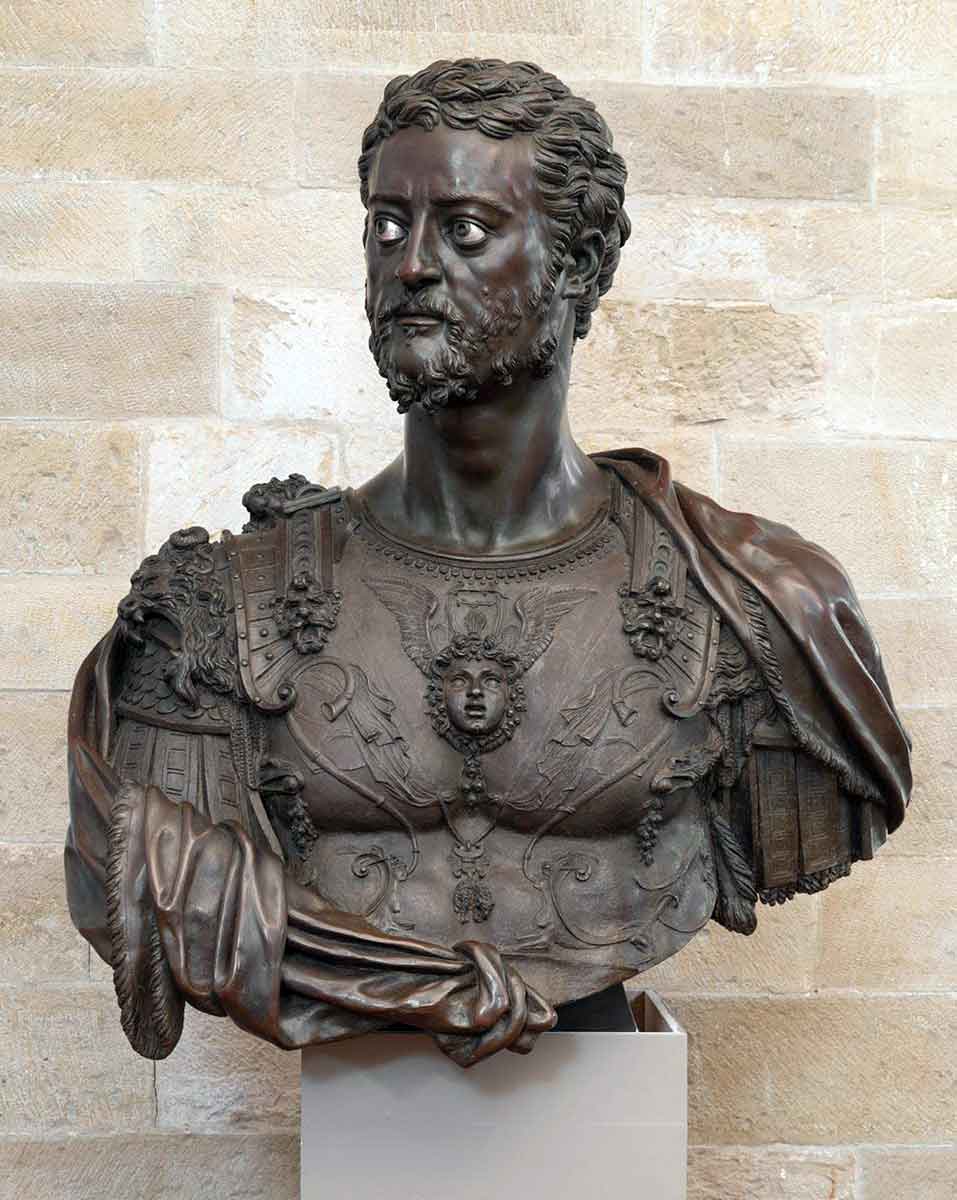
Perseus with the Head of Medusa was commissioned in 1545 by Cosimo I de’ Medici, so it was meant to express that his newly established duchy was a legitimate political regime. The Medici had a longstanding tradition of aligning their political agenda with the narratives of powerful myths.
In this instance, Perseus is a personification of the Duke, and Medusa stands for the chaotic and much too fractured Florentine Republic that the Medici dynasty fought to dismantle.
The squirming snakes erupting from Medusa’s severed neck symbolize the democratic factionalism that led to the civil discord and instability that Cosimo claimed to have eradicated. That is why Cellini picked a telling iconography for Medusa’s contorted corpse. What this propagandistic sculpture equally tries to convey is that whoever tries to meddle with the Duke’s version of peace would be met with swift and radical punishment.
5. The Statue Was Received With Both Approval and Dissent
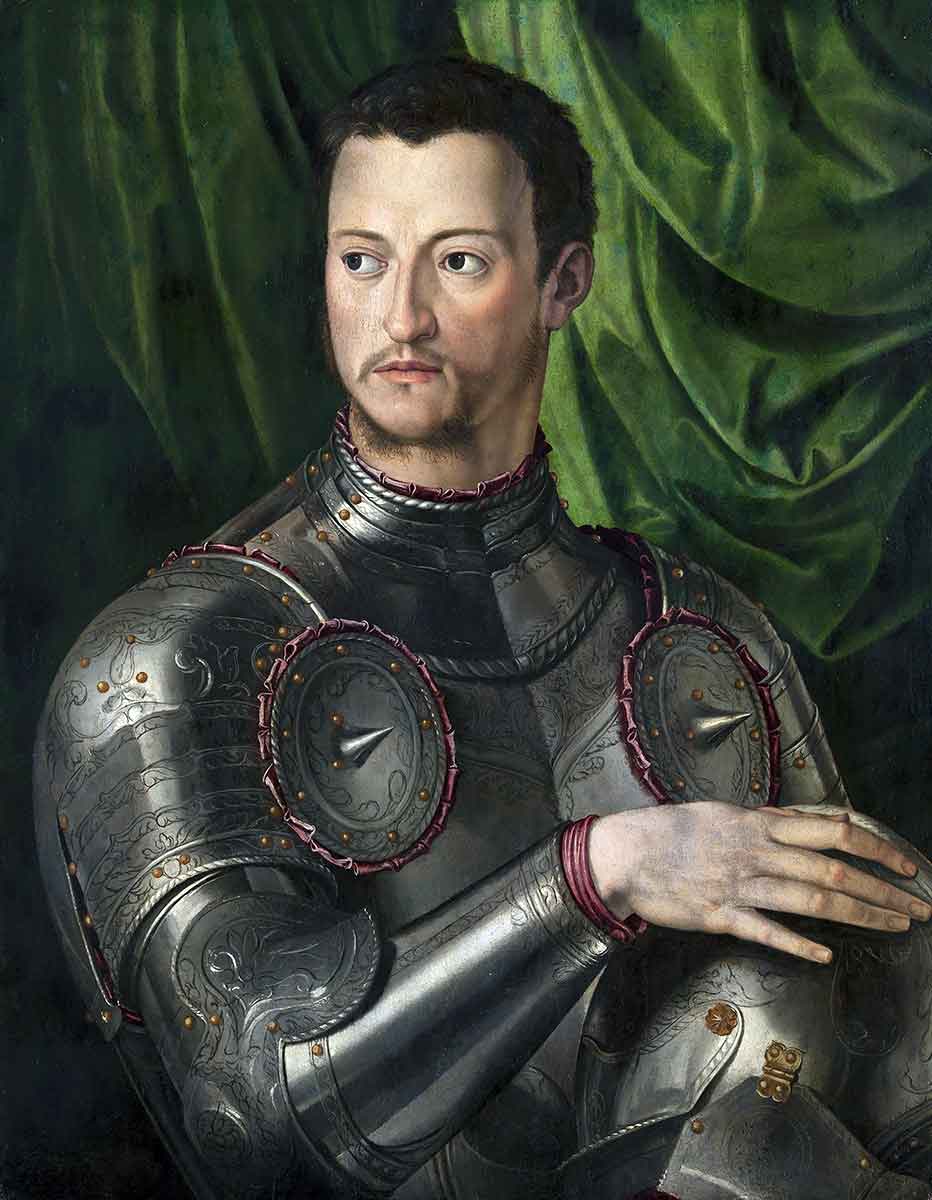
Cosimo I was an authoritarian ruler with a polarizing and precarious political position among Florence’s citizens. Cellini recalls in his Autobiography that an immense crowd gathered in the square before dawn, chanting their praise over the statue’s realism and virtuosity. Cosimo I was so anxious about the public reception that he watched it being unveiled from a discreet window of the Palazzo Vecchio.
His anxiety stemmed from his dissenting rule. While his court entourage and the elite praised the way he imposed stability (and how that was expressed in this programmatic monument), the majority viewed it with a mix of aesthetic appreciation and political dread. The blood so aptly captured by Cellini was a very explicit reminder of Cosimo’s absolute reign over life and death in the Duchy of Florence. In fact, showing aversion to Perseus and Medusa would have turned Cellini’s spectators into enemies of the state.
6. Cellini Was Himself Blood-Thirsty

This sculpture can also be read as a visceral reflection of the artist’s violent self. Cellini’s criminal record, detailed abundantly in his memoir, dwarfs anecdotes about problematic artists such as Caravaggio.
The explicit take on Medusa’s end mirrors the turbulent and openly blood-thirsty temperament of Benvenuto himself. His record counted three murders: a rival goldsmith, a soldier during the 1527 Sack of Rome, and the revenge he took on his brother’s killer. The uncompromising realism that Cellini opted for in this monument is infused by his real-world criminal acts, which pushed him out of Florence, Rome, and Naples on countless occasions.
7. Cellini Placed a Self-Portrait in the Sculpture
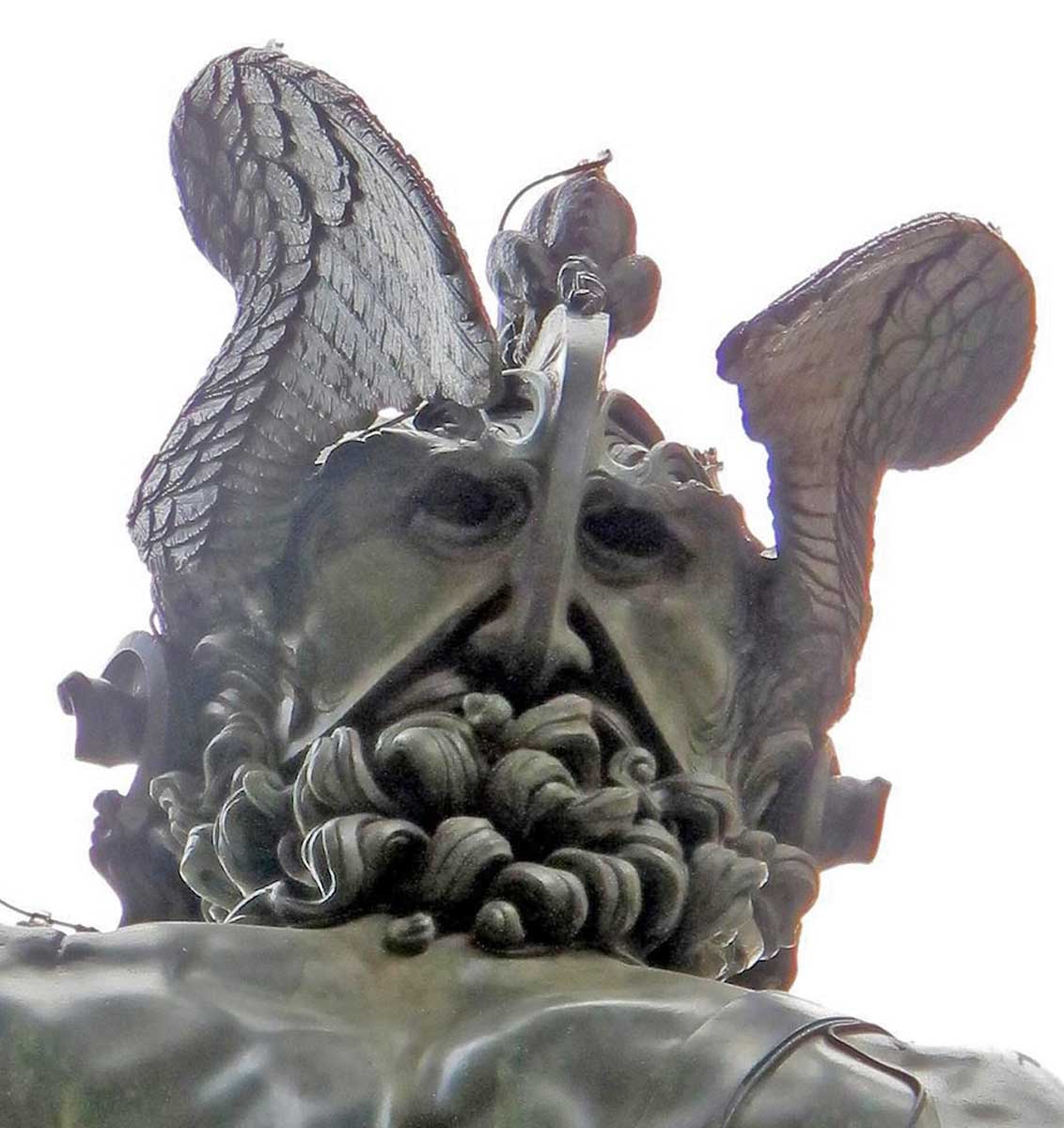
As if trying to encourage such an interpretation, the artist placed a hidden self-portrait in the sculpture. However, it is hard to find it unless you enter the Loggia dei Lanzi and walk around the monument. Once you do, you will see the artist’s likeness on the back of Perseus’s helmet. His frowning gaze seems to look down on whoever is looking. Benvenuto Cellini was most certainly anticipating the awe and appreciation the statue would provoke, and he wanted to leave his trace on it in more than one way.
8. The Hero and His Victim Look Alike
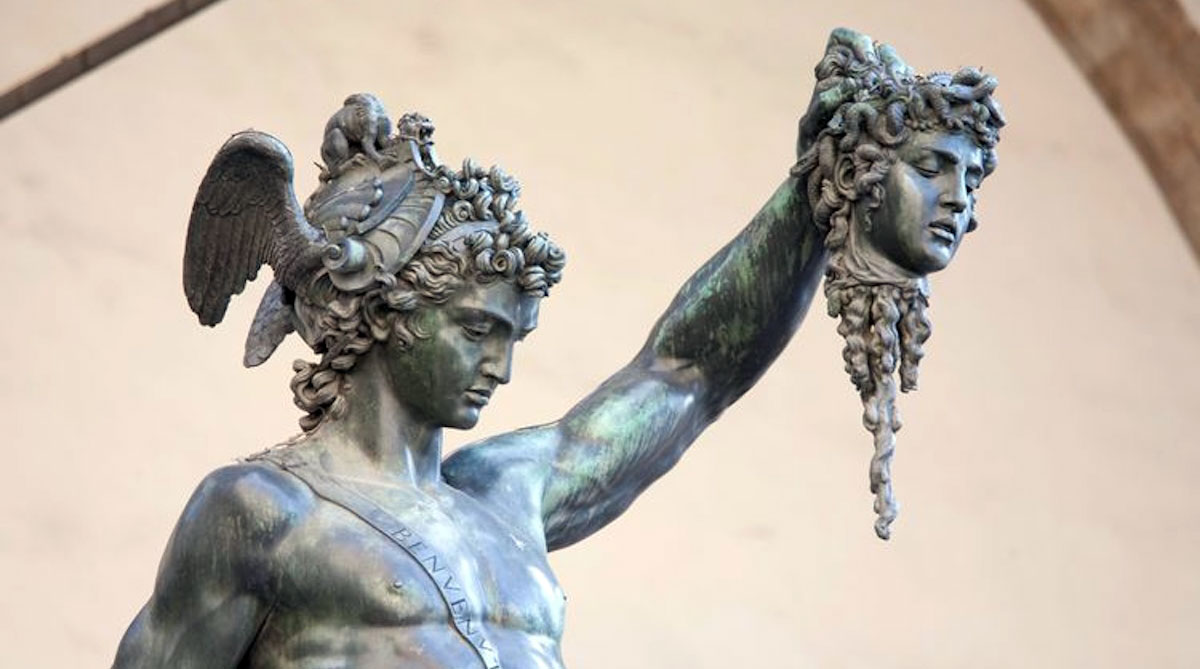
Medusa has been mostly depicted as a repulsive and grotesque figure. Cellini brings something else to the table: an idealized classical face with a beauty hard to contest. Perseus shares many of her features. His facial structure is almost identical, and pertains to a certain highly stylized Mannerist human countenance. Both Medusa and Perseus have the same straight, sharp nose, heavy-lidded eyes, and sullen lips.
Art historians have generally read this similarity in two veins. One camp glosses over the psychological allegory argument, suggesting that the facial mirroring provides a metaphor symbolizing conquering oneself’s dark nature. The other reading proposes that it all has to do with gender subversion. This neutralizing of gender through twinship amplifies the inherent tragedy of the act and blurs the lines between traditional Renaissance standards of what was masculine and what was feminine. Medusa looks like a threat, equal to her conqueror.
9. The Plinth of the Sculpture Is a Masterpiece of Its Own
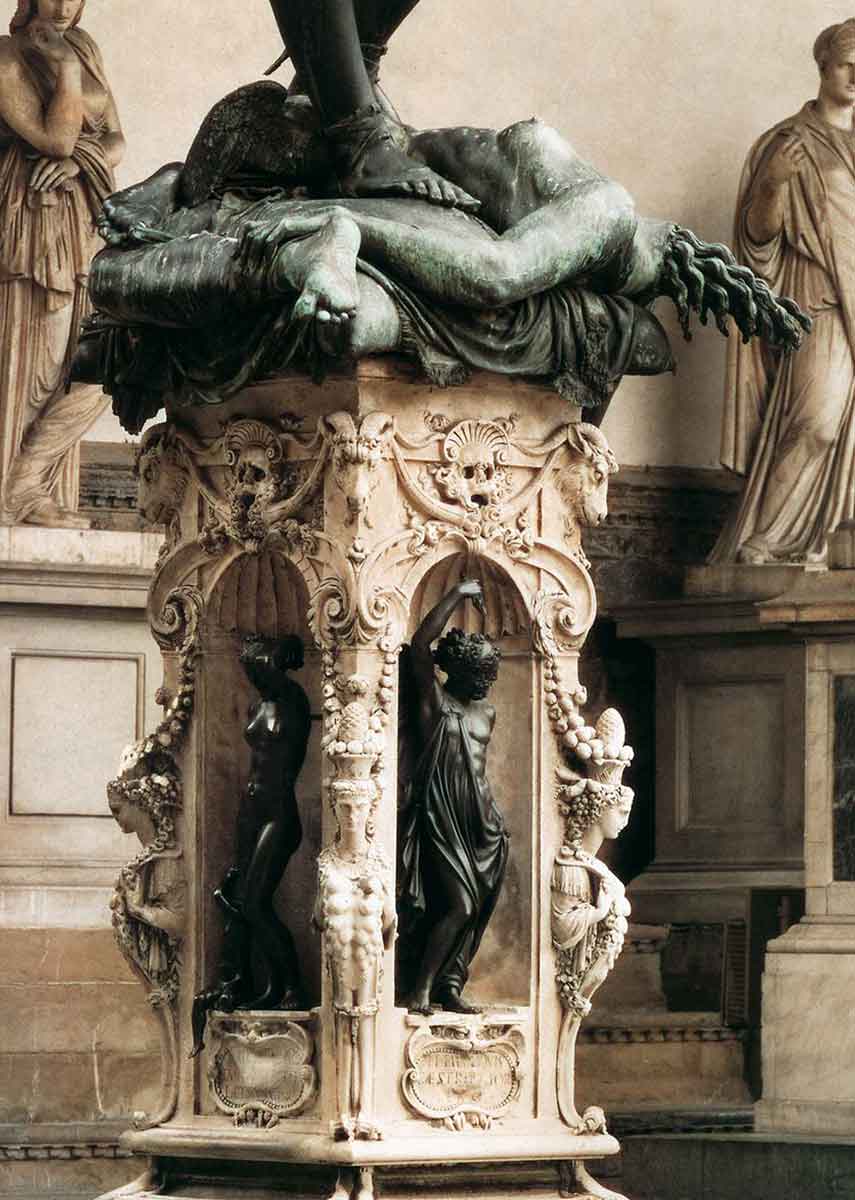
The most coveted art was the kind that made people stop in their tracks, rather than a work that catches one’s eye from across the piazza. Benvenuto Cellini proved his awareness of such an outlook through the way he constructed Perseus and Medusa’s plinth, or base. Cellini’s functional anchor serves more than that purpose. The four-sided iconography enhanced the political narrative further, placing bronze statuettes of Mercury, Minerva, Jupiter and Danaë with Perseus as a child. These mythological figures place Perseus’s victory in a genealogical and therefore predestined disposition, sanctioned by many gods.
10. The Loggia dei Lanzi and Its Statues Attract Feminist Critique
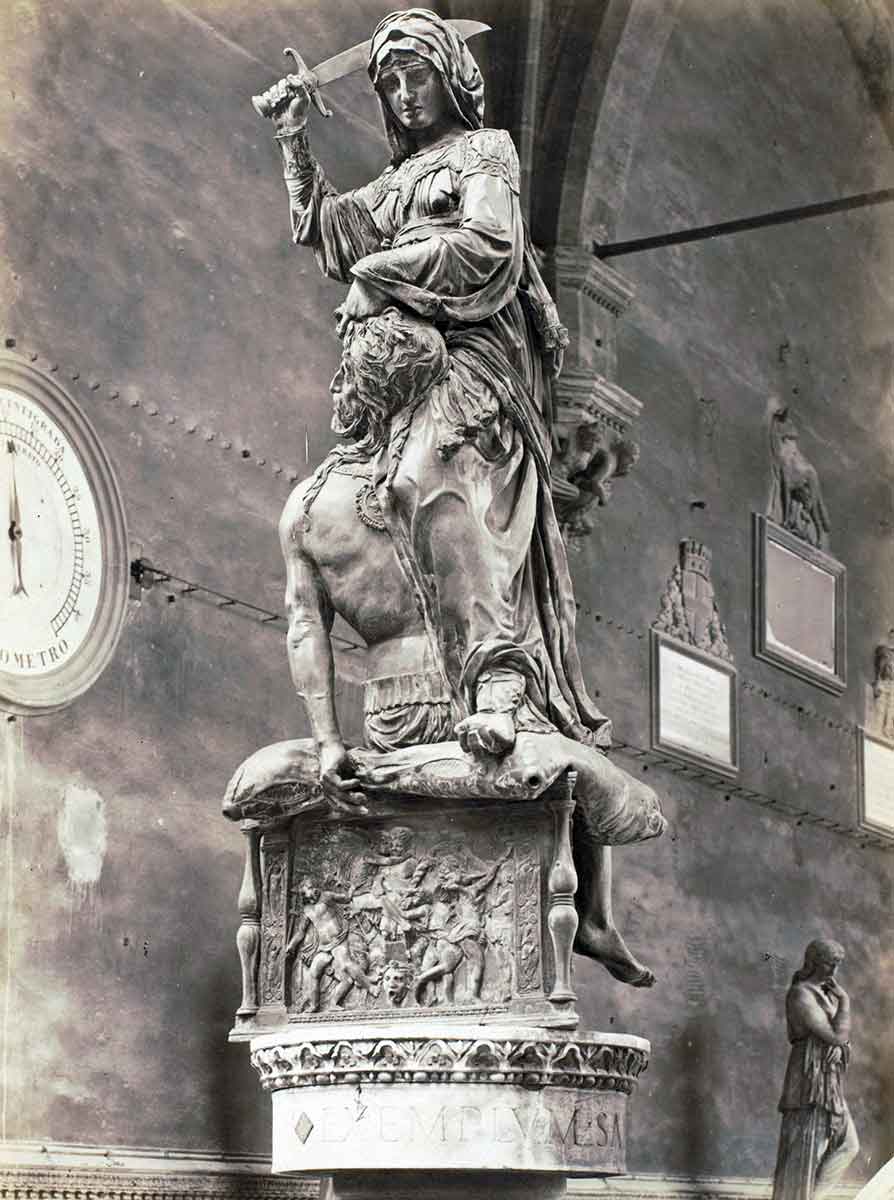
In light of its many sculptures depicting forms of violence against women, the Loggia dei Lanzi has invited many debates in the last few decades. Art historian Yael Even argued that Cosimo I’s placement of Perseus and Medusa in the loggia was meant to turn the space into an institutional theater of subjugation and silencing of women.
The evidence can be found in the deliberate displacement of Donatello’s Judith, a rare depiction of a woman enacting political justice by executing a tyrant.
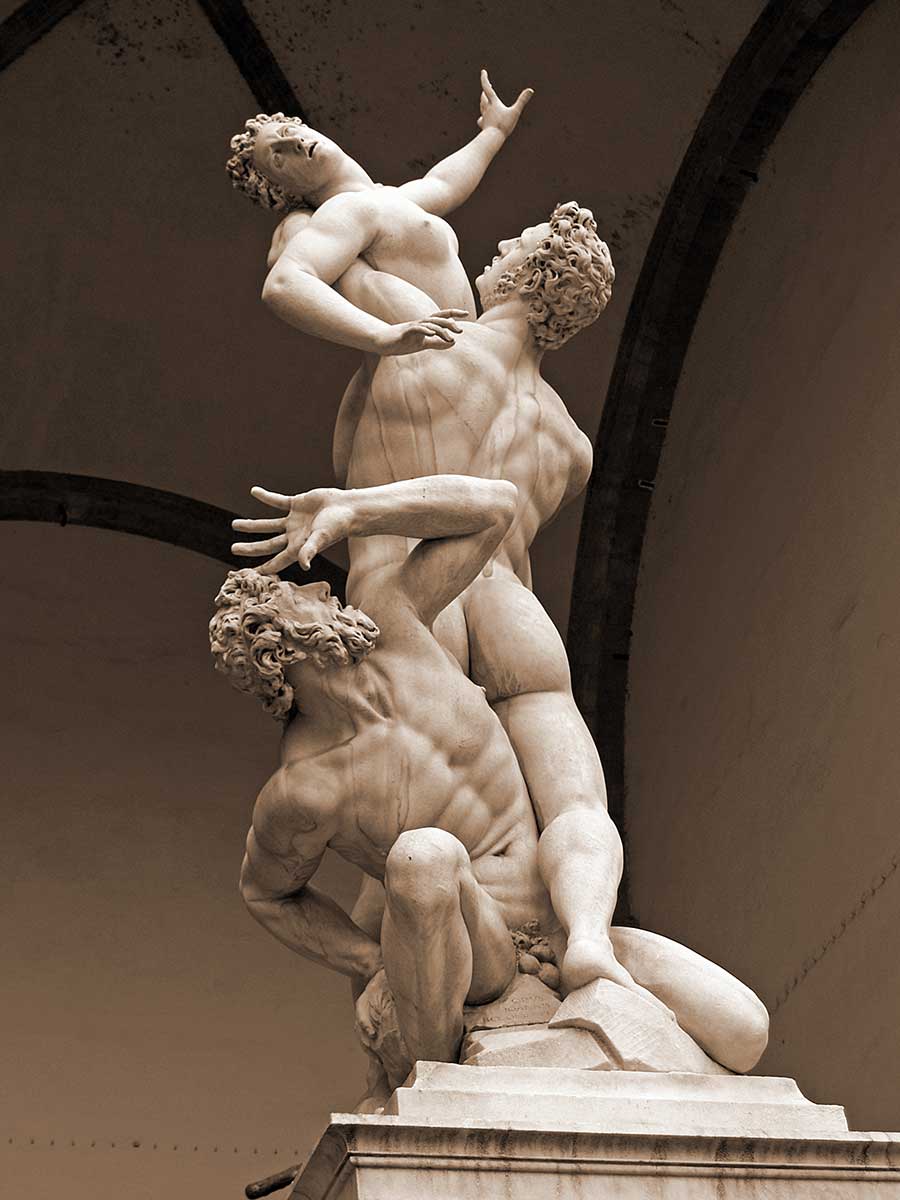
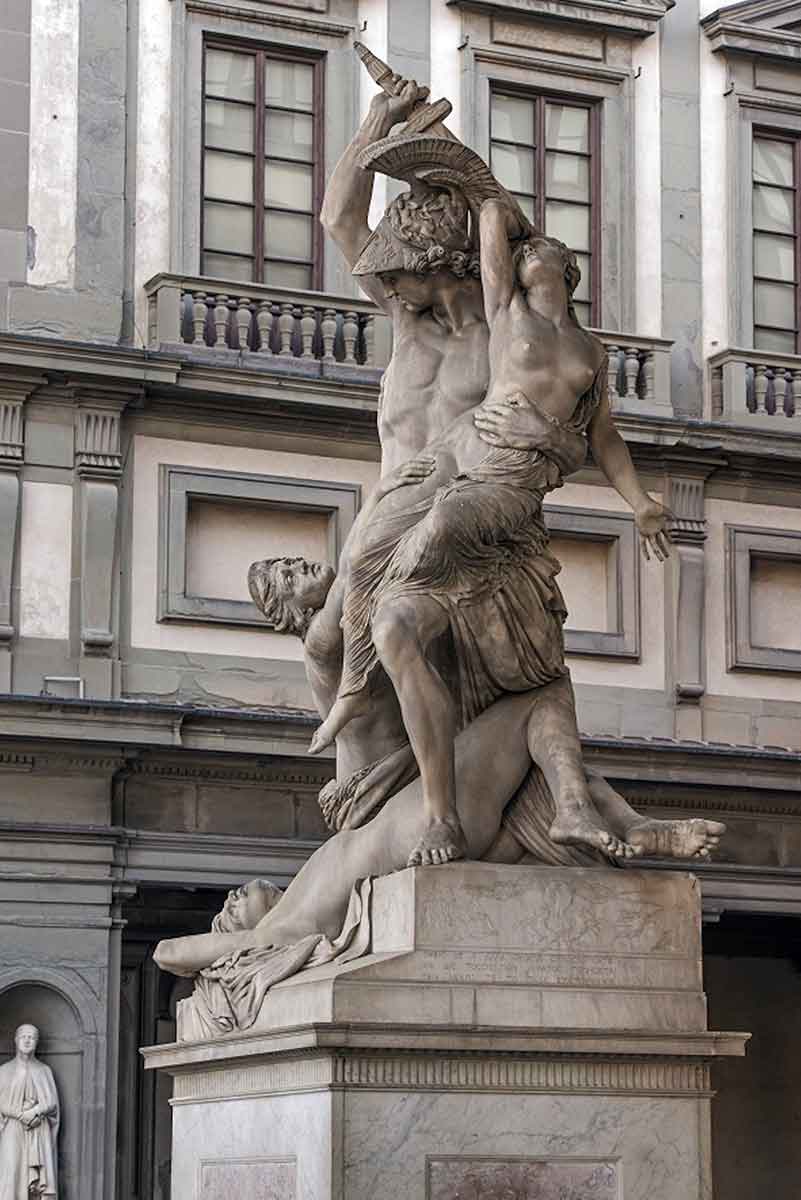
This atmosphere was then further enhanced by the addition of Giambologna’s Rape of the Sabine Women in 1582, placed on the other side of the loggia at Francesco I de Medici’s order. The addition of The Rape of Polyxena further pushed this theme in the loggia.
Christine Corretti, when discussing the androgyny of both Perseus and Medusa, brings another valuable gender debate to the table: she suggests that the physical similarity of the protagonists suggests the hero (the allegorized Cosimo I) rose to power through the female intervention of powerful Medici matriarchs.
Such is the beauty of art historical debate – there will always be countless ways to approach an artwork, and a masterpiece of controversy like Cellini’s Perseus and Medusa will incite even more discussion.