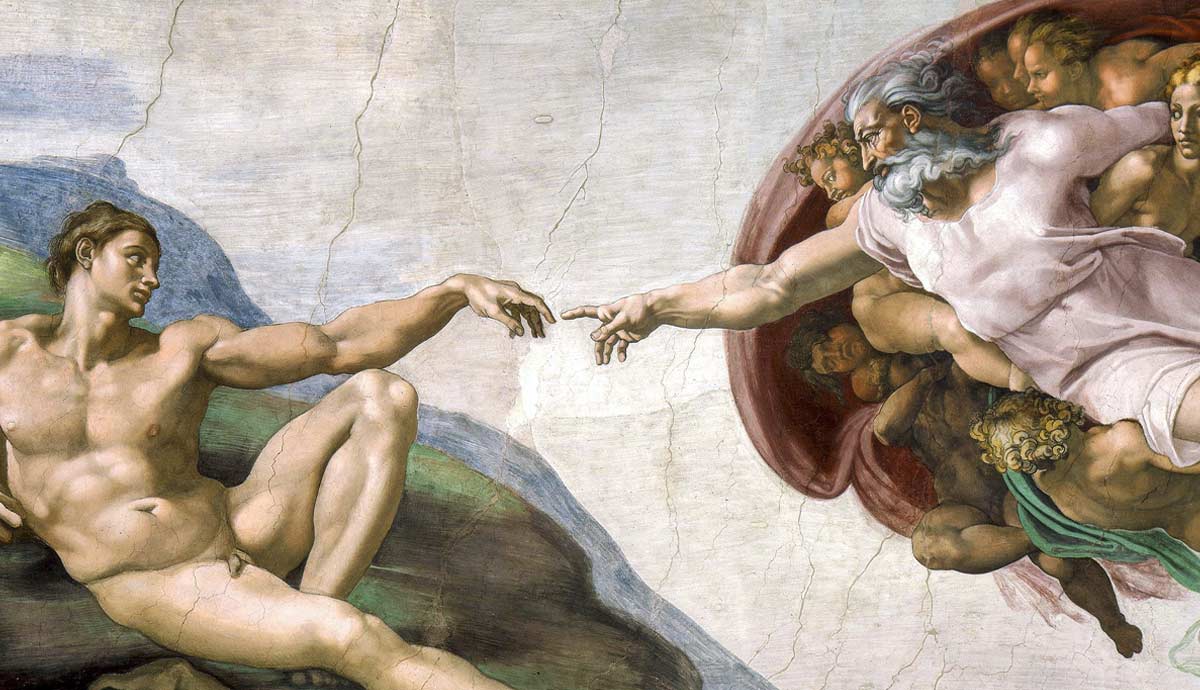

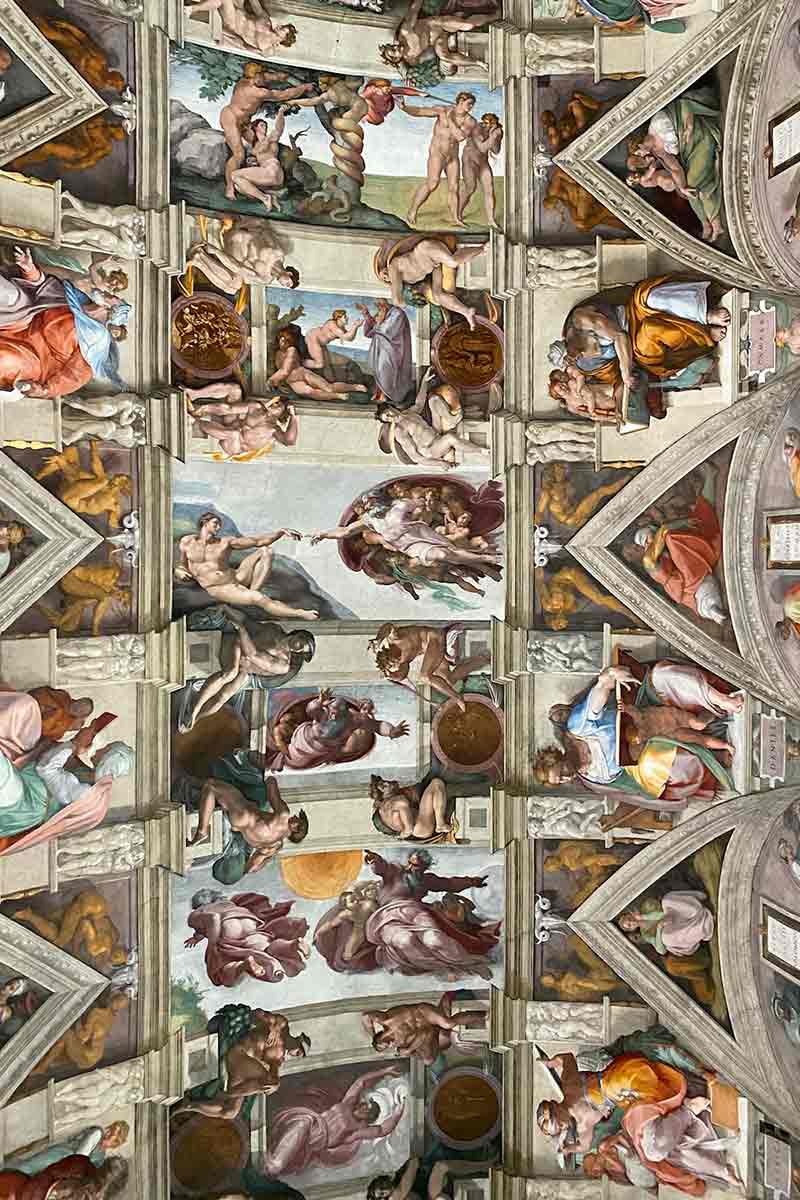
We all know the highlights of the Sistine Chapel. The Creation of Adam competes with perhaps only the Mona Lisa as the most recognizable Renaissance masterpiece. In this article, we will take a closer look and see what other characters stand out upon a second glance. Let’s analyze both sections of the fresco: the ceiling, painted between 1508 and 1512, and the altar showing the Last Judgment, executed between 1536 and 1541.
1. Which Figure Is a Cryptic Self-Portrait of the Artist?
Michelangelo had an immensely difficult time working on the frescoes of the Sistine Chapel, especially the ceiling paintings. He did not take on Julius II’s commission that easily, because he found a fresco project ill-suited for a sculptor.
In spite of that, he became fully committed and applied himself to the task with absolute diligence, hard work, and all the artistry he could demonstrate. It was, nonetheless, a truly exhausting project.
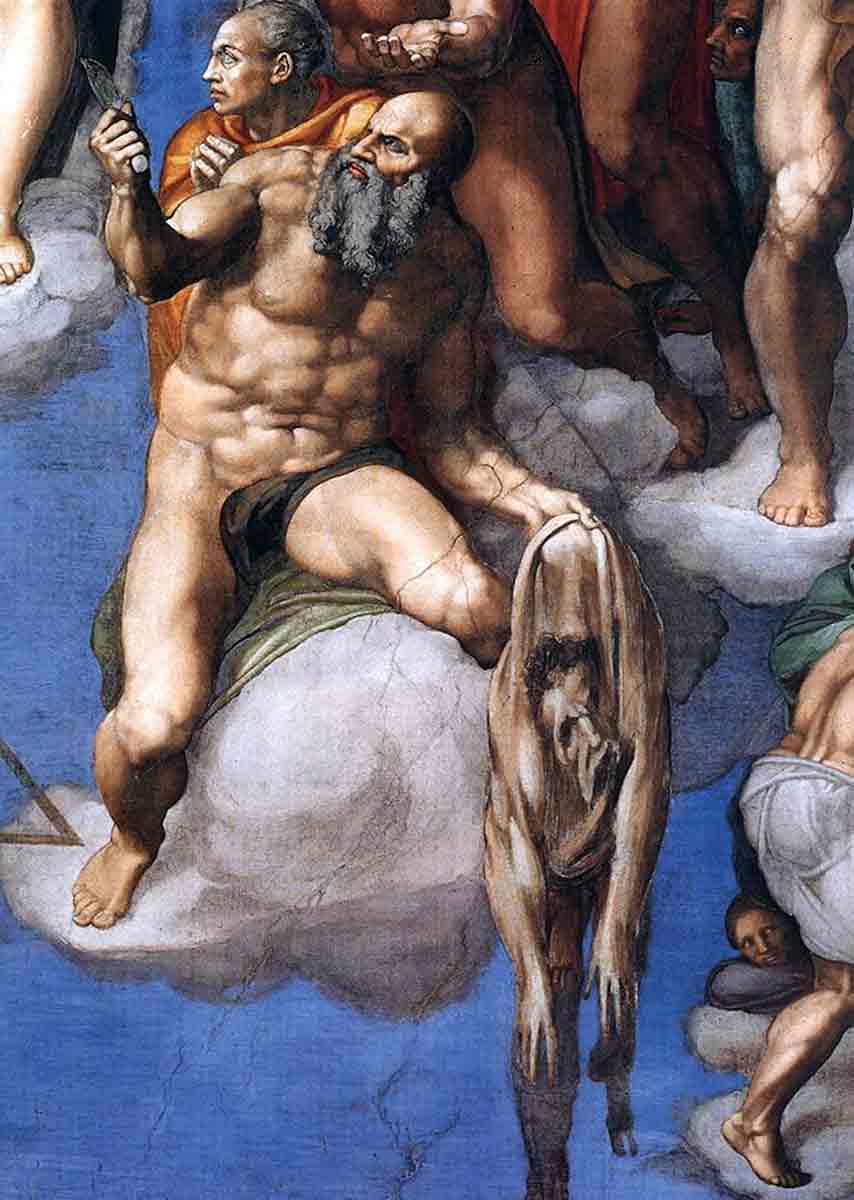
It is no wonder that the only self-portrait that Michelangelo slipped into the Sistine Chapel expresses exactly the dreadful work process he went through in both painting campaigns. In the Last Judgment, on the right side, beneath Christ the Judge, St. Bartholomew, glancing at him, holds a flayed human skin: that is Michelangelo. A telling visual expression of how taxing the process of decorating the Sistine Chapel was for him.
2. Which Prophet Resembles the Pope Who Commissioned the Fresco?
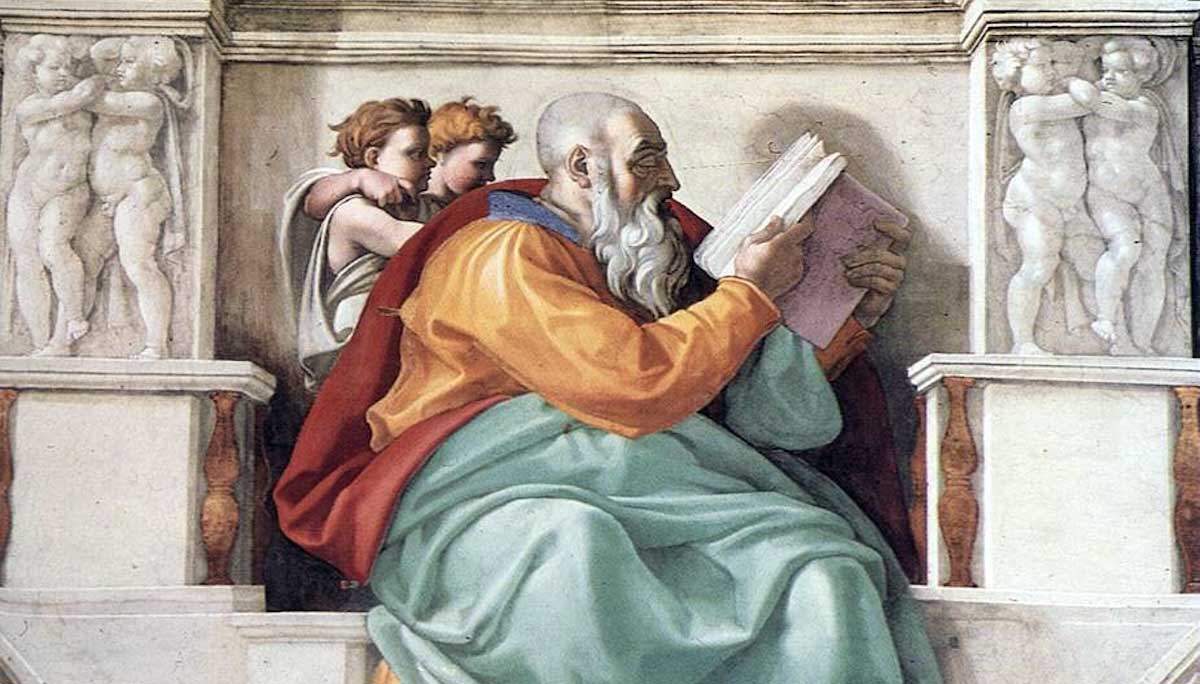
That placement has a clear iconographical purpose: by placing the prophet Zacharias just above the entrance, Michelangelo references the very beginning of the prophetic timeline that leads up to Christ’s birth.
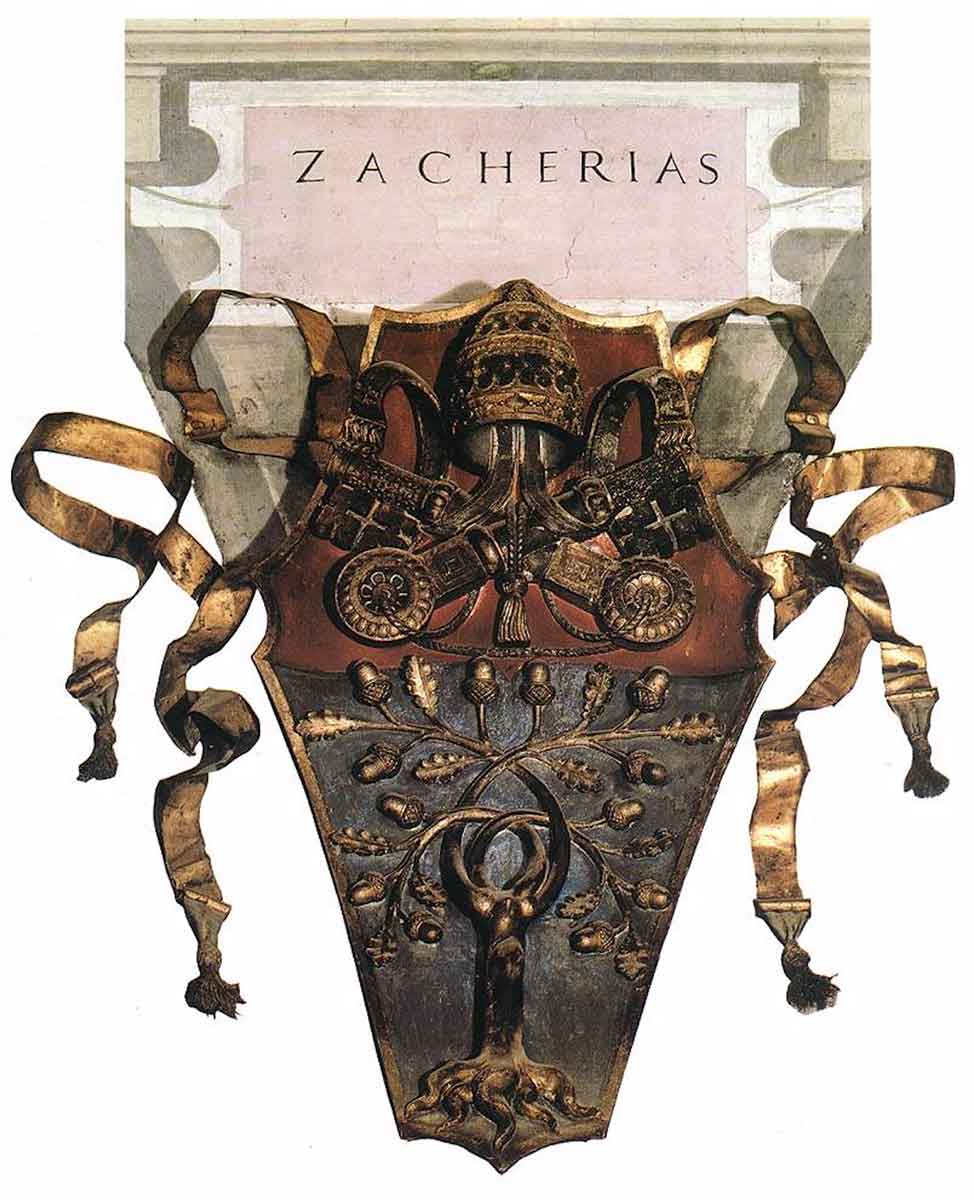
Having that in mind, it is also interesting to note that Prophet Zacharias is thought to be a portrait of the originator of the entire painting cycle, namely the temperamental Pope Julius II della Rovere. The physical resemblance to Julius and the inclusion of the coat of arms of the Della Rovere family just next to the lunette containing the Prophet is striking evidence. The frame of the lunette itself is decorated with acorns and oak leaves. Della Rovere literally translates to “of the oak tree.”
3. Which Biblical Woman Occupies the True Center of the Ceiling Decoration?
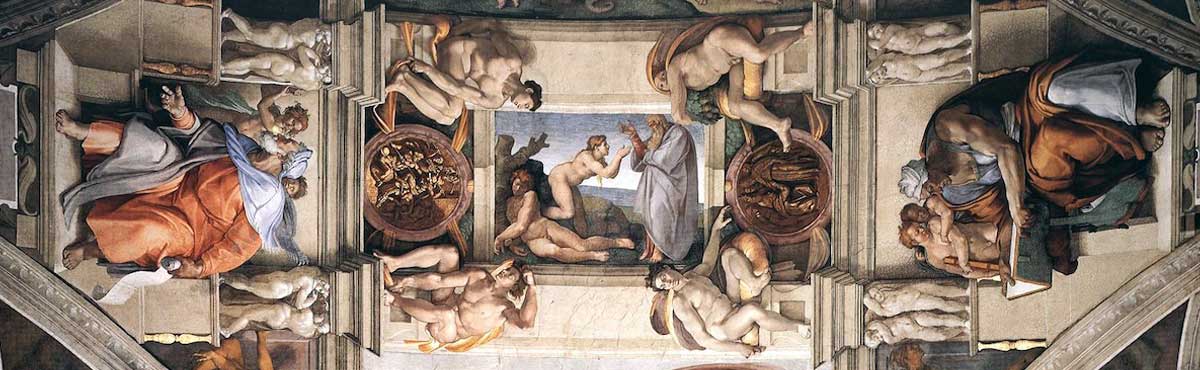
The Creation of Adam dominates our imaginations so avidly that we tend to think it must be the centerpiece of the Sistine Chapel. Michelangelo’s visual conception places another image in the geometric center of the program: The Creation of Eve. While the cosmos is brought into being in earlier panels, Michelangelo places Eve at the geometric midpoint of the vault sequence—marking the emergence of human life as a pivotal hinge between creation and the Fall. The exact moment Michelangelo renders is her emergence from the side of Adam, who is slumped in a vulnerable sleep on a rock. This contrast between Eve’s dynamic interaction with the Creator and Adam’s helplessness emphasizes his passive role in the crucial moment of creation.
4. Which Figure Became Michelangelo’s Most Famous Act of Artistic Revenge?
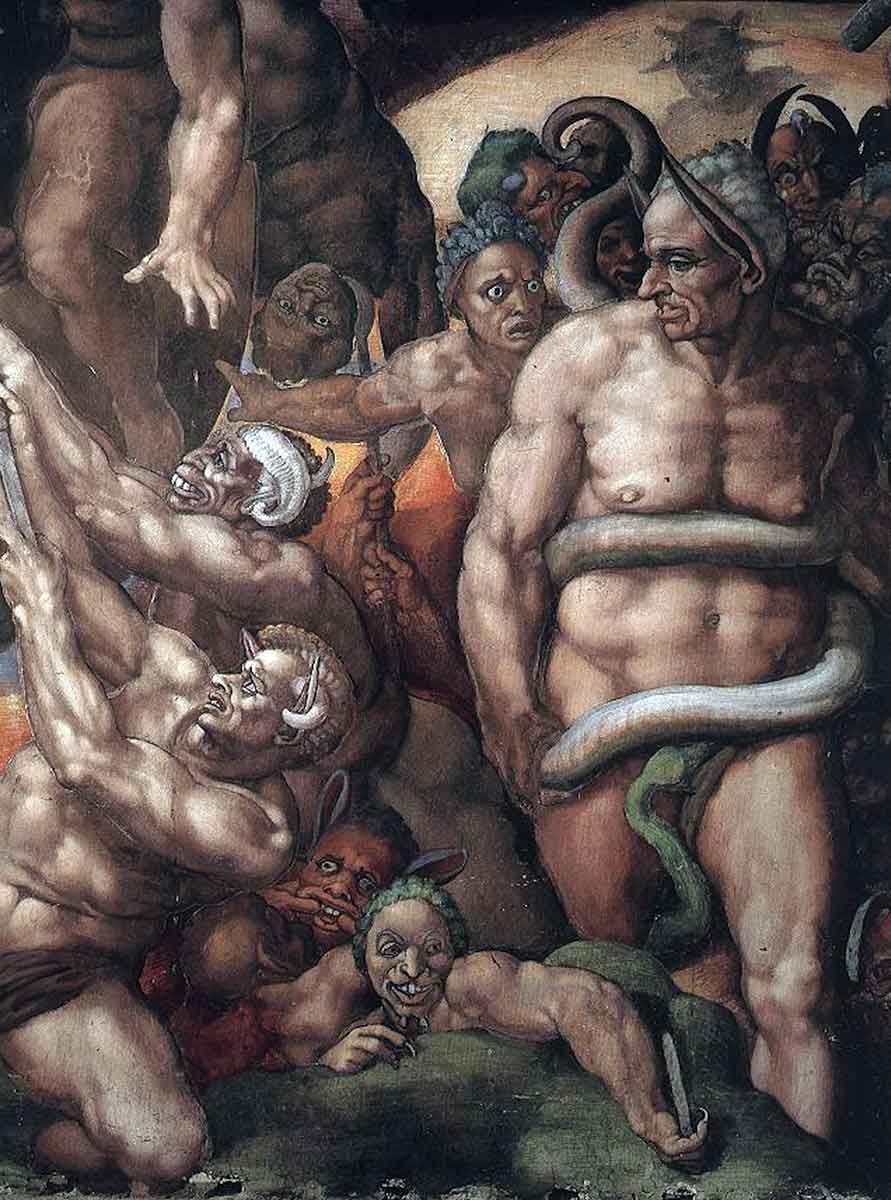
One of the most comical portrayals in the Sistine Chapel is that of Minos, even if we don’t have all the context. Diving deeper into the anecdotal dimension of the image, it becomes outright hilarious. The man with donkey ears and draped in a snake that bites his penis is Biagio da Cesena, the papal Master of Ceremonies. He was part of a Vatican faction that badmouthed Michelangelo’s extensive display of nudity, arguing that nakedness belonged in a tavern or a bathhouse, not in a holy chapel.
Judgy as he was, Michelangelo impersonated Biagio as Minos, the mythical judge of the underworld. To comment on his prudishness, he covered his body with a massive serpent. The story goes that Cesena complained to Pope Paul III about this shameful caricature, to which the Pontiff replied that his jurisdiction did not go as far as Hell, so altering the image of the Last Judgment on the altar was out of the question.
5. Which Saint Is Easiest to Overlook?
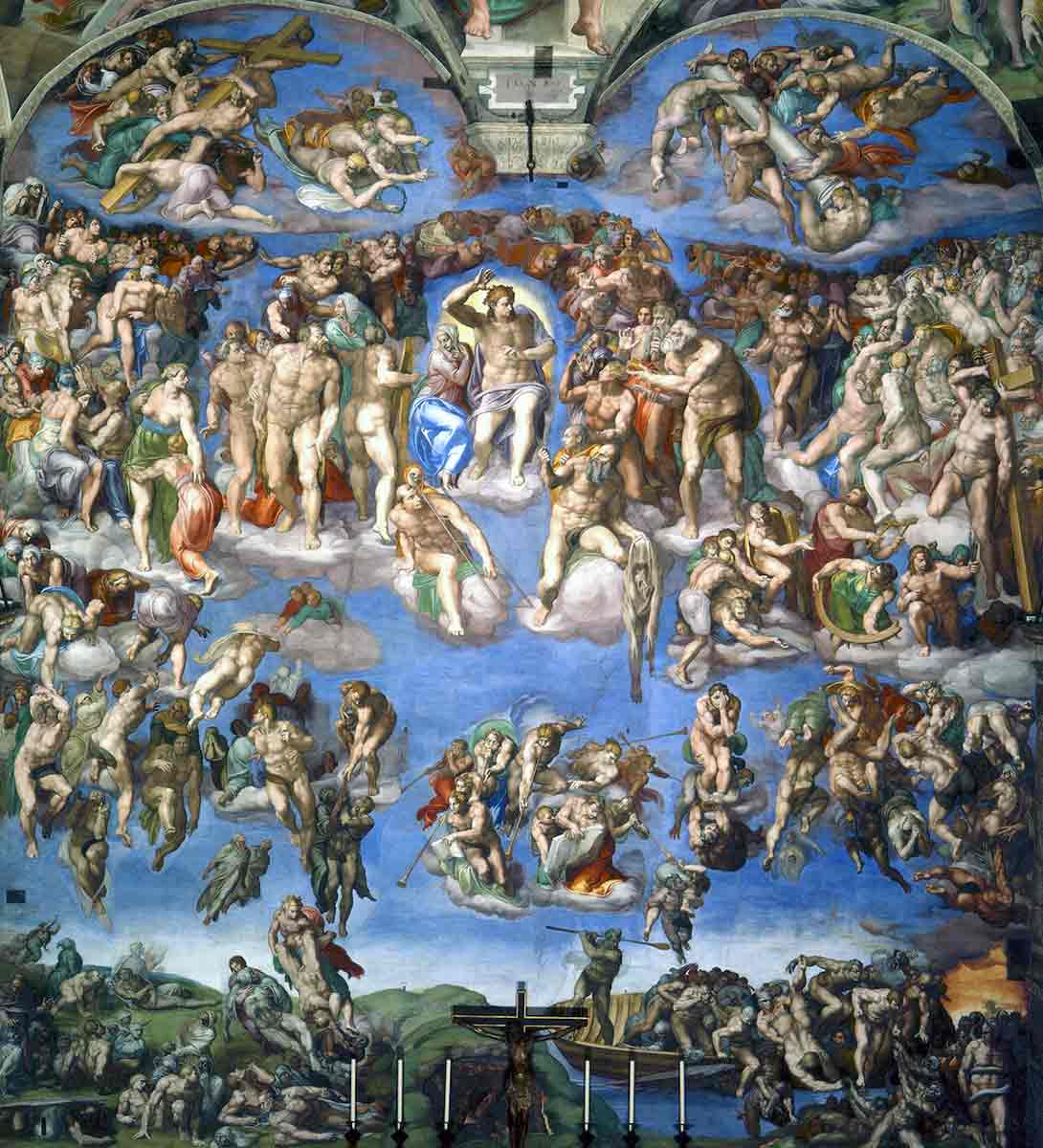
Partially obscured, brandishing striking blonde hair and dressed in a yellow cloth, Mary Magdalene is one of the most recent identifications art historians have proposed. The identification came, in fact, from an art restorer. Sara Penco published a book in 2024 arguing that Mary Magdalene, the first person to see Jesus Christ after his resurrection, was not left out of the Last Judgment depiction, as was previously argued.
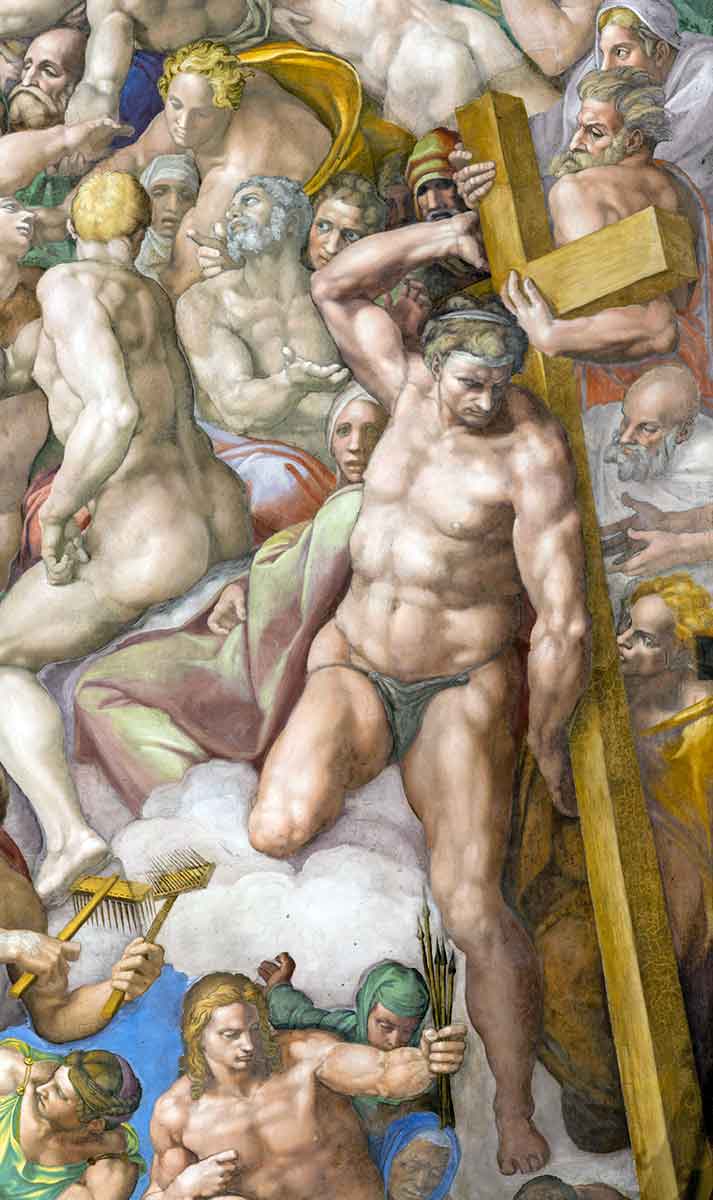
Her argument is based on Mary Magdalene’s proximity to Christ and her gesture of kissing the cross. Such a display of intimacy with Christ and his sacrifice has led Penco to be convinced we can identify the blond lady as Magdalene.
In the book’s foreword, Professor Yvonne Dohna Schlobitten states:
“She is a sinner, who is welcomed by Christ the cross-bearer and directed toward the path of salvation. In the chaotic and anguished vision Michelangelo stages in the Sistine Chapel, the detail of Mary Magdalene alongside Christ the Redeemer is the key to understanding a message that Michelangelo addresses to himself and passes on as a legacy to humanity.”
6. Which Figure Shows Michelangelo Pushing Anatomy Beyond Nature?
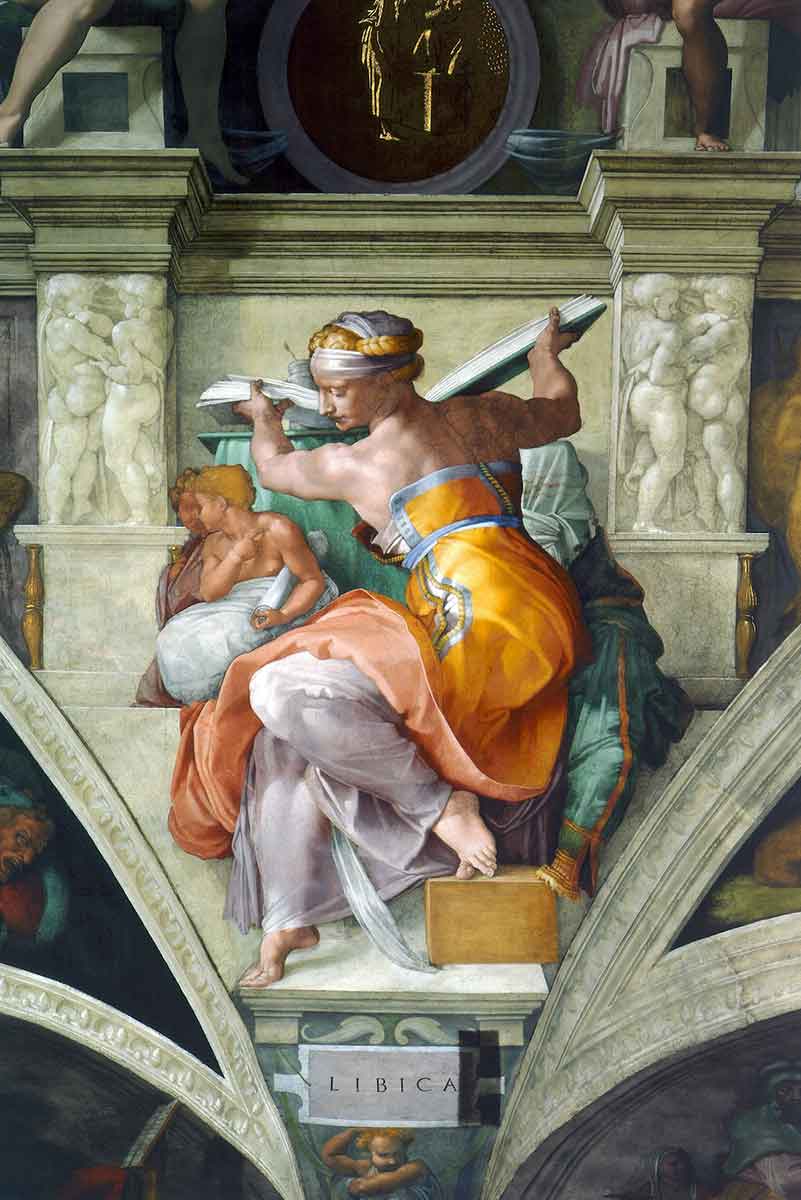
Michelangelo decorated the Sistine Chapel, the place where cardinals elect a new Pope, with much of Old Testament imagery. Other than showing the seven Prophets, the artist also included five sibyls in a very prominent part of the ceiling. The twelve Old Testament characters are, in fact, the largest figures on the vault, and they are placed alternately. The scope of representing the pagan Sibyls of the Classical World was to emphasize that Christ was the Messiah of all people, not just Christians or the Jews. The Libyan Sibyl showcases particular bravura in the command of complex human anatomy. This female figure, in fact designed on a male model, is one of the most archetypal illustrations of figura serpentinata.
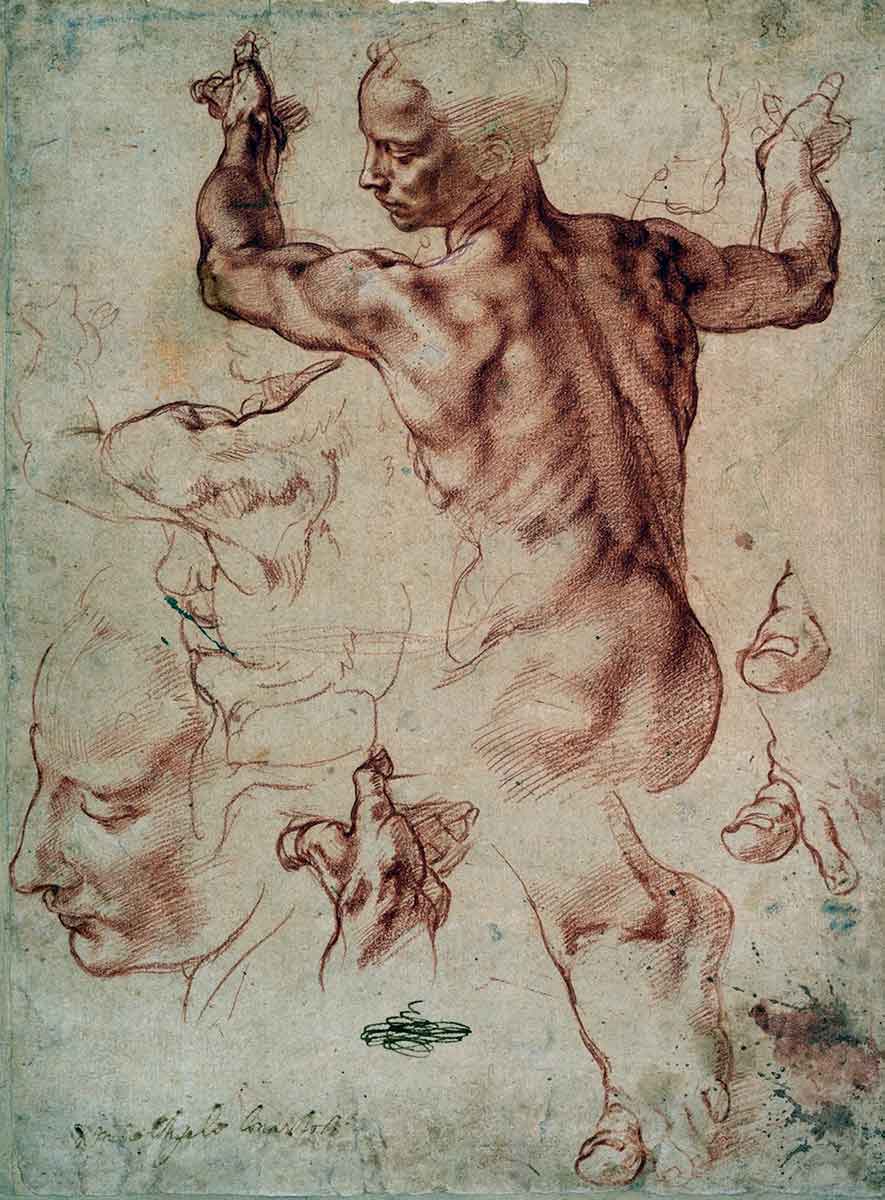
Michelangelo was one of the artists who instrumentalized such artificially constructed serpentine figures, paving the way for the contortions that would define the Mannerist period. This corkscrew-like position of the Libyan Sibyl is one of the first depictions of human anatomy pushed to extremes in the history of Renaissance art. Michelangelo learned from closely studying Hellenistic statuary, such as the Laocoön group.
7. Which Old Testament Hero Seems to Defy Gravity?
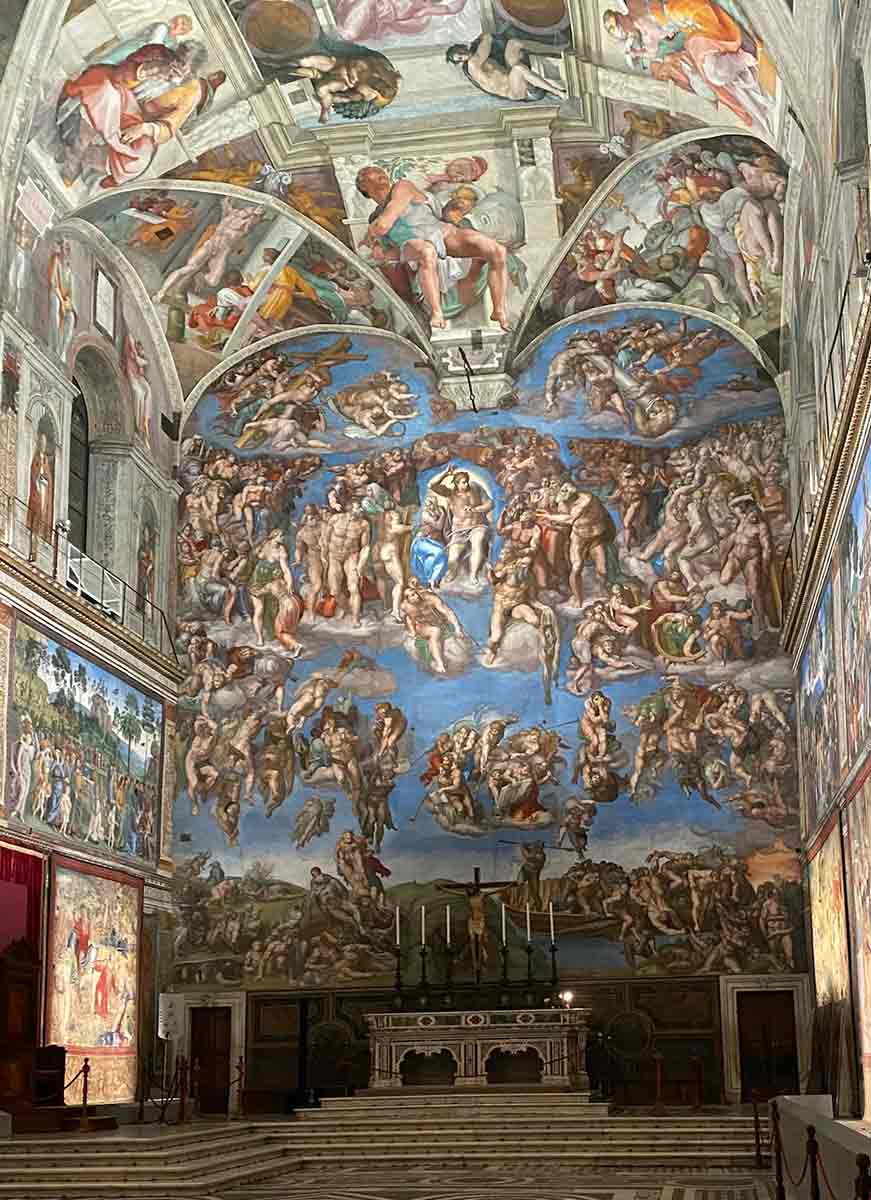
Michelangelo boasted another skill in the figure of Jonah. His importance from a religious standpoint motivated Michelangelo to exhibit maximum skill in the foreshortening of Jonah’s body. This image is a masterclass in perspective.
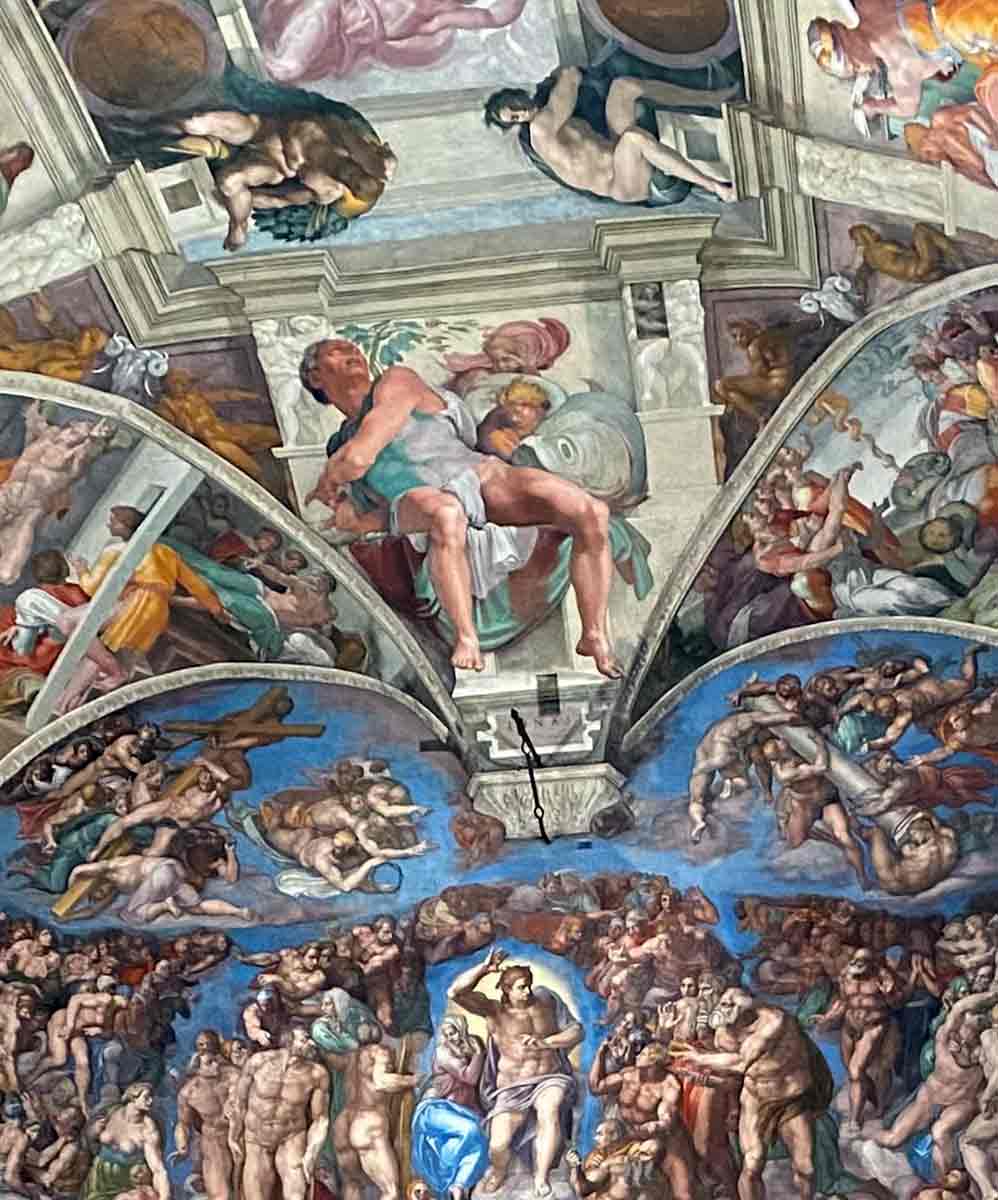
Jonah is painted with his head thrown back, legs floating outward and creating the sensation that he’s falling backward into space, all while the ceiling’s curves seem to fall toward the viewer. His body seems weightless. This visually tense illusionistic depiction of Jonah has both a practical and an allegorical purpose. His glance leads the viewers to look at the story of Creation and the life of Noah. The eye then does a full circle, rounding back to Jonah and the promise of Resurrection, infused by his own story: swallowed by a fish, he came out of it after days, just like Christ being resurrected after three days in his tomb.
8. Which Villain Is Depicted as a False Christ?
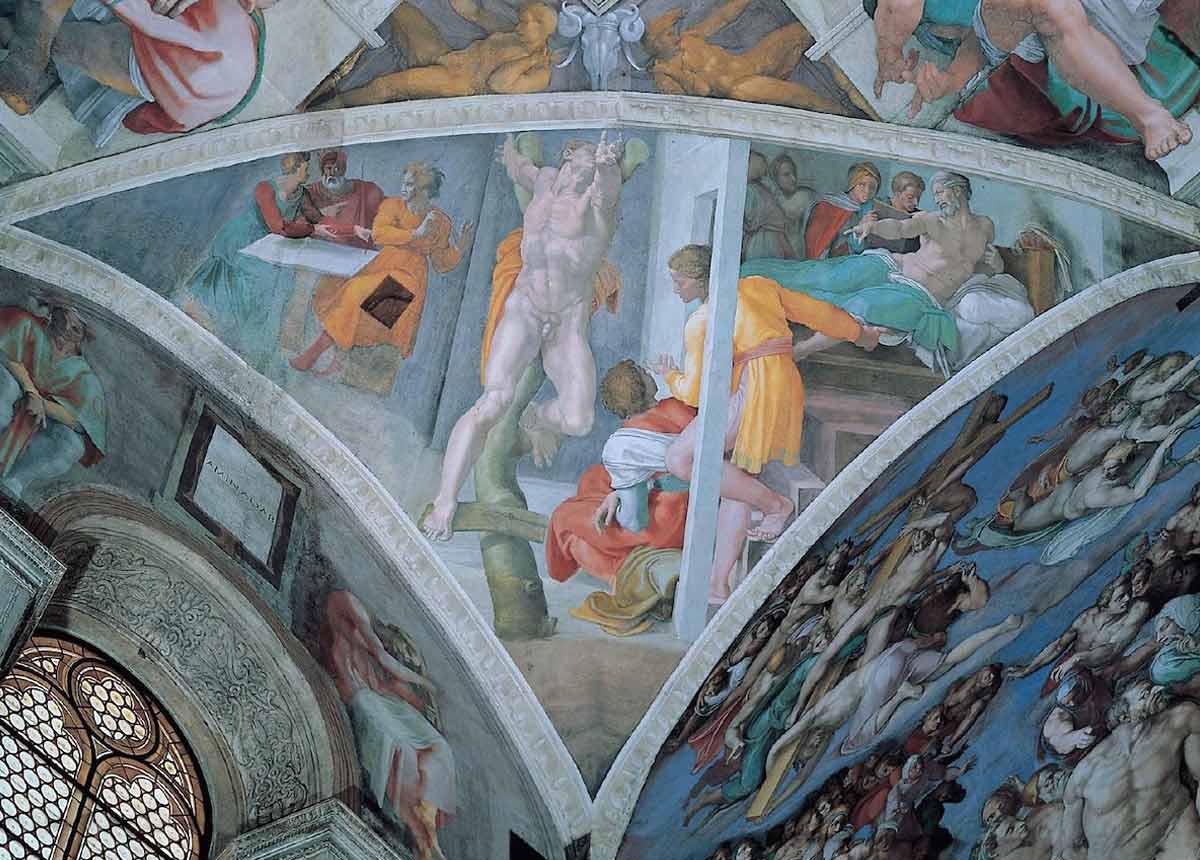
Haman is the chief anti-hero in the Book of Esther. He plotted to persecute Jews across the Persian Empire. The plan was ultimately sabotaged by Queen Esther and Mordecai. Michelangelo portrays his punishment: he is taken to the gallows he arranged for mass executions.
Historians have noticed how Michelangelo rendered Haman’s punishment in a very similar way to Christ’s crucifixion, in a false Christ vein. This resemblance generates a theological tension. Renaissance theology loved comparisons between Old and New Testament stories. If Jonah’s story foreshadowed Christ’s resurrection, Haman shows a negative analogy. He may look crucified like the Messiah, but his punishment was much deserved.
9. Which Biblical Creature Has a Surprisingly Human Face?
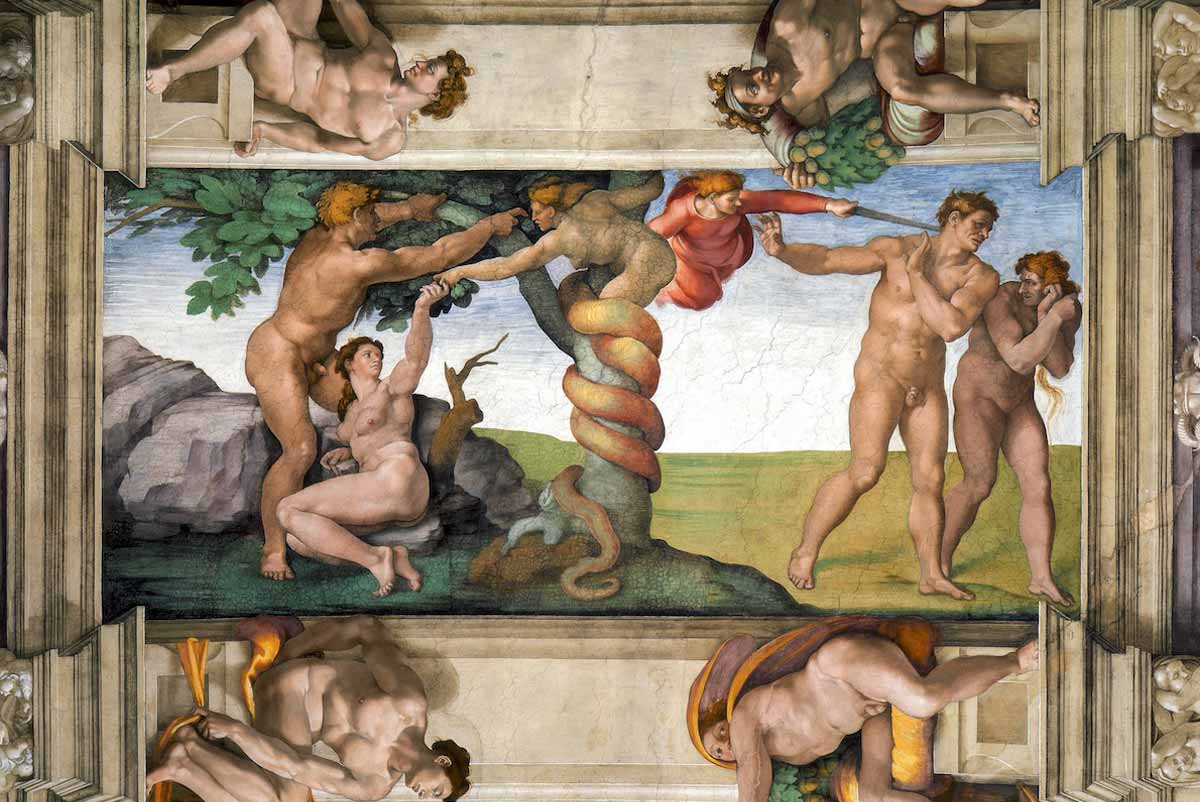
The story of Adam and Eve’s temptation contains a gender twist: the serpent is half woman. She has blonde hair, a muscular torso, and she looks strikingly similar to Eve, pointing out that the original sin had to do with vanity and self-temptation.
Why did Michelangelo opt for this iconography? Considering that his iconographical program abounds in parallels to the Old Testament, this visual codification references the myth of Lilith, Adam’s rebellious first wife who ended up turning into a demon.
Another striking element of the Fall of Man episode is that Michelangelo turned the apple tree into a fig. This option reflects his close reading of the Genesis book, where Adam and Eve must start covering their intimate parts with fig leaves.
If you thought Michelangelo’s choice of woman-serpent has misogynistic undertones, the fact that Adam eagerly reaches for the tree might make you change your mind. Michelangelo wanted to stress that both original people shared equal blame.
10. What Figures Remain Undecipherable?
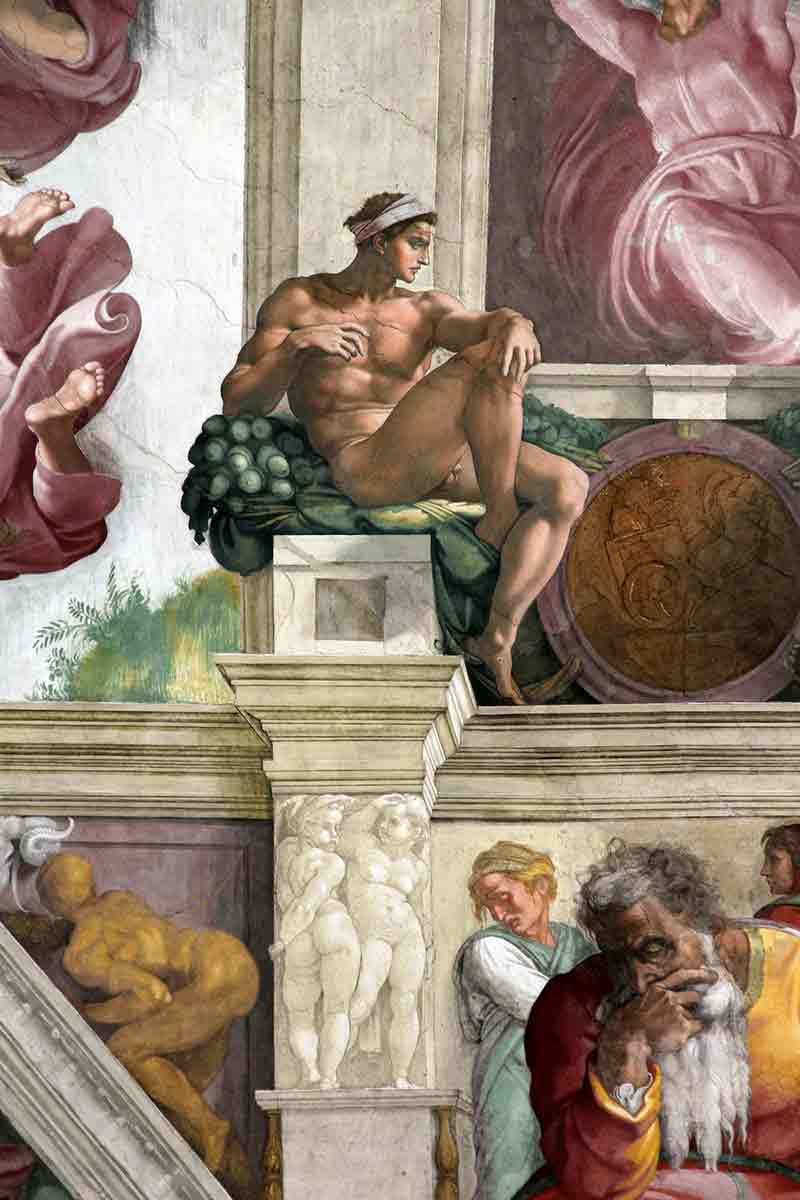
There is always room for debate when it comes to interpreting an artist’s iconography. However, most images in the Sistine Chapel can be safely attached to a biblical story or have their attributes indicate their identity. The ignudi, the naked figures populating the architectural elements of the fresco, remain impenetrable. Art historians mostly agree that the naked figures seem to lack a clear biblical or historical identity. Thus, the ignudi seem to be placed in a non-narrative, purely decorative space.
The 20 figures have very distinct forms and emotional expressions, making it harder to attach a psychological reading to their appearance. Are they Neo-Platonic ideals of human perfection, since Michelangelo was infused with this philosophy? Or are they angels? We can only speculate.