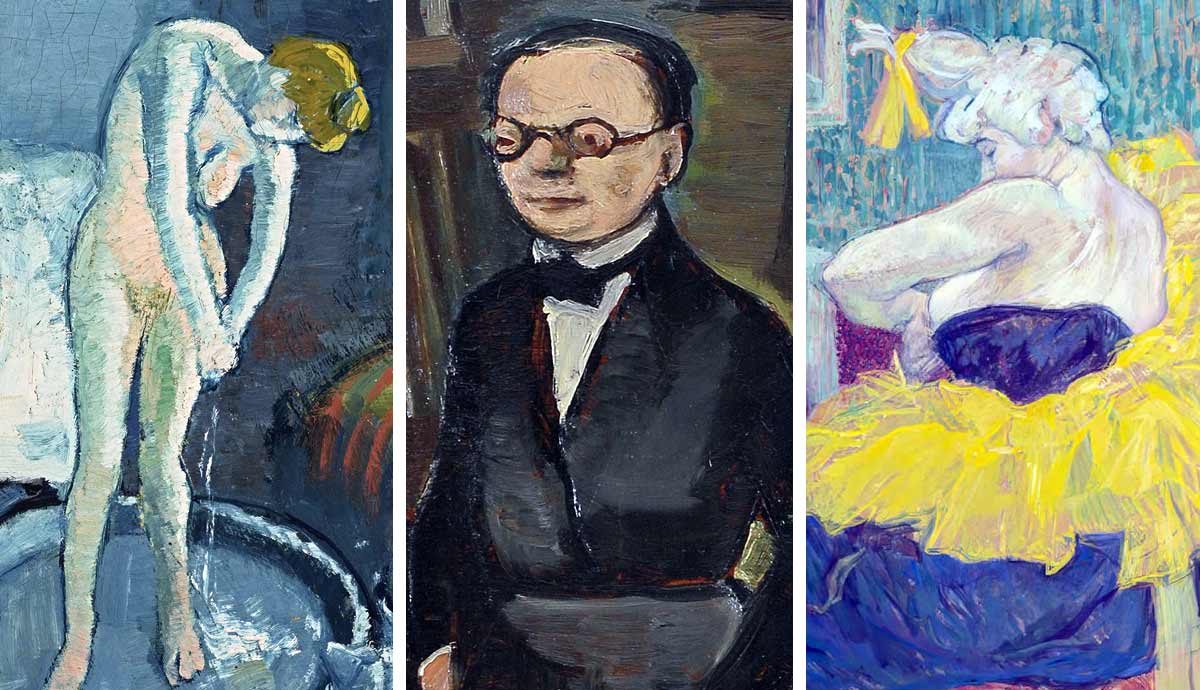

From Neoclassicism to early Impressionism, the 19th-century held within it a number of important art movements and styles. Painters went from emulating the ancient classics to imbuing their work with more stylistic drama and symbolism. Among these painters were some of America’s most influential artists whose work is admired to this day.
How Mary Cassatt (1844–1926) Defied Parisian Tradition to Revolutionize Impressionism
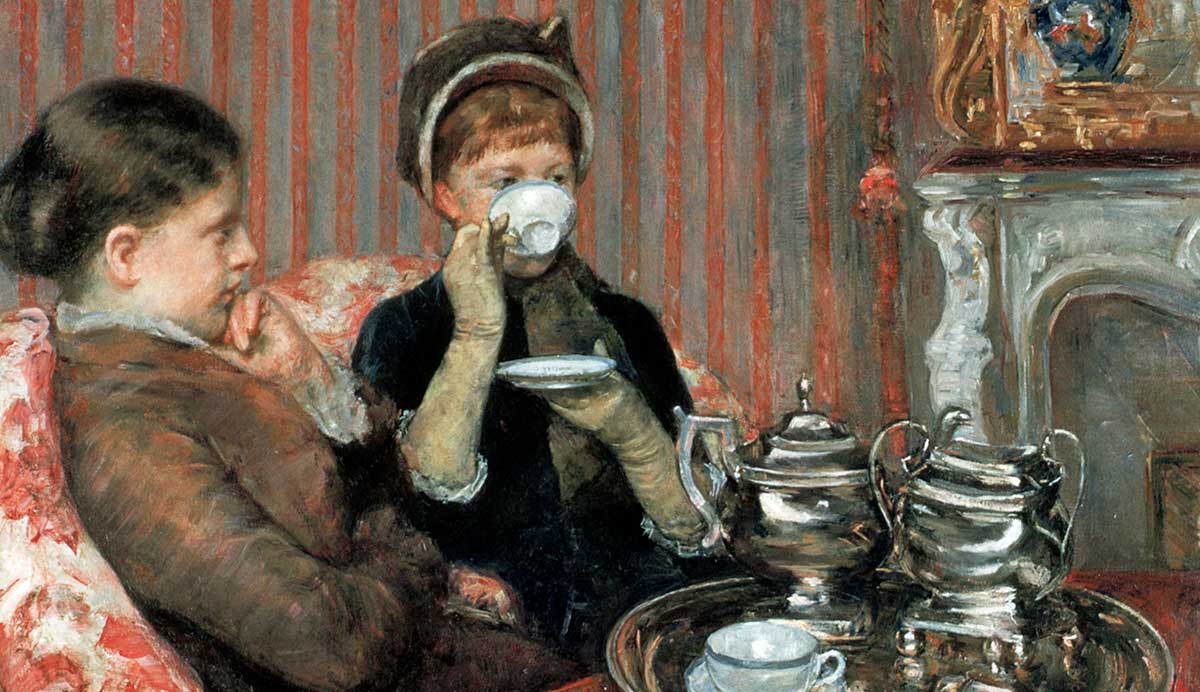
Mary Cassatt was both a printmaker and painter, largely influenced by early Impressionists including Edgar Degas, who at one point invited her to join a community of burgeoning Impressionist painters. Born in Allegheny, Pennsylvania, and a student of the Pennsylvania Academy of the Fine Arts, Cassatt spent a considerable amount of time in France while growing up and later in life. Her work largely centered on the depiction of women and children and of the bond between mother and child.
Going against her parents’ initial wishes that she pursue something other than art, Cassatt began her studies at the young age of 15 and in many ways had to pave her own way in a world that still catered to male artists. She did not have access to live models and felt that the Academy restricted her ability to learn, so she began to teach herself by studying the masters. Her earlier work shows a heavy use of pastels and a more impressionistic style, while later pieces don’t necessarily fall within a set style and draw influences from her study of Japanese block prints.
How Winslow Homer (1836–1910) Transformed American Realism with Dramatic Coastal Masterpieces
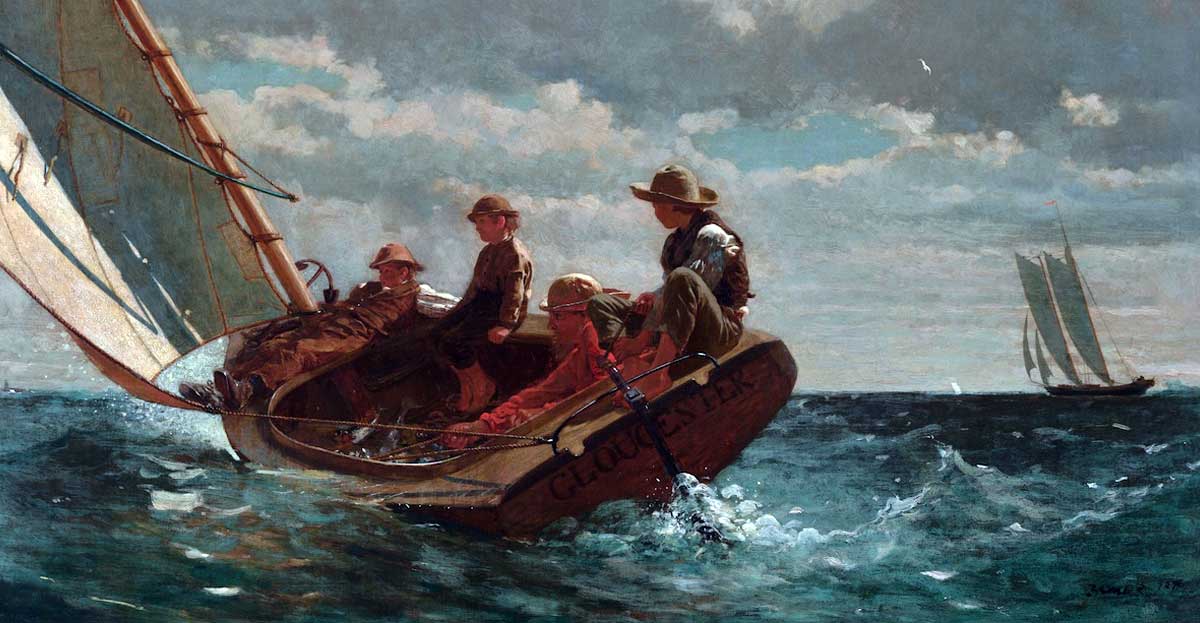
Winslow Homer was born and raised in Boston, Massachusetts, and began his artistic work as a printmaker. He dabbled in oils as well and eventually made a name for himself painting rural scenes in various locations around New England. His paintings focused on both human life and interaction as well as landscape. He also painted a number of works depicting scenes of the Civil War.
Homer used color to communicate mood in his paintings and also studied in France for a period of time, where he learned to highlight the natural lighting of his surroundings to bring depth to his paintings and subjects therein. A few of his most famous works include “Boys in a Pasture” and “Breezing Up.”
Albert Bierstadt (1830–1902) Captured the Epic Scale and Romance of the Wild West
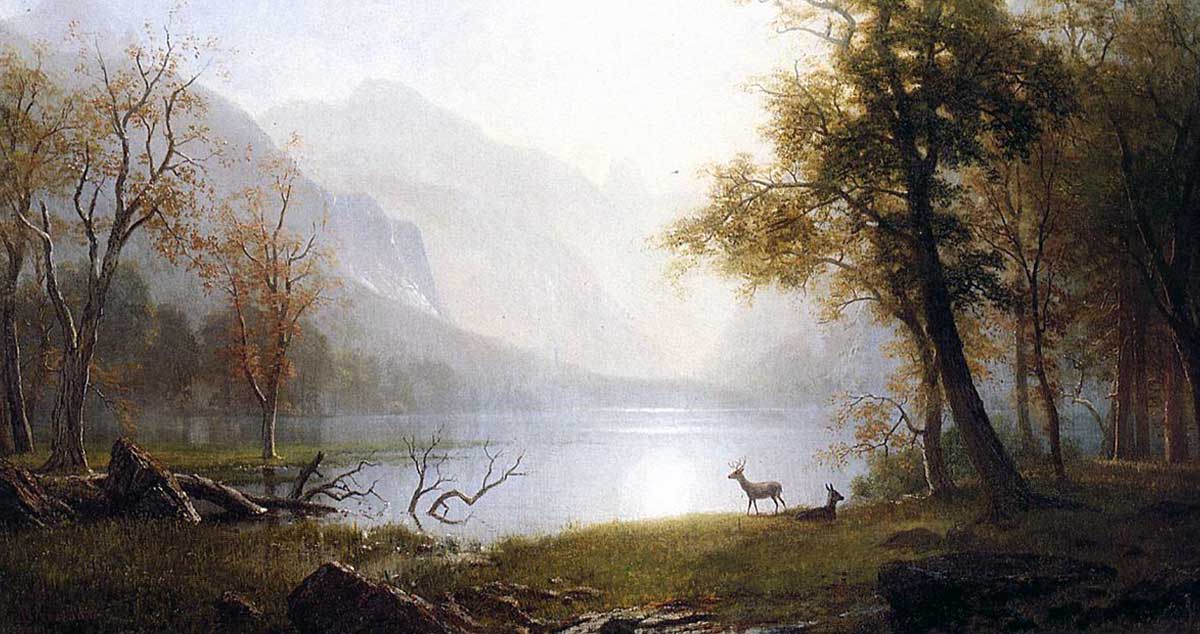
Born in Prussia, Bierstadt immigrated to America with his family when he was just one year old. He grew up in New Bedford, Massachusetts, and always had a keen interest in drawing and art. When he was older, he returned to Germany to study painting and eventually came back to America to teach for a short time before he became fully devoted to his own paintings.
His work was a prime example of the soft, romantic lighting used in landscapes during the Romantic period, and his landscape paintings of the West particularly display that. He is best known for the grandeur he depicted in his works, showcasing the landscapes of the West, which he captured on several journeys during the Westward Expansion.
How Thomas Cole (1801–1848) Sparked a National Movement as Father of the Hudson River School
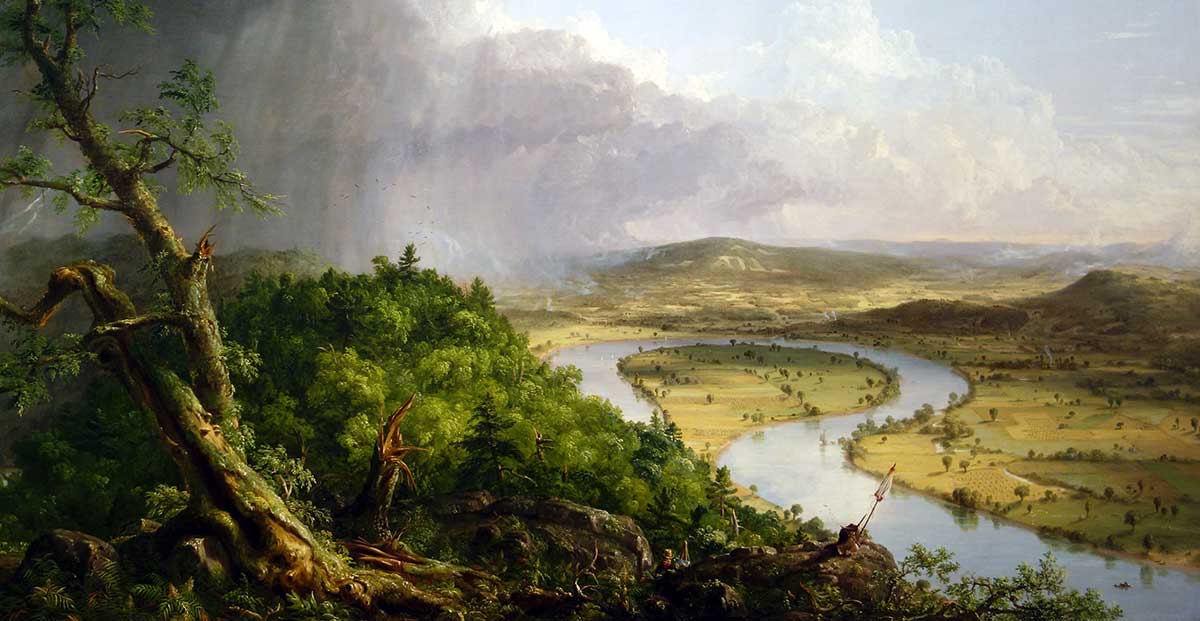
Although he didn’t move from England to America until he was 18, Thomas Cole is regarded as one of the most influential American oil painters of the 19th-century, both for his prolific works as well as his influence on other painters. He was the founder of the Hudson River School, which was a movement characterized by its embrace of Romanticism as the basis of inspiration for landscape painting.
Similar to Bierstadt’s work, Cole’s paintings communicate a depth and grandeur through soft light and exquisite American landscapes, in addition to small figures or animals which emphasize the natural expanses even more.
Cecilia Beaux (1855–1942) Shattered Gilded Age Glass Ceilings to Paint High Society
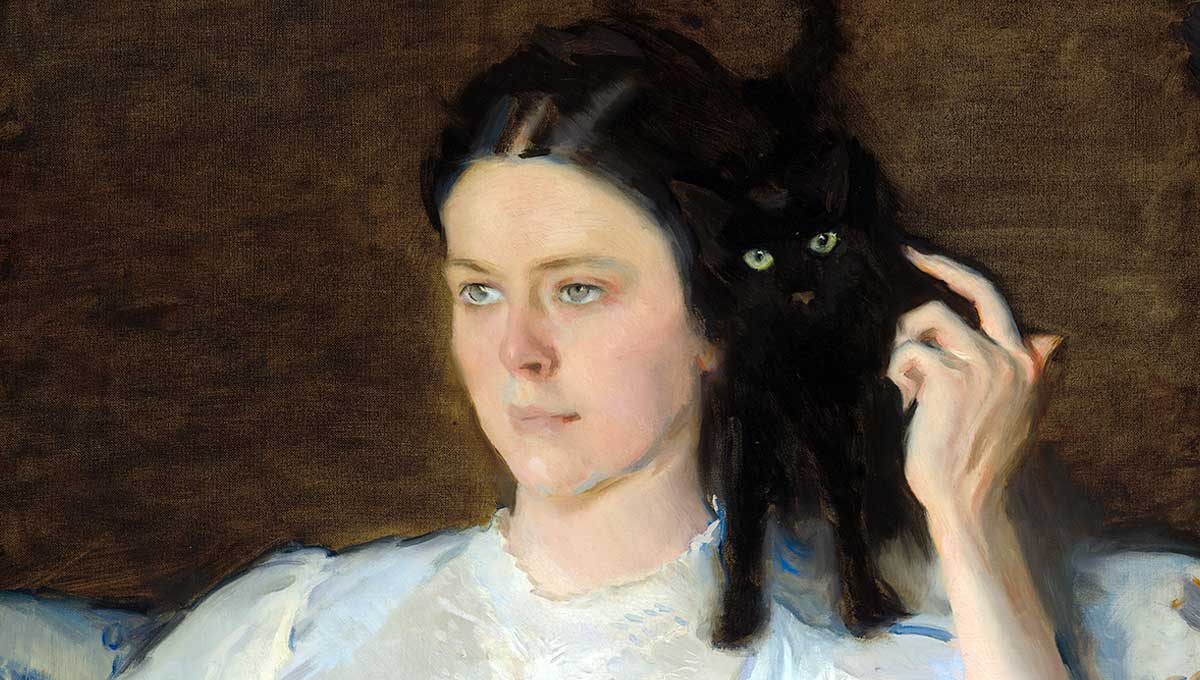
Abandoned by her father shortly after the death of her mother, Cecilia Beaux was raised by relatives in Philadelphia, where she grew up, lived, and worked. While studying art, she worked making lithographs and painting china, but eventually fully devoted herself to the art of portraiture.
She was the first woman to teach at the Pennsylvania Academy of the Fine Arts and later settled in New York. Her oil paintings are a mix of families, mothers and children, women, and portraits of politicians and aristocrats of her time who sought out her talent and ability to bring their faces to life on canvas.