
Medieval justice was often as much theater as it was punishment. Public execution methods served multiple purposes as they simultaneously allowed the community to satisfy its demand for retribution, demonstrated the power of the state, and provided a warning to future criminals. The most severe punishments were reserved for the greatest crimes, ones that ruptured the sense of social order. The punishments imposed for these crimes were designed to be as prolonged and agonizing as possible to match the heinousness of the crime.
1. Hanging, Drawing, & Quartering
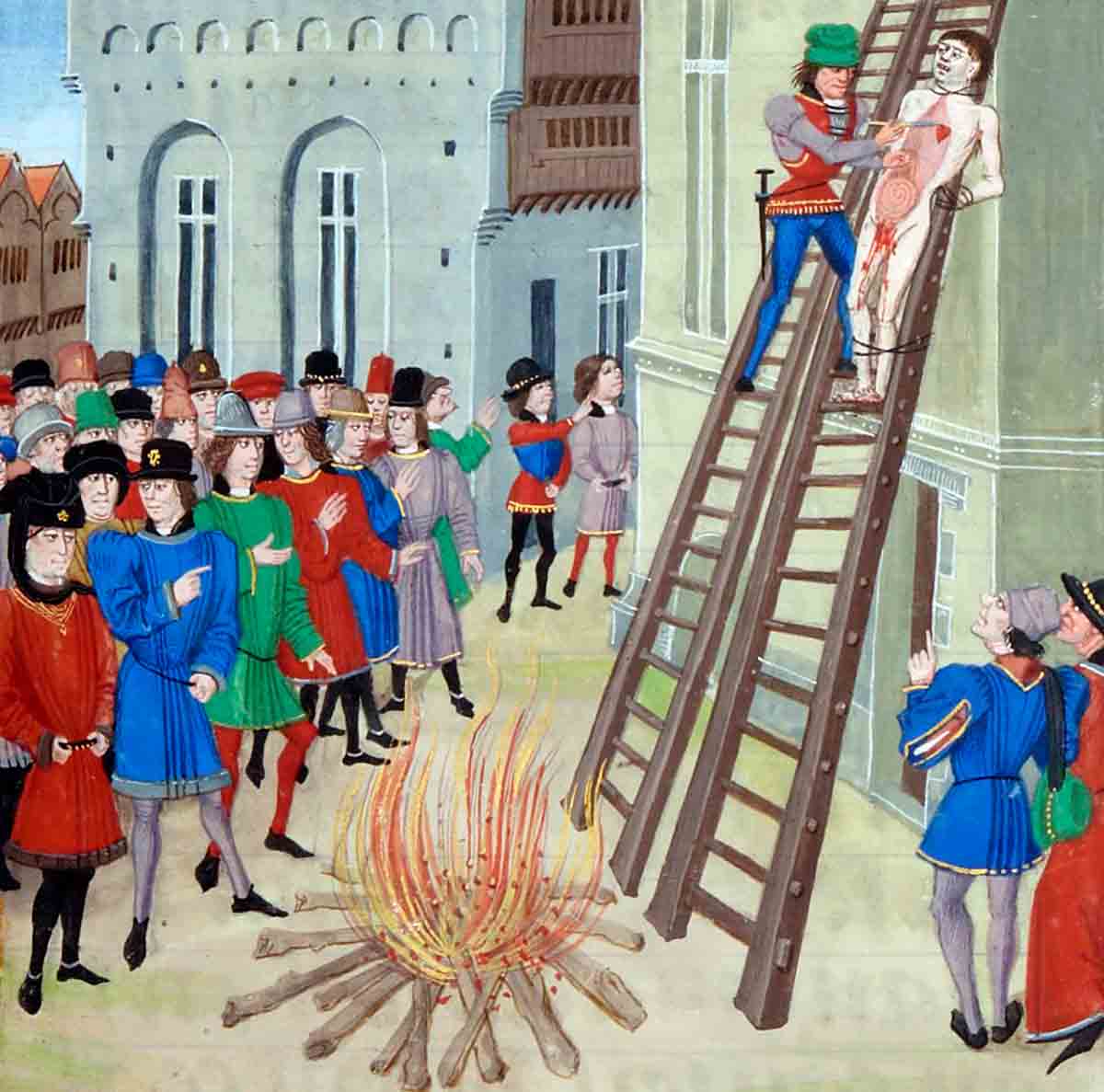
Depicted at the climax of the film Braveheart, the process of hanging, drawing, and quartering was a long and drawn-out process designed to make the condemned suffer as much pain and humiliation as was physically possible.
Reserved for traitors, the execution was multiple punishments stacked on top of each other. First, the prisoner would be dragged by a horse through the streets of the city to suffer abuse by the common people. Once arriving at the execution site, the prisoner was lifted up to hang by the neck. This was not a short, sharp drop designed to break the neck. Rather, it was a slow strangulation meant to drag out suffering.
Before the condemned fell unconscious or died, they were lowered back down to the scaffold. Unfortunately for them, their torment was only just beginning.
They were then tied to a table, and a large brazier was lit next to them. With a sharp knife, the executioner would open them up from the sternum down to the groin. They would then reach into the torso, pull out the various organs, and toss them into the fire. The condemned would be kept alive and conscious through the whole ordeal, forced to see their innards removed and smell their own burning organs.
When there was nothing left to remove, the condemned was beheaded.
One final humiliation lay in store for the body, however, as it was chopped up into four pieces. The head would be placed on a pike, and the quarters of the body would be sent to the four corners of England as a reminder of what treason against the king brought.
2. The Breaking Wheel
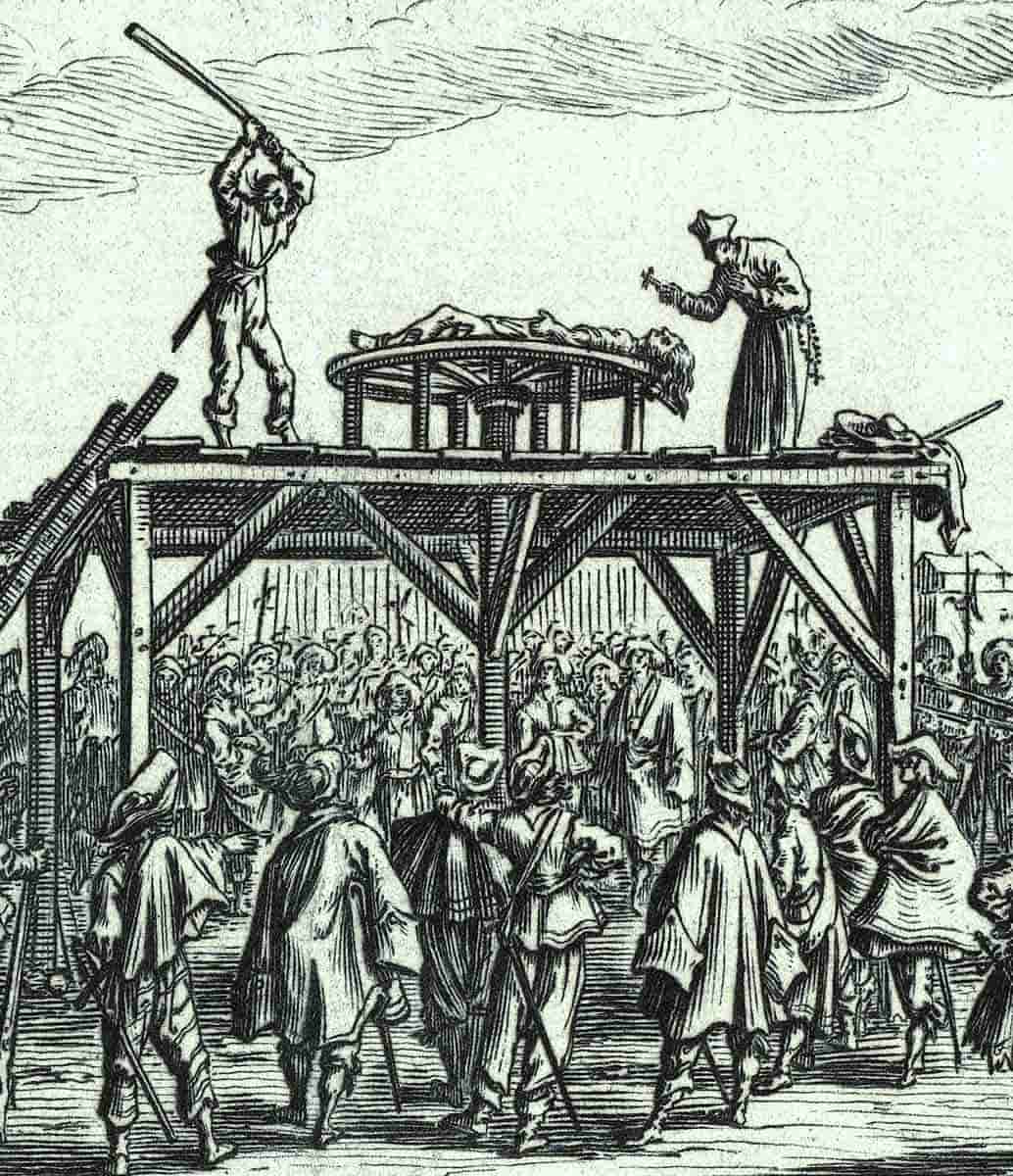
In use across Europe from antiquity through the 19th century, the breaking wheel was a punishment for murderers, rapists, traitors, and highwaymen that provided a grisly spectacle often lasting multiple days.
The exact details of the execution varied from place to place, but each variation followed the same template. The condemned would have their legs and arms broken and laced through the spokes of a large cart wheel. In France, this was accomplished by tying the condemned to the wheel, rotating it around, and as each limb passed, the executioner would strike it with a heavy metal bar. In the Holy Roman Empire, the limbs were often broken by being crushed by the heavy wheel itself.
If the executioner was instructed to show mercy, he could behead the condemned after one or two limbs were broken.
Once the broken and shattered limbs were tied around the wheel spokes, the wheel would be hoisted up on top of a large pole for all to see. Like the ancient practice of crucifixion, it would often take a while for death to claim the wheel’s victim. The unfortunates would slowly succumb to the elements, their wounds, and the various animals that would come looking for an easy meal.
In 1348, a man named Bona Dies supposedly remained conscious for four days afterwards. In 1581, Christman Genipperteinga, a German serial killer, was said to have lasted nine days before dying.
3. Burning
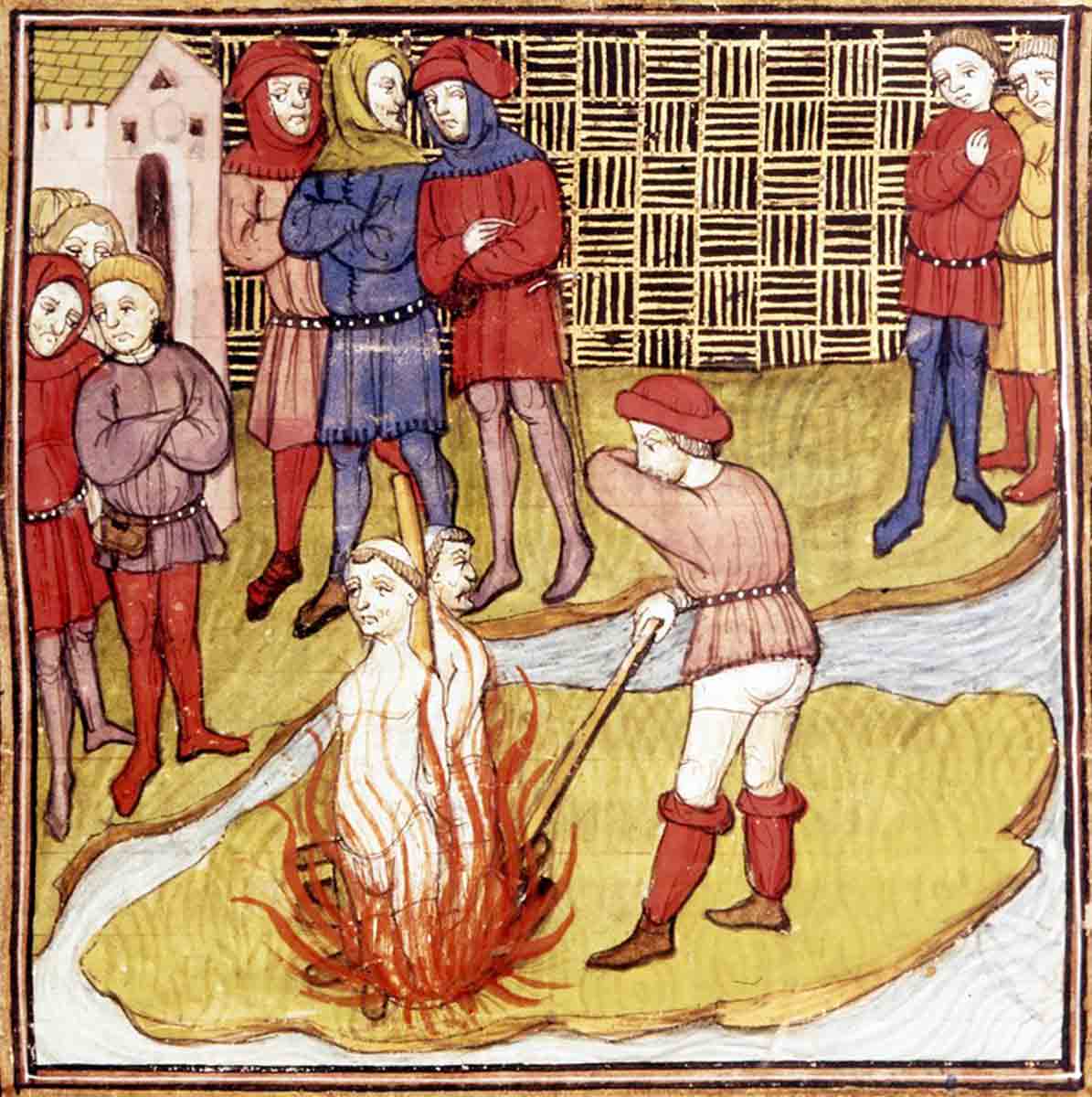
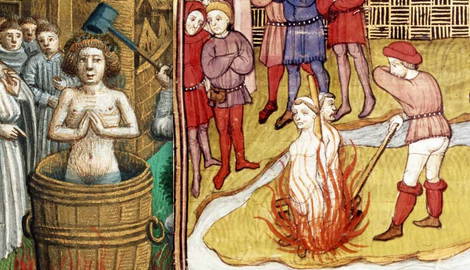
Most famously used in cases of heresy and witchcraft, burning was also employed as a punishment for treason, arson, and a handful of other serious crimes throughout the Medieval Period.
For heretics, burning was both practical and symbolic. Fire often takes on a cleansing property in Christian thought, with purgatory being described as a cleansing fire. In addition, with the body totally reduced to ashes, there would be no relics from the heretic that could be collected by any remaining followers of the heresy.
Interestingly, burning was seen as a more “modest” punishment for women accused of treason. Hanging, drawing, and quartering required the condemned be stripped naked, which was seen as too great a humiliation for women. Burning allowed the condemned to remain clothed while still suffering unimaginable pain.
4. Impalement
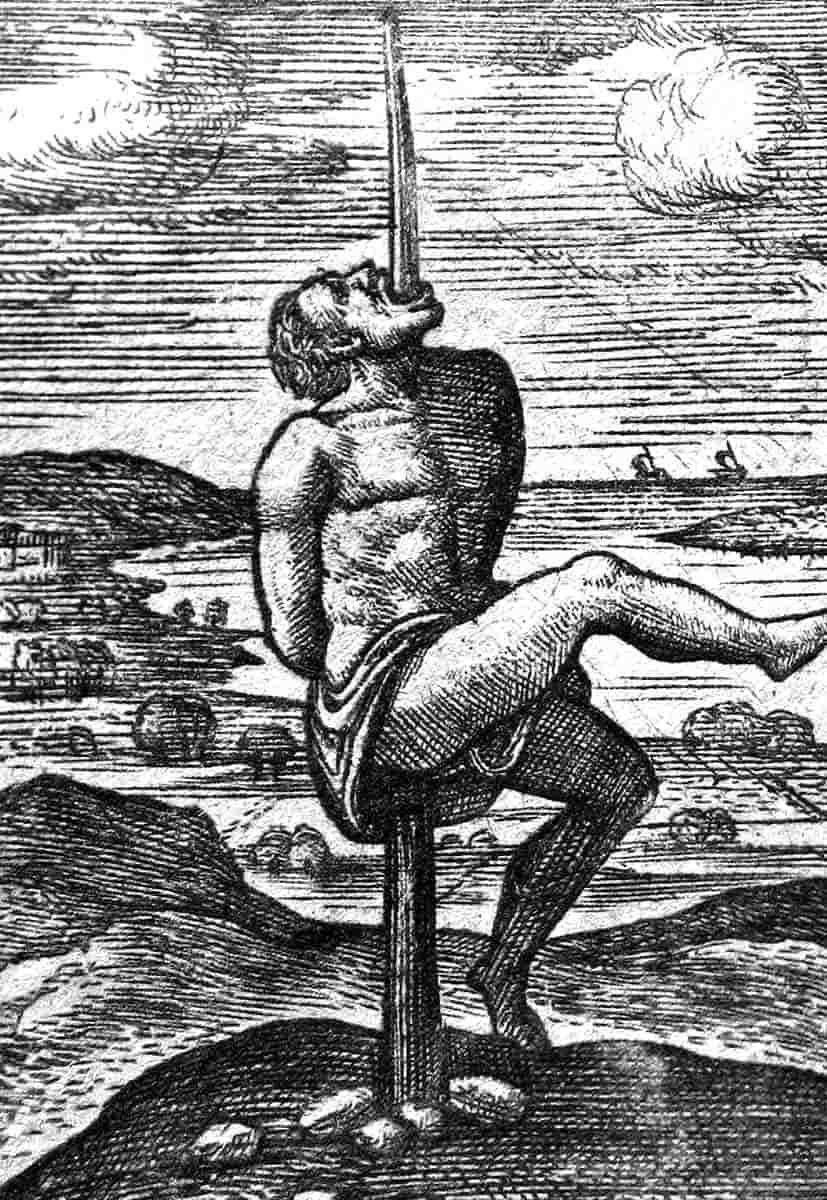
Infamously used as a terror tactic in warfare by Vlad III of Wallachia, impalement was also used as a form of judicial punishment. There were two types of impalement practiced. The first, known as transversal impalement, would involve a spike being thrust through the stomach or back, resulting in the victim lying horizontally across the pole. The second, known as longitudinal impalement, would involve the spike being driven up vertically through the torso.
The victim would then be left on the spike to slowly die from a combination of exposure and massive blood loss.
5. Boiling
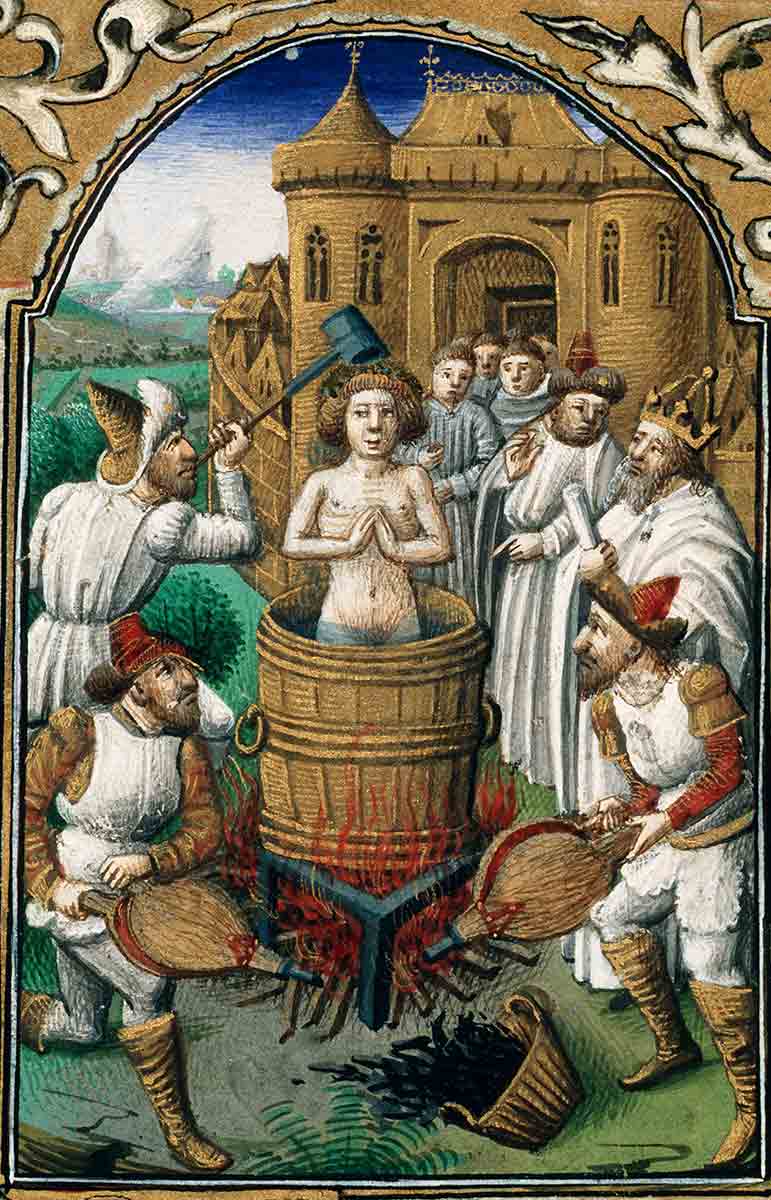
Part of the horror of seeing someone boiled alive comes from the fact that the action is used so ordinarily for cooking. A pot full of bubbling liquid is something most people will see every day. That everyday scene was suddenly inverted when a person was thrown into the pot.
Boiling alive was the punishment for coin forgery in parts of the Holy Roman Empire, but its actual use there is not well documented. However, there is solid evidence of boilings that took place in the 1500s.
A notorious example was the case of a man named Richard Roose. He was a cook who confessed (under torture) to trying to poison Bishop John Fisher in 1532. King Henry VIII was so horrified by the crime that a new law was hastily pushed through Parliament that classified poisoning as a treasonous offense and specified death by boiling as the punishment. The law was specifically written to retroactively apply to Roose. In April of 1532, he was marched to his place of execution. He was chained up and suspended over a cauldron of boiling water. He was dunked into the cauldron, left to suffer, and then removed. The whole process was repeated three separate times, and his death reportedly took two hours.
Roose said he had no co-conspirators and acted alone. However, as Bishop Fisher was a firm opponent of Henry VIII’s attempts to receive an annulment of his marriage to Catherine of Aragon, some historical conspiracy theorists suspect that Henry himself had something to do with the attempt on Fisher’s life.
6. Flaying
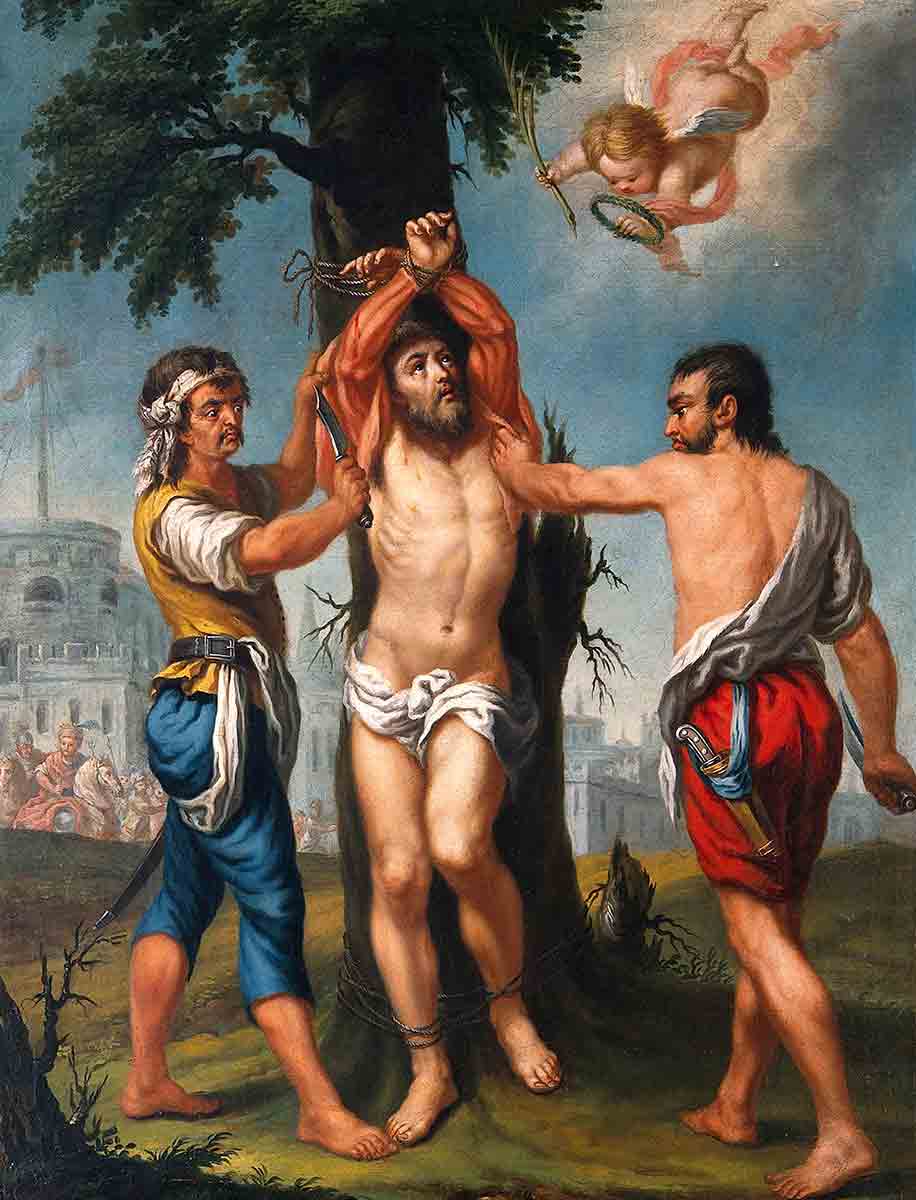
Flaying is the process of removing the skin from the muscle beneath. Extensively practiced in the ancient world, it was used sparingly in the Medieval Period. St. Bartholomew was often depicted holding his own skin in Christian artwork, as that was his method of martyrdom according to his hagiography.
The most well-known case of someone being flayed was the case of Bertrand de Gourdon. He had shot and killed King Richard the Lionheart of England in 1199. While the king forgave and pardoned him on his deathbed, the mercenary leader Mercadier, who was employed by Richard, was not as keen to let the young man get away with regicide. He dragged Bertrand back to camp and ordered him to be flayed alive.
The flayer would start at the extremities, like the hands or feet, and slowly slice the skin away with a sharp knife, moving in toward the torso. The ultimate goal of flaying was to be able to remove the victim’s skin and have it remain in one piece for the maximum visual impact. This was a procedure that many would have experience with performing on animals, as the removal of skin was necessary for the production of leather.
7. Blood Eagle
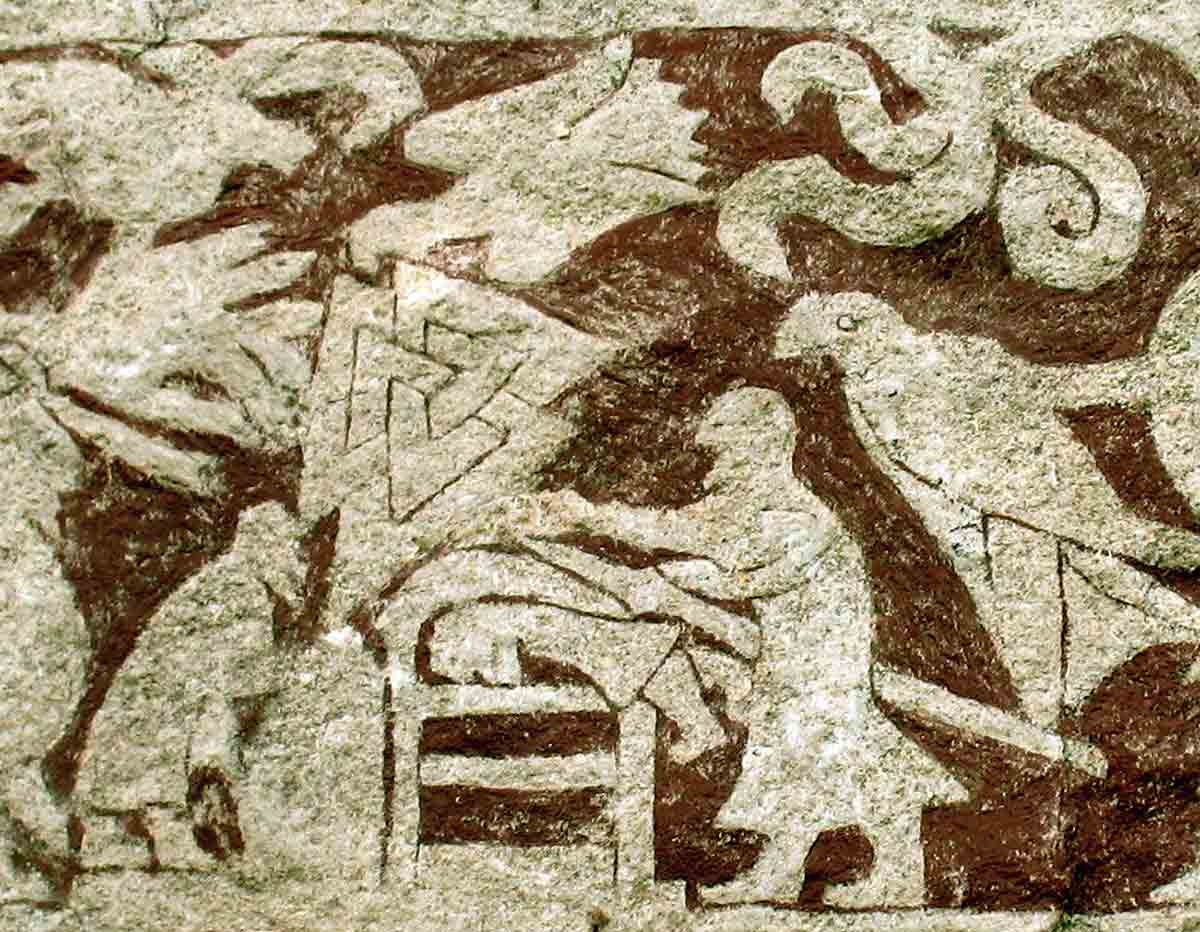
The Blood Eagle was a spectacular form of ritual execution performed by the Vikings during the Early Medieval Period. Many modern scholars debate whether the execution method was actually performed at all, or was just a literary flourish.
The victim would be bound and laid face down with their back exposed. The executioner would then make a long incision down the back and pull apart the skin and muscle to expose the spine and rib bones. Each rib bone would then be broken and torn away from the spinal column to expose the inside of the torso. The next step is where the procedure gets its avian moniker: the lungs would then be taken out of the cavity and splayed on the victim’s back to resemble wings.
In 867, Aella, the king of Northumbria and the killer of Ragnar Lothbrok, was captured by the Great Heathen Army. It was written in the sagas that Ragnar’s kinsmen “carve[ed] the bloody eagle” on his back. Thus was Ragnar’s death avenged, and the terror of resisting the Northmen spread among the English.
8. Lingchi
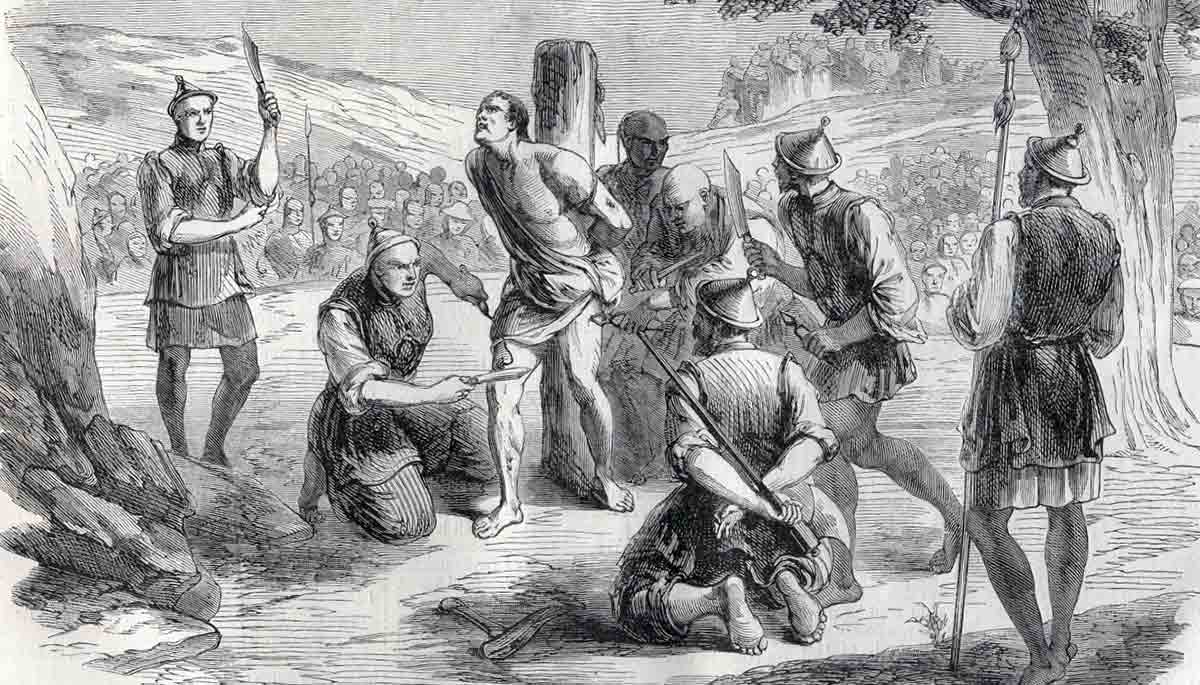
Medieval Europe did not have a monopoly on brutal executions. In China, the highest form of punishment was lingchi, which translates to “slow slicing.” In English, it is better known as “death by a thousand cuts.”
The punishment was reserved for what were seen as the worst crimes imaginable, against both the state and against nature. These included the murder of one’s lord or one’s parents.
Lingchi was, as the name suggests, a deliberately slow death. The victim was tied to a pole, and the executioner would grab hold of the flesh at different parts of the body before slicing it off. The process would start at the extremities and work its way in towards the torso. After great chunks of the victim’s flesh had been cut away, the amputations would begin. Again, these started at the hands and feet and then worked their way in.
The gruesome process was actually banned several times throughout Chinese history as it was seen as too extreme to be allowed in a moral society. However, it was always reinstated. The last known person executed by lingchi was a man named Fu Zhuli, who killed his master in 1905.
This late date makes Lingchi possibly the best documented form of execution on this list, as photographs exist of the whole process. View them at your own risk.