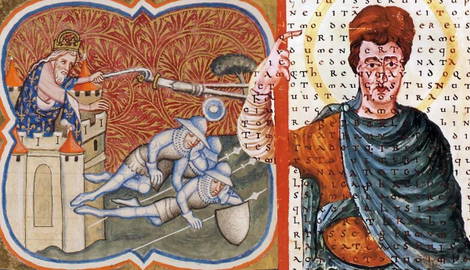

It was customary among the Franks to divide territory among the legitimate sons of the king. Charlemagne had three sons, all but one of whom predeceased their father. That left his youngest son, Louis the Pious, to inherit the vast empire that Charlemagne had conquered.
When it came time for Louis to see to his own succession plans among his own sons, he knew that he needed to plan well to avoid conflict among them for territory and influence. Unfortunately for Louis, he replaced conflict among his sons with conflict between his sons and himself.
The Ordinatio Imperii
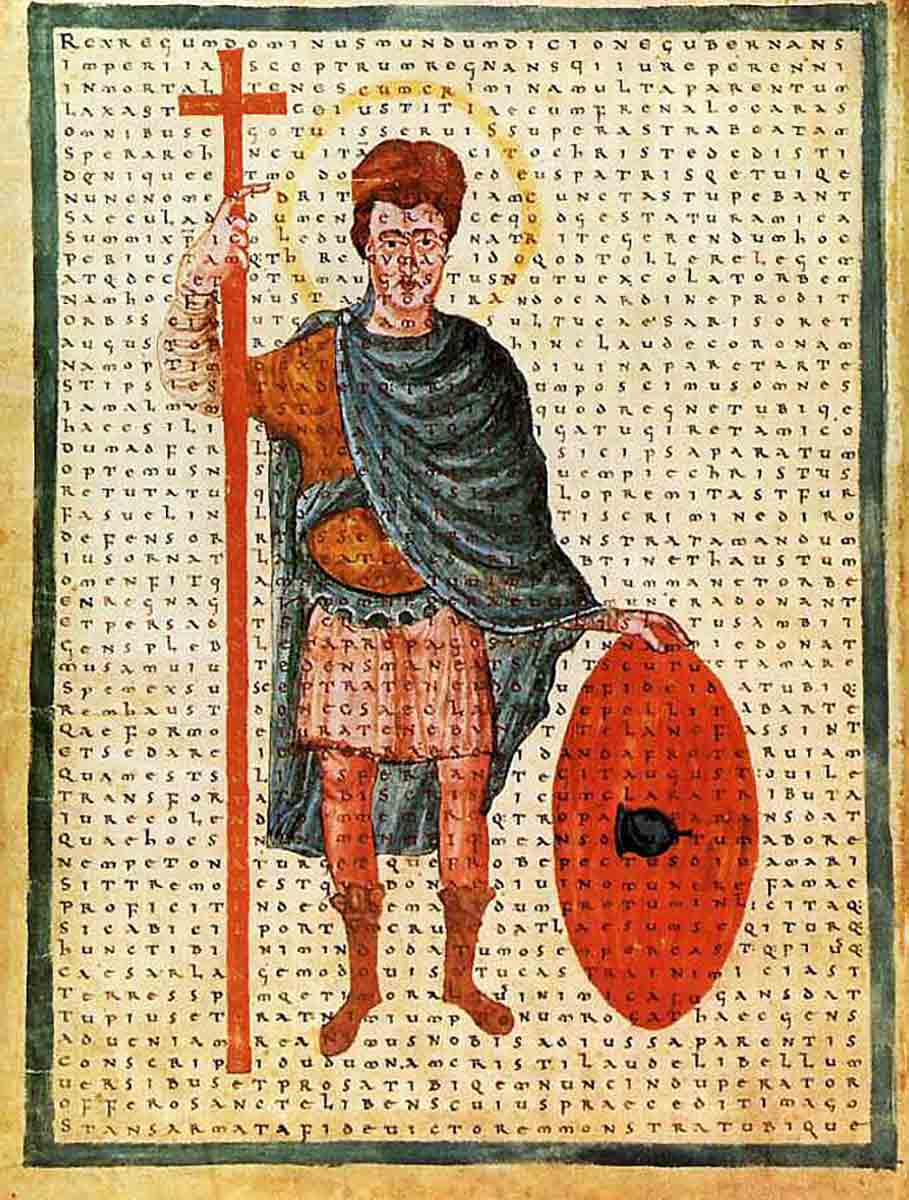
In 817, Louis had the Ordinatio Imperii drafted, which laid out his plan for the succession.
His eldest son, Lothar, would inherit the imperial crown, while his son Louis (usually given the soubriquet “the German” to differentiate him from his father) would inherit the lands of Bavaria and Saxony, and the third son, Pepin, would inherit the lands of Aquitaine. There were provisions that the brothers must see each other at least once a year and give gifts to each other. Charles and Louis were not to make foreign policy decisions without first consulting Lothar. It was a very orderly, logical system.
However, there was one fatal flaw. His brother Pepin, who had been ruling Italy for his father, left his territory to his son Bernard. Bernard was not accounted for in Louis’s succession document. Italy was assigned to Lothar, and as such, Bernard feared total disinheritance.
Bernard of Italy
Rumors swirled that Bernard planned to take military action to secure his inheritance. Powerful Italian magnates supposedly convinced him to separate Italy from the larger Carolingian realm and rule it as an independent king. When Louis received word of this, he was furious and raised an army to march against Bernard, believing that he was about to raise the flag of rebellion.
However, there is little evidence that Bernard was going to do any such thing. In any case, when he heard that an army was marching against him, he knew it would be futile to fight, so Bernard traveled north across the Alps to meet Louis and try to work out a solution.
Rather than a negotiation, Bernard found a cell. He was arrested and, in a show trial, was convicted of treason and sentenced to death. Louis, attempting to show mercy, commuted the sentence to blinding, which had a long history in the Byzantine Empire as a punishment for rebellious princes, but was uncommon in Western Europe.
Bernard was restrained while a stiletto dagger was heated in an open flame until red hot, and was then shoved into his eyes. While a horrific punishment, it is not necessarily fatal. However, Bernard’s blinding was botched. After two days of agony, he died from his wounds on April 17, 818. He was 21.
Louis became paranoid that there were more plots in the works among his extended family. To head off other potential familial rebellions, Louis ordered his surviving half-brothers Drogo, Hugh, and Theoderic to be forcibly tonsured and shut away in monasteries.
The Penitent Emperor
The events of 818 shook Louis. His beloved wife Ermengarde died a few short months after Bernard, which also hit him hard. While it is impossible to know his inner thoughts, based on his later actions, he may have seen his wife’s death as divine punishment for his sins.
For many years after Bernard’s death, he had tried to alleviate his guilty conscience, but the feelings only worsened over time.
In 822, a council was assembled at Attingy consisting of bishops and lords from across the empire. Louis appeared before the council wearing the hair shirt of a penitent sinner. He prostrated himself before the altar and announced to all present that he had ruled unworthily, had dishonored the church, and had committed serious sin.
Among the serious sins he confessed was the killing of Bernard. He said that he had the power to free his nephew and was counseled to do so, but refused, and his actions resulted in Bernard’s death. He also confessed to the mistreatment of his kin by forcing his half-brothers into monasteries, ultimately punishing loyal men.
The spectacle of the emperor prostrating and humbling himself in the way that Louis did at Attingy raised his standing in the eyes of the Church, but vastly lowered it in the eyes of his nobles. They likely saw no issue with Louis’s actions, and throwing himself on the mercy of the Church made Louis appear weak.
Succession Complications
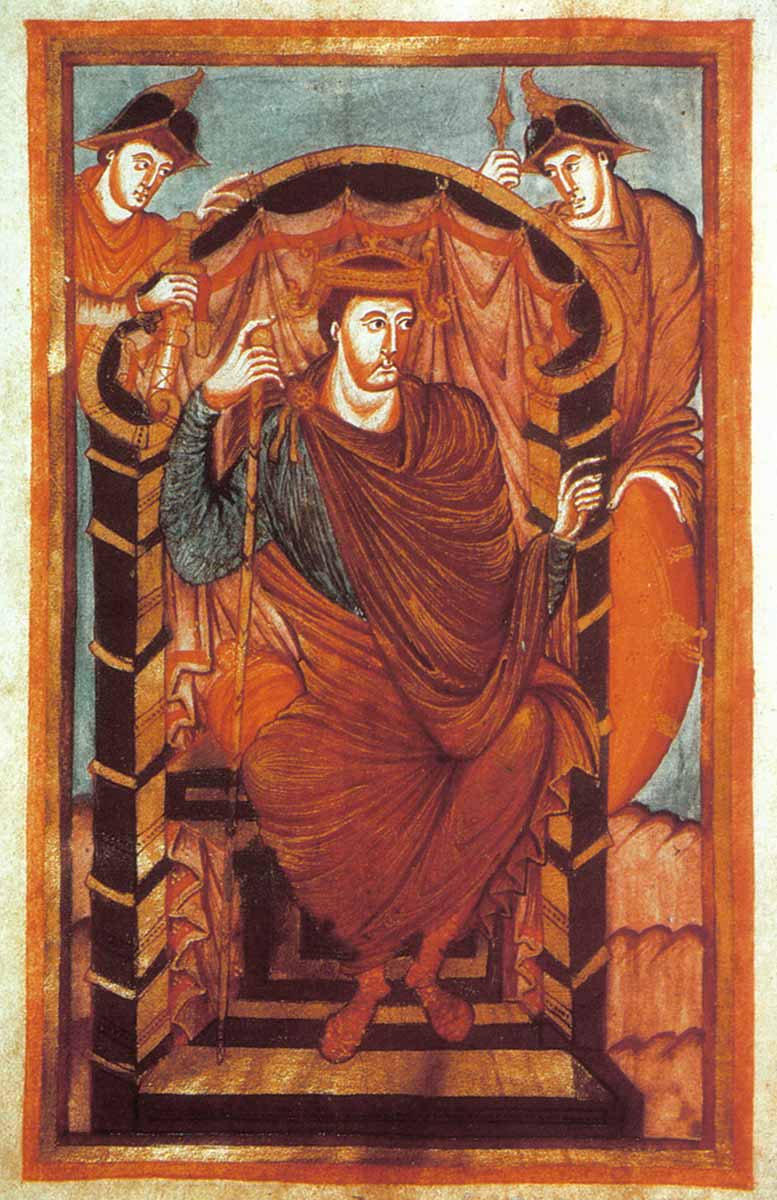
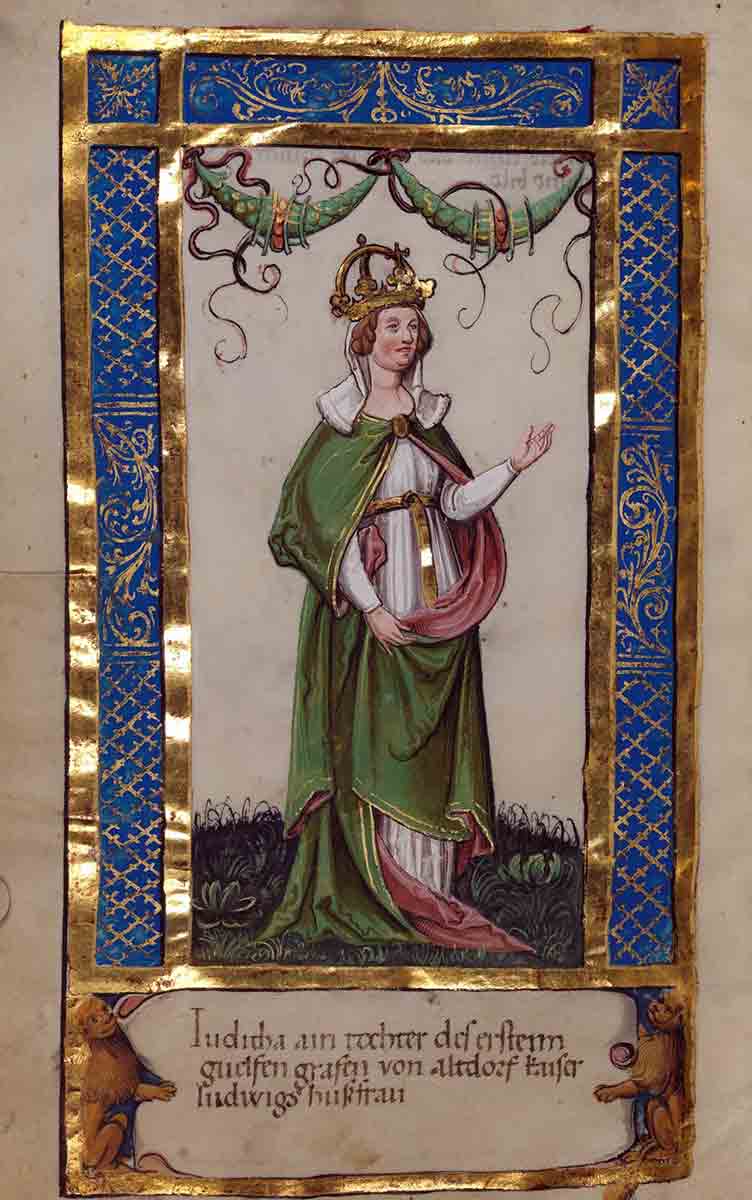
In 823, Louis’s new wife, Judith of Bavaria, gave birth to their first son. They named him Charles after his grandfather.
Young Charles proved a further complication to the succession plans of the Ordinatio. While by right Charles would be entitled to land, being a legitimate son of Louis, all the land of the empire was already spoken for among the three sons of Ermengarde. There were two choices before Louis: he would either need to conquer more land, a feat easier said than done for the already overextended Carolingian Empire, or he would need to redraw the succession map for the existing land. Louis chose the latter.
He revised the Ordinatio Imperii to give Alemannia, the rich lands between Aquitaine and Bavaria, to Charles, depriving Lothar of a portion of his promised inheritance. This sent a shockwave through the Carolingian court. Lothar was, of course, furious over some of his lands being given to his new half-brother, but Pepin and Louis the German were both fearful of the implications.
If the succession could be rewritten, then their lands would shrink every time Louis and Judith had another son. Bernard had tried to negotiate with Louis and had ended up dead. Lothar, Pepin, and Louis the German would not make the same mistake.
The Rebellion of 830
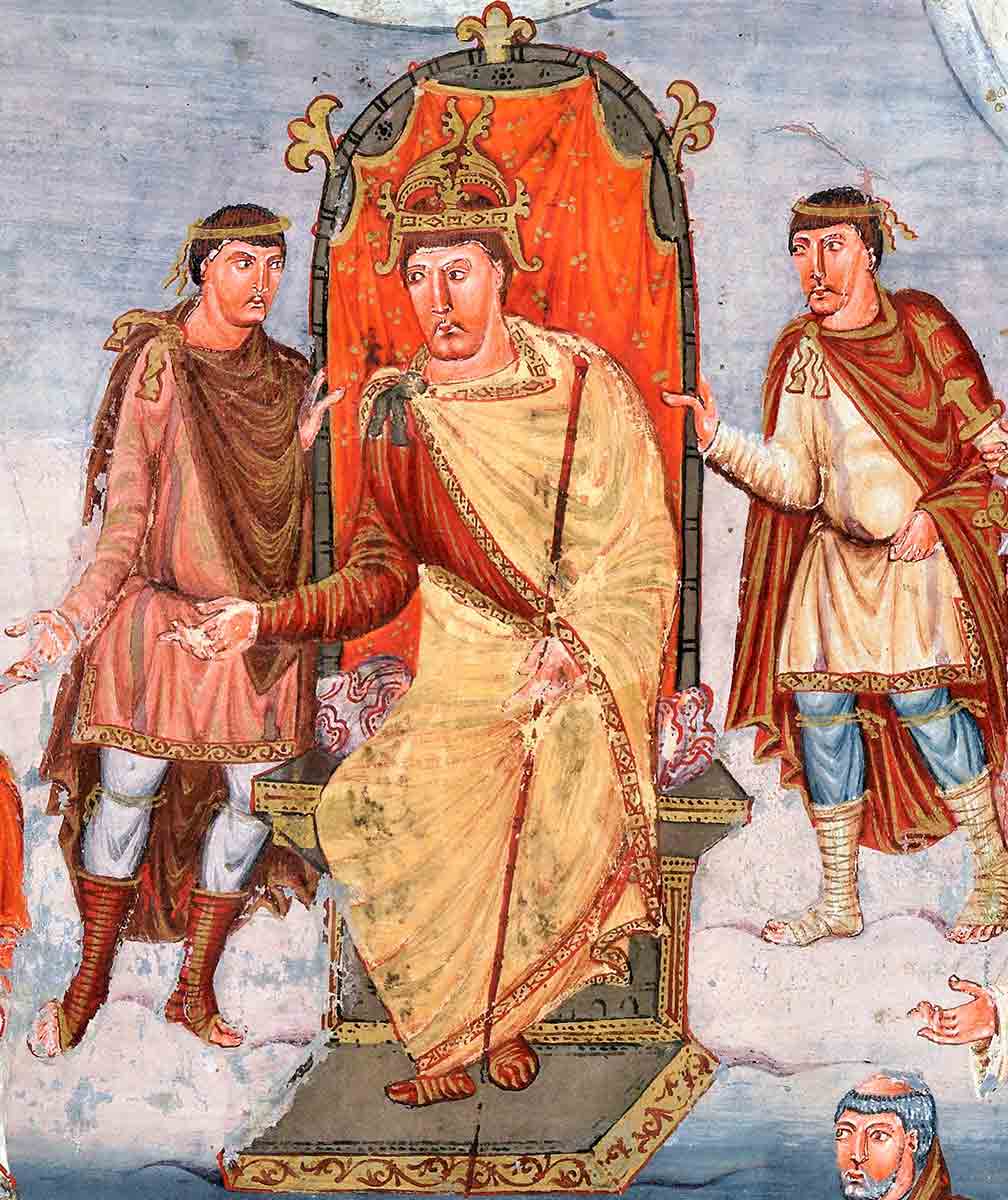
Lothar and his brothers rose up in rebellion against their father. They moved quickly, capturing him at Compiegne. Judith was forced into a convent, and the succession was brought back to the 817 settlement, removing Charles from the document.
The revolt succeeded quickly, but it fell apart equally as quickly. The brothers had agreed on what they were against, namely Judith’s growing influence and the matter of Charles’s inheritance, but they did not have a detailed idea of what would happen after their rebellion.
Lothar was officially co-emperor with his father, but in reality, he was the sole power at the head of the empire as long as Louis the Pious was under his control. His conduct as emperor alienated his nobles and antagonized his brothers, leading to Pepin and Louis the German feeling like they had made a mistake.
By the end of 830, the short-lived revolt was over. Support for Lothar had bled away, and Louis the Pious was restored to his former position.
Perhaps remembering the disaster of Bernard’s death, Louis showed remarkable leniency to his sons and the rebel nobles who had backed them. A few court officials despised by the brothers were exiled as a way for them to save face, but the situation after the rebellion was remarkably like it was beforehand.
Judith’s vows were considered invalid since she was coerced. Judith and Charles were still in the picture. None of the underlying issues that caused the rebellion in the first place were addressed, just swept under the rug.
It would not be long before those issues would flare up again.
The Second Rebellion
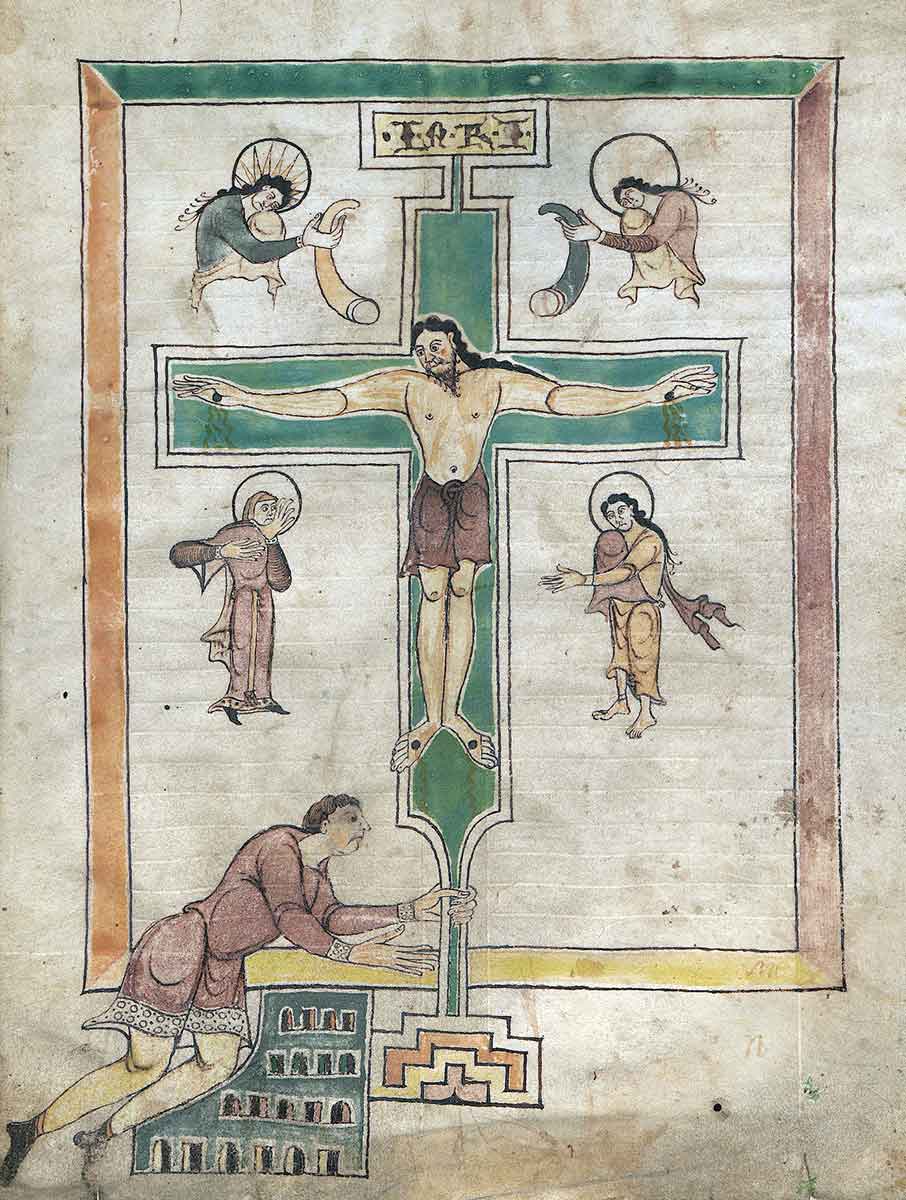
Louis the Pious’s position was extraordinarily unstable following his brief capture and effective deposition in 830. He continued to clash with his nobles and his sons as the empire once again threatened to tear itself apart.
In 832, Louis stripped Pepin of Aquitaine entirely and assigned it to Charles instead. Pepin once again found himself in the position where he feared total disinheritance. With the line that had caused them to rebel once before crossed a second time, the brothers once again rose in rebellion against their father. This time, however, they had a plan.
Louis had no choice but to raise his own army in response. The forces shadowed each other, neither willing to be the one to initiate full-blown civil war. In 833, word reached Louis that his sons were willing to negotiate.
The Field of Lies
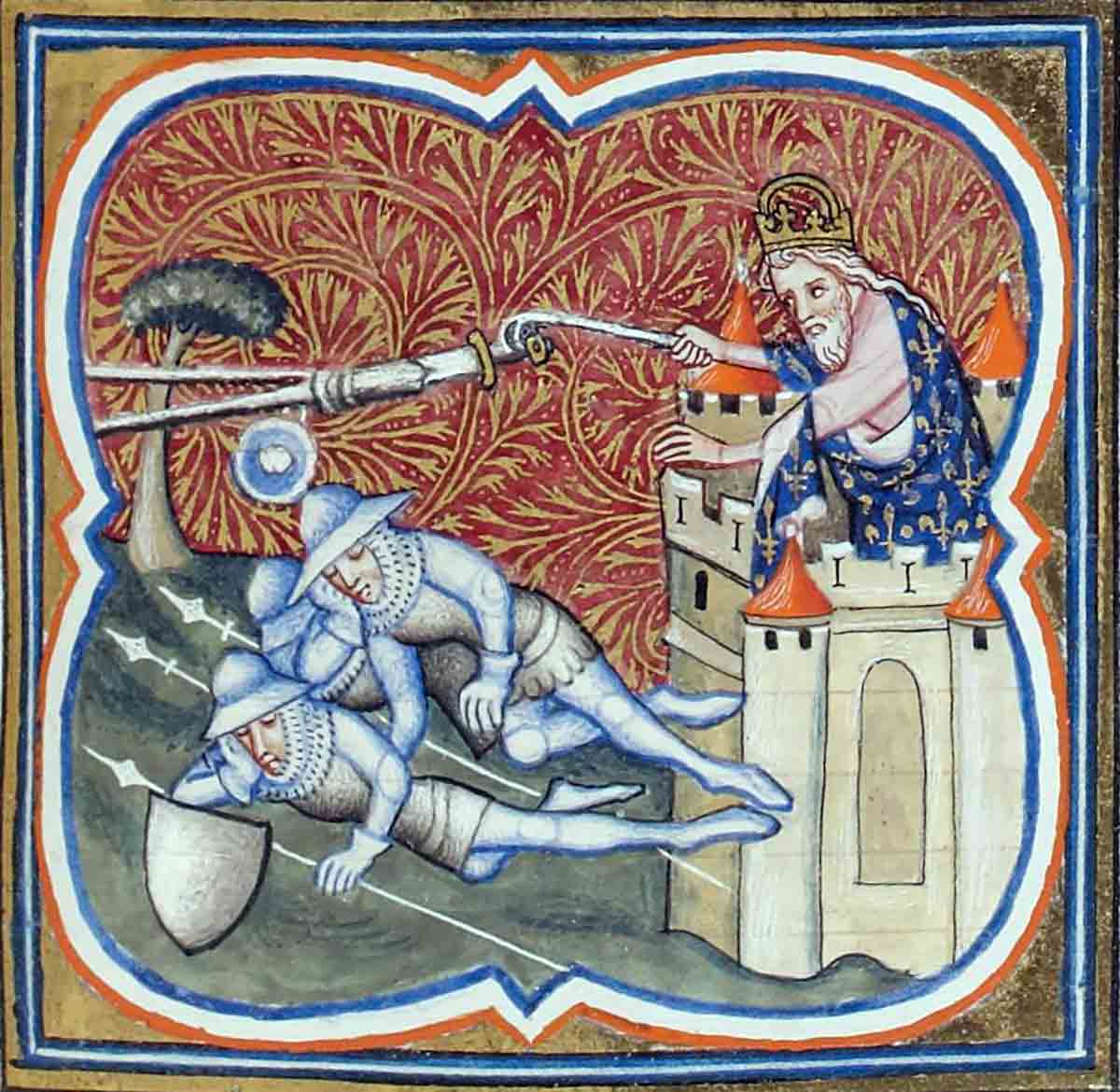
Louis and his sons camped their armies in Alsace. Pope Gregory IV was called in as the negotiator between the two camps. The presence of the pope, Louis hoped, would cause cooler heads to prevail.
However, over the next few days, Louis’s host became smaller and smaller. One by one, bishops and lay lords defected over to Lothar’s camp. Men who had sworn sacred oaths of fealty and service to Louis betrayed him in favor of his sons. It is likely that Lothar and his brothers promised them concessions, increasing their relative power in exchange for joining their side in the rebellion.
The mass breaking of oaths gave this event its colorful name in the sources as the Field of Lies.
As his force disintegrated from under his nose, Louis realized that he had no leverage. If he fought, he would be annihilated. He had no choice but to surrender.
This was only the beginning of Louis’s humiliation. Rather than negotiating in the middle of the field between the two camps as they had done for the previous few days, Lothar and his brothers demanded that Louis walk fully across the field to their camp.
Rather than being accompanied by a mighty army, Louis only had his wife and son to walk with him. It was a profound show of weakness and defeat. When Louis arrived in his sons’ camp, he was not treated as an equal negotiating partner, nor as an emperor, nor even as a father. He was instead treated as a prisoner. He was confined to a tent while his sons decided what to do with him.
Louis had lost, and his sons held all the cards.
To the Victor Go the Spoils
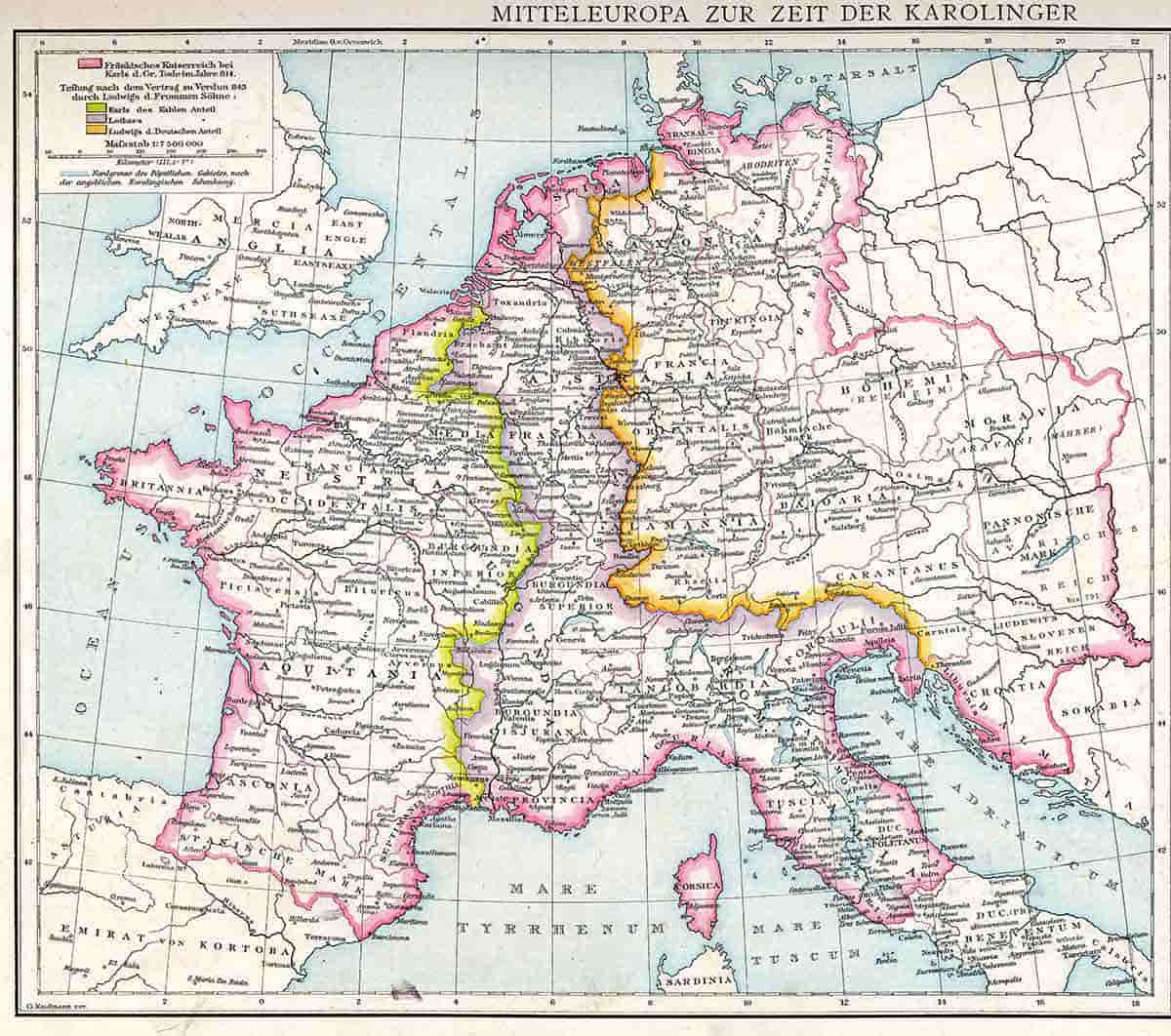
With Louis in their power, the empire was essentially divided into three along the lines of the Ordinatio Imperii. Pepin had Aquitaine returned to him, the younger Louis returned to Bavaria, and Lothar retained the rich middle lands. They once again forced Judith to a convent and exiled her son Charles to Italy.
Their petty and vindictive behavior did not stop there. In a twisted reflection of the aftermath of Bernard’s killing, Louis was once more forced to do penance at Soissons. He was paraded before a synod of bishops as a penitent and made to confess to a whole list of crimes, most of which were fabricated. At the end of the whole affair, Louis laid down his arms and regalia and accepted a state of permanent penance, which essentially meant that he was barred from ruling. He effectively abdicated with this pronouncement, and Lothar became acting emperor in his stead.
However, this whole spectacle left a bad taste in the mouths of the nobles and bishops. Without Louis to unite them, the brothers and their supporters began to quarrel among each other, and the decisions made at the Field of Lies were regretted by many.
So, with growing chaos and no one to stop it, the lords of the land eventually turned back to Louis. He was formally reconciled in 834, his penance was officially ended, and his regalia were returned to him. Judith left the convent, and Charles returned from Italy.
Lothar immediately fled, fearing what his father would do to him now that he was back in power. Louis the German refused to recognize his father’s return to power. Pepin, seeing which way the wind was blowing, was at Louis’s side when his penance was ended to show his support.
Aftermath
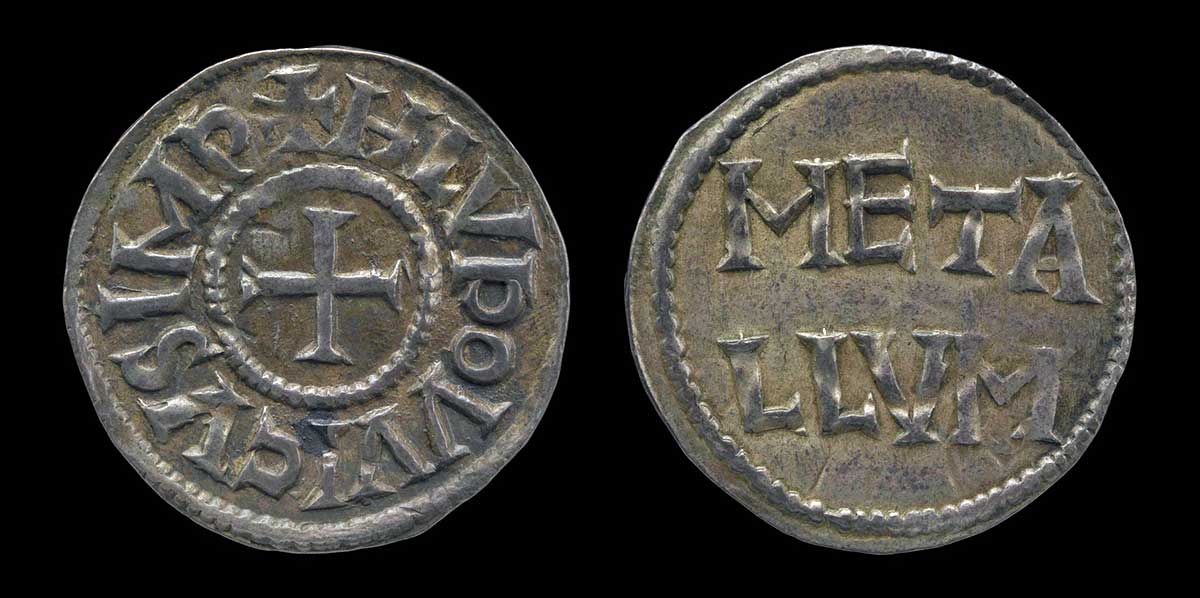
The remainder of Louis’s reign was uneasy and troubled. His sons continued to test him, push boundaries, and position themselves for more power.
After Louis’s death in 840, his sons had no one to fight but each other. Quarrels between them escalated until civil war broke out once again. Unlike all the previous times when the Carolingians raised arms against each other, neither side backed down. The bloody battle of Fontenoy and the peace of Verdun afterward marked the disintegration of the Carolingian Empire as a unified political entity. Instead, the regions of West, Middle, and East Francia devolved into separate kingdoms.
The great irony of his reign was that in Louis the Pious’s attempts to prevent fratricidal conflict among his sons by laying out an orderly succession plan, he caused the exact conflict he was trying to avoid. Like in a Greek tragedy, trying to prevent an event was exactly what led to the event happening.
The man tried to be a good Christian and a good father, but his attempt to do so led to the ruin and collapse of the empire that he spent so much effort trying to hold together.