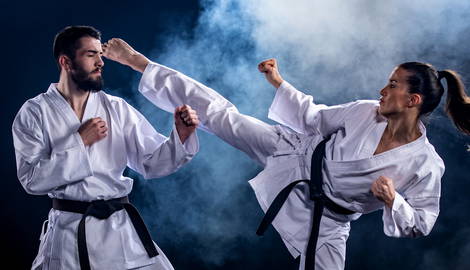

As the Meiji Restoration of 1868 saw industrialization and modernization sweep across Japan, many traditional ways of life were obliterated. The culture of the samurai was effectively destroyed, but their traditional non-armed fighting techniques, known as Jujutsu, would form the basis for many modern martial arts in Japan and beyond. Judo, Karate, Korean Taekwondo, and Brazilian Jiu-jitsu all share this common root.
The Modernization of Japan and the Invention of Martial Arts
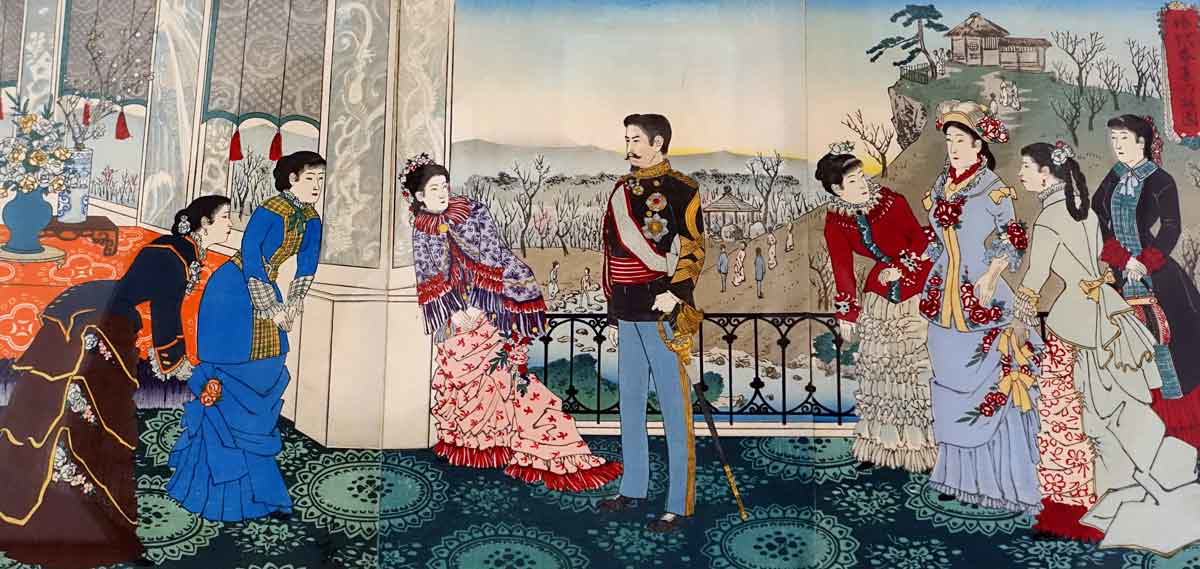
The long 19th century (1776-1914) witnessed a tidal wave of national emulation and a stealthy Europeanization around the world. Against this backdrop, the Edo Period Japan (1603-1867) came to an end. In 1868, the Tokugawa Shogunate government was swept away by a coup d’état, the last Shogun was deposed, and a new Meiji Emperor was installed as the ruler of Imperial Japan.
The Meiji Restoration was an era of change, with the rapid development of heavy industry and widespread administrative and political reforms. Many traditional ways of life, such as the martial way of the samurai, were effectively destroyed. While the samurai class gradually disappeared, their combat expertise found new avenues for expression. The samurai arts of fighting without weapons, collectively known as Jiujutsu, became recognized as valuable systems of physical training and were adapted for self-defense and recreational practice.
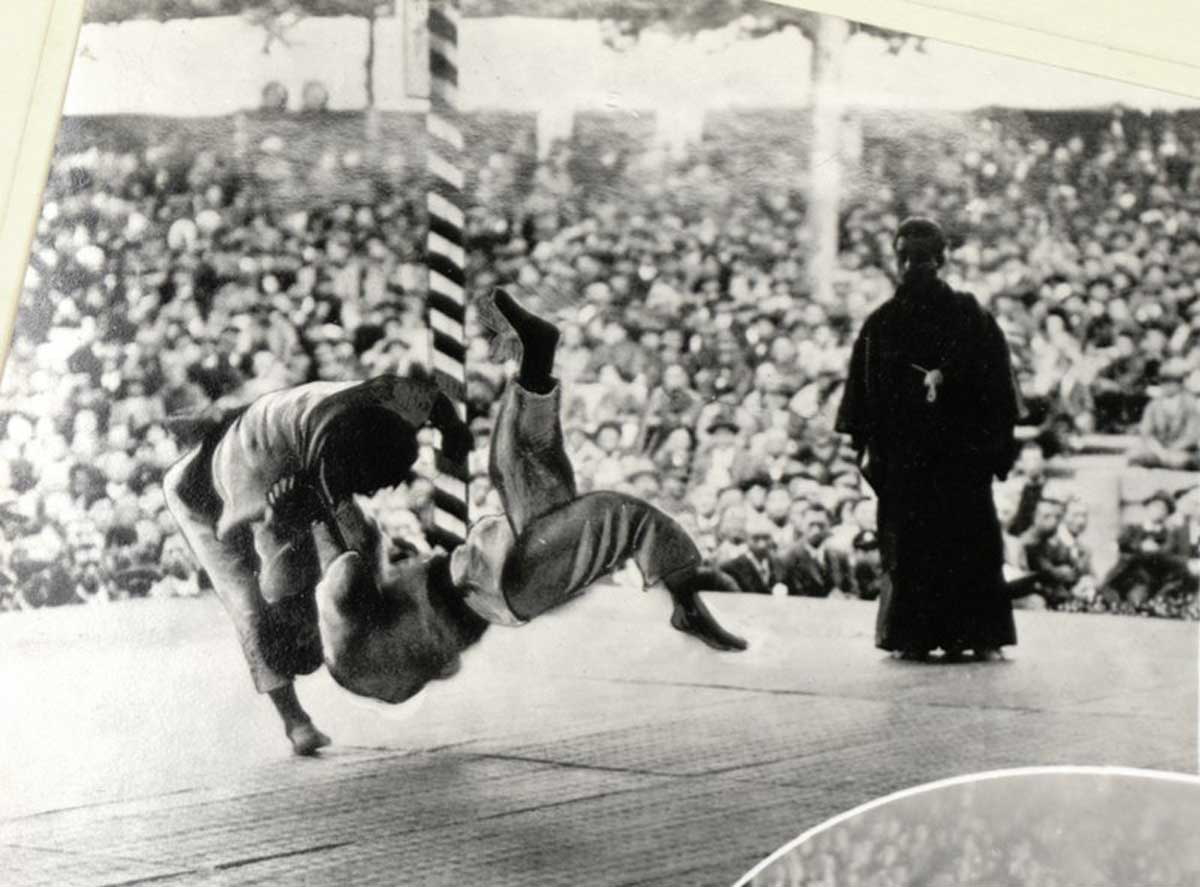
On one hand, enterprising young Japanese men, intoxicated by modernity but enchanted by the lost culture of the samurai, sought to express Japanese culture through the invention of martial arts. On the other hand, as Japan was tasked with creating a combat-ready national army, its training was enhanced by Karate and Judo techniques.
Karate and Judo’s international export led to the rise of other “ancient” martial arts such as Korean Taekwondo and Brazilian Jiu-Jitsu. These were also linked to the creation of a cultural identity, and while they may have drawn on traditional arts, they were recreated within a distinctly modern framework.
Jigoro Kano’s Scientific Judo
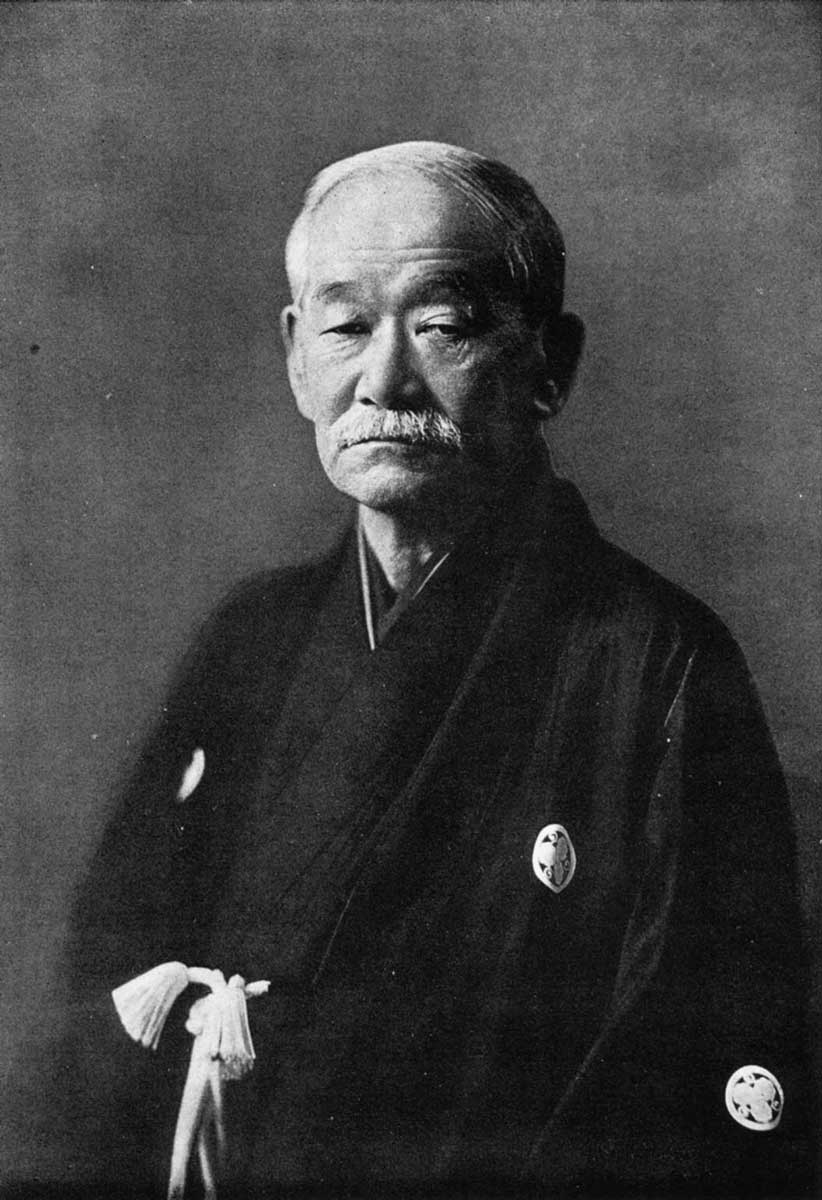
Jigoro Kano (1860-1938) was born in the last days of the Tokugawa Shogunate into a wealthy sake-brewing family of the (former samurai) shizoku class in modern-day Kobe, Japan. While he experienced strict discipline in his traditional samurai style at home, he also received a fine and varied education, preparing him to take advantage of the opportunities offered by the Meiji Restoration.
Kano developed an interest in martial arts following severe bullying while at the prestigious Ikuei Gijuku school in Tokyo. The shame of failing to defend himself led to a keen interest in the jujutsu techniques of the samurai. While at Tokyo University, Kano trained with various jujutsu masters before ultimately blending elements of jujutsu, spiritual-physical philosophy, and Western science to create “Jū-Dō” (the gentle way).
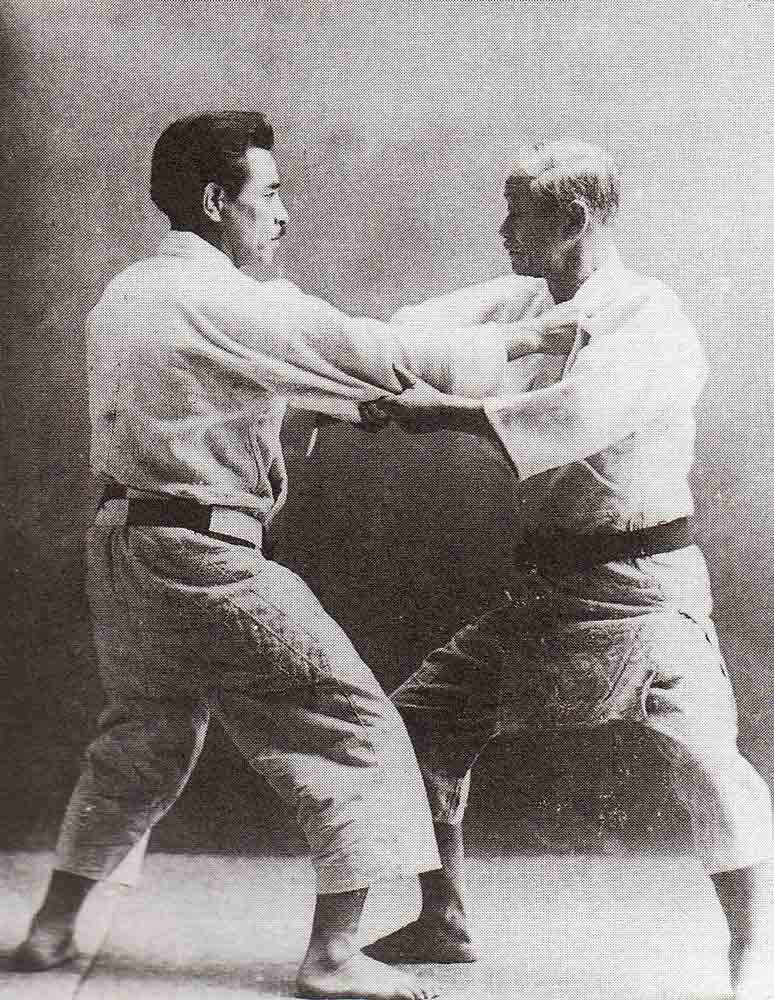
The Western scientific thinking Kano encountered at university left a strong impression on him. His Judo emphasized techniques based on a scientific, biomechanical understanding of the human body. He introduced a modern teaching syllabus and graded belt structure. He emphasized randoori (free sparring) as opposed to the traditional study of Kata (forms).
Accordingly, the classical jujutsu principle of “defeating strength through flexibility” was transformed into a new technical and theoretical system based on “maximum efficient use of energy.” Above all, Kano aspired to make Judo an education for the body and the mind, as well as an aesthetic pursuit.
Following the conclusion of his studies, Kano opened the Kodokan (“place to teach the path”) in Tokyo in 1882. He went on to become his country’s most important educator and a seminal figure in Japan’s modernization. Judo was the first Japanese martial art to gain widespread international recognition and the first to become an official Olympic sport in 1964.
The Birth of Karate
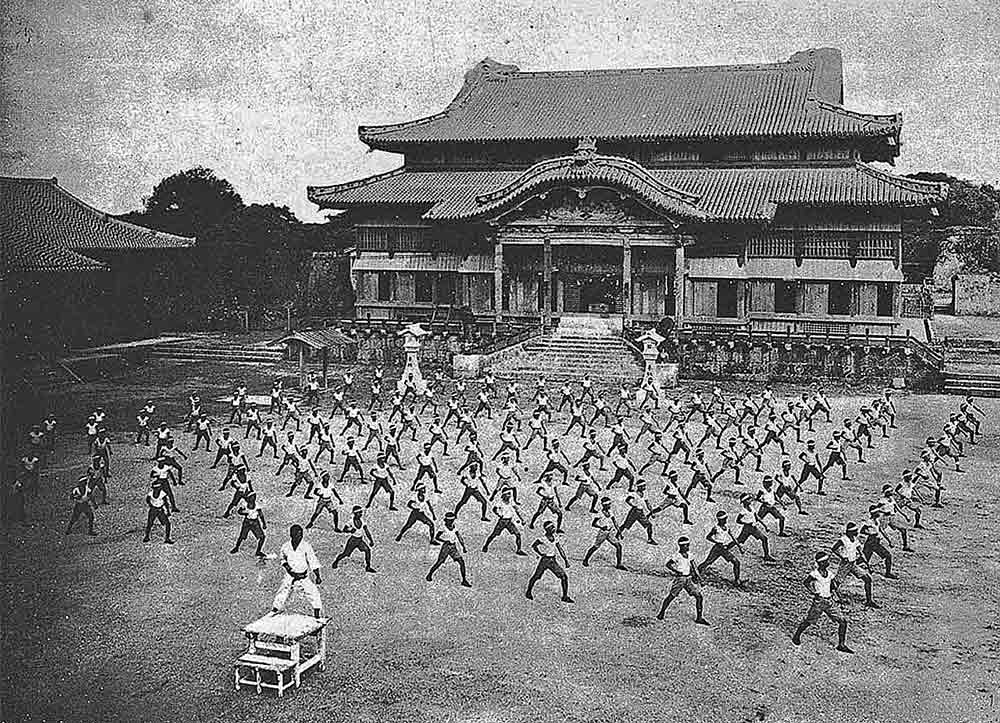
In Okinawa, the unifying thrust of Meiji modernization left an indelible mark on Ankō Itosu (1831-1915), an educated man of noble birth considered by most to be the father of modern Karate. During his early 20s, Itosu studied Okinawan martial arts under the instruction of master “Bushi” Matsumura (1809-1901), and the art of Tōde (lit. Tang Dynasty Hand, a reference to Chinese martial arts). His training later extended to encompass other Okinawan styles, making him the first (known) master to have learned the arts later named Shuri-te, Naha-te, and Tomari-te.
Itosu worked to fuse the various Okinawan combat styles into what would become known as Karate. He created the basic Katas (forms) called pinan (peaceful mind). He also nurtured a young student named Gichin Funakoshi (1868-1957), who would become a major contributor to the development of modern Karate.
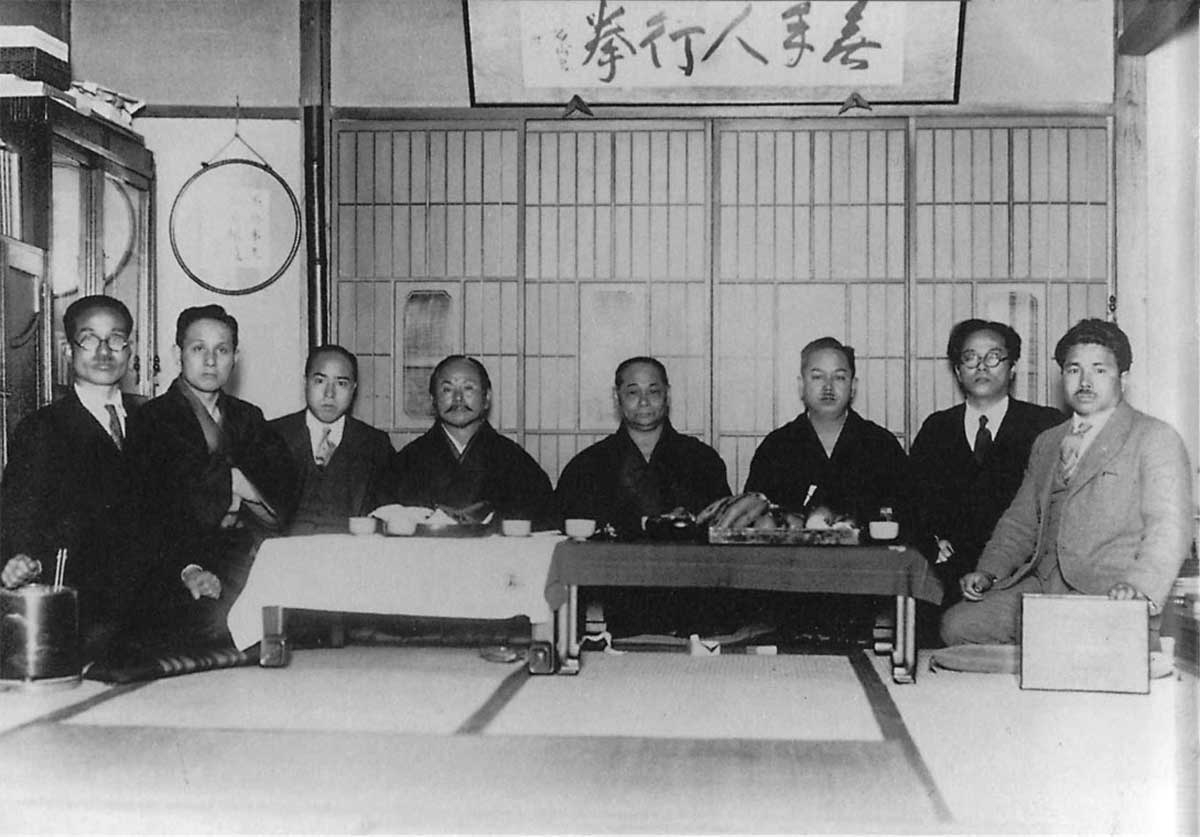
Funakoshi introduced Karate to mainland Japan through a demonstration of Kata and the philosophical and transcendental elements of Karate at the Kodokan in 1922, at the invitation of Jigoro Kano. Funakoshi modified Itosu’s teachings into his famous five maxims, transforming Karate-do from a martial combat into an art encompassing the values of respect, sincerity, and refinement of character. He further introduced the “Twenty Principles” of Karate-do (Shotokan Niju Kun), to augment the ethical dimension of Karate.
In 1949, Funakoshi established the Japan Karate Association (JKA), bringing university clubs and schools under one umbrella, all aligned with his teachings. Today, the Shotokan style created by Funakoshi is the most widely practiced form of Japanese Karate.
Taekwondo: From Japan to Korea
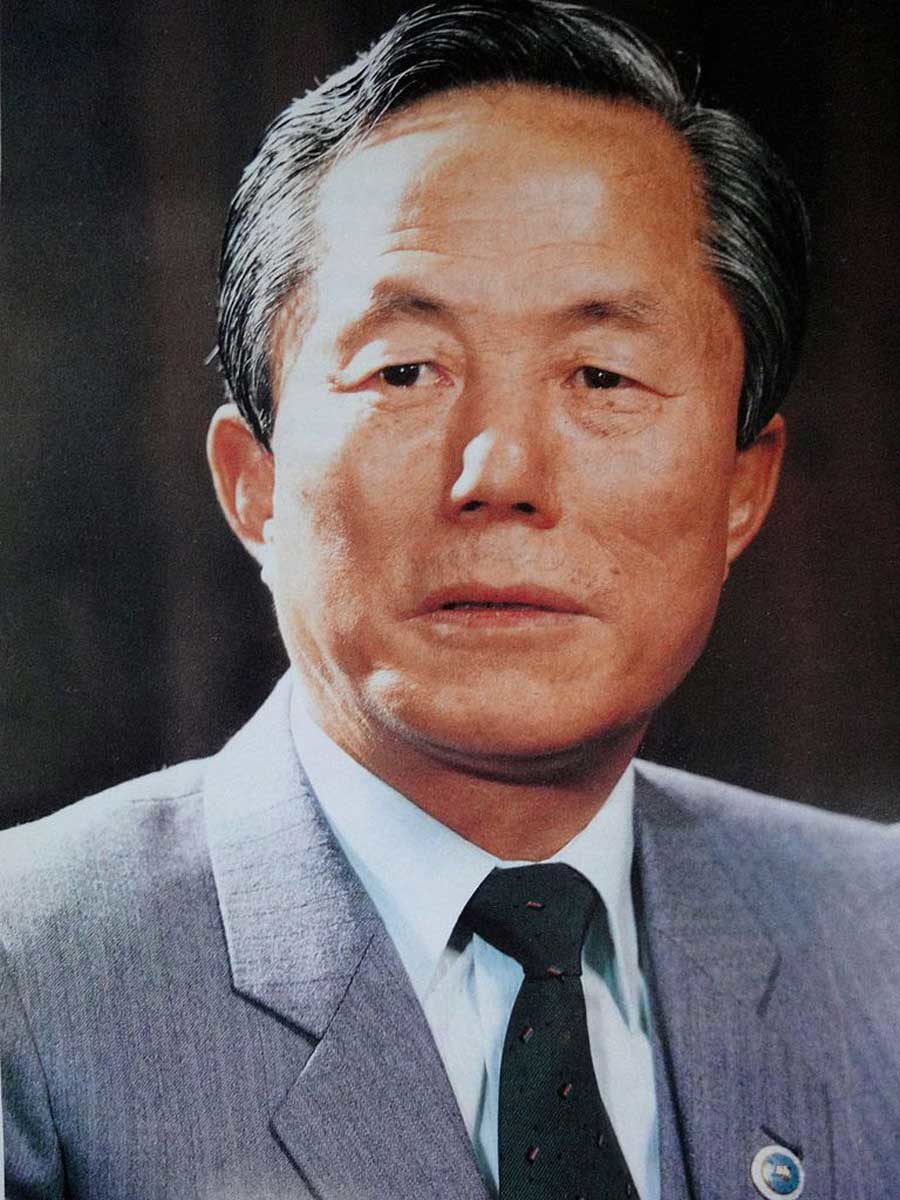
While official histories of Taekwondo characterize it as an indigenous martial art directly born from the ancient Korean art of Taekkyon, Taekwondo is closely linked to Japanese Karate.
The official origins of Taekwondo are linked to Choi Hong-Hi, a Korean War veteran, South Korean military General, and later defector to North Korea. Born in 1918 in Hwa Dae (now North Korea) during the “dark period” of Korean occupation by Japan (1910-1945), Choi made his way into the South Korean military and served as an officer during the Korean War (1950-1955). By his own account, he taught his fellow soldiers how to fight in a style that mixed Taekkyon with elements of Shotokan Karate that he had learned during his time living in Japan.
Following the war, Choi is reputed to have continued refining and promoting his martial system, and in 1955, he officially named it “Taekwon-do.” Nevertheless, the martial techniques that gradually evolved into modern Taekwondo bear no real resemblance to Taekkyon.
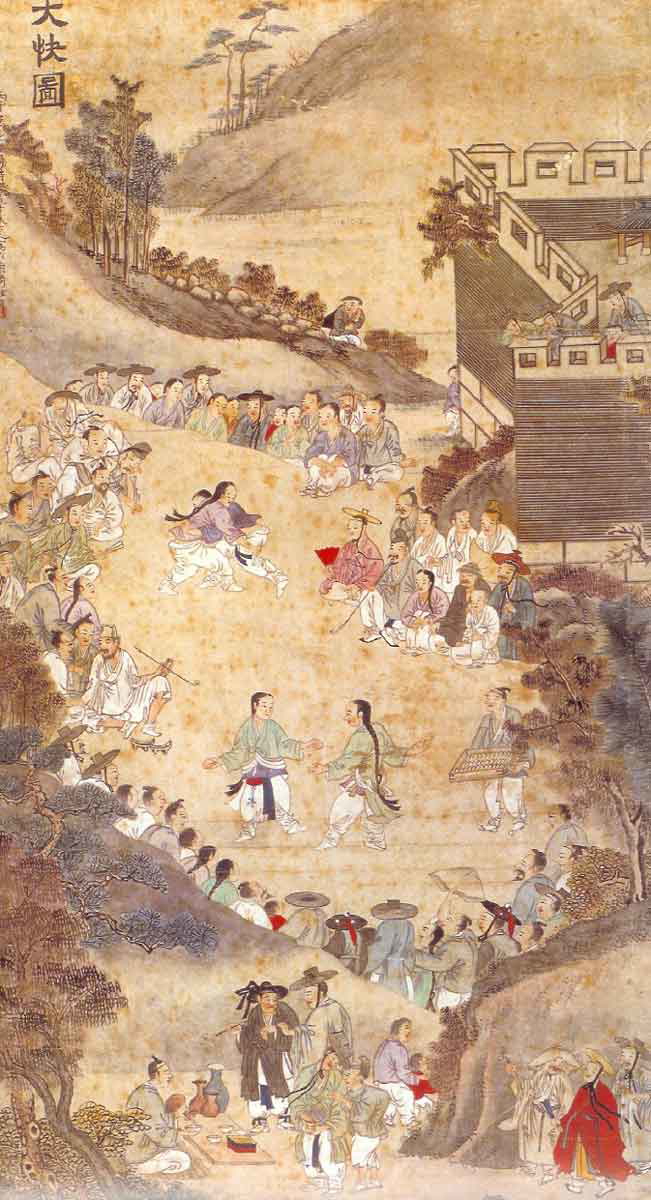
Instead, following the Korean War, Korean Karateka who had previously lived in Japan returned home to open their own training schools. Most proudly highlighted their lineage and used Korean translations of Karate (gongsu / dangsu) to describe their art. In contrast, Choi was almost alone in asserting a background to his teachings that was anything other than Japanese. Nevertheless, he is still considered the principal founder of the art that became an Olympic sport in 2000.
From Judo in Brazil to Brazilian Jiu-Jitsu
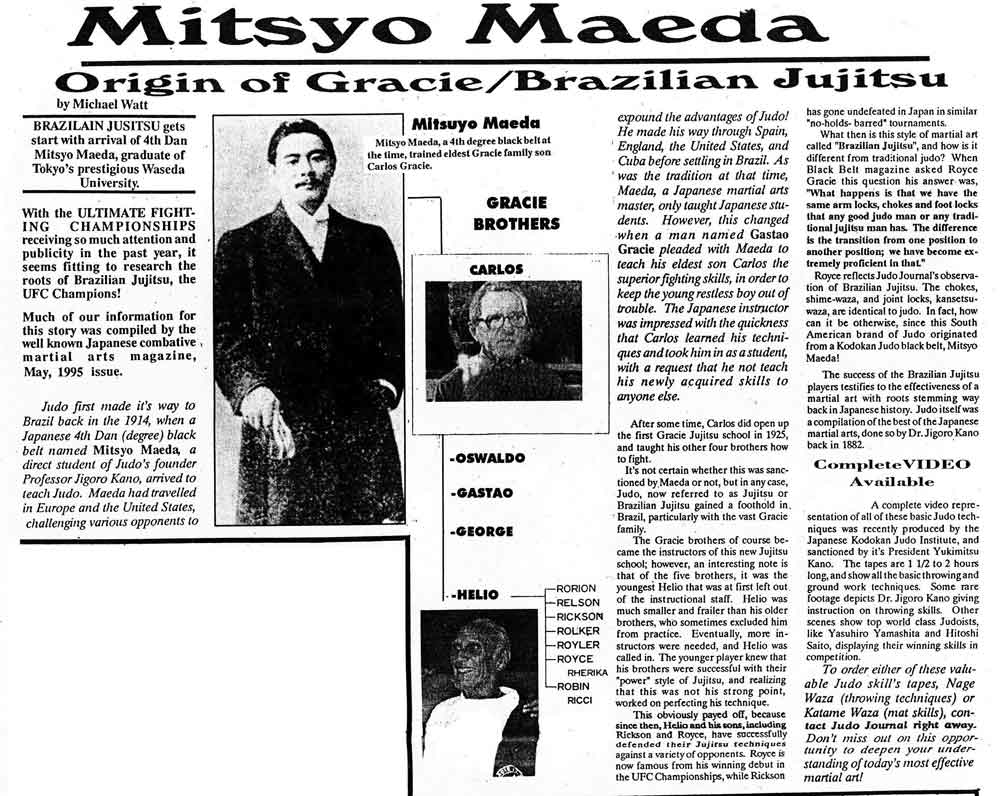
In the case of Taekwondo, the introduction of Japanese Karate to Korea was pivotal. A similar trajectory occurred when Mitsuyo Maeda, a Japanese student of Jigoro Kano, brought Judo to Brazil. Under the tutelage of the prominent Brazilian Gracie family, and closely aligned with the fortunes of the proto-fascist Brazilian Integralist movement, the Judo that arrived in Brazil eventually evolved into Brazilian Jiu-Jitsu (BJJ).
Around 1917, a young man named Carlos Gracie bore witness to a Judo demonstration by Maeda (under the name “Count Koma”) at Belém’s Teatro da Paz. Enthralled by the enigmatic Judoka’s prowess, Carlos is said to have promptly signed up to learn directly from Maeda, quickly becoming his most prized student.
By 1925, Carlos took the step of founding the first “Gracie” School of Jiu-Jitsu in Rio de Janeiro. Yet, it was his younger brother Helio who would eventually become celebrated as the founder of Brazilian Jiu-Jitsu. According to Gracie legend, it was Helio who “transformed” and improved “Jiu-Jitsu” by introducing “leverage” to make it more efficient. Yet the intriguing question of precisely how Helio transformed Maeda’s Judo and how BJJ differs from the earlier form.
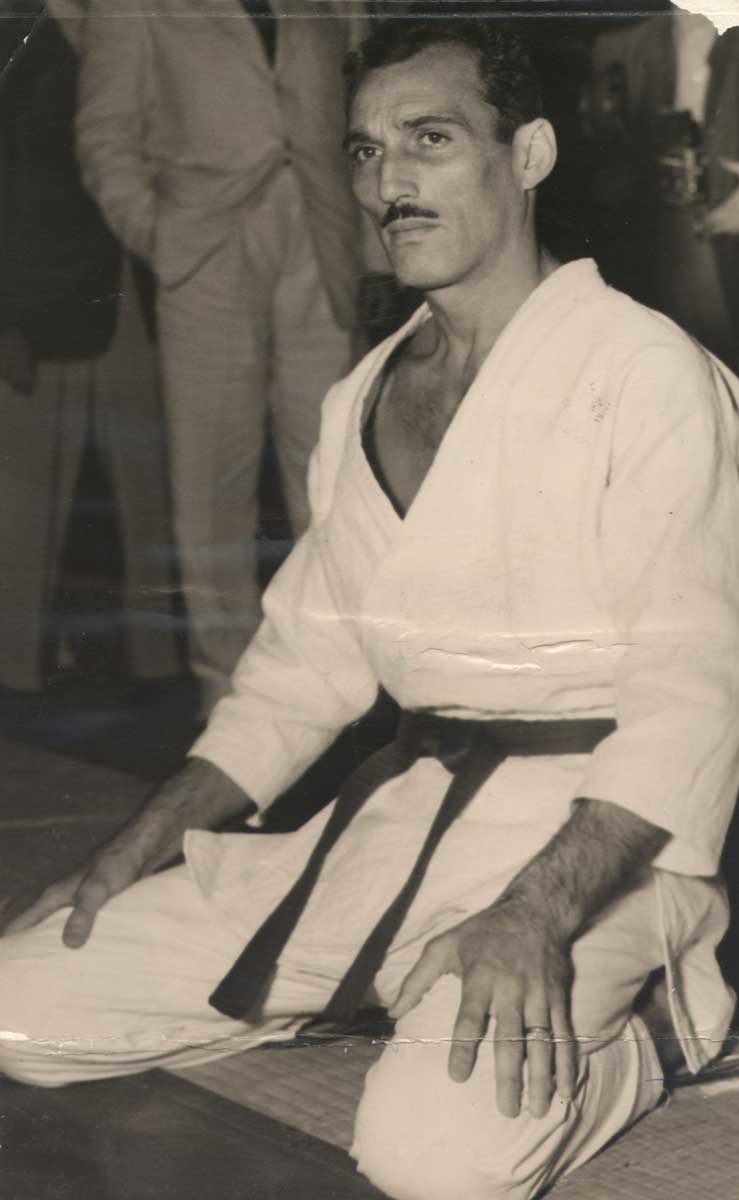
Nevertheless, the Gracie family set off on a remarkable journey of their own. Helio and Carlos became famous for their open invitation Gracie Challenge matches to other martial artists to prove the supremacy of their Jiu-jitsu, greatly enhancing their reputation. They also helped inaugurate the founding myth of Brazilian Jiu-Jitsu: that through the mastery of force, leverage, and positioning, a smaller, physically weaker individual, Helio Gracie, could triumph over a larger, stronger adversary (a myth also taken from Judo).
The impact of this notion turned out to be nothing short of revolutionary. At the inaugural event of the Ultimate Fighting Championship (UFC) in 1993 (a modern televised version of the Gracie Challenge), Helio’s son, Royce Gracie, proved beyond doubt that BJJ stood as the world’s most effective martial art. Today, BJJ is one of the fastest-growing combat sports in the world and remains the primary grappling art in Mixed Martial Arts (MMA) competitions. But much like Judo, Karate, and indeed, Taekwondo, Brazilian Jiu-Jitsu owes its roots to the late 19th-century modernization of Japan.