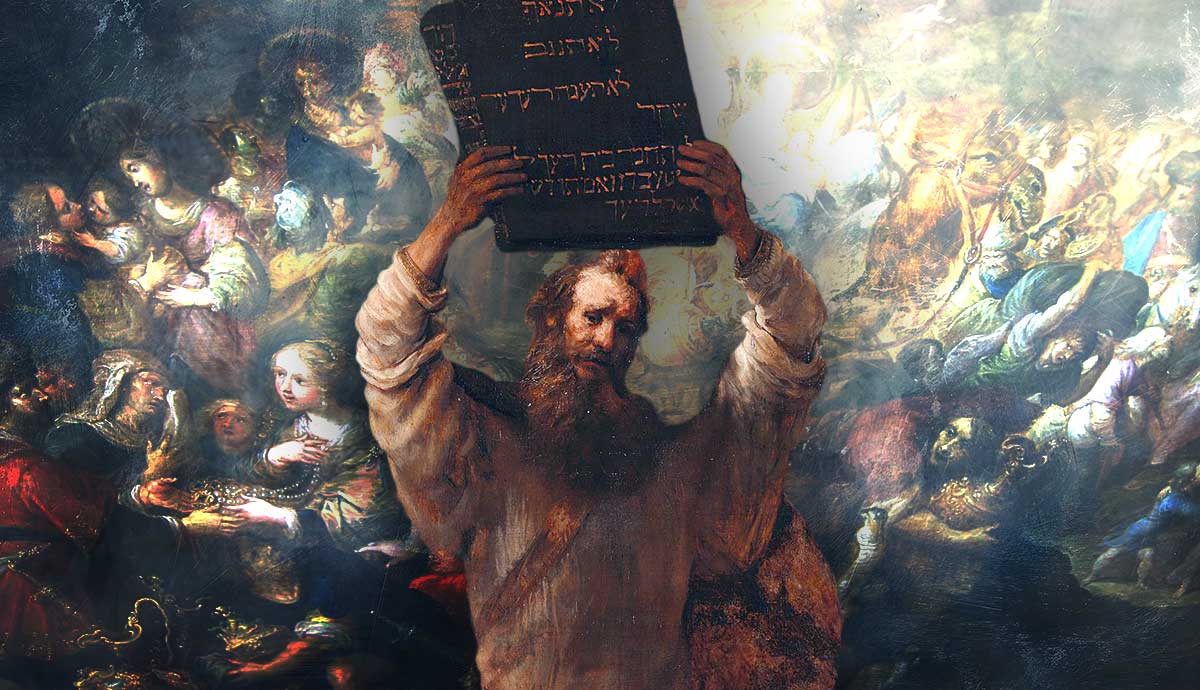

With Thanksgiving upon us, many people may be looking to the Bible to find both reasons and resources to express thankfulness in the midst of difficult times. Biblical expressions of gratitude were rarely polite table graces spoken in comfort. Instead, the most enduring scriptures on thankfulness emerged from the crucible of mortal peril, war, and Roman imprisonment. From Moses leading refugees past Egyptian chariots to Paul dictating epistles in chains, ancient authors did not give thanks for material abundance. They gave thanks for sheer survival, spiritual endurance, and deliverance, establishing a profound template of gratitude that redefined faith across thousands of years.
Deliverance and Song of the Sea in Exodus
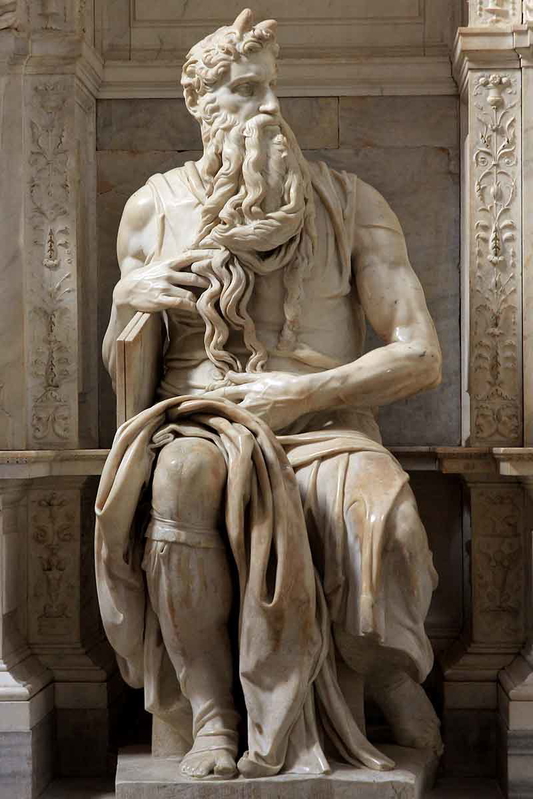
Throughout the Old Testament, thanks were often expressed to God, usually for deliverance from enemies. Probably the greatest example of thankfulness was when the Hebrews crossed the Red Sea, escaping from the Egyptians when God parted the waters. Moses and the people of Israel sang this song immediately after crossing the Red Sea and witnessing the collapse of Pharaoh’s pursuing army.
“I will sing to the LORD, for he has triumphed gloriously;
the horse and his rider he has thrown into the sea.
2 The LORD is my strength and my song,
and he has become my salvation;
this is my God, and I will praise him,
my father’s God, and I will exalt him.
3 The LORD is a man of war;
the LORD is his name.”(Exodus 15:1–3)
At its heart, this passage is an anthem of total redemption. It defines God not as an abstract, distant philosophy, but as an active rescuer who steps into human history to confront oppression, overturn seemingly impossible odds, and make Himself known personally to those He delivers.
Expressions of Personal Thanksgiving in the Psalms
The Old Testament also offers an easy way to find inspiration for thankfulness during Thanksgiving. Turn to any page in the book of Psalms, where David and others expressed their thankfulness to God. Below is an inward-facing soliloquy attributed to King David, in which the speaker preaches to their own soul to actively remember God’s gracious acts rather than slipping into spiritual amnesia.
“Bless the Lord, O my soul,
and forget not all his benefits,
3 who forgives all your iniquity,
who heals all your diseases,
4 who redeems your life from the pit,
who crowns you with steadfast love and mercy,
5 who satisfies you with good
so that your youth is renewed like the eagle’s.”(Psalms 103)
Unlike prayers addressed outward to God or corporate calls to worship, this psalm begins as a self-directed discipline of memory, enumerating five distinct gifts that restore human life from the inside out. It starts at the deepest level of moral failure (forgiveness), addresses bodily weakness (healing), rescues from destruction (redemption), confers honorable identity (crowning with covenant love), and sustains future endurance (renewed youth). The underlying message is that human beings are prone to dwelling on current difficulties while forgetting past deliverances. True praise is not an unthinking emotional reaction, but an intentional recalibration of the mind to remember who God is and what He has done.
The Magnificat and Prayers of Gratitude in the Gospels

In the New Testament, Mary, the mother of Jesus, Praises and thanks God for allowing her to be the mother of the Messiah. In Luke 1, Mary’s prayer is known as the Magnificat; it is a hymn of praise spoken by Mary during her visit to Elizabeth shortly after the Annunciation.
“And Mary said, “My soul magnifies the Lord,
and my spirit rejoices in God my Savior,
for he has looked on the humble estate of his servant.
For behold, from now on all generations will call me blessed;
for he who is mighty has done great things for me,
and holy is his name.”(Luke 1.46-49)
At its core, this passage introduces the main theme of the Gospel of Luke: the “Great Reversal.” God’s kingdom consistently upends human expectations by elevating the poor, the overlooked, and the humble while disregarding worldly pride and self-sufficiency. Mary’s song frames the Incarnation not just as a private miracle, but as the moment God actively stepped in to fulfill His ancient covenant promises by lifting up the lowest among His people.
Jesus Christ Himself provides the simplest of thanks over probably the most important meal ever eaten, the Last Supper:
“And he took a cup, and when he had given thanks he said, “Take this, and divide it among yourselves. For I tell you that from now on I will not drink of the fruit of the vine until the kingdom of God comes.” And he took bread, and when he had given thanks, he broke it and gave it to them, saying, “This is my body, which is given for you. Do this in remembrance of me.”
(Luke 22.17)
The Passover meal commemorated Israel’s redemption from slavery in Egypt, structured around four distinct cups of wine (linked to the four promises of Exodus 6:6–7) and unleavened bread. By inserting his own identity and death into the center of this sacred script, Jesus signaled that the ultimate exodus, deliverance from the bondage of sin and death, was now taking place through him.
The Apostle Paul and Gratitude in Roman Imprisonment
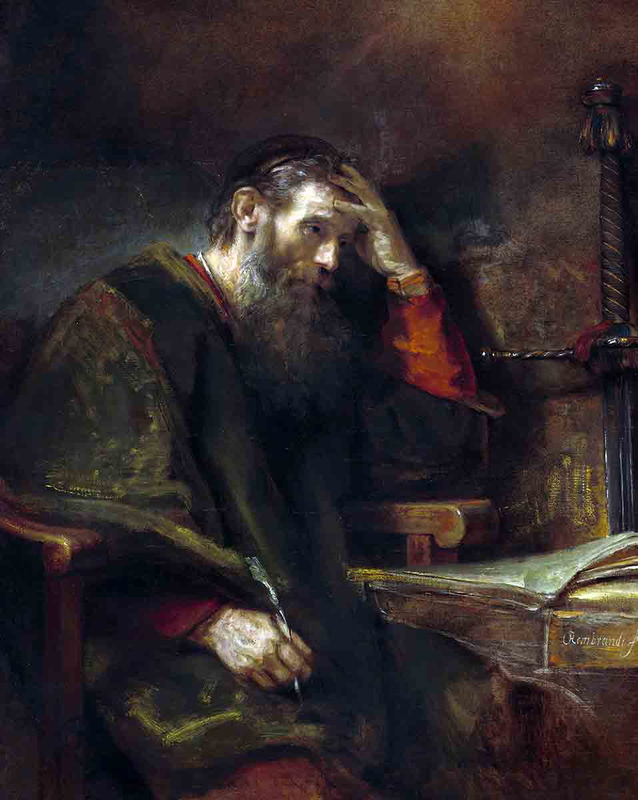
Finally, in Philippians and elsewhere, the Apostle Paul, who often found himself in dire circumstances, encourages others to be thankful. He writes from prison:
“do not be anxious about anything, but in everything by prayer and supplication with thanksgiving let your requests be made known to God. 7 And the peace of God, which surpasses all understanding, will guard your hearts and your minds in Christ Jesus.”
(Philippians 4)
This passage does not promise that offering prayers will automatically change immediate external circumstances or eliminate hardship. Instead, it promises an inward transformation. When you intentionally transfer burdens to God through specific petition coupled with active gratitude, God replaces anxiety with His own divine security. Rather than an individual having to fortify their own mental defenses against fear, God’s peace acts as an armed sentinel standing guard over the intellect and emotions.
Addressed to a community enduring intense social ostracism and persecution in Macedonia, Paul says:
“Give thanks in all circumstances; for this is the will of God in Christ Jesus for you.”
(I Thessalinians 5.18)
This passage defines thanksgiving as an act of spiritual defiance. It asserts that external hardships do not have the power to define reality or rob a person of hope. Paul’s thankfulness comes from his perspective that there is something greater than his temporal circumstances, and that salvation from Jesus Christ is greater than any hardship and worth any hardship that he has borne.
Why Biblical Thanksgiving Rarely Focused on Material Wealth

Rarely in the Bible was a thanksgiving prayer offered for material possessions, though indeed it did happen occasionally. More often, thankfulness was given to God for some other reason. In Exodus, Moses thanks God for defeating the Egyptians, leading the Hebrews to safety. David often thanked God for victory over enemies. Jesus gave simple thanks for food, and Paul gave thanks for simply being alive in prison, still able to spread the Gospel about God’s love.