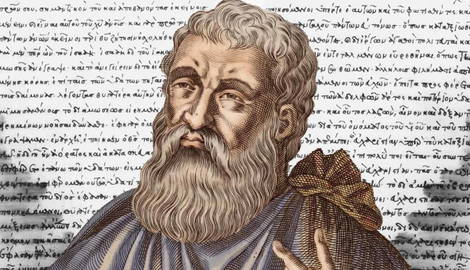

Born in the early 100s in what is now Palestine to Greek parents, Justin sought to find God through various philosophies, including Stoicism and Platonism, until a seaside conversation with an older man opened his eyes to Christianity.
Justin had been searching for truth through various philosophies, while the man he encountered pointed Justin to the Old Testament prophets; men who had proclaimed the truth directly from God through the Holy Spirit, as opposed to being derived through a philosophical system. It was then that Justin determined that Christianity was the true philosophy, and that other philosophies had what he termed the “Logos Spermatikos,” the “seminal word,” the seed in each philosophy that “whatever things were rightly said among all men, are the property of us Christians” in his Second Apology.
What Is the Logos, and How Did Justin Interpret It?
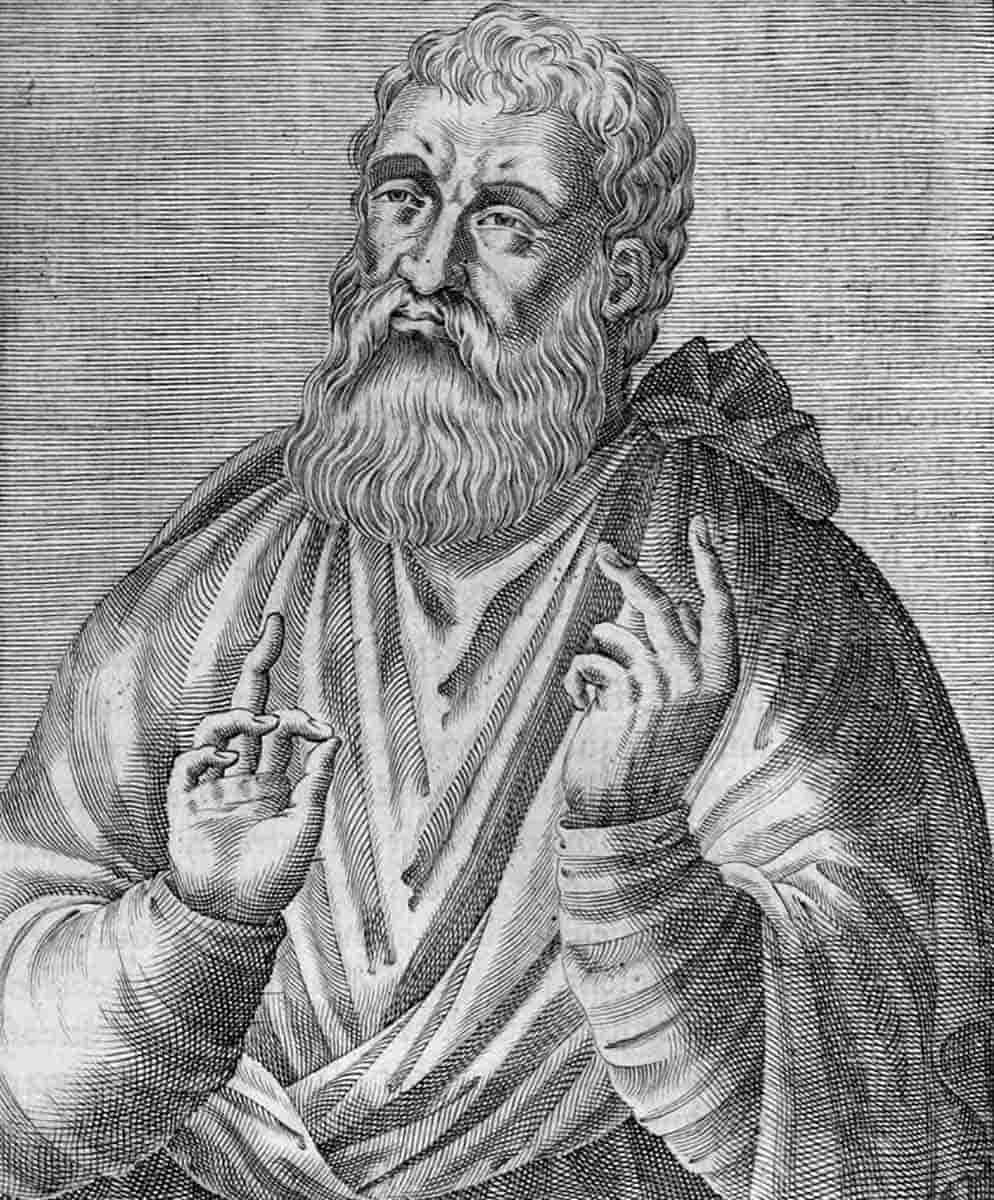
The “Logos” was the Greek concept of “the Word,” generally the idea that there is an underlying principle or order to the universe, and that through reason, it is somewhat knowable. First used by the Greek philosopher Heraclitus in the 6th century BC, the Apostle John took the idea to its ultimate conclusion, claiming that Jesus Christ was the divine, incarnate Logos:
“1 In the beginning was the Word, and the Word was with God, and the Word was God. 2 He was in the beginning with God. 3 All things were made through him, and without him was not any thing made that was made. 4 In him was life, and the life was the light of men…” John 1:1-4, ESV.
And in Genesis 1, God created the heavens and the earth through the spoken Logos, and simply by speaking, God made creation “come true” as the divine Word.
It is this Logos that Justin Martyr points toward in his concept of the logos spermatikos: “For all the writers were able to see realities darkly through the sowing of the implanted word that was in them.”
Justin famously argued that Plato had borrowed his ideas of creation directly from Moses and the Genesis creation story, as Plato’s description of creation has similarities to the first chapter of Genesis.
What Did Justin Martyr Write?
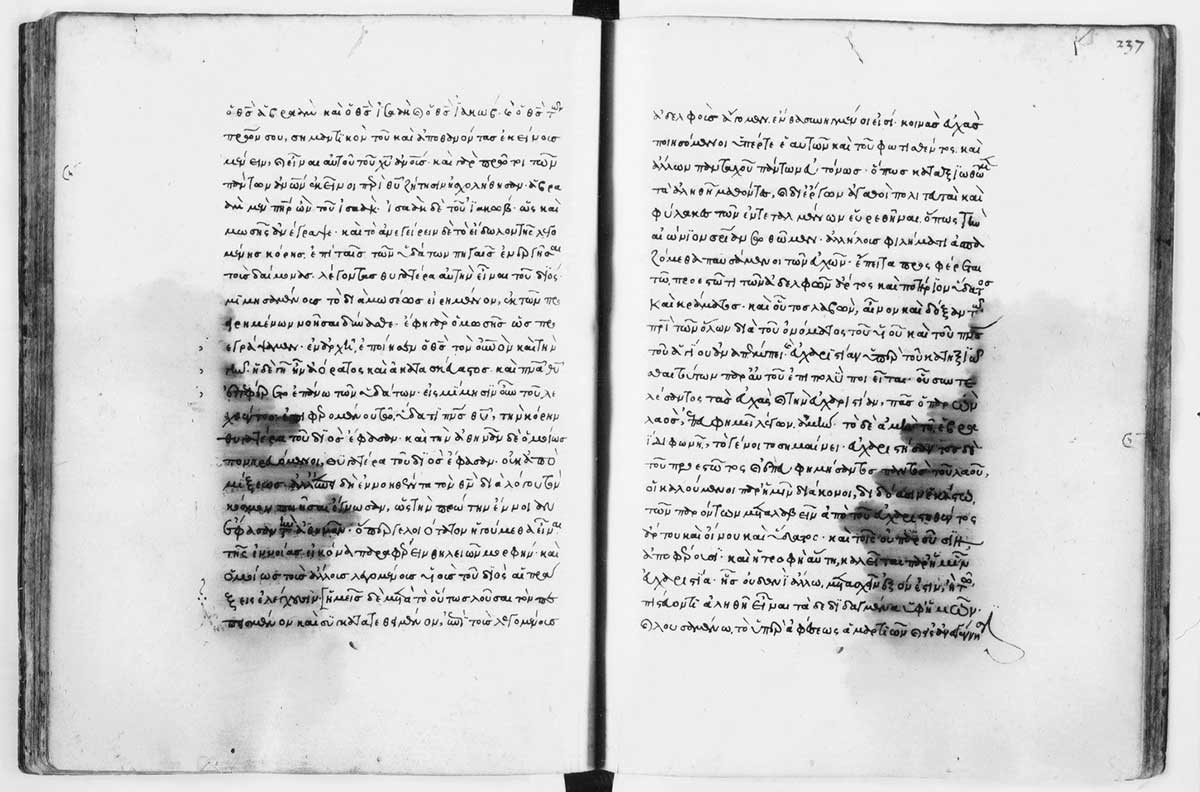
Several of Justin Martyr’s works have been preserved. His First Apology and Second Apology, the Dialogue with Trypho, and On the Sovereignty (or Sole Government) of God still exist. We know that at least four other works likely existed: the Psalmist, his Against Marcion, the treatise Against All Heresies, and On the Soul. Some of these works were mentioned by the Christian historian Eusebius. Several other works formerly attributed to Justin appear to be of questionable veracity as to whether or not he authored them.
The First Apology
The Roman Empire in the second century, led by the Emperor Antoninus Pius, had been arresting and persecuting Christians, often from misconstrued information as to what Christians believed. The early Romans considered Christians to be atheists, as they did not worship any of the Roman gods nor the Emperor. The Romans also accused Christians of practicing cannibalism in the Eucharist, not understanding that it was a representational sacrifice. Christians were also accused of being rebellious, the Romans not understanding that Christians were looking forward to a heavenly kingdom, not an earthly one. Justin defends Christians in writing in Chapter 11:
“For if we looked for a human kingdom, we should also deny our Christ, that we might not be slain; and we should strive to escape detection, that we might obtain what we expect. But since our thoughts are not fixed on the present, we are not concerned when men cut us off; since also death is a debt which must at all events be paid.”
Justin called for the Romans to convict Christians for their actual deeds if they were wrong, not because they called themselves Christians. He charged the Romans with being in the wrong, as Christ himself taught civil obedience, and Christians sought to follow the laws properly. He claimed that to cast judgment on Christians simply for being Christians was immoral and against the well-regarded justice system of the Romans in Chapter 4:
“For from a name neither praise nor punishment could reasonably spring, unless something excellent or base in action be proved. And those among yourselves who are accused you do not punish before they are convicted; but in our case you receive the name as proof against us, and this although, so far as the name goes, you ought rather to punish our accusers.”
The Second Apology
Justin addresses his Second Apology a few years after the first, around 155-160 AD, to the Roman Senate. Justin is addressing the judgments of the Roman Prefect Urbicus for condemning several Christians to death simply for being Christians. The Second Apology is an application of the principles of the First Apology, where Christians were condemned to death for being Christians, not for any actual crimes they committed. He acknowledges the “spermatic word,” that “seed” of truth in many philosophies, but concludes in Chapter 15 that:
“our doctrines are not shameful, according to a sober judgment, but are indeed more lofty than all human philosophy.”
What Does Justin Present in His Dialogue With Trypho?
Justin’s Dialogue with Trypho is an autobiographical conversation, probably in Ephesus with the Jewish Trypho, written sometime after 155 AD. The Dialogue is the longest remaining work of Justin, and the longest known Christian text from the first 150 years of the religion. It is a general defense that the Old Testament was fulfilled in the Christian faith, that Jesus Christ:
“is the new law, and the new covenant, and the expectation of those who out of every people wait for the good things of God. For the true spiritual Israel, and descendants of Judah, Jacob, Isaac, and Abraham (who in uncircumcision was approved of and blessed by God on account of his faith, and called the father of many nations), are we who have been led to God through this crucified Christ.”
Justin defends against the idea that the feasts and rites of Judaism are necessary for salvation, and that they are all pointing to Christ and were necessary because of the sins of the Jewish people. The Dialogue is full of Old Testament quotations, showing that Justin has a deep familiarity with the Old Testament and Judaism, despite not being a Jew.
What Happened to Justin in the End?
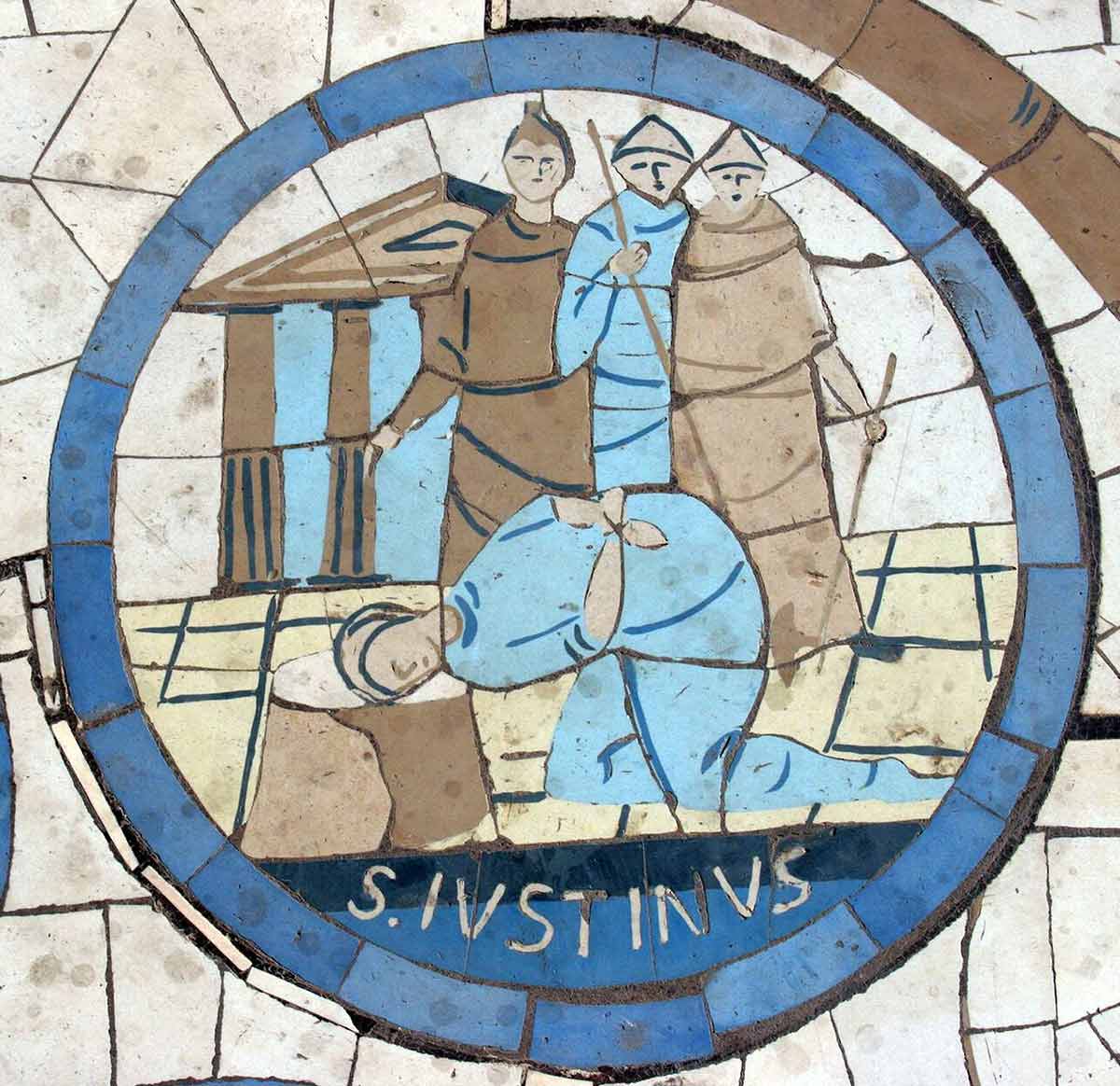
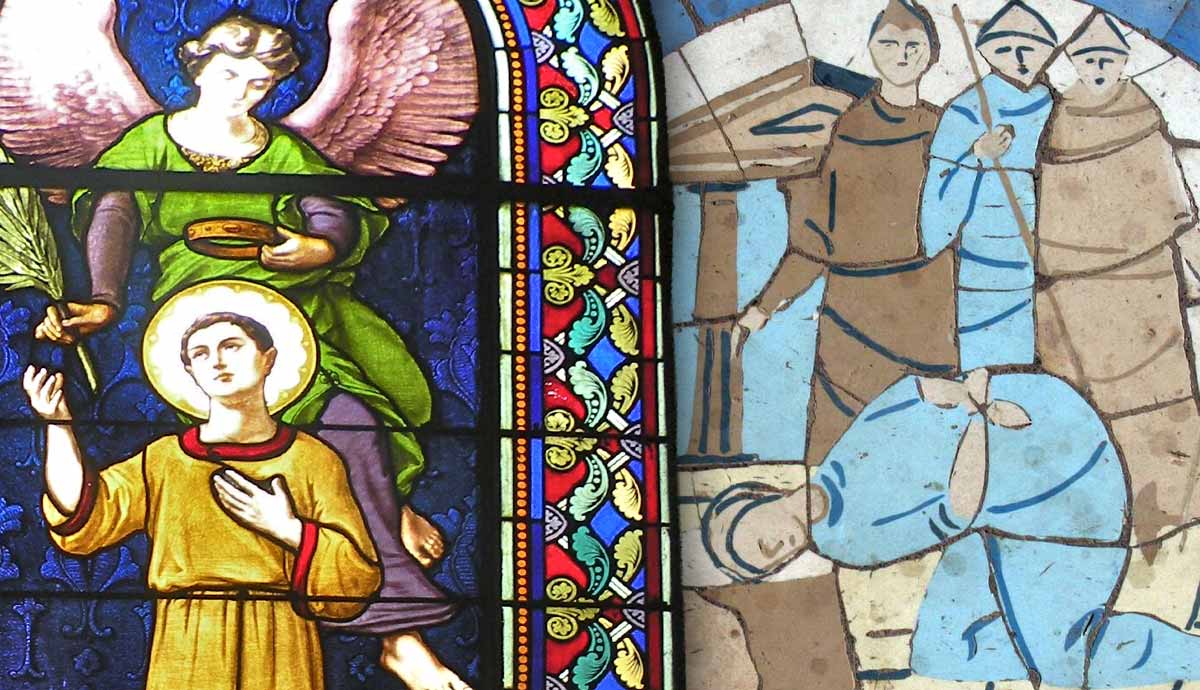
Justin died as he lived: proclaiming the philosophy of the Gospel of Jesus Christ. In about 165 AD, Justin was brought before the Roman prefect Rusticus by his arch-rival Crescens. Justin had even predicted in the Second Apology that Crescens would be the reason he would be martyred:
“I too, therefore, expect to be plotted against and fixed to the stake, by some of those I have named, or perhaps by Crescens, that lover of bravado and boasting; for the man is not worthy of the name of philosopher.”
Crescens was an anti-Christian cynic philosopher who had clashed with Justin, and Justin claimed that he proved Crescens to be ignorant. While there is no direct link that Crescens had Justin killed, Justin’s student Tatian accuses Crescens. When brought before Rusticus with several other students, Justin refuses to sacrifice to the Roman gods, saying:
“We hope to suffer torment for the sake of our Lord Jesus Christ, and so be saved. For this will bring us salvation and confidence as we stand before the more terrible and universal judgment-seat of our Lord and Savior.”
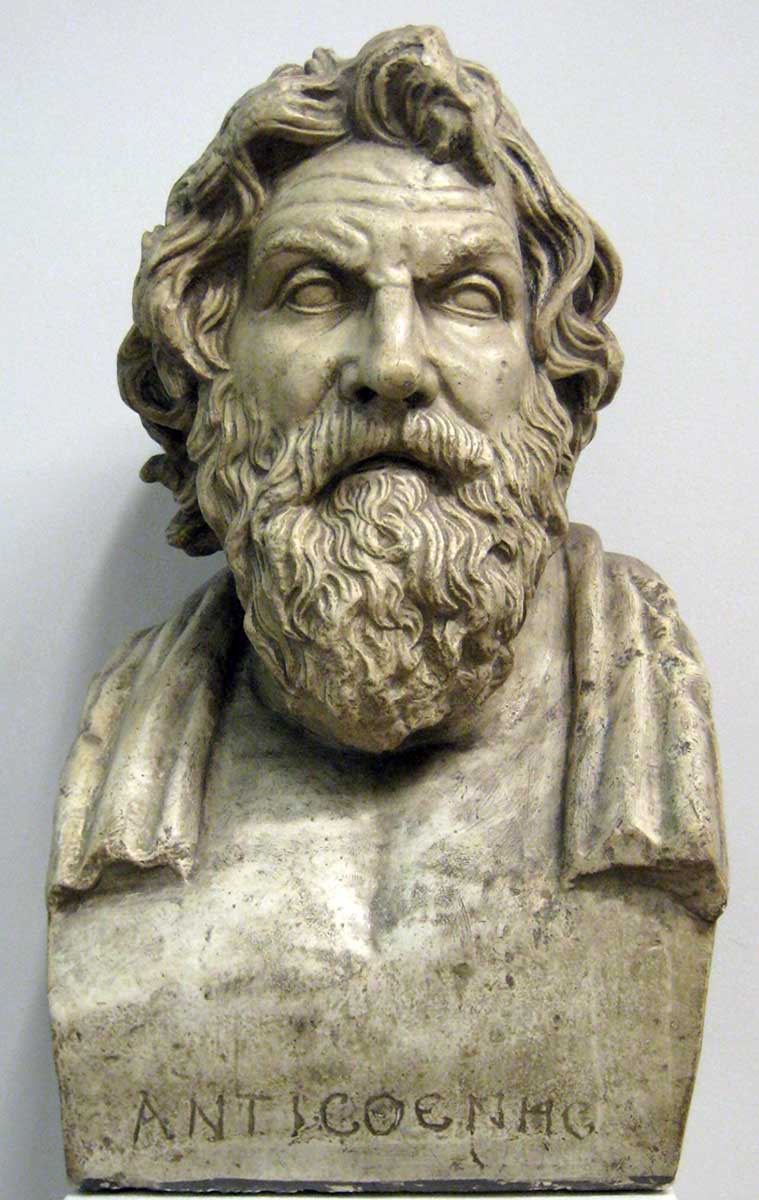
In looking at Justin’s philosophy, his conclusions about Christianity are both deep and simple at the same time. He holds the idea of the divine Logos in high esteem and sees Jesus Christ as its incarnate form, and that ultimate reason can come from no other source than the God of the New Testament. His defense of Christianity against the Romans relies on the simple matter of the moral goodness of its teachings and its citizens. His defense of Christianity against the Jews is in fulfillment of the Old Testament, and the perfection of Christ makes all other customs unnecessary. His position is that the prophets’ hearing and speaking truth directly from God overcomes all the philosophical meanderings of man’s attempts to figure out God. Within all of his defenses, we find one of the most enduring models of apologetics for the Christian faith. In his final moments, we also see the conviction of a philosopher convinced of his beliefs to the end.