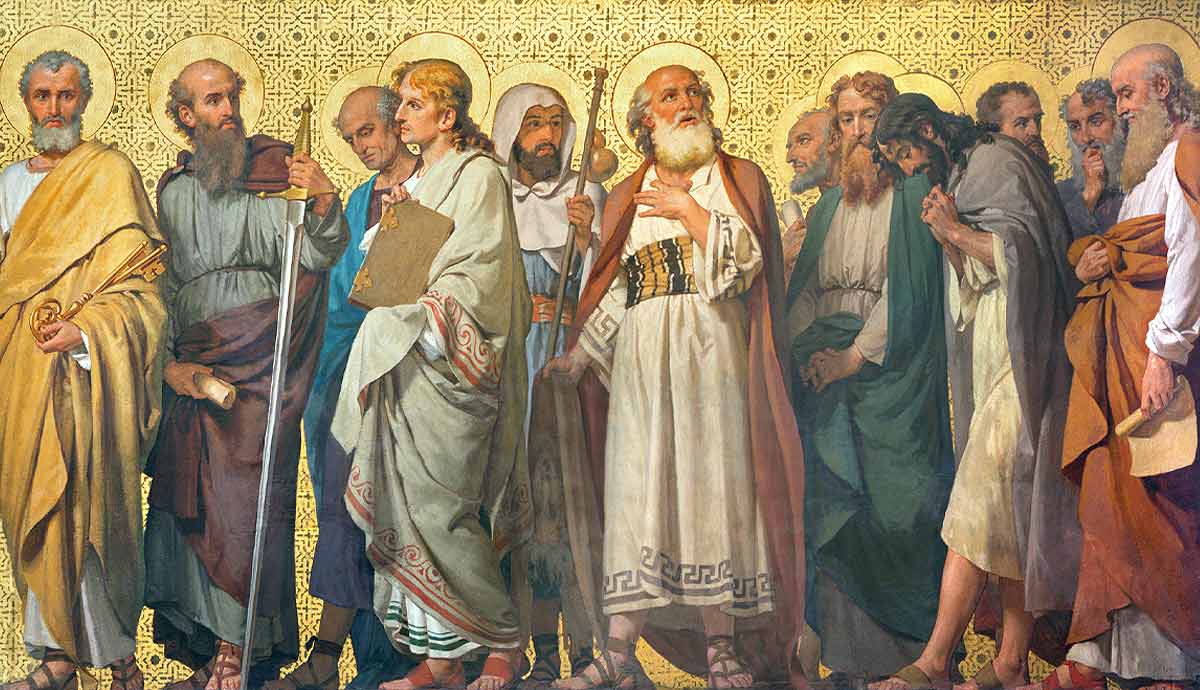

Christianity started in the first century AD as a small religious movement in the Roman province of Judea, led by Jesus Christ of Nazareth and his 12 disciples. After his crucifixion, his followers continued to grow the movement, which was based on his life and teachings. Fast forward to today, and Christianity is the world’s largest religion, with approximately 2.3 billion followers, about 30 percent of the global population.
How Compassion in the Face of Epidemics Fueled Christianity’s Rise

In its infancy, the Christian religion was viewed with suspicion by Roman authorities, and so its adherents were ruthlessly targeted and persecuted. Despite these challenges, the religion expanded rapidly through personal connections and word of mouth.
Its growth in the ancient world was spurred by two plagues – the Antonine Plague and the Plague of Cyprian. The maladies hit the Roman Empire in 165 AD and the 200s. At the time, Christians stood out because they took care of the sick while many pagans abandoned the sick in a desperate attempt to avoid infection. Their kindness caught the eye of many Romans, leading thousands to join the faith. Christianity also preached equality at a time when women were often treated as less important by Roman law and society. Because of this, many women joined the religion. By the early 300s, specifically around 312 AD when Constantine the Great joined the faith, it had become a major force.
How Christianity Transformed from a Persecuted Cult to Rome’s Official Religion

Another major turning point came when Roman Emperor Constantine saw a cross in the sky in 312 AD. This was just before he battled his rival, Western Roman Emperor Maxentius, at the Milvian Bridge north of Rome. After winning the crucial battle, Constantine credited the victory to the Christian God and subsequently issued the Edict of Milan in 313 AD, alongside co-emperor Licinius. It declared the legal tolerance of Christians throughout the Roman Empire.
While Constantine’s conversion transformed Christianity from a persecuted group to a favored state religion, the Roman Empire would not be declared an officially Christian state until 380 AD under Roman Emperor Theodosius I. This was after he issued the Edict of Thessalonica, which formally acknowledged Nicene Christianity as the official state church of the Roman Empire. It is estimated that by 350 AD, Christians made up approximately 50 percent of the Roman Empire’s population.
How Christianity Spread Across Medieval Europe and the Silk Road
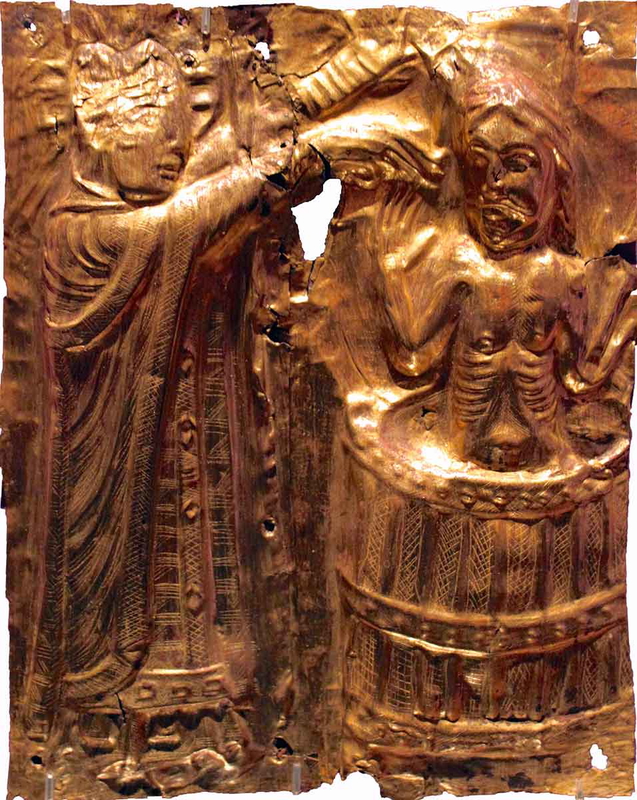
Christianity continued to spread into Germanic Europe after the Western Roman Empire fell apart in the 5th century AD. This was especially following the conversion of Clovis I, King of the Franks, in 496 AD. Moreover, when Germanic and Slavic chiefs like King Harald Bluetooth of Denmark converted around 965 AD, so too did the people that they led. By the end of the first millennium, Europe had established itself as the heart of the Christian religion.
Meanwhile, Christianity also traveled eastward along the Silk Roads through efforts made by the Church of the East. The missionaries established thriving communities that stretched from Mesopotamia all the way to Tang Dynasty China, where believers set up the Nestorian Stele monument in 781 AD. Traders and missionaries also used the Syriac language to share scriptures across Central Asia, thus promoting the spread of the religion.
How the Age of Discovery Expanded Christianity into a Global Faith
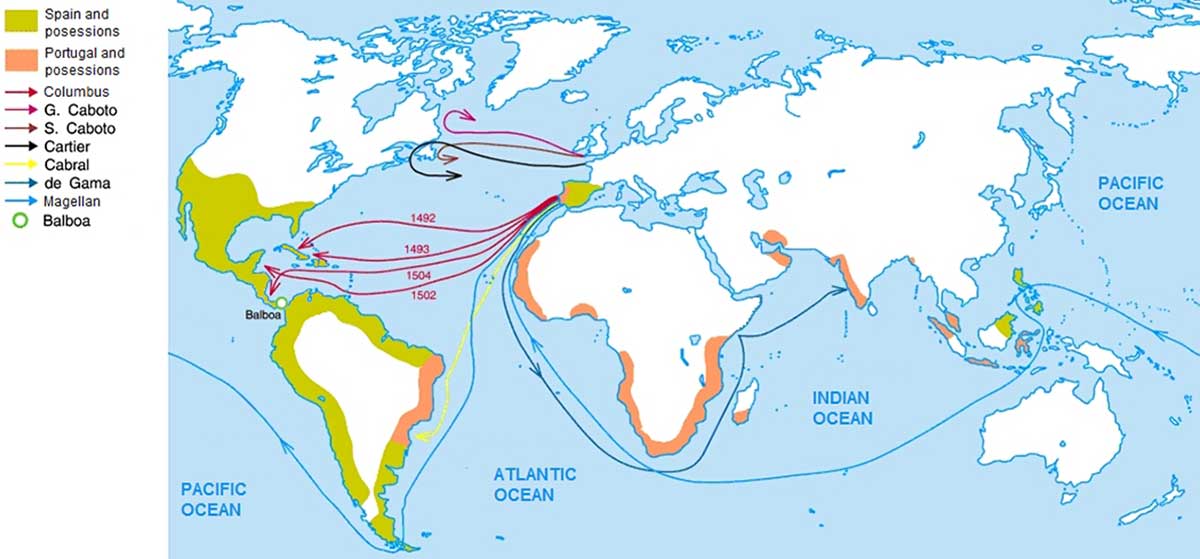
That said, Christianity experienced its most rapid geographic expansion during the 16th century, often called the Age of Discovery. As European explorers roamed the globe during the era, they brought their religious traditions with them. Priests who were also present were used to set up the cross and preach the gospel as soon as they disembarked. While some indigenous people adopted the faith voluntarily, others were coerced or forced into conversion.
As a result, Christianity established a presence in the Americas, sub-Saharan Africa, and parts of Asia during this period. Protestant nations like the Netherlands, England, and Denmark also began sponsoring missionary work in the 17th century. Missionary activity would gain greater momentum in the 19th century as organizations such as the Church Missionary Society sent missionaries to Africa, Latin America, and Asia, changing the religious demographics of those continents.
Today, the Democratic Republic of the Congo, for instance, has over 70 million Christians who make up roughly 95 percent of the total population. Nigeria has over 107 million Christians, while Ethiopia has more than 81 million Christians. Current forecasts project that Christianity will continue to grow the fastest in the Global South throughout Africa and Asia, while growth declines in Europe and North America.