The Cold War turned Latin America into an ideological and military battleground. The anti-communist climate and U.S. pressure enabled military dictatorships and their repressive mechanisms. Operation Condor is a clear example of how they combined cutting-edge technology and intelligence with cruel methods of torture, disappearance, and murder to instill fear and eliminate their enemies. The scars remain, as truth and justice are still pending.
The Cold War’s Global Battlegrounds
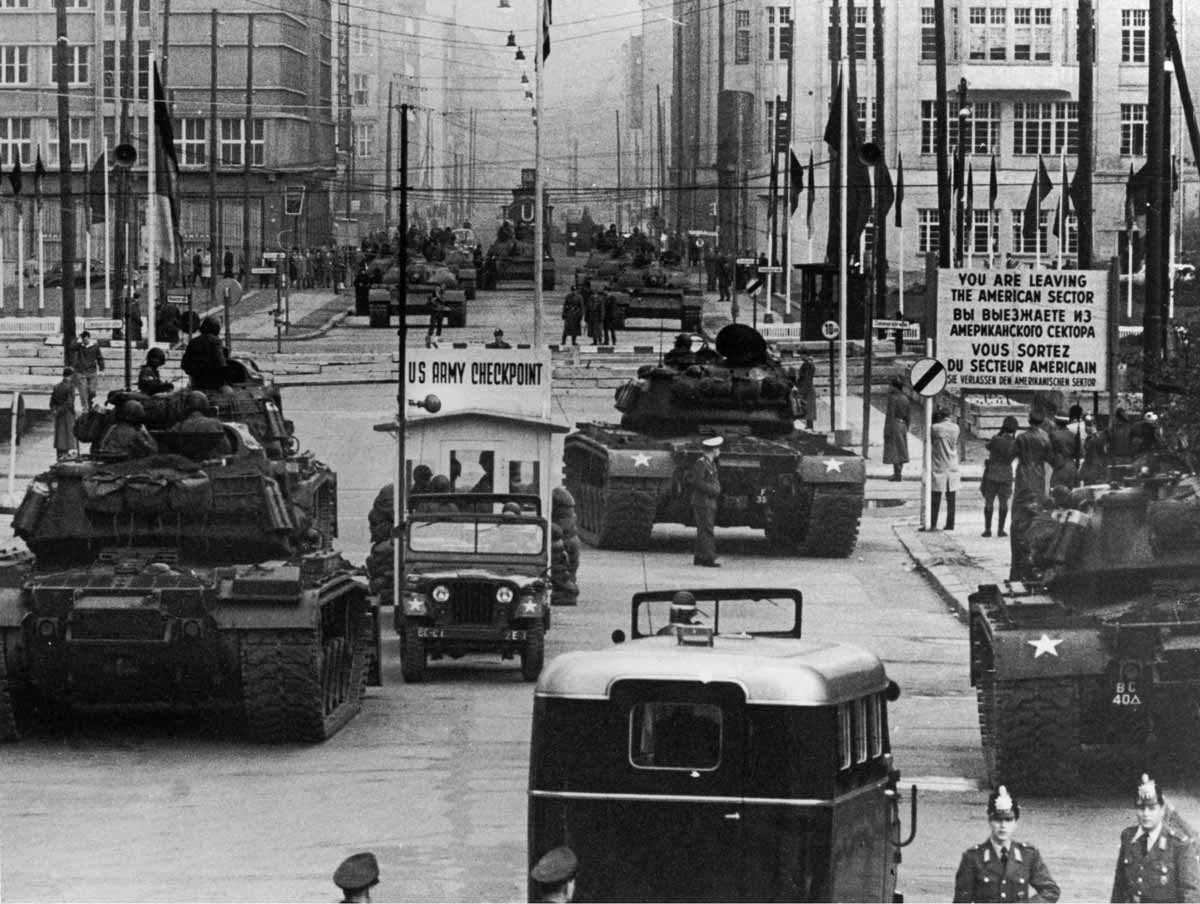
The Cold War was a confrontation between the two hegemonic powers that emerged from World War II: the United States and the Soviet Union. It was a struggle for both geopolitical and ideological control. The term “cold war” refers to a world under a constant nuclear threat, where both powers were prepared with the most advanced and lethal technology but avoided direct confrontation as it could lead to global destruction. However, the conflict was not actually as “cold” as the term suggests, as it involved diplomatic, political, social, and ideological disputes and, most notably, violent wars around the world, including the Vietnam War and the Civil War in the Congo.
Latin America was also a key battleground for the development of the conflict. The United States sought to maintain permanent control in ideological and political as well as cultural domains within its “backyard.” Any encroachment of the communist bloc onto the American continent represented a direct threat to the United States, as it could serve as a military base for missile attacks or, indirectly, as an ideological influence.
The Cuban Revolution and its Consequences
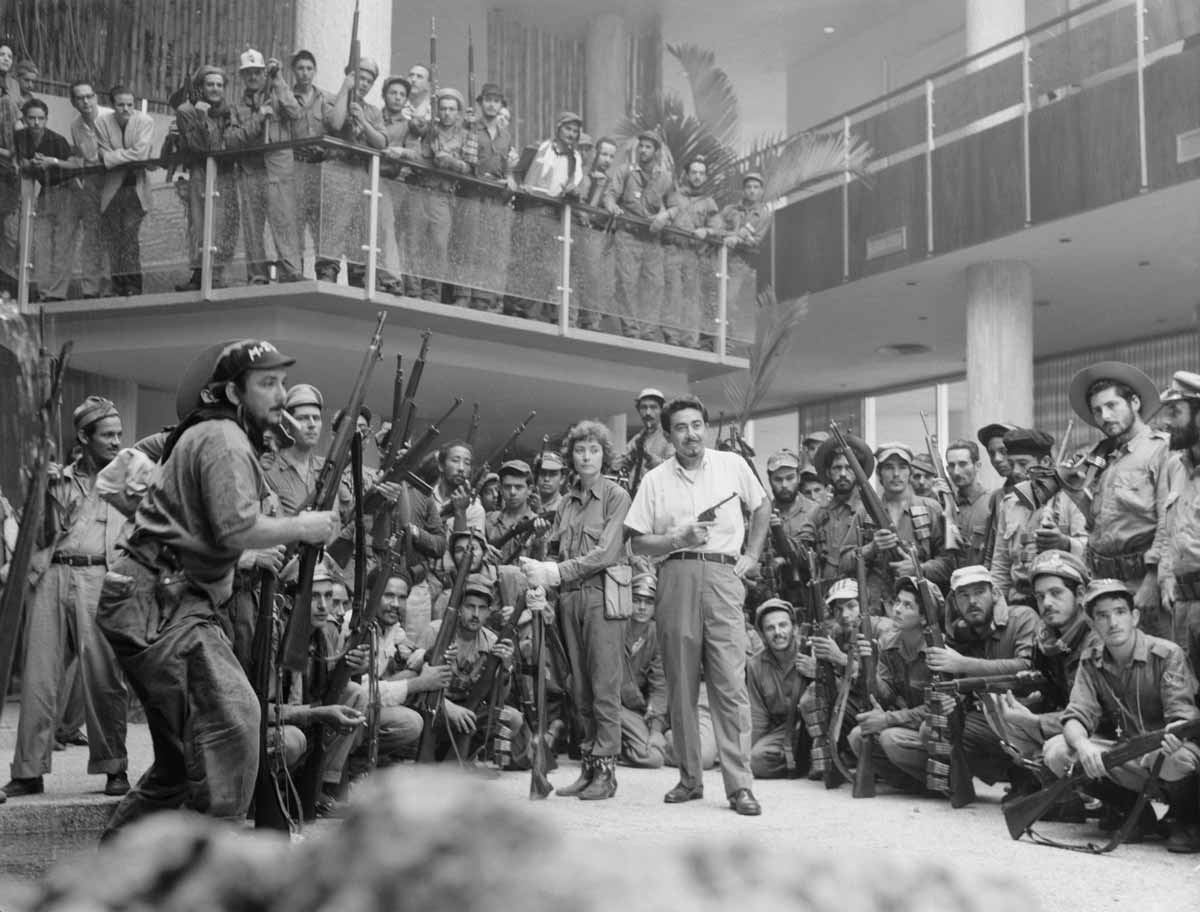
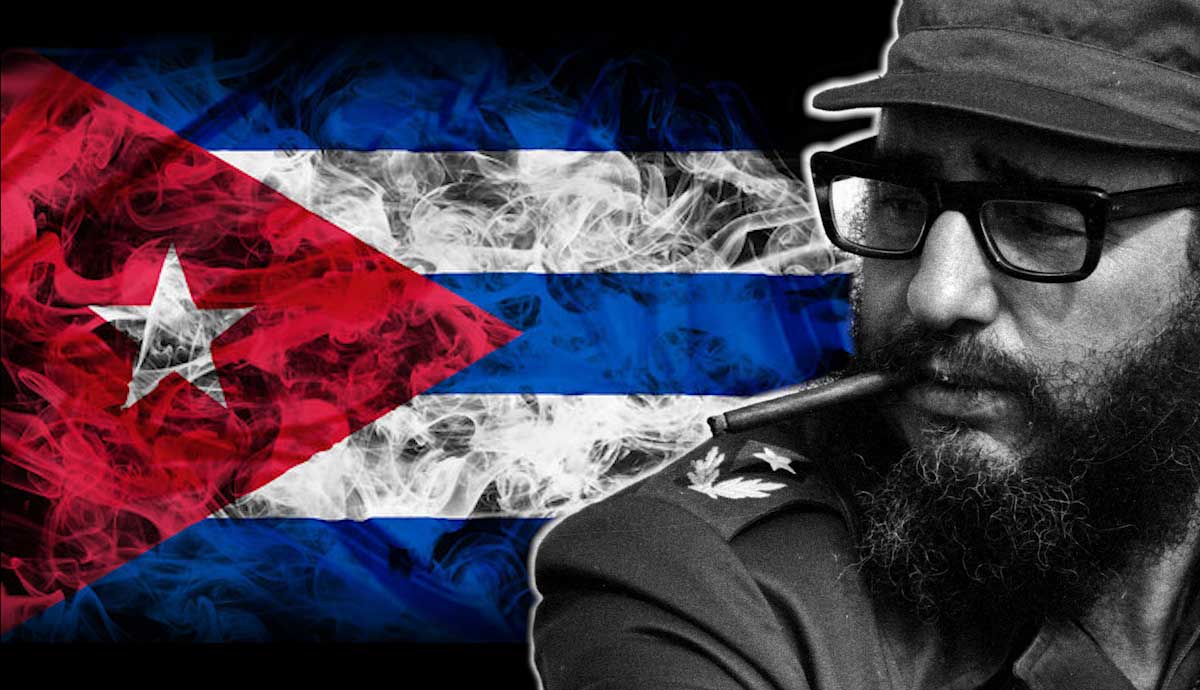
Violence in Latin America increased considerably in the 1960s as a result of the Cuban Revolution, Fidel Castro’s rise to power, and leftist nationalism. Not only did these revolutionaries overthrow the previous dictatorship, they also established the first Marxist-Leninist government in the Americas.
The mere existence of the regime encouraged and gave hope to the rest of the continent that it was possible to build a political system that challenged U.S. hegemony and political elites and transformed sociopolitical structures. It contributed to the renewal of the left and ignited the spirit and dreams of young people, leading them towards greater radicalism. However, it also aroused a deep fear of instability among the middle classes, causing polarization as these groups took much more conservative positions.
Unhappy with the situation, the United States implemented the Doctrine of National Security and sought ideological control, intensifying its interference in the political processes of Latin American countries. It also created a specific foreign policy strategy for Latin America, called the Alliance for Progress, which aimed to artificially and systematically accelerate economic development in the region based on the Western capitalist model to compete with the Soviet version based on Marxism. Additionally, it was closely tied to militarization. The Alliance failed to address the problem of Latin American development but left a deep legacy in political systems, contributing to the increase in violence in the following years.
The Seventies: Decade of Terror
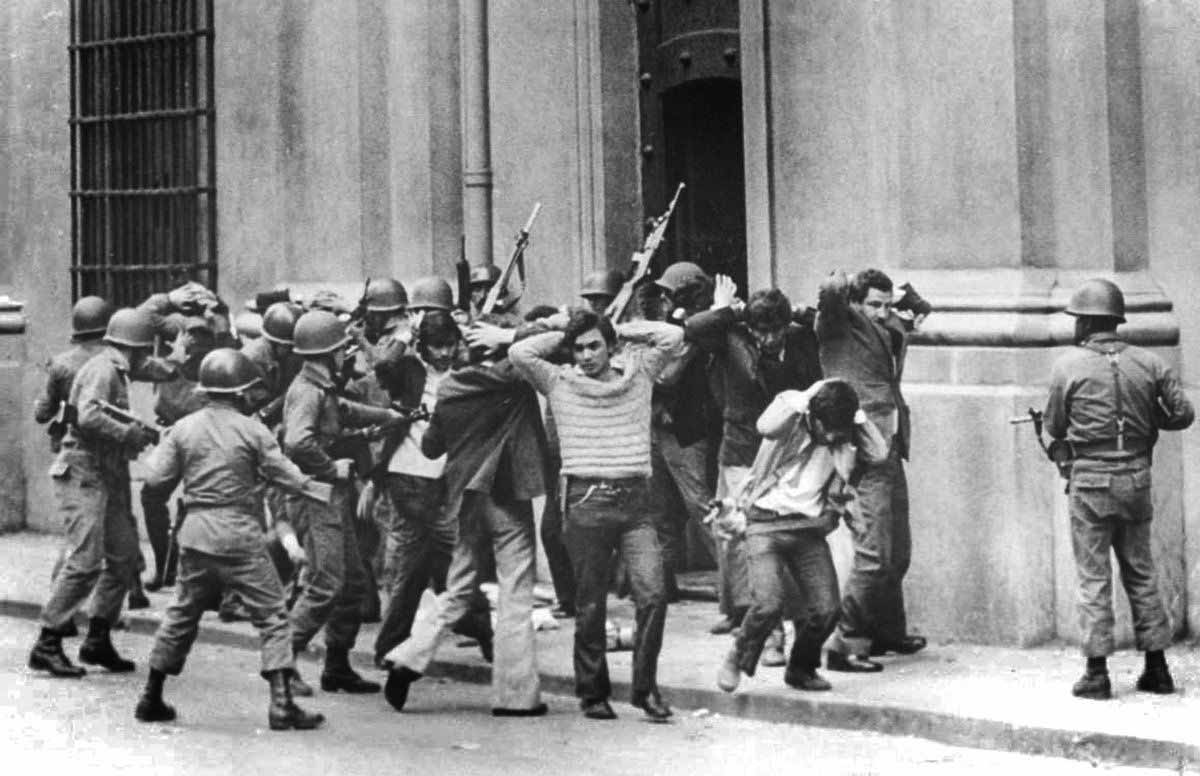
During the 1960s and 70s, Latin America experienced a series of military dictatorships plagued by social tensions, violence, and repression. These were the result of the region’s economic and social crises, the exhaustion of the development model, high inflation, and significant inequalities, as well as the weakness of democratic institutions and the gradual control of governments by the military. The influence of the Cold War in political, diplomatic, and economic aspects, and particularly the foreign policy of the United States, exacerbated these crises. Radical anti-communism and the fear of instability deeply affected the armed forces, leading to the adoption of extremely repressive measures.
The United States implemented a National Security Doctrine (NSD) that promoted the idea that the military should protect the nation not only from external threats but also made citizens themselves a target. Any perceived provocation from leftist and revolutionary groups could be met with violence, including torture and forced disappearances. The U.S. actively supported many of these military regimes by providing financial, diplomatic, and military aid. For example, at the School of the Americas in Panama, military personnel from various Latin American countries were trained in counterinsurgency techniques, including torture interrogations, intelligence, military combat, kidnappings, extortion, and psychological warfare.
Emergence of Operation Condor
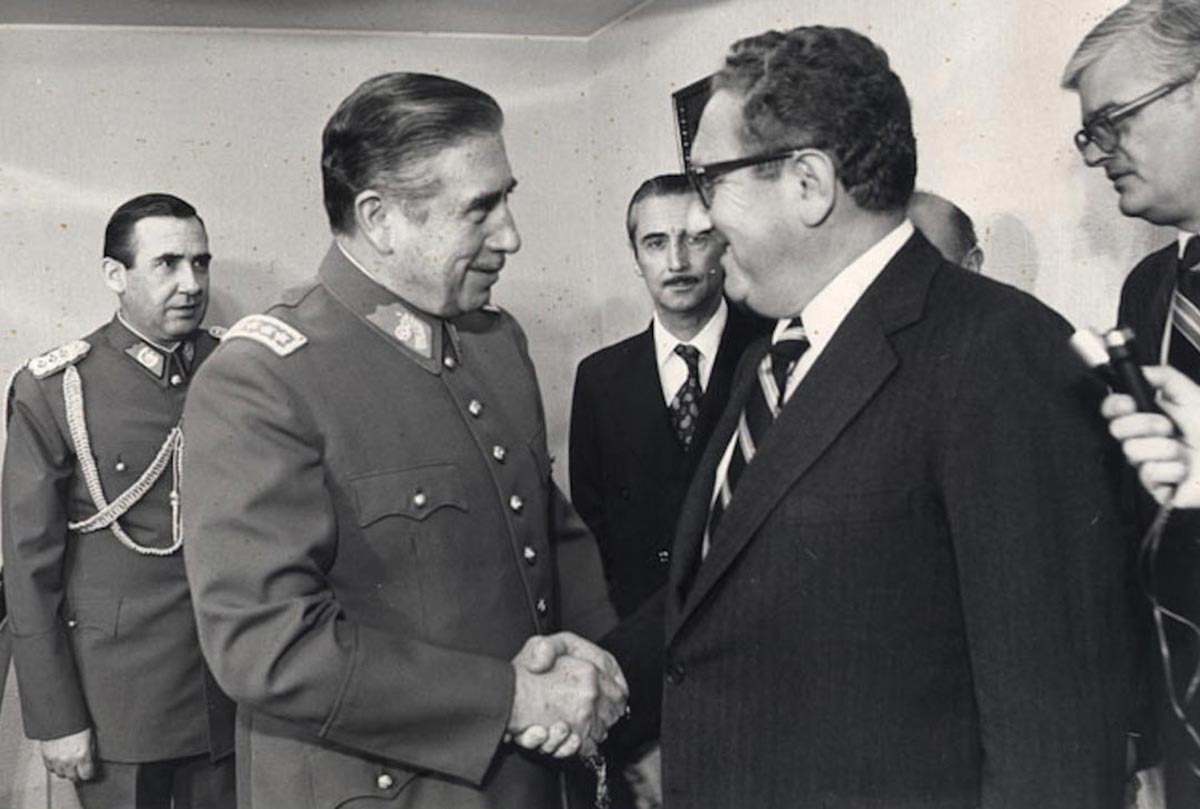
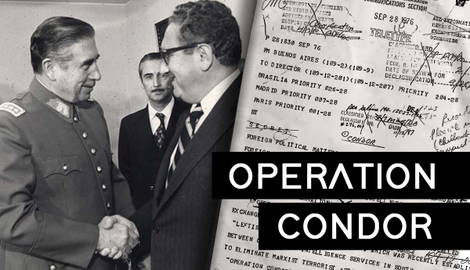
The violence, a result of the dictatorships and the Cold War, reached unprecedented levels in the modern history of the continent, with tens of thousands of Latin American men, women, and children tortured and murdered. The repressive phenomena adopted a practice of regional coordination in information exchange and police cooperation that allowed for the refinement of counterinsurgency measures across states. Known as Operation Condor, this policy was founded by the military juntas and formalized in 1975 in Santiago, Chile, with the support and resources of the United States government. Among its members were Chile, Argentina, Uruguay, Bolivia, Paraguay, Brazil, and later Peru and Ecuador.
As a result of the extreme anti-communist fervor of the Latin American military elite, Operation Condor aimed to eliminate political opponents of the regimes through intelligence, databases, espionage, torture, disappearances, and repression. Through fear, the military state sought to extinguish aspirations for social justice and revolution; it was a way to keep the population in a state of fear and uncertainty while the military magnified and consolidated its power over society.
The United States played a crucial role as its secret partner and sponsor. They provided financial resources to the Latin American dictatorships to maintain political control and to support the functioning of Operation Condor. The U.S. offered diplomatic assistance by minimizing international criticism of human rights violations and ensuring the achievement of the operation’s objectives.
Institutions like the CIA and the Pentagon collaborated in military training as well as in advising officers and planning operations. They provided advanced technological and military equipment, from computers and communication systems to weapons and espionage tools. They also cooperated through official and covert channels in the exchange of information.
The United States also took advantage of the Condor system to further its own interests. The exact degree of direct involvement has been hotly debated, but many Defense Department and CIA files still need to be declassified to clarify what happened.
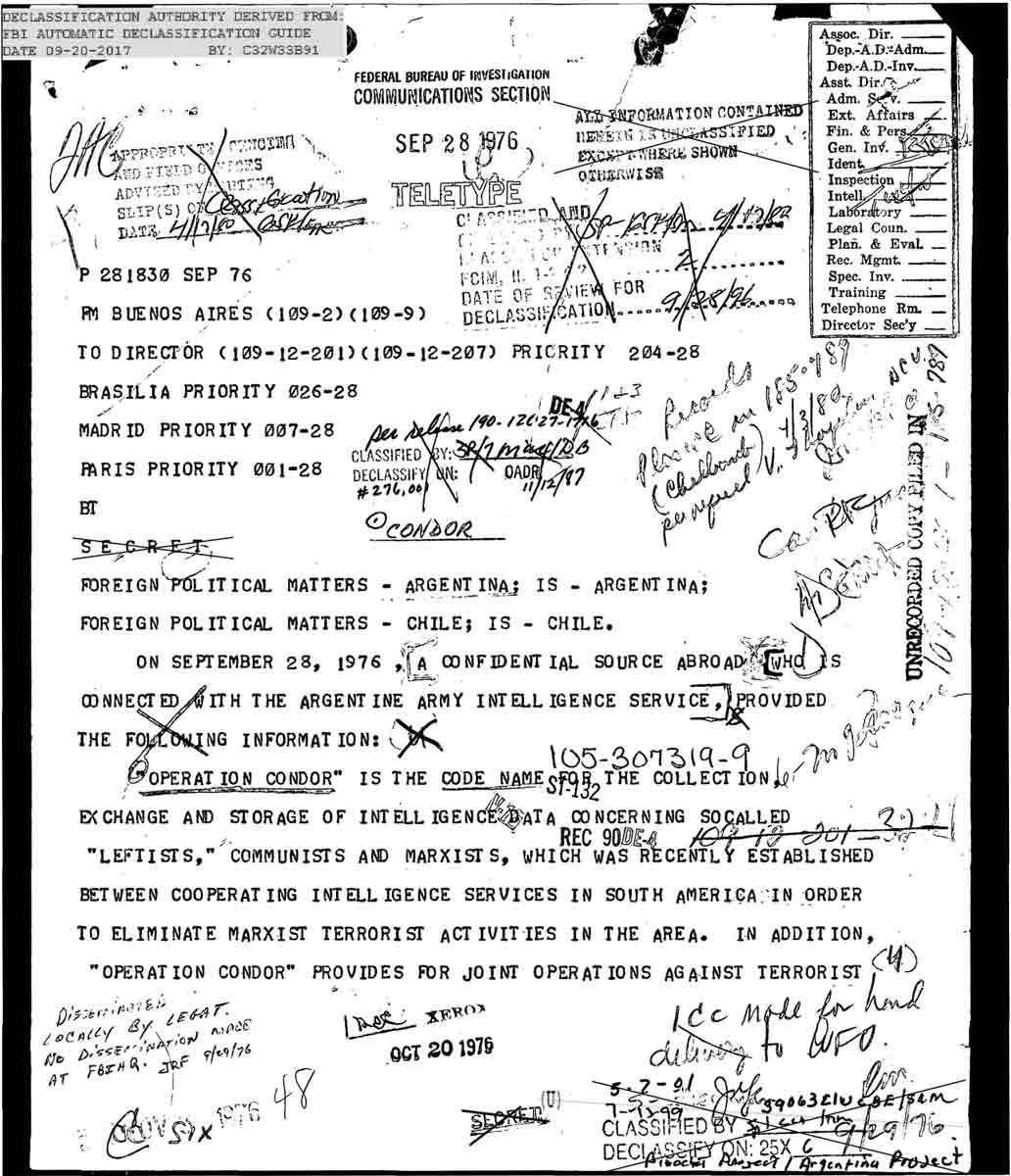
The operation was extremely bloody and violent, where anything was permitted to ensure internal order. It operated outside the law without any limitations, violating human rights while using 20th-century science and technology. However, with its high levels of coordination, technology, and precision, it could appear quasi-legal as a counter-guerrilla and counter-insurgency institution, allowing its participants to disguise and conceal the use of criminal and terrorist methods from the rest of the world; otherwise, it would have reduced domestic and international tolerance for the regimes.
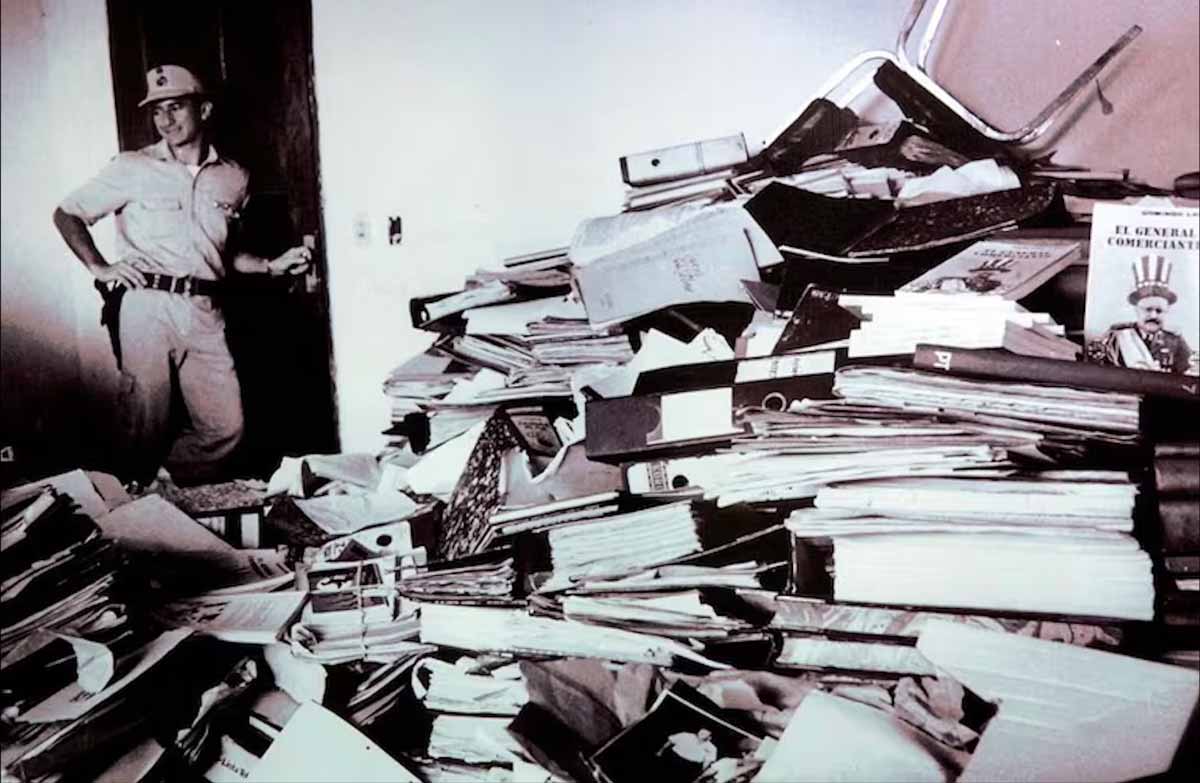
The organization was a truly well-kept secret of the Cold War. It wasn’t until 1992 that the “Archives of Terror” were discovered, a new and rare collection of documents that confirmed the testimonies of Operation Condor’s victims. However, there are still many facets to be clarified and numerous cases still awaiting justice.
The Three Phases of Operation Condor
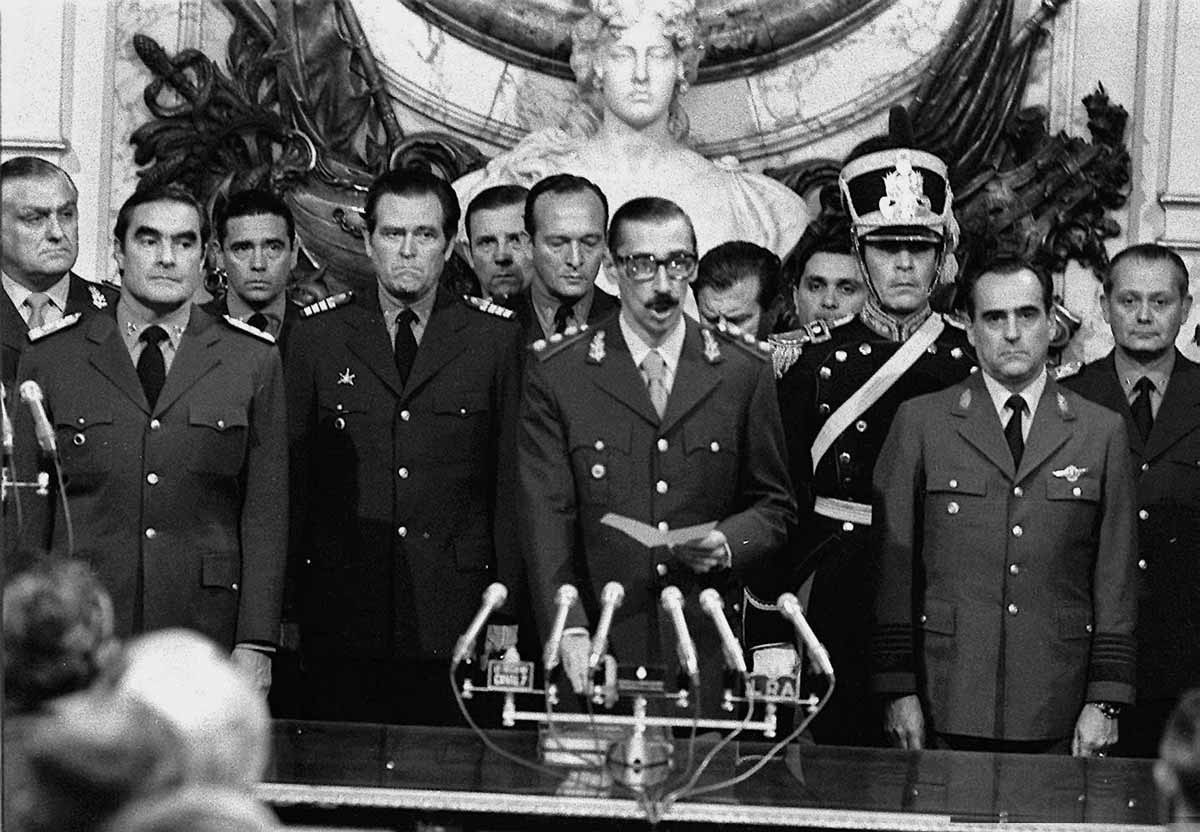
Operation Condor was composed of three elements. The first involved establishing a communicative and informational structure among the various participants. The coordinating base was located in Santiago, Chile, where a database was generated that included information on thousands of “suspicious” individuals. This database contained files with photos, microfilms, surveillance reports, psychological profiles, personal and political backgrounds, lists of friends and family, and more.
A complex communication infrastructure between the member countries, called Condortel, was also developed. Each country had a code: Chile was Condor 1, Argentina Condor 2, Uruguay Condor 3, Paraguay Condor 4, Bolivia Condor 5, and Brazil Condor 6. This hierarchy was not random but indicated who held more power within the organization. The telecommunications network and the database were extremely sophisticated and used the most advanced technology of the time, which could only be supplied by an organization like the CIA.
The second phase involved taking action against enemies within Latin America, particularly leftist revolutionary groups, but also members of the Catholic Church who promoted Liberation Theology or any political figures deemed too problematic for the regime. The methods used ranged from interrogations and torture to disappearances, kidnappings, and murders. Prisoners were detained, tortured, and sometimes even killed in clandestine centers.
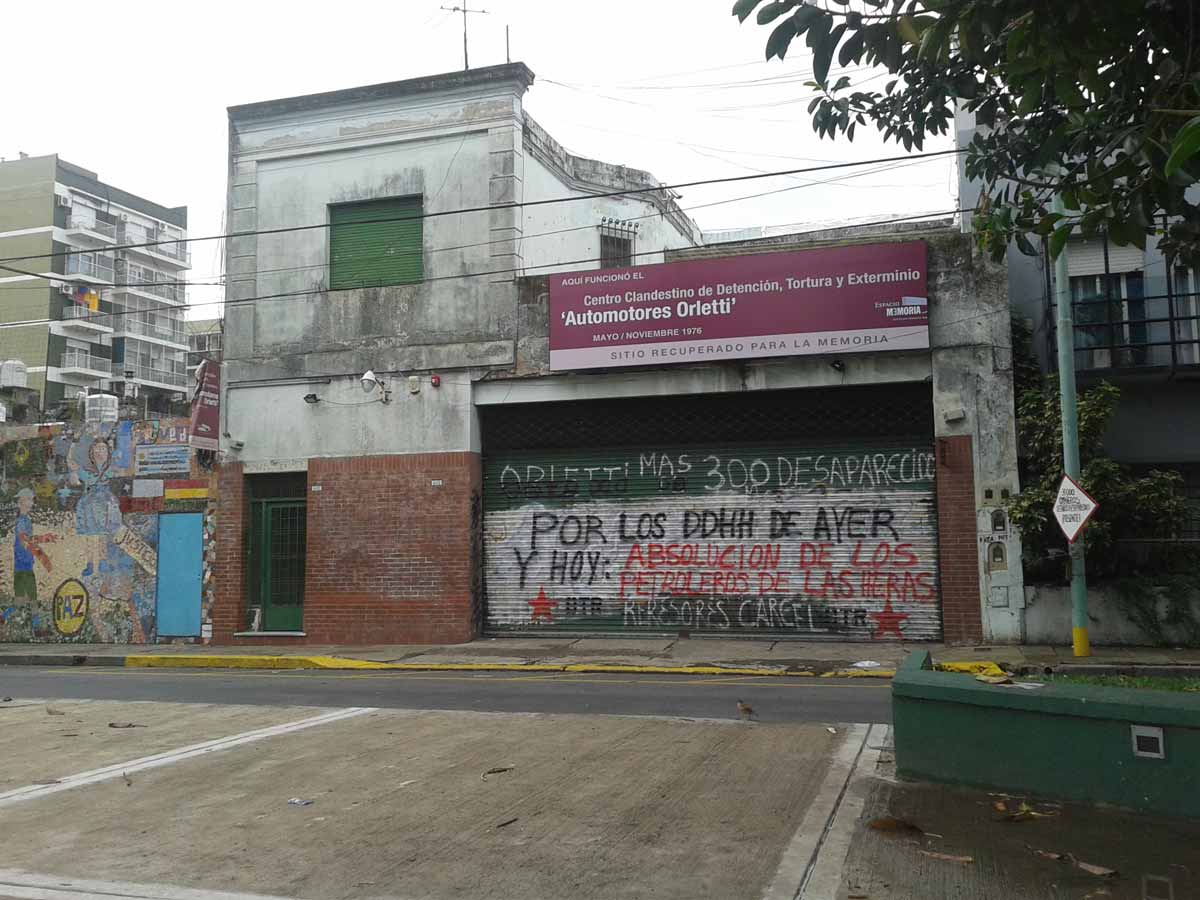
Automotores Orletti, in Buenos Aires, was one of the most important clandestine centers during this period. Operating under the facade of a mechanic shop, it was a torture center that over three hundred victims passed through, the majority of whom were killed and disappeared.
Lastly, the third phase involved continuing operations outside the Latin American region, on a global scale. It particularly targeted political leaders who were refugees or exiles, as there was fear that they might mobilize to sway world opinion and gain support against these military regimes.
The most notable operation was the assassination of Orlando Letelier, Chilean Minister of Defense during Salvador Allende’s government and thus very problematic for Augusto Pinochet’s dictatorship, especially due to his activism after exile. He was killed by a bomb planted in his car, which exploded while he was driving in Washington, D.C.