
Contrary to modern impressions, Paris was once a congested labyrinth of narrow streets, until the massive modernization of the 19th century, commissioned by Emperor Napoleon III, was carried out by Georges-Eugène Haussmann (often referred to as Baron Haussmann).
During the Middle Ages, the majority of what is now known as Paris consisted mainly of constricted lanes that averaged about 13 feet wide. So, what were some of the grim realities of the city before this massive modernization project?
What Made the Streets and Prisons of Medieval Paris So Dangerous?
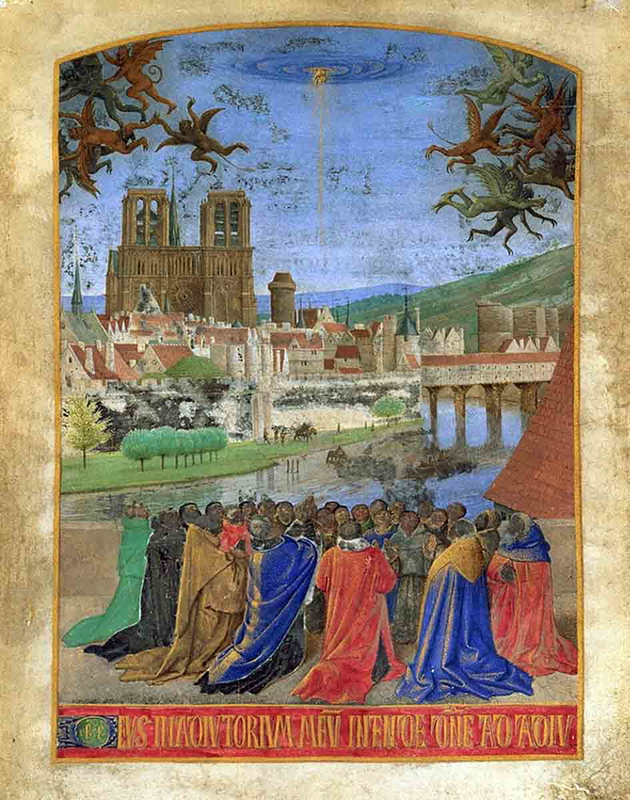
While many of Paris’s narrow streets originated in the Roman and Merovingian eras, the effort to improve them was significantly intensified during the reign of King Philip II (1180–1223), who ordered the main thoroughfares to be paved around 1186. Side streets, however, remained unpaved and were filled with filth. This continued until the mid-14th century, when Paris had grown into a city of over 200,000 residents and expanded beyond the Wall of Philip Augustus.
This defensive fortification was built between 1190 and 1215 to protect the city from Anglo-Norman forces and other external marauders. At the time, buildings in the city projected outward toward each other so significantly that neighbors could almost touch opposite buildings across the alleys. Because of this, there was barely any sunlight to illuminate the passages that typically harbored vermin, criminals, and feral dogs, and sometimes contributed to the spread of diseases.
The headquarters for royal justice at the Grand Châtelet was also poorly built. Originally constructed as a wooden fortress in 870 by Charles the Bald to defend the Grand-Pont against Viking incursions, it was reconstructed in stone on the Right Bank of the Seine in the 1130s by King Louis VI as an actual châtelet (small castle). By the late Middle Ages, the fortress served as the seat of the Provost of Paris, the city’s primary criminal court, as well as its most notorious prison.
The Infamous Prison at the Grand Châtelet
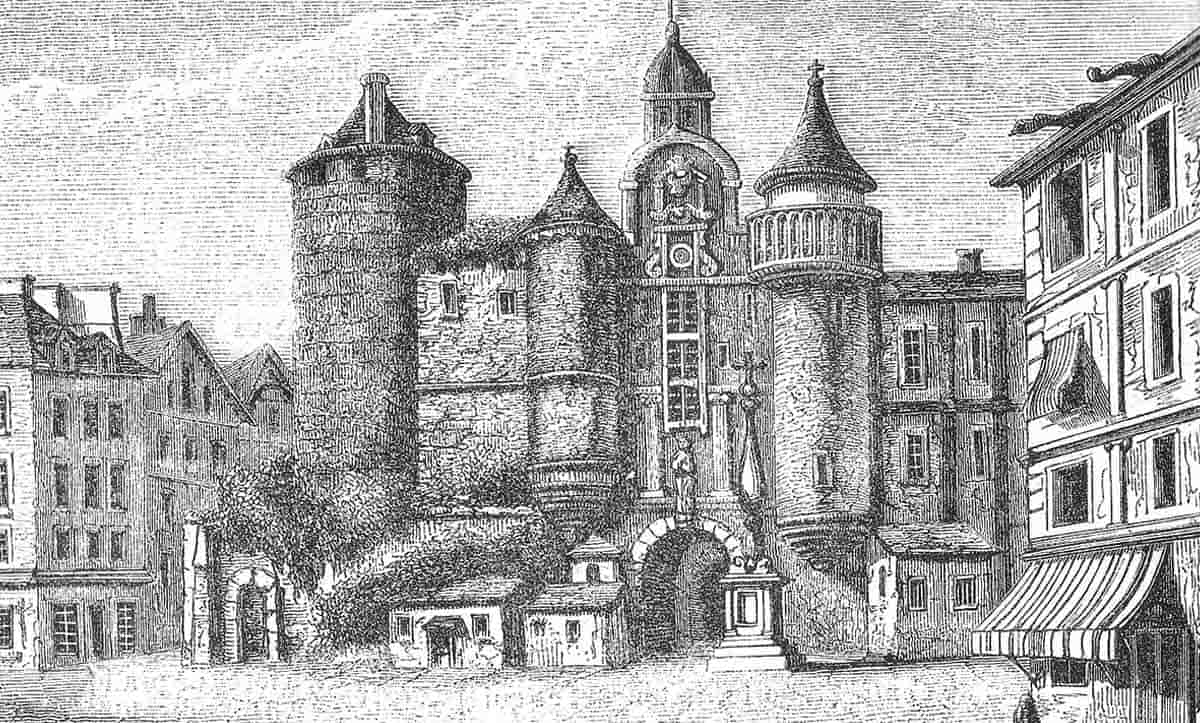
While subterranean dungeons, torture chambers, and the morgue were relegated to the damp lower basements, the primary judicial halls and magisterial chambers were located on the upper levels of the building. Within the facility was La Fosse, an infamous dungeon built in the shape of an inverted cone that was accessible only from above via a ceiling hatch through which prisoners would be lowered.
Prisoners put there could neither stand upright nor sit down amid rising filth. The fortress also functioned as the capital’s Châtelet morgue, where victims found dead in the public way or whose identity remained unknown after death would have their remains displayed on large stone slabs so that passersby could recognize them. The fortress was entirely demolished between 1802 and 1810 and was remembered by nearly all who entered its gates as one of the most inhumane and sinister structures in Paris.
The Deadly Bubonic Plague in Paris
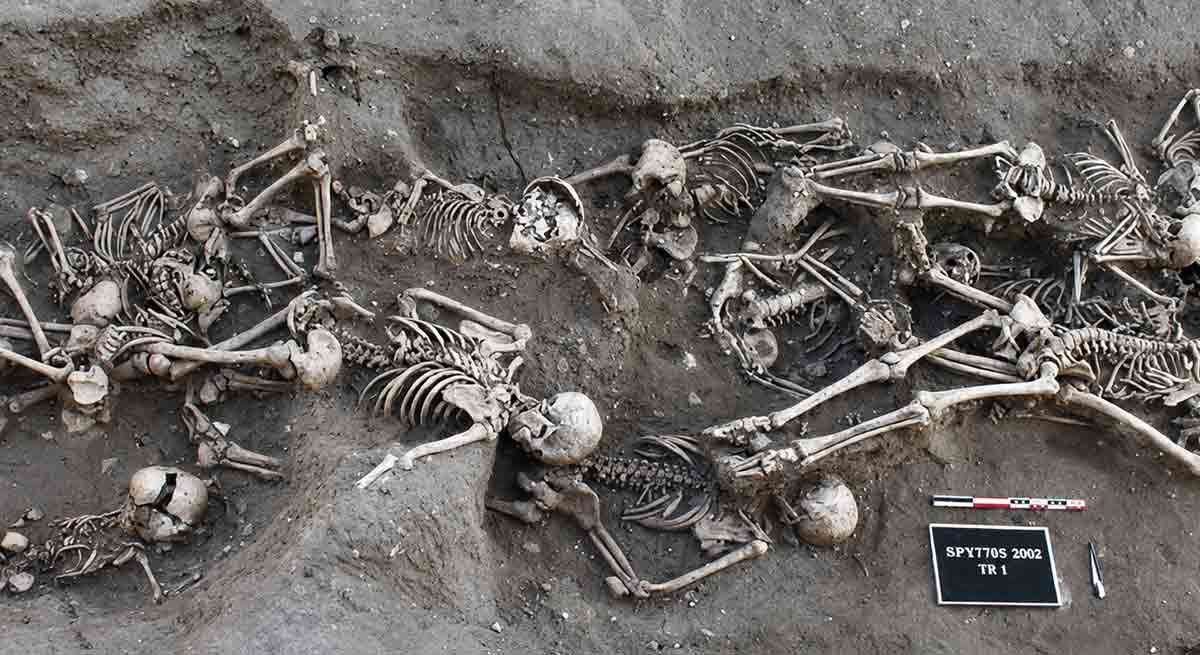
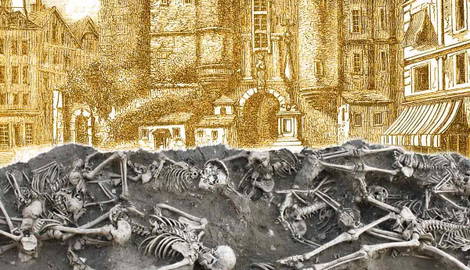
Microscopic pathogens also lurked within medieval streets. From the time the bubonic plague, a lethal bacterial infection transmitted by fleas and rodents, first arrived in 1348 until the epidemic’s peak around 1350, an estimated 50,000 Parisians succumbed to the Black Death. At the height of the epidemic, historical records describe residents dying so rapidly that bodies accumulated in the streets before being collected by carts, often at night. More than 300 skeletons were discovered in 2015 in layered rows within eight mass graves in a basement at the intersection of Boulevard de Sébastopol and Rue Réaumur that were confirmed to be the remains of the former Trinité Cemetery.
The Destruction of Medieval Paris and the Haussmann Renovation
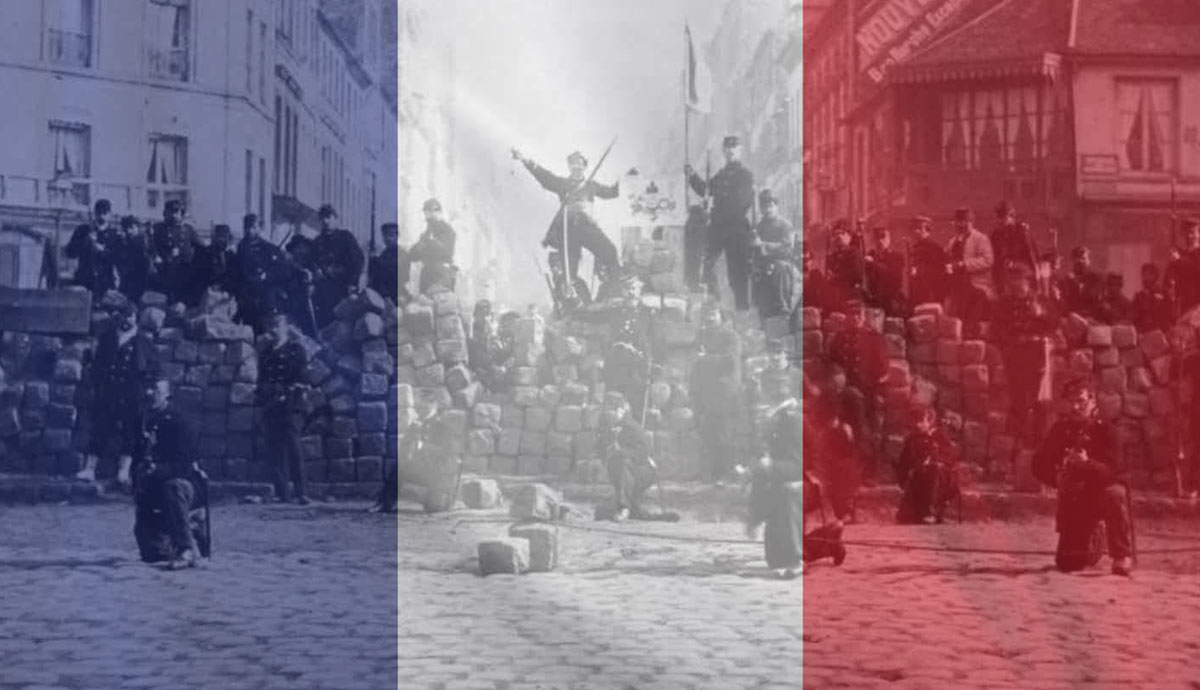
Medieval streets were quite literally corridors of unrest. Narrow, winding lanes provided natural cover for barricades, and Parisians utilized this medieval topography for insurrection. Things changed when modern medicine identified contaminated water as the primary vector for the rapid transmission of cholera, an infection caused by poor sanitation that killed approximately 19,000 people in six months during the 1832 outbreak.
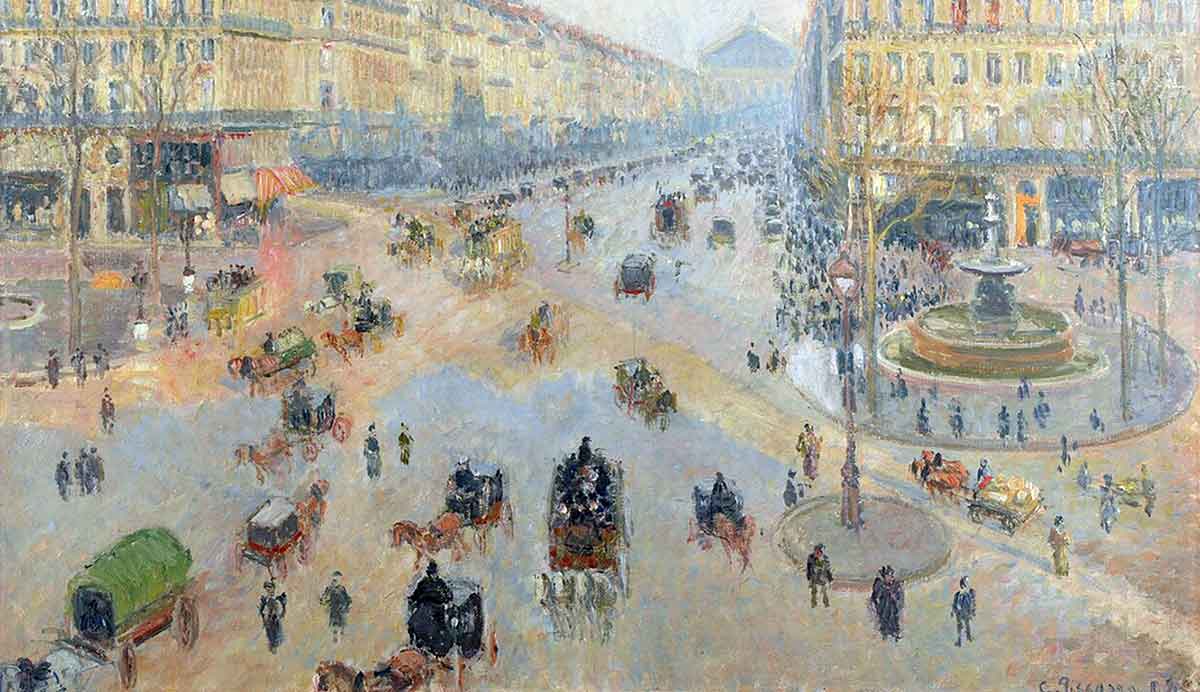
To solve these issues, Emperor Napoleon III, who led France from 1848 to 1870, concluded that he could better manage civil unrest and contagion with wide boulevards illuminated by gas lamps. Baron Georges-Eugène Haussmann was directed to “aerate” and “beautify” Paris in 1853. In effect, Haussmann razed roughly 20,000 buildings and displaced thousands of working-class Parisians from ancestral neighborhoods by carving out 102 miles of avenues such as Boulevard de Sébastopol and Avenue de l’Opéra.
Segments of the ancient city survived Haussmann’s urban planning, but much was lost forever. A small vestige of Paris’ medieval street plan and several 16th-century half-timbered houses on Rue François-Miron can be found in the Marais district, along with the 15th-century landmark known as the Hôtel de Sens, a former palatial residence for archbishops.