
Pope Urban II’s speech at the Council of Clermont interlaced biblical imagery with a call to action. He used familiar stories from the Bible to promise salvation. Despite the hardship borne by peasants on Earth, they saw crusading as the best way to guarantee eternal paradise in the afterlife. This promise of deliverance was tempting enough to justify and incite violence.
In a world divided by social classes, religion served as a point of commonality. His promise of eternal salvation was compelling enough to motivate thousands to attempt to reclaim land that they felt belonged to their God.
The Call to Crusade
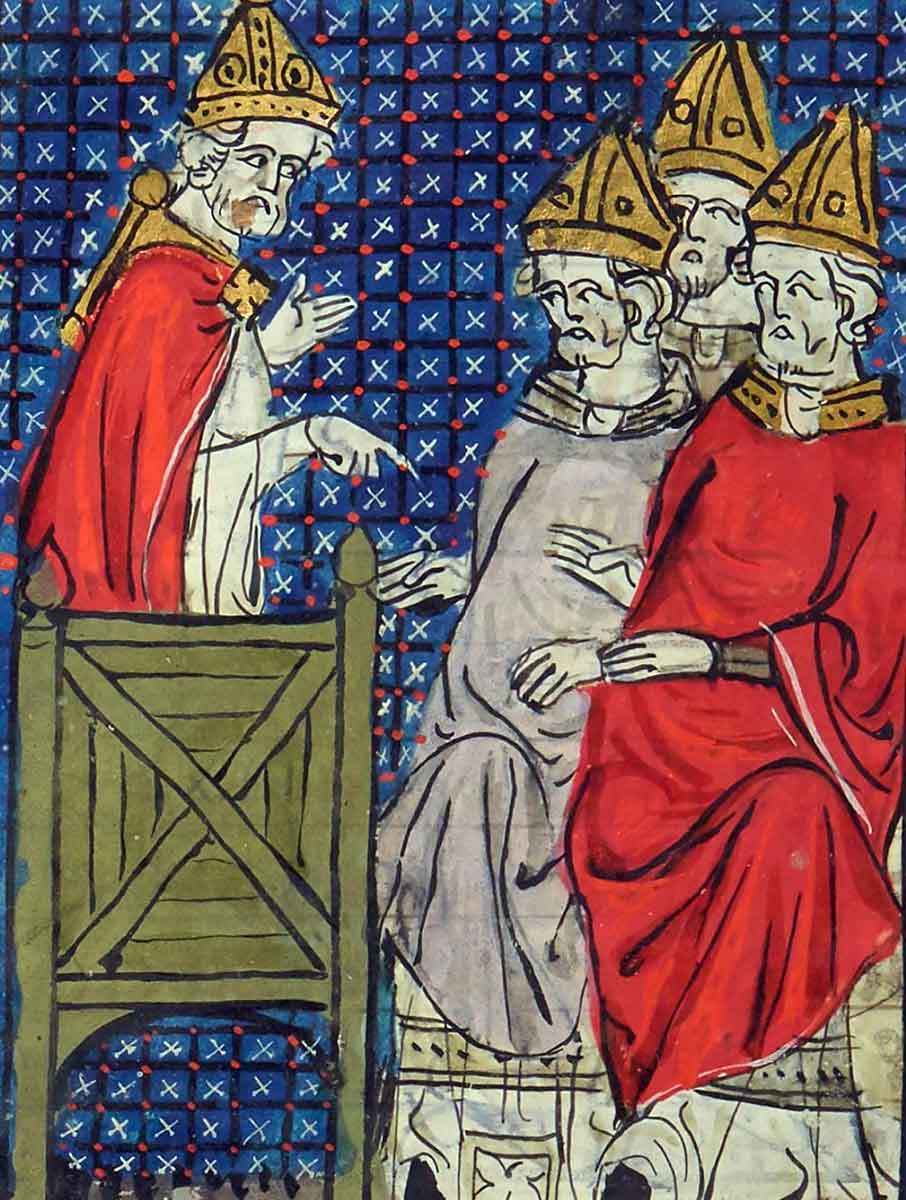
Medieval society was divided into three distinct classes: those who prayed, those who fought, and those who worked. Society was stratified, and little social mobility existed. A medieval peasant would struggle to relate to his lord, just as a ruling lord could not envision the daily life of a peasant.
Despite their differences, one factor united medieval people in Western Europe: Christianity.
Throughout the Middle Ages, Christianity served as a shared ground for many Europeans. Piety functioned as an integral aspect of society’s fabric. Adherence to the Christian doctrine was a way to safeguard one’s own status in this life and even elevate it in the afterlife. Religion was thus a great motivator. Even for those with no prospects of inheriting land from their family, monastic life also offered social mobility that was otherwise unattainable in a feudal system. Society’s ladder had few rungs on Earth, but the promise of eternal salvation was offered equally to everyone.
Crusading took hold of people. Members of society who weren’t always permitted to fight, such as women, even promoted crusading. With the help of the Bible, Pope Urban II managed to convince thousands to march.
The Council of Clermont
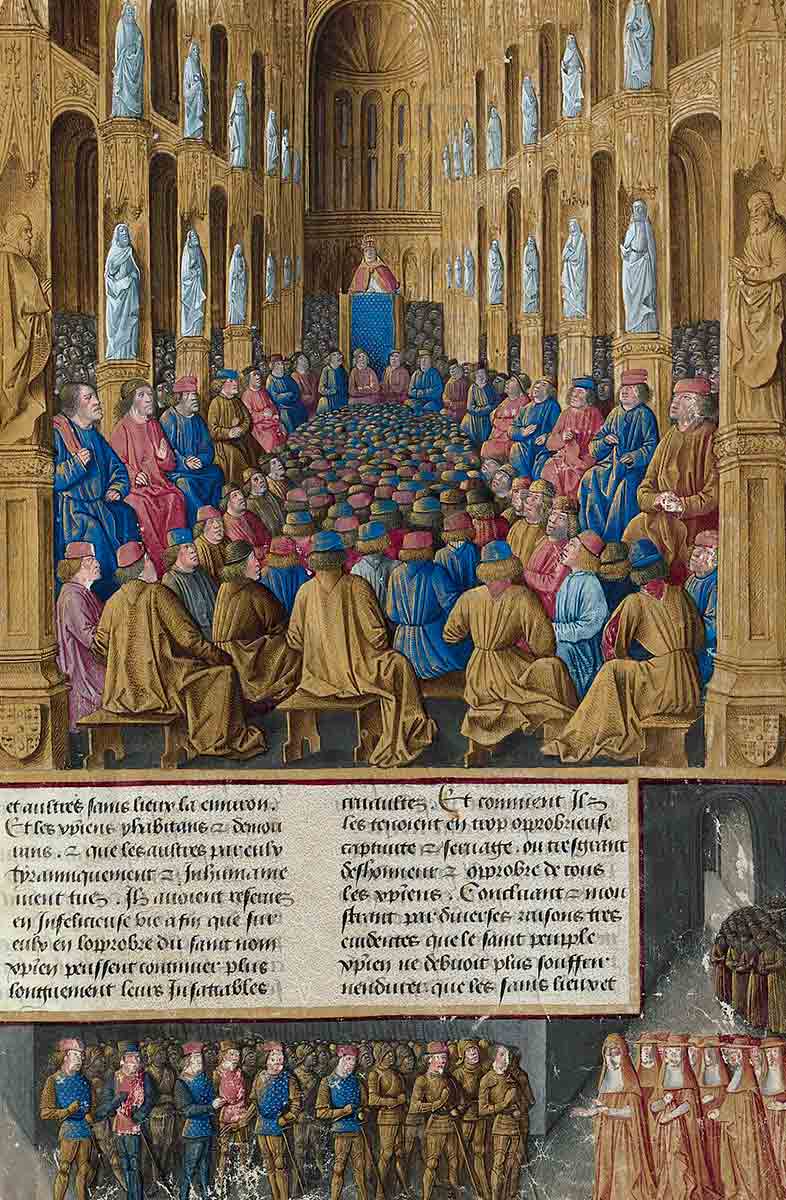
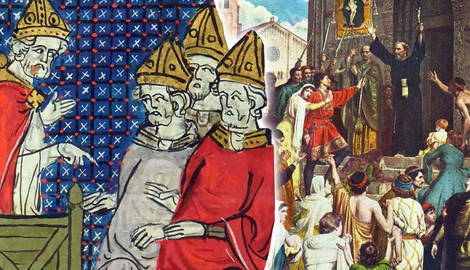
In mid-November 1095, the Catholic church convened. At its head was Pope Urban II, who assumed the position in 1088. This council was held in Clermont, roughly 90 miles from Cluny Abbey, a highly influential epicenter of monastic reform where Urban II had previously served as grand prior.
The speech that spurred the Crusaders on was written in response to the Byzantine emperor Alexios I Komnenos’s request for allies against the Seljuq Turks. The speech was given in French, but anyone who was willing to participate would be welcome. With his speech, preparations and fervor for the First Crusade would begin.
Salt of the Earth
Pope Urban II began with concrete images borrowed from biblical stories and everyday life to reassure listeners before moving to abstract, omnipotent forces to invoke fear.
He reminded his addressees that they were “true shepherds” who should not nod off while watching their flock. He indirectly invoked the imagery of Jesus, known as the “Good Shepherd,” who provided spiritual guidance to his followers. He expects the congregation to do the same.
This gentle image, however, is then paired with abstractions of violence. Failure to tend to the flock will result in being tortured by remorse for one’s crimes and then being “savagely hurled into the deadly abode” for such transgressions. He was presenting listeners with a clear dichotomy: follow the teachings of Jesus or face the ineffable, eternal suffering of a sinner.
Urban also invoked Matthew 5:13, reminding people that they are “the salt of the Earth.” This imagery is also connected to Jesus, as he encouraged listeners to be hardworking, honest, and upholders of morals.
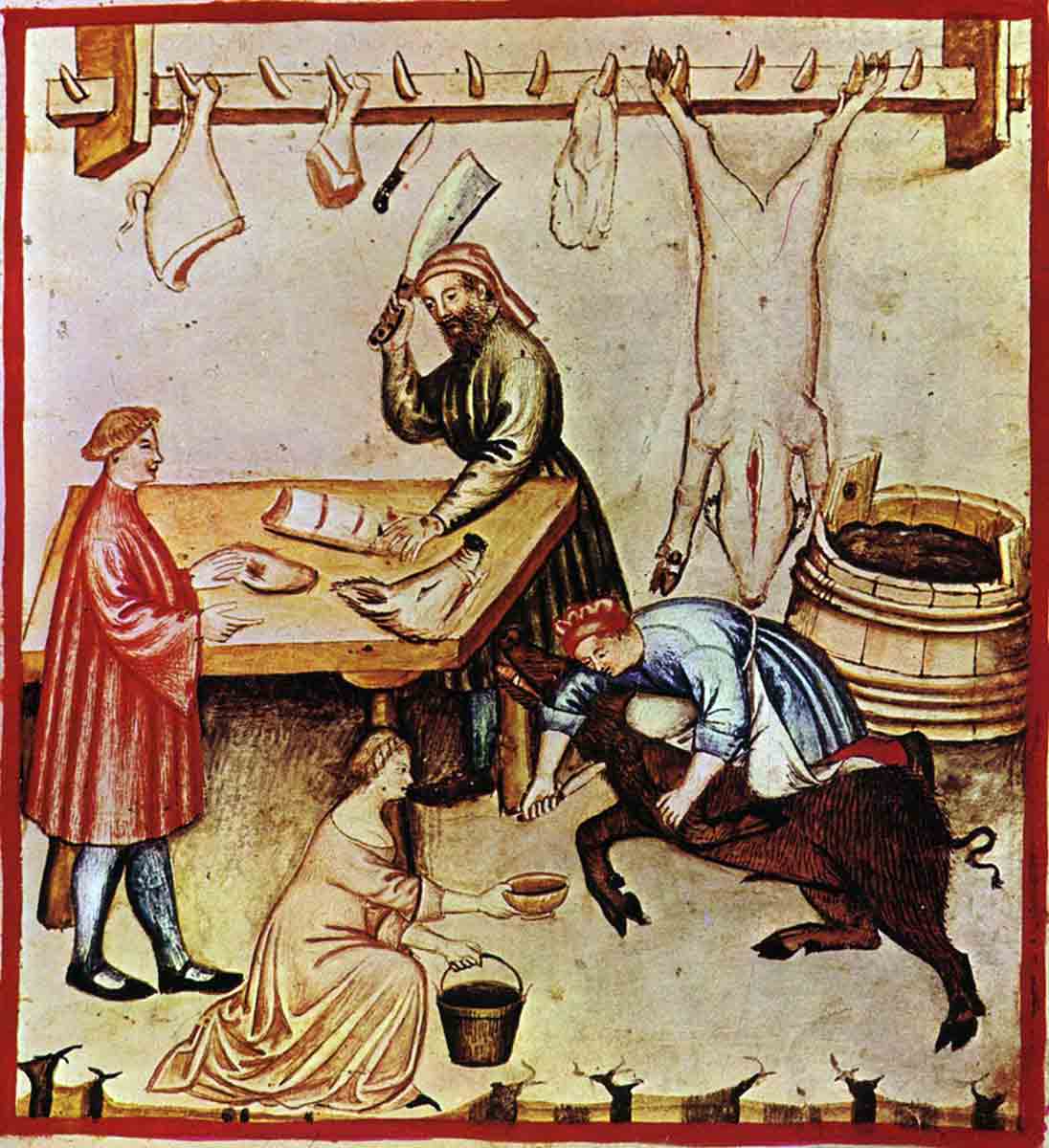
Culturally, salt was precious. It was associated with cleanliness and used to preserve meat. Given the prevalence of salt in daily life, Urban continued to use salt-based metaphors in his discourse. He celebrated salting and asked others to continue salting. He extends the metaphor by emphasizing how admirable it is for someone to salt something, to seek to preserve it. Urban applied this salt metaphor internally, warning the gathered bishops that if they failed to properly guide their own Christian flocks, those believers would rot in the stench of their sins. These “unsalted” church leaders will be a “stench in the nostrils when the Lord wills on some future day to address them.” Salt is associated with purity and cleanliness, and is separate from the “abyss of unclean things.” These people, the salt of the Earth, must march forward.
Blind Lead the Blind
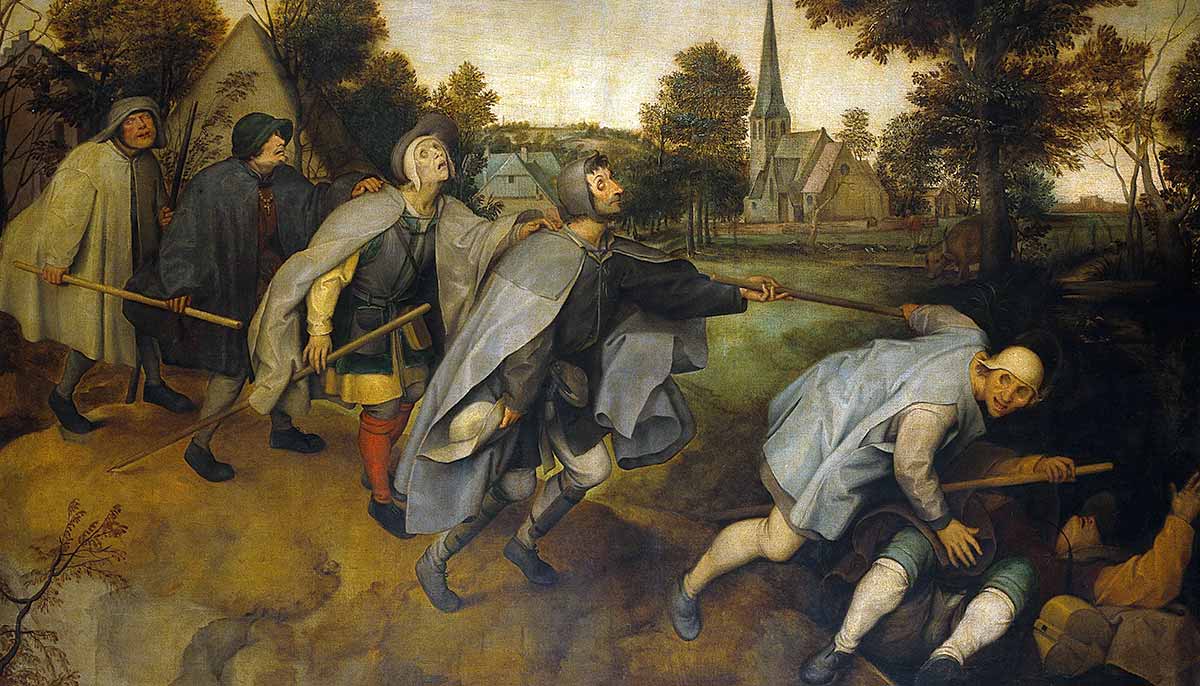
Urban invoked “the distributor of this salt” to make concrete the role the crusaders would play. However, he also reminds crusaders that they will not merely be able to crusade because they choose to be Christians. He uses imagery that reminds his listeners that they have to distinguish themselves from those they hope to “save.”
After discussing abstract, idealistic concepts like peace, purity, and modesty, he returns to a concrete image: “…if one’s own hands are unclean, how can he cleanse the impurities of another?” He goes on to quote Matthew 15:13/Luke 6:39: “if the blind lead the blind, both shall fall into the ditch.” He asks the congregation to improve themselves before they attempt to correct those that they intend to take under their charge. In order to “save” others, they first must demonstrate piety themselves.
Christ’s Heralds and the Parable of the Rich Man and Lazarus
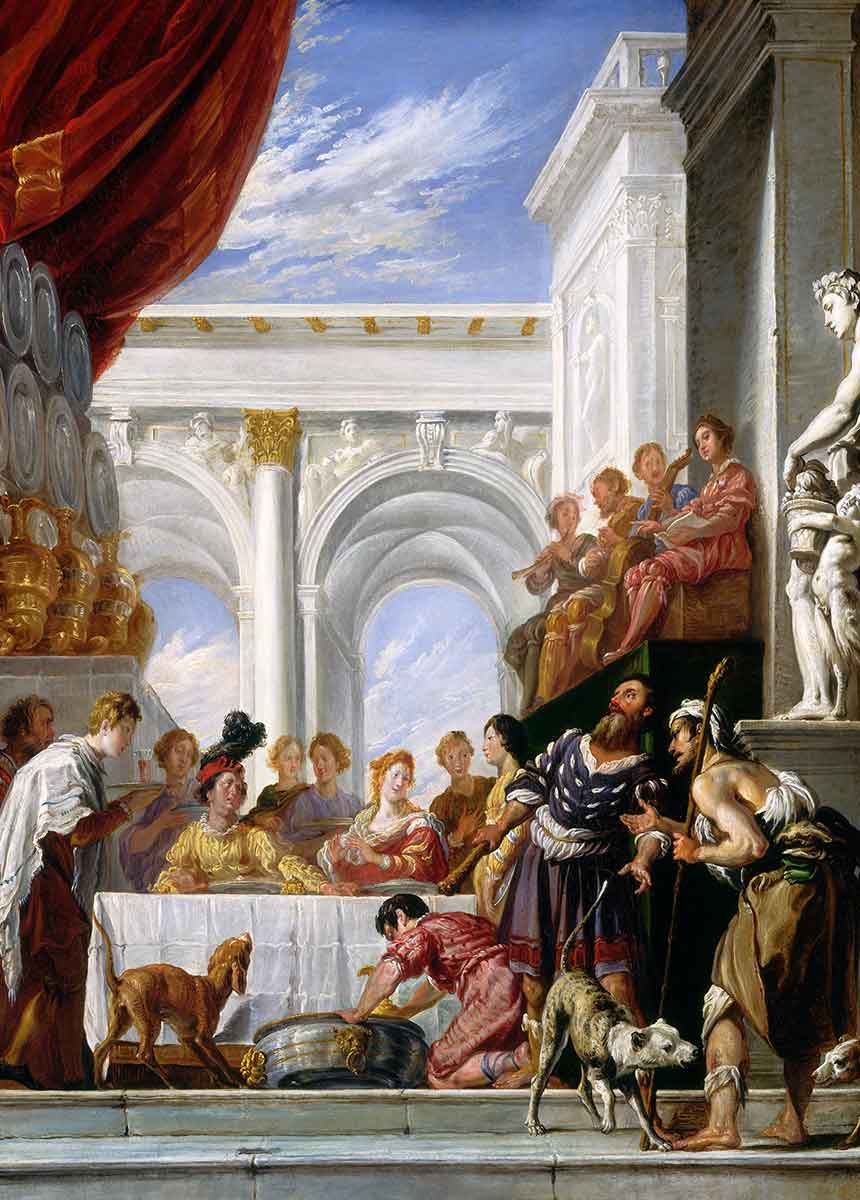
As they are occupying what is a holy land, Pope Urban II invokes Luke 16:19, which speaks of the Parable of the Rich Man and Lazarus. He says, “he was not punished because he had [stolen] the goods of another, but because he had not used well the things which were his.”
Urban invoked the parable to admonish Christian knights against domestic plundering and the abuse of their resources, demanding they maintain the Truce of God at home before focusing on warfare abroad.
Pope Urban ends his speech with his call to action, “I, or rather the Lord, beseech you as Christ’s heralds to publish this everywhere…to carry aid promptly to those Christians and to destroy that vile race from the lands of our friends.” His statement carries tremendous weight because he is insisting that it is God’s will that this Crusade be carried out.
With God’s Help: Life on Crusade
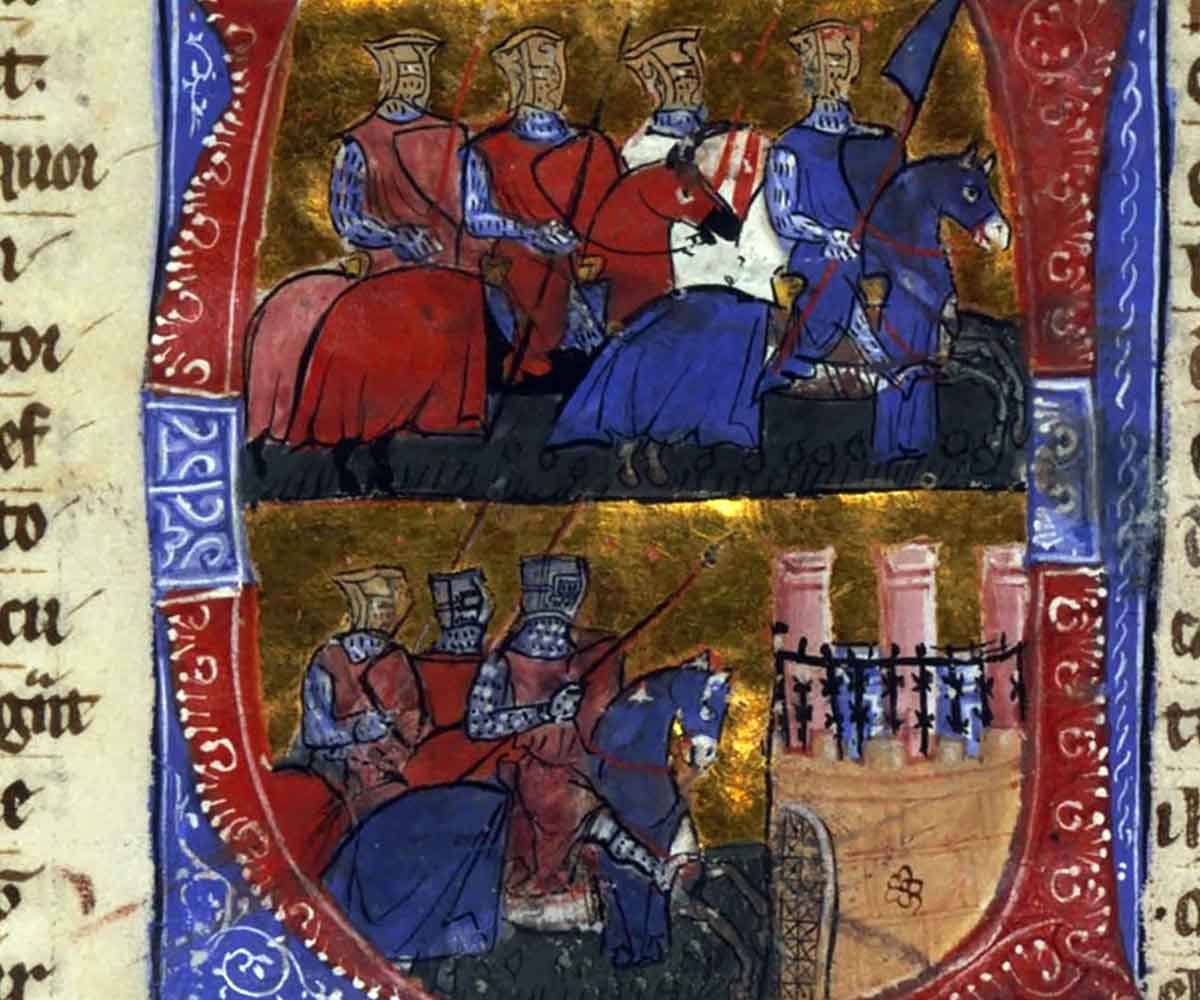
If the above arguments were not convincing enough, Pope Urban ensured a final promise for those who went on Crusade. The decision to march towards reclaiming the holy land would result in an “immediate remission of sins.” Popes were said to be invested with the power of God, so he was able to make such promises. Even the unrepentant would have a chance to redeem themselves.
He asks his listeners to draw a contrast to their life, saying that those who have been “serving as mercenaries for small pay now obtain the eternal reward,” and “those who have been wearing themselves out in both body and soul now work for a double honor.” With crusades, he has promised not only eternal salvation, but also the opportunity for elevated status while they remain on Earth. He finishes his speech by saying that the Crusaders should set off as soon as spring comes.
The Crusades to Come
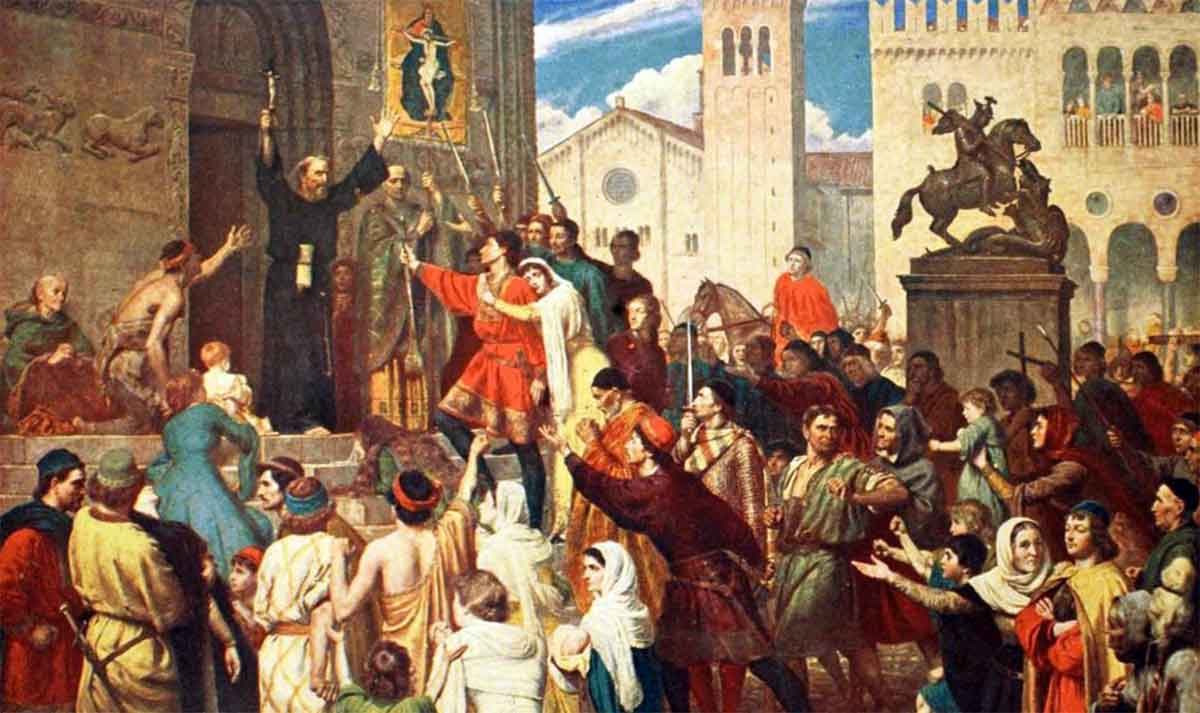
Life on crusade was difficult. While there was a cause motivating crusaders, there was limited unity among crusaders who tended to be factionalized by their country of origin. There were limited resources, and the existing divisions among the troops made it difficult to allocate collective resources.
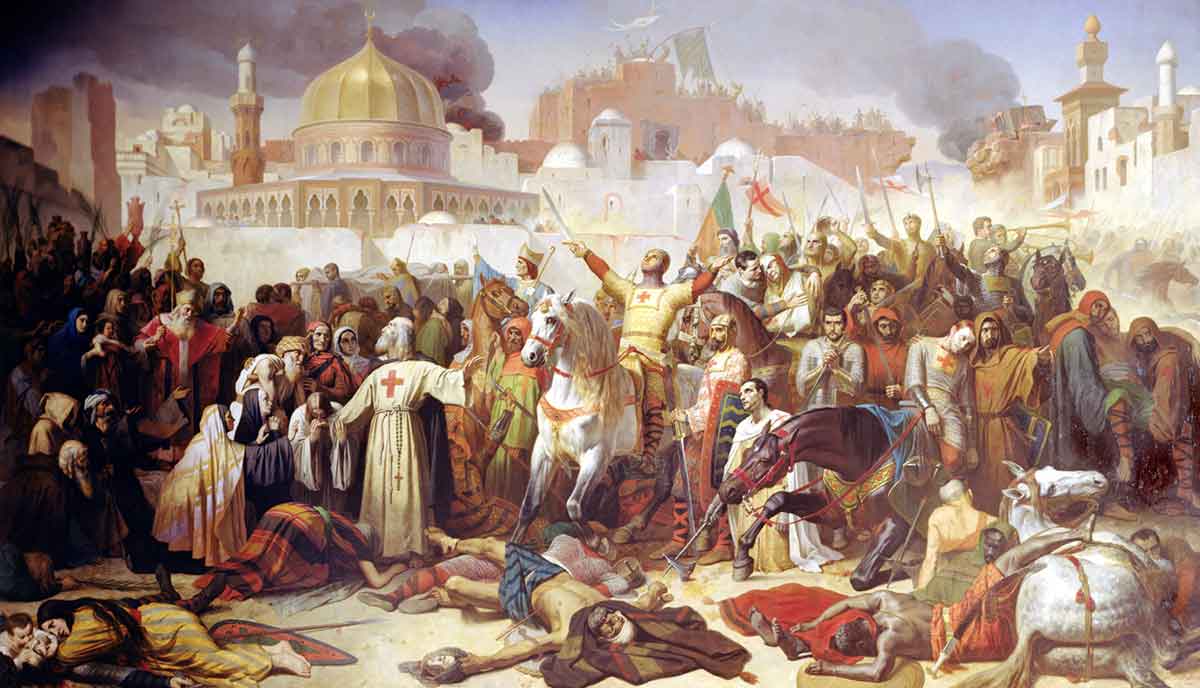
Despite their hardships, the crusaders did come back with godly stories. Some claimed to see saints who provided advice, and geographic or celestial events were interpreted as divine signs. Along the way, crusaders often got to see relics, and some even began to imagine warrior-saints. Above all, martyrdom was seen as a source of pride.
Guibert of Nogent, known for being one of the earliest medieval autobiographers, chronicled the First Crusade. He selected a reverential title for his work: The Deeds of God Through the Franks. Nine major crusades would take place over the course of the Medieval Period, making holy wars a facet of a world driven together and torn asunder by religion.