
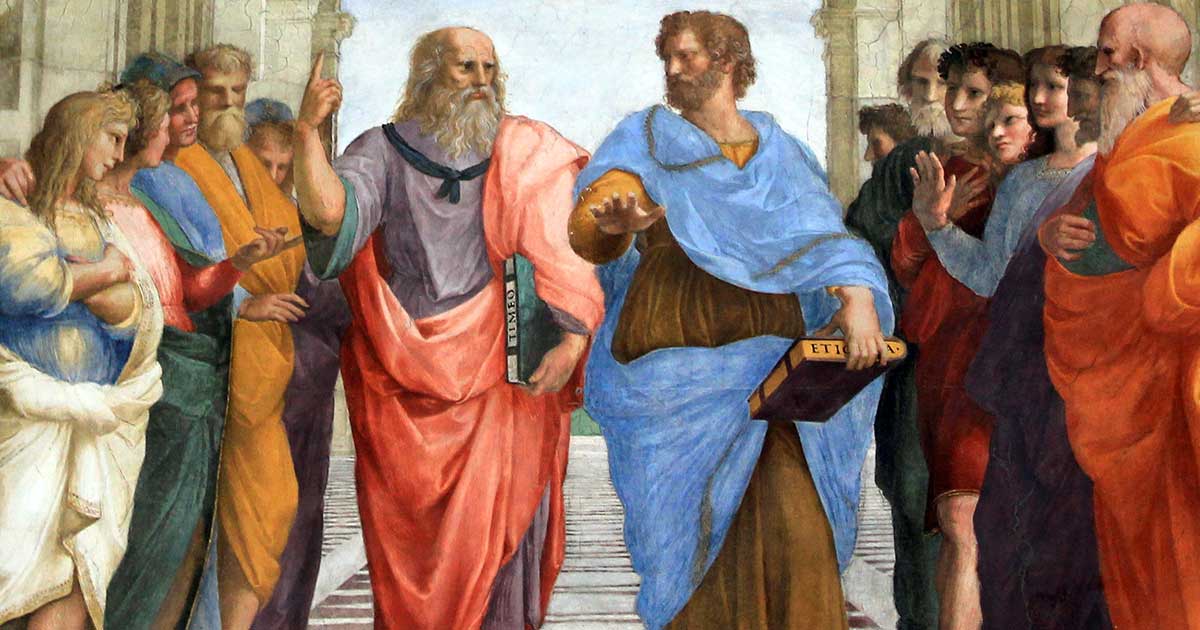
Plato was a high-born Athenian. While not the first philosopher on record, he is certainly one of the most famous and influential scholars in the field, not just in his time, but right up until today. He wrote primarily about epistemology, politics, ethics, and metaphysics, and the early Christian Fathers noted common themes between his work and Christianity. However, the Church leaders never accepted Platonic philosophy as it stood, but always altered it in light of their Biblical beliefs. Scholars have noted that they “Christianized” it for their own purposes, especially with regard to Plato’s theory of the forms.
How Early Church Fathers Viewed Plato’s Work
Some early Christian Fathers condemned Plato’s philosophy entirely. Theophilus of Antioch called it nothing but “worthless and godless opinions” (To Autolycus, Book 3, Chapters 2, 3). Tertullian claimed that “heresies are instigated by philosophy” (Against Heresies, Chapter 7). He quoted Colossians 2:8, wherein Paul warned Christians not to be taken in by “hollow and deceptive philosophy.” However, Paul was not condemning the field itself, but the type of philosophy that “depends on human tradition and the elemental spiritual forces of this world rather than on Christ.”
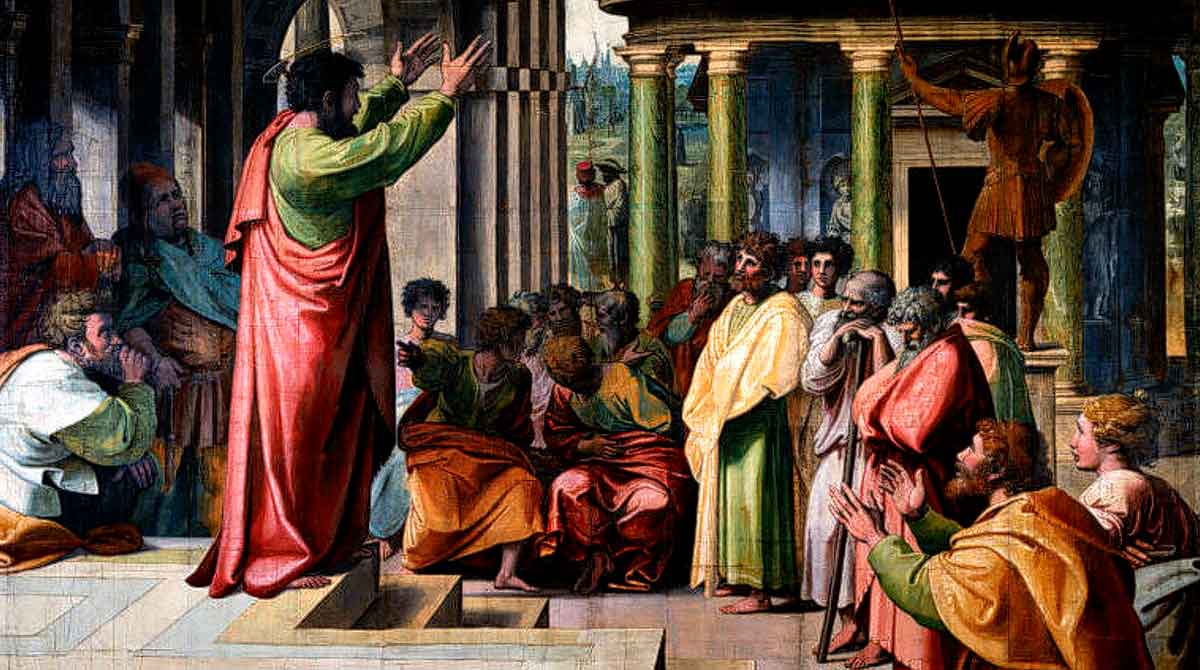
In fact, Paul himself made use of ancient philosophy as he argued for the Christian faith. We see this in Acts 17 when he posited his argument for the Gospel of Jesus Christ before the philosophers meeting at Mars Hill, using the Socratic Dialogue methodology borrowed from Plato to make his case.
Some early Christian Fathers, such as Justin Martyr and Clement of Alexandria, believed that Plato had taken some of his ideas from Moses and the Old Testament prophets and that his philosophy was actually a precursor to Christianity, as it contained elements of God’s truth. However, they regarded Platonism as incomplete, needing a Christian understanding of God to finish it off.
Besides borrowing Plato’s methodology to convince non-believers of the truth of Christianity, these early theologians also took on the language of Plato. The very word “theology” came from the Greek philosophers, as did the word “Logos” that the apostle John used in the opening of his Gospel. However, they redefined the terms.
Where Plato used “theology” to describe the tales of mythological figures, the Christians used it to refer only to the study of the triune God of the Bible. And where the Greek philosopher employed “Logos” to refer to a distant unknowable divinity, John used the word to describe Jesus, the second person of the Trinity.
Forms
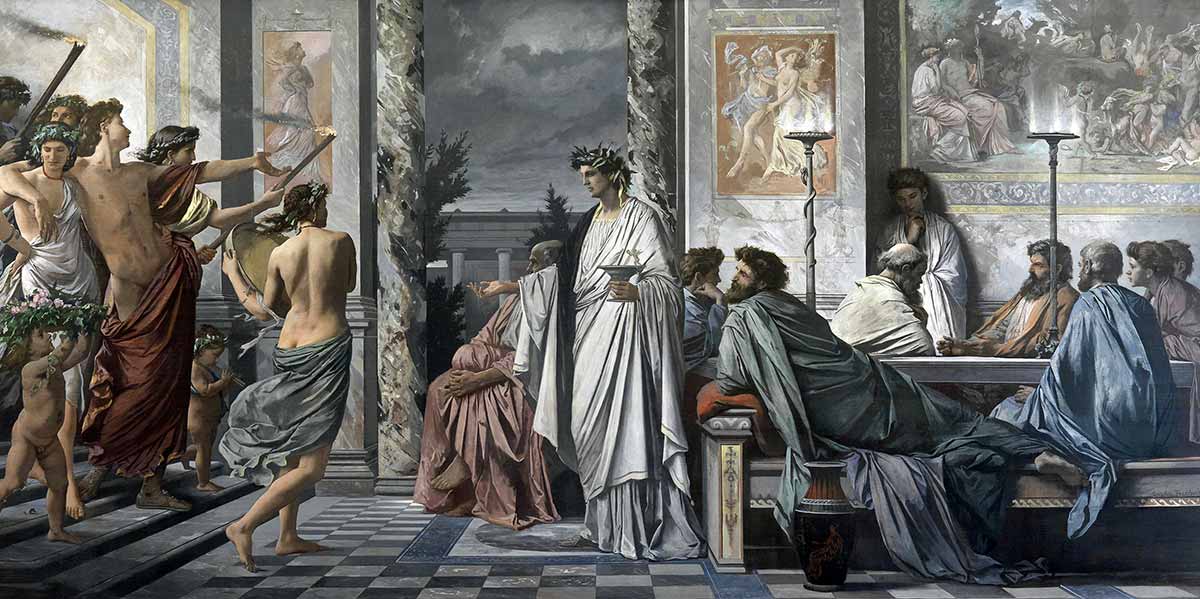
Plato believed that human beings are born knowing certain ideas that he called forms. These ideas do not just exist in our minds, he said, but exist totally outside our thoughts as well. They represent universal, objective truths that are ideal, perfect, and desirable. They have no substance and are metaphysical in nature. Everything in the visible, material world is merely an imperfect reflection of them. While Plato’s description of them varied, at one point, he indicated that all forms are part of one form, namely, the Good, which gives all the other forms meaning. Therefore, it is the Good that human beings are meant to seek.
However, Plato purports that while we might be born with knowledge of this, we have forgotten it all. It is through education that we must uncover and recollect a form. It is a teacher’s job to help us do that. Once we are aware of a form’s existence, we can embark on an intellectual journey to gain full knowledge of everything we have forgotten and connect with the divine and become god-like.
The Soul and the Mind
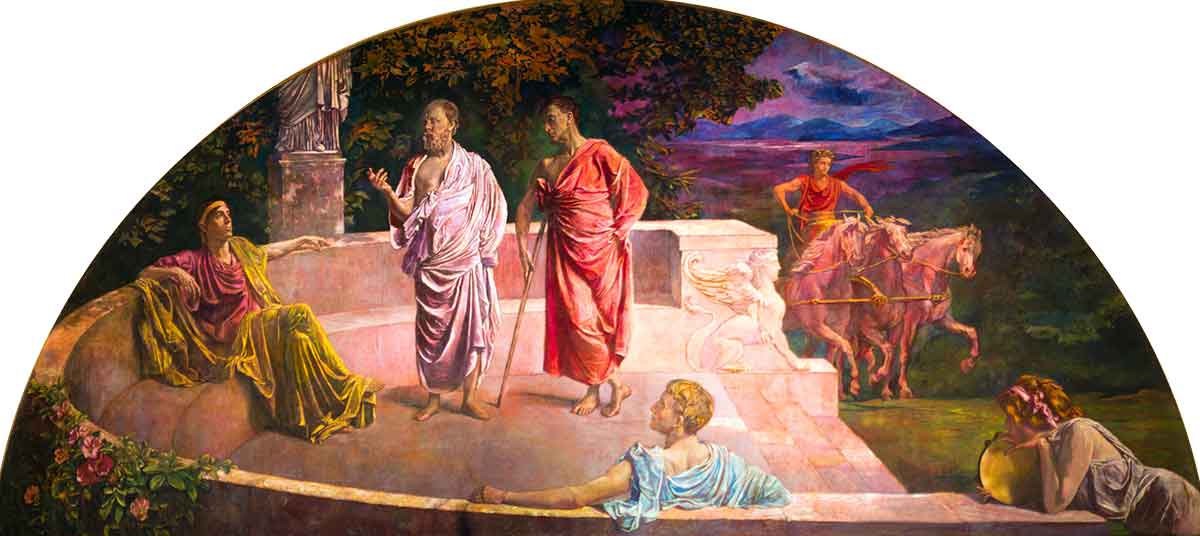
Plato borrowed the idea of a soul from Greek literature. Homer, for example, used the word to describe a wind that filled living beings. Plato redefined it, making it the seat of the mind and reason in a human being. They represent the bridge between the material world and the forms as they allow us to intellectually grasp them.
Beyond the human soul and its containment of rational thought, there is, Plato asserted, a mind that is responsible for creating this Earth and all therein. In his work, Timaeus, he used the word “demiurge” to describe such a mind that did not just make the cosmos, but sustains it as well, continuously giving it order. In fact, it was the orderliness of the world that made Plato think that there must be an intelligence behind its creation. This mind, however, is not the source of the forms, although he supposedly did spend time contemplating them.
Basil the Great (c. AD 330 to 379)
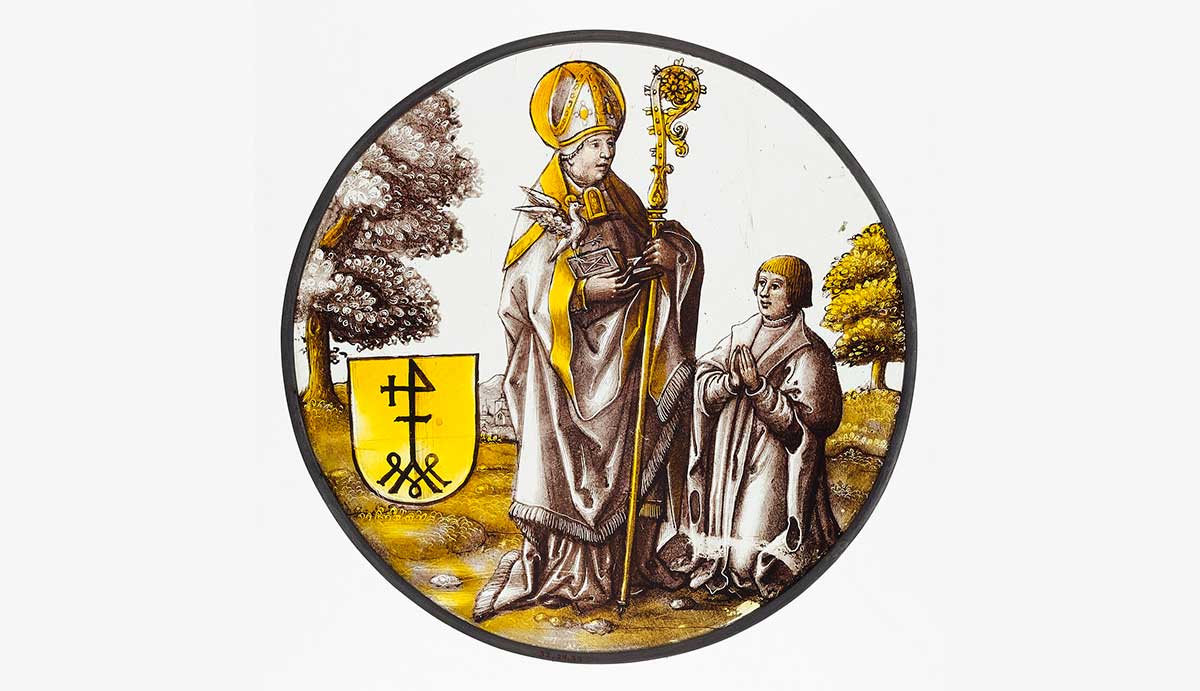
Basil is one of the renowned Cappadocian Fathers. He served as Bishop of Caesarea in the region of Cappadocia in what is now modern-day Turkey. Born into a well-to-do Christian family, he was given an excellent classical education that included philosophy. In his Address to Young Men on the Right Use of Greek Literature (also called To The Youth), he encouraged students to study pagan authors, including Plato, advising them to pick out what was virtuous and good in their writings. However, at the same time, he warned them to dismiss what was untrue, immoral, or idolatrous in them. As with the earlier Church Fathers, he saw elements that complemented Christianity, but found non-Christian material as well.
Basil echoed Plato in his belief that “a rational force is implanted in us as a seed,” a seed, he said, that “impels us toward love.” He even wrote that men, by nature, desire “the Good.” However, Basil believed that “the Good” is God and “since all creatures desire the Good, all creatures desire God.” Like Plato, Basil believed that teachers were needed to help students attain the Good, but that came through study of scripture, which he dubbed “the school of commandments.” As he put it, the seed “is fully cultivated and skillfully nurtured by the grace of God, brought to its full perfection” (The Love of God). Mere philosophy could not do that.
Gregory of Nyssa (c. AD 335 to c. 394/39)
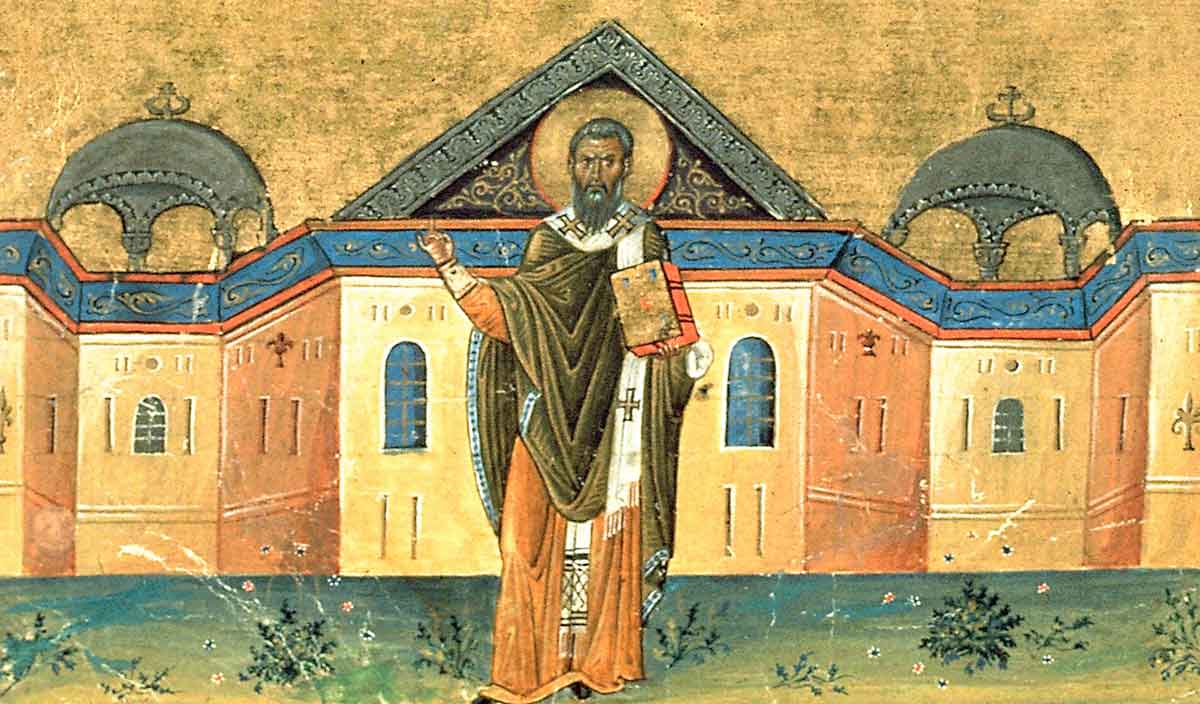
Gregory was Basil’s younger brother. He, too, was one of the Cappadocian Fathers and served as Bishop of Nyssa. Like his brother, he adopted and adapted Plato’s work, most notably in his writing about moral transformation, which mirrored Plato’s “Ladder of Love” in his Symposium. However, also like Basil, he put a Christian twist on the theme. He quoted from the Beatitudes: “Blessed are the pure in heart, for they shall see God” (Matthew 5:8). He believed that, because humankind is made in the image of God, the purification of the heart would reveal the divine image within us. That is how Christians connected with God, not through the study of philosophy.
Gregory used the vocabulary of Plato in talking about forms and referred to God as the “transcendent Form” behind everything. However, he was clear in noting that God was not just A form along with many others, but was THE form that stood alone. He also pointed out that, from a Christian perspective, God was both the Good and the mind/reason, thus Christianizing the terms and their meanings.
Gregory of Nazianzus (c. AD 329 to 390)
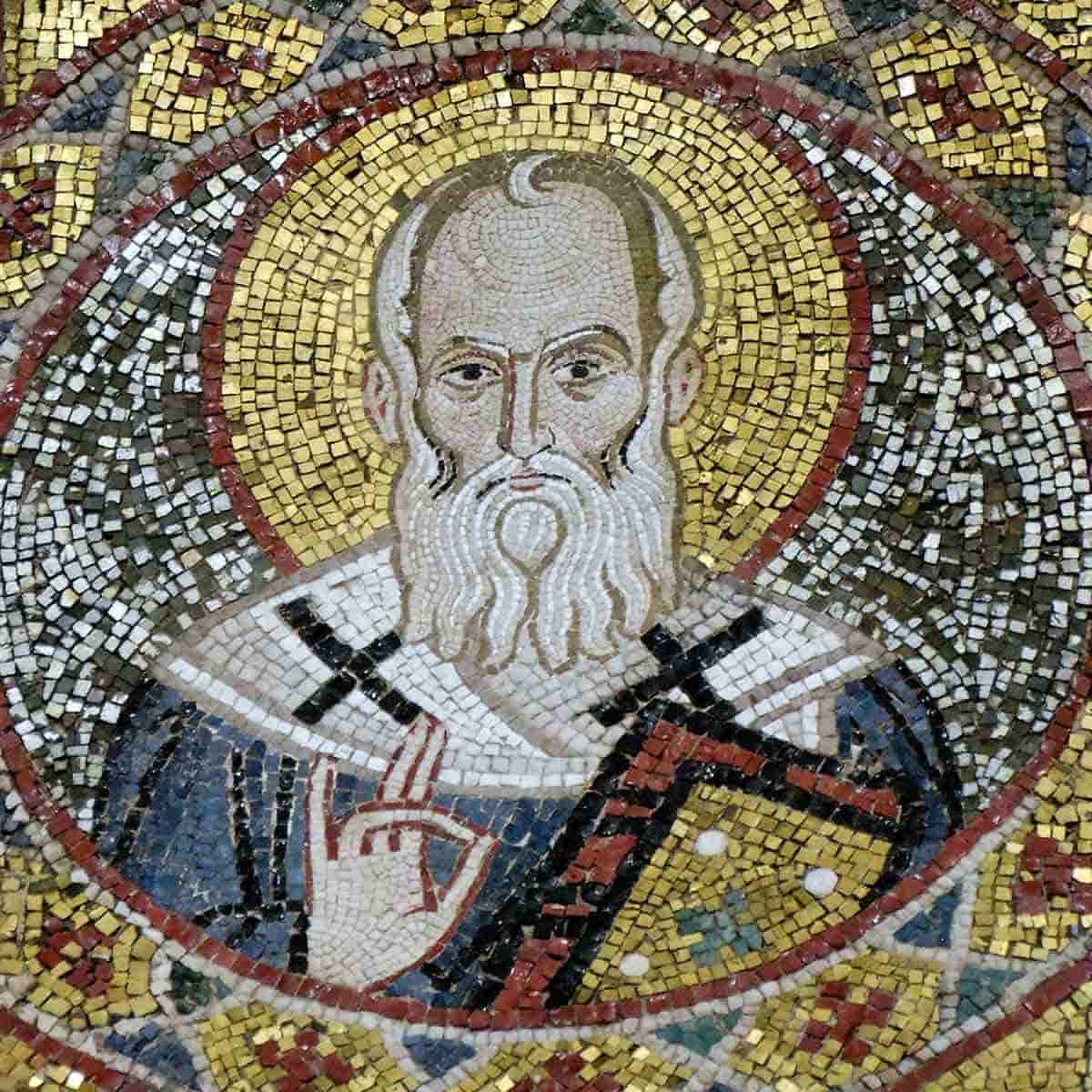
This Gregory was also a Cappadocian Father. He focused on the many descriptions of God found in the Bible, including the mind. He wrote, “Are not Spirit, and Fire, and Light, and Wisdom, and Righteousness, and Mind, and Reason, and the like, the names of the First Nature?” Unlike Plato, Gregory did not believe that intellectual, philosophical study would help us uncover buried knowledge and connect with the divine. However, that does not mean that our minds played no role in uniting with God. Indeed, the theologian pointed out that our minds will help us to know him, not just as an abstract concept like that imagined by Plato, but as a being we can know personally, owing to the fact that we were made in his image.
He agreed with Basil that it was through the study of scripture that we could achieve the goal of coming to God and of becoming god-like, not through the practice of philosophy. Philosophy’s only role was to supply frameworks and language for talking about God. And while he agreed with Plato that “every rational nature longs for the Good,” he, too, explained that the Biblical God is the Good.
Augustine (AD 354 to 430)
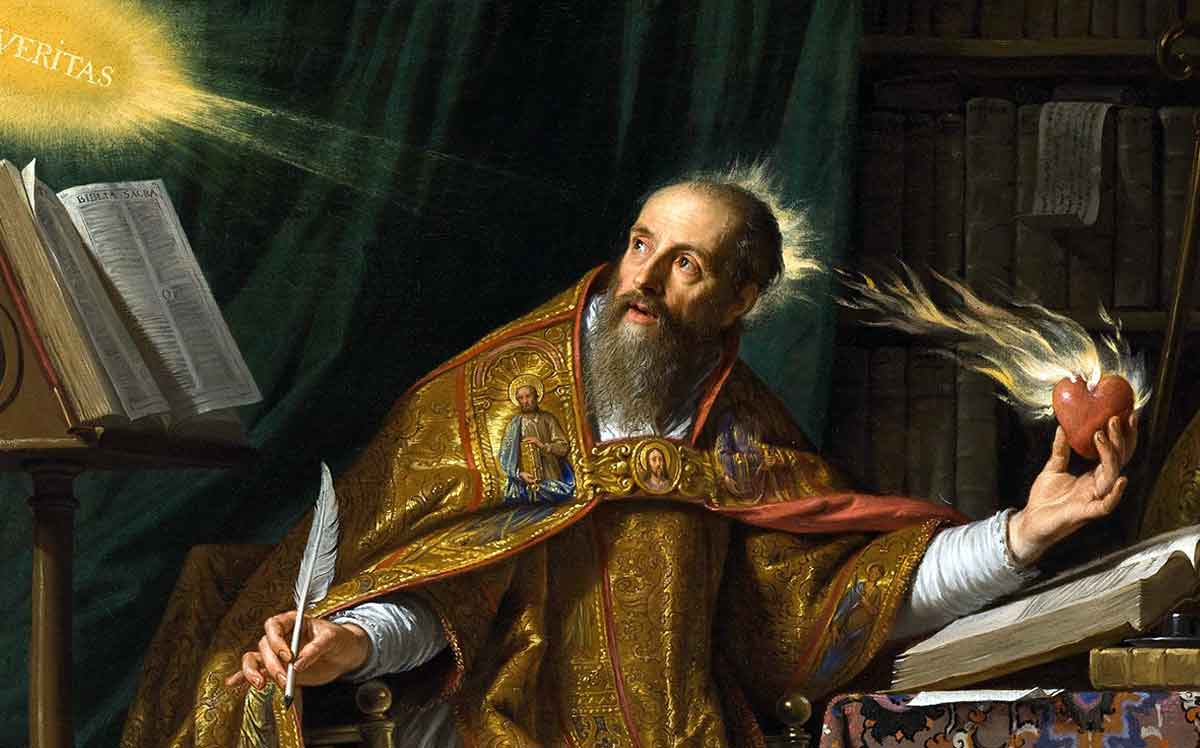
Augustine praised Platonism, considering it to be superior to all other secular philosophies because, as he saw it, the idea of forms brought people closer to the Christian understanding of God than any of the rest. He wrote, “Able men, who have thought deeply on these things, have gathered that the first form is not to be found in those things whose form is changeable . . . They saw that there is some existence which is the first form, unchangeable” (City of God, Book VIII, Chapter 6). Augustine praised Plato for recognizing that an intelligence of some kind had created the world, noting that Platonists “most rightly believed” that a creator was “the first principle of things, which was not made, but made all things.”
Augustine noted, however, that while Plato outlined his philosophy admirably, he did not have the full truth. The philosopher failed to take it one step further beyond an abstract concept of the first form and recognize that the living God is the form about which he wrote. Plato rightly believed that there was indeed an invisible world behind this visible one, but he could not name or identify any unseen being who might occupy it. It took Augustine and his fellow theologians to do that.
Conclusion
Ultimately, Christianity owes a great deal to Plato. While the early Christian Fathers saw errors in his work, many of them recognized that he was on the right track with some of his beliefs. They just took what he wrote further, redefining such ideas as his Forms, and using his methods of argumentation and the vocabulary of philosophy to express Biblical theology.