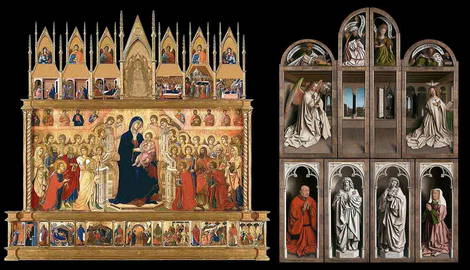

In Italy, in the early 14th century, a new and often complex form of devotional art began to emerge. The polyptych, an assembly of multiple painted panels, frequently featured the gilding of the Byzantine style and echoed its elaborate framing. Over the course of several centuries, the polyptych experienced a glorious ascent before falling out of fashion during the Renaissance. That ascent, though, often gave rise to works of undeniable magnificence.
Who Commissioned Religious art and Polyptychs?
Religious art was commissioned, in the most part, by churches and chapels throughout Europe and the Byzantine Empire for centuries before the Renaissance catapulted it to a higher level. Until then, patrons had been the religious leaders of the respective establishments. Private patronage was a thing of the future.
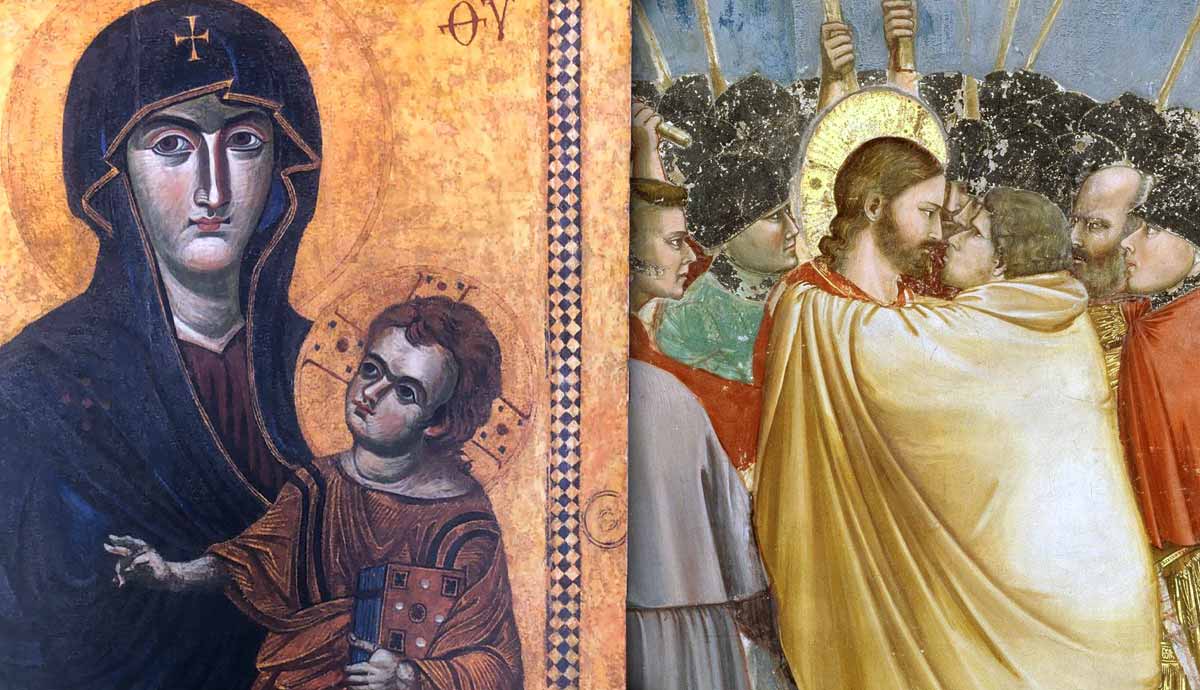
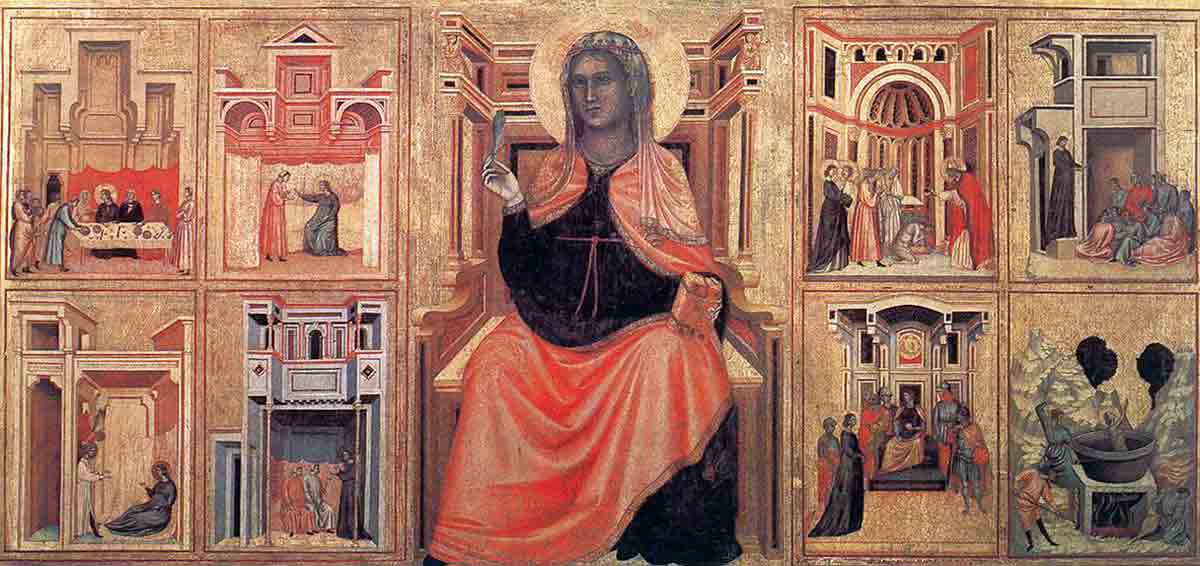
In addition to relating to a specific church or saint, Byzantine and early Christian art in general took the form of icons or simple images of the Madonna and Child or the Crucifixion. The Saint Cecilia Altarpiece, pictured above, is one of the oldest extant polyptychs. Believed to have been painted by a follower of Giotto in the early 14th century, the painting retains the trademark Byzantine gold whilst featuring Giotto’s more naturalistic portrayal of the human form. Relatively restrained in its decorative style and likely explicitly commissioned for the church in which it hung, this altarpiece represents both the end of one era and the beginning of another. As Italian art moved towards the patronage of the wealthy and monumental pieces designed to display power, religious art became less about pure devotion and more about who could commission the biggest and the best.
Duccio’s Maesta: Medieval Magnificence Incarnate
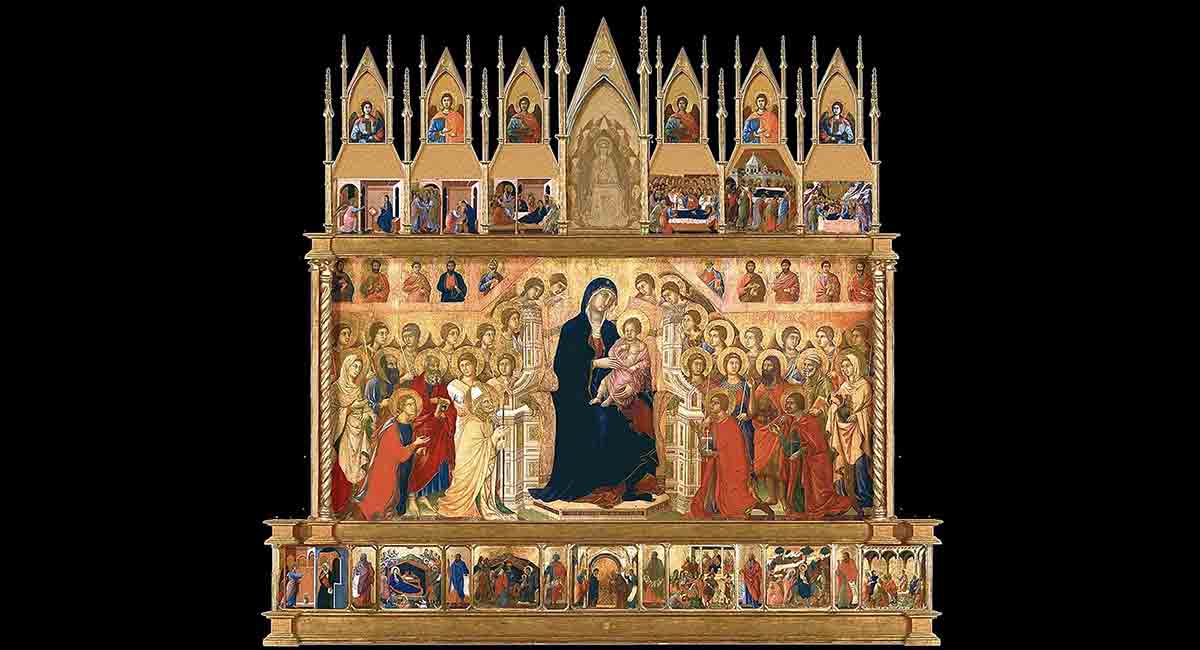
On June 9, 1311, a procession wound its way around the center of Siena, passing through the Campo, the seat of government, and on to the Duomo. Every man of importance in the commune took part; such was the magnitude of the affair. The occasion for such a prestigious event was the installation of Duccio’s Maestà polyptych, or Majesty of the Madonna, on the high altar of the cathedral.
All this pomp may seem a bit much for a painting. The Maestà, though, was much more than that. Its size was not the key factor in its fame, although at over six and a half feet by thirteen feet, it was considerable. In fact, it is likely that the people of Siena did not realize the importance of the phenomenon they were witnessing that summer day.
Duccio’s masterpiece, despite owing much to the Byzantine tradition of painting, cemented the Sienese style, perpetuating the city-state’s traditional, conservative ideology. Commissioned by the government and the cathedral’s authorities during a period of civic stability and wealth, the Maestà was one of the first works of art designed to project an image of the city in which it belonged, as well as proclaiming Siena’s devotion to God.
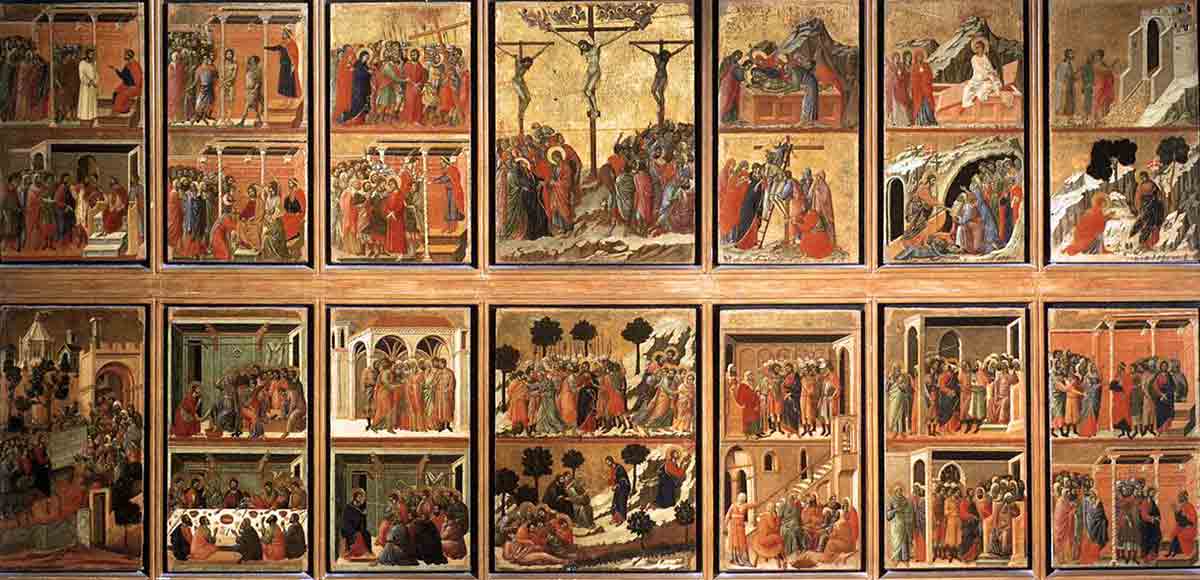
In terms of structure, the Maestà is double-sided, a real innovation for the period. Each side of the work performs a different function. The front is devoted to the worship of the Virgin and Child and is intended for the faithful to view. The reverse offers a more complex cycle illustrating the life of Christ. Not ordinarily visible to the public, it provided the clergy with further, private opportunities for contemplation.
Italian City-States and the Power of the Polyptych
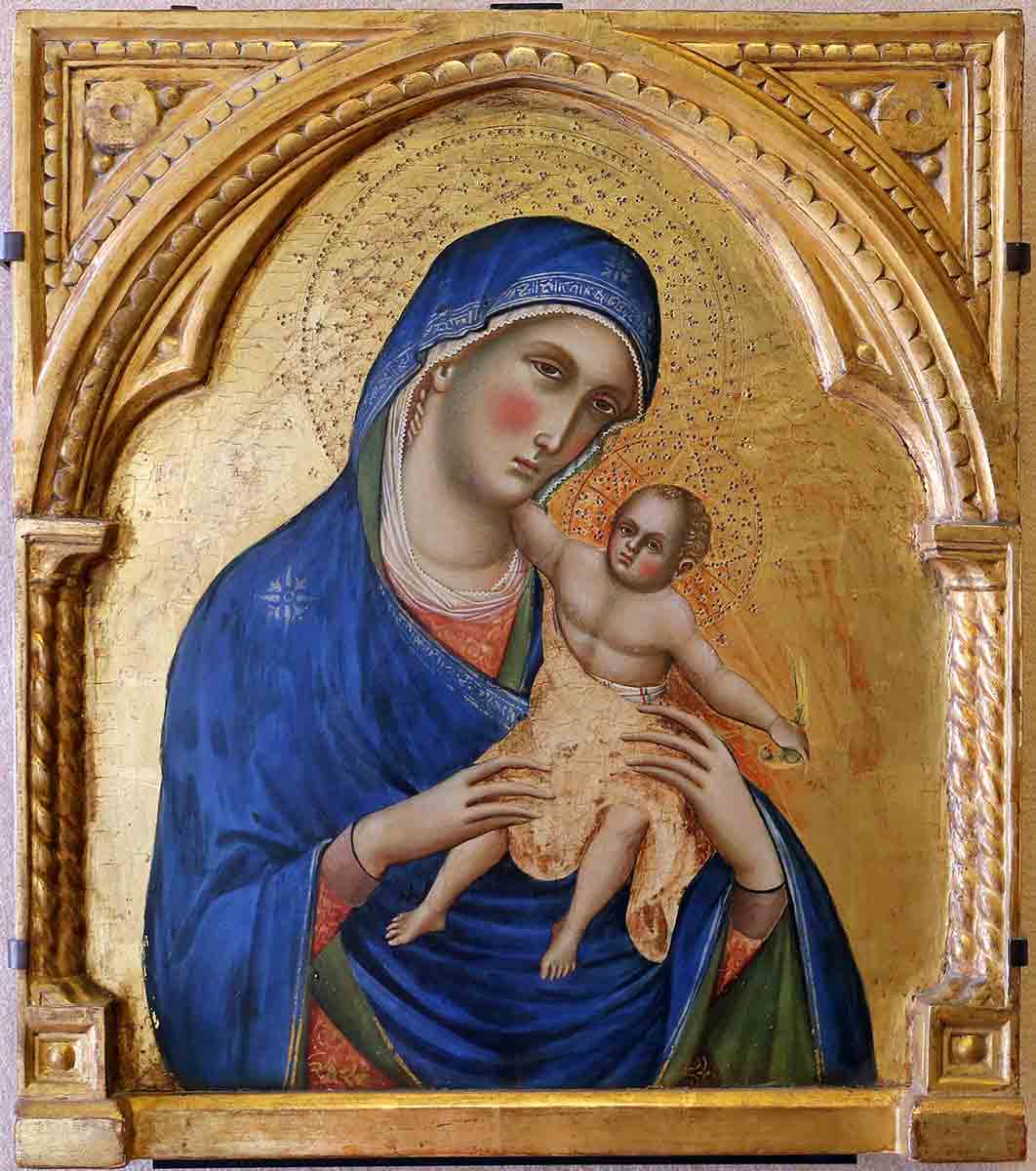
The influence of the Byzantine Empire continued to be felt in the city-states of northern Italy well into the Trecento. Paintings continued to be adorned with gold and ultramarine, the costliest pigment, which abounded in the robes of the Virgin. Although Siena and Florence were renowned for the quality of their art and the wealth of their patrons, the artists of Venice, Western Europe’s portal to the east, shone brightly, posing serious competition to their Tuscan colleagues.
Paolo Veneziano came to be seen as the father of Venetian art. By the mid-14th century, Paolo, born into a family of painters, ran his own successful workshop, which his sons later joined. The Trecento in Venice, in particular, was a time of marvels. La Serenissima was at the height of its power, dominating trade between East and West. The city hosted Dante Alighieri and Marco Polo. Petrarch lived there for some years, introducing the principles of humanism to a society still adhering to Aristotelian thought.
Religion, though, held firm. However rich a trading or banking family might be, it still needed the blessing of its patron saints and of God to ensure a good afterlife. Whereas the average citizen might attend church throughout his life to ask for God’s mercy after death, the nobility and eminent families had money at their disposal. With it, they invested in the hereafter. The principal form of religious art was essentially the single panel, most frequently featuring the Virgin and Child. As the 14th century wore on and the prosperous leaders of society throughout the Italian city-states grew ever more powerful, families such as the Strozzi and the mighty Medici in Florence demanded more of their artists. It was during this maelstrom of change and the developments in science, philosophy, and, of course, art, that the polyptych emerged.
The Strozzi Chapel Altarpiece: Continuity and Change
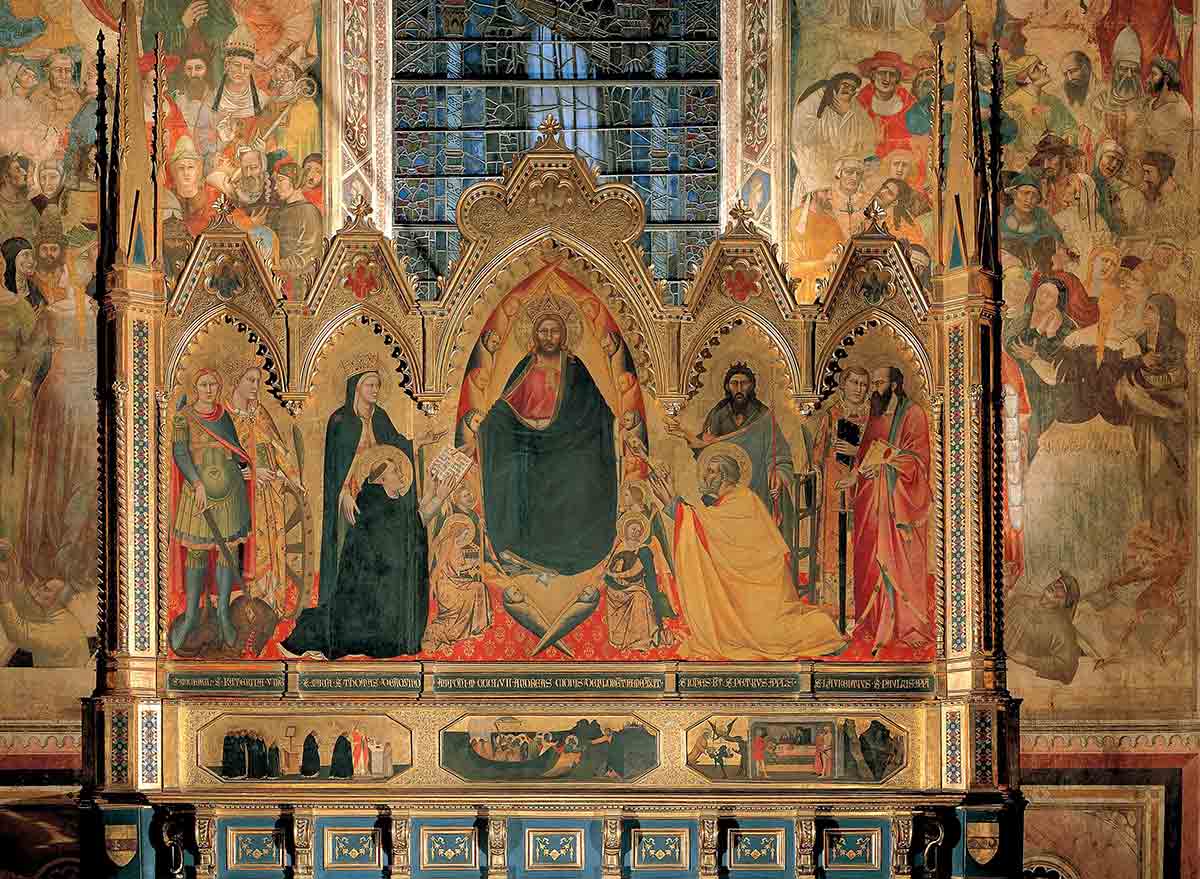
The Strozzi family was, from the early 14th century, a rival in banking and wealth to the Medici in Florence. Both families were devoutly Catholic, though their business interests often lured them away from the path of righteousness. Money-lending, or usury, as the church calls it, went firmly against the tenets of Catholicism. The Strozzi and the Medici were, therefore, torn. How could they demonstrate their devotion to the church while still letting the rest of Europe know who was in charge? Enter the polyptych altarpiece.
In the mid-1350s, Tommaso Strozzi signed a contract with brothers Nardo and Andrea di Cione (also known as Orcagna) for the creation of a five-panel polyptych, painted in the finest ultramarine pigment and gold, surrounded with complementary frescoes on the walls, to adorn a chapel in the Dominican church of Santa Maria Novella in Florence. The resulting cycle of frescoed walls and a polyptych of gold and tempera not only spoke of the family’s devotion to the Dominican branch of the Catholic church but also flexed its social muscles in an ostentatious display of enormous wealth and power.
The Strozzi’s extravagant show of prosperity and opulence at Santa Maria Novella was impressive and, over the decades to come, was frequently matched, if not exceeded, by their arch-rivals, the Medici. Across the Alps, another revolution involving the rise of the polyptych was occurring, led by one of the masters of the Northern Renaissance, Jan van Eyck, and painters such as Rogier van der Weyden and Robert Campin.
The Ghent Altarpiece
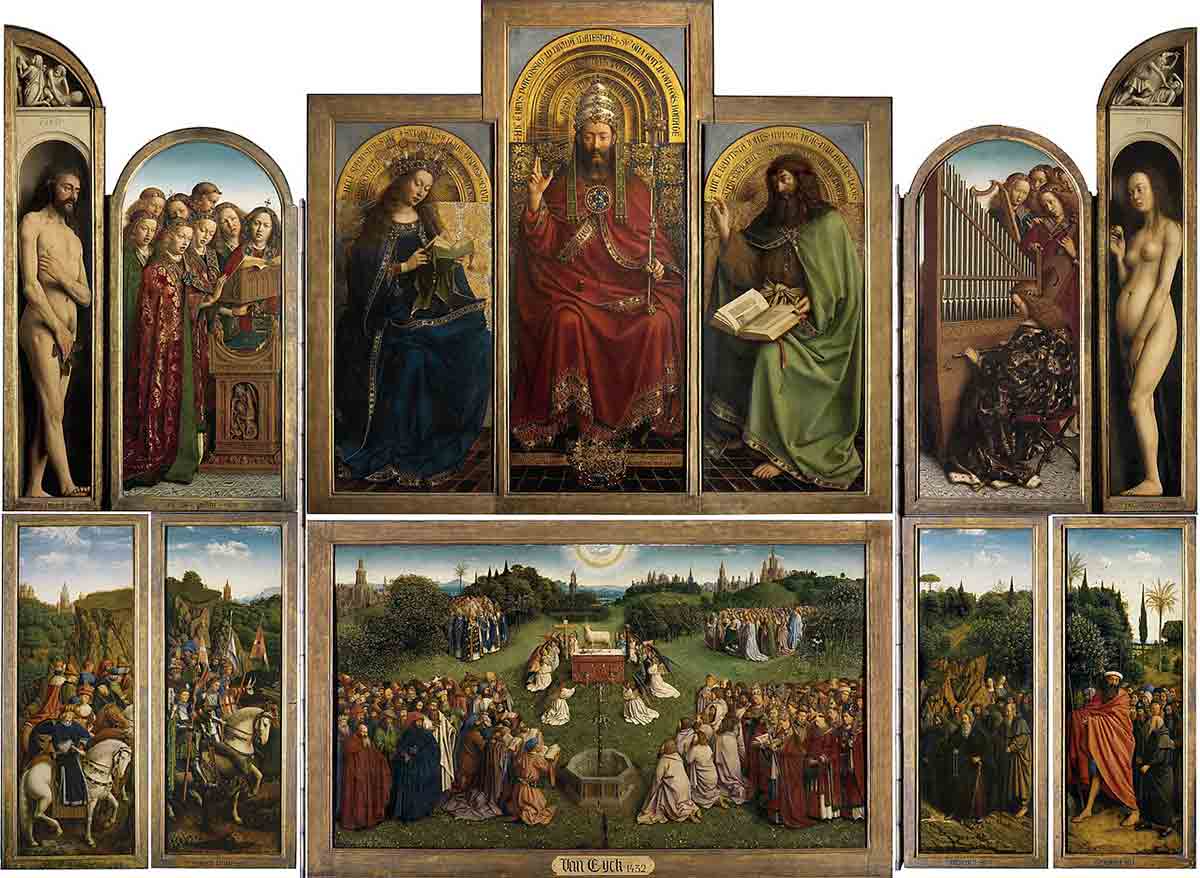
Renaissance art in Italy is often seen as the acme of the period’s achievements. When Antonio de Beatis, the Cardinal of Aragon’s secretary, saw the Adoration of the Mystic Lamb, or the Ghent Altarpiece as it came to be known, in 1517, he surely knew that something significant had been happening in art north of the Alps from the early 14th century onwards.
Frequently believed to have been painted entirely by the hand of Jan van Eyck, it was, in fact, his brother Hubert who started working on the polyptych. Following Hubert’s death in 1426, Jan continued the work until its completion in 1432. Although attribution to various parts of the work is problematic, it is the ambition and breathtaking scale of the altarpiece that really matter here.
The patrons of the altarpiece were Joos Vijd, from a prosperous merchant family from Flanders, Warden of the Church of Saint John and Assistant Burgomeister of Ghent, and his aristocratic wife Elisabeth Borluut. This influential yet devout couple had the means to commission such illustrious artists as Hubert and Jan van Eyck, and they did not hesitate to use it to the fullest extent.
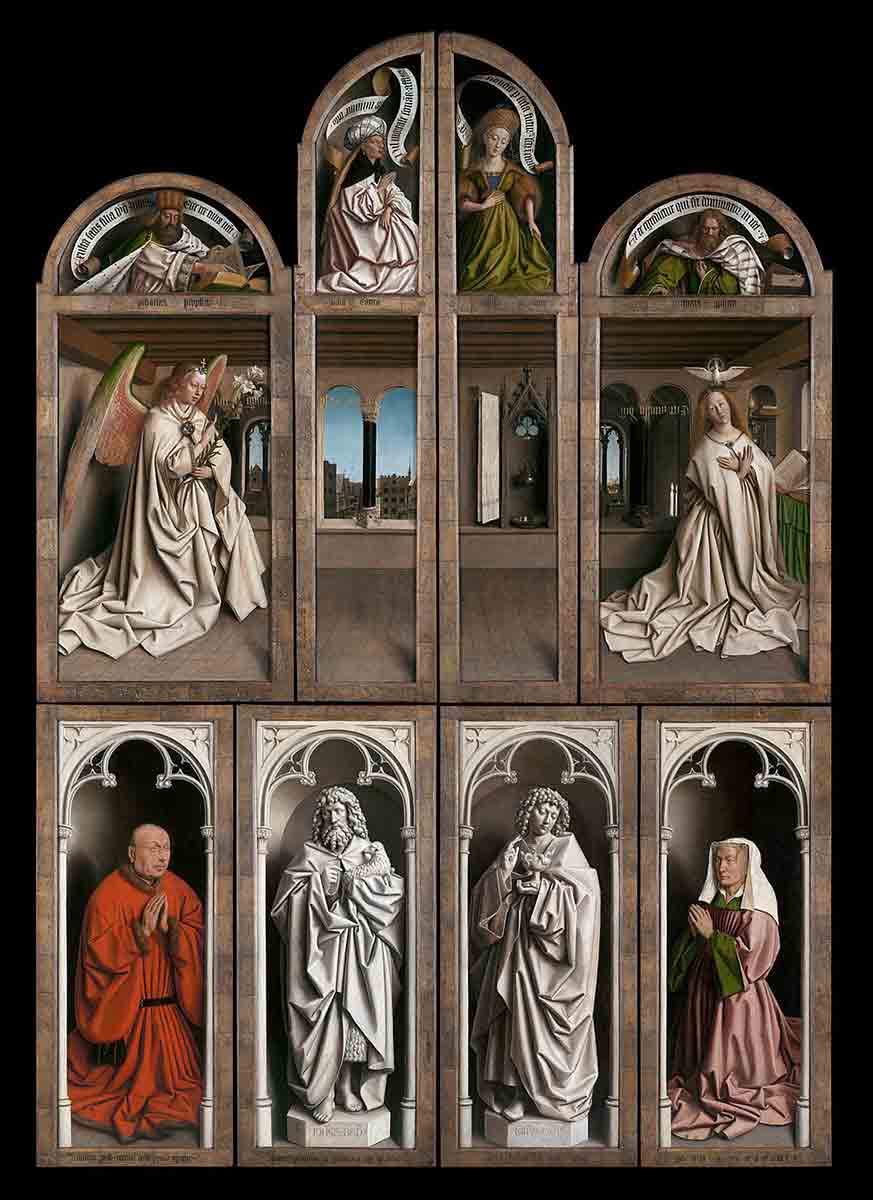
As was often the case with patron-financed altarpieces, the donors are depicted on the panels of the altarpiece’s complex structure. Measuring approximately 12 feet 4 inches by 8 feet 6 inches when closed and 12 feet 4 inches by 17 feet 1 inch when open, it provided plenty of space for a host of saints and angels, as well as depictions of the donors kneeling in prayer.
Jan van Eyck’s mastery of oil paint, still largely unused south of the Alps, was complete. A world away from Duccio’s Byzantine-influenced, stiff figures, van Eyck’s people are human, natural, soft. Adam and Eve are exposed, vulnerable. The grisaille of Saints John the Baptist and John the Evangelist is crisp and stony. An altarpiece of this scale and quality would have cost a fortune. To the donors, it was money well spent. Thanks to this Northern Renaissance polyptych, the whole of Ghent and beyond knew Joos Vijd and his wife. Beyond the earthly realm, they could only pray that their offering to God would be well-received.
Polyptychs: Helping the Wealthy Live (And Die) Well
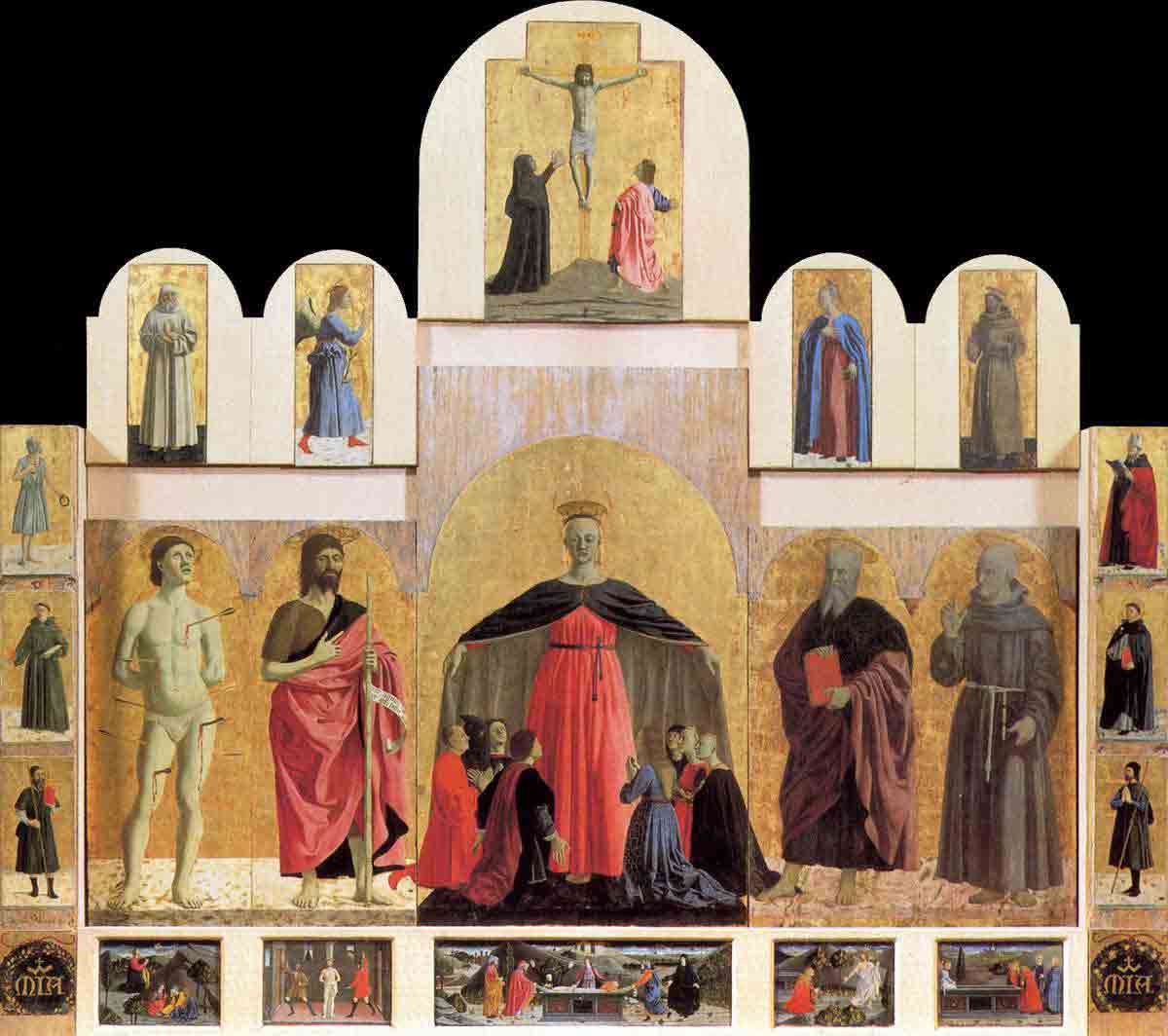
Throughout the history of early modern art, the rich and powerful have allowed artists to give free rein to their innate genius, using the finest materials and a talent refined through years of apprenticeship in the workshops of older masters. In the 14th century, the fanciest clothes, the biggest house, and the most enormous art purchase were a way to ensure everyone knew your name.
Donors such as the Medici, the Strozzi, Joos Jijd, and Elisabeth Borluut would be remembered for centuries to come for their art commissions. What was important to them, though, these merchants, moneylenders, and bankers, was that, through their offerings to the church and to God, they would be forgiven for their sins on Earth. They wanted to enjoy their riches, but they also wanted to ensure that they made an impressive enough donation to their patron saints and to God, so that their comfort might continue in the afterlife.
Whilst single-panel Madonnas could hang in a privately funded chapel in a prominent church, gilded diptychs, embellished with the costliest lapis lazuli, could be carried by traveling kings for moments of private prayer; triptychs drew the faithful into church to pray before them. It was the painted polyptych that spoke loudest in the early Renaissance. Designed to dominate an altar, even the church or cathedral as a whole, polyptychs like the Ghent Altarpiece were a dramatic and effective way to gain attention, either within society or in heaven.
The polyptych changed religious art. To some extent, it commercialized it and commodified it. Centuries later, perhaps we should be grateful for the fear of damnation that prompted the high flyers of 14th-century Europe to seek redemption via the medium of high art. If it were not for their actions, we might never have experienced the magnificent polyptychs that have survived to this day.