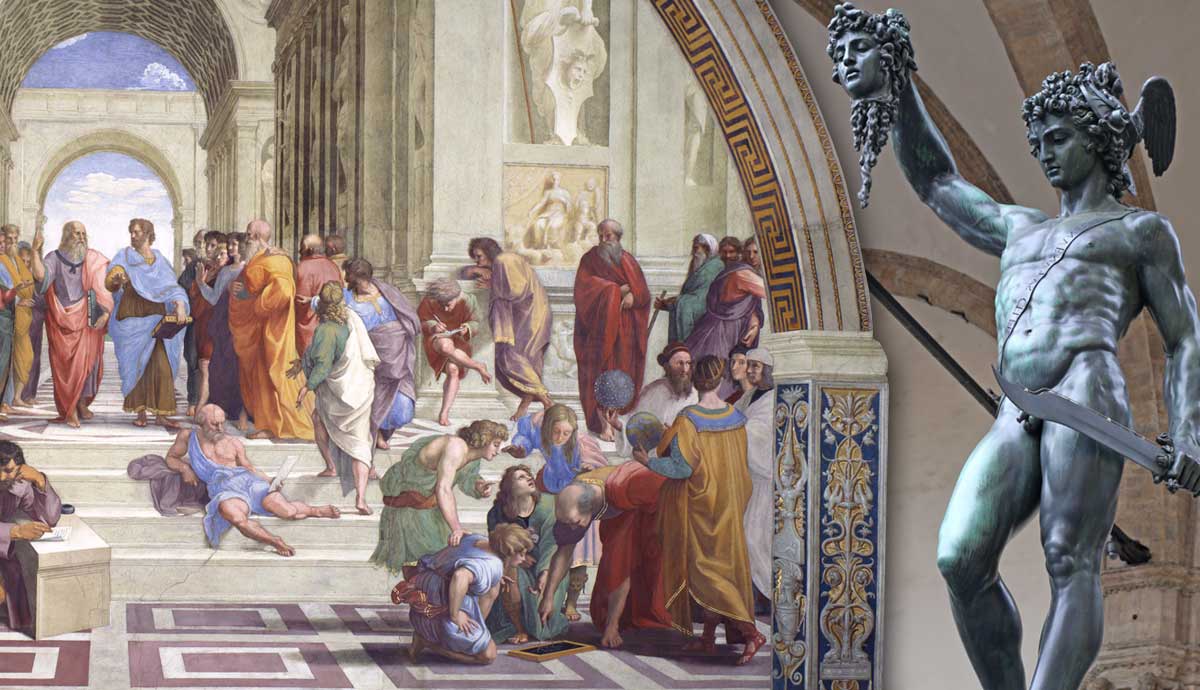

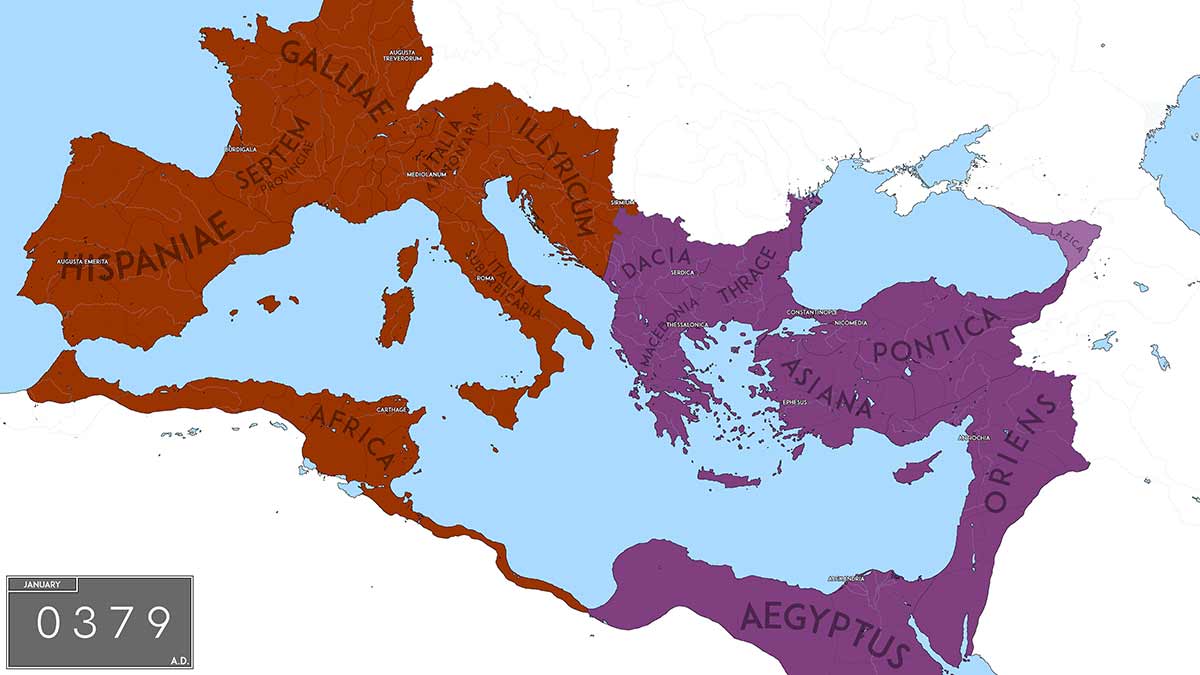
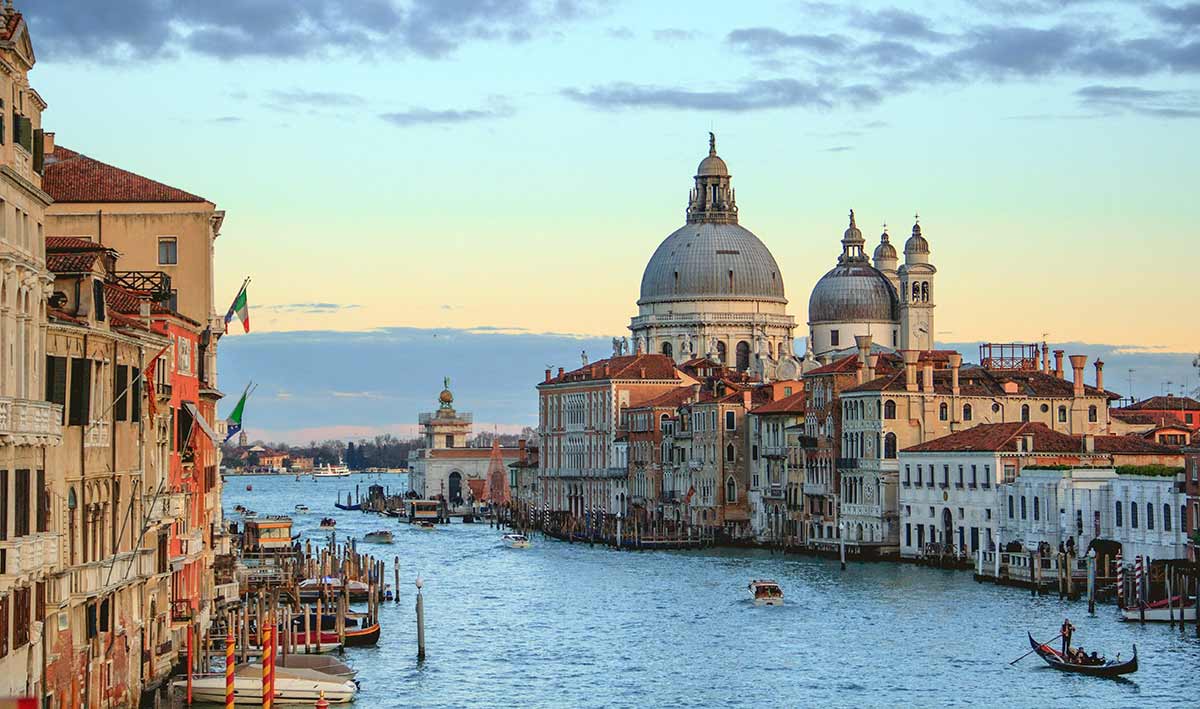
As early as the 3rd and 4th centuries, the city-states of northern Italy found themselves ideally placed at the crossroads of Europe. Italian bankers controlled the finances of Europe, and trade routes passed via Constantinople and Venice to Ravenna, considered by Emperor Honorius to be more easily defended than Milan. In the coming centuries, Ravenna’s position as the fulcrum of the Eastern, or Byzantine, Roman Empire and its Western counterpart led to it becoming a conduit for an artistic revolution, from which emerged the Proto-Renaissance.
Byzantine or Roman…or Renaissance?
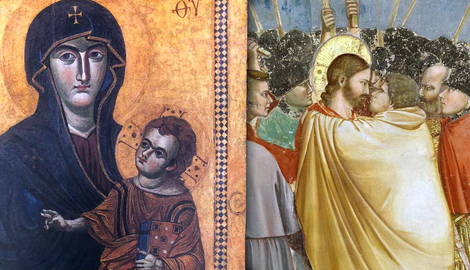
As the city’s influence spread, its artists began to disseminate Ravenna’s Byzantine influences throughout the peninsula, sparking the first murmurings of the Renaissance. Suppose you look at works by Giotto, Cimabue, or Duccio, and they remind you of the mosaics of Greek churches or Eastern Orthodox icons. You’re likely witnessing the influence of Byzantine art on the early Renaissance. But what does Byzantine mean? Artistic periods can overlap, as seen in this case, where a period spanning art and architecture from the Roman Empire to the early Renaissance includes the Medieval period, which lasted over a thousand years.
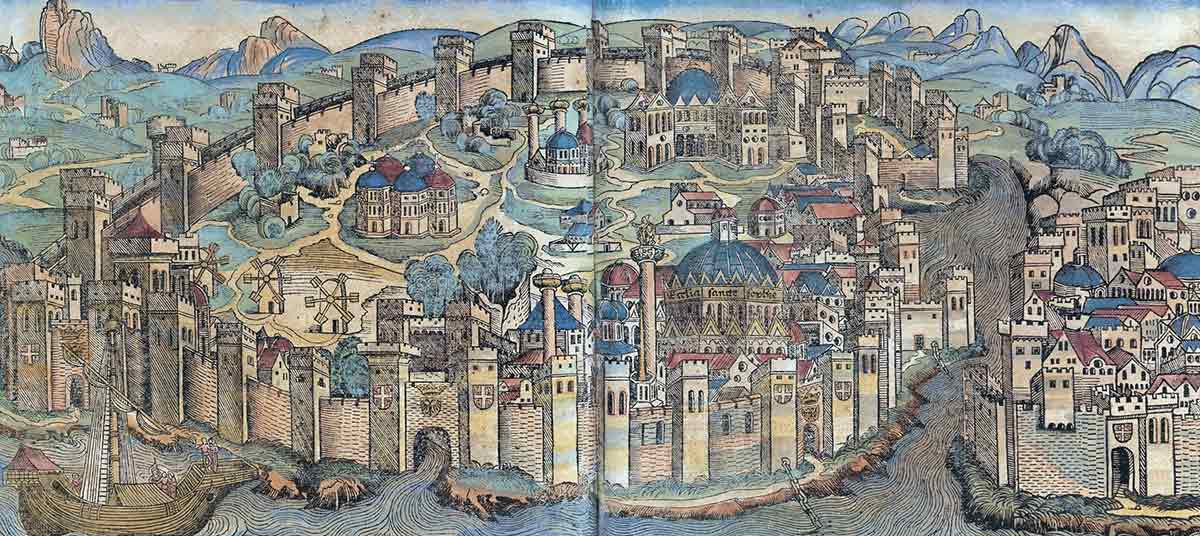
Byzantion (later becoming the Latinized Byzantium) was a Greek colony in antiquity. In 330 AD, Emperor Constantine conquered the city, renaming it Constantinople. The city had a tumultuous history, raided and looted over centuries, until the eventual Sack of Constantinople during the Fourth Crusade in 1204, and then its final moments at the hands of the Ottomans in 1453.
The Golden Ages of Byzantine Art
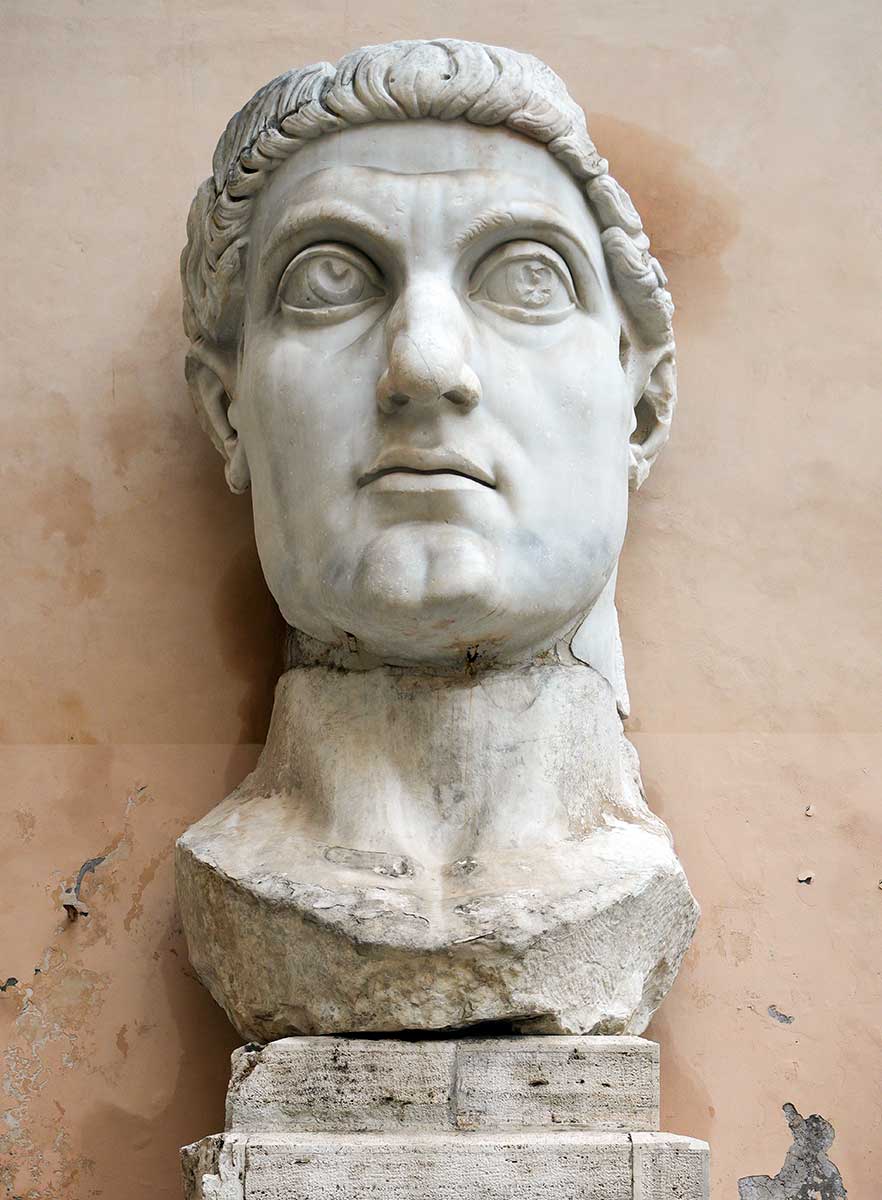
In 381 AD, an ecumenical council held in Constantinople by Emperor Theodosius I decreed that the Bishop of Constantinople would rank second in importance in the church, as Constantinople was considered the New Rome. In the centuries that followed, the city flourished. By the 6th century, it was the primary axis of trade and imperial power in the Eastern Roman Empire.
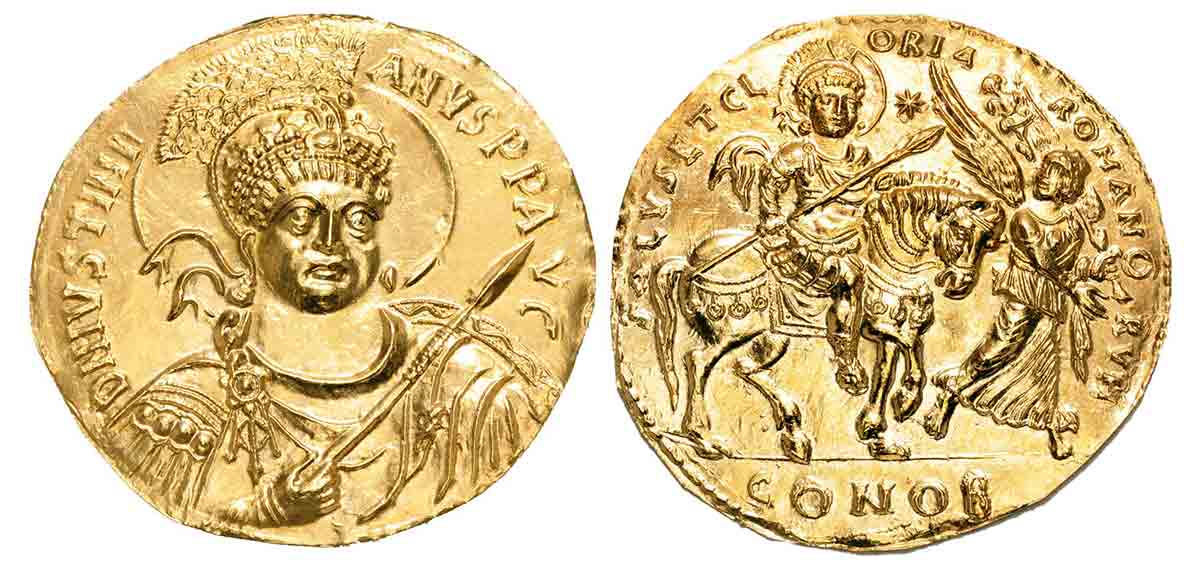
As the age of Constantine the Great passed, it was Emperor Justinian, who reigned from 527 to 565 AD, who oversaw not just the military advancement of the Byzantine Empire but also instigated one of the most ambitious building programs in history. Perhaps the most enduring and impressive of the edifices dating from this period is the Hagia Sophia, Constantinople’s and still Istanbul’s breathtaking cathedral. The church has undergone numerous transformations in its long history.
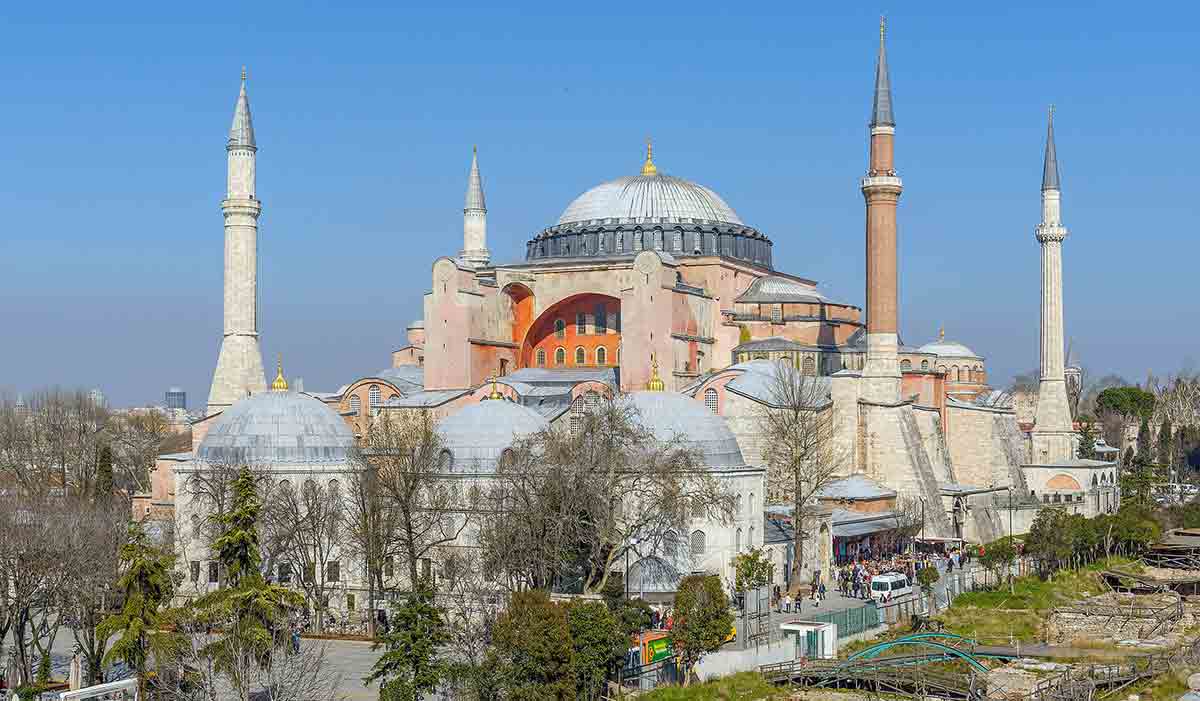
For over a thousand years, it served as the spiritual center of Eastern Orthodox Christianity until the fall of Constantinople to the Ottomans in 1453, when it was converted into a mosque. The spacious domes and light-flooded spaces of the structure became a blueprint for churches around the world. Importantly for art history, the Byzantine use of marble, gold, and ultramarine provided a palette for a new era, the Renaissance.
Ravenna: How the West Was Won…and Almost Lost
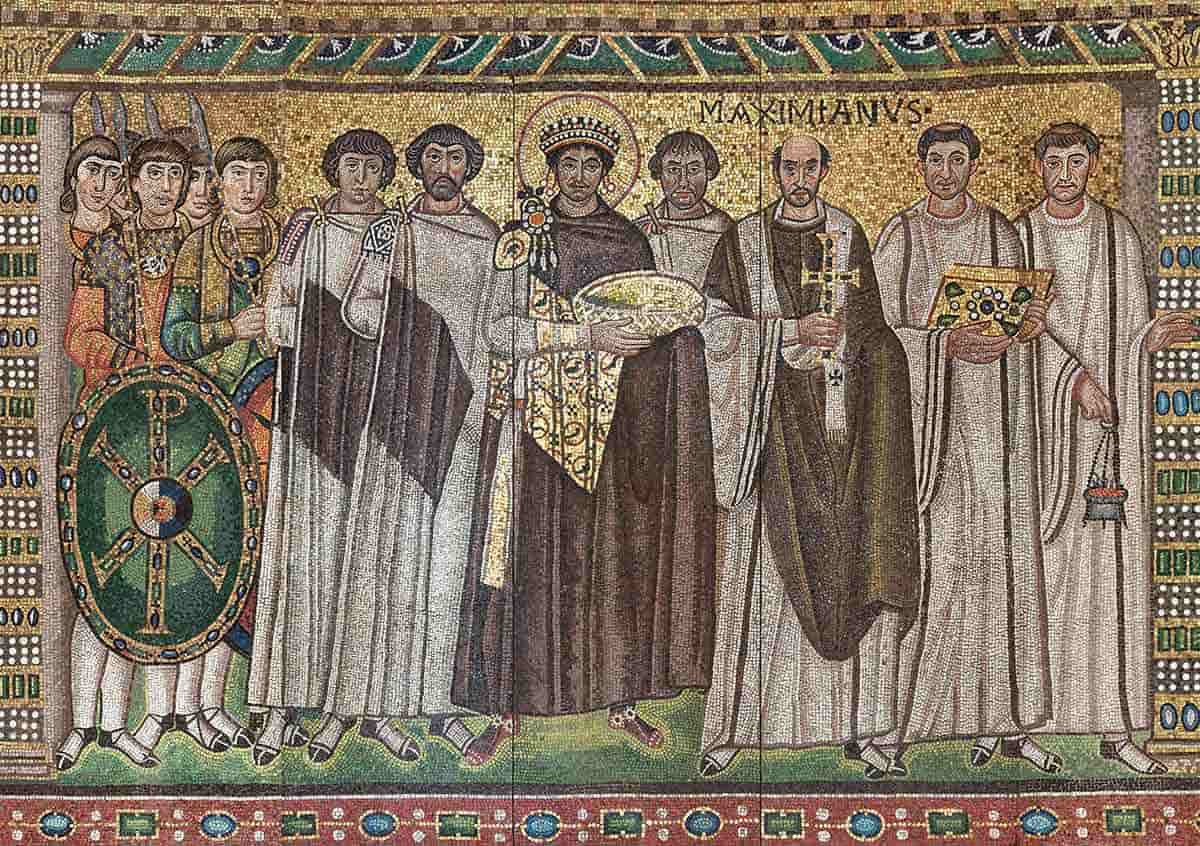
The swathes of gold and dearth of three-dimensional representation, typical of Byzantine mosaics, arrived in Ravenna in the early 5th century. Milan (or Mediolanum in Roman terms) had been the seat of the Western Roman Empire up until then. However, the threat of a Visigoth invasion forced Emperor Honorius to displace his court wholesale to Ravenna, a town surrounded by hard-to-breach marshland and therefore easier to defend. The finest artisans and artists, attracted to Constantinople by the wealth and importance of the city, saw similar opportunities arising in Ravenna. Their arrival was to be the catalyst for the fusion of East and West.
The art of Ravenna during the 5th and 6th centuries retained its Byzantine influence. Mosaics, studded with gold, adorned the walls of churches such as San Vitale. In the 8th and 9th centuries, a formidable, prolonged period of war and invasions, as well as outbreaks of plague, dealt a crushing blow to Byzantine art. Iconoclasm was imposed on the production of religious works. For an empire built on religion, iconoclasm (the banning of the veneration or production of religious images) was catastrophic. Many works were destroyed or drastically altered, resulting in a paucity of extant Orthodox Christian art predating 730 AD, the onset of an iconoclastic period that was to last, in two spells, for over a century.
Italo-Byzantine Art: A Natural Progression
In the period following the iconoclasm, dramatic changes, both political and cultural, took place across Europe. The rise of the Papal States was instrumental in the disintegration of Byzantine rule. Centuries of war and power struggles meant that Ravenna was an intensely contested place. In terms of art, the Byzantine era post-iconoclasm appeared essentially unchanged. Creators of the mosaics and icons so familiar in churches throughout the Roman Empire persisted with their rigid stylism and limited color palette.
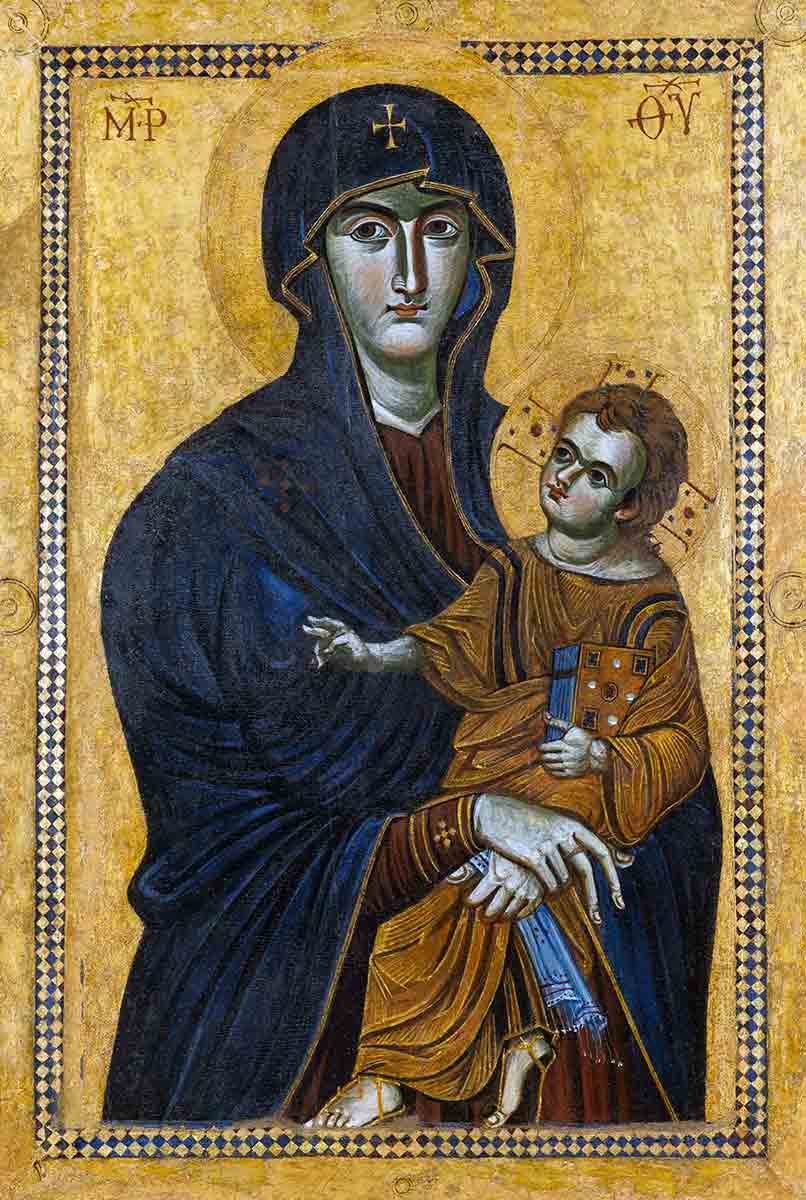
Images of the Virgin, or Theotokos, in Byzantine art, and the Child, dominated art throughout the Eastern Roman Empire and succeeded in the West too. With their rich gold backgrounds and use of lapis lazuli and mosaic, icons of the Virgin and Child, known as the Hodegetria, became, following the Sack of Constantinople in 1204, the root of Proto-Renaissance art.
Looting and the destruction of devotional artworks were rife in war-torn Constantinople. Churches, monasteries, and the homes of some of the city’s wealthiest people were ransacked, with much of the art taken turning up in northern Italian states, especially Venice and Ravenna. The arrival of the finest icons in Italy sparked a desire for more. Western artists, accustomed to painting frescoes and wooden crosses for religious use, now hastily acquired the skills of iconography to meet commissions.
As the 13th century progressed, the Eastern style of religious art spread throughout the wealthy city-states of the Italian peninsula. Two artists emerged who were to fuse the heavily stylized iconography of the Byzantine Empire with an increasingly naturalistic approach to figure painting.
The Proto-Renaissance: How Cimabue and Duccio Changed Art
During the Byzantine Empire’s long and violent demise, the Italian states, with their rich and powerful dynasties, were in the ascendancy. Artists, accustomed to receiving commissions for large-scale frescoes or more minor works, recognized the appetite for personal devotional artworks associated with the influx of stolen Byzantine art. Now they were commissioned to paint, in a hybrid Italo-Byzantine style, a new kind of Christian art. Enter Cimabue and Duccio di Buoninsegna and the Proto-Renaissance.
Cimabue was born in Florence in 1240. It is believed that he studied under masters from a Byzantine background, and indeed his work reflects such influences. Where Cimabue differed, though, was in his treatment of the human body.
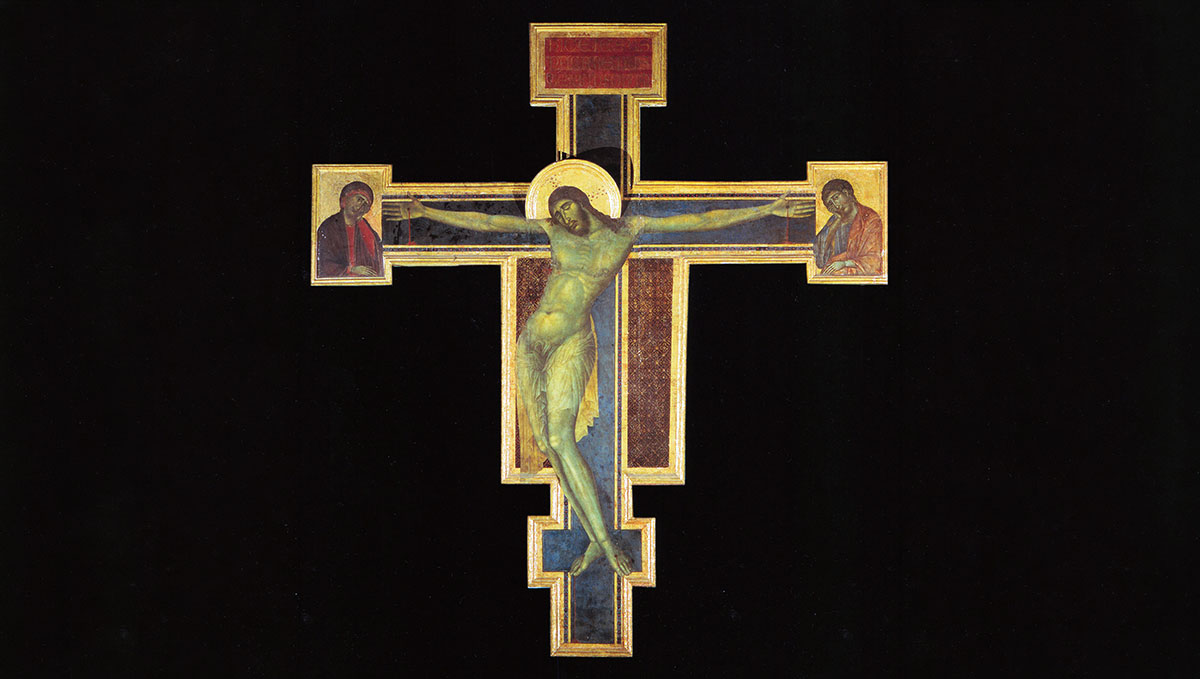
Look at the icon of the Salus Populi Romani shown above and then look at Cimabue’s Crucifix; the treatment of the human form differs significantly. Although the golden halo and framework are carried through from the Byzantine, Christ’s body has a more naturalistic curve; he sags under the strain of crucifixion. The tones of his skin, morbidly pale, with a bluish hue, speak of death and suffering. In the earlier work, though, the stiff and traditional form decreed by the iconographer’s practice conveys its devotional message in a more prescriptive manner.
Hand gestures and body position held particular meaning in iconography. Now, Cimabue was emphasizing the humanity of Christ, inspiring devotion and worship in his viewers. Although artists such as Coppa di Marcovaldo were still practicing the iconographer’s art in accordance with its meticulous guidelines, Cimabue and his contemporary, Duccio, were pioneers in the movement towards a more three-dimensional and expressive treatment of the world.
Duccio: The Master of Siena
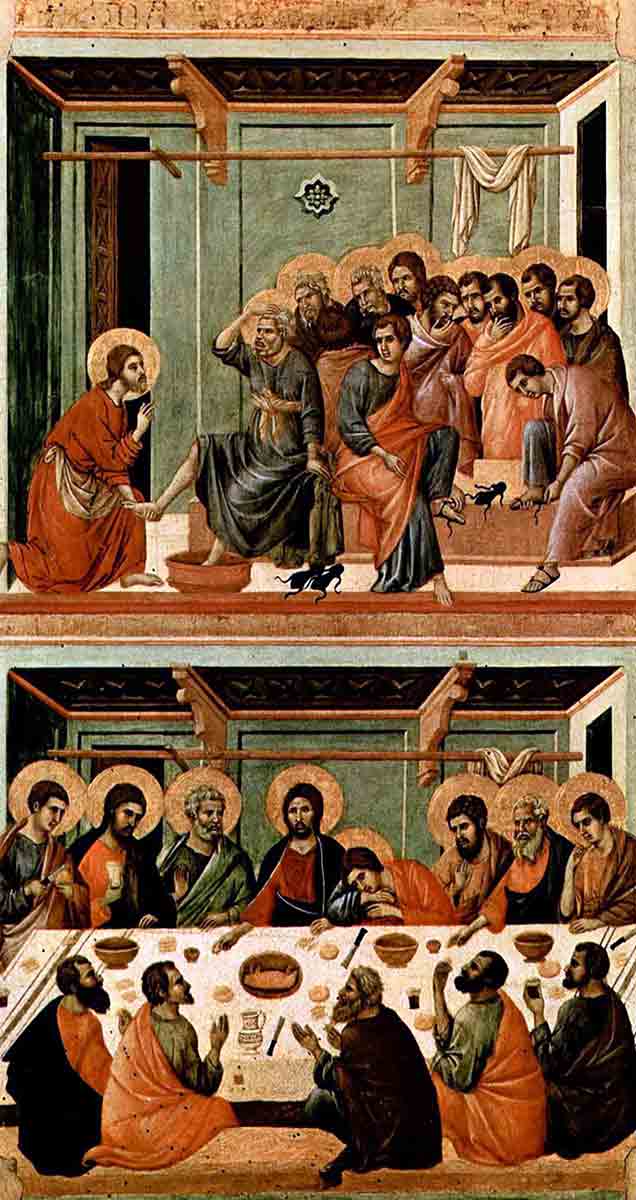
Although the influence of Byzantine art, particularly iconographic style, continued to propagate in the Italian states, Duccio, in Siena, was perhaps the first to adopt an integrated approach to his work. A contemporary of Cimabue and working in Siena close to sculptors Giovanni and Nicola Pisano, Duccio’s style was unlike anything else the world of religious art had seen before. He developed a rich, emotive manner of portraying his subjects and became one of the most well-documented artists of the time and a cornerstone of the Trecento.
Duccio’s portrayal of The Washing of the Feet on the rear panel of his Maestà shows a range of movement and a keen observation of human activity, notably absent in Byzantine art. Although Duccio’s workshop primarily produced icons and personal religious images, his larger commissions, such as the Maestà, heralded a turning point in Western art. Key to this movement was another of Cimabue’s associates, his ex-pupil, Giotto.
Giotto: Artist, Architect, Humanist?
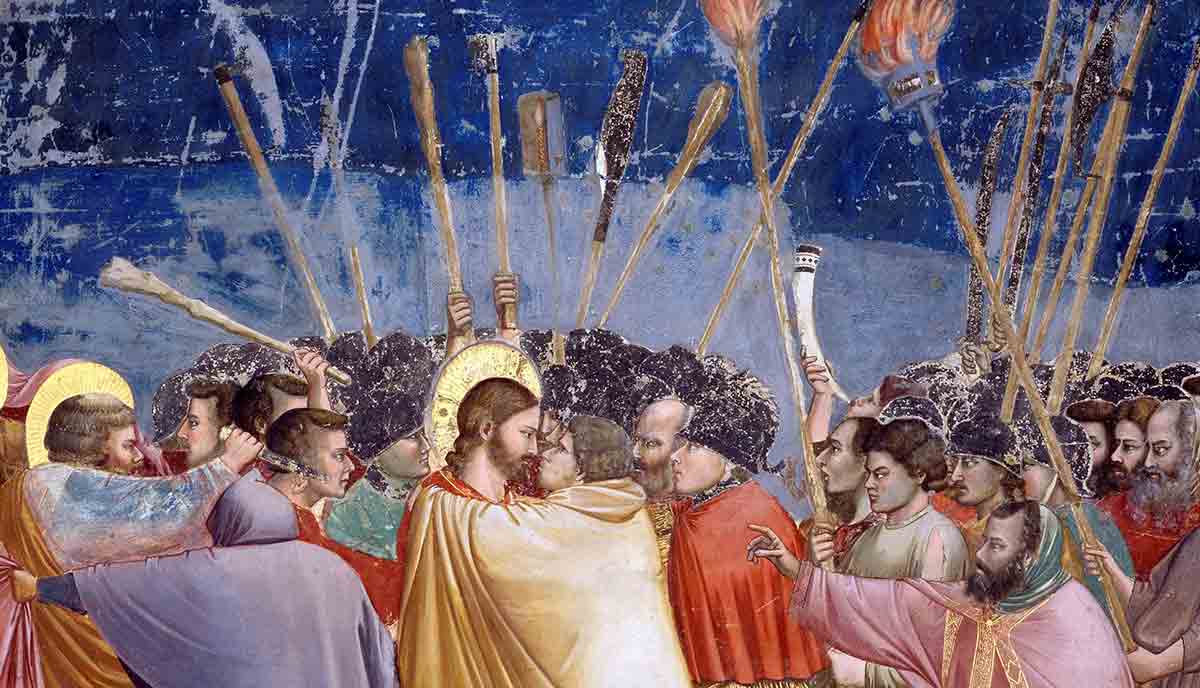
If Cimabue and Duccio could be seen as the epicenter of Proto-Renaissance art, with their move towards a freer, less remote treatment of Christian doctrine, it was their compatriot, Giotto, who brought the fully rounded, solid figures of the Bible to life in the Trecento. Giotto is said to have learned his art at the feet of Cimabue but is considered to have exceeded his master in his influence and achievements.
His contemporaries had made great strides in their more relaxed depiction of the human form, but Giotto took a step further. His figures really wear their clothes; the form of their bodies can be identified. There is a solidity, a realism in Giotto’s people that enabled the devoted Christians of the time to identify with his Biblical figures. Viewers of his work in the Scrovegni Chapel would have seen tangible portrayals of the world and not the remote, stiff icons of the Byzantine era.
From Byzantine to Renaissance: The Perfect Storm
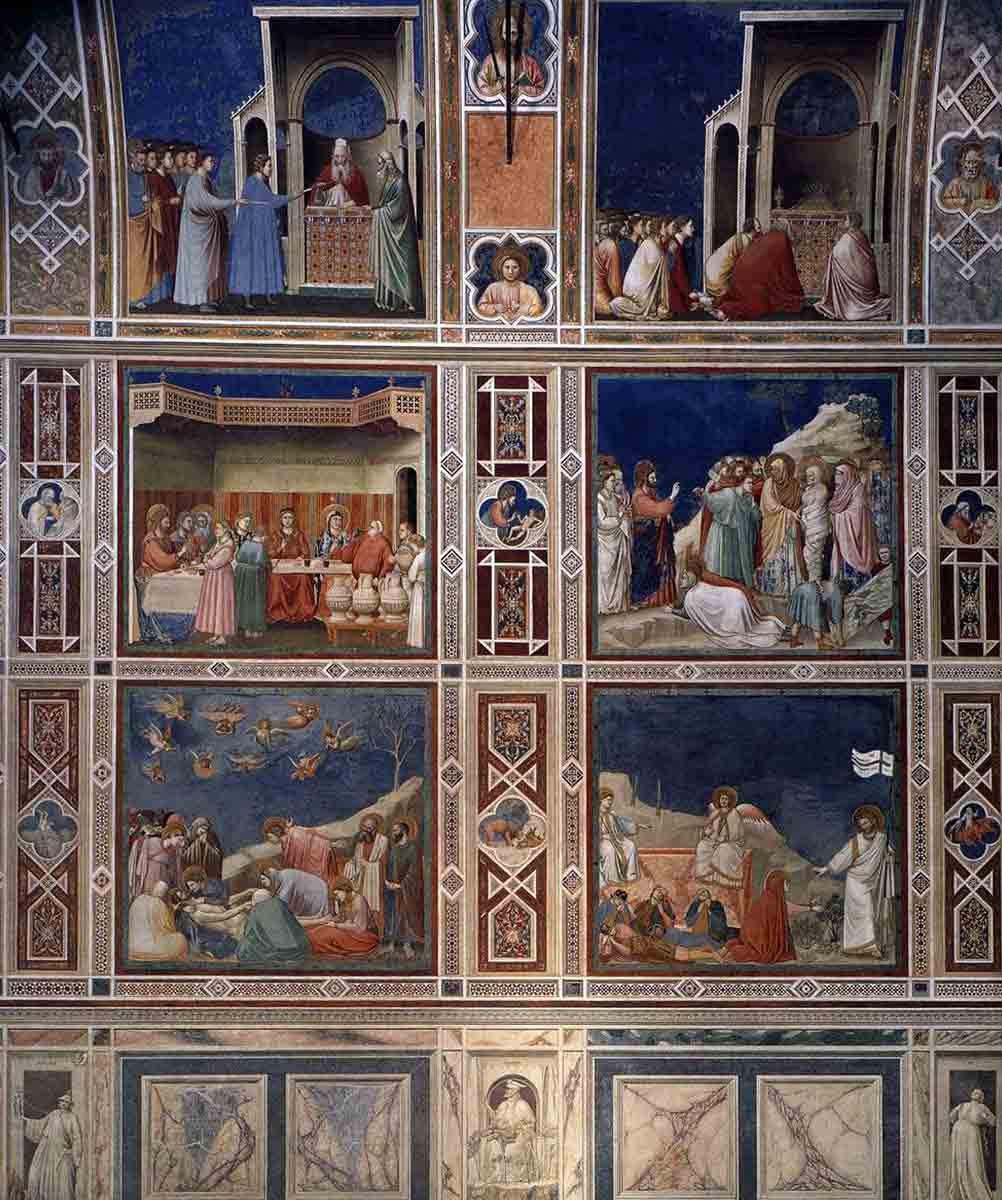
In the centuries encompassing the slow shift from the height of the Byzantine Empire towards a disseminated Europe, of people finding provincial identities outside the constraints of imperial rule, a perfect storm was brewing. By the 14th century, art, philosophy, architecture, and life in general had become very different. The old Roman ways were being questioned; the human mind and its possibilities had become central to a movement that would result in a rebirth, a Renaissance, in culture and society.
In terms of art, Cimabue, Duccio, and Giotto led the way towards a more grounded understanding of the teachings of the Bible, even if it was at the expense of their wealthy patrons. Byzantine art had established the colors of devotional art: ultramarine and gold. The Proto-Renaissance brought the thought, the humanity, the realism. Along with an increased curiosity about the world and its machinations, as well as the human condition, the Renaissance was taking shape.
Byzantium’s location at the crossroads of East and West had been critical to its success. Wealth fuelled cultural growth via patronage, just as it always would. Wealth alone was not Byzantine art’s only contribution to the dawn of the Renaissance, though; a providential coming-together of some of the greatest minds in human history, in tandem with Byzantium’s groundwork, created a giant cultural leap for mankind.