Childhood in ancient Rome was a stage of life both familiar and somewhat foreign to us today. It was filled with amusement and curiosity, yet shaped by a society that viewed children as future citizens rather than as individuals in their own right. Roman families placed great importance on raising children who would uphold the values of their household, whether they were destined to become farmers, senators, artists, or soldiers. Despite these expectations, Roman children were more than miniature adults. They shaped their own world within the bustling streets, quiet courtyards, and sprawling countryside of the empire. And here is what they played with.
Surviving Toys: Dolls, Miniatures & Everyday Objects
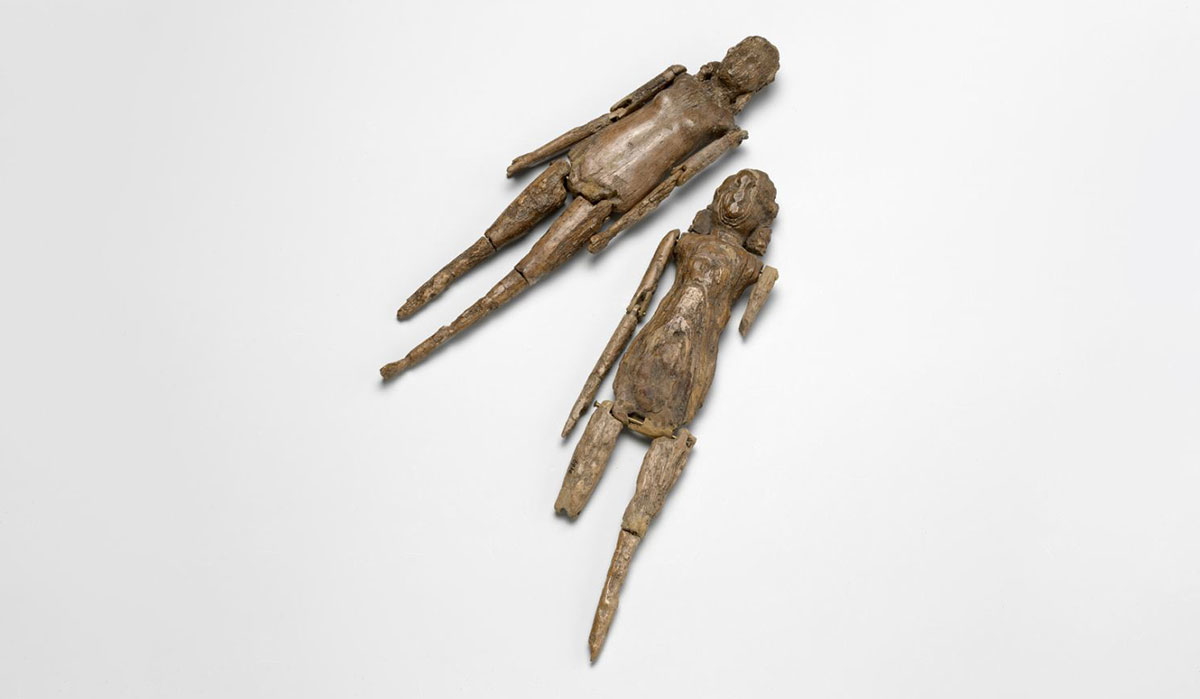
Toys in Rome were diverse, typically made from wood, clay, bone, ivory, cloth, metal, or any material that could be easily shaped. Archaeology has given us a good understanding of Roman toys because many have survived for almost two millennia. These toys are usually found in tombs, the ruins of houses, and sanctuaries.
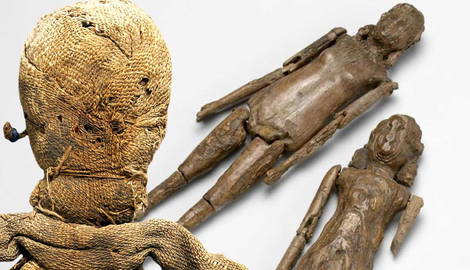
Dolls (pupae or pupae fictiles) are among the most frequently recovered Roman toys. The simplest examples were made from coarse clay, molded in a single piece, and often with minimal features. However, more elegant dolls with various decorations and features have also been found, belonging to wealthier social classes. What characterized both the inexpensive and the luxurious versions is that Roman girls customarily dedicated their favorite dolls to Venus during their coming-of-age ceremony, symbolizing the end of their childhood.
Roman children often played with miniature objects, such as replicas of houses, furniture, people, and animals, made from clay, wood, and even bone. Through these toys, children could create and manage an entire imaginary household. Workshops for the mass production of such miniatures have been discovered in Gaul and North Africa. Particularly popular in urban areas were miniature soldiers and gladiators, reflecting boys’ dreams of becoming brave warriors.
There were also more complex toys, such as whistles that doubled as tools for calling animals. Archaeologists have also uncovered wooden carts with functioning wheels, complete with iron or bone axles. Children frequently improvised with household objects that were not originally intended to be toys, including tiny pots, cups, jugs, and ladles, as evidenced by wear patterns that clearly point to children’s play. They often imitated kitchen work, food preparation, and other domestic activities.
Toys of the Wealthy vs Toys of the Poor
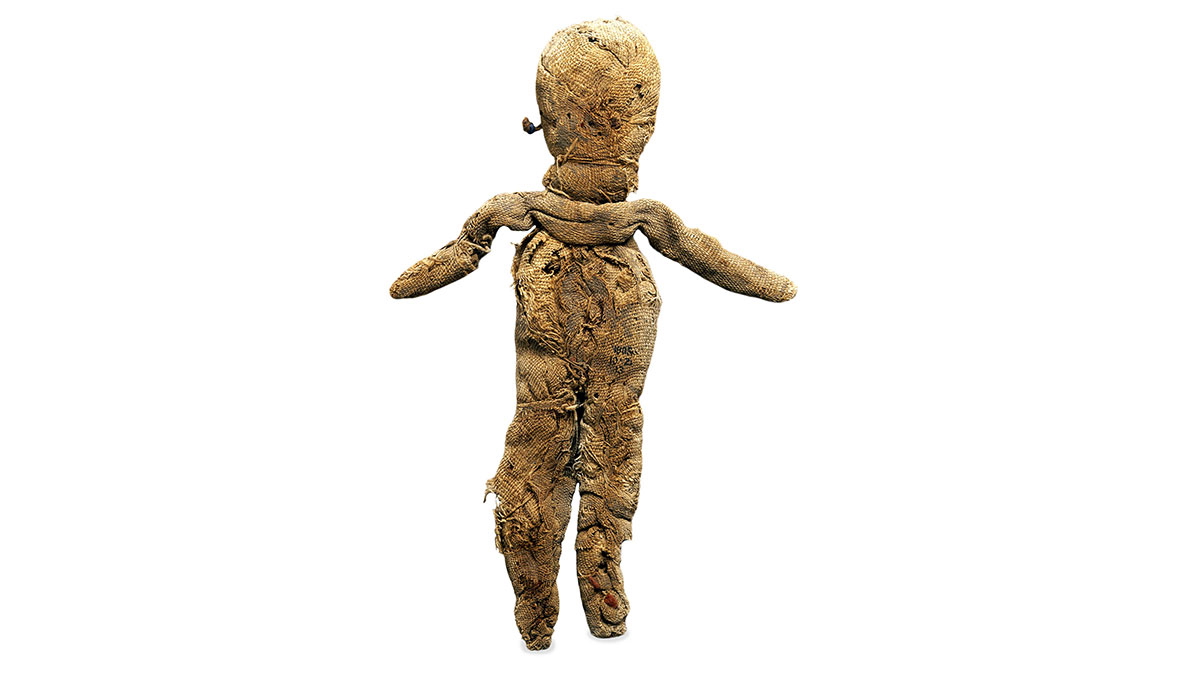
Although many types of toys were the same, there were clear differences in detail between the toys of the wealthy and those of the poor. For richer children, toys were not only playthings but also symbols of status, education, and refinement. Girls possessed finer dolls carved from ivory, with articulated limbs, movable joints, and more elaborate hairstyles. Sometimes their dolls even included luxurious clothing and expensive jewelry. The dolls of poorer girls, by contrast, were static and generally undecorated.
Elite families sometimes purchased toys imported from the provinces, such as painted figurines from Gaul. Instead of clay or wooden figures, the miniatures owned by wealthy children were often made of metal and were costly to produce. Toys belonging to poorer children were frequently improvised, everyday objects transformed into playthings.
Wealthier children also had toys that served educational purposes, such as tablets, styluses, abacus counters, and miniature writing tools. Toy carts and chariots found in affluent households often featured iron or bronze axles, finely carved wooden bodies, and realistic decorative elements that mirrored actual Roman vehicles. More archaeological remains of high-quality toys have survived simply because their construction was more durable, whereas cheaper toys had a much shorter lifespan.
Games of Skill and Chance: Knucklebones, Dice & Board Games
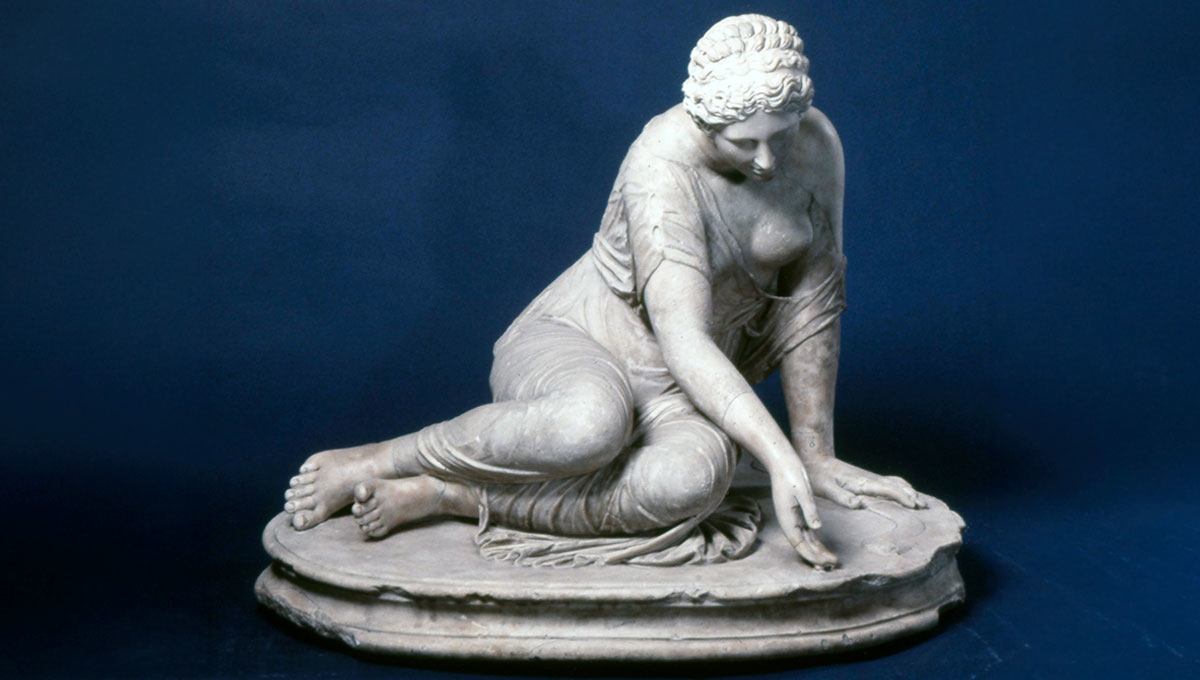
Games of skill and chance were central to Roman leisure, and children were no exception. Many of these games were adopted from earlier Greek traditions, but the Romans developed their own rules and variations. The most popular of these games was knucklebones, known as astragali. The pieces were originally the ankle bones of sheep or goats, since their natural shape made them ideal for such games. Later, wealthier families began using pieces made of bronze, ivory, stone, or glass. Children played knucklebones either by tossing the pieces into the air and trying to catch as many as possible, or by playing point-based versions of the game.
Dice were widespread across the Roman world and came in two main types. The first type is the familiar six-sided dice, known as tesserae. The second type is the four-sided dice called tali. Dice were commonly used for gambling games, but children played non-gambling versions centered on luck, counting, and simple competition. Dice were made from bone, metal, clay, amber, or ivory, with wealthier households owning beautifully carved sets or imported pieces.
Board games were also very popular in ancient Rome. The most well-known was Ludus Latrunculorum, played with black and white pieces. Although the exact rules are not fully known, it was likely a mix of checkers, chess, and modern strategy games, with the goal of capturing the opponent’s piece. Another well-known game was Ludus Duodecim Scriptorum, similar to modern backgammon. Children rolled dice or knucklebones to determine movement.
Hoops, Balls & Physical Play
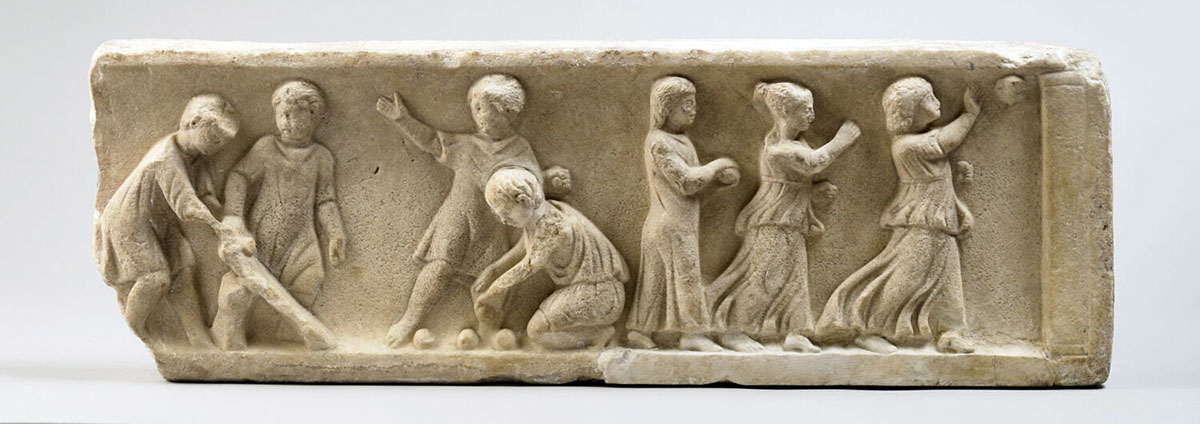
Games that encouraged physical activity were very popular in ancient Rome, and ball games were the most popular. There were several types of balls. The most common was the simple ball (pila), then the heavier, stuffed leather ball used in more intense throwing games (pila paganica). They also used a lighter, air-filled ball, often made from an animal bladder, that could be struck with the hands or played like an early form of volleyball (follis). Wealthy children often had balls with decorative stitching, while poorer children typically played with worn-out ones. The most common ball games were catch-and-throw, various forms of dodgeball, handball, and various coordination games.
Another extremely popular toy among Roman children was the hoop, known as a trochus. The hoop was typically made of metal or wood, and children rolled it along the ground using a hooked stick called a clavus. The goal was to keep the hoop rolling for as long as possible. Wealthier children sometimes had hoops fitted with small bells that produced sound as they rolled.
Other physical games Roman children enjoyed included racing, chasing games, jumping and leaping competitions, balancing, and wrestling. Some Roman children owned hobby horses, sticks topped with a carved horse head or decorated cloth, allowing them to reenact cavalry scenes or heroic adventures. This was especially popular among boys who dreamed of becoming great warriors.
Imitating Adults: Role-Play, Make-Believe & Future Training
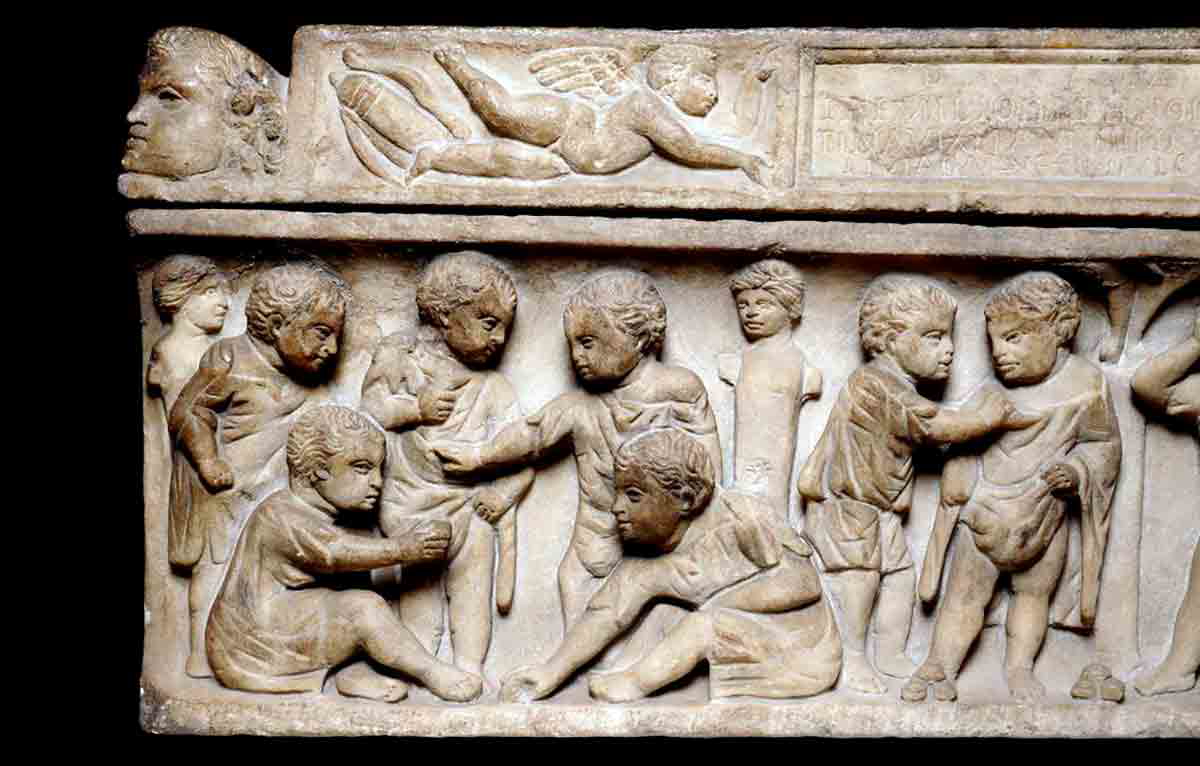
Roman children often mirrored the adult world, which aligned with Rome’s goal of shaping children into proper citizens as early as possible. Girls were encouraged to imitate their mothers and matrons, using pots, cups, jugs, ladles, and pieces of fabric as if managing their own kitchens or storerooms. Both boys and girls created pretend banquets and served “guests,” imitating the structure of the Roman household. Children most frequently imitated the environment closest to them. If they lived in a craft-oriented setting, they pretended to make various handmade goods. If they grew up around merchants, they pretended to trade. In this way, they moved more easily from play into real work.
As expected, boys often imitated soldiers and gladiators, staging mock battles. They used wooden swords, shields, or sticks as spears. When playing in groups, they sometimes reenacted specific famous battles. Less commonly, they acted out scenes from religious life, setting up miniature altars and offering pretend sacrifices. All of this had a dual purpose: through play, children absorbed the norms, expectations, and skills of Roman society.
Pets & Animal Companions as Playmates
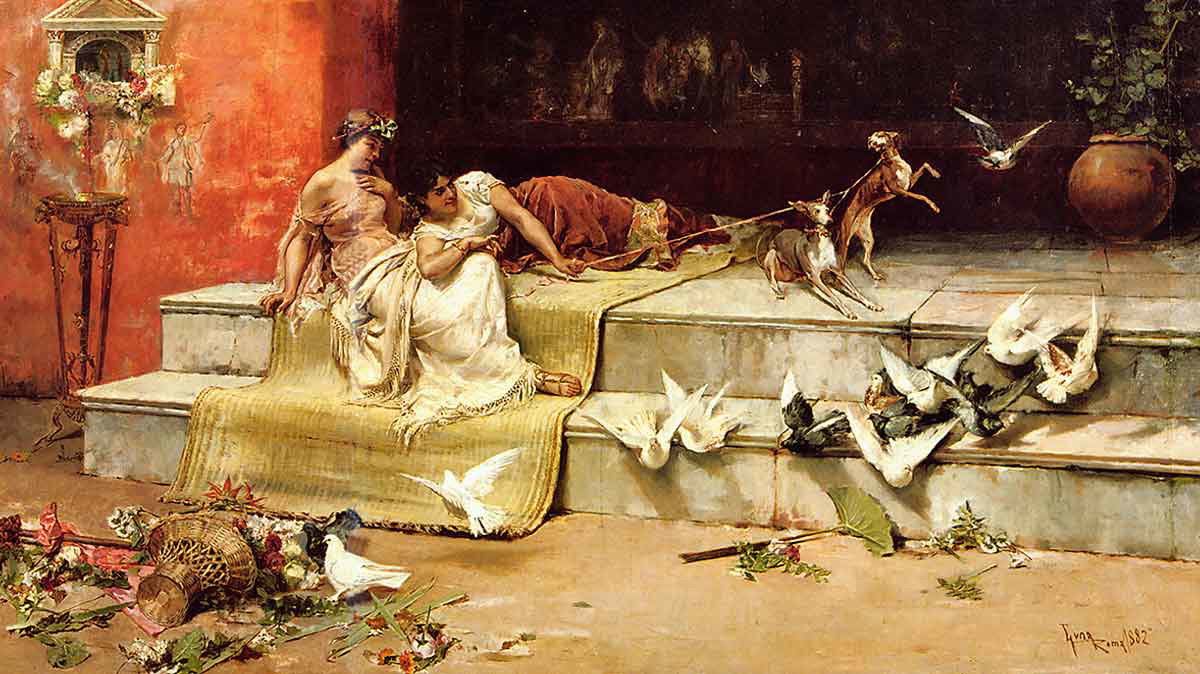
Pets were common in ancient Rome, and dogs were the most popular. In addition to guarding households and livestock in rural areas, dogs served as playmates and valued companions for children. Unlike toys, pets appear much more frequently in Roman drawings, writings, and inscriptions. The most well-known dog types in Rome included the Molosser dogs from Epirus, the Laconian and Cretan hunting dogs, the Maltese dog, and similar small companion breeds.
Interestingly, birds were more popular pets than cats, and they were especially beloved by young girls. The famous poet Catullus even wrote a poem about a girl mourning her pet sparrow.
“Mourn, O you Loves and Cupids
and such of you as love beauty:
my girl’s sparrow is dead,
sparrow, the girl’s delight,
whom she loved more than her eyes.”
(Catullus 3: Death Of Lesbia’s Sparrow)
In rural areas, children played with farm animals such as lambs, calves, poultry, and others. Cats arrived in Rome relatively late, coming from Egypt and the eastern Mediterranean. They were loved by the Romans, but their role was more practical than sentimental, primarily serving to control rats and other pests. A charming and occasionally surprising part of Roman childhood was the affection some children showed for small animals like mice, beetles, and insects, as well as tortoises and frogs.