Almost two thousand years have passed since the Roman Colosseum was built around AD 80. The UFC Octagon, on the other hand, is a modern creation that made its debut in November 1993 inside McNichols Sports Arena in Denver. While many centuries separate these two famous fight avenues, there are many similarities that connect them. So, what are these similarities?
Both Were Built for Show and Safety
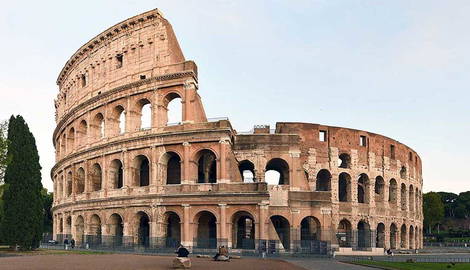
Many modern fight arenas borrow heavily from the Colosseum, whose builders used solutions remarkably similar to those in modern stadiums. Its elliptical fighting arena measured approximately 272 to 287 feet long and 157 to 180 feet wide. It also had a wooden floor that was covered with sand to absorb blood that was set in a four-level complex surrounded by a high wall.
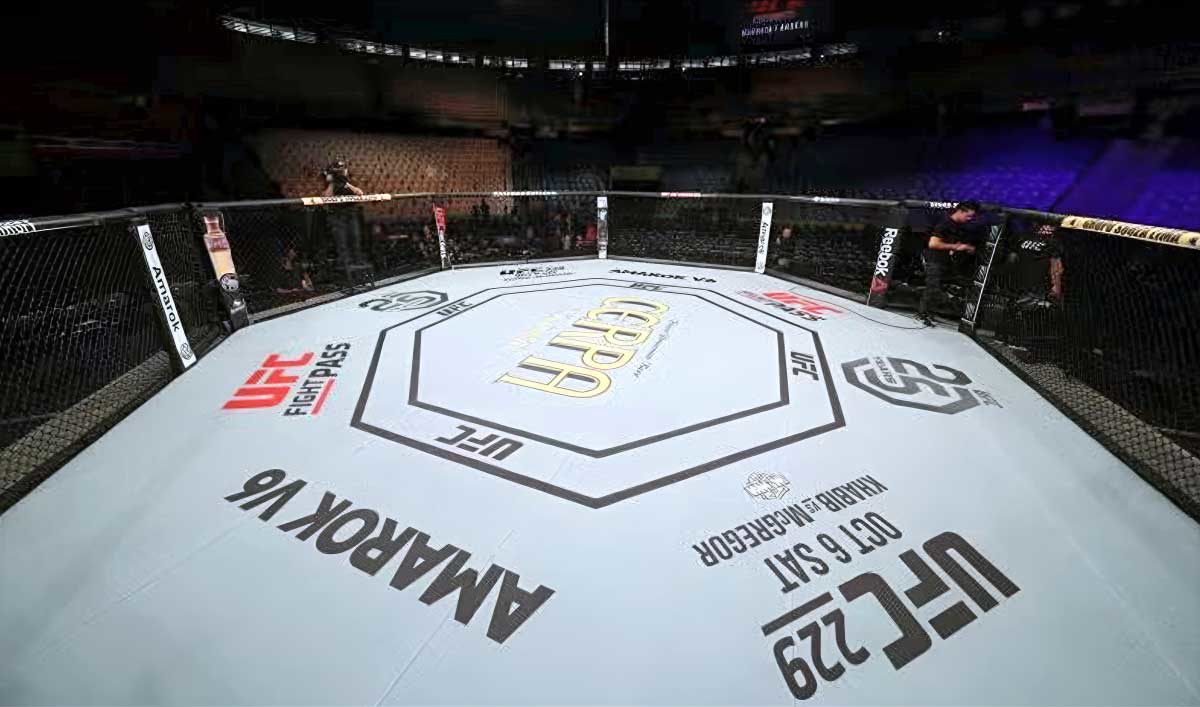
The oval design ensured that every seat had a good view of the action. The structure also had 80 entrances at ground level. 76 of them served as entrances, exits, and staircases numbered in red paint for easy visibility. For shade, organizers made use of the velarium, a canvas awning that also improved airflow. Sailors from the Misenum fleet were tasked with building, maintaining, and operating it. Comparatively, the UFC Octagon measures 38 feet across and its fence prevents fighters from being thrown outside the ring.
Both Have Relied on Tough Rules and Professional Referees
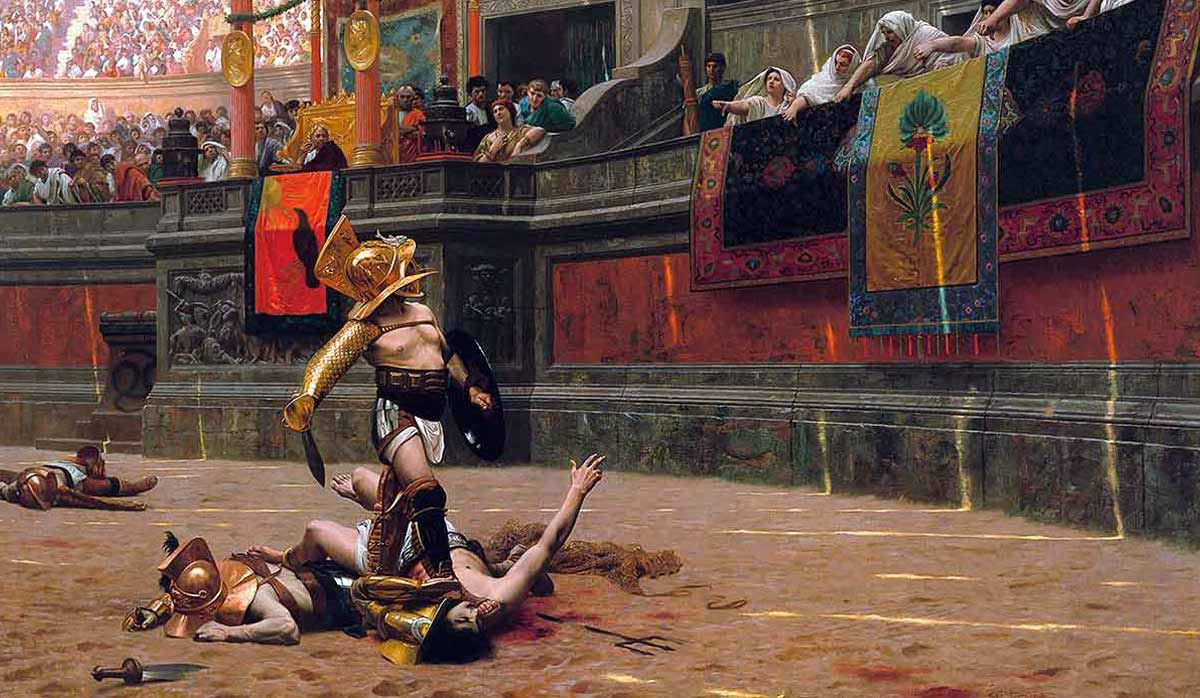
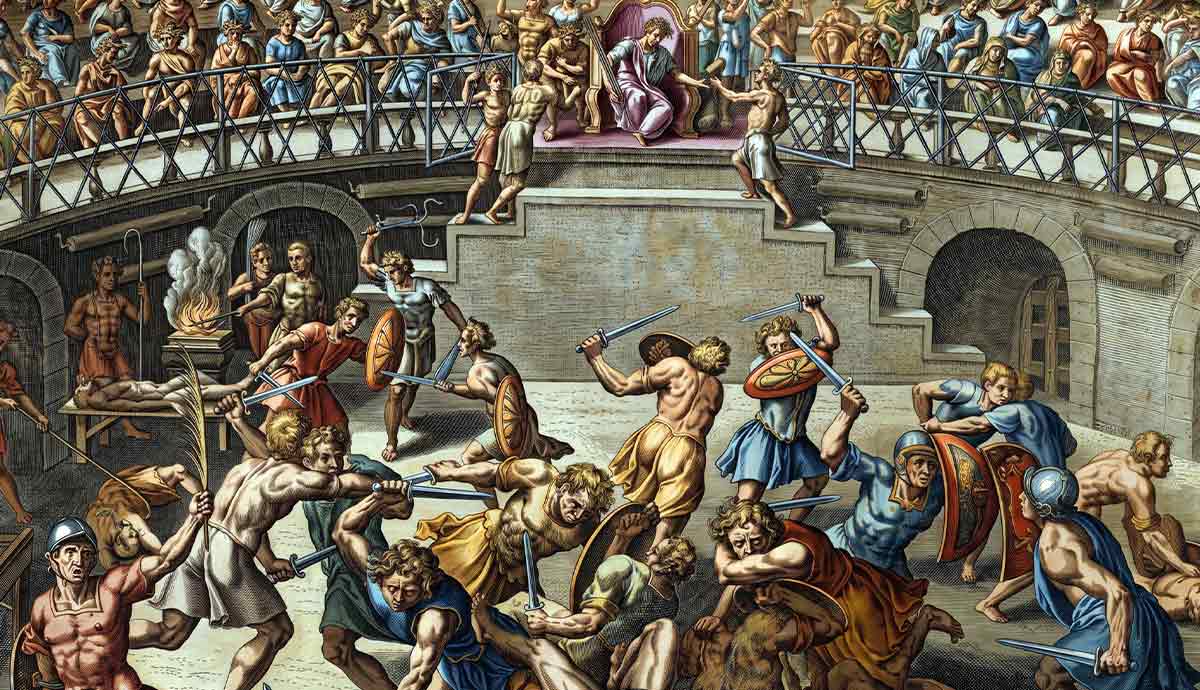
Hollywood films and TV shows often depict gladiator fights as chaotic and full of blood. However, most matches were under a clear set of rules. Fights usually pitted one person against another of different size and skill. Referees also watched the fights closely and likely stopped things the moment one person got badly injured. The referee, called a summa rudis was usually a former gladiator himself. In the UFC, refs have a clear role in the Octagon. Strikes to the spine, throat, and back of the head, for example, remain banned. Kicking or kneeing a downed fighter in the head is also against the rules.
Both Facilities Were Ran and Maintained by Promoters
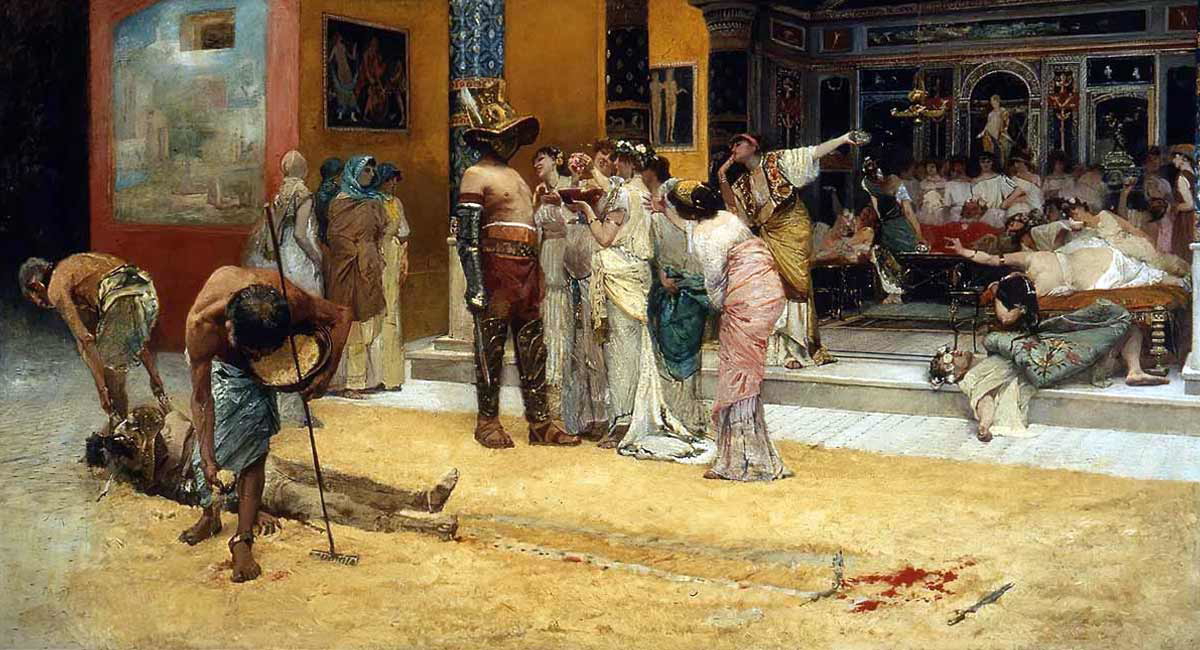
Gladiators lived in basic controlled camps. One of them called the Ludus Magnus, for instance, connected directly to the Colosseum through underground tunnels. There, gladiators developed their fighting skills under their manager or lanista, who contracted them to games across the empire. Gladiators who did not enter a gladiatorial school as a result of a crime signed agreements that stated what type of fighter they wanted to be and how many times per year they were willing to fight. The process aligns with how the UFC operates. By the time Zuffa purchased the UFC in 2001, the sport already had training facilities and a fighter roster.
Great Fighters Have Accumulated Significant Wealth and Promoted Merchandise in Both Venues
Archaeological findings indicate that the top gladiators became the Roman version of today’s sports figures and even had their faces on souvenir cups and other merchandise. Exemplary gladiators would also receive gifts such as gold coins and at times valuable silver plates, while the top reward was the wooden sword or rudis. Reportedly earning up to 17 times what a Roman soldier received as pay, a gladiator could accumulate significant wealth after years of winning.
Today, famous UFC fighters such as Conor McGregor who has a net worth of over $100 million have proven that distinct personalities could extend beyond combat sports. Because of the diversification of revenue streams, partners, and sponsors, today’s UFC fighters do not only promote merchandise. Top UFC fighters now appear in video games as well.
Both Venues Have Paired Competitors by Style
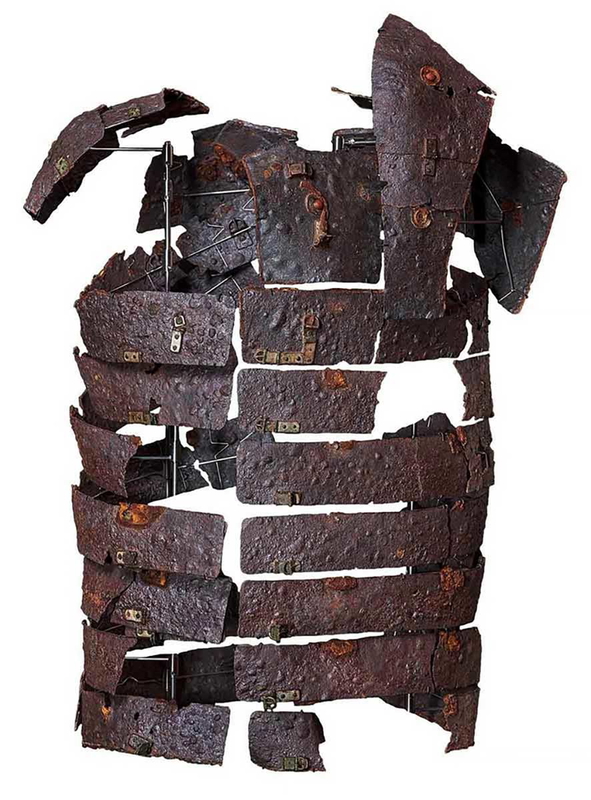
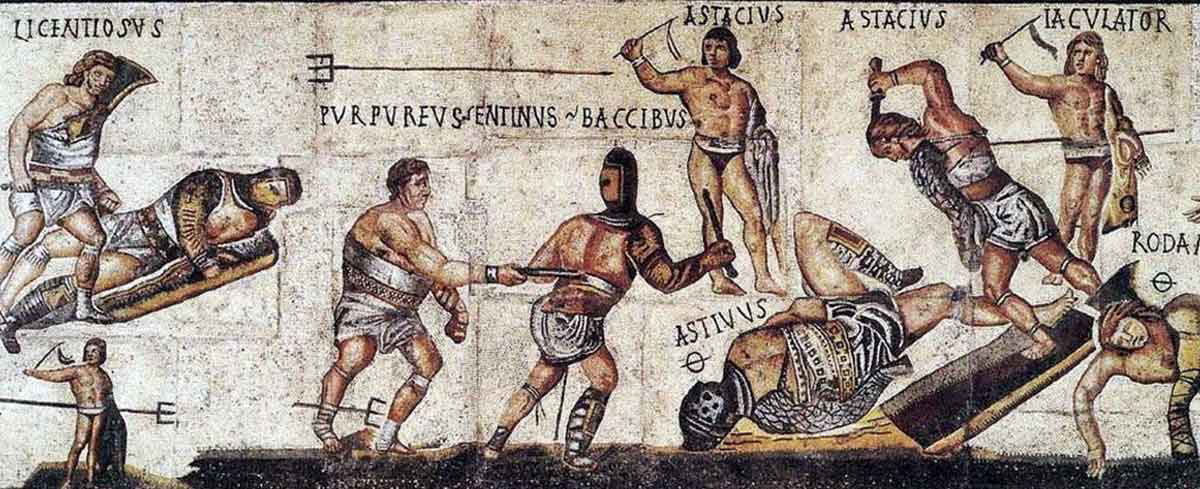
Later gladiator fights were presented as style against style. Fast, light fighters with nets and tridents would face slower, heavier ones in full armor with large shields and short swords. Early UFC events were presented the same way, with different styles competing to show which martial art was most effective in unarmed combat. Ultimately, gladiatorial combat was a mix of wrestling combined with the brutality of UFC matches, but with weapons thrown in.
The Roman emperors knew the value of public shows for their reputation. As such, they organized the events such that entry was free. UFC events work a bit differently and are based on a business model. The matches are broadcast to 165 countries and territories and in over 40 languages, with the company making money mainly through pay-per-views from which fighters are compensated. With over 40 million fans in the US and more than 700 million around the world, the organization combines real fights with reality TV-style stories to captivate audiences.