
“The Words of God,” commonly known as hieroglyphs, was among the first writing systems in human history. Similar to any other ancient languages and scripts, the exact origin of the hieroglyphs is unknown and will most likely never be revealed in its entirety.
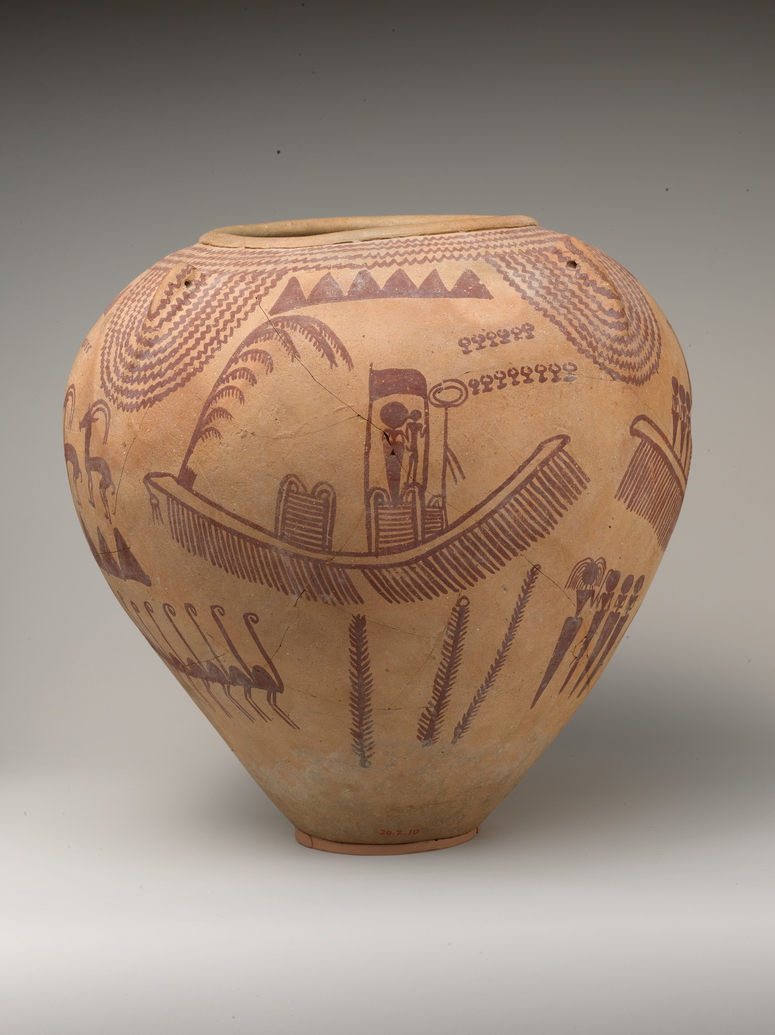
The oldest hieroglyphs securely dated by archaeologists come from the Naqada II period (3500 – 3200 BC), making this script more than 5000 years old. It seems that the first hieroglyphs were used partly as decoration, as the ones from Naqada II and Naqada III were found on pottery.
Despite thousands of archeological finds, historians wouldn’t have made almost any progress in understanding the script if it were not for the Rosetta Stone.
How Egyptian Hieroglyphs Worked
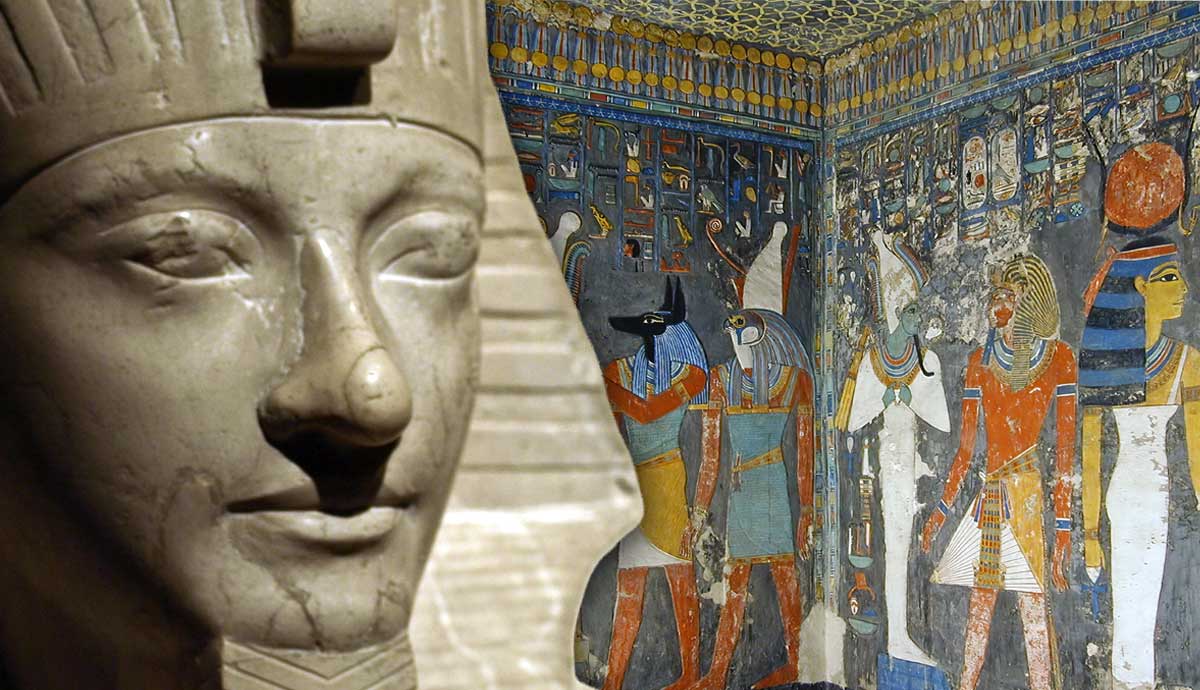
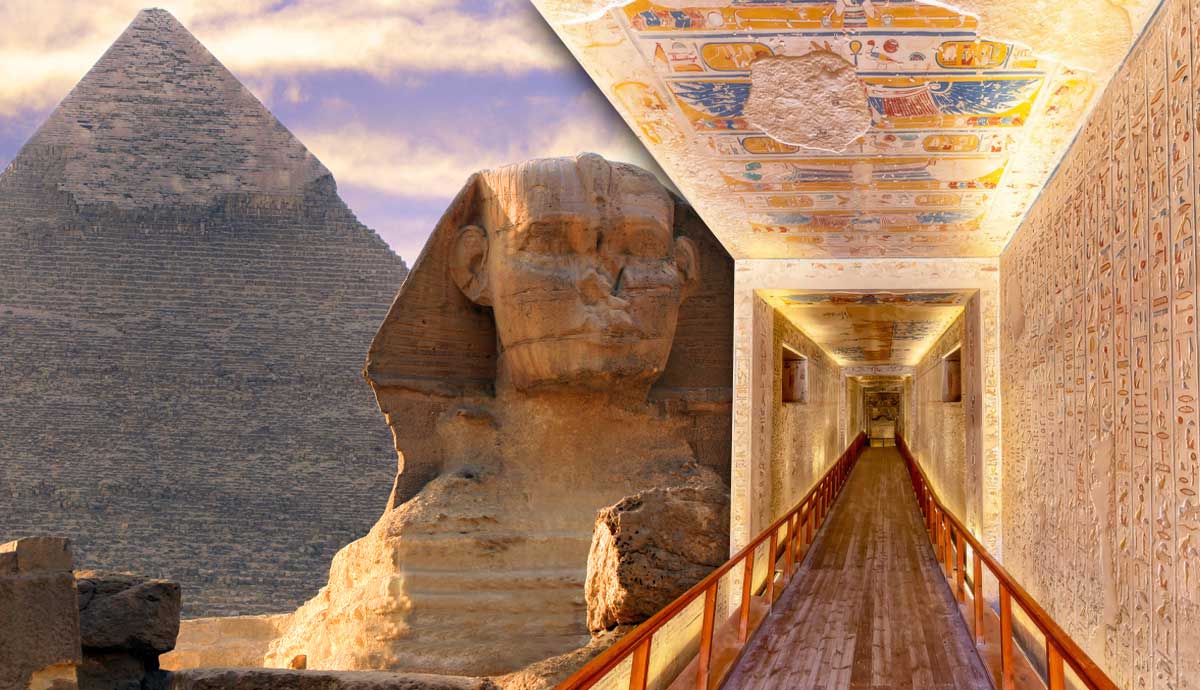
Ancient Egyptian hieroglyphs consisted of drawings that were placed on the walls of temples and monuments and were depicted on papyrus.
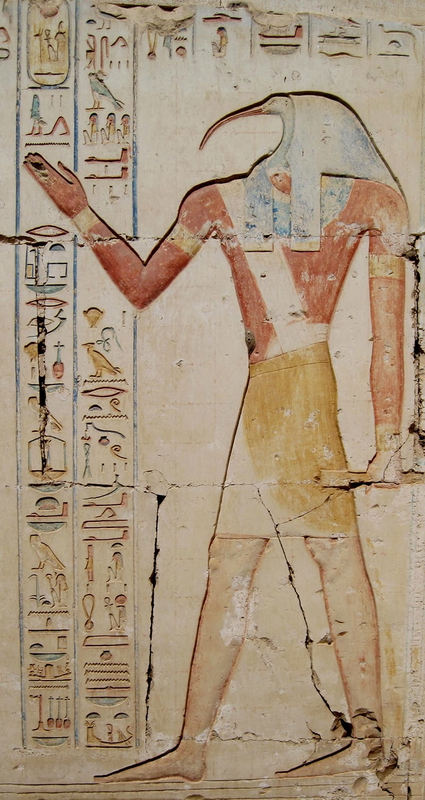
Scribes were some of the few people who could read and write. They were thought to be professionals and were highly respected people. Ancient Egyptians believed that the ability of their scribes was connected to the god Thoth, worshiped as the god of writing.
Although the ancient Egyptian script does look complicated, it is actually quite clear and simple. There were three main groups of signs: logograms, phonograms, and determinatives. Logograms were used to depict words or morphemes, while phonograms were used to depict sounds. Determinative signs were used to aid the two other groups and make them clearer.
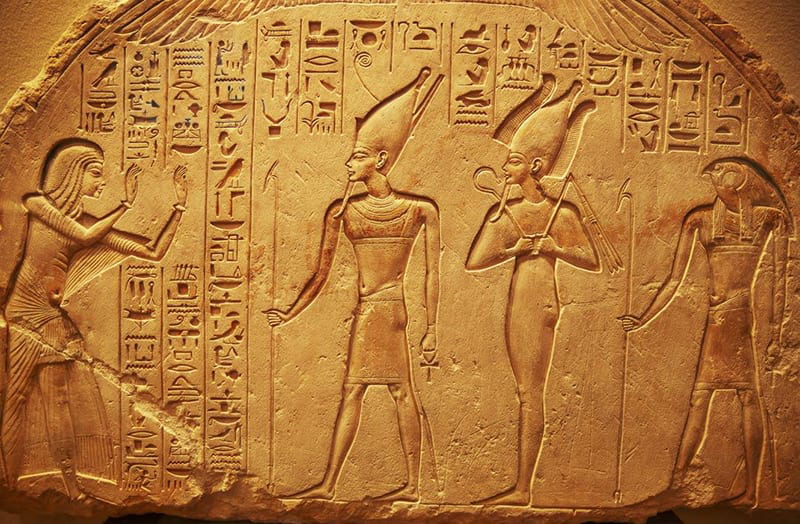
The ancient Egyptian script consisted mostly of consonants, which is the case with all ancient scripts from the Pre-Dynastic and Early Dynastic periods of Egypt. Undoubtedly, they used more vowels in spoken language for pronunciation. Nevertheless, they did not include any in their writing system, which made it extremely difficult for archeologists and historians to pronounce. Because vowels were usually not written, scholars developed conventional vocalizations to approximate pronunciation. This explains why most people think that Egyptians used vowels in their script.
The ancient Egyptian writing system consisted of hundreds of characters. Hieroglyphs were mainly used for religious, monumental, and formal inscriptions. They continued to be used in Egypt until about AD 400, after which they were gradually replaced by Coptic, another form of written language.
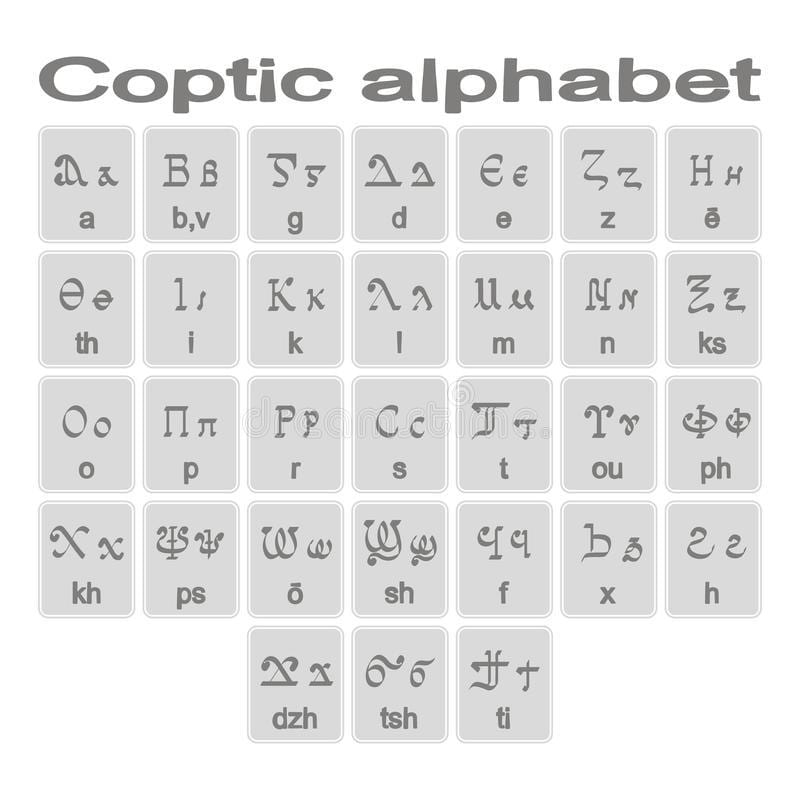
The Coptic alphabet was based on the Greek alphabet, with 24 letters, and later added six Demotic-derived letters for Egyptian sounds. Today, these two scripts have long been forgotten, and the official language of Egypt is Arabic.
The Discovery That Changed Egyptology
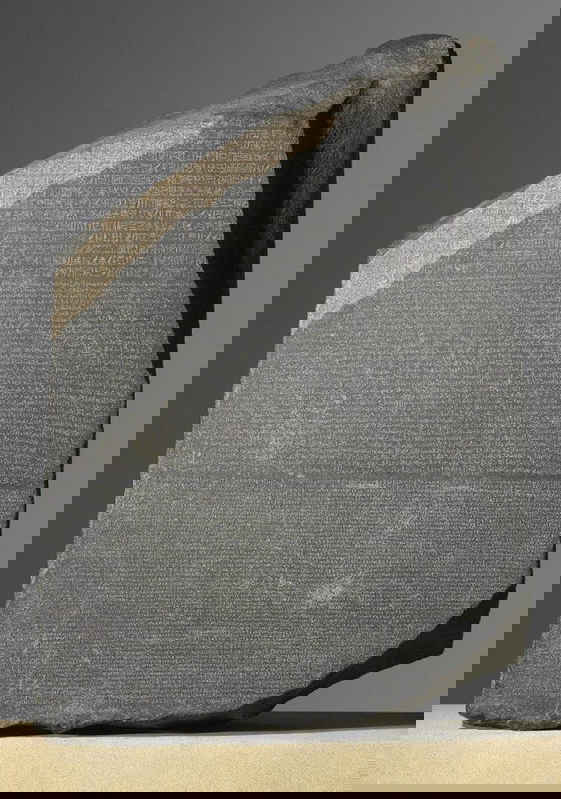
Scientists and archaeologists had little success in the interpretation of ancient Egyptian hieroglyphs until the Rosetta Stone was discovered in 1799 by accident by soldiers in Napoleon’s army.
The Rosetta Stone is a fragment of a large black granodiorite stele found near the city of Rosetta in the Nile Delta. The same text is engraved on the stone in three ancient scripts: Egyptian hieroglyphic, demotic, and Greek. This was because, at that time, these were the three main scripts that Egyptians used.
Both the demotic script and the ancient Greek language were well known to 19th-century Egyptologists who worked on deciphering the stone. As the text in the vernacular and the Greek language coincided, the significance of the Egyptian characters became clear.
Its discovery and decipherment were crucial to the interpretation of many other ancient Egyptian texts.
But what does the text on the Rosetta Stone actually depict? Unfortunately, the stone that we have today is only a small portion of the actual stone stele, and a lot of the text is missing. Nevertheless, it gives a lot of information about one of the most important rulers of Egypt from the Ptolemaic Dynasty.
What Does the Rosetta Stone Say?
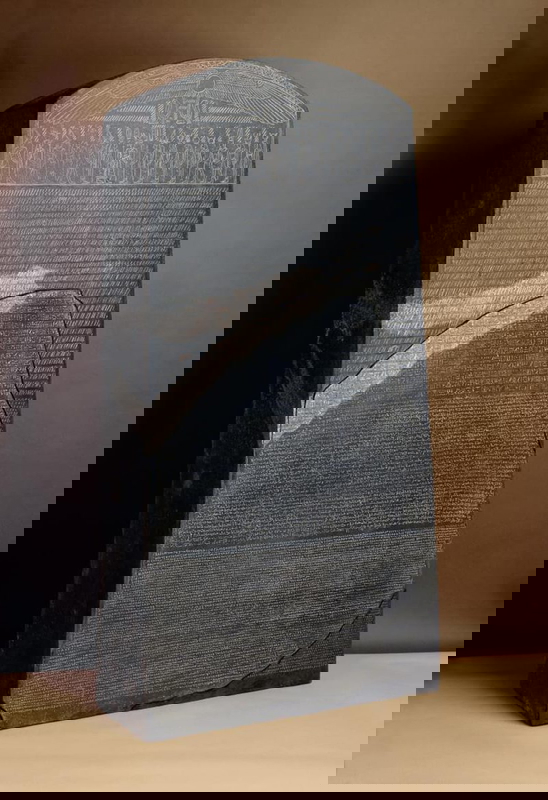
All three texts refer to a decree issued by the Memphis council of priests. It confirmed the royal cult of Ptolemy V of Egypt, roughly one year after his coronation. The text on the Rosetta Stone begins with a great appraisal of the achievements and dominions of Ptolemy V.
The king brought prosperity to Egypt and invested large sums in the temples — both for the construction of new ones and the restoration of old ones. Taxes were reduced or completely eliminated, and many prisoners, who were previously considered enemies of the state, were released.
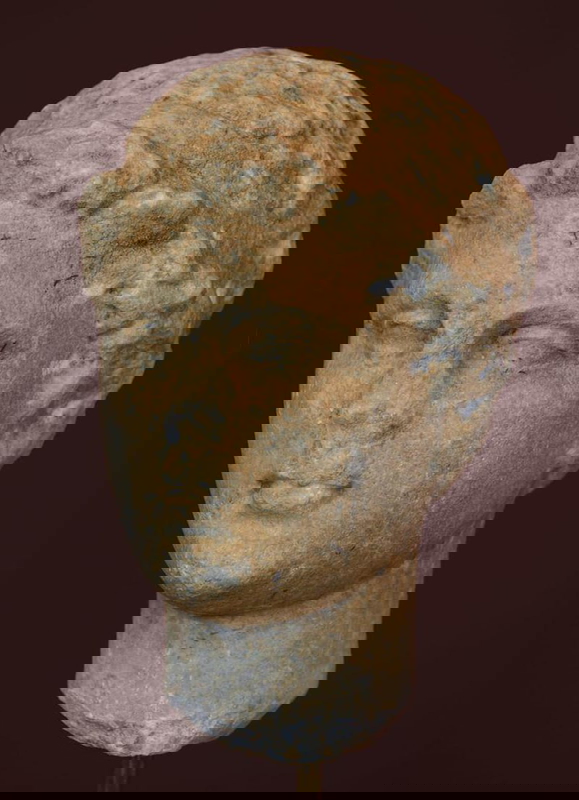
Ptolemy V had defeated Egypt’s enemies, and his military actions are mentioned on the stone. As tribute to the king, in all temples a gilded statue of the king was to be erected, and the temples themselves were to be visited three times a day by priests.
According to the decree, Ptolemy’s birthday, as well as his coronation date, were to be celebrated as festival days during which sacrifices and feasts would be held. In addition, every last and 17th day of each month was to be a day of celebration in honor of the great ruler and favorite of the gods.
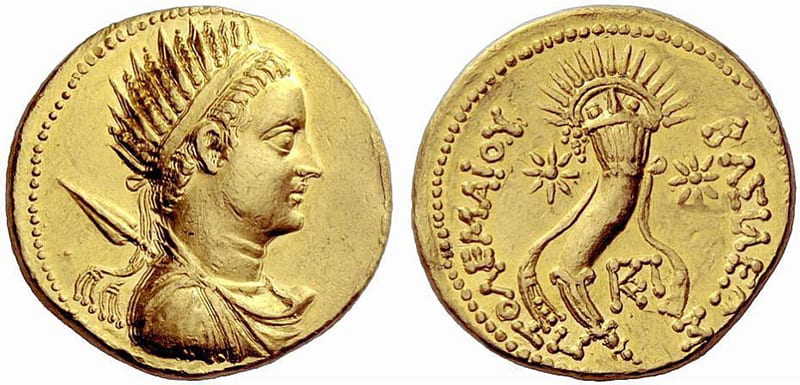
The text concludes that these decrees must be written in three different scripts, and the stelae on which they are inscribed must be placed in all temples — right next to the statues of that great king who would live forever.