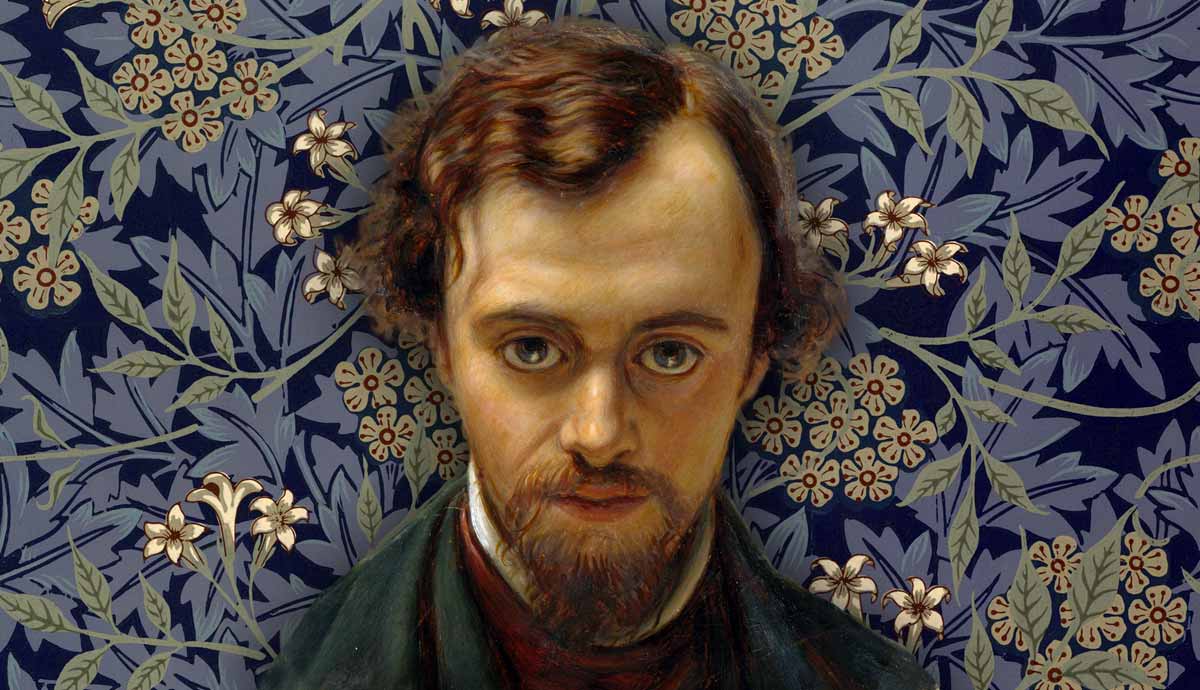
In the mid to late 19th century, two of Britain’s leading creative figures could be found at the heart of the Pre-Raphaelite Brotherhood: Christina and Dante Gabriel Rossetti. While Dante Gabriel Rossetti became one of the most influential artists of the Pre-Raphaelite Brotherhood, Christina Rossetti came to be seen as one of the greatest English poets of her time. Throughout both of their careers, the two siblings worked on projects together and exchanged ideas, resulting in shared themes in both poetry and painting being disseminated throughout the Pre-Raphaelite Brotherhood.
The Childhood of Christina and Dante Gabriel Rossetti
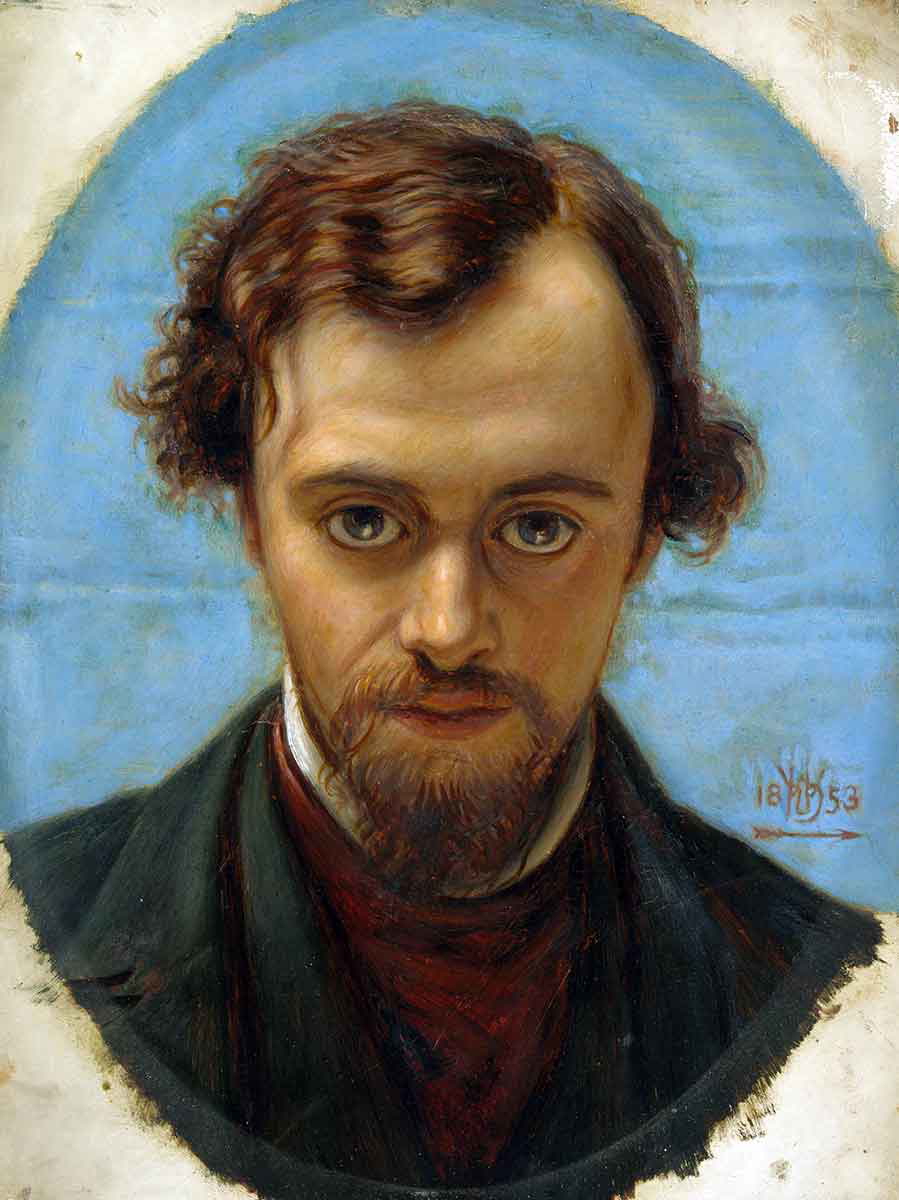
Dante Gabriel Rossetti (whose birth name was Gabriel Charles Dante) was born in London in 1828, and Christina Rossetti was born in the same city in 1830. Their father, Gabriele, was an Italian poet who had been forced to leave Italy because of his criticisms of King Ferdinand of Naples. Their mother, Frances Polidori, was a governess from London. Having been hired as a professor at King’s College in 1831, Gabriele was extremely passionate about his literary scholarship, which orbited around the medieval Italian poet Dante Alighieri. This passion touched the lives of all of the Rossetti children, with the four of them writing their own stories and poems at a young age.
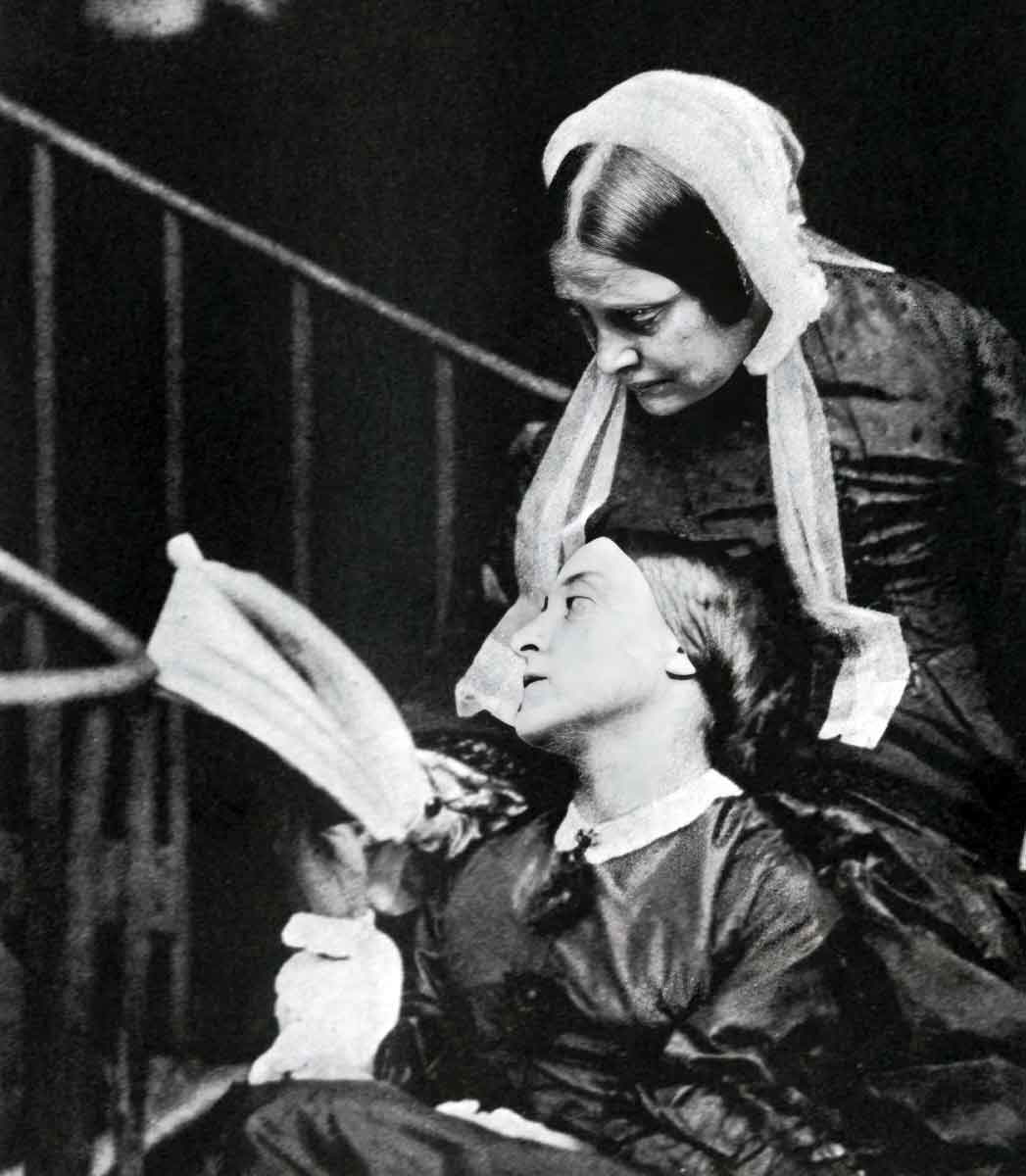
While their siblings William and Maria were known as the “two calms” of the family, Dante Gabriel and Christina were known as the “two storms.” While this nickname may suggest that the two had an overly emotional nature, Dante Gabriel and Christina showed studious dedication to their respective crafts even in their early years. As a teenager, Dante Gabriel was a student at Sass’s Drawing Academy and entered the Antique School of the Royal Academy once he had completed his studies there. By the age of twelve, Christina was seriously writing poetry and had her poems privately published by her grandfather when she was sixteen.
During this period of her life, her father Gabriele became seriously ill with what could have been tuberculosis and began to go blind. In order to earn extra income, Christina helped her mother earn a living as a teacher, while at the same time balancing writing her poetry. Dante Gabriel, in the meantime, immersed himself in his studies, and by 1848 had become a founding member of the Pre-Raphaelite Brotherhood.
A Pre-Raphaelite Partnership
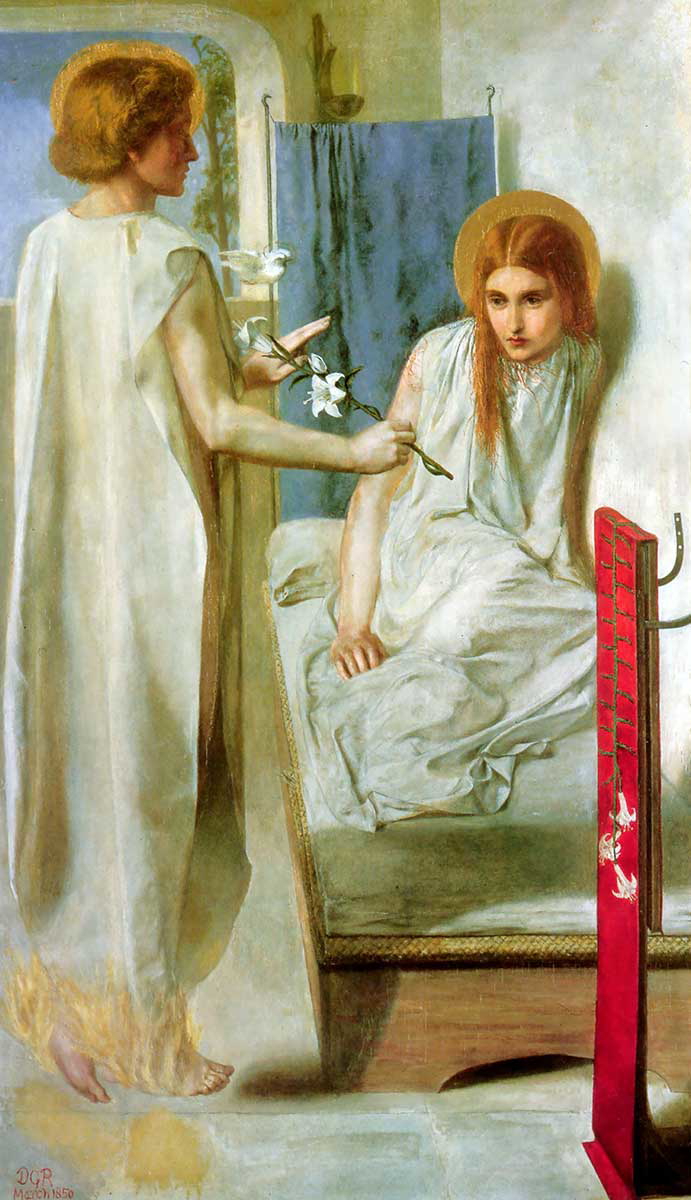
Even before the Pre-Raphaelite Brotherhood’s official formation, Dante Gabriel encouraged Christina to share her poetry with the movement’s early members. At the time, Christina was not interested, which Dante Gabriel attributed to her modest nature. While Christina never became an official member of the group, both the brother and the sister played an important role in the development of the type of language and imagery that would come to define the Pre-Raphaelite Brotherhood. Both of them, for instance, had some of their writings published in the short-lived Pre-Raphaelite publication The Germ.
Christina even posed for her brother’s paintings Ecce Ancilla Domini! and The Girlhood of Mary Virgin. As their careers developed, each seemed to have been keenly aware of what the other was either doing or had done, and used it as a form of personal inspiration. This familial interconnection resulted in some of the definitive visual and literary works of the Pre-Raphaelites.
Goblin Market
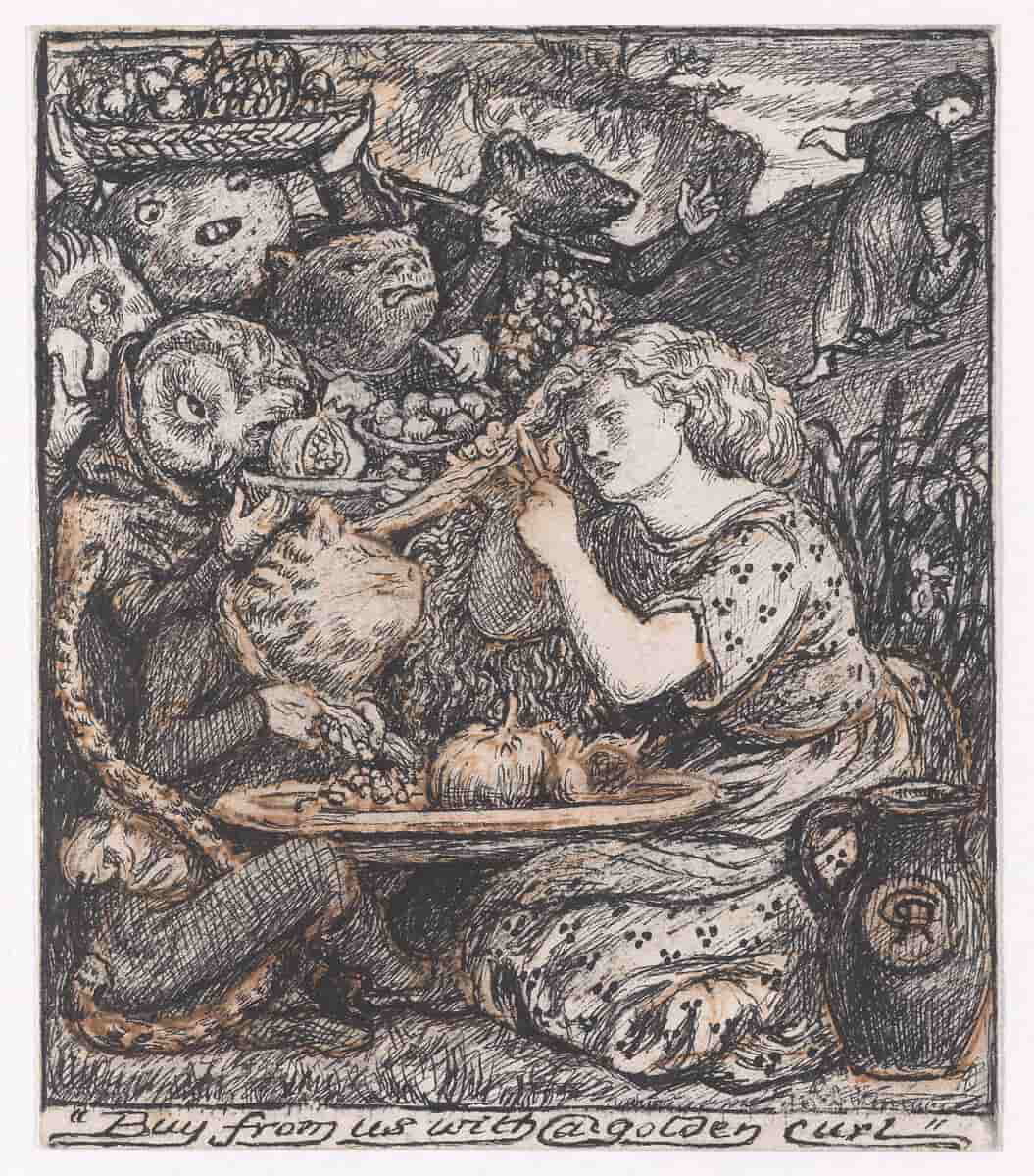
A key example of the interconnectedness of Christina and Dante Gabriel Rossetti’s work can be found in their collaborations on Christina’s published volumes of poetry. Dante Gabriel was enthusiastic about helping his sister to become a recognized author, personally convincing the publisher Alexander MacMillan to begin publishing her work. The relationship with MacMillan eventually led to the publication of her anthology Goblin Market and Other Poems in 1862. Goblin Market quickly became one of Christina’s most beloved poems. It recounts the story of two sisters, Laura and Lizzie, who face down the temptations offered by a group of sinister goblins. The poem is extremely rich in its language, creating a vivid fairytale world in the minds of its readers in which a failure to resist evil can prove deadly.
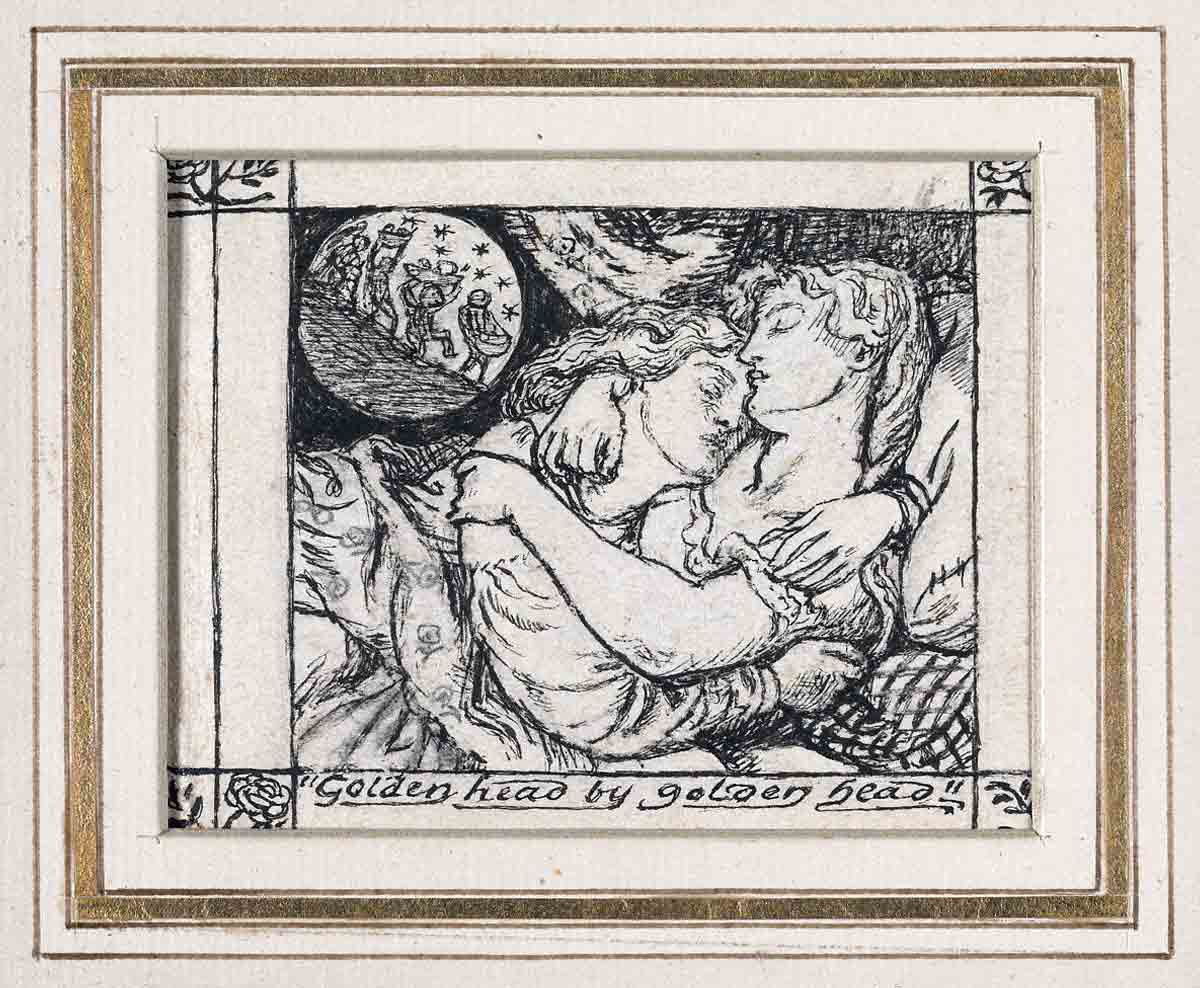
The world that Christina Rossetti constructed in this poem was extremely influential on the Pre-Raphaelite Brotherhood, with artists constructing similar fables in their art. Dante Gabriel himself was not immune to this influence, and it can be felt in the illustrations he created for the poem when it was first published. For example, his illustration for the title page of the book encapsulates the kind of fantasy world that would come to be so important for future Pre-Raphaelite works. It features the two heroines of the poem sleeping peacefully in their bed, with a quote from the poem describing the sisters, “golden head by golden head,” directly below.
In the distance, the goblins process with their goods in what resembles a sort of danse macabre. This constant threat of evil in the face of innocence, illustrated in both the poem and the works of art that Dante Gabriel created for it, came to be a defining feature of the art of other artists associated with the Pre-Raphaelite style, such as John William Waterhouse and Edward Burne-Jones.
The Prince’s Progress
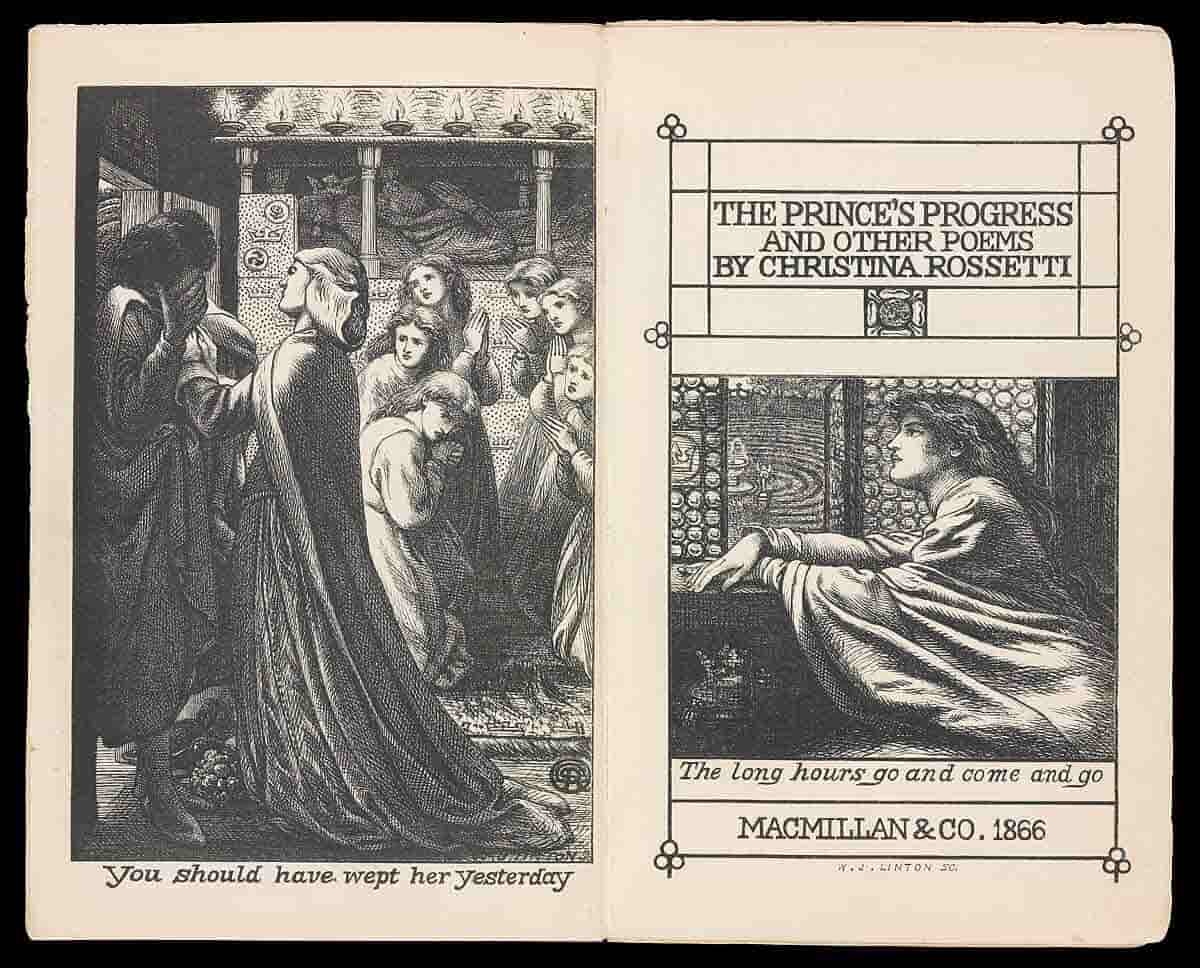
After Goblin Market and Other Poems achieved success, Dante Gabriel encouraged Christina to continue releasing tomes of poetry, which ultimately culminated in The Prince’s Progress and Other Poems in 1866. Dante Gabriel attempted to double as both illustrator and editor of this anthology, informing Christina on what scenes he thought could be added to the volume’s longest poem, The Prince’s Progress, and which of the volume’s other poems deserved to be removed.
Christina listened to his advice but pushed back firmly on many of his ideas. Nevertheless, in The Prince’s Progress, Christina crafted a tale that had a distinct Pre-Raphaelite sensibility. The poem centers around a princess longing for her prince, while the prince’s escapades delay him from reaching her before she dies. Its themes of temptation and the pain that love can bring became the defining themes of many future Pre-Raphaelite works. Like Goblin Market, it was also rich in detail, particularly in its depictions of the prince’s heartbroken paramour.
Once more, Dante Gabriel’s illustrations for the work built upon the Pre-Raphaelite world that Christina had described in her text, framing the characters in a distinctly medieval setting. The attire of the characters is long and flowing, evocative of a simpler and purer time, and their surroundings feature many medieval details. Pre-Raphaelite artists had already been crafting such worlds in their earlier works and would continue to do so throughout the 19th century. Through illustrating the manuscript in such a way, Dante Gabriel firmly asserted his sister’s identity as a Pre-Raphaelite poet.
Italia, Io Ti Saluto!
Christina and Dante Gabriel Rossetti’s works were also connected by more abstract interests and themes. One of the most important of these was a love of their father’s native Italy. In the 1860s, both of them used their understanding of Italian culture to explore their own complex emotions in a particularly impactful way. The deep sense of emotion expressed by Christina and Dante Gabriel Rossetti at this time, both in poetry and in painting, pushed the Pre-Raphaelite Brotherhood forward on its trajectory towards intensely psychological works of art.
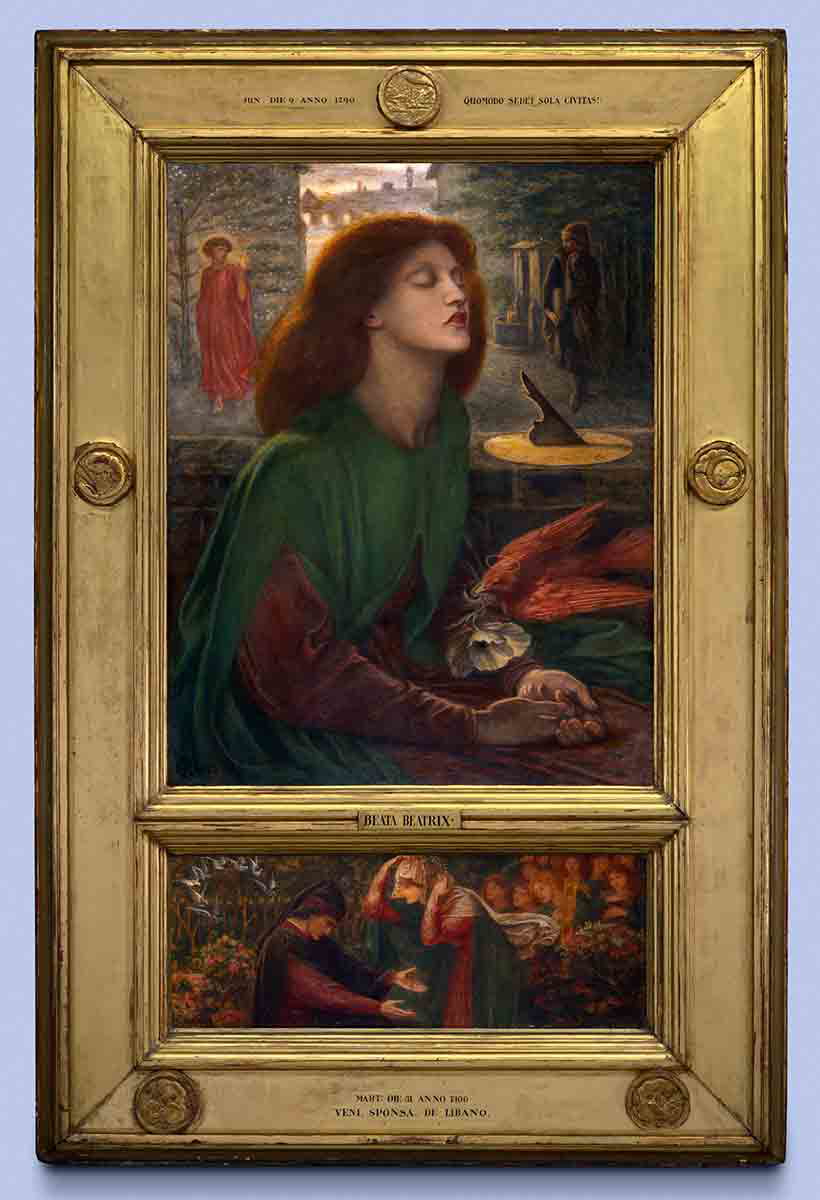
Dante Gabriel, for instance, began work on his painting Beata Beatrix in this decade. This painting was created in response to the death of the artist’s wife, Elizabeth Siddal, in 1862. In the painting, Elizabeth Siddal is depicted in front of the Ponte Vecchio bridge in Florence, Italy, closing her eyes with a peaceful expression. Both this Italian imagery and the title of the painting are drawn from the poetry of Dante Alighieri, the subject of many of Gabriele Rossetti’s writings, with specific reference to the death of Dante’s love interest Beatrice as described in La Vita Nuova. By giving the painting this title and framing the subject with imagery drawn from Dante Alighieri’s Florence, the artist suggests that his mourning for Elizabeth is as profound as the poet’s was for Beatrice.
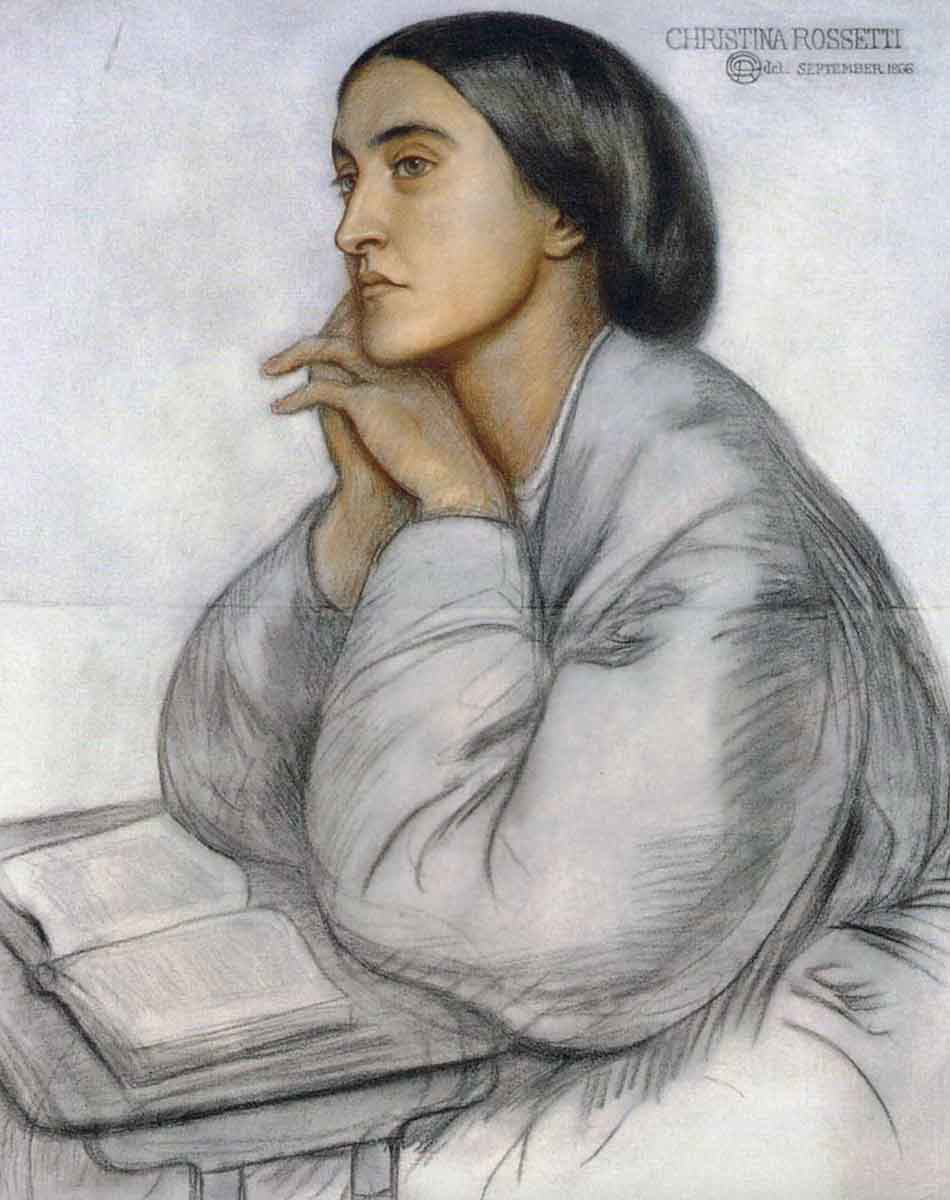
In 1865, Christina’s poem Italia, Io Ti Saluto! was written. Like the title of Beata Beatrix, the title of the poem firmly establishes a connection between the author and the nation of Italy. Italia, Io Ti Saluto!, translated into English, literally means, “Italy, I greet you!” The poem was written while Christina was traveling through Italy with her brother William and her mother Frances and expresses the alienation she felt from the English culture in which she was born. In the text of the poem, Christina anticipates eventually having to return to England, illuminating her sense of mourning with the words,
To see no more the country half my own,Nor hear the half familiar speech,Amen, I say; I turn to that bleak NorthWhence I came forth –The South lies out of reach.
Christina Rossetti’s “Day-Dreams” and Dante Gabriel Rossetti’s “The Day Dream”
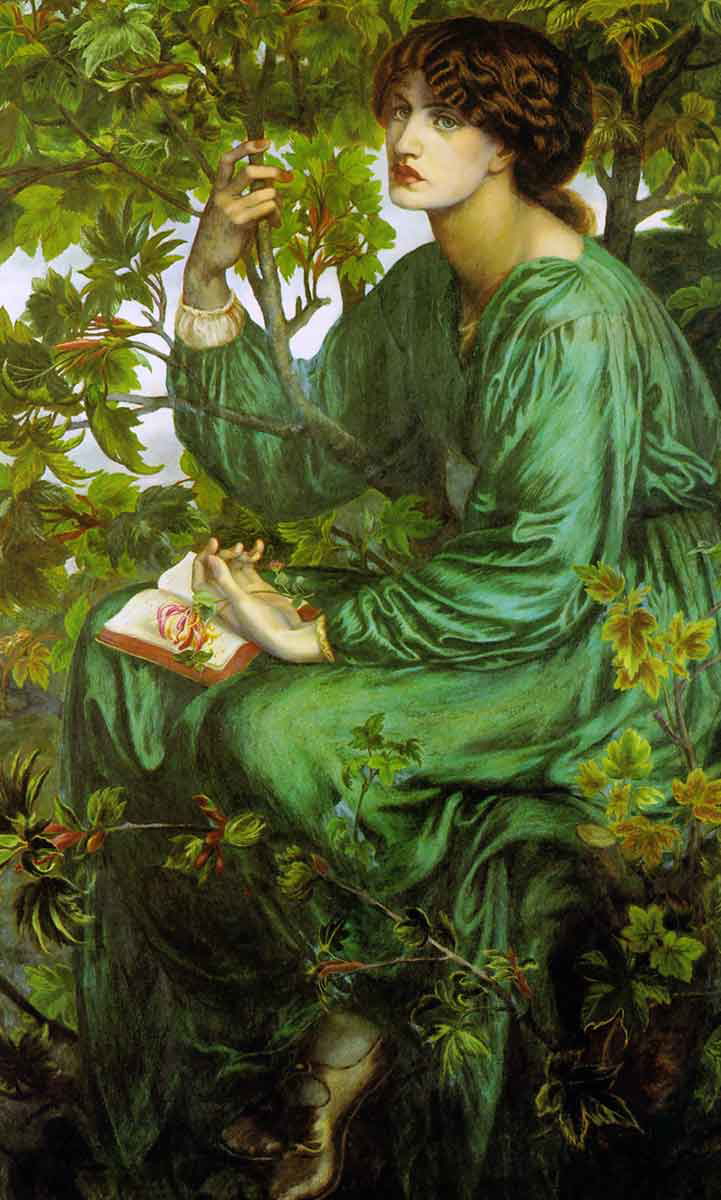
One of the greatest examples of the mutual inspiration between the brother and sister lies with Christina’s 1857 poem Day-Dreams, and Dante Gabriel’s 1880 painting The Day Dream. In her poem, Christina writes from the perspective of a man wondering why the woman he loves seems to be in a trance, deeply unaware of the world around her. The poem describes the woman in the stanza:
So she sits and doth not answerWith her dreaming eyes,With her languid look deliciousAlmost Paradise,Less than happy, over wise.
Dante Gabriel put these words into visual form in his painting The Day Dream. Here, the subject of the painting, the artist’s mistress Jane Morris, similarly looks out with a dreamlike expression. The lack of emotion on her face draws attention to her unknown state of mind, crafting a mystery in the same manner as Christina’s poem.
At the time of The Day Dream’s creation, the artist had written his own poem to accompany the painting. Unlike Christina, Dante Gabriel focuses heavily on natural imagery in his poem, which accounts for the emphasis on the foliage surrounding Jane Morris in the painting. Nevertheless, both poems explore the concept of a woman lost in her own thoughts and the effect such a woman has on a male admirer.
As a result, it seems likely that Dante Gabriel was, in his own way, attempting to reinterpret an idea that his sister had articulated in her own work. It is important to note that the painting The Day Dream was completed over twenty years after Christina Rossetti originally wrote her poem. Even though many years had passed, the impact of Christina’s words on Dante Gabriel’s painting seems to suggest that her poetry remained with him, no matter what challenges the passage of time brought.