
Smedley Butler was not a traditional Quaker. He became one of the most courageous United States Marine officers during the early 20th century. Serving from 1898 to 1931, Butler fought in the Boxer Rebellion and the Banana Wars and won two Medals of Honor. Over time, he grew disillusioned with US interventionism and became an anti-war advocate. He supported the Bonus Army during the Great Depression and exposed an attempt to overthrow President Roosevelt known as the Business Plot.
Early Life
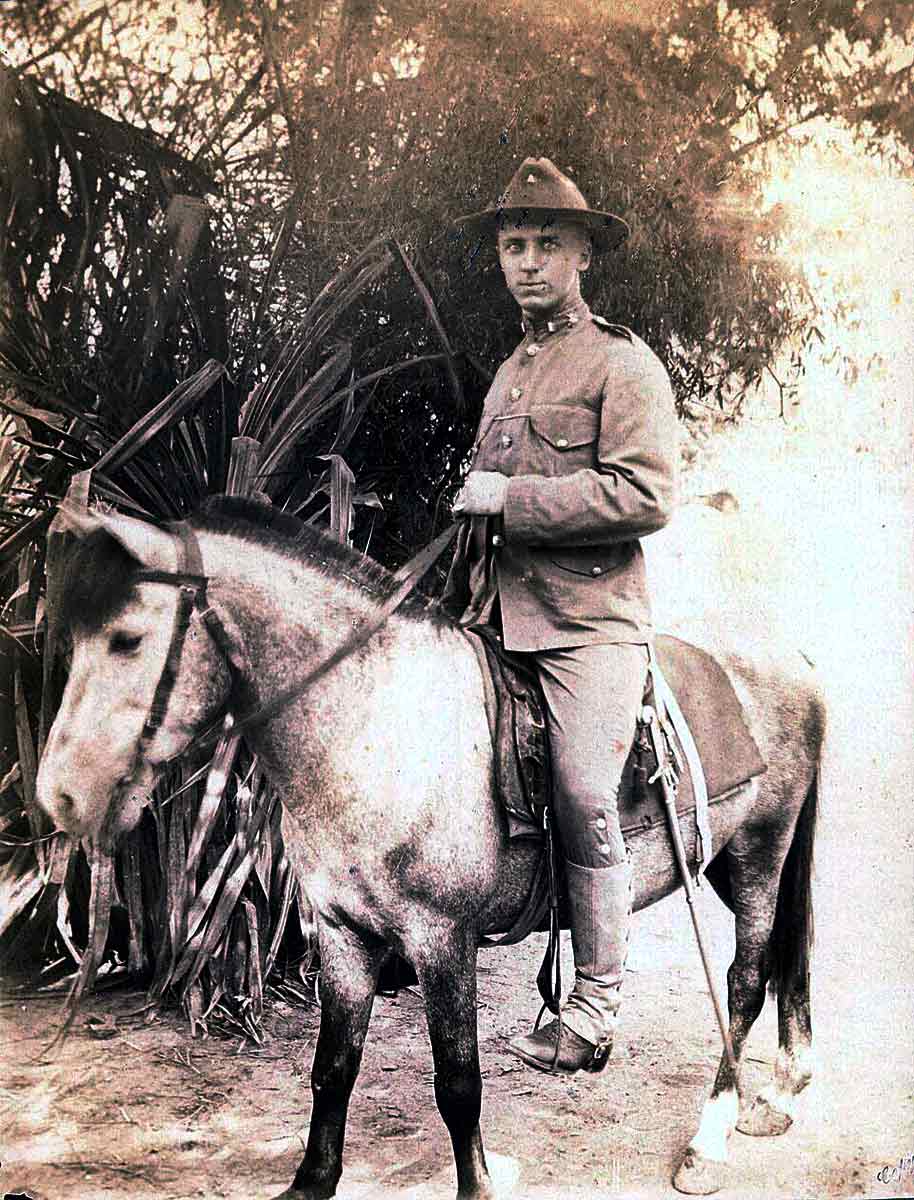
Smedley Darlington Butler was born in West Chester, Pennsylvania on July 30, 1881. Raised in a Quaker household, his father and grandfather had served in the federal and state legislatures respectively. His father Thomas Butler served as chairman of the House of Naval Affairs Committee and advocated for a strong navy, shaping his son’s views.
When the United States declared war on Spain in 1898, the adventurous 16-year-old Butler dropped out of school and obtained a direct commission as a Marine second lieutenant. However, the war was already over by the time he completed officers’ training. He eventually experienced combat in the Philippine Insurrection and the Boxer Rebellion in China in 1900. In China, he and five other marines carried a wounded private 17 miles away to safety after an ambush. He would later participate in the relief of Tientsin and Peking, earning a promotion to captain before his 19th birthday.
The Banana Wars and “Dollar Diplomacy”
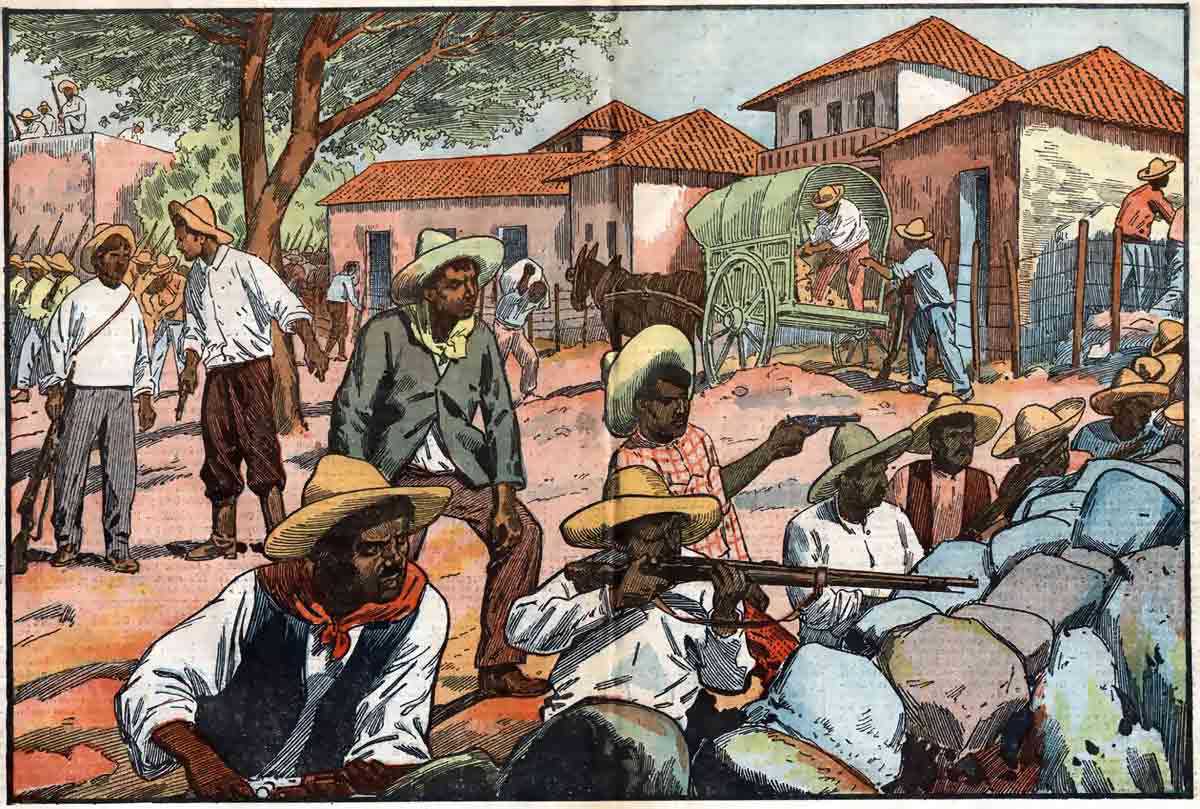
After China, Butler held various postings in the US and Central America. Between 1902 and 1918, he fought in the “Banana Wars.” These were a series of US military interventions in Latin America to protect commercial interests in a policy known as “dollar diplomacy.”
According to Assistant Secretary of State Huntington Wilson, “dollar diplomacy” was to substitute “dollars for bullets” and implement “peace for those who benefit by the investment of capital.” (Boot, p. 138) The Taft administration encouraged Latin American states to take out loans from Wall Street banks, while the latter invested in their resources. However, insurrections broke out and the US deployed its armed forces to protect investments and estates from insurgents and European rivals.
After fighting in Honduras in 1903, Butler served in Nicaragua from 1909 to 1912. Nicaragua was a source for rubber, banana, and gold that American and British businesses owned. As a major, Butler led a battalion to support the Nicaraguan president. Once the rebellion ended, Nicaragua became a US protectorate and Wall Street banks took over its banks and railroads.
Butler wrote to his parents, “What makes me mad is that the whole revolution is inspired and financed by Americans who have wild cat investments down here and want to make them good by putting in a Government which will declare a monopoly in their favor.”
Veracruz and the First Medal of Honor
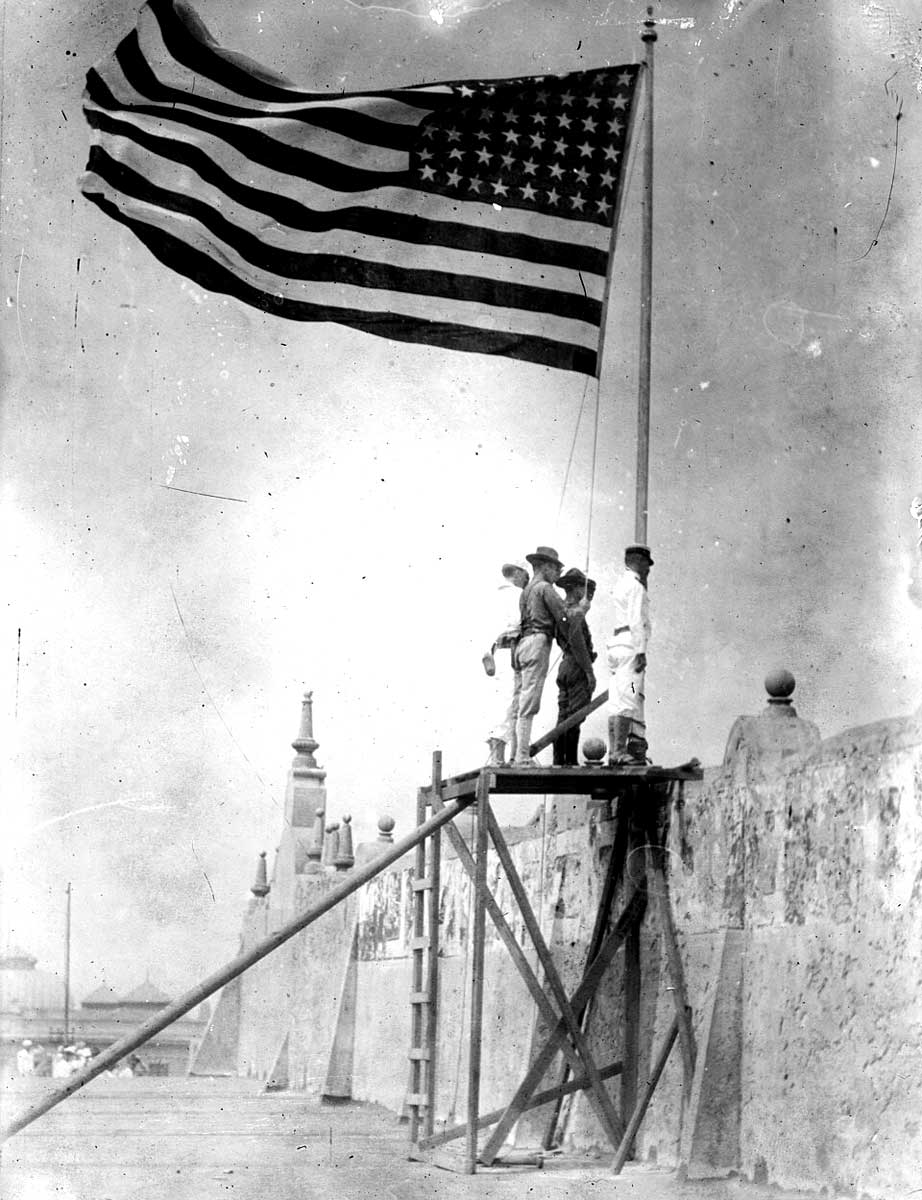
In 1914, the United States intervened in the Mexican Revolution and occupied the coastal city of Veracruz. Landing ashore on April 21, Butler’s battalion cleared the city of Mexican troops, overwhelming light resistance with few casualties. Butler was one of 55 US service members to receive the Medal of Honor.
Congress and the Navy Department liberally awarded the decoration more out of propaganda than genuine heroism. Butler refused the medal, writing to his mother that the medal was for “Heroism” and “to have it thrown around broad cast” was “unutterably foul” (Schmidt, p. 72). Nevertheless, the Navy Secretary ordered Butler to accept the medal.
Haiti and the Second Medal of Honor
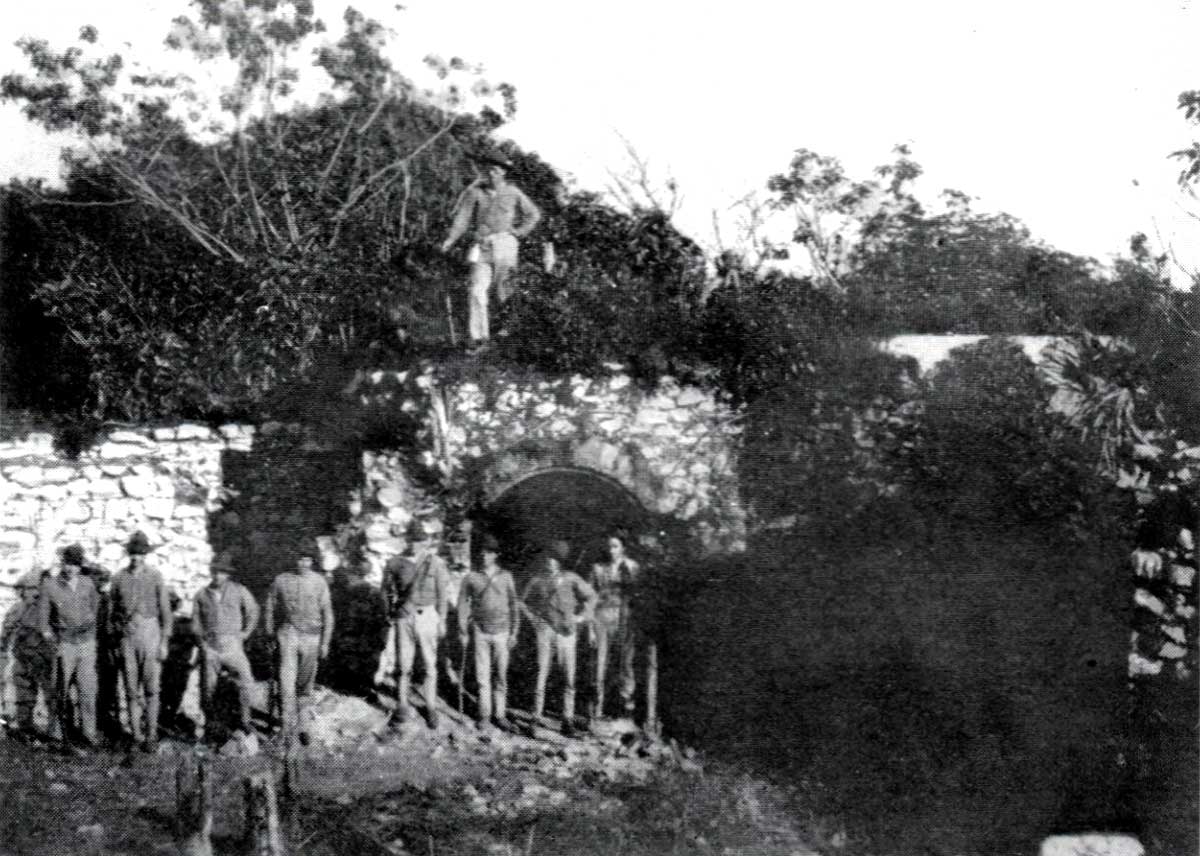
In August 1915, Butler’s battalion deployed to Haiti, where the US fought the Cacos, rebel guerrillas who fought the unstable government. Like Nicaragua, Wall Street banks controlled 50% of Haiti’s banks and railways. The US wanted to protect its economic interests from the Cacos and Germany, which was attempting to extend its influence in the background of World War I.
Throughout the autumn, Butler participated in counterinsurgency operations against the Cacos. His most significant victory during the First Caco War was capturing Fort Rivière on the evening of November 17. As a result, Butler and two enlisted men received the Medal of Honor. Butler thus became one of two US Marines to receive two Medals of Honor and one of 19 men in the history of the US armed forces.
Butler’s role transitioned from combat to policing. Now a lieutenant colonel, Butler became commandant of the Gendarmerie d’Haiti, the Haitian military police force, to restore order. He also oversaw the construction of a national road network with a corvée system, forcing peasants with unpaid taxes into labor. While Butler made the work as humane as possible and treated the poor with compassion, the Haitians grew resentful toward the Americans over the forced-labor and racial abuse from other Americans. These factors eventually led to another rebellion after Butler left Haiti in 1918.
Final Years in the Marines and Retirement
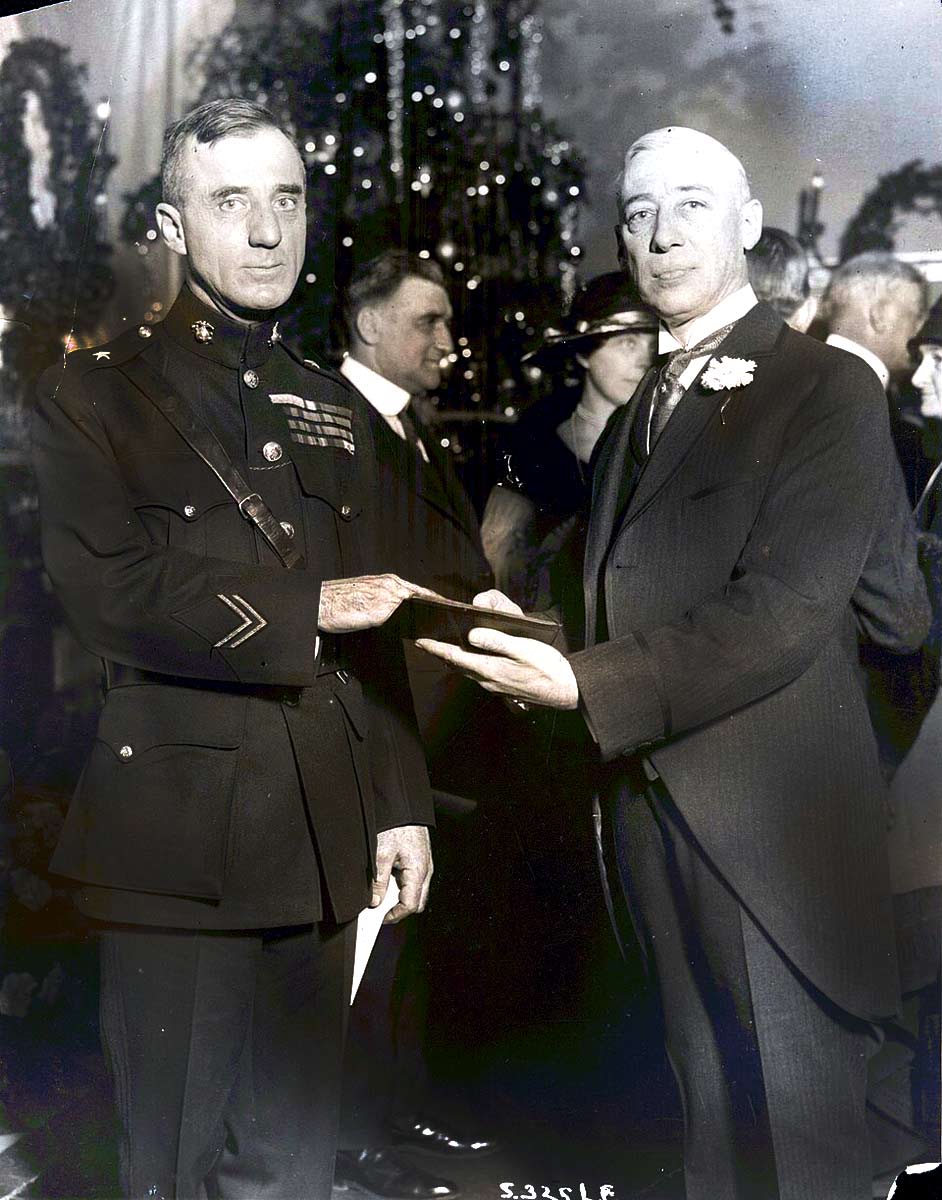
Meanwhile, the US entered the Great War in Europe. However, the Marines found Butler too valuable in Haiti and did not send him to France until September 1918. To his disappointment, he was not offered a combat command. Regardless, he dutifully took command of a logistics place, reorganizing the Allies’ main transit and supplies. He earned a reputation for ignoring regulations to cater to the Marines’ requirements. One example was mustering 7,000 Marines to steal wooden planks and digging tools from an army warehouse to make wooden floors in the barracks, earning him the nickname “General Duckboard.”
During the Prohibition Era in the 1920s, Philadelphia Mayor W. Freeland Kendrick asked President Coolidge to allow Butler to become Philadelphia’s Director of Public Safety. From 1924 to 1926, Butler took leave and oversaw police and fire departments. Butler approached the task like a military officer; he ordered raids on illegal bootlegging, saloons, and gambling, increased street patrols, and removed corrupt officers. His dedication eventually put him in conflict with corrupt city officials, who eventually pressured the mayor to fire Butler.
Returning to the Marines in 1927 as a brigadier general, Butler led the 3rd Marine Brigade in China to protect American citizens during the civil war. Unlike the Boxer Rebellion and the Banana Wars, Butler made clear to his Marines that their mission was to protect Americans, not colonial interests or to harass Chinese people. His mission was successful owing to his friendly relations with Chinese generals. He returned to the US in 1929 as a major general, becoming the youngest major general in Marine history at age 48.
Political Activism
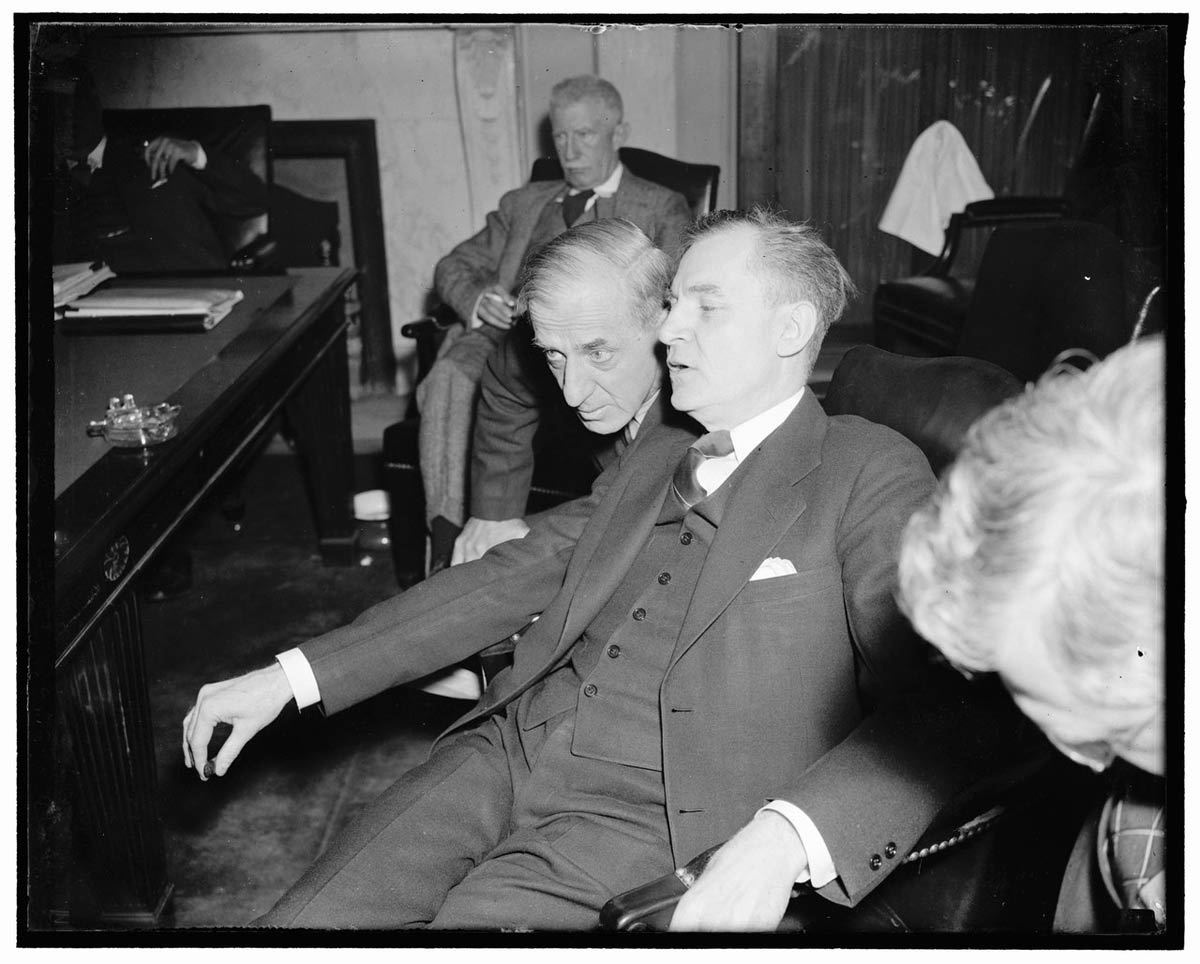
As fascism became increasingly prominent in the 1930s, Butler became more politically active, speaking against fascism and his own involvement in the Banana Wars. Two speeches he made facilitated his retirement in 1931. The first was when he told the public that US armed forces (including himself) had forcibly installed the Nicaraguan president in office in 1912. In a second speech, Butler spoke of Italian dictator Benito Mussolini callously running over a child. He received reprimands for both speeches, preventing him from becoming the next Commandant of the Marine Corps. Seeing his career at an end, he retired in 1931.
He remained active in public as a civilian during the Great Depression. He ran for the Senate as a Republican in 1932, campaigning to support Prohibition, the struggling lower class, and infrastructure improvements. However, he lost the primary election because the public favored repealing Prohibition.
The Bonus Army
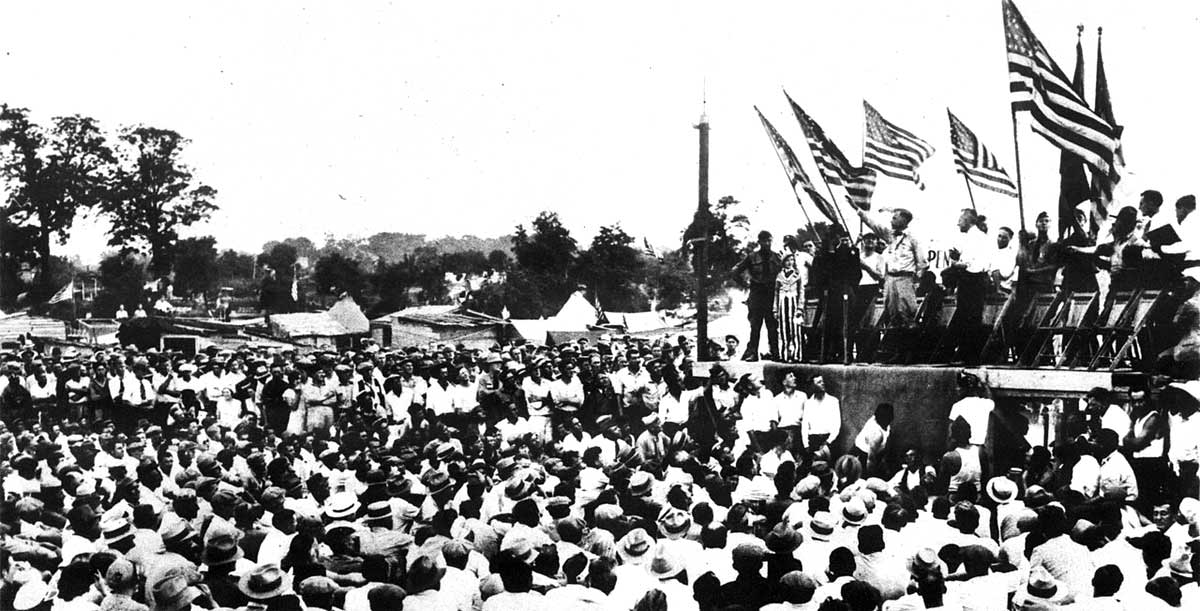
Butler continued to support veterans’ welfare during the Depression, delivering lectures across the country. In May of 1932, World War I veterans and their families marched into Washington, D.C. Calling themselves the Bonus Army, the veterans demanded bonuses that the government promised them for their service. By late May 25,000 marchers arrived in Washington and set up camps for two months.
On July 19, Butler and his son visited the veterans’ largest camp at Anacostia Flats, touring the camp and sharing breakfast with them. “I never saw such fine Americanism as is exhibited by you people,” Butler told them. “You have just as much right to have a lobby here as any steel corporation… Makes me so damn mad, a whole lot of people speak of you as tramps. By God, they didn’t speak of you as tramps in 1917 and ’18.” Nine days later, US Army infantry, tanks, and cavalry dispersed the Bonus Army with tear gas and sabers.
The Business Plot
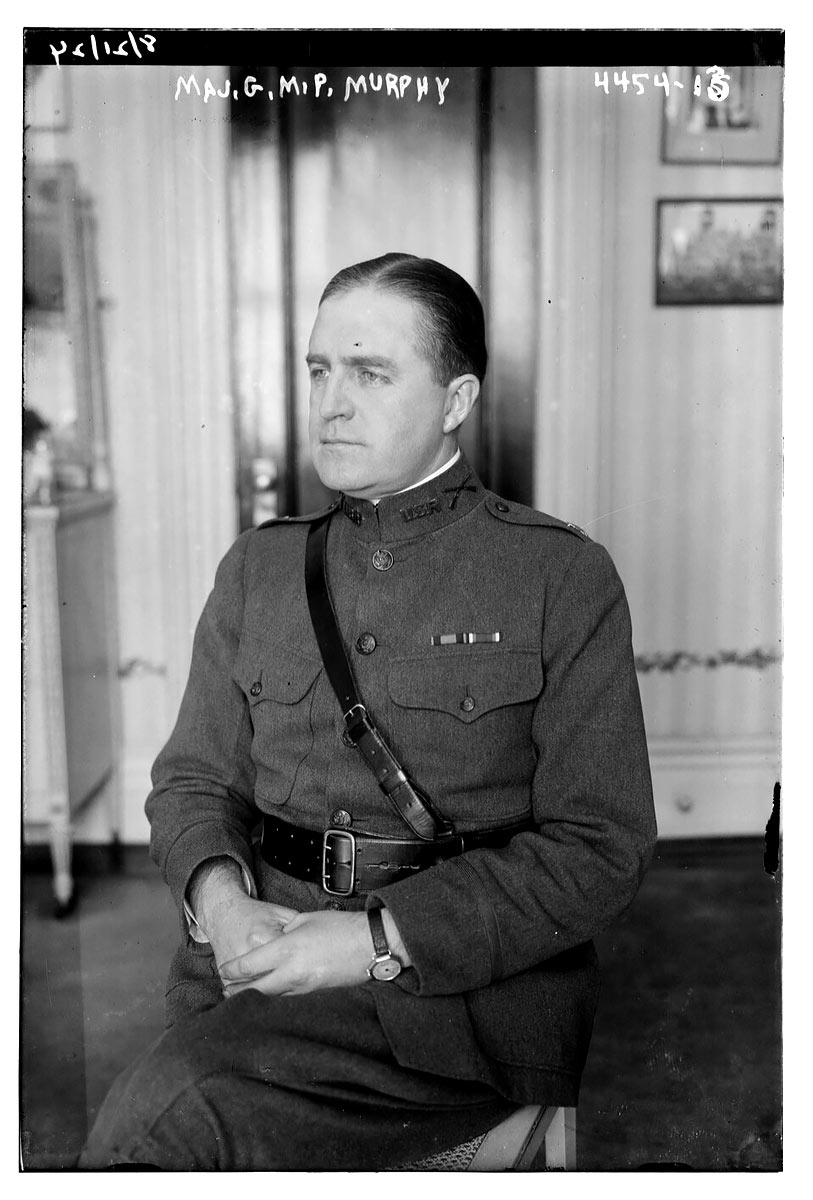
Butler’s outspoken support for veterans eventually attracted attention from the wealthy elite. On July 1, 1933, Wall Street broker Gerald MacGuire (employee of Grayson M.P. Murphy of J.P. Morgan) approached Butler. Claiming to represent the American Legion, MacGuire offered Butler to give speeches criticizing President Franklin D. Roosevelt’s New Deal. Butler, a friend of Roosevelt’s, turned MacGuire down. MacGuire approached Butler repeatedly afterwards. Each time, Butler feigned interest in MacGuire’s schemes. Eventually, MacGuire revealed his and accomplices’ desire to overthrow Roosevelt in a coup and establish a fascist government with Butler at its head.
The Business Plot appeared in newspapers and brought Butler to testify before the Special Committee on Un-American Activities in the House of Representatives, also known as the McCormack-Dickstein Committee. Butler named other Wall Street conspirators like Murphy, Robert Sterling Clark of Singer Sewing Machine, and Thomas W. Lamont of J.P. Morgan. While the McCormack-Dickstein Committee reported finding credible evidence that a coup attempt was discussed, no criminal prosecutions were initiated by the Department of Justice. The Committee closed the investigation without charging anyone.
Why Did Butler Call War a “Racket”?
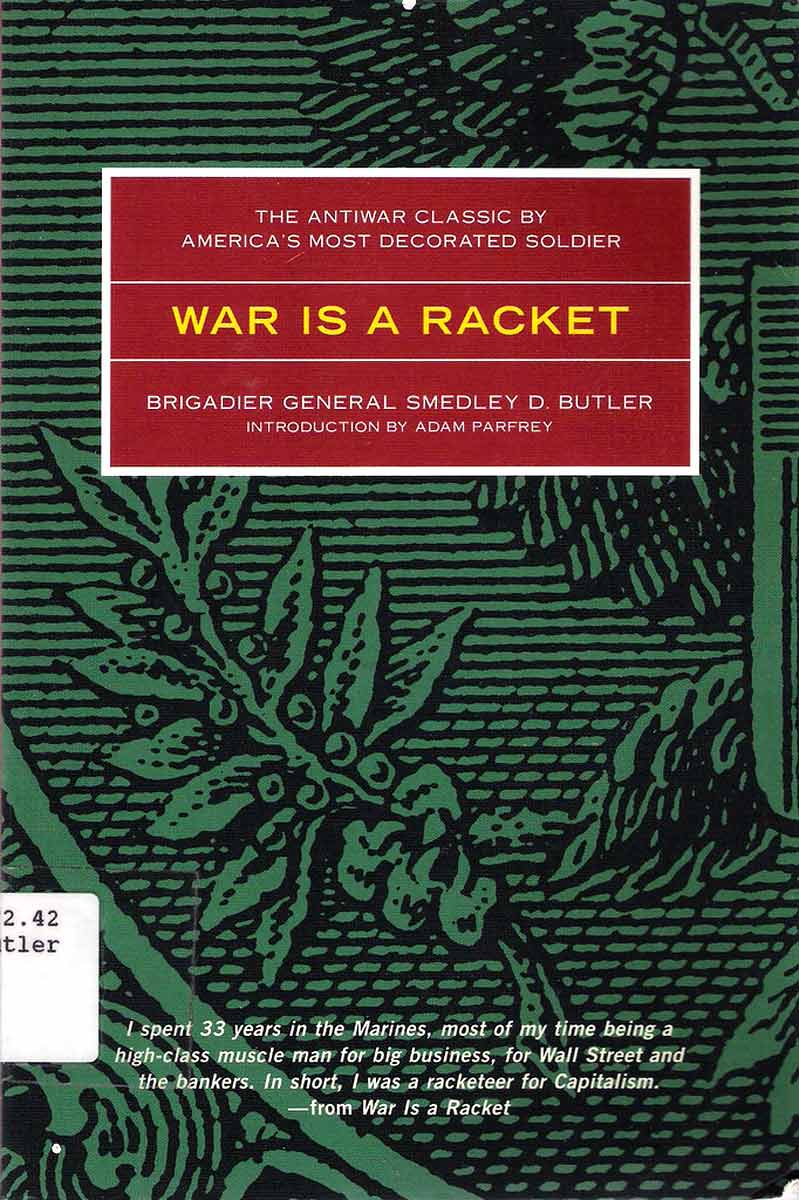
While a dedicated combat Marine, Butler’s Quaker upbringing influenced his views toward warfare. Throughout his service, Butler believed the Banana Wars were at the behest of US corporations, exploiting the Caribbean resources and people as well as American servicemembers, as he witnessed in Nicaragua and Haiti.
In 1935, he published a pamphlet entitled War Is a Racket, criticizing American wars in China and Latin America for profit. “For a great many years, as a soldier,” he writes, “I had a suspicion that war was a racket; not until I retired to civil life did I fully realize it” (Butler, p. 3). He cites senatorial hearings after World War I; he argued that while businesses profited, taxpayers paid for the war while propaganda manipulated men to enlist. He concludes the pamphlet by arguing for military isolationism and not fighting overseas, going to war solely for defense of the mainland.
Final Years and Legacy
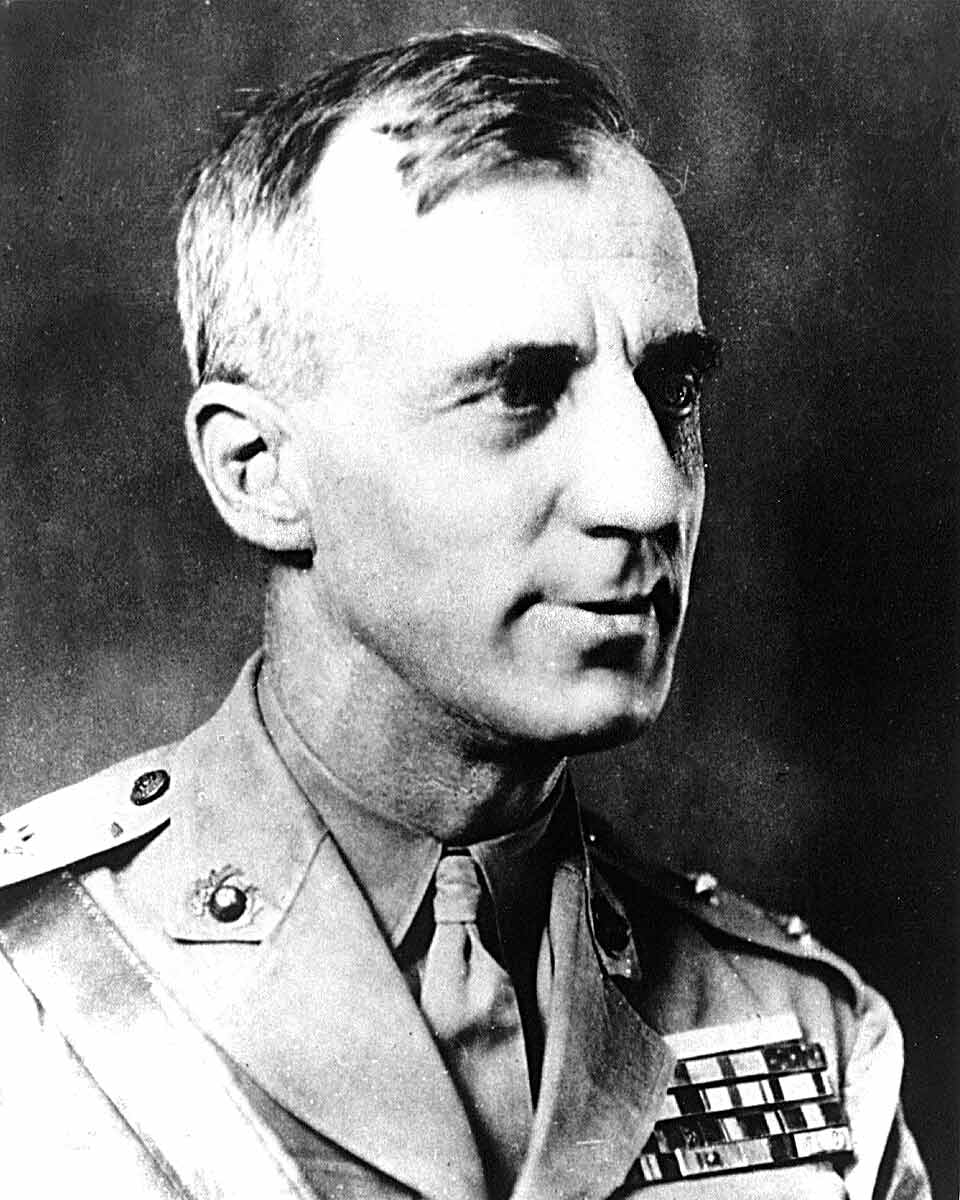
Smedley Butler remained an active spokesperson for the American League Against War and Fascism, advocating non-interventionism and against imperialist wars and the military-industrial complex. Throughout his final years, he refused to moderate his stance even as Nazi Germany invaded and occupied much of Europe. Even as Poland and France fell in 1939 and 1940 to fascism, Butler urged the United States to not become involved before he died of cancer on June 21, 1940.
“The Fighting Quaker” left a lasting legacy for Marines and pacifists. At the time of his death, he was the most decorated Marine in US history until Lieutenant General Lewis “Chesty” Puller’s legendary leadership in World War II and Korea. In 1942, the U.S. Navy commissioned the destroyer USS Butler in the late general’s honor. For Marines, he was a compassionate and courageous leader who placed others’ well-being above his own, even by breaking military regulations.
His legacy extends to pacifist groups and veterans against military intervention, including the Vietnam Veterans Against the War. In particular, he influenced Marine Corps Commandant General David Shoup, who opposed U.S. involvement in Vietnam.
Smedley Butler left a legacy of battlefield courage, devotion to his men, and for speaking out against corruption and interventionism.
Sources
- Boot, M. (2002). The Savage Wars of Peace: Small Wars and the Rise of American Power, Basic Books.
- Butler, S. (1935). War Is A Racket, Heritage History.
- Schmidt, H. (1987). Maverick Marine: General Smedley D. Butler and the Contradictions of American Military History, University of Kentucky Press.