
On May 23, 1618, Bohemian Protestant lords led by Count Thurn stormed Prague Castle, outraged that the royal Habsburg family wasn’t honoring the Letter of Majesty.
Signed by Emperor Rudolf II in 1609, the letter had promised the Protestant estates of Bohemia freedom of religion and the right to build churches. During a heated confrontation at the palace, the lords threw two Catholic regents and their secretary out of a window. Although they fell from a height of roughly 70 feet, all three men survived. The event is known as the Second Defenestration of Prague and was the spark that ignited the Thirty Years’ War.
How a 70-Foot Defenestration Sparked 30 Years of European Devastation
Religious tensions between Bohemian Protestant and Catholic groups escalated after the Catholic King-elect Ferdinand II, who had been crowned King of Bohemia in 1617 by the Bohemian Diet (Assembly of Estates), began closing Protestant churches in Bohemia, contrary to what was allowed under the Letter of Majesty. In the aftermath of the Prague incident, the Bohemians proceeded to officially remove Ferdinand as King and instead offered the crown to the Protestant Frederick V of the Palatinate. The move turned what was essentially a rebellion into a full-scale European war.
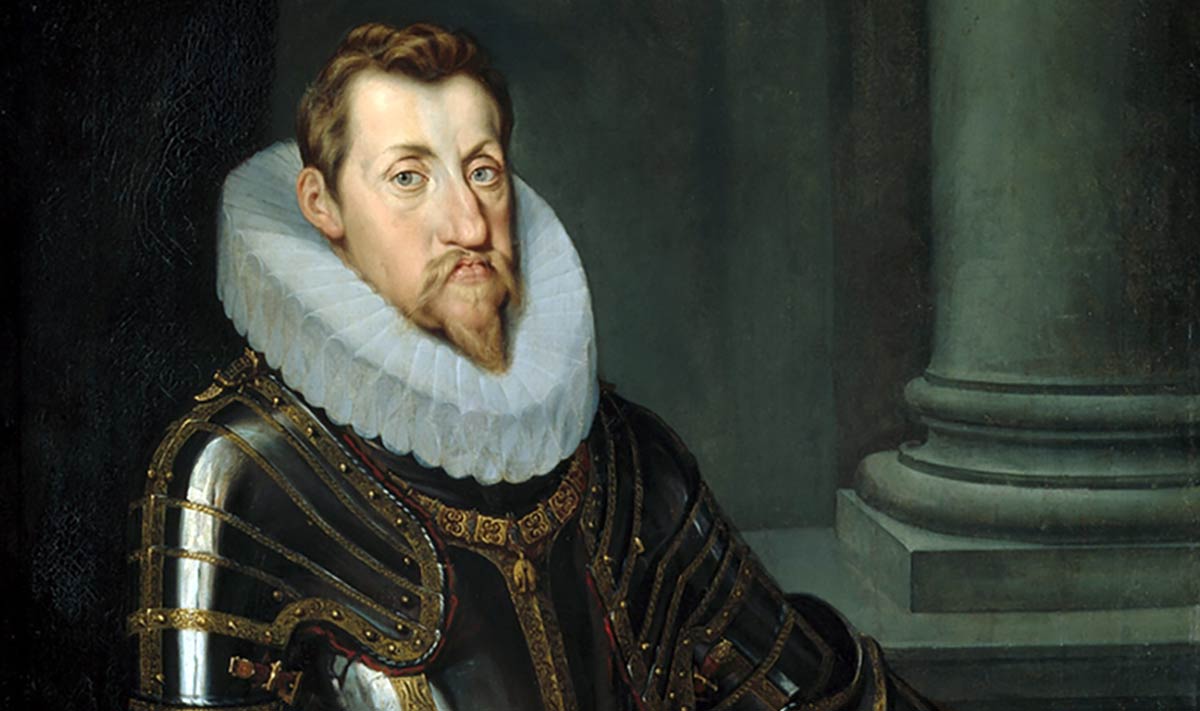
Ferdinand II, who became Holy Roman Emperor in 1619, was an intensely Catholic ruler who wanted to return all his lands to the authority of the Catholic Church, but his centralizing reforms would have infringed upon the German Liberties, which were traditional privileges enjoyed by the numerous princes of the Holy Roman Empire. The civil war within the Holy Roman Empire between the Catholic Emperor Ferdinand II and the autonomous Protestant states and local rulers under his domain quickly ballooned into a multinational conflict as the Empire’s instability opened the region up for foreign intervention by those looking to check Habsburg power.
How Foreign Intervention Turned a Holy War Into Pure Geopolitics
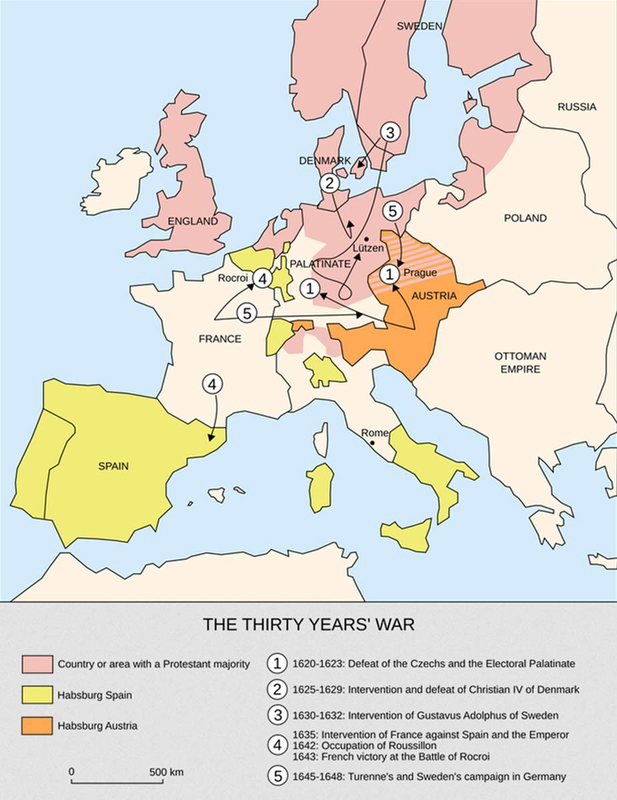
Gradually, the war evolved from a religious conflict to a struggle for power in Central Europe. The shift happened partly because Emperor Ferdinand II also issued the Edict of Restitution in 1629, a law that forced Protestants to restore ecclesiastical lands to the Catholic Church. The resulting unrest not only drew more German princes into the fray, but also alarmed King Gustavus Adolphus of Sweden, who invaded Germany in 1630 to protect Protestant rights and Swedish interests. Sweden won major battles and pushed imperial forces back, but Gustavus Adolphus was killed in battle on Nov. 6, 1632. On May 30, 1635, German princes and Ferdinand II signed the Peace of Prague to end internal German fighting and suspend the edict.
Why a Catholic Cardinal Backed Protestants to End Decades of Slaughter
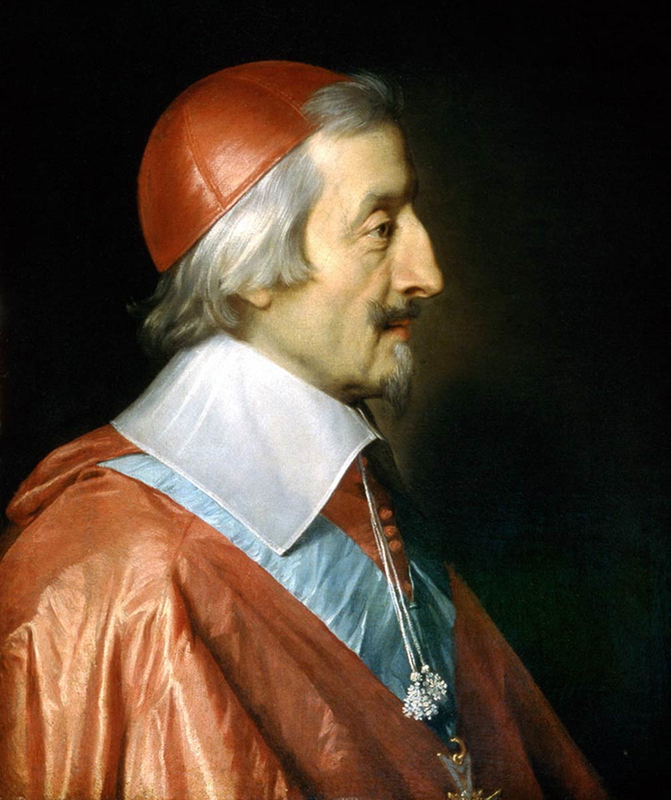
On May 19, 1635, French Cardinal Richelieu committed the full strength of the French military to the Protestant cause. France, traditionally one of Catholicism’s most powerful champions, had entered the war not for religion, but for political reasons. This was after Richelieu realized that Catholic Spain, France’s rival, controlled neighboring territories in Italy, the Netherlands, and Spain itself.
Crucially, Spain was ruled by the Spanish Habsburgs, who were close cousins and military allies of the Austrian Habsburgs in Vienna. France could not stand for Habsburg hegemony on all its borders. And so the French military entered the final decade of the war fighting the most powerful Catholic alliance in Europe. Emperor Ferdinand II died in 1637, leaving his son Ferdinand III to carry on the fight against France and Sweden.
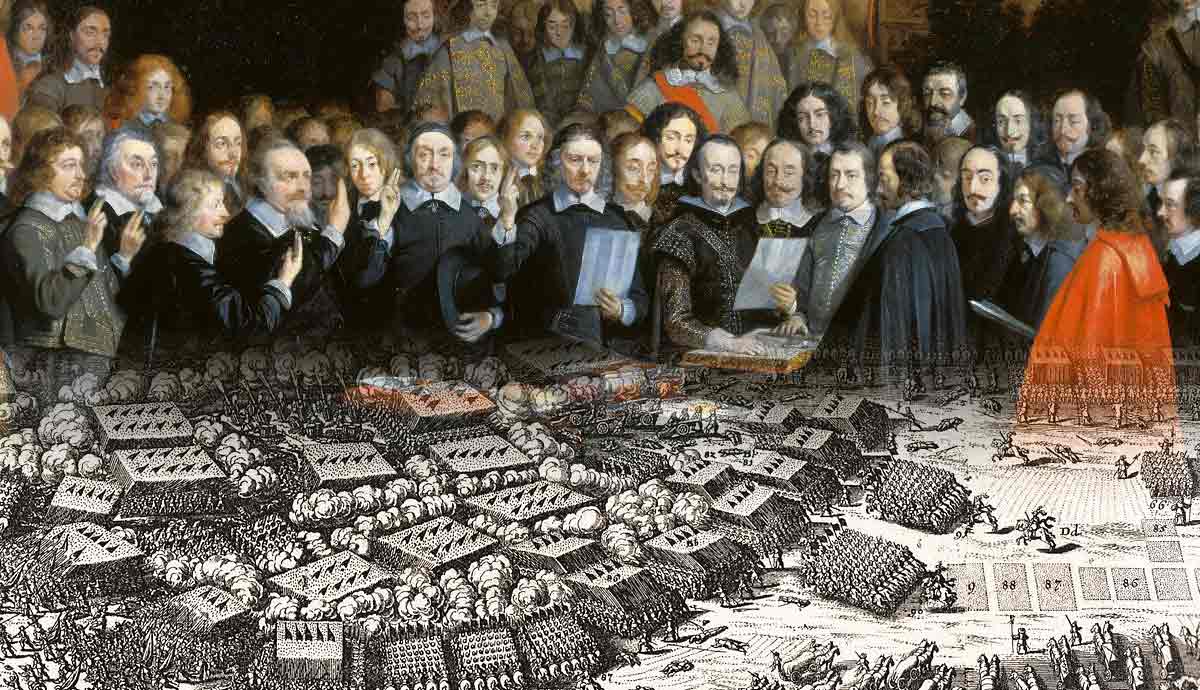
Historians estimate that total deaths between 1618 and 1648 range from 5 million to a staggering 8 million lives lost. To stop the carnage, two treaties were signed in the Westphalian cities of Münster and Osnabrück on October 24, 1648. Together, the treaties are known as the Peace of Westphalia. They brought an end to the Thirty Years’ War.
How the Treaties of 1648 Shifted European Power to France and Sweden
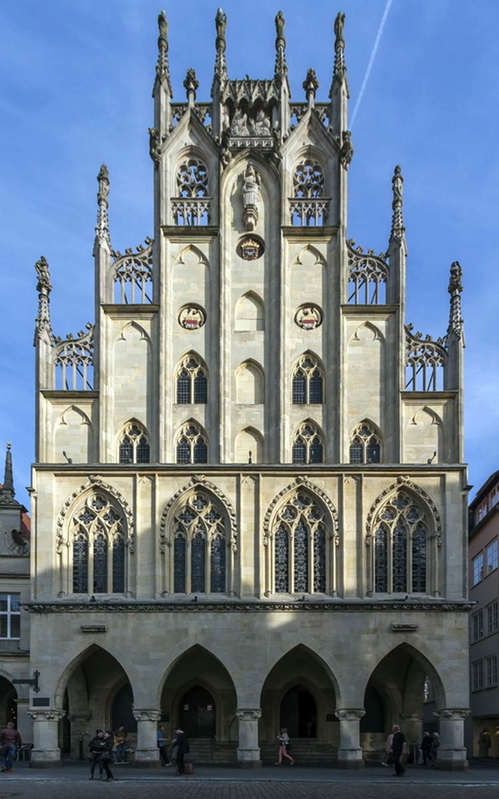
As a result of the agreements, France became the most powerful nation in Europe by securing permanent sovereignty over the Three Bishoprics of Metz, Toul, and Verdun and gaining parts of Alsace. The French border now touched the Rhine in several places for the first time since the Middle Ages. Pushing the frontier all the way to the Rhine River would become a part of French foreign policy for the next three centuries. Sweden also gained Western Pomerania and the port of Wismar along with the territories of Bremen and Verden.
The additions meant that the nation now controlled the mouths of the Elbe, Weser, and Oder rivers, making it the dominant power in the Baltic region. Meanwhile, Brandenburg expanded by acquiring Eastern Pomerania.
This development set the groundwork for its future growth as the Kingdom of Prussia. Besides those territorial gains, the treaties recognized both the Dutch Republic and the Swiss Confederacy as independent nations that were now free from the control of the Holy Roman Empire.