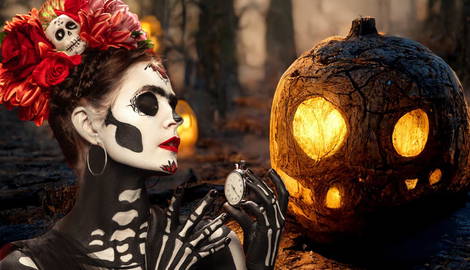

Long before children knocked on doors for candy, ancient Celts gathered around towering bonfires to survive a night of terror. On November 1, the festival of Samhain marked the boundary between summer and winter, life and death. Believing the veil between the worlds was thin on this auspicious date and that otherworldly spirits walked the earth, villagers wore gruesome disguises and offered food to appease roaming phantoms. These pagan rituals have survived the millennia, evolving directly into the Halloween traditions millions celebrate today.
How Samhain Marked the Celtic New Year
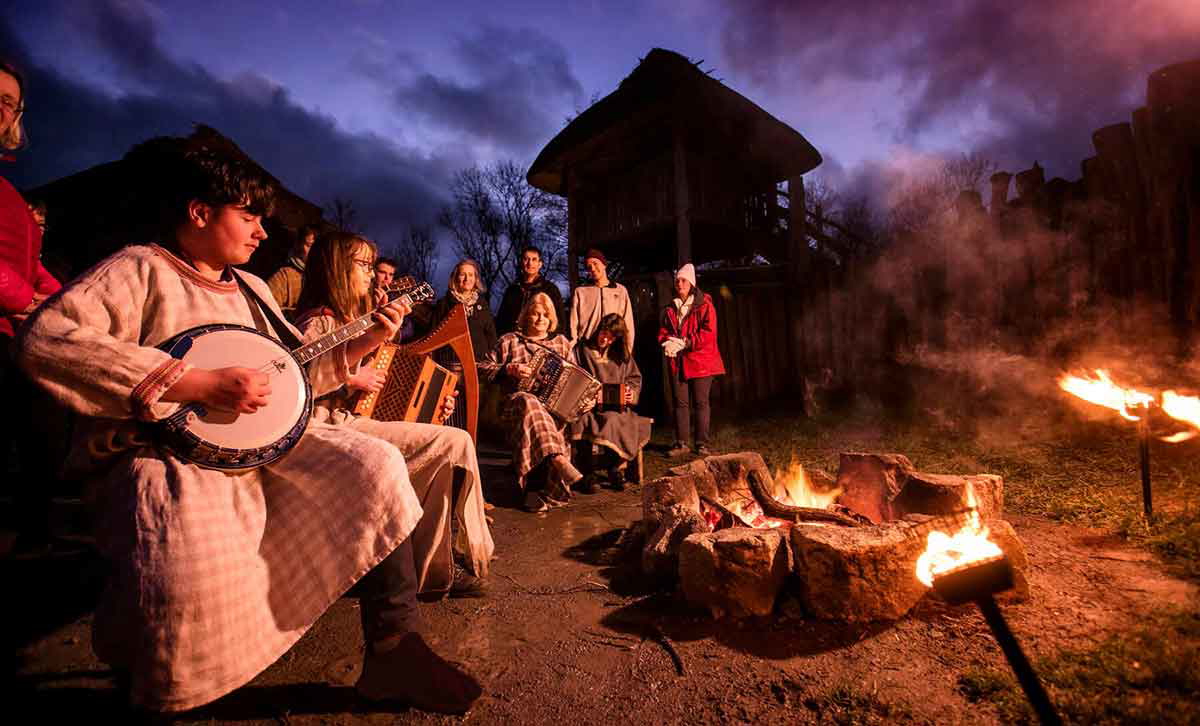
The Celtic calendar, influenced by the pastoral and agricultural year, began on November 1st. Traditionally, this was marked by the great feast of Samhain. Coinciding with the end of the harvest season, livestock was slaughtered, and great bonfires lit. As a time of transition between the seasons, and as the night started to grow longer and darker, it was believed that the veil between the worlds was at its thinnest. This meant that there was a greater risk of the dead and other creatures walking among the living.
While the first literary evidence for Samhain dates to the 9th century, when Ireland was already Christianized, there is good evidence that Samhain was an ancient festival among the Celts. Several Irish Neolithic passage tombs are aligned with the rising sun on Samhain, suggesting that the date was already marked out as important in prehistoric times. In addition, the Gaulish Coligny Calendar from the 1st century BC calls this time of year Samoni.
There are records of food being left as offerings and places being set at dinner for departed family members. In the 9th century, the Catholic Church embraced Samhain, renaming November 1st “All Saints’ Day,” making October 31st “All Saints’ Eve” or “All Hallows’ Eve,” from which the term Halloween is derived.
How Stingy Jack Created the Jack-o’-Lantern
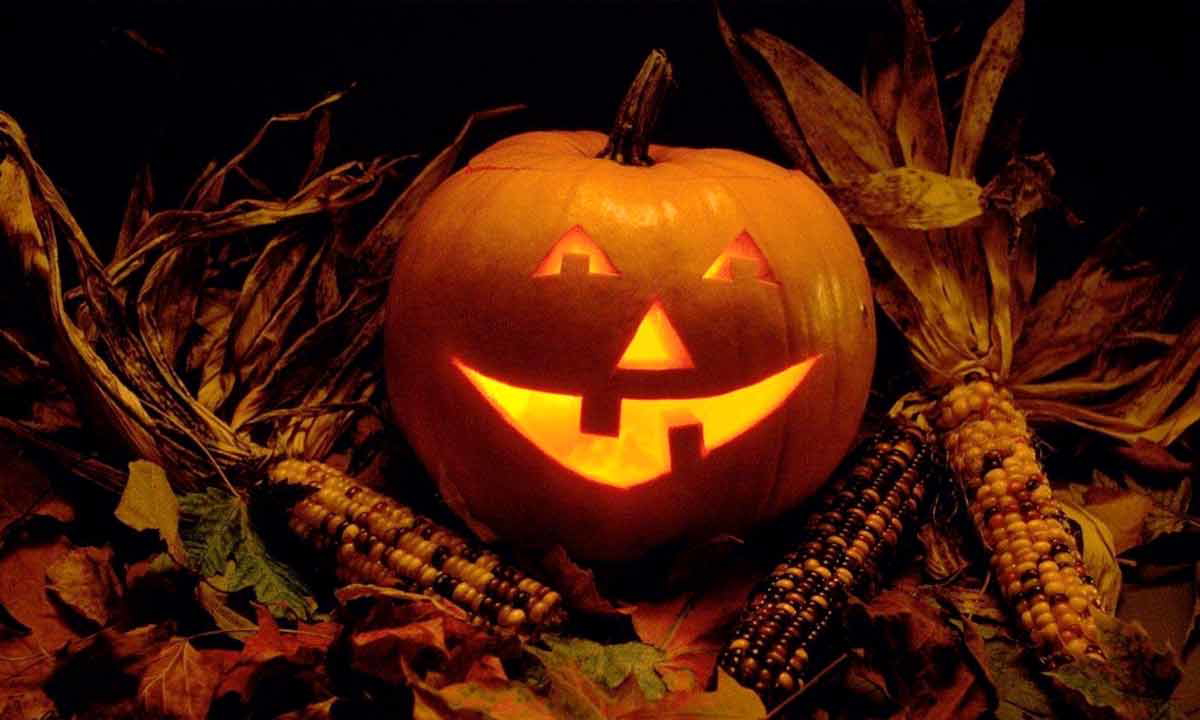
The earliest known use of the term Jack-o’-Lantern is in England in the 1660s. It referred to a light phenomenon also called Will-o’-the-Wisp. This folklore term was used to explain the bright lights occasionally appearing above marshes or bogs that we now know as bioluminescence.
It also appears in an 18th-century Irish folktale about Stingy Jack. In various versions of this legend, Jack is a blacksmith who cheats the devil in a wager, sometimes trapping the devil in crosses, sometimes tricking him into turning himself into a silver coin. In each variation, Stingy Jack has led a life of crime and so cannot go to heaven. However, as he has outsmarted the devil, he cannot be taken to hell either, and so his spirit is doomed to wander the earth after death. When Stingy Jack asks the devil how he will be able to see which way to go, the devil throws Jack a fiery coal, which Jack promptly puts in a carved-out vegetable. The ghostly firelit pumpkin is Stingy Jack’s ghostly lantern. And so, the legend of the Jack-O’-Lantern was created.
To keep Stingy Jack and other malicious entities away from their homes, people in Ireland, Scotland, and the Isle of Man carved terrifying faces into turnips, rutabagas, beets, and potatoes, placing burning embers or candles inside to sit on window sills and near doorways. When millions of Irish immigrants moved to North America during the 19th century, they brought the tradition with them. In America, they discovered the native pumpkin. Larger, softer, and much easier to hollow out and carve than dense turnips, pumpkins quickly became the preferred canvas for the traditional harvest ritual.
Spooky Love Rituals
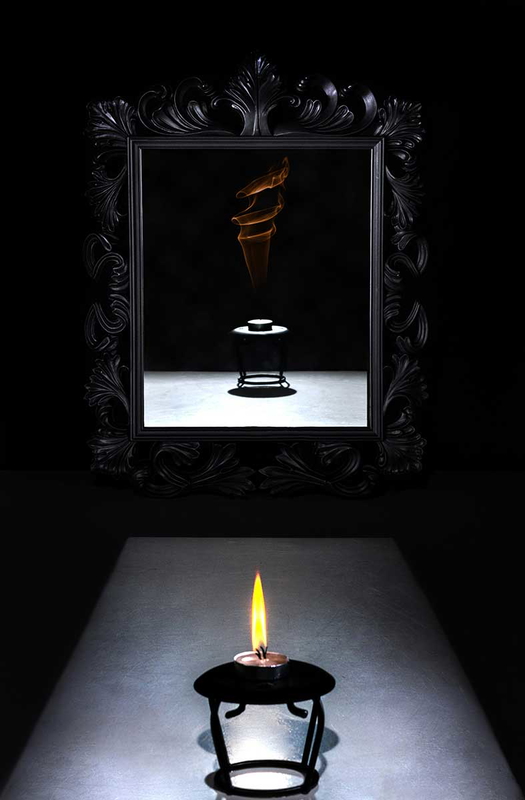
While Halloween is not generally associated with romance, it is associated with magic, and therefore love spells. There was also an ancient tradition of young girls hoping to see their future husband reflected in a candlelit mirror. It was also possible to discover the initial of his name by throwing a complete apple peel over her shoulder, with the letter formed by the peel.
Another popular Halloween tradition was to line a hot fireplace (or around a bonfire) with hazelnuts, giving each the name of a prospective husband and reciting “if you love me pop and fly; if you hate me, burn and die.” To guarantee a dream of her future love on Halloween, a young girl could place her shoes in the form of a ‘T’ and say: “Hoping this night my true love to see, I place my shoes in the T.” While less popular than some Halloween traditions, some people still use it as an opportunity to cast love spells.
The Evolution of Trick-or-Treating From Soul Cakes
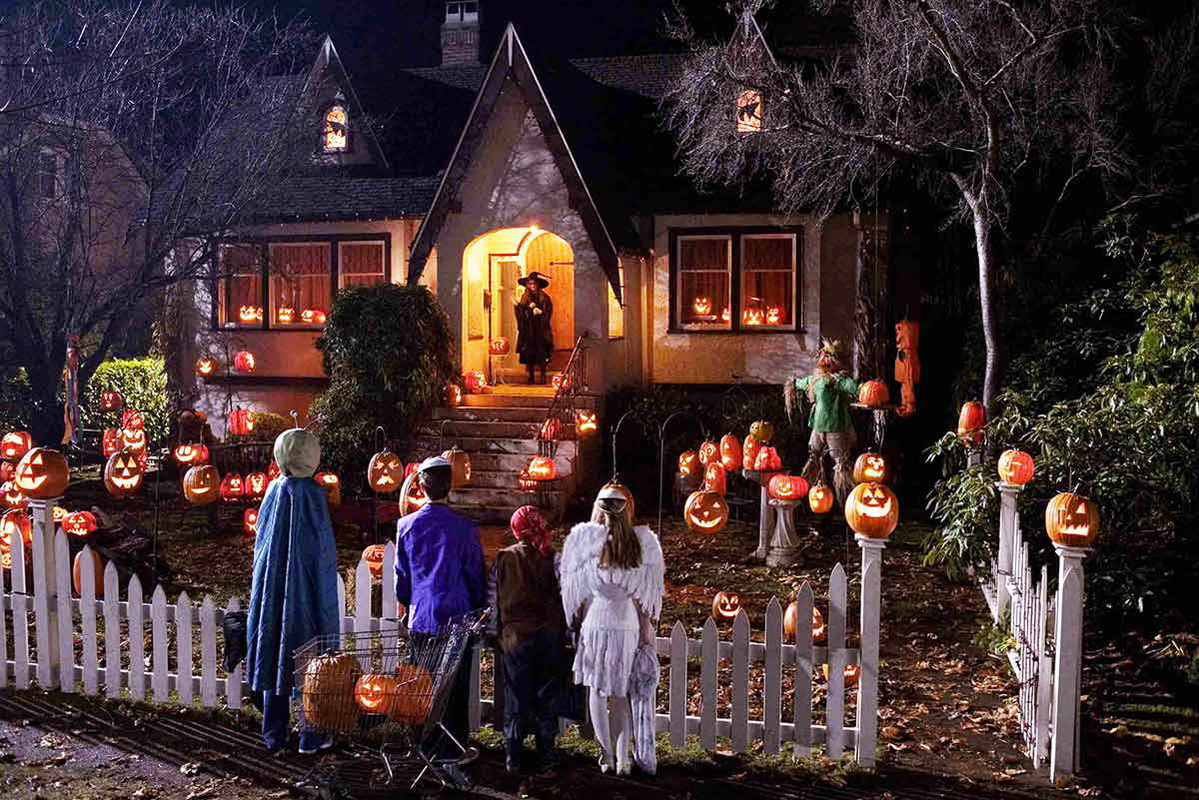
There are conflicting theories on the origin of trick-or-treating. The truth is likely to be a combination of all of these. Firstly, during Samhain, food would be left out as offerings to wandering souls who walked the earth at night. In time, merrymakers began to dress as these spirits in exchange for small food offerings. The German-American tradition of belsnickeling also saw people dressing in ghoulish costumes and going door-to-door. In this tradition, those who answered would have to guess who was disguised and then give a small offering if they were wrong.
This is reminiscent of the Scottish practice of “guising” or “souling.” Mostly children (although poorer adults were recorded to have taken part also) would go door-to-door, in costume, offering prayers for the dead on All Souls’ Day. Over time, the prayers evolved into jokes, tricks, songs and other entertainment in return for money or food, usually cakes known as soul cales. The practice of trick-or-treating remains popular today, particularly in the United States.
Apple Bobbing as a Form of Divination
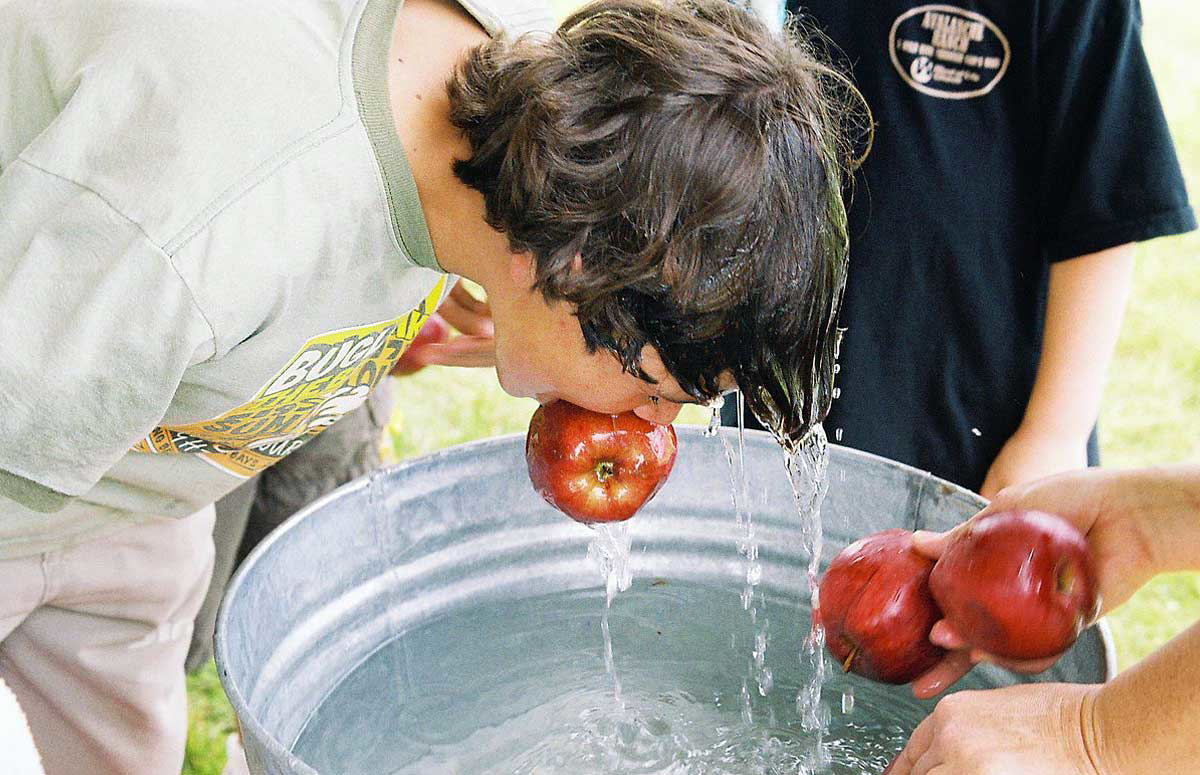
Also known as “ducking” or “dooking” in Scotland, or Snap Apple Night in Ireland and Newfoundland, apple bobbing is an ancient Halloween tradition. The likely origins are the merging of the Celtic Samhain with the Roman fruits and orchards goddess Pomona, whose symbol was the apple. When conquering Britain, the Romans introduced the apple to British soil. Already a powerful symbol in Roman culture, when Celts cut the apple in half (lengthways) they observed that the seeds formed a pentagram; a symbol they associated with fertility.
From here, variations of bobbing for or spinning for apples were commonplace amongst young, unmarried folk. The purpose was one of divination: ‘Who would be the next to marry?’ ‘Who will my partner be?’ and other questions were apparently answered by whoever could first catch an apple or let an apple fall.