
Europe has an abundance of marble heroes, masterpiece paintings, and Renaissance saints, but tucked between all the icons are the kind of objects that make you scratch your head. These oddities rarely make the guidebooks, yet they often become the stories you bring home, partly because they are wonderfully bizarre and partly because they reveal just how inventive (and weird) humans can be.
Here are some of the weirdest exhibits from European museums.
1. The Giant Hairball, Hunterian Museum, Glasgow
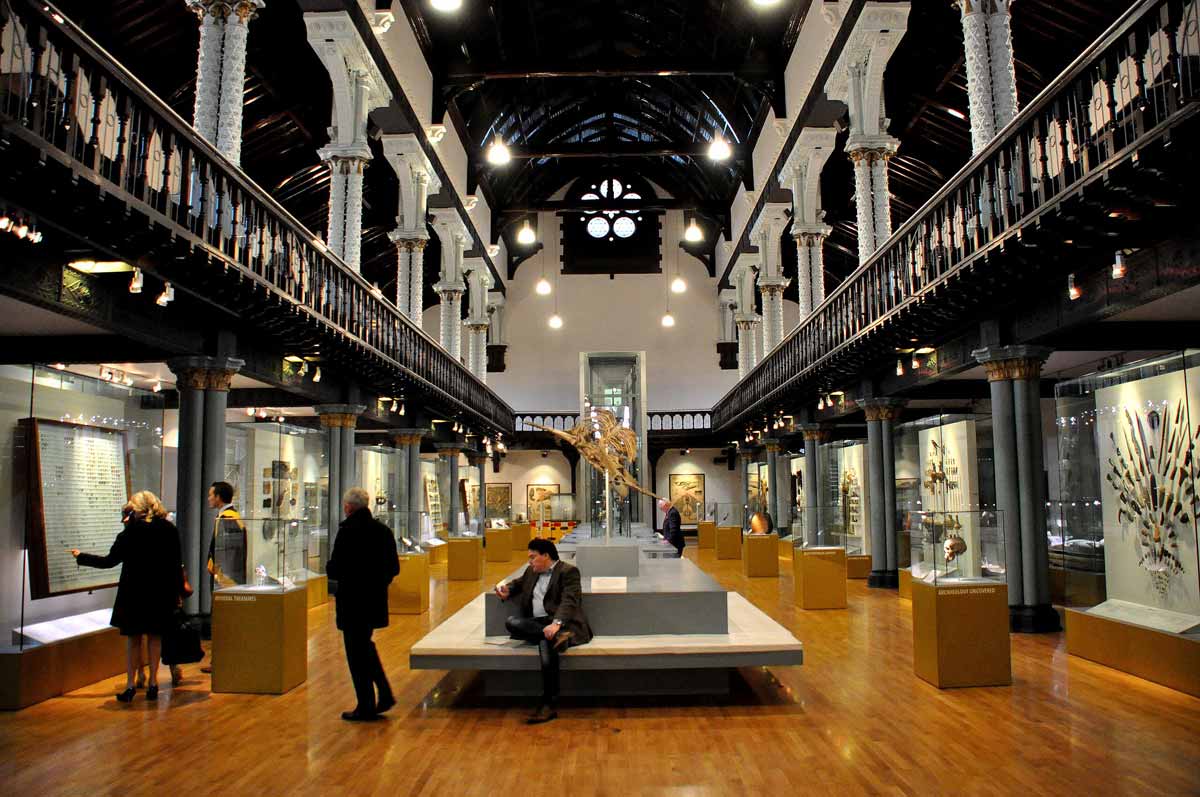
The Hunterian Museum in Glasgow is full of scientific curiosities, but few stop people in their tracks quite like the 19th-century trichobezoar removed from the stomach of a cow. It is large, perfectly smooth, and strangely elegant, though in the very specific way that only a dense ball of swallowed hair can be. Cat lovers of the world may feel an unexpected flicker of kinship here, since this is essentially the agricultural ancestor of the household hairball.
These formations occur when hair collects and compacts over time. In grazing animals that cannot vomit, they can quietly grow to impressive sizes, and farmers sometimes kept them as curiosities. The Hunterian now presents this one with matter-of-fact clarity, leaving the odd mixture of fascination and mild discomfort entirely up to you.
2. The Anatomical Venus, La Specola, Florence
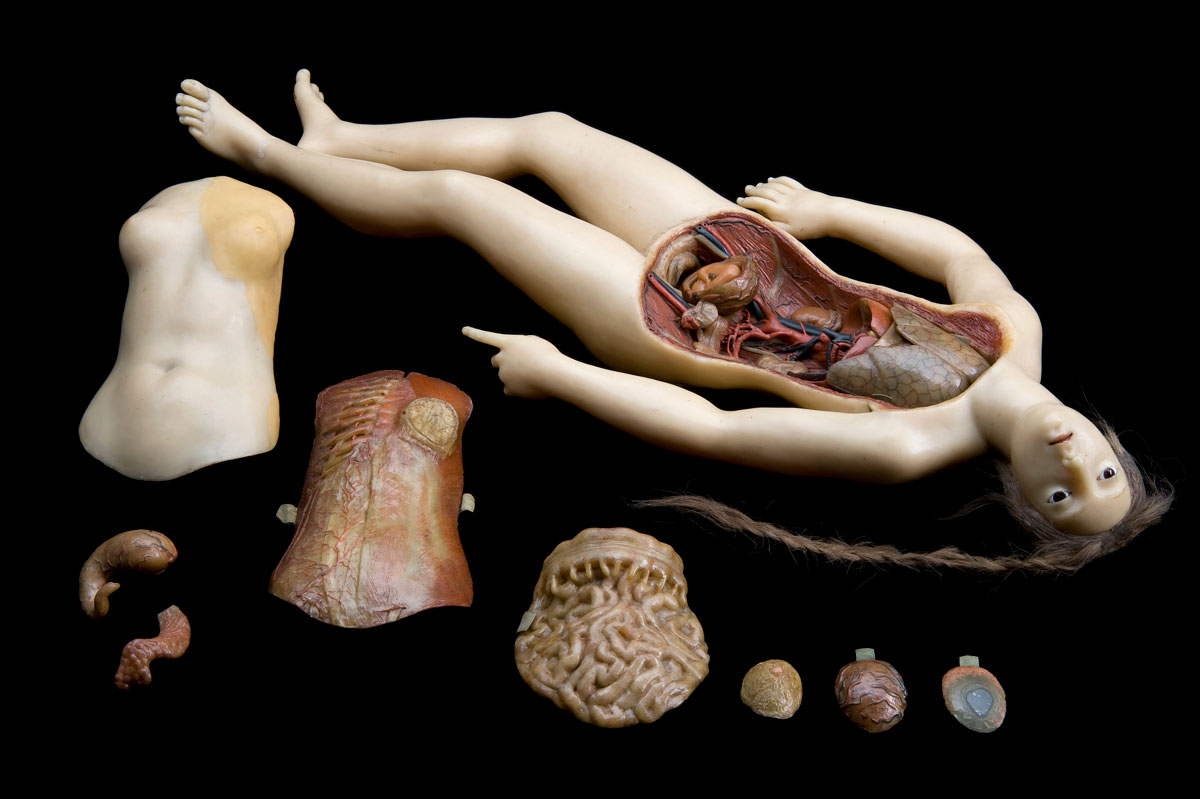
The Anatomical Venus was made in the late 1700s, when Italy was trying to modernize medical teaching. Wax artists from Florence’s best workshops created models that would not decay and could be studied again and again, and the Venus is arguably the most famous. Her torso opens neatly to show each organ in place, and her face is surprisingly gentle, which was intentional, as scholars reasoned that students were less likely to faint if the model looked calm. It might surprise you to learn that the tactic did not always work.
La Specola itself is one of Florence’s most unexpectedly interesting museums, a place where 18th-century science meets the wonder of old cabinet displays. Founded in 1775, it was Europe’s first public science museum and still feels delightfully time-capsuled, with long halls filled with taxidermy, wax models, and curiosities that once helped scholars explain the natural world to us uninformed mortals.
3. The Furniture-Destroying Axe, Museum of Broken Relationships, Zagreb
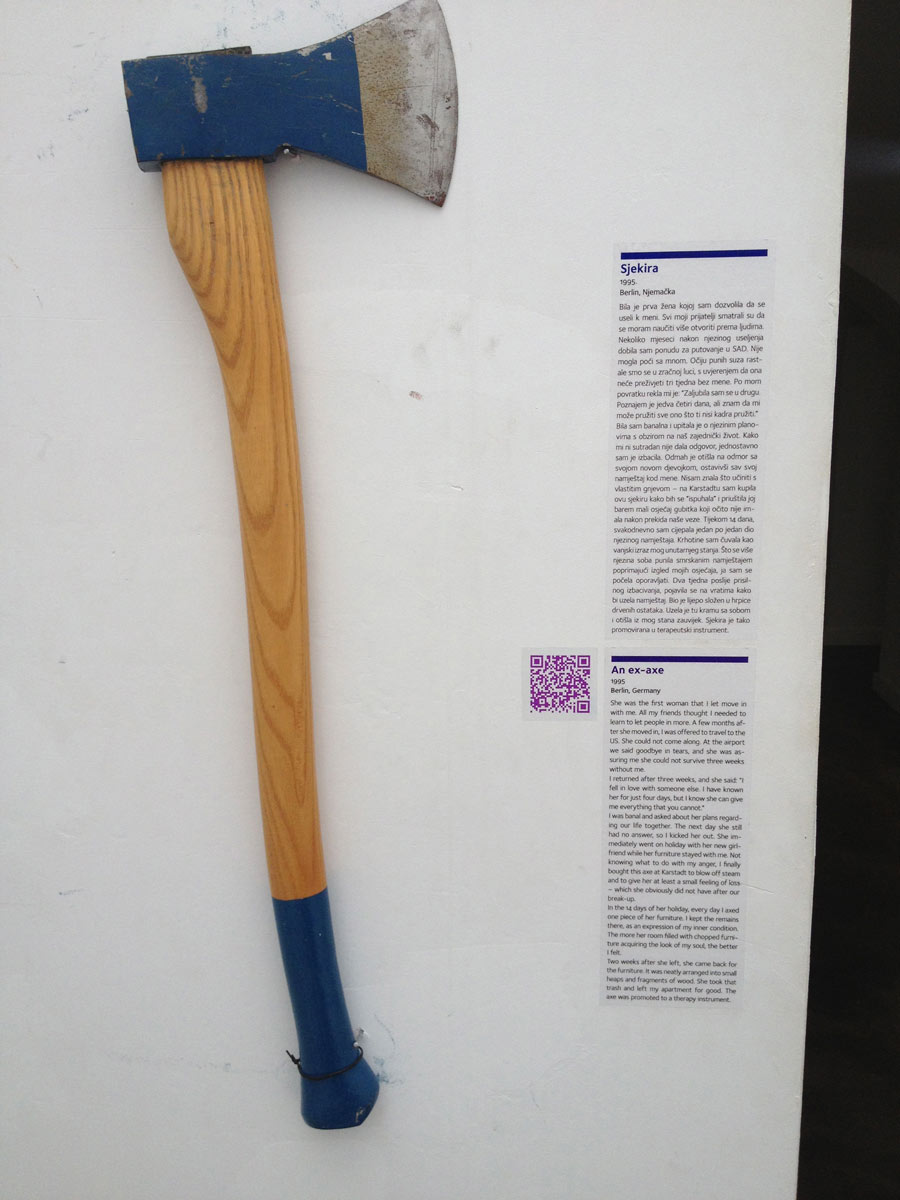
This ordinary-looking axe was donated to the aptly named museum in 2005, after a relationship ended abruptly, leaving the donor stuck with an ex’s furniture and a desire for catharsis. According to the note, the axe was used to chop up every last piece. The museum is full of objects that carry emotional weight, but this one captures heartbreak in its most unfiltered form because, truth be told, it is superbly relatable.
The Museum of Broken Relationships in Zagreb began when two Croatian artists parted ways and, instead of arguing over who kept what, wondered what would happen if their love’s leftovers had a home of their own. What started as an offbeat idea swiftly grew into a kind of international confessional, with people mailing mementos from just about every corner of the world. Today, the museum occupies part of a baroque palace in Zagreb’s Upper Town, and is filled with objects that range from the nostalgically tender to the totally unhinged. You will find wedding dresses, love notes, abandoned teddy bears, and, of course, the now-famous breakup axe.
4. Fake Mermaids, Anatomical Collection, University of Edinburgh
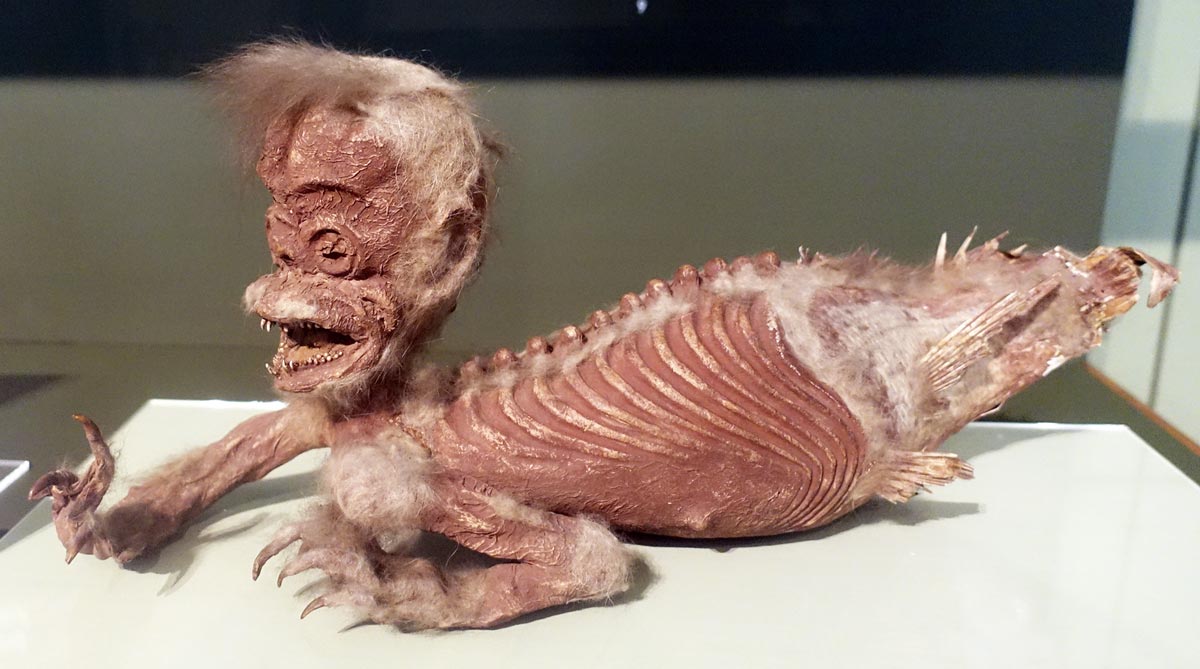
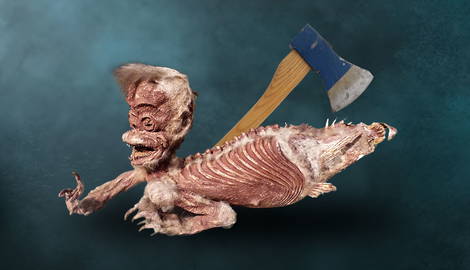
The anatomical collections at the University of Edinburgh are a treasure trove of Victorian imagination, the kind of place where curiosity and showmanship happily collide. Tucked among medical specimens and teaching tools is a fake mermaid, a 19th-century crowd-pleaser stitched together from a fish tail and a small primate with absolute confidence. The Victorians adored this sort of spectacle, and standing before it today feels like stepping into an age when scientific certainty was still finding its feet and people were wonderfully willing to believe in the impossible.
5. A 19th-Century Sewer Boat, Sewer Museum, Paris
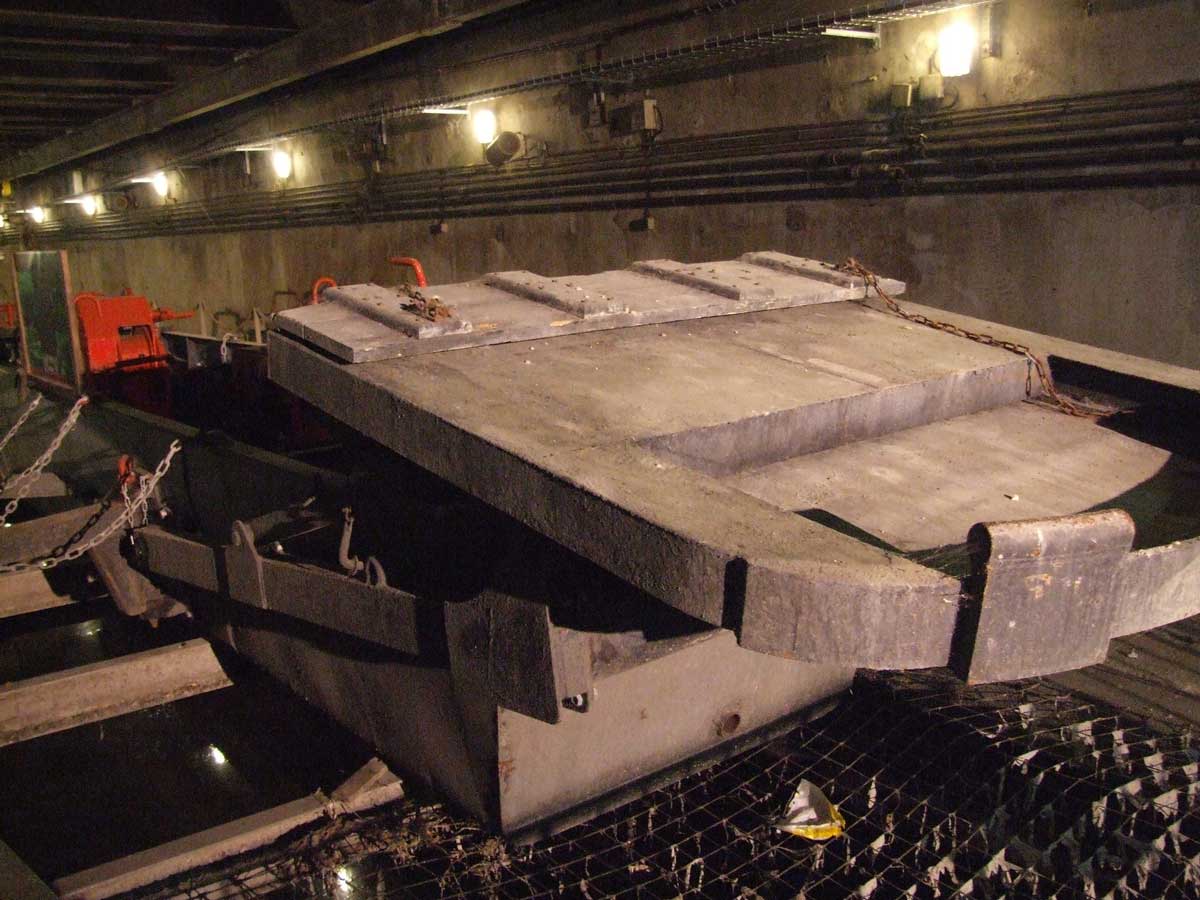
The Paris Sewer Museum may be the city’s least romantic attraction, which is saying something in a place that can make even a baguette look poetic. Yet if you love history, this underground world is oddly delightful. It reveals the city from a completely different angle, showing the vast network that kept Paris running long before anyone was sipping café crème above ground.
Back then, the city employed teams of specialized workers called égoutiers, who would navigate the sewer tunnels by boat and barge to clear blockages and keep Paris’s vast underground network in working order. It might not be a savory topic, but when contemplating some of the most fundamental public works in society—then and now—sewer maintenance has few rivals.
Victor Hugo even described the Paris sewers in Les Misérables, which gives you a sense of their importance.
6. The Alchemist’s Furnace, Museum of Alchemists and Magicians of Old Prague
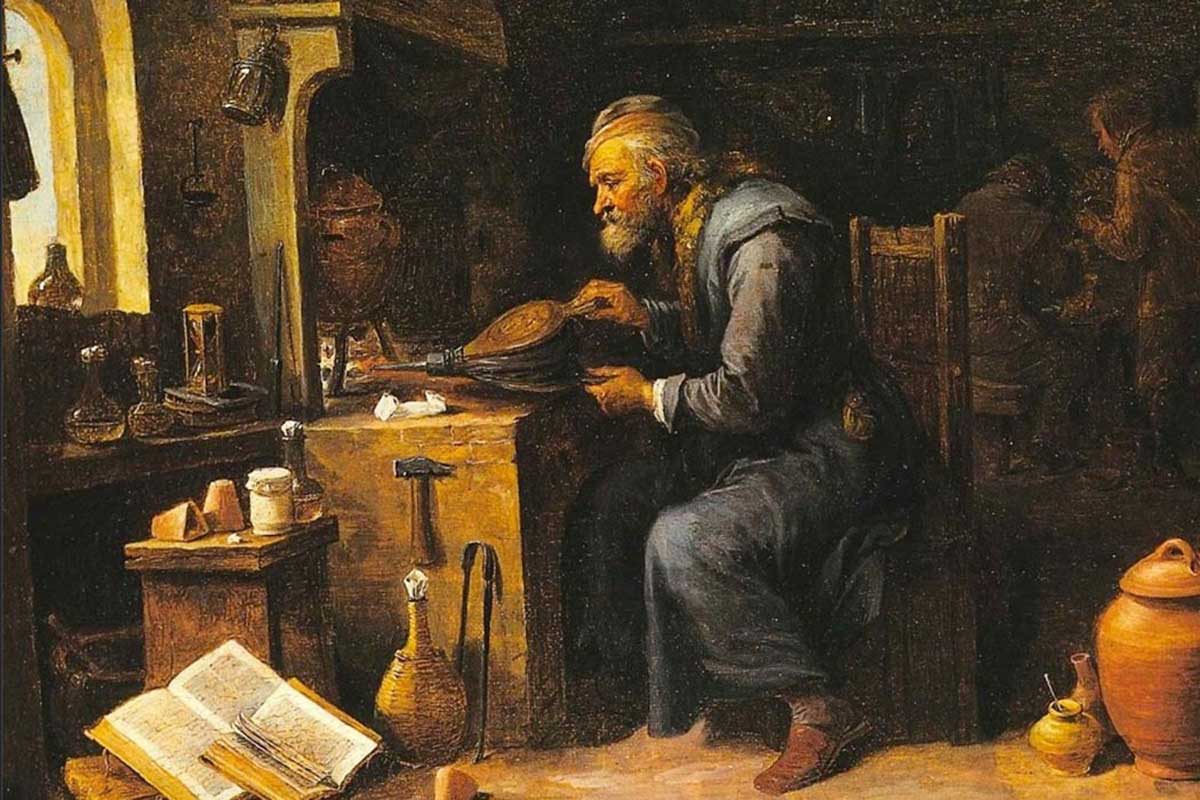
Prague’s Museum of Alchemists and Magicians taps straight into the city’s long-held relationship with the mysterious, offering a space where history and legend snuggle side by side. Set in a house linked to the English alchemist Edward Kelley, it already feels like you are stepping into one of the city’s stranger stories as you climb the old staircase to the attic.
The highlight is the reconstructed alchemist‘s workshop, centered on a brick furnace surrounded by jars, powders, and handwritten formulas. It reflects the tools and set-up of practitioners who genuinely believed they were edging closer to turning metals into gold or discovering an elixir that could outsmart time. Whether or not they ever succeeded is another matter entirely, but the room makes it clear just how serious these experiments once were.
7. Merdacotta Tiles, Museo Della Merda (aka The S**t Museum), Castelbosco

This wonderfully unexpected museum in the Italian countryside began as a creative experiment on a working dairy farm in 2015 and has grown into a genuinely thoughtful look at sustainability, agriculture, and the surprising usefulness of things we usually avoid discussing. Exhibits range from manure-based building materials (like the above-featured tiles) to quirky ceramics inspired by the animals that helped create them. There is even a section on composting science, which turns out to be far more interesting than anticipated. The whole place runs on a mix of curiosity and humor, and it works. You might arrive because you spot the name on Google maps and it makes you smile, and you leave knowing you have just visited one of Italy’s most inventive cultural projects. Bravo.
The featured terracotta-style tiles are made from cow manure mixed with clay. They are surprisingly elegant and used across the museum’s own interiors. The craftsmanship on show here is quite something, and the best part is that you can actually buy a practical item to use at home.
8. The Cherry-Stone Eiffel Tower, Museum of Miniatures, Prague
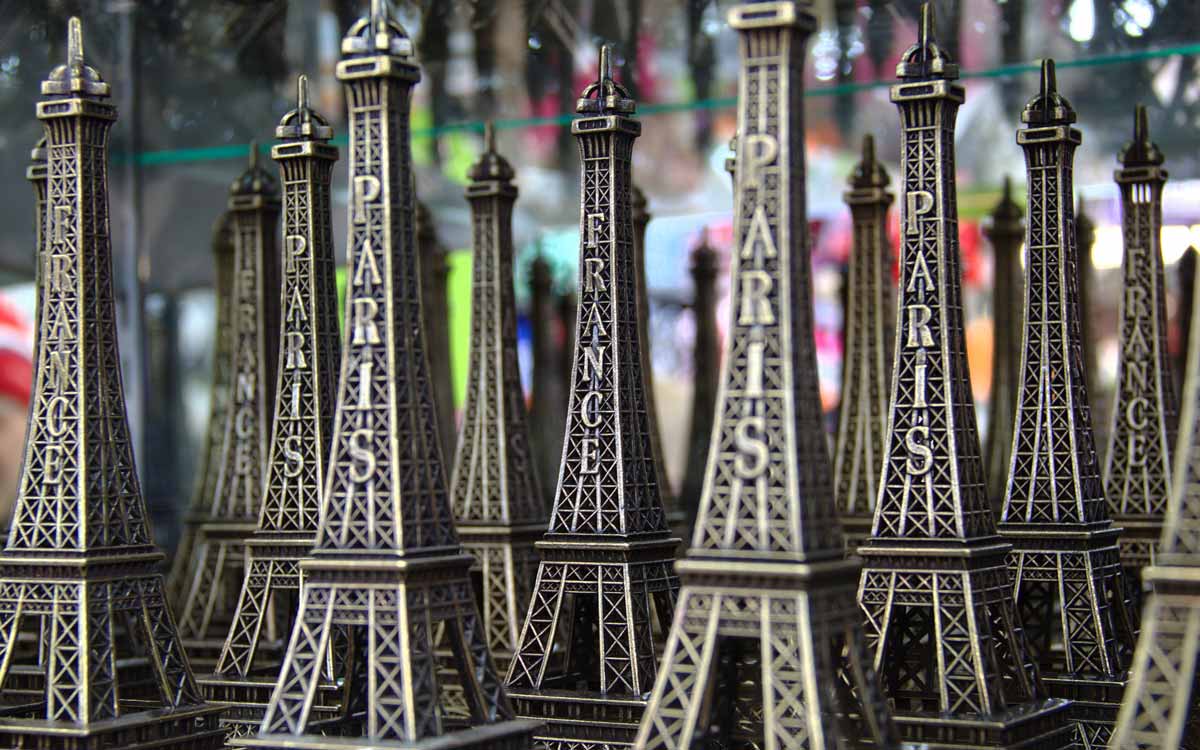
The Museum of Miniatures is exactly what it sounds like, a small collection of items that reward patience and curiosity. Many displays require a magnifying lens or microscope, which immediately slows the pace of your visit.
The tiny Eiffel Tower carved into a cherry stone is one of the most famous highlights. Made in the late 20th century, it fits entirely within the pit of the fruit, and you only see its full shape when you look through the magnifier. Micro-carving is a niche skill that demands steady hands, endless patience, and a great deal of time. Here, all that effort results in a Paris landmark you can balance on your fingertip.