
By the late 19th century, the term gringo was applied almost universally to white Americans, and it was well established across Latin America, with apparent origins in Mexico. Yet, the word remained intriguing and ambiguous. More than a century later, the debate over its origins and implications remains unresolved. Where did the word “gringo” truly come from, what does it actually mean, and why does it still spark controversy?
Gringo: A Word That Intrigues and Divides
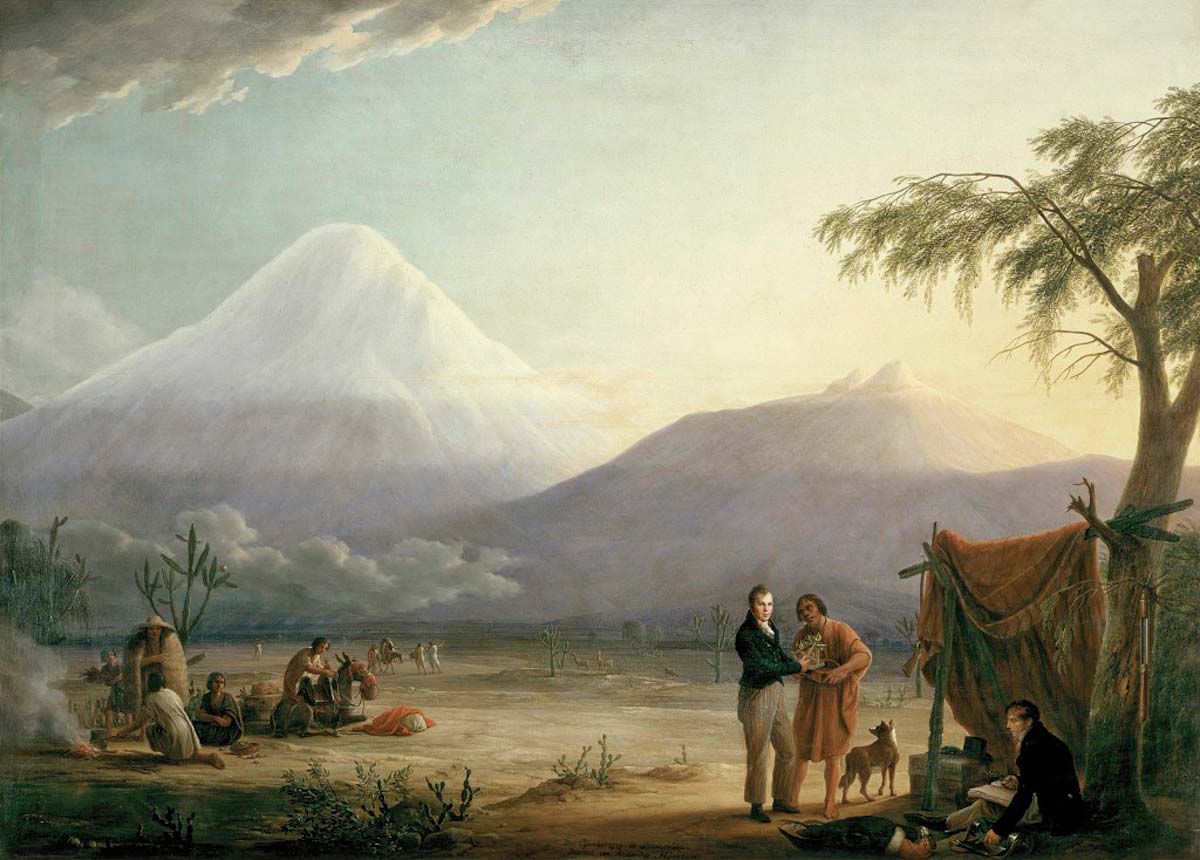
In 1896, as he was about to begin his journey through South America, American journalist and traveler Harry Foster wrote in one of his famous travelogues:
“Colonel Charles Jeffs, our guide in Honduras, made us understand that it was as gringos, or foreigners, we were thereafter to be designated and disliked.”
As travelers like Foster and his companions ventured deeper into Latin America, they often wondered what the sobriquet truly meant, what connotations it carried, and, more importantly, what kind of reception they could expect: warm hospitality, indifferent tolerance, or something more hostile?
The debate over the term’s meaning and origins has persisted for centuries. Where did gringo come from, and why do people still argue about its roots?
The Mexican-American War and the Legends
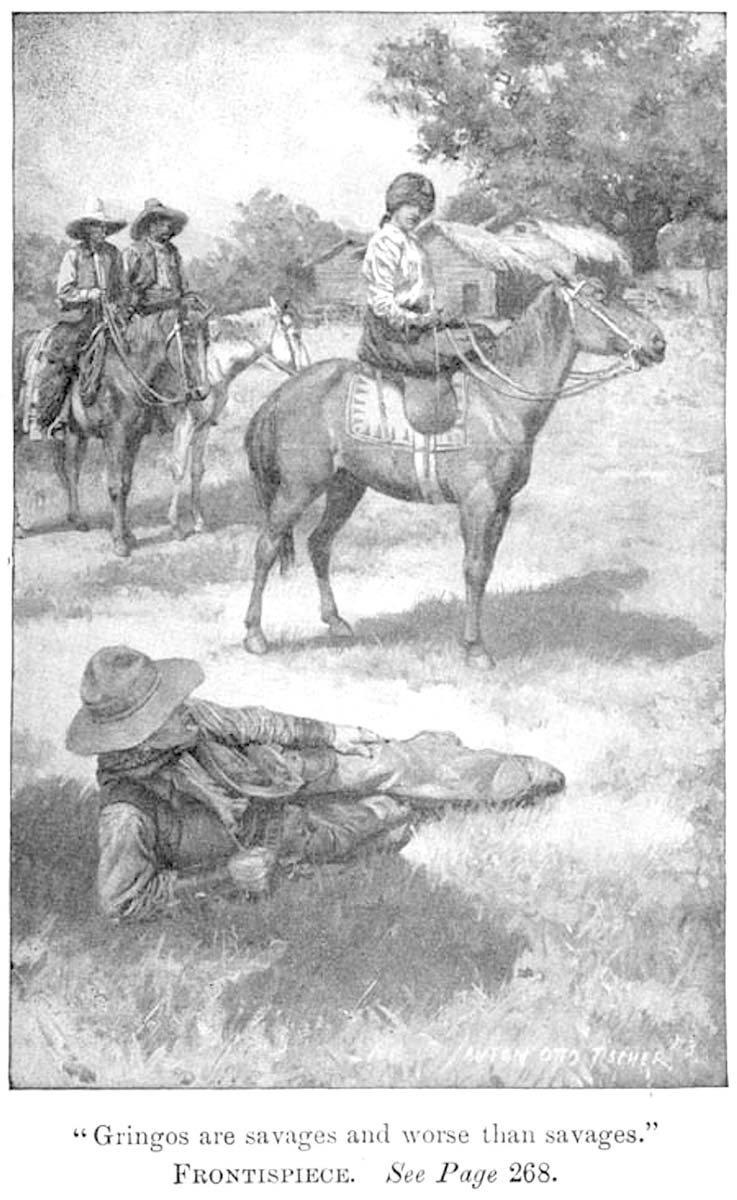
One of the most widespread myths (perhaps due to the sheer number of people who believe it) is that the word gringo originated in the 1840s during the Mexican-American War (1846-1847), a conflict that resulted in Mexico losing over half of its territory, including California, New Mexico and parts of other current US states. Even 170 years later, this war remains a fresh wound in Mexican memory.
The term gringo was certainly in use right after the war. In 1849, Lieutenant Henry Wise, who wrote under the pen name “Harry Gringo,” published a novel titled Los Gringos, in which he explained:
“The word gringo is an epithet—and rather a reproachful one—used in California and Mexico to designate the descendants of the Anglo-Saxon race. The definition of the word is somewhat similar to that of greenhorns in modern parlance.”
During his stay in Mexico, Wise tells us, he was mocked for being a gringo; an inexperienced, naive, and easily ridiculed outsider.
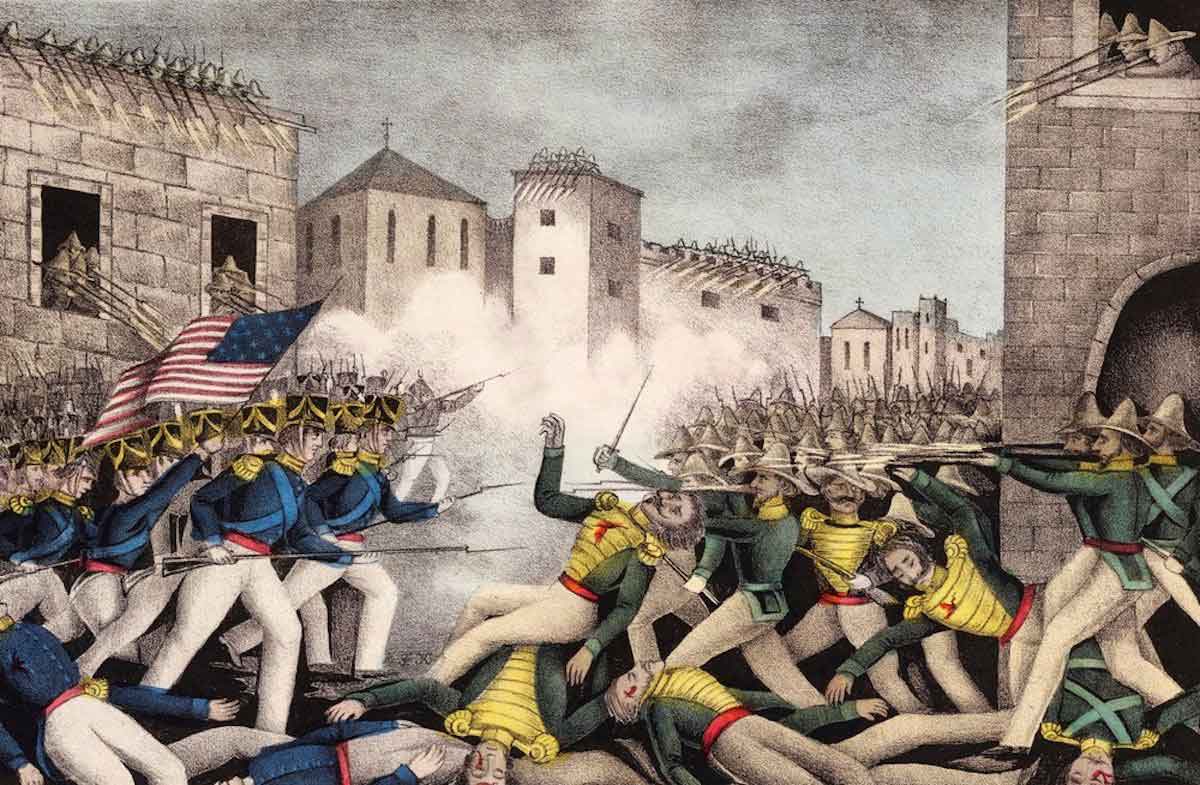
According to legend, gringo comes from the phrase “Green, go!” with two main variations. One theory suggests that since American soldiers wore green uniforms (except they actually wore blue), Mexicans shouted this phrase during the military occupation of their country. Another claim is that “green” referred to U.S. dollars, though this explanation quickly falls apart because dollar bills as known today did not exist in the 1840s.
Furthermore, the word had already appeared in newspapers and books before Wise’s account. In 1825, two decades before the Mexican-American war, an article in a London newspaper called The Morning Chronicle reported on turmoil in newly independent Mexico. The piece described how protesters in the streets shouted:
“Death to the gringos who plunder us, and luck to the gachupines (Spaniards) who always treated us like brethren!”
Barely four years after their declaration of Independence from Spain, Mexicans had apparently changed their minds about their former colonial rulers. But in this early reference, gringo didn’t actually refer to Americans, it referred to the British.
Spain, the French, and the Origins of Gringo
Despite this early Mexican usage, evidence proves that Latin Americans did not actually invent the term gringo. In another article from the same London newspaper, discussing anti-French sentiment in Spain during the French invasion of 1823, Spaniards referred to the invading soldiers as gringos:
“Those terms of opprobrium, such as gabacho, gringos, feotas, etc., by which the French were denominated in the time of Napoleon’s invasion (1808), are being applied to them.”
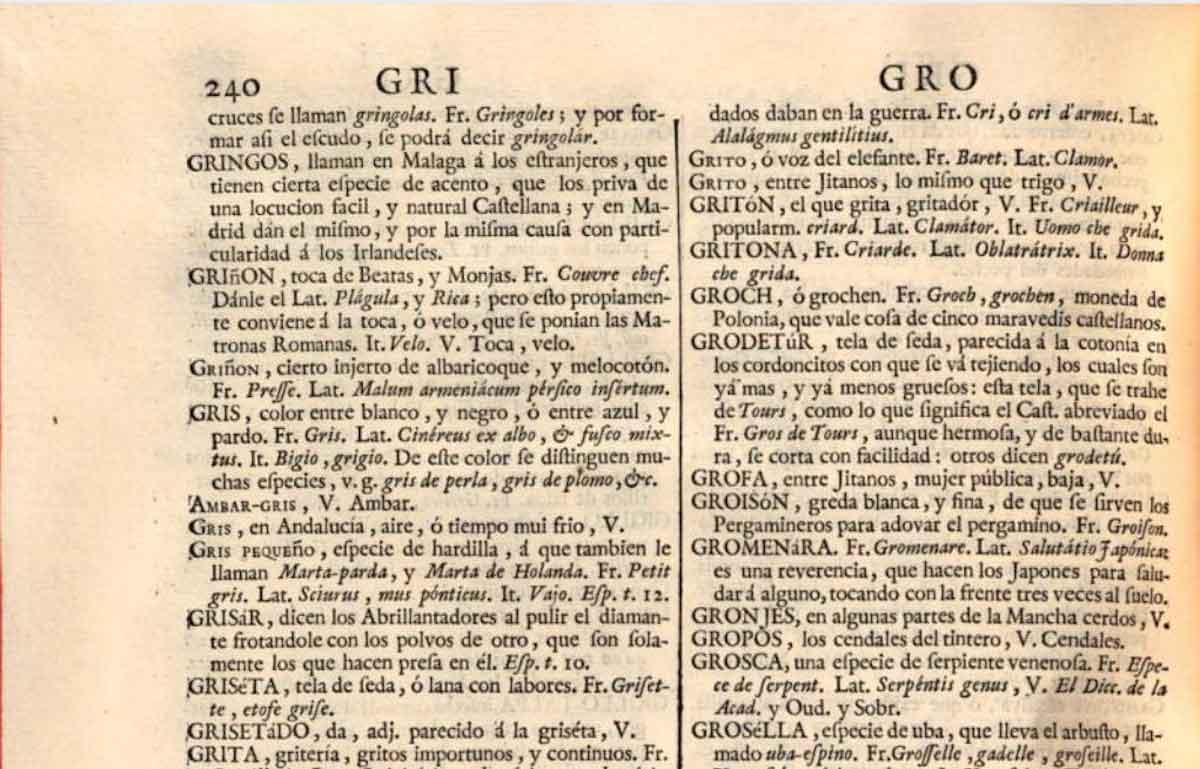
Further, the term appears in even older sources. A Spanish dictionary published in 1787 explains:
“Gringos is the name given in Malaga to foreigners who have a certain type of accent that prevents them from easily and naturally pronouncing Castellano [Spanish].”
Given Málaga’s long history under Islamic rule, is it possible that gringo has deeper roots? Could a word like “gharīb” (pronounced “greeb” with a rolled “r”), meaning “stranger” or “foreigner” in Arabic, have evolved into a similar-sounding term in Andalusian Spanish?
Another interesting suggestion is that gringo derives from griego (Spanish for “Greek”). In much the same way that Romans referred to incomprehensible languages as barbarian, Spaniards may have called anything unintelligible to them “Greek.” This characterization survives today in the Spanish expression “Esto me suena a griego” (“Sounds Greek to me,” nearly matching the English idiom “It’s all Greek to me”).
But, how then did “griego” become gringo? One possibility (this author’s particular theory) is that it resulted from a typographical error. I’ve found a few cases where 18th- and 19th-century newspapers wrote gringo when they clearly meant griego, for example, when referring to Greek philosophers. Could gringo have originated from a printing mistake?
Of course, these theories have their limitations. For instance, to 18th-century Spaniards, the French language was not so incomprehensible as to call them “Greek.” However, as far as etymology goes, these remain the most plausible explanations.
Literature, Cinema, and the Cultural Weight of Gringo
A word of caution: the word gringo can be offensive in certain contexts, especially in Mexico, where people stubbornly refuse to call U.S. citizens Americanos, arguing that “America” and “Americans” originally referred to the entire continent and their inhabitants, which is true.
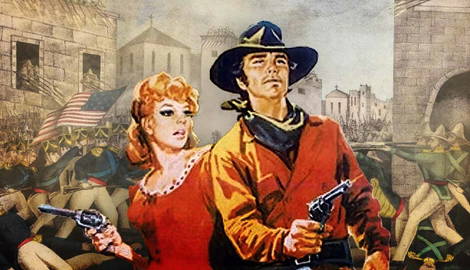
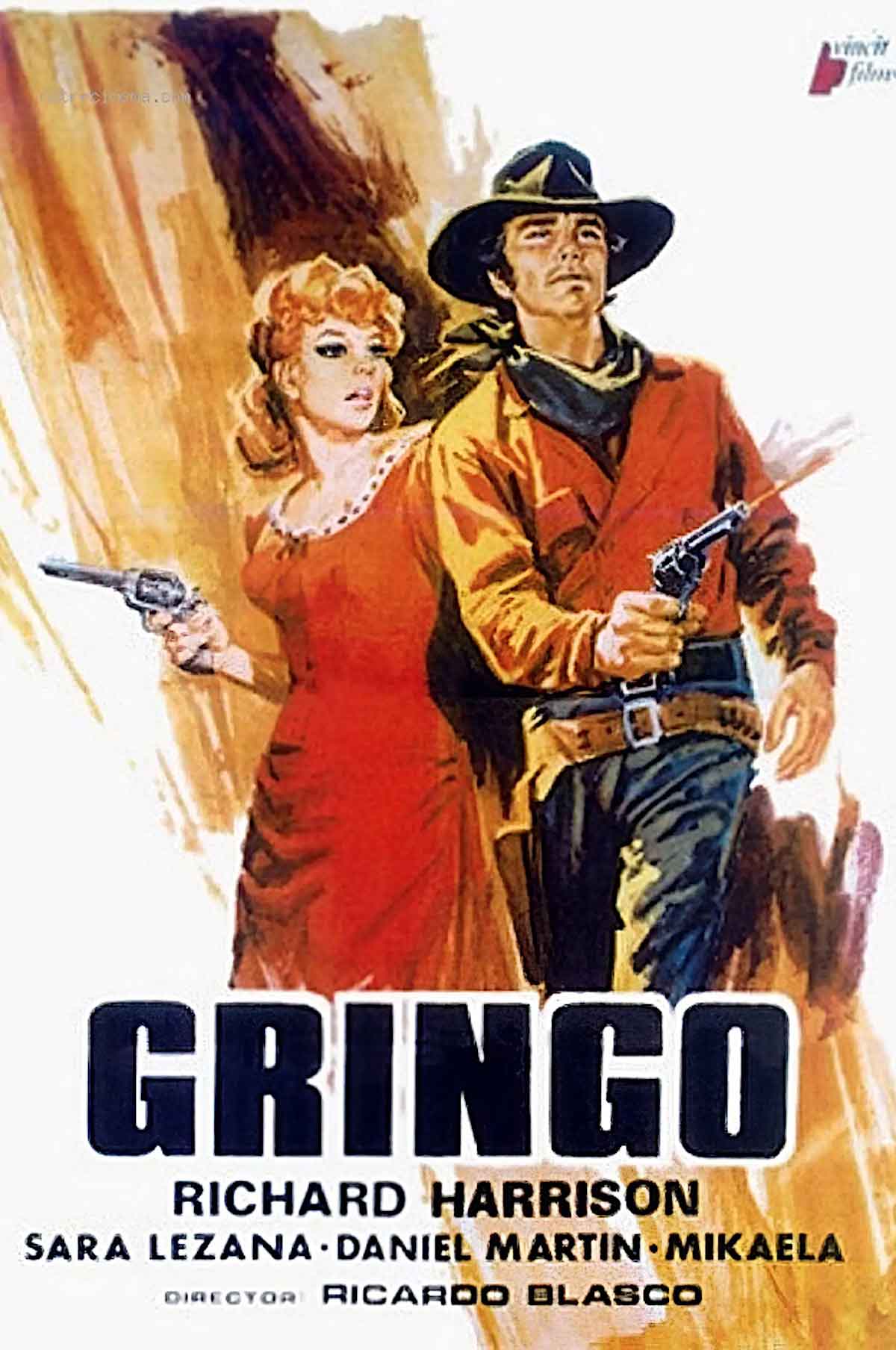
However, gringo has been used so freely in literature and film that it has largely lost its sting. The laureate Mexican writer Carlos Fuentes titled one of his novels Gringo Viejo (“The Old Gringo”), and Ennio Morricone produced the song A Gringo Like Me, a proud cowboy anthem, for the 1963 Western film Duello nel Texas.
“Every man is a liar.
There’s just one kind of man who tells the truth,
that’s a dead man, or a Gringo like me.”
A Word That Still Resonates
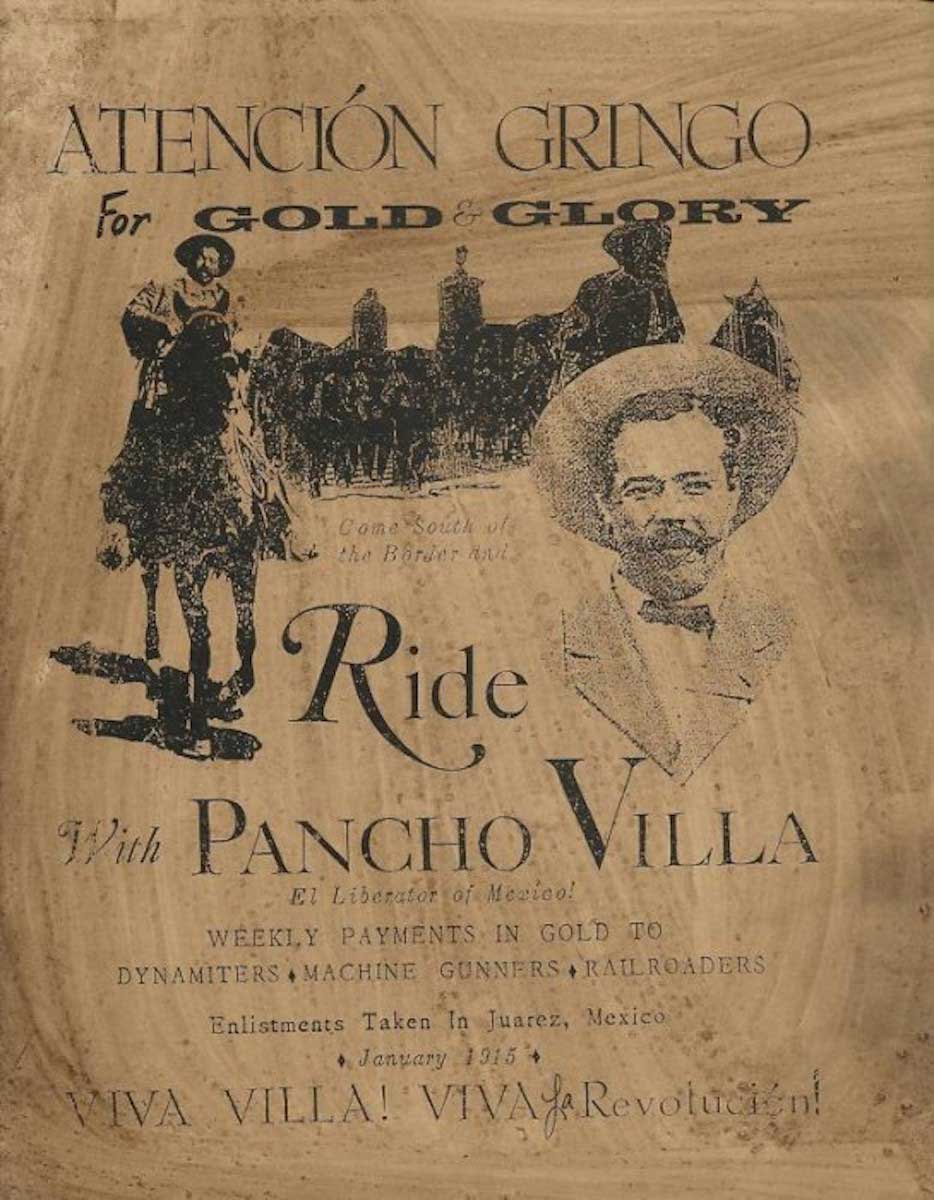
Though its true origins remain in question, it’s clear that what began in 18th-century Spain as a neutral term for someone with an odd accent became, in the 19th century, a pejorative label for a foreign white invader. By the 20th century, it had come to mean simply “American,” though it’s also worth noting that in modern Latin American usage, gringo specifically applies to white people born in the US.
Today, the word carries a wealth of cultural meaning.
As Harry Foster wrote in A Gringo in Mañana-Land (1924):
“The term gringo, a word of vague origin, once applied with contempt to the American in Mexico, is now used throughout Latin America, without its former opprobrium, to describe any foreigner.”
Words change over time, and gringo is no exception. It can amuse, offend, or simply describe, depending on who says it and how. In some contexts, it carries an air of casual familiarity, while in others, it is sharpened into an insult. Sometimes, it is used with irony or endearment, and other times, it reflects deep-seated historical tensions.
Regardless of its intent, the word has embedded itself in the cultural lexicon, acquiring new shades of meaning with each passing generation. Like the Spanish language that created and reinvented it, gringo is a story in motion, a term that changes faces with the times, a mix of prejudice and affection, a spark for legends, and, like any well-told tale, it never stops reinventing itself.