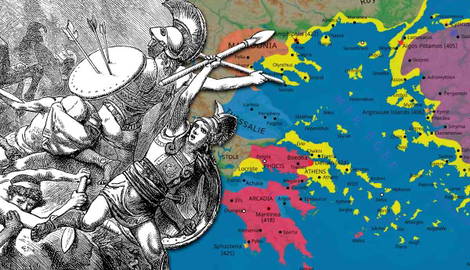

In the 400s BC, Athens and Sparta stood opposed politically and militarily. Athens was a radical democracy, with citizens voting on nearly every political matter, including going to war. Athens was a coastal town, with a strong navy and an economy based around shipping, silver, and tributes from conquered lands.
Sparta was the opposite – a land-based economy from farming, with an oligarchic rule rather than a democratic one. Athens also had no standing military, only raising an army when needed, while Sparta had a distinct military class supported by its economy.
The Persian Invasion Forced Athens and Sparta Into an Alliance
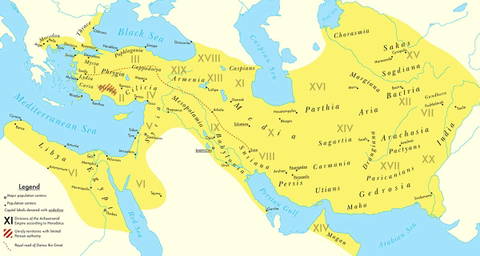
Despite their political and cultural differences, Athens and Sparta had a common enemy: the Achaemenid Persian Empire. Founded by Cyrus the Great in 550 BC, the Achaemenid Empire was the largest empire of the ancient world, spanning from India to Libya at its height. In the 400s BC, Darius the Great and Xerxes I led the Persian armies against the Greeks, seeking to conquer the Greek peninsula with the largest army ever assembled in the ancient world.
The Persian invasions resulted in some of the most famous ancient conflicts, including the Battle of Thermopylae, where a small army of about 7000 Greeks (including the famed 300 Spartans) held off the massive 120,000- 300,000-strong army of the Persians. The Greek alliance eventually repelled the Persians by 480 BC, and when they no longer had a common enemy, the Greeks’ natural divisions resurfaced.
Opposing Ideologies and the Erosion of Peace
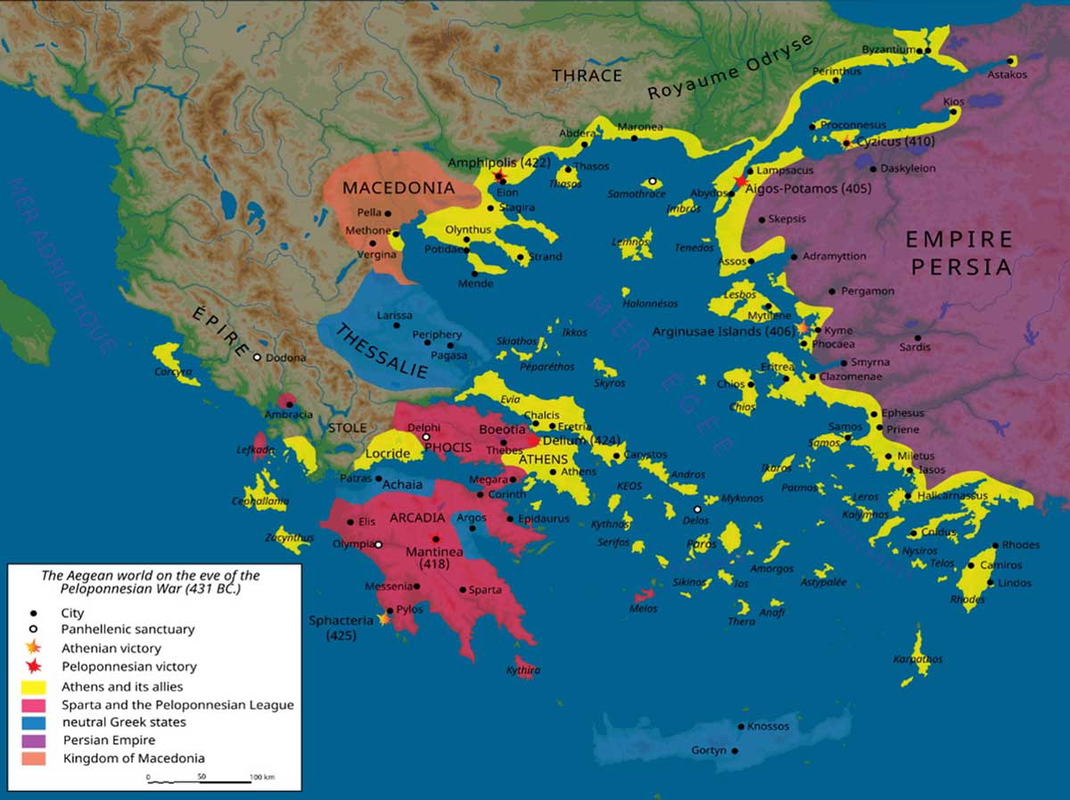
After expelling the Persians, Athens went on the offensive. Forming what came to be known as the Delian League, the Athenian Empire encompassed many of the coastal areas around the Aegean Sea. Sparta withdrew into its area, seeking to consolidate the Peloponnesian League it had formed in the 500s BC with the surrounding city-states. While relationships among the Greek city-states were complicated, the conflict generally broke down between the Spartans, who wanted to remain more isolated, and the Athenians, who wanted to expand.
Diplomatic Insults and the Megara Crisis Sparked the Peloponnesian War
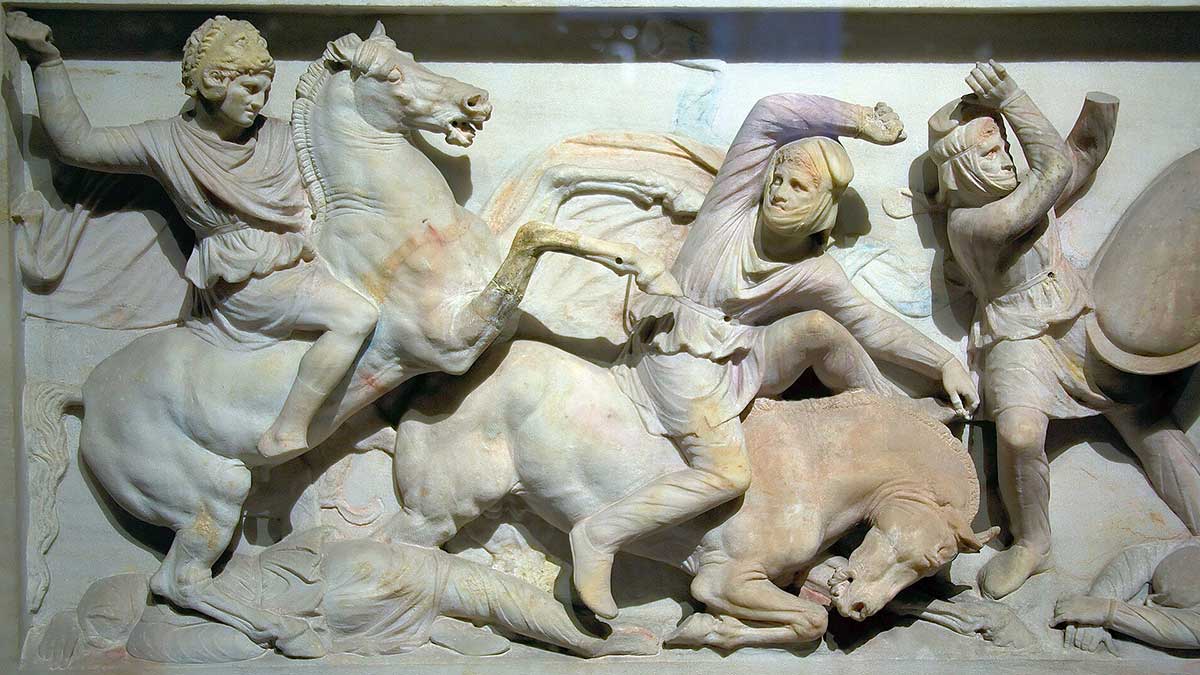
The relationship of the two sides – the Delian League of Athens and the Peloponnesian League of Sparta – degraded into a series of conflicts which came to be known as the Peloponnesian War. Their relationship broke down over time, beginning with matters that seemed trivial at first. Athens sought to rebuild the walls around its city, a move opposed by the Spartans, who wanted to be able to attack Athens if necessary. Later, the Spartans called for assistance in ending a revolt by its lower classes, called helots. Athens sent a small army, but the distrustful Spartans rejected the help, causing further offense. The rejection resulted in the repudiation of the alliance by Athens, which would resettle the rebellious helots in their allied city of Naupaktos.
The final breakdown occurred when Athens allied with Megara in its conflict against Corinth. Megara and Corinth were both under Spartan control, and close to Athens. The two city-states went to war over territory, and Sparta refused to intervene. Athens helped Megara and began a conflict with Sparta that lasted across the Greek peninsula and surrounding areas for the next century and beyond.
Alexander the Great and the Rise of Macedon Finally Ended the Rivalry
Various peace agreements were signed, but no real lasting peace between Sparta and Athens ever took hold over the next two centuries. The two sides waged war back and forth, degrading each other’s power until the matter was finally settled when Alexander the Great defeated Sparta at the Battle of Megalopolis in 331 BC.