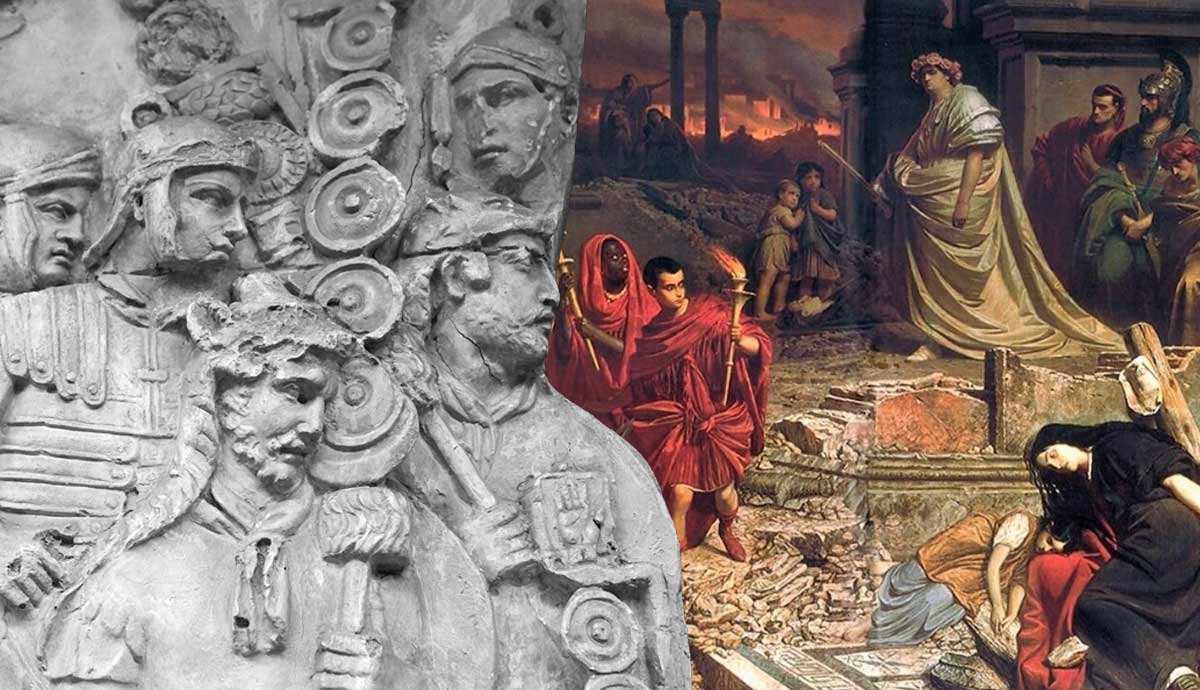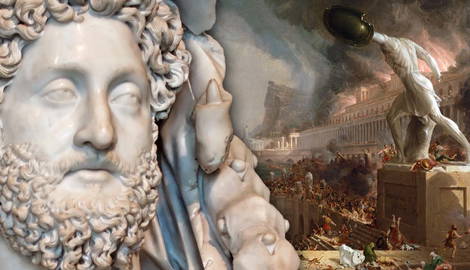

The death of the emperor Marcus Aurelius at Vindobona in AD 180 is considered the end of the striking period in Roman history: the Pax Romana. Also called the “Golden Age,” this was almost a century characterized by relative political stability, facilitated in part by an adoptive approach to imperial succession. This ended when Marcus Aurelius chose to be succeeded by his biological son, Commodus. The personal failings of the new emperor, combined with external factors, brought the Pax Romana to a decisive end.
Golden Age: The Adoptive Emperors

In AD 96, the Roman Empire teetered on the brink of civil war. The emperor Domitian, hated by the Senate, had finally succumbed to conspiracy. When he was murdered in the Palatine palace, the Empire was left with a power vacuum. Domitian had been the second son of Vespasian, the founder of the Flavian dynasty. However, Domitian lacked a male heir, and therefore the question of who should succeed the murdered emperor was very much open.
Perhaps haunted by memories of the civil wars of AD 68-69 following the death of the last Julio-Claudian Nero, the Senate realized they needed to move quickly. According to the Fasti Ostiensis, the Senate decided on the very same day that Domitian was murdered, September 18, AD 96, to appoint the elderly senator Marcus Cocceius Nerva as emperor. Although he had the Senate’s backing, his standing with the Praetorians and the army was less secure. To bolster support for the new Senatorial-supported regime, Nerva officially adopted the then-governor of Germania, Trajan, as his heir and successor.
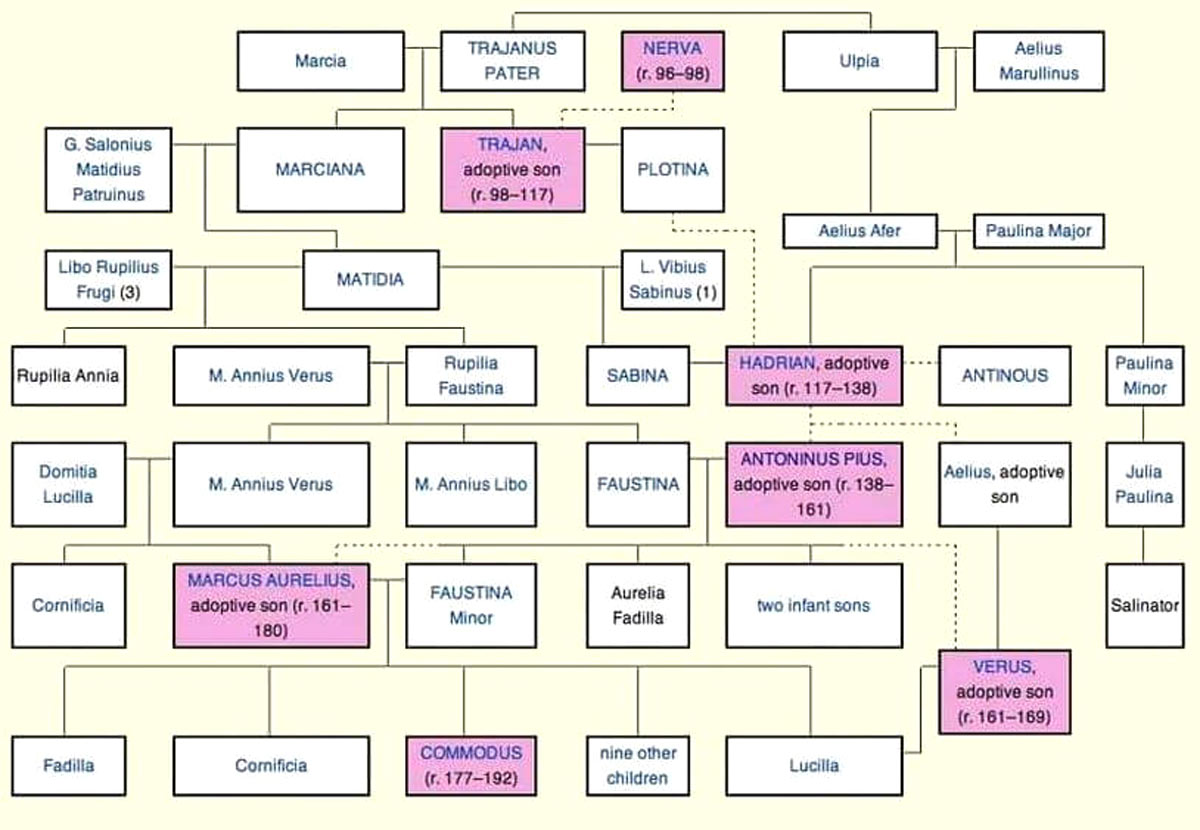
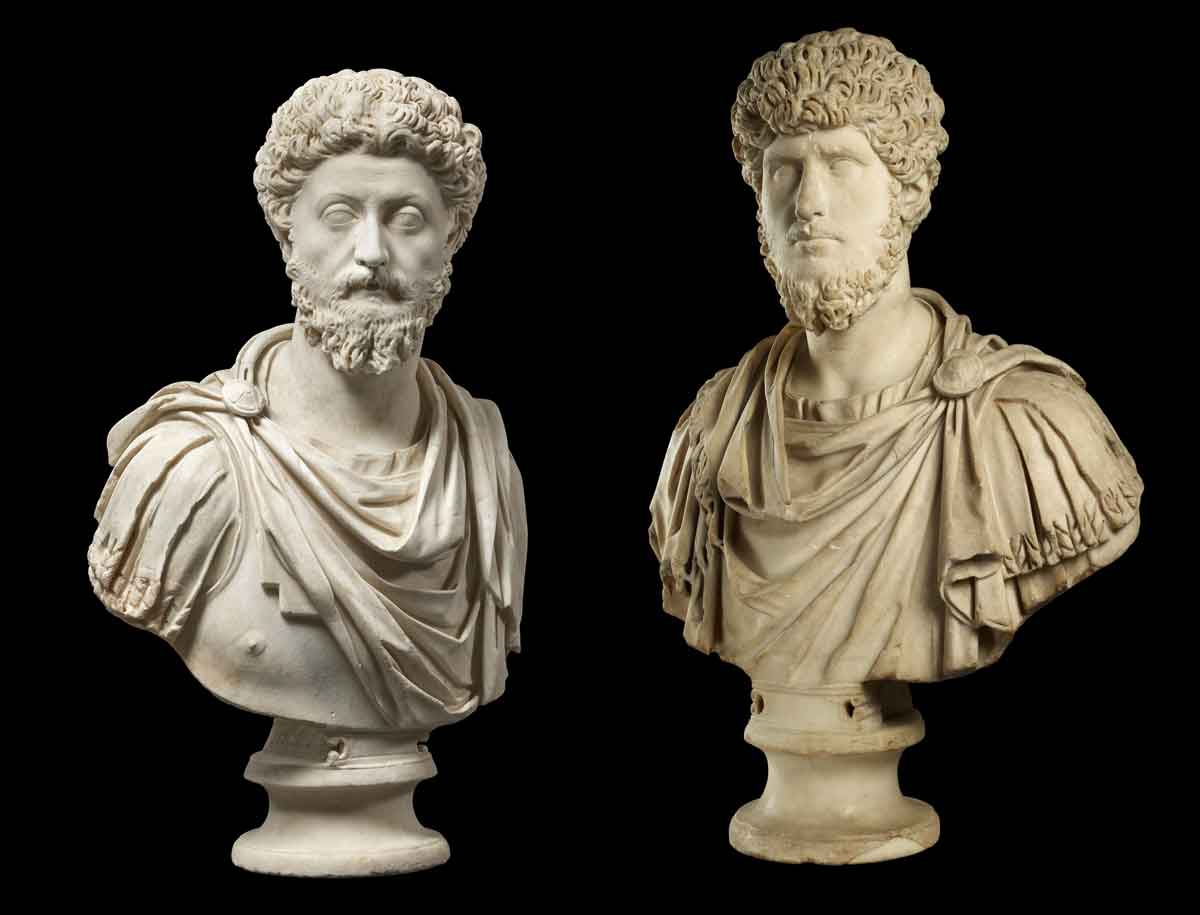
Nerva, who was in his 60s by the time of his accession, was emperor for just two years. As anticipated, power passed smoothly to his nominated successor. Unknowingly, Nerva had established his greatest legacy: the advent of Rome’s “Golden Age.” The men who followed Nerva, by accident of biology, were unable to have sons of their own. Consequently, each man was compelled to choose his successor through adoption, and was therefore able to choose the man who was, in theory, best qualified for the enormous undertaking of running the Empire. Trajan adopted his cousin Hadrian, and Hadrian adopted his nephew-by-marriage Antoninus Pius. A condition of that adoption was that Antoninus Pius adopt as his successors Marcus Aurelius and Lucius Verus, who were also from distant arms of the family tree, and succeeded together in AD 161.
It was this smooth transition of power, from one nominated emperor to his adopted successor, that ensured this period was characterized as a Golden Age. The peace of the Pax Romana was, therefore, an internal peace. It became such a defining characteristic of the 2nd century AD that, for centuries after, this period continued to be idealized. The Enlightenment historian Edward Gibbon famously called this the period of history when mankind was happiest.
Infectious Instability: The Antonine Plague

Nevertheless, Rome’s Golden Age was not without blemishes. In the middle of the 2nd century, the Empire was afflicted by a devastating pestilence. Known as the “Antonine plague,” named after the ruling dynasty, the plague was devastating. According to ancient writers, the plague was caused by divine retribution. Both Ammianus Marcellinus and the much less reliable Historia Augusta claim that the devastation visited upon the Roman Empire was divine punishment for the sack of Seleucia during the Parthian War.
Absence of evidence makes identifying this millennia-old pathogen challenging. However, there is a prevailing consensus amongst historians that the plague was likely a sustained outbreak of smallpox. Scattered evidence from antiquity gives an impression of the danger the disease posed. Papyrological evidence from Egypt records how the plague laid waste to the population. The senatorial historian Cassius Dio, who witnessed the return of the pestilence in the AD 180s, described how as many as 2,000 people were dying each day just in Rome.
The impact of the plague was felt throughout the Empire, including in the upper echelons of society. The most high-profile victim of the disease was none other than the emperor Lucius Verus. As well as a traumatic human impact on the Empire, the devastation wrought by plague had huge political, economic, and social consequences.
Frontier Fighting: Wars on the Imperial Borders
The Pax Romana was, ultimately, something of a misnomer. The reigns of Trajan, Hadrian, Antoninus Pius, and Marcus Aurelius might have been viewed as halcyon days by some. But for others, such as the Dacians, devastated by Trajan’s war of conquest, or the Jews, who were crushed by Hadrian at the Bar Kokhba revolt, there was very little peace to be found. During the AD 160s, the Roman Empire found itself embroiled in another war. This time, they clashed with the Parthians. Traditionally, the two empires had existed in a kind of stasis. Both were aware that they lacked the resources to deliver a decisive blow, although the Parthians had dealt the Romans some terrible losses in the past. This imperial equilibrium did not stop either side from provoking conflict.
There had already been one war in Parthia in the 2nd century AD under Trajan. However, his death had brought an abrupt end to proceedings. Hadrian gave up the territory won by Rome. Then, in AD 161, the Parthian king Vologases IV marched into Armenia and expelled the Roman client king to install a man loyal to him; a certain Pacorus. The first Roman response, led by the governor, Marcus Sedatius Severianus, resulted in the massacre of the Roman forces. A protracted war of retaliation was now inevitable.

The Roman response, led by Lucius Verus, began in AD 163. The campaign focused on the reconquest of Armenia to begin with, and the capital of Artaxata was retaken in the same year. For this, Verus, despite not leading the forces at Artaxata, was awarded the honorific title Armeniacus, the “conqueror of Armenia.” A Parthian counter was launched against Osroene in Mesopotamia, once again driving the Roman client king out.
The Roman advance was twofold. One force quickly moved to retake the Osroene capital, Edessa, for the Romans. The other force marched deep into Parthian territory. Led by Avidius Cassius, the Romans sacked two great cities: Ctesiphon and Seleucia. The advance deep into foreign territory and the depredations of war coincided with the first outbreaks of the Antonine Plague. The pestilence was carried back to the Empire by the soldiers.
Ostensibly, the Romans were victorious in this Parthian war. However, the costs were exceptionally high. The plague devastated the Empire, and, destabilized by years of conflict, the eastern provinces remained a source of conflict for decades. There was also the death of Lucius Verus on campaign, heightening the political consequences of the conflict. Verus’ death also thrust Marcus Aurelius’ infant son, Commodus, right to the fore of imperial politics.
The Philosopher’s Son: Raising Commodus

Marcus Aurelius was not like other emperors. It was not just the Stoic philosophy that set him apart from his peers. Unlike the emperors who had preceded him, Marcus Aurelius and his wife, Faustina, enjoyed an incredibly fecund relationship. Although the sources vary slightly on the total number, the imperial couple certainly had over ten offspring. Unfortunately, this was also a source of great tragedy for the pair, with many of their children dying in infancy. Only six of their children outlived their father. Five of these were daughters but, crucially, one was a son: Lucius Aurelius Commodus Antoninus.

Born in AD 161, Commodus was actually a twin. His brother, Titus Aurelius Fulvus Antoninus, died in infancy in AD 165. Another brother, Marcus Annius Verus, also died during Commodus’ childhood in AD 169. The deaths of the other Antonine sons set Commodus on the path to power. From an early age, his status as his father’s heir, and thus as his successor, was made clear. Commodus was made Caesar in 166, at the age of just five. Ostensibly, the title Caesar, which complemented his father’s title Augustus, marked Commodus out as the junior partner in imperial power. Of course, as a literal child, his role at this point was entirely symbolic.
Marcus Aurelius took steps to ensure that Commodus’ status was incontestable. He was presented to the soldiers at an early age, accompanying his father to the northern frontiers during the Marcomannic Wars. It was there, in AD 172, that Commodus received the title Germanicus. The hope of such actions was that, when his father died, the soldiers would accept Commodus without contest. Later, in January AD 177, Commodus assumed the consulship at the age of just 15, the youngest person yet. His title was upgraded to Augustus later that year, making him (junior) co-emperor.
Imperial Megalomania: Commodus Unchecked

Marcus Aurelius was the first emperor to be succeeded by a biological son since Vespasian (AD 69-79). Rarer still, Commodus was a child born to a ruling emperor: Titus and Domitian were both adults by the time their father took power. In other words, Commodus was “born to the purple,” and he was, therefore, special. According to the historian Herodian, he said as much to the soldiers who acclaimed him emperor in AD 180. Although the speech was almost certainly invented by the historian for dramatic purposes, it reveals the fundamental novelty of Commodus’ status in AD 180. He was the first emperor of his kind. Unfortunately for the Empire, it appears that the new emperor had inherited none of his father’s virtues.
There had perhaps been inklings of Commodus’ cruelty as a child. The infamously unreliable Historia Augusta recounts an episode where a servant had the temerity to make Commodus’ bath too cold. The 12-year-old future emperor ordered the bathkeeper to be thrown into the furnace as punishment. Luckily, another servant saved the day. A sheepskin was tossed onto the flames instead, with the stench enough to trick the young Commodus. While this story is probably untrue, it shows the type of behavior believed of the prince.
More verifiable was Commodus’ immediate decision to withdraw the Roman armies from the German frontier upon his father’s death. Instead of seeking a conclusive military victory, peace was purchased, and the new emperor retreated to the comfort and opulence of the imperial capital.
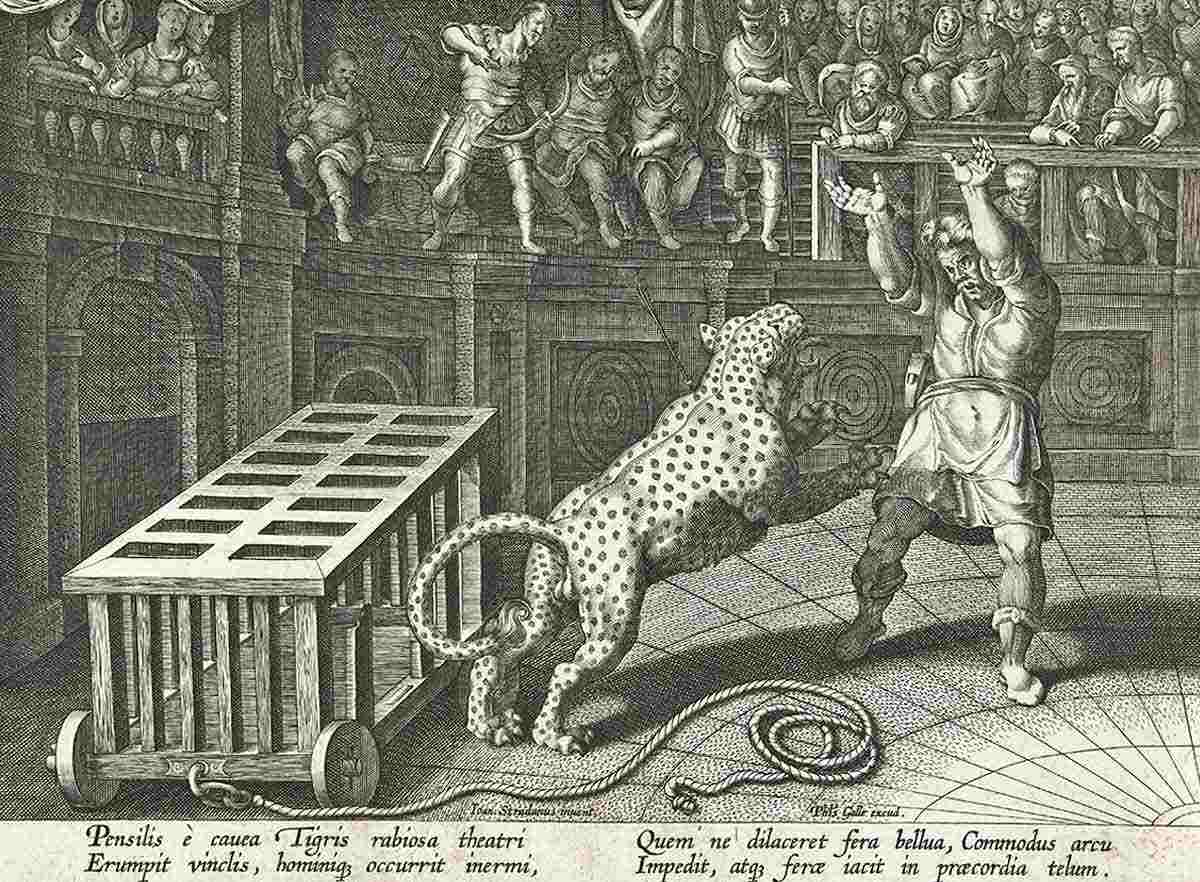
Once back in the imperial capital, the situation deteriorated further. The more infamous of Commodus’ depravations are by now very well known, in part thanks to Hollywood. First, there were his attempts to present himself as a gladiator. Participating in the arena, Commodus slaughtered animals in shows that were typically the preserve of slaves and criminals. Later, there were his attempts to equate himself with Hercules, which resulted in one of the most striking portraits of any to have survived from antiquity.
Even beyond these most egregious examples of imperial failings, Commodus had strayed from the example set by his father and other Antonine predecessors. For instance, arriving in Rome in AD 180, he quickly jettisoned his advisors, wise men picked by his father, in favor of lackeys and sycophants.
The End of the Pax Romana: An Age of Iron and Rust
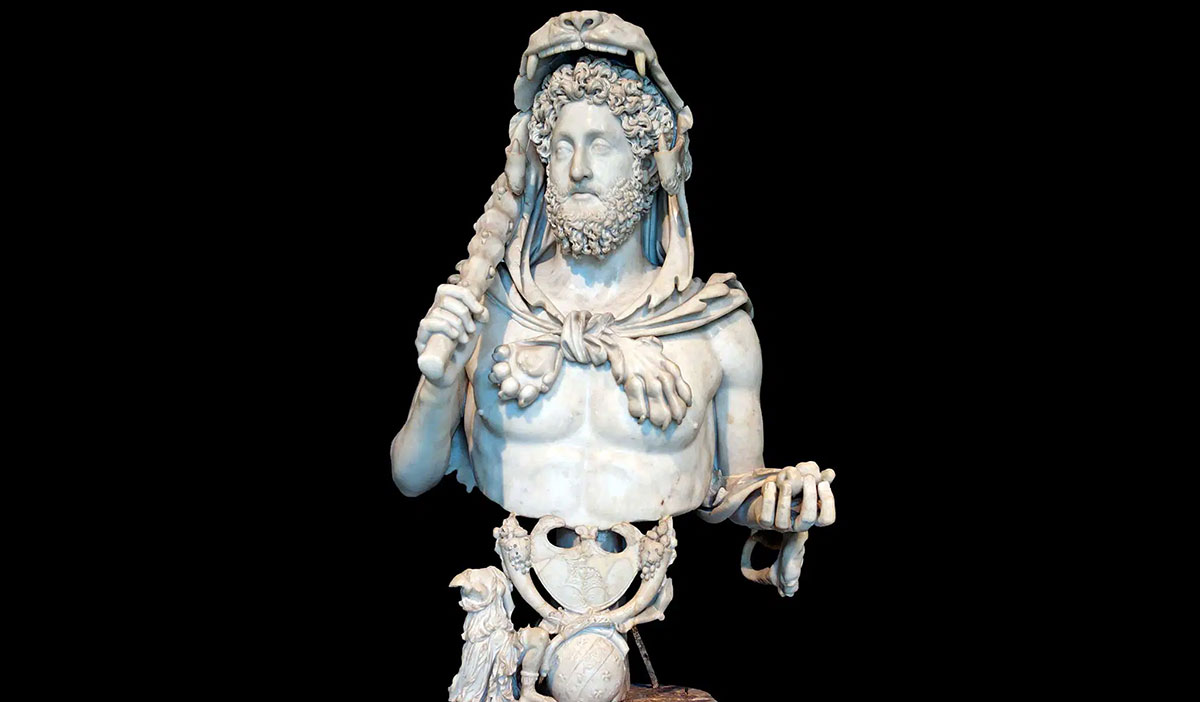
Commodus’ reign was marked by the deterioration of the political consensus that had otherwise characterized the preceding decades of Antonine rule. In fact, his accession was later identified by the historian and senator Cassius Dio, a contemporary of Commodus, as the moment the Empire was transformed from a kingdom of gold to one of iron and rust.
Notions of a Pax Romana were shattered by the return of coups against the emperor. As early as AD 182, Commodus had survived an attempt on his life orchestrated by his eldest sister, Lucilla. He was saved by the assassin’s incompetence. Instead of delivering the fatal blow, the would-be assassin had dithered, monologuing in front of the emperor: “See! This is what the Senate sends you!” while brandishing the dagger he would never get to use.
Unsurprisingly, because the bungling assassin had revealed this was a senatorial plot, the political tensions in the capital escalated further. Commodus would never again trust the Senate, and leading men across the Empire were culled. They were replaced by unsavory characters, such as the freedman Cleander, who in time came to command the Praetorians.
The turbulence was not limited to Rome. There was unrest on the Empire’s northern borders, with both Britain and Gaul sliding into chaos. One group of disaffected soldiers, led by Maternus, a charismatic figure, even devised a plot that, though unsuccessful, aimed to kill Commodus.
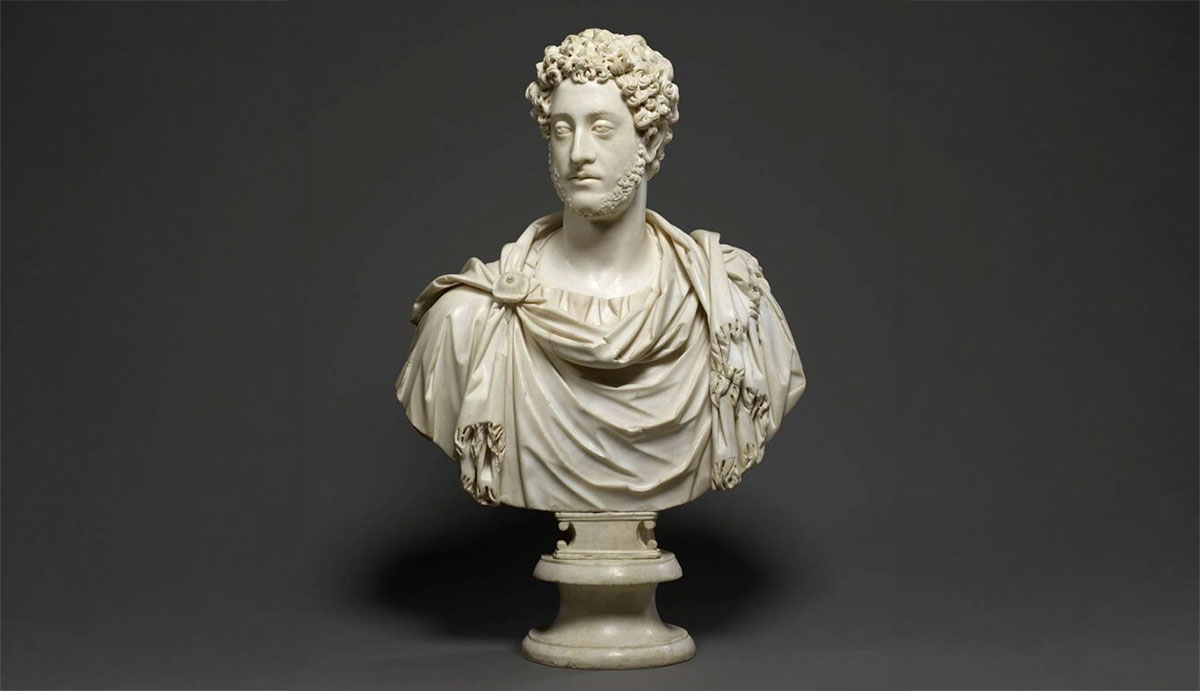
The decisive blow against the Roman Golden Age came on New Year’s Eve AD 192. While taking a bath in his private residence, Commodus was murdered. First, poison was administered. Unfortunately for the conspirators, the gluttonous emperor had already had so much to drink by this time that he vomited up the toxic tincture. He was, though, badly weakened. The wrestler, Narcissus, was dispatched into the bath chamber to finish what the poison had started: he strangled Commodus to death.
On New Year’s Day AD 193, the Empire awoke to a new emperor. Much like Nerva, Pertinax was an elder statesman of repute and, almost certainly, a member of the conspiracy which had toppled Commodus. The memory of the former emperor was condemned to much jubilation, especially among the Senate. But Pertinax proved unable to bring the Empire back to stability. Lacking the authority to bring the Praetorians into line, the emperor and guards clashed over duties and pay. The Praetorians struck first, and murdered the parsimonious Pertinax less than three months later. This was the spark for a civil war that lasted until 197, when Septimius Severus emerged as the sole emperor of a much-changed Empire. The century that followed was characterized by political intrigue and instability.