
History remembers Nero for his irresponsible decadence and the Great Fire of Rome, but it rarely credits the men who put the fire out. When Vespasian emerged victorious from the civil war following Nero’s fall, he inherited an empire in crisis. The treasury was empty, the army was mutinous, and the prestige of the Caesars was tarnished. Vespasian and his sons, Titus and Domitian, had to “reboot” the Roman state. Through practical but ruthless leadership, they paved the way for the following dynasty, known as the rulers of Rome’s Golden Age.
Ending the Year of the Four Emperors
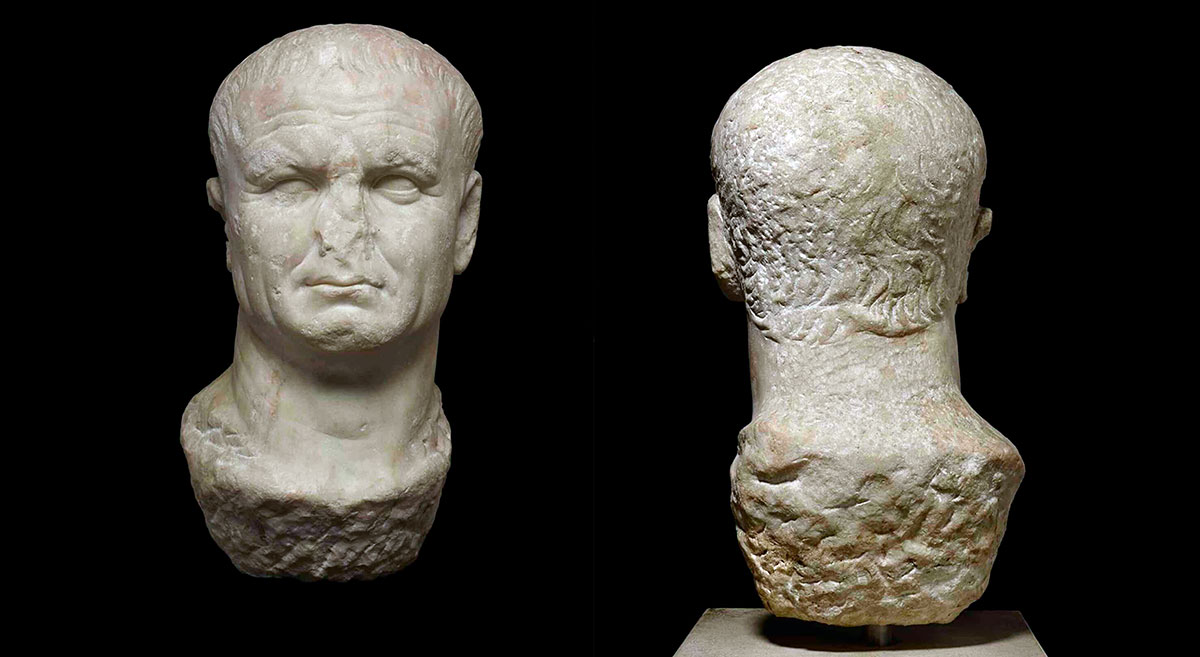
Augustus Caesar established the Roman Empire around his Julio-Claudian family as a monarchy in all but name. However, 50 years after his death, Rome had lost faith in the final Julio-Claudian successor, Nero, a pampered prince who refused to play statesman. History accuses him of demanding sycophantic praise, kicking his pregnant wife to death, and even setting fire to the city of Rome, all while spending excessively on vanity projects like his Domus Aurea, a personal palace built on public land cleared by the fire of AD 64.
By the start of AD 68, people were fed up. In March, Gaius Julius Vindex, the governor of Gallia Lugdunensis, rebelled against Nero’s brutal tax hikes. He encouraged Galba, the governor of Hispania Tarraconensis, to lead their rebellion, and their troops hailed him as emperor. Support for Galba spread. Finally, the Prefect of the Praetorian Guard abandoned Nero for Galba.
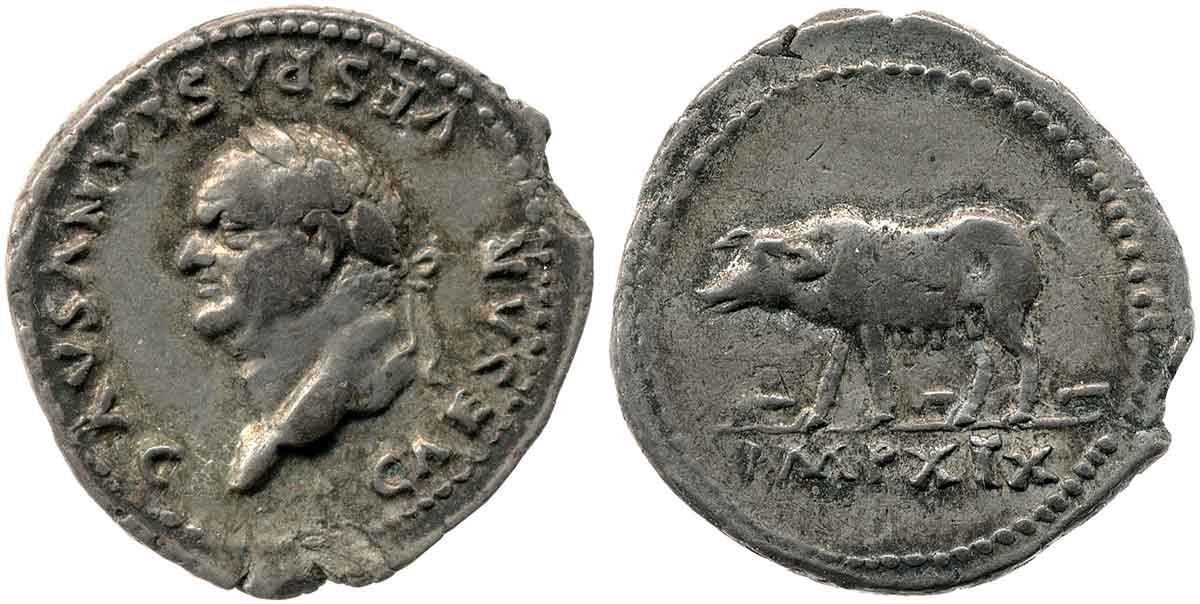
Nero committed suicide, but this did not clear a path for Galba. What made him the best candidate to replace the last Julio-Claudian prince? The courtier Otho and the general of the German legions, Vitellius, threw their hats in the ring, leading to a year of civil war. This only ended when Vespasian, campaigning in the East to put down a Jewish rebellion, united the eastern legions behind him and emerged as the victor.
Vespasian showed his shrewdness from the start. He painted himself as reluctant to pursue the purple but convinced to “step up” by signs and omens of divine favor. He let his ally Antonius Primus lead the armies against Vitellius in Italy, keeping his own hands clean of Roman blood.
Creating Auctoritas With the Lex de Imperio Vespasiani
The Julio-Claudians ruled through the personal auctoritas of their family. Each emperor’s position was reinforced by traditional Republican offices, including the consulship, and by special powers, such as tribunicia potestas and maius imperium. Vespasian could be granted the same offices and powers, but the Romans understood that Julio-Claudian power was based on more than that.
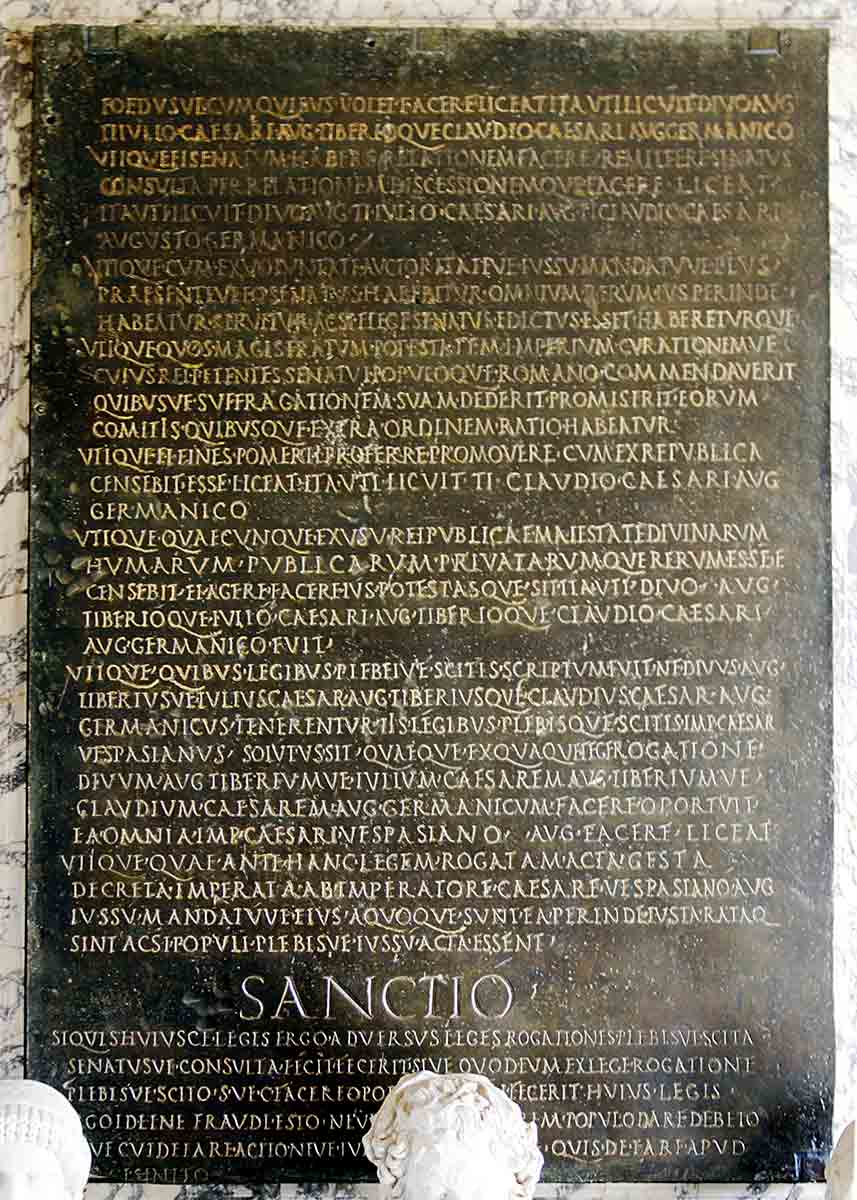
The state took steps to recreate Julio-Claudian auctoritas legally with the Lex de Imperio Vespasiani. Passed right at the beginning of Vespasian’s reign, the law tries to cover everything that the Julio-Claudians had been able to do. Some things are listed specifically, like making treaties and endorsing candidates for office, but there are also some “catch-all” clauses:
“And that whatever he considers to be in accordance with the public advantage and the dignity of divine and human and public and private interests he shall have the right and the power to do and to execute just like the deified Augustus, and Tiberius Julius Caesar Augustus, and Tiberius Claudius Caesar Augustus Germanicus.”
Lex de Imperio Vespasiani
The law specifically references the non-disgraced Julio-Claudian emperors as a precedent, skipping over Gaius Caligula and Nero.
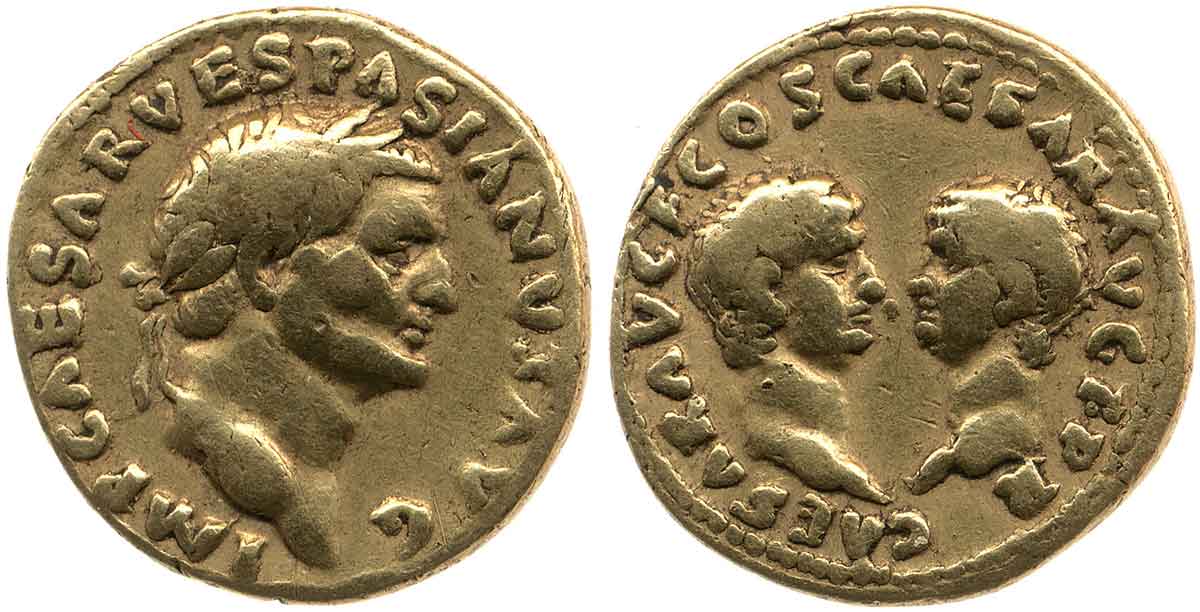
There seems to have been no doubt that whoever claimed power after Nero would draw on the Julio-Claudian legacy. All the men who competed for power in the Roman civil war of AD 69 added Caesar, a family name of the Julio-Claudians, and Augustus, their honorific title, to their own names.
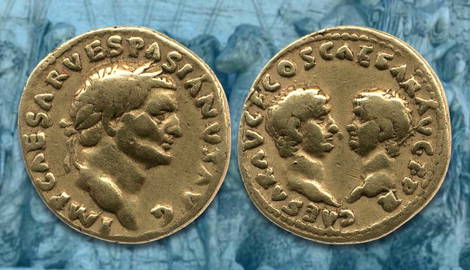
That Vespasian had two grown sons (Titus, 29 and Domitian, 17). This was one of the things that recommended him for power in a society that valued ancestral nobility. It meant that there was a clear line of succession, limiting the possibility of another chaotic civil war in the years to come. Vespasian proclaimed Titus as Caesar and promoted his sons on coins as Caesar Augustus filius.
Financial CPR: The Infamous Urine Tax
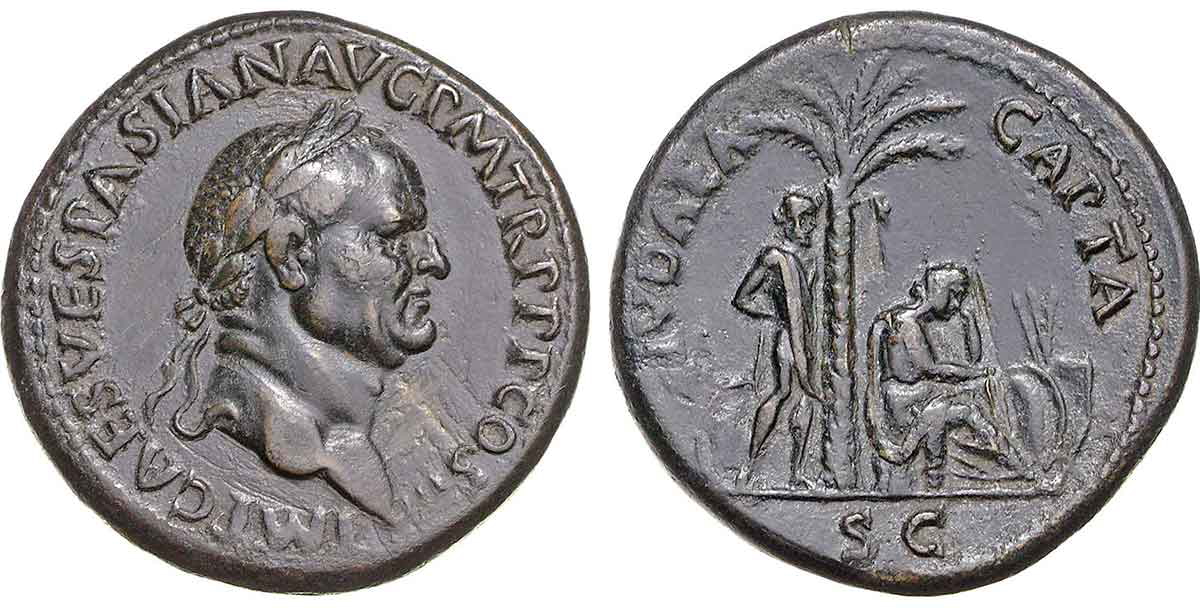
The Empire Vespasian inherited was financially bankrupt. According to Suetonius, after reviewing the finances, Vespasian declared that it would take fourty billion sesterces to restore the state finances.
Nero’s extravagant spending on public spectacles, in which he starred, and building projects, such as the Domus Aurea, had drained the coffers. The civil war exacerbated the problem as each emperor bribed his legions with cash bonuses. Meanwhile, Rome’s provincial governors were occupied with the war and provincial tax collection was disrupted.
Vespasian was ruthless in his approach to restoring Rome’s finances. He doubled provincial taxes to get them flowing again, and revoked tax immunities that some regions had enjoyed. Since the Temple of Jerusalem was destroyed by Titus when putting down the rebellion, Vespasian had the half-shekel temple tax previously paid by the Jewish people to the temple paid to Rome. He also conducted massive property surveys in Italy and reclaimed public land that had been occupied by elites.
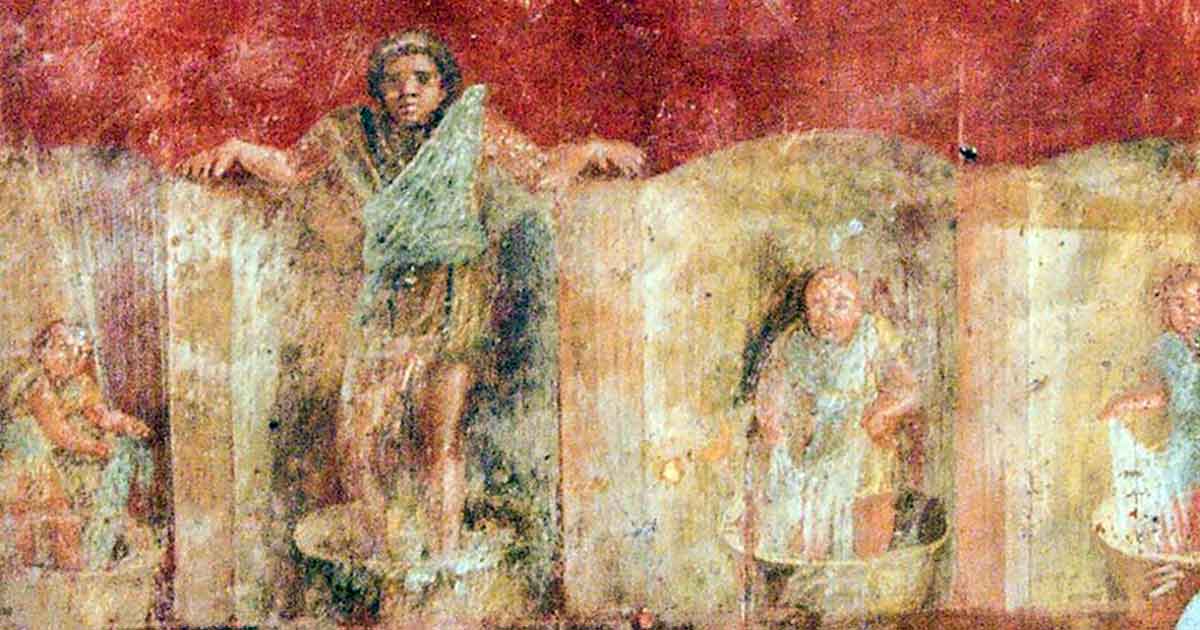
But Vespasian’s most famous innovative tax was the Vectigal Urinae, or urine tax. Urine was the main source of ammonia for laundry workers and tanners, so he imposed a tax on its collection and distribution. The Roman elite, and even Titus, thought the tax disgusting, but Vespasian reportedly responded, “pecunia non olet,” (money doesn’t stink) (Suetonius, Vespasian 23).
Vespasian also implemented austerity. Nero’s lavish dinners and expensive court lifestyle were a thing of the past. He lived modestly and imposed similar frugality on the government. When Vespasian did spend, he prioritized projects that would stimulate the economy through job creation, such as building the Colosseum. While some contemporaries criticized Vespasian for his avarice and stinginess, by the end of his reign the treasury was in surplus.
Restoring the Military: The Fall of Jerusalem and Britain
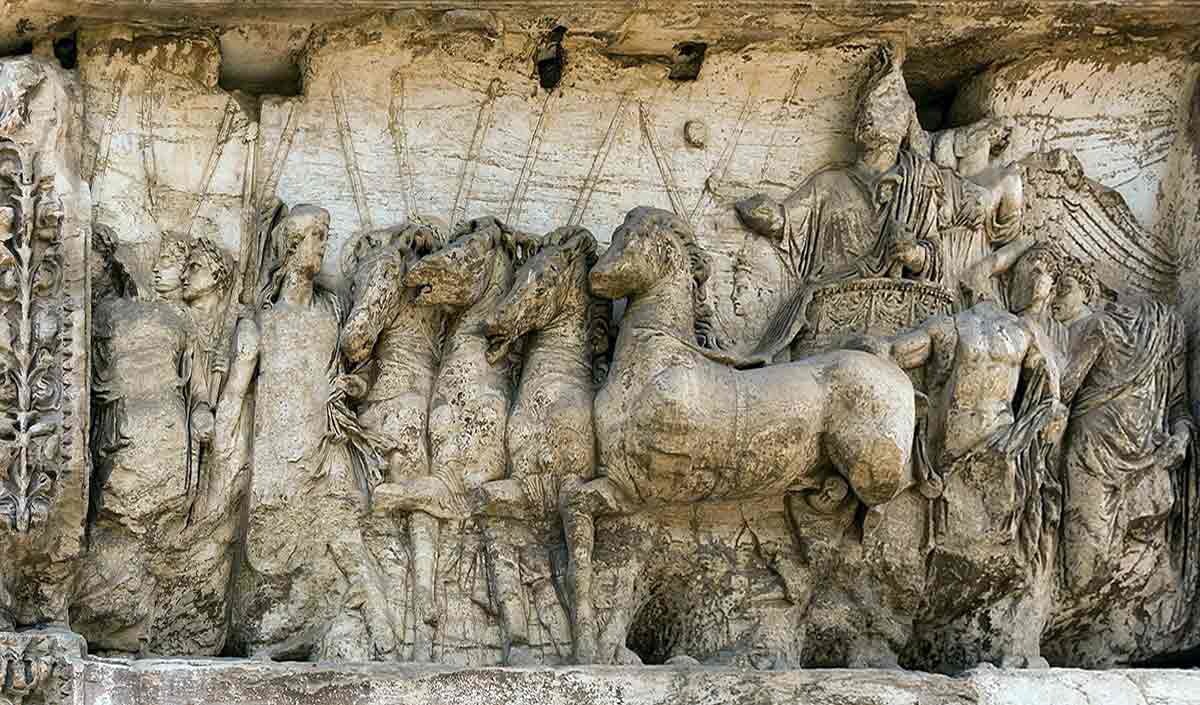
Rome’s military was in disarray when Vespasian came to power. They had not been paid in about two years, leading to widespread insubordination and lax discipline. They had also spent the last year fighting one another while neglecting Rome’s borders, resulting in revolts. Perhaps worst of all, Vitellius had disbanded the existing Praetorian Guard and replaced it with a horde of 16,000 veterans from his own legions.
Vespasian was just as ruthless and innovative here as he was with his finances. He disbanded units that could no longer be trusted and relocated legions away from where they had served in the civil war. He also moved auxiliary troops, recruited from local populations, from their own lands to foreign territories where they were less likely to become involved in local rebellions. He no longer allowed a single governor to command large numbers of legions, breaking them up into smaller commands.
Vespasian dismissed Vitellius’s new Praetorian Guard and created a much smaller guard composed of handpicked men. Vespasian also learned from the mistakes of the Julio-Claudians. The Praetorian Prefect Sejanus had unsuccessfully conspired against Tiberius, Caligula was killed by his Praetorians, and Nero was abandoned by his. As the commander of the only troops allowed in Rome, the Praetorian Prefect was a powerful position, so Vespasian appointed his own son Titus.
Vespasian also kept the soldiers busy, ordering the building of roads and fortifications and dispatching them to aggressively secure the borders in Britain and Germany, leaving them no time for conspiracy.
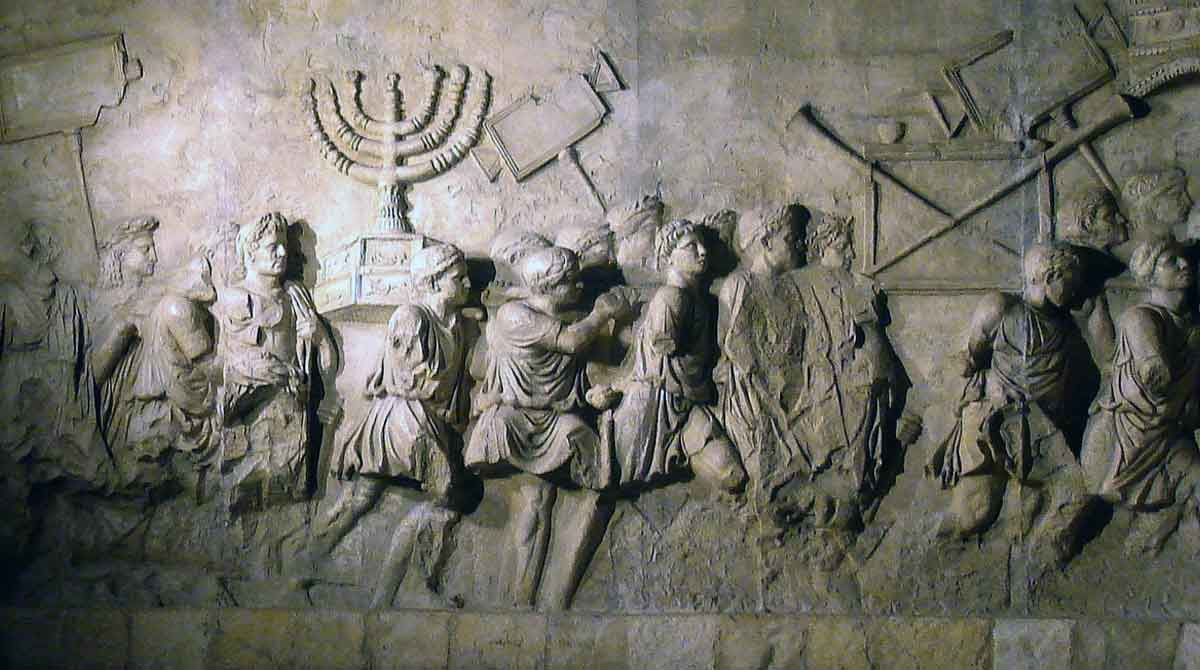
But while Vespasian wanted to limit the ability of the army to make emperors of their generals, he also reinforced the military aspect of the emperor. In AD 71, Vespasian and Titus shared a triumph in Rome for their victory in Judea, though it must have invoked their civil war success. We know quite a bit about the event from Flavius Josephus, who witnessed it, and the surviving triumphal Arch of Titus.
Dressed in imperial purple with laurel wreaths, Vespasian and Titus emerged from the Temple of Isis in triumphal chariots, with the young Domitian, who did not participate in the war, riding a war horse. They carried the spoils of the war, a scene depicted in the Arch of Titus, and mobile stages that reenacted war scenes. The rebel leader was ceremonially executed in the Forum.
The Colosseum: Propaganda in Stone
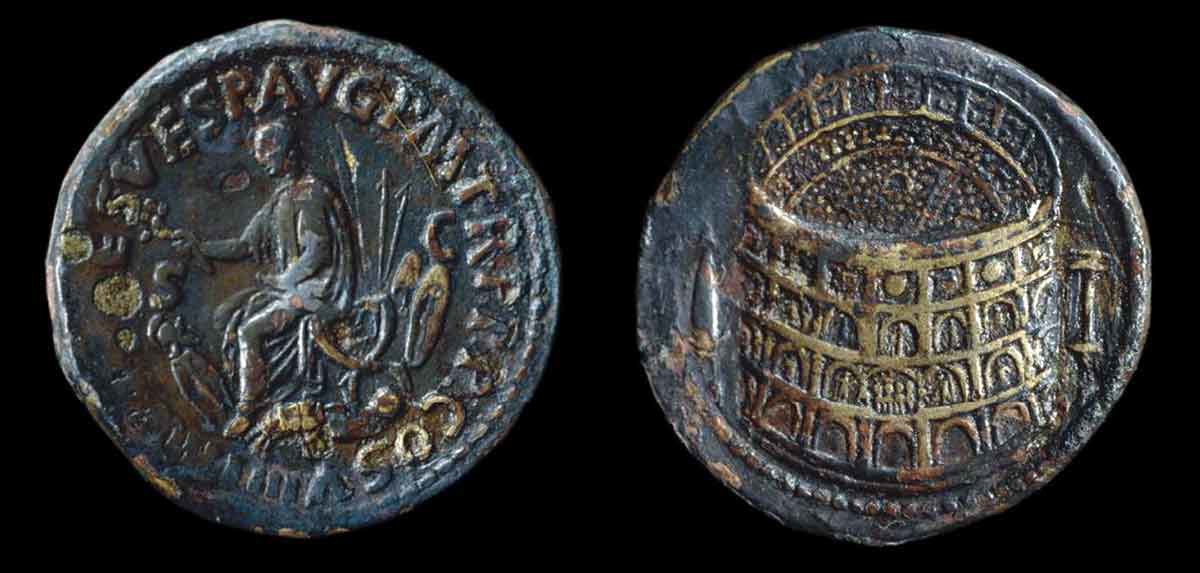
While Vespasian was frugal, he invested in building projects to stimulate the economy. His most famous project was the Flavian Amphitheater, better known as the Colosseum, built on previously public land that Nero had acquired for his Domus Aurea. The Flavians made a great show of “returning” this land to the Roman people.
Reinforcing their military might, the project was paid for from the spoils of the Jewish War, and Jewish captives were also forced to work on the project. The project probably began in AD 72. It was completed under Titus, who inaugurated the Colosseum with 100 days of spectacles in AD 80. Juvenal was inspired by these types of spectacles when he coined the term “panem et circenses” (bread and circuses) to mock the Roman people for trading their sovereignty for free grain and entertainment.
This was only one of many Flavian architectural projects. Domitian restored many of the city’s landmarks damaged after another great fire in AD 80. He rebuilt the Temple of Jupiter Optimus Maximus, Rome’s principal temple on the Capitoline Hill, with a façade of Pentelic marble, gold doors, and a roof covered in gilded bronze shingles. He rebuilt the Circus Maximus into a stadium that rivaled the Colosseum. He restored the Pantheon, the Baths of Agrippa, the Saepta Julia and the Theater of Pompey. All these buildings now bore the Flavian name, physically embedded in the fabric of the city.
Titus and Roman Crisis Management: Vesuvius and the Great Fire
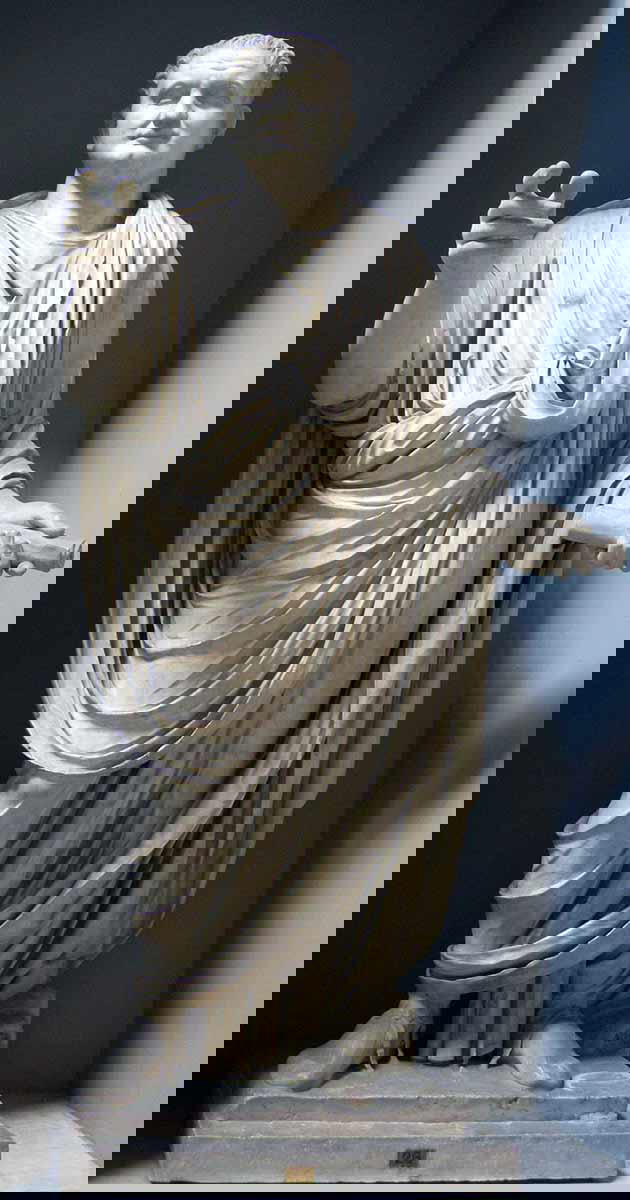
When Vespasian died in AD 79, the founder of the new dynasty had established a clear line of succession. Titus was unpopular under Vespasian because he was known as his father’s enforcer. He was criticized for aggressively stamping out conspiracies and executing political dissidents. He was also known to have had a passionate love affair with the Jewish queen Berenice. This led to fears that he would indulge in “Eastern decadence” and become a second Nero.
But by the end of his own reign, Titus was reportedly known as the “delight and darling of the human race” (Suetonius, Titus 8.2). He overhauled his reputation, ending his relationship with Berenice and ending treason trials. He also dealt with several crises, which he used as opportunities to show himself as the philanthropic patron of the Roman people.
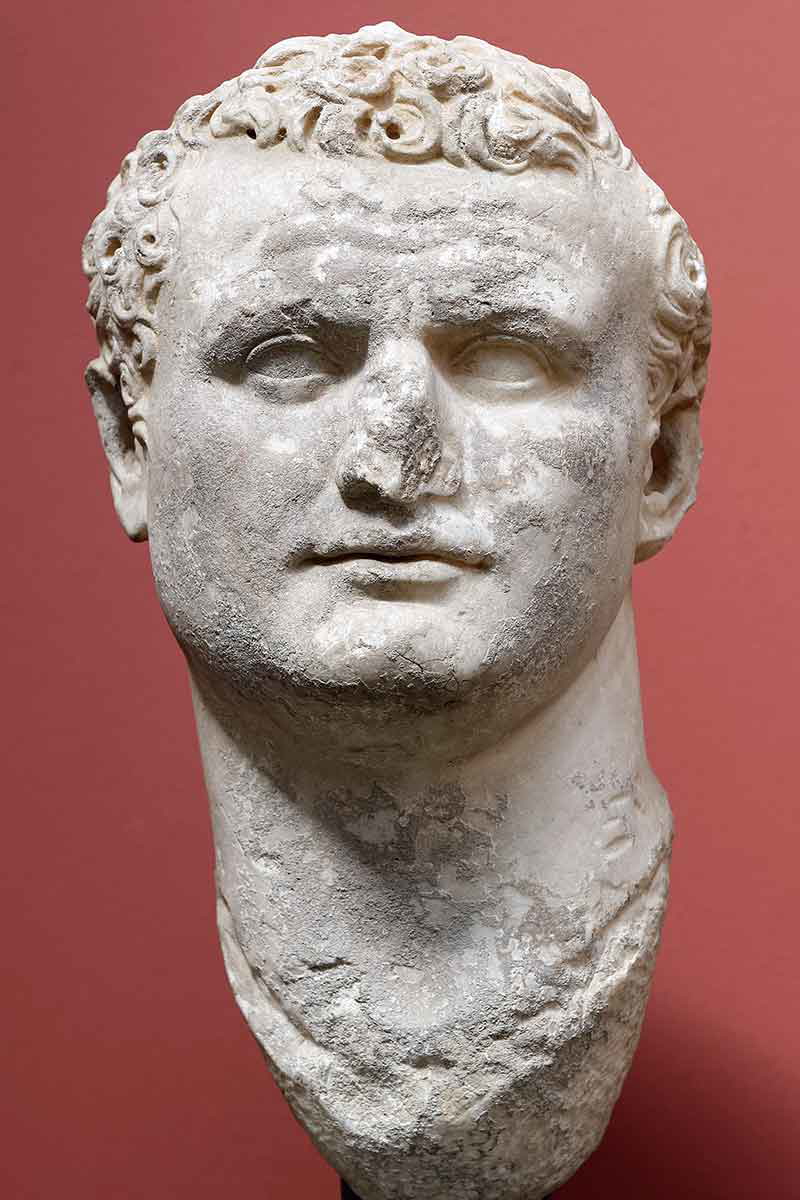
Just two months into his reign, Mount Vesuvius erupted, destroying Pompeii, Herculaneum, and Stabiae. Titus went to Campania to personally oversee relief efforts. While he was still there, a massive fire broke out in Rome that raged uncontrollably for three days, destroying many major structures. He announced that he would personally fund the rebuilding, refusing donations from the people or foreign kings.
This disaster was followed by a plague, likely triggered by the fire. Titus employed an army of physicians to support the people and conducted massive public sacrifices to restore the favor of the gods. This all contributed to his popularity when he died, probably of malignant malaria, at just 41 years old in September AD 81.
Domitian: The Efficient Tyrant
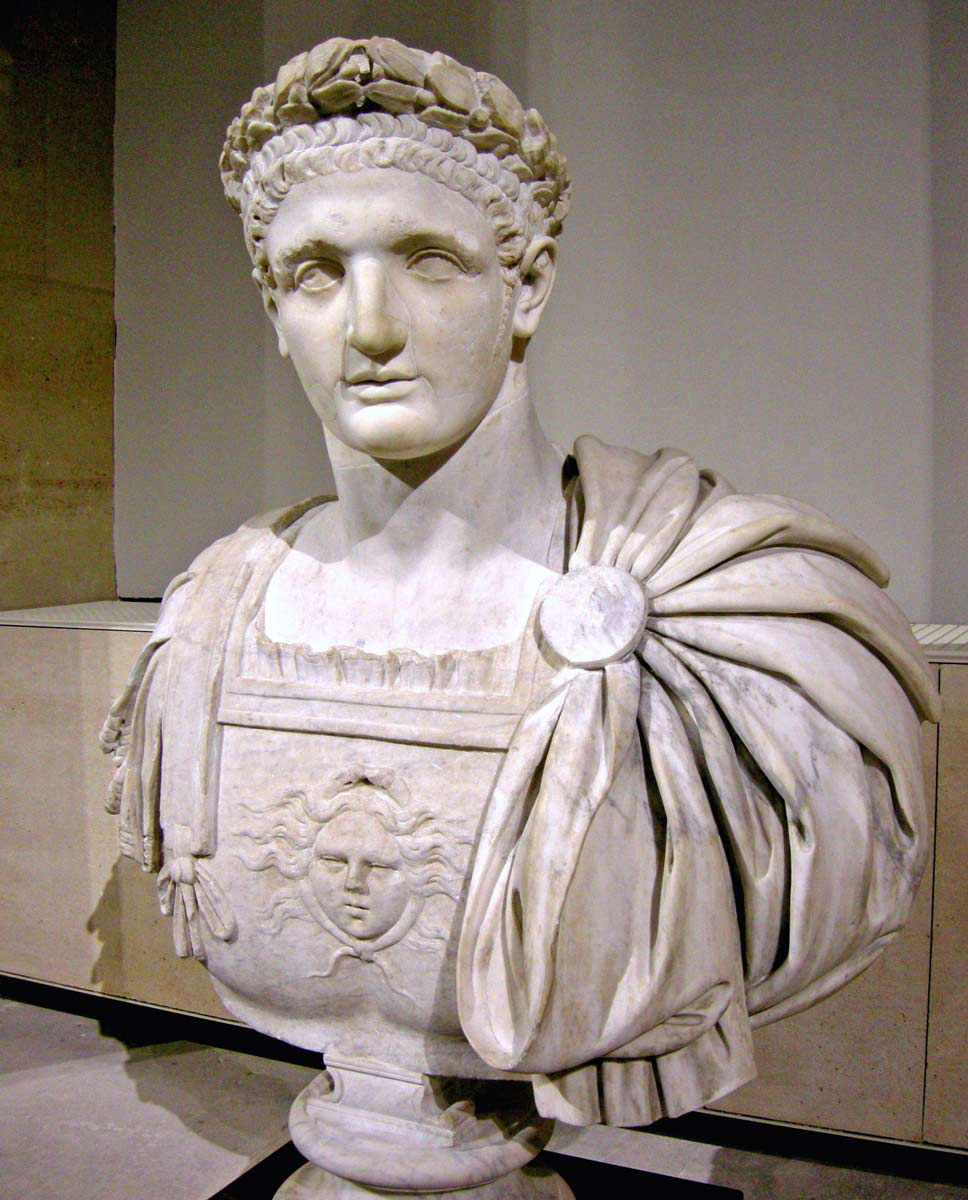
With no sons, from the start of his reign, Titus marked his younger brother Domitian as Caesar and successor. Nevertheless, Domitian reportedly took decisive steps to secure his position. With Titus’s body still warm, Domitian rode to the Praetorian camp and promised them a significant bonus to secure their loyalty. They hailed him imperator, and then the Senate voted him the title Augustus. This meticulous and ruthless approach characterized much of Domitian’s reign.
Domitian took direct, openly autocratic control of many aspects of Rome’s governance. Inheriting his father’s concern with fiscal security, Domitian micromanaged the economy. Observing a grain shortage and overproduction of wine, he issued an agricultural edict that banned the planting of new vineyards in Italy and ordered the destruction of half the vineyards in the provinces, forcing farmers to grow grain. He reformed the currency, increasing the silver content of the Roman denarius to about 12%, returning to the Augustan standard and curbing inflation.
Domitian also appointed himself perpetual censor, giving him full control over Senatorial membership and the morals of the Roman people. He controlled the courts, often overruling judgments he considered influenced by bribery or favoritism. He audited provincial governors and brutally punished anyone who abused their position. This bred well-documented fear and resentment among the Senatorial class.
Domitian stopped consulting the Senate and relied on a council of friends, equestrian lawyers, and efficient freedmen to govern the Empire directly. He built a new central governing building, the Domus Augustana, as a sprawling administrative complex. It inspired awe, but also terror, as Domitian closely monitored all those who worked for him, reportedly requiring them to call him “dominus et deus” (master and god).
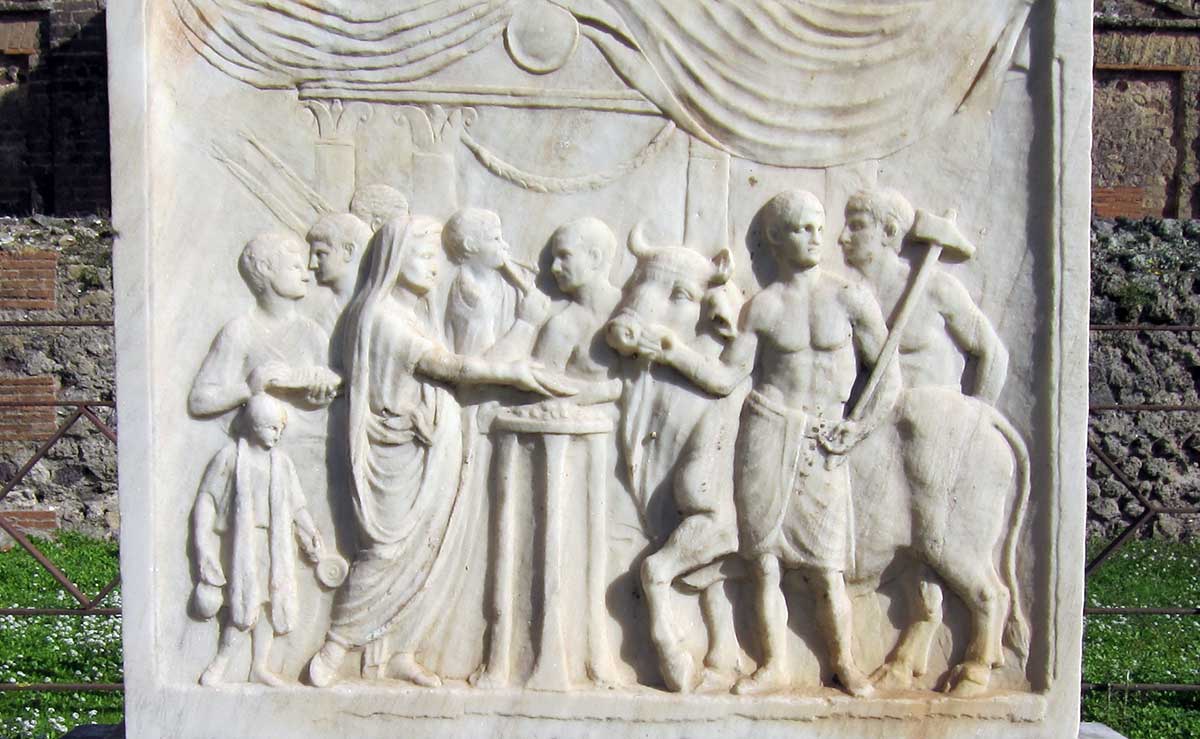
While it may be an historical exaggeration that Domitian wanted to be called god, he certainly promoted the divinity of his family, potentially looking to rival the Julio-Claudians. Both Vespasian and Titus were deified, and Domitian constructed multiple temples for them. They had a shared temple at the foot of the Capitoline in the heart of Rome, and the Porticus Deorum in the Campus Martius.
Domitian also had his long-deceased sister Domitilla, his niece Julia, and his deceased infant son deified. These were installed in the Templum Gentis Flaviae, constructed on top of the Flavian house where Domitian was born. The deification of his family served to increase the aura of divinity around Domitian himself.
While Domitian was one of Rome’s most efficient rulers, his zealous approach made him enemies among the elite, who may still have imagined a more Republican-friendly government could have been created following the fall of Nero. Domitian was aware of this loathing, and he was as paranoid as his subjects. After putting down a revolt in AD 89, Suetonius reports that Domitian saw plots everywhere, but complained that no one would believe him until he was dead. This proved accurate, and he was killed by his palace staff in AD 96. While the rejoicing Senate quickly replaced him with Nerva, the armies, Praetorians, and people were outraged by his death.
How the Flavians Invented the “Modern” Roman Empire
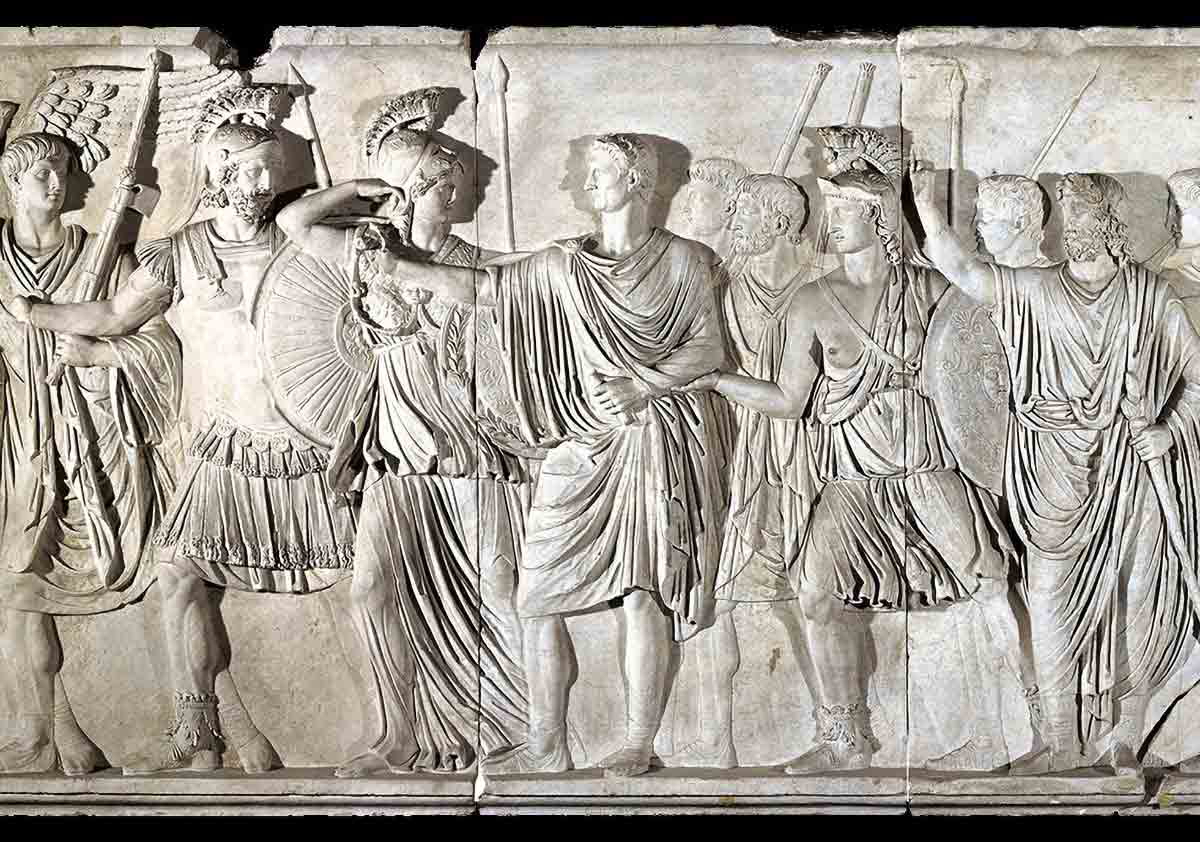
The emperors who followed Domitian are known as the “Five Good Emperors” and are broadly celebrated for overseeing a Golden Age in Roman history. They are also celebrated for being CEOs rather than kings, with emperors choosing their successors through adoption rather than relying on hereditary heirs, therefore choosing the “best man for the job.” While this narrative overlooks the close familial connections between the Antonine emperors, this idea is reinforced in popular history by the fact that their Golden Age ended with Commodus, the first son to succeed his father in a century.
But the Golden Age of the Antonines was built on Flavian foundations. The Flavians restored an Empire in chaos through sound fiscal policy, military reform, and centralized administration, creating a strong foundation for the Golden Age. The Flavians also established the idea that the emperor could be a CEO legally invested with auctoritas. This enabled seemingly non-hereditary succession under the Antonines.
Many of the Antonine emperors, notably Trajan, were just as autocratic as Domitian, but Trajan is remembered as the Optimus Princeps. While there are many reasons for this difference in reputation, one is simply that the times had changed. The Senate hated Domitian for his autocratic micromanagement, but in just a few decades it had become the status quo.