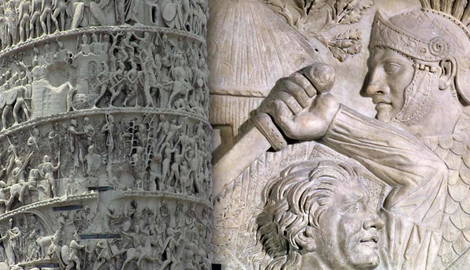

In the last few decades of the 2nd century AD, Rome’s “Golden Age” was beginning to wane. While Marcus Aurelius is celebrated as one of Rome’s greatest emperors, his reign was marred by the Antonine Plague, war with Parthia, which cost the life of his colleague in power, Lucius Verus, and conflict on the Danubian frontier. The philosopher emperor spent much of his reign fighting the Marcomannic Wars. His victory over the Germanic tribes was immortalized in the heart of Rome on the Column of Marcus Aurelius.
Conflict in Rome’s “Golden Age”
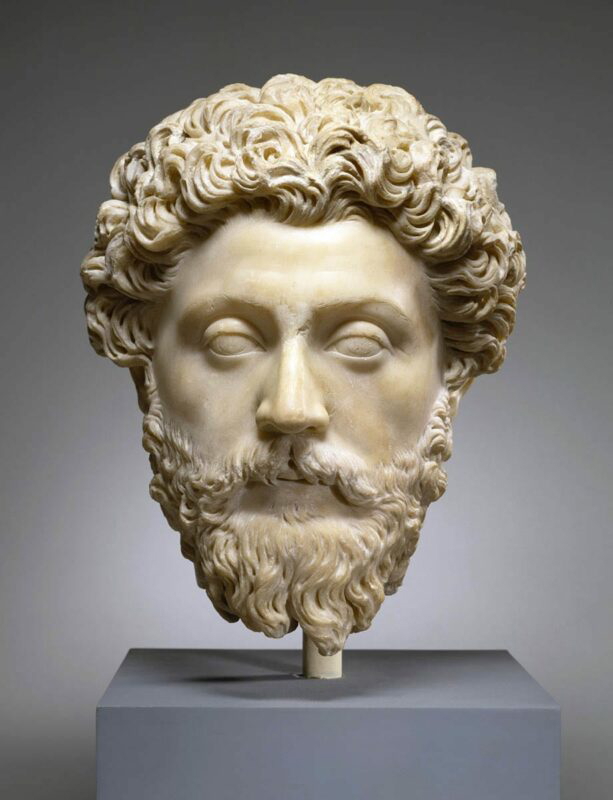
The Enlightenment historian Edward Gibbon notoriously declared the 2nd century AD to be the period of history during which “the human race was most happy and prosperous.” His history described how the inhabitants of the Roman Empire lived under virtuous and wise rulers in a peaceful empire.
Today, historians rebuff many of Gibbon’s arguments, objecting, in particular, to the notion that the Roman Empire was at peace. While Rome was spared civil war between the death of Domitian in AD 96 and the death of Commodus in AD 192, conflict and bloodshed on the frontiers raged. Trajan, Hadrian, and Marcus Aurelius battled Rome’s enemies in Dacia, Judaea, and Parthia. Even the reign of Antoninus Pius saw conflict in Britain.
Antoninus Pius’ successor, Marcus Aurelius, ruled from AD 161 to 180. Two major conflicts dominated his reign. His younger co-ruler, Lucius Verus, led Roman armies against Parthia while Marcus Aurelius oversaw the Empire from Rome. Lucius Verus also led armies north to the German frontier. Starting in AD 166, Germanic tribes including the Marcomanni and Quadi, alongside the Sarmatian Iazyges started to invade Roman territory. Here, Lucius Verus probably contracted the Antonine Plague that took his life in AD 169. This left Marcus Aurelius to lead the armies personally.
The Marcomannic Threat to Rome
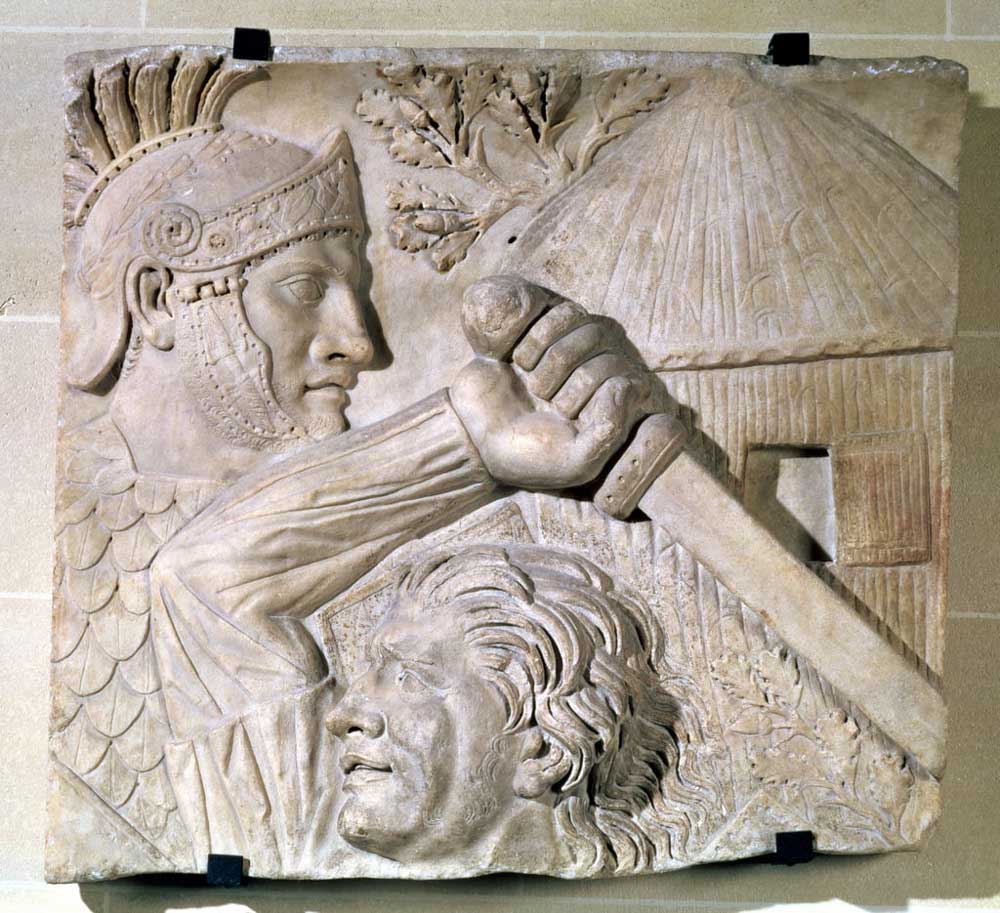
In AD 169, a more aggressive and punitive campaign was launched. Marcus Aurelius advanced north, aiming to quash the Iazyges, but the Romans soon found themselves facing a larger threat. With their focus on the Iazyges in Dacia, other Germanic groups seized the initiative and struck against the Romans. One group, the Costoboci, even advanced south into Greece, where they sacked the sanctuary of Eleusis.
The gravest danger was posed by the Marcomanni. Led by their king, Ballomar, they gathered a coalition of Germanic tribes and crossed the Danube. A large Roman force was defeated at the Battle of Carnuntum before the Marcomanni advanced south. They soon reached northern Italy and besieged the city of Aquileia. This was the first invasion of Italy since the Cimbrians invaded in the last years of the 2nd century BC.
Marcus Aurelius, the Frontline General
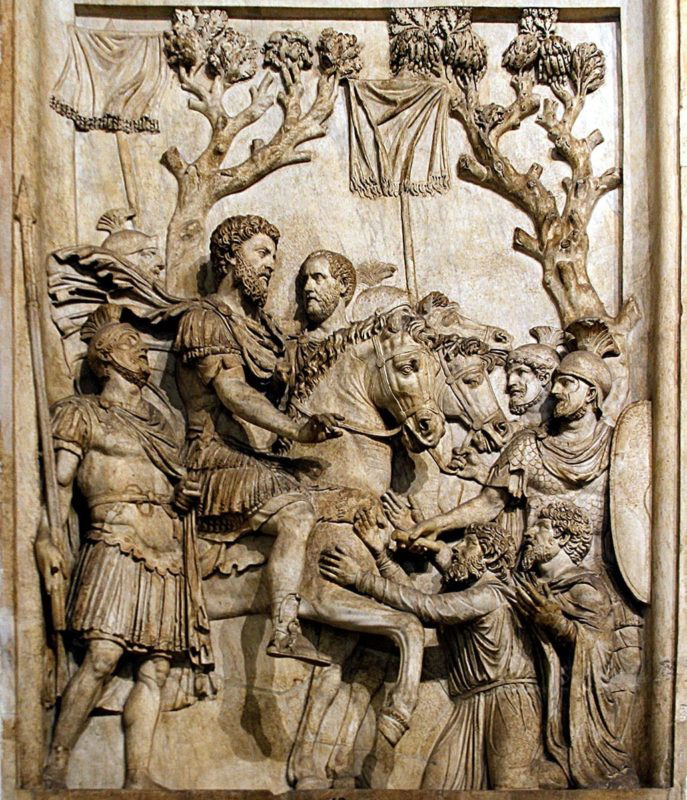
The Marcomannic threat demanded a strong Roman response. Reinforcements were dispatched across the frontiers, and the Danube fleet was also strengthened. At the same time, the Romans used the tried and tested tactic of diplomacy to drive a wedge between the Germanic allies. By AD 171, they had driven back the invaders.
Larger battles against the Marcomanni, for which frustratingly few sources survive, followed in AD 172-3, resulting in a Roman victory. Victories over the Quadi and the Iazyges followed in AD 174 and 175.
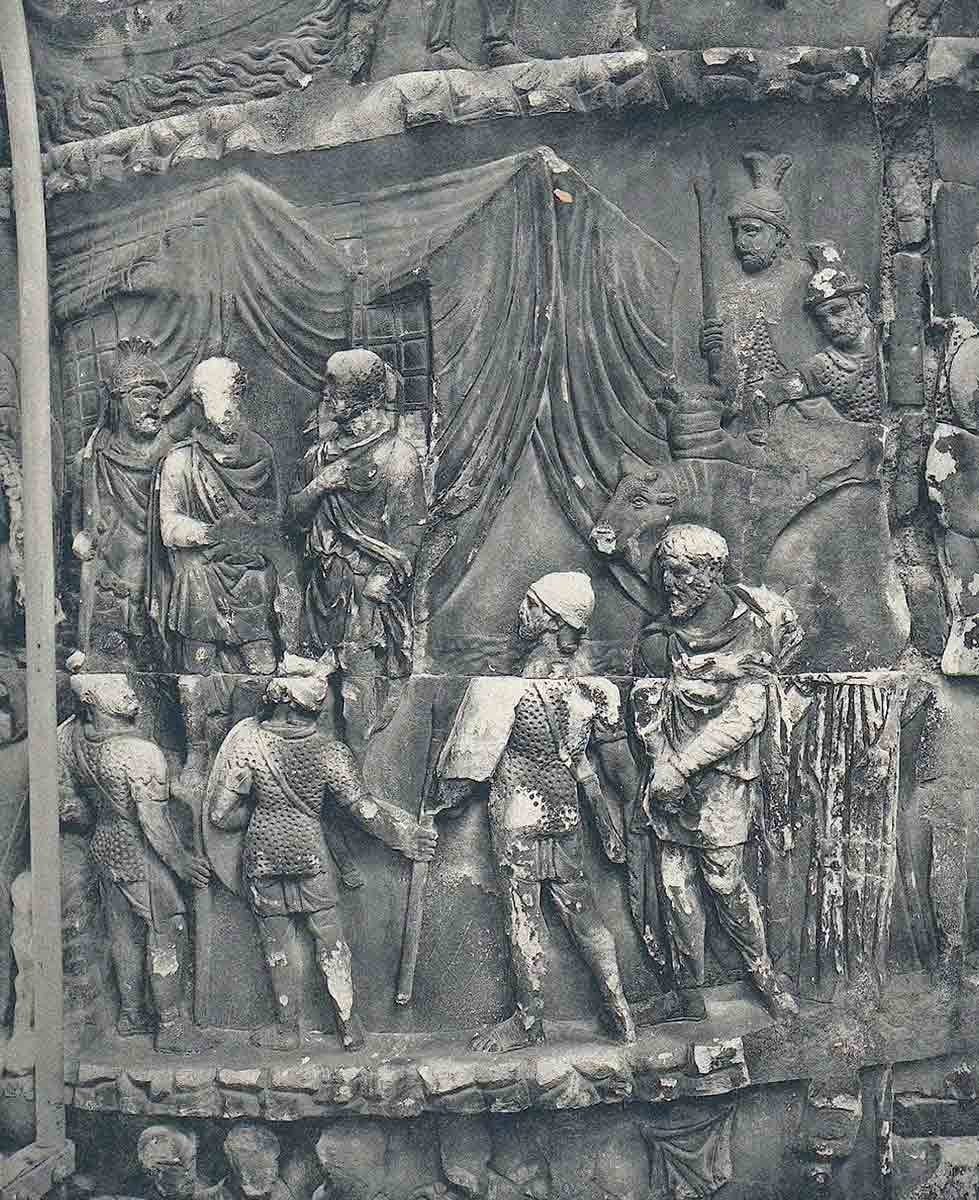
Any further plans to further subjugate the territories were paused as a result of the abortive revolt of Avidius Cassius in AD 175. Conflict with the Quadi and Marcomanni resumed in AD 177 in what is sometimes referred to as the Second Marcomannic War. The war would occupy the remainder of Marcus’ life, with the emperor remaining on campaign until he died at Vindobona (modern Vienna) in AD 180.
Celebrating Victory: Roman Triumphal Architecture
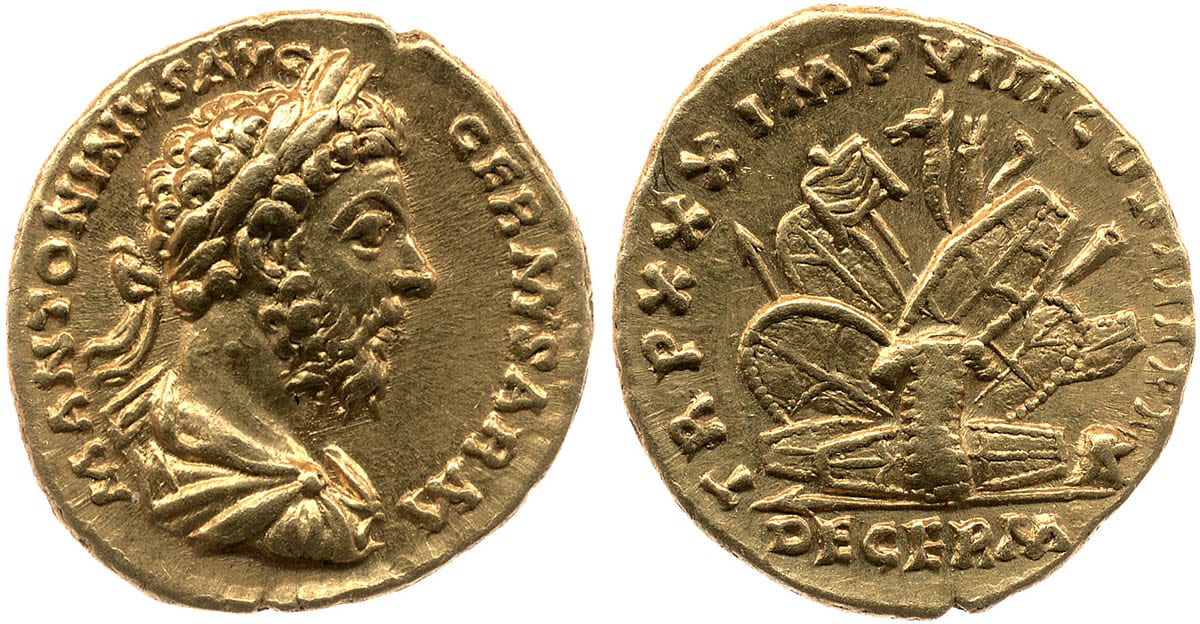
In the pause between the hostilities against the Marcomanni, Marcus celebrated a triumph in AD 176. These huge public spectacles were a long-standing tradition dating back to the Republican era when ambitious generals competed for status. It was now the sole preserve of the emperors. Marcus’ triumph over the Marcomanni in the first half of the 170s was also commemorated on coinage, in titulature—he took the titles Germanicus and Sarmaticus to commemorate the territories and people he had subdued—and in art and architecture.
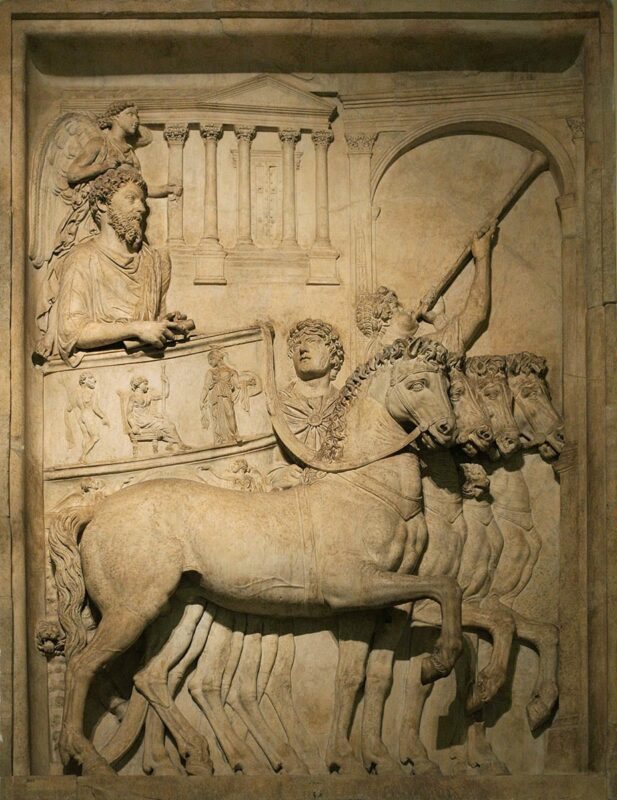
Roman triumphs involved the procession of the victorious general through the city; therefore, there was always a close association between military victories and architecture. Generals also used wealth captured through their victories to construct monuments to celebrate their success. From Republican times, triumphal arches were a common choice, with the Arch of Titus, erected for his victory in Judea, a notable example.
Less common but no less iconic were triumphal columns. Trajan’s Column was erected to celebrate his Dacian victories. It stood at the far end of Trajan’s Forum and was also a mortuary monument, with the emperor’s ashes interred in the column’s base. Imitating his popular predecessor, Marcus Aurelius’ victory was commemorated by the construction of a colossal triumphal column in the heart of the ancient capital.
The Story of War: Constructing the Column of Marcus Aurelius
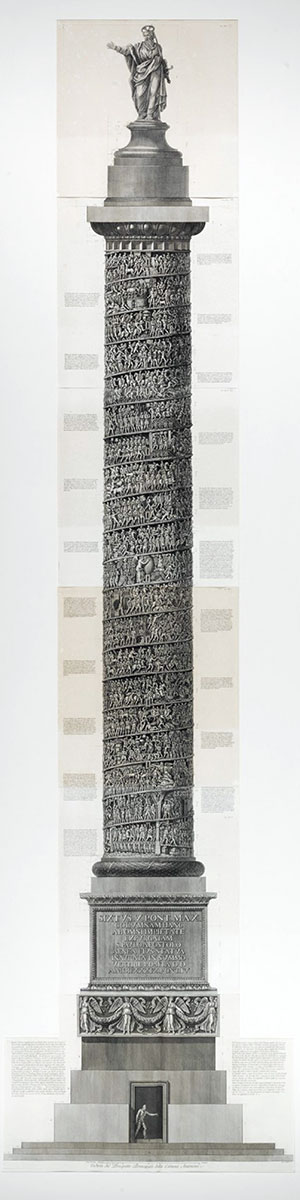
Located in the northern part of the Campus Martius, construction of the column probably began after his death in AD 180. This would make it an architectural endeavor undertaken by the emperor’s son, Commodus, who is not otherwise well known for his interest in building projects. The monument was likely completed after Commodus’ death in AD 193 and may well have been finalized by Septimius Severus. Not only was Severus a prolific builder emperor, but he advertised his reign as a continuation of the good rulership of the Antonine dynasty, even claiming Marcus Aurelius as his father.
The monument is a Doric column, measuring almost 30 meters in height, which is atop a 10-meter-tall base. The almost 40-meter-tall column is not a monolith, but rather it comprises 27-28 individual blocks of Carrara marble, each measuring almost four meters in diameter. Carrara marble is a glittering white stone quarried at Luna, Tuscany. The blocks were hollowed out to allow the construction of a staircase within the column’s interior.
Originally, the column would have been surmounted by a statue of Marcus Aurelius, as was the custom, but the original statue has long since been lost. Today, the column is topped by a statue of St Paul, which was placed there in the 16th century. St Peter stands atop the Trajanic monument.
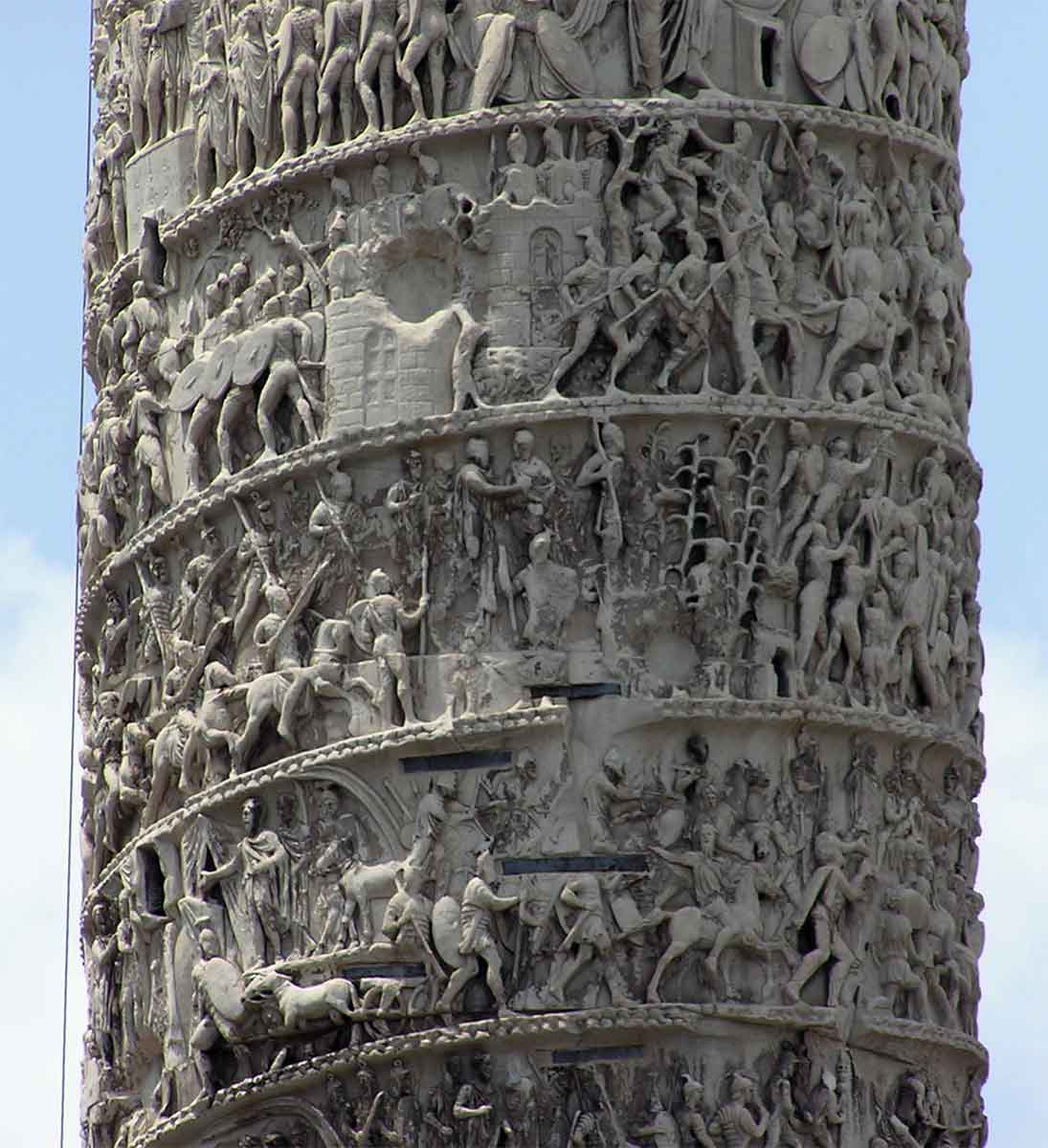
The most striking similarity between the columns of Trajan and Marcus Aurelius is the helical frieze that spirals around the entire height of the monument. These friezes are narrative in character, offering a pictorial retelling of the campaigns. The story of Marcus Aurelius’ column begins with the advance of the Roman army across the Danube, while a victory midway through marks the lull between the two campaigns.
For both columns, the question of visibility has long puzzled scholars. How was a viewer in antiquity (and now) meant to view and understand the images on the frieze as it spiralled into the air? On the column of Marcus Aurelius, stylistic choices may have been made to address this. The heads of individuals on the frieze are larger than natural, seemingly to help viewers identify and interpret the image.
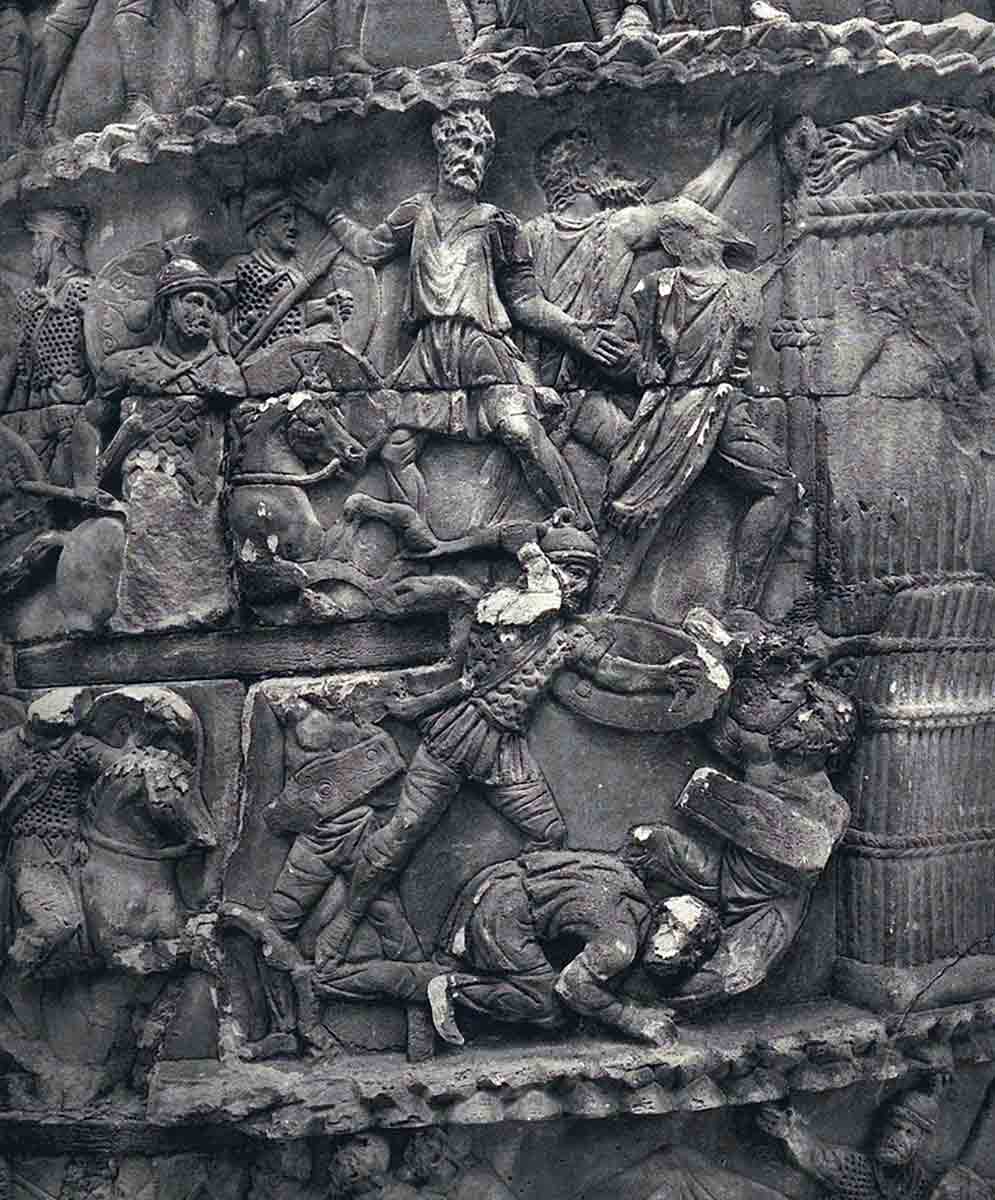
The style of the friezes is also reflective of the changes in Roman art across the 2nd century. The scenes on Marcus Aurelius’ column are predominantly of battle and brutality. In contrast, Trajan’s column focuses more on the highly organized Roman army, marching and building fortifications, and the clemency granted post-victory. The friezes on Marcus Aurelius’ column are also carved in higher relief, creating scenes that appear simpler but have great depth and intensity, in both action and their emotive impact.
Divine Deluge: The Rain Miracle
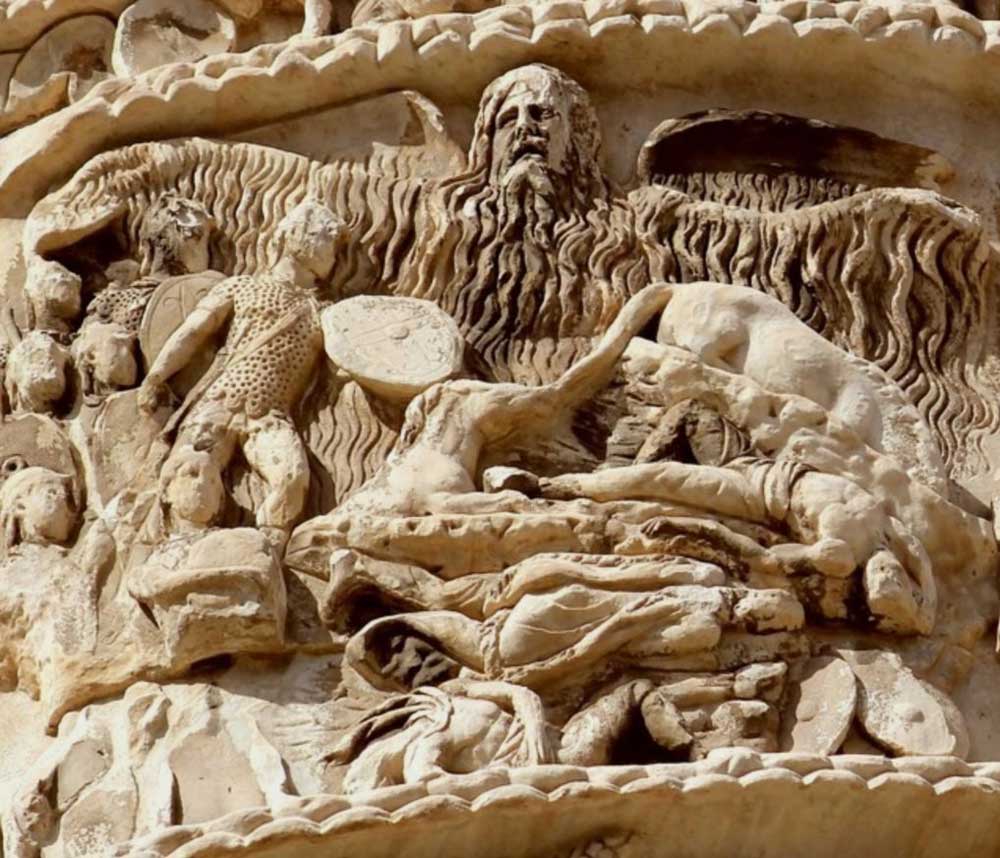
The most famous episode in the Marcomannic Wars took place in AD 173, towards the end of the first campaign and therefore about halfway through the column’s helical frieze. This was the moment at which the Legio XII Fulminata, surrounded by the enemy, was suddenly saved from destruction by a miraculous storm. This divine downpour is represented on the column’s frieze in personified form. A rather ghoulish figure looms, arms spread wide over the soldiers, with long, wavy tendrils, symbolizing the deluge, dripping down over the corpses on the battlefield. The iconography of the miracle is striking, bearing scant similarity to other Greco-Roman deities.
The episode has and continues to attract interest and debate among historians. The rain miracle was noted by several ancient sources. The senatorial historian Cassius Dio provides the most detailed account. He notes that the miracle was attributed by some to a certain Arnuphis, an Egyptian magician and companion of Marcus Aurelius, who used enchantments to call upon the protection of Mercury. Other writers have offered different interpretations, reflecting their own agendas. Tertullian, the Christian author from the late 2nd century AD, attributed it to the Christian faith.
Survival: The Afterlife of the Column of Marcus Aurelius
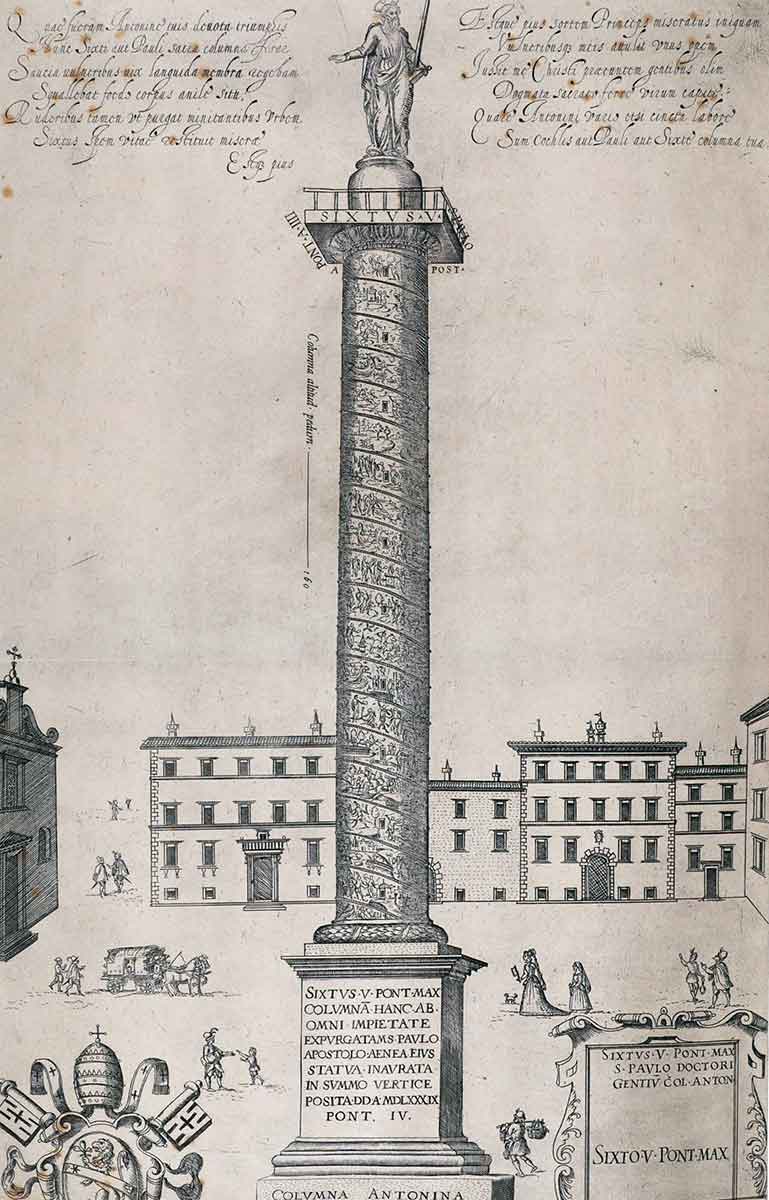
In the immediate aftermath of the column’s construction, it seems to have fallen under the stewardship of a certain Adrastus, an imperial freedman. Epigraphic evidence identifies this man as the procurator columnae, while another inscription records a request for land and permission to build a home adjacent to the column.
What happened to the monument following its initial construction is largely unknown. However, by the middle of the 16th century, the column needed restoration. By this time, around six meters of the column lay beneath ground level, which had risen substantially over time. Moreover, the most obviously valuable elements of the monument had long since vanished, including the statue of the emperor that once surmounted it.
In 1589, the Pope, Sixtus V, decided to act. As part of his wider efforts to transform the Roman cityscape, he commissioned architect Domenico Fontana to restore the column. It was excavated down to the ground level, damage to the marble was repaired, and the column was once again topped with a gleaming bronze statue; this time of St Paul. Intriguingly, it is possible to spot the restored marble because the restorers used Proconnesian marble, which is greyer and coarser than the original fine Carrara marble. The base of the column, now visible following the excavations, was also transformed. The original decorative elements, including images of defeated barbarians, were removed and replaced by a new inscription honoring Sixtus V’s work.
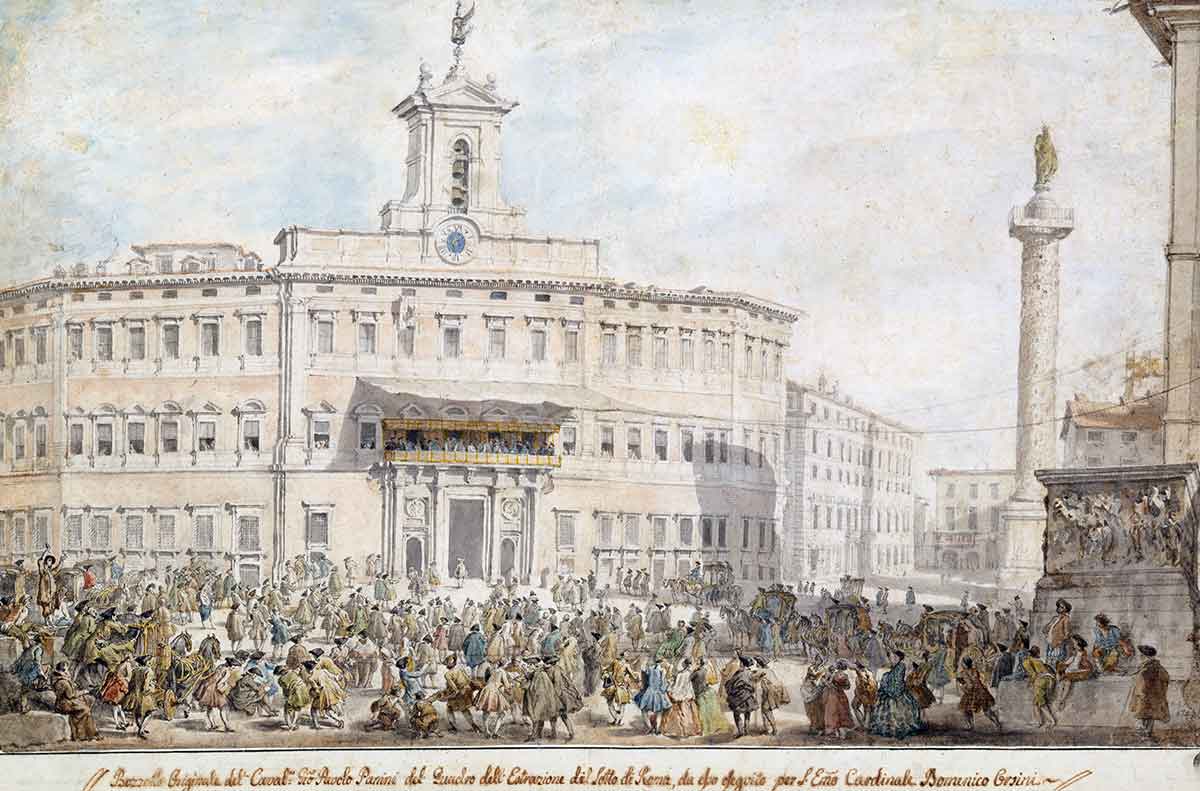
Today, the column of Marcus Aurelius is the center point of the Piazza Colonna, home of the Palazzo Chigi, the seat of the Italian government. While for many Marcus Aurelius might seem to be one of the few “good” Roman emperors, and therefore a fitting figure to have beside the seat of one’s government, the column celebrating his military victories commemorates the true brutality of the Roman Empire. After all, for all his stoicism, Marcus Aurelius is alleged to have longed for the utter annihilation of Rome’s enemies.