
The Aztecs’ or Mexicas’ precise origins are unknown, although according to the Codex Aubin, they descended from a northern group of hunter-gatherers from Áztlan (“Land of White Herons”). Contemporary with the fall of Tula, the capital of the Toltec Empire, around 1179 AD, the Aztecs were traveling from the barren plateau of northern Mexico in search of a new home. According to Aztec legend, Huitzilopochtli, the sun and war god, guided them, and they ultimately settled on an island off the banks of Lake Texcoco. From this marshy wetland, the group of wandering Mexica built an empire.
The Engineering Marvel of Tenochtitlan
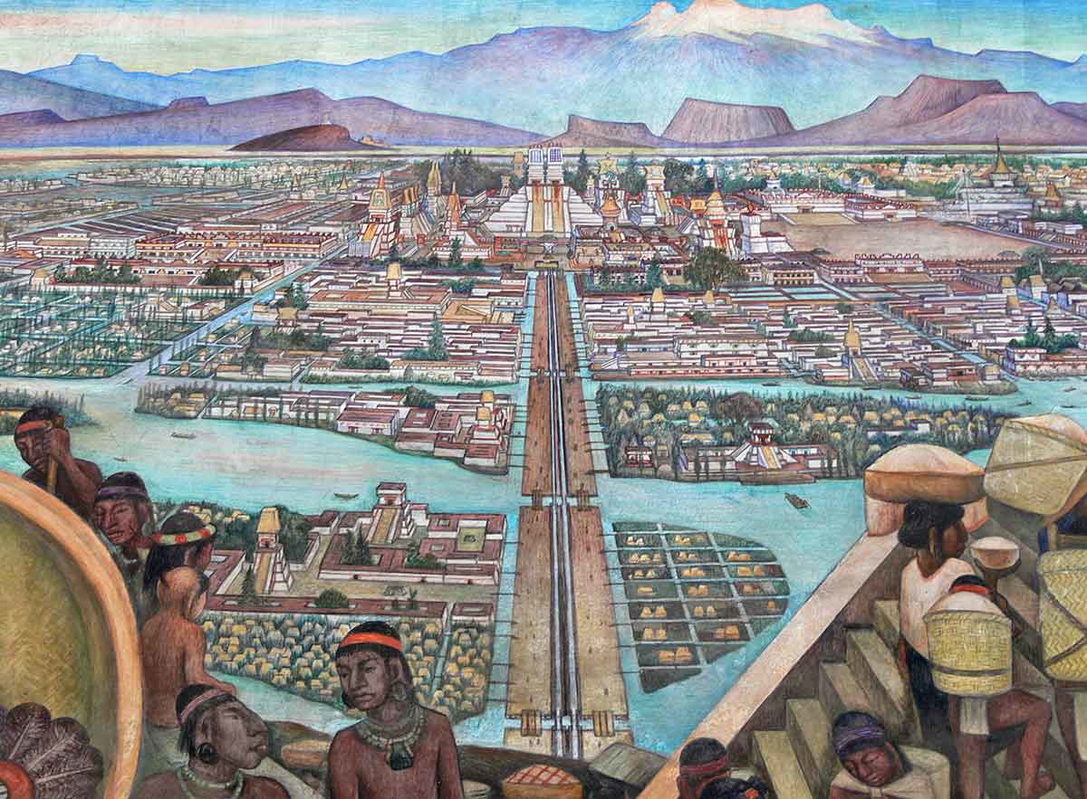
With more pyramids than Egypt and home to the largest pyramid on the planet, the Great Pyramid of Cholula, Mesoamerica was once home to brilliant architects and magnificent structures. Perhaps the most famous architectural feat of the Aztecs was their capital city, Tenochtitlan.
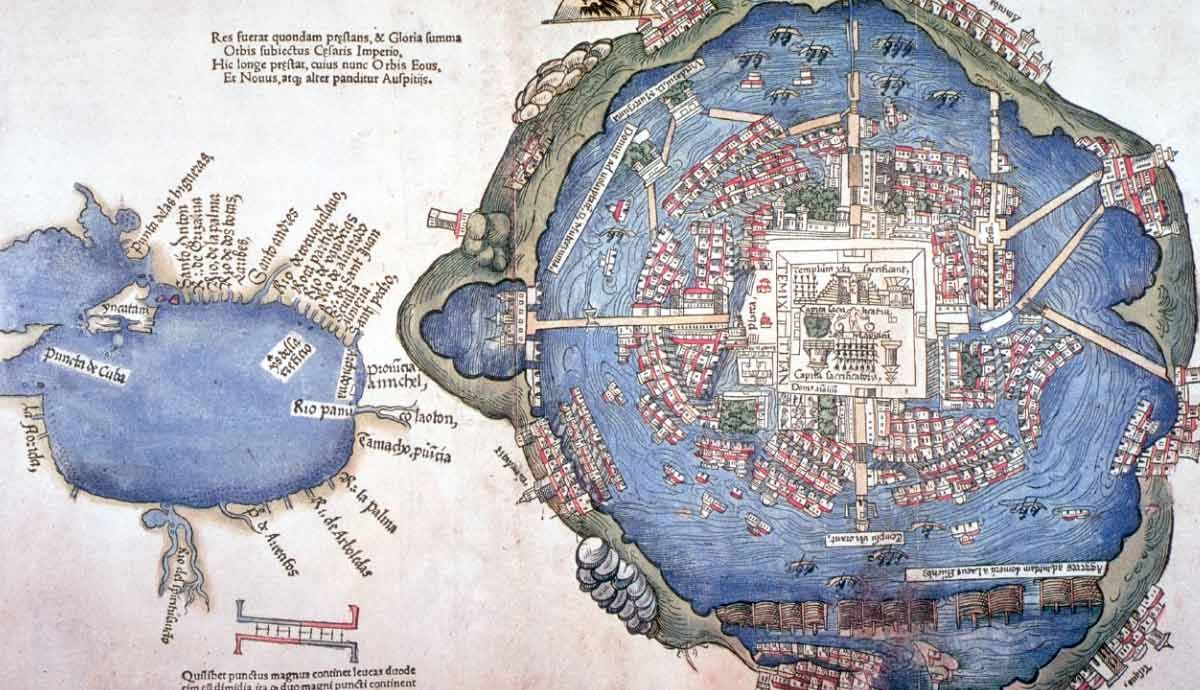
Built on an island in the middle of Lake Texcoco, Tenochtitlan utilized the water around it to construct floating gardens (chinampas), sluice gates, and dams. Tenochtitlan flourished as a result of its control over Lake Texcoco, with plentiful crops and a burgeoning population. With the natural security provided by the lake as well as its militaristic neighbors, the city-states of Tlacopan and Texcoco, the inhabitants of Tenochtitlan were able to concentrate their efforts on the construction of temples, residential buildings, academies, ball courts, streets, and so on.
By the time of the Spanish Conquest in 1521 AD, Tenochtitlan may have been the largest city in the world, with as many as 200,000 inhabitants, if not more. According to the Spanish conquistador Bernal Díaz del Castillo, in his The Conquest of New Spain, Tenochtitlan was both entrancing and indescribable. The Templo Mayor—a temple devoted to Huitzilopochtli, the deity of the sun and battle, and Tlaloc, the god of rain—stood in the city center, where the much-maligned bloodletting and human sacrifices took place.
After a 93-day siege by the conquistadors and their Indigenous allies, Tenochtitlan was largely destroyed. After surrendering in 1521, Tenochtitlan faced more destruction and looting. From the foundation of the once-great city, Hernán Cortés began the construction of Mexico City and drained Lake Texcoco. The remains of Tenochtitlan can still be seen today, dotted throughout Mexico City, a constant reminder of the once great empire.
Mandatory Universal Education Centuries Ahead of Europe
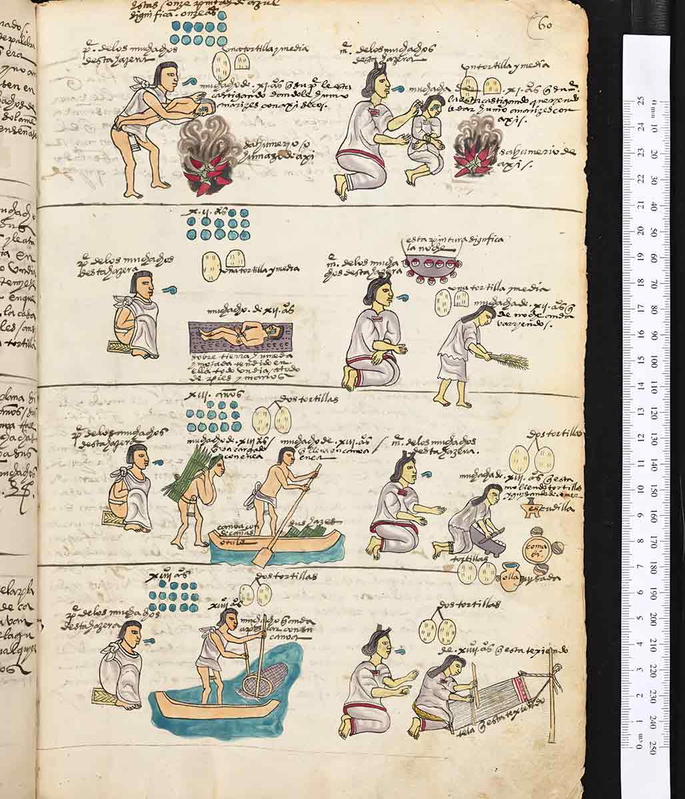
Before attending mandatory schooling, Aztec children were taught household chores and values by their parents. Sons were taught by their fathers how to canoe, catch fish, transport products, and a plethora of other labor-intensive duties. Daughters, under the guidance of their mothers, learned how to weave, grind maize, and keep house. At 15 years of age, both males and females would attend full-time schooling at a calmecac (“the House of Tears”) or telpochcalli (“the House of Youth”). Which school they attended was largely based on the calendar sign and number associated with their birth.
The calmecac was a religious academy, often reserved for the children of nobles and the highly talented children of commoners. Students were taught an array of subjects, including religion, literature, science, astronomy, art and architecture, maths, medicine, law, and government.
Students at the telpochcalli underwent extensive military training, as well as learning about the religion and history of the Empire. Considered not to be as strict or diversified as a calmecac, telpochalli attendees were still able to gather at the cuicacalli (“House of Song”) to learn how to play music, dance, and sing in their spare time. In Eurocentric fashion, the introduction of advanced higher education in the Americas was long attributed to the establishment of Santa Cruz de Tlatelolco in 1536 CE, ignoring the long-established Aztec education system.
Advanced Medical Innovations and Botanical Healing
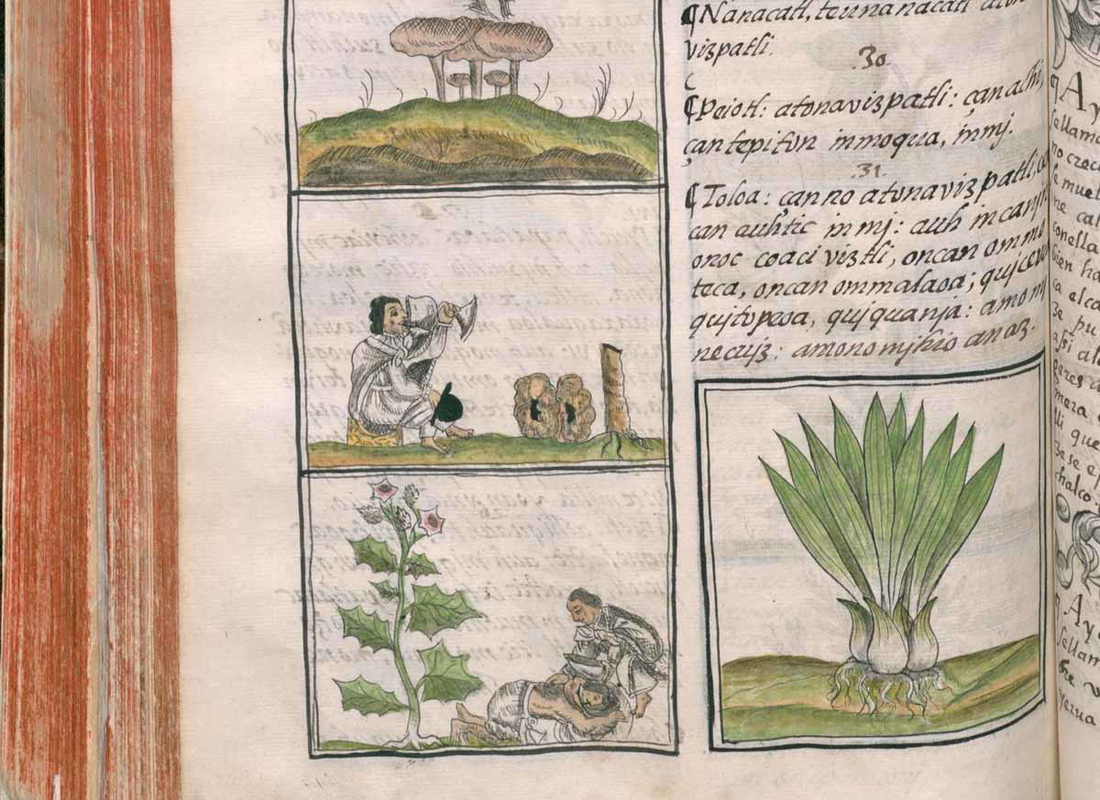
Between 1440 and 1469 AD, the Aztec emperor Moctezuma the Elder established a botanical garden that housed around 2,000 varying species of plants. The Aztecs used these plants to treat abrasions, burns, internal issues, and even mental illnesses.
Tenochtitlan was not the only Aztec city that employed massive gardens; Texcoco was home to Texcotzingo, the earliest botanical garden in the Americas. More than 180 of the plants and trees discovered in these gardens were employed for medicinal purposes, according to the Badianus Codex of 1552 CE.
Not only were the conquistadors impressed with the Aztecs’ medical proficiency when they arrived in Tenochtitlan in 1519, but King Charles V of Spain sought out agents to steal knowledge about the usage of these native plants. It is suggested that medical practitioners in the Aztec Empire were centuries ahead of European practitioners in their use of anesthetic drugs in surgery and natural medicinal practices.
However, Aztec medicine wasn’t solely based on observable science. The Aztecs believed that the human body contained three entities: The tonalli (residing in the brain), the teyolía (residing in the heart), and the ihíyoti (residing in the liver). The balance of these entities could alter one’s health, as could the interference of gods and goddesses. To cure illnesses from these supernatural deities, both medicinal and ritualistic treatments were used. Certain Aztec medicines and treatments are still used by medical practitioners today. Sadly, despite the Aztecs’ proficiency in medicine, they couldn’t save themselves from the diseases brought upon them by the Spaniards.
Monumental Artistry and Celestial Symbolism
With the Empire requiring its inhabitants to undergo rigorous education, individuals could specialize in specific industries including trade, herbalism, agriculture, and warfare. However, one of the most important crafts an Aztec resident could specialize in was art.
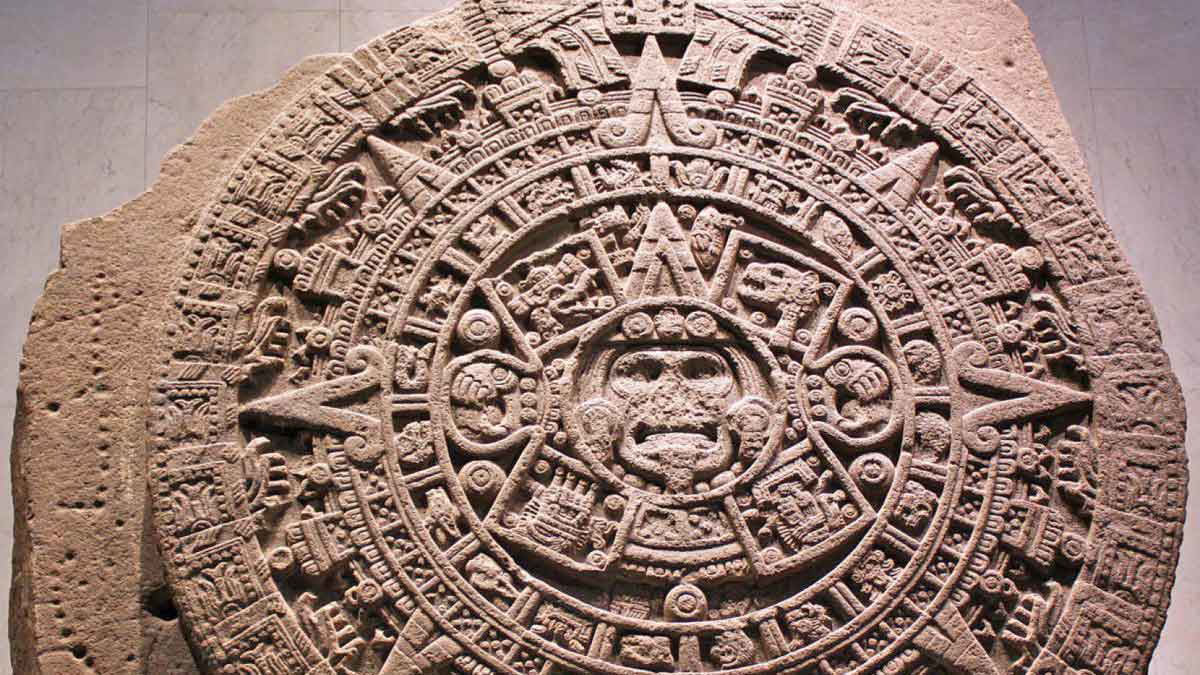
At the core of Aztec education, art in the empire took a variety of forms, including pottery, jewelry, stone sculptures, mosaics, and architectural reliefs. One of the most recognized examples of Aztec art is the Aztec Sun Stone or calendar. Weighing 24,590 kilograms (approx. 54,000 lbs) with a diameter over 3.5 meters (11.5 feet), the stone is embellished with an assortment of symbols ranging from zoomorphic to elemental to abstract.
While purveyors of pseudoscience may have misled some into believing the stone serves as a doomsday clock, there is significantly more purpose and artistry behind it. The stone exemplifies the multi-functionality of Aztec artifacts, embracing a wealth of subjects common in Aztec art, including astrology, chronology, religion, and politics.
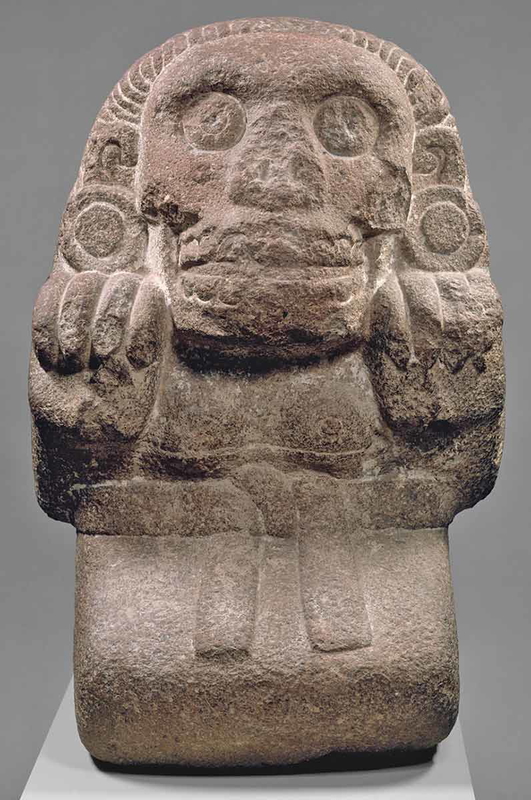
With the fall of the Aztec Empire, the Aztecs’ way of life began to change and the production of Aztec art largely ceased. The Aztec people underwent forced conversion to Roman Catholicism, and everyday practices were outlawed. Although generally authoritative overseers, Augustine Friars commissioned the decoration of churches using local artists, which allowed some Aztec art to survive during the initial Spanish takeover. Today, Aztec artifacts and majestic structures help academics better comprehend Aztec culture and history.
Competitive Athletics and the Sacred Ballgame
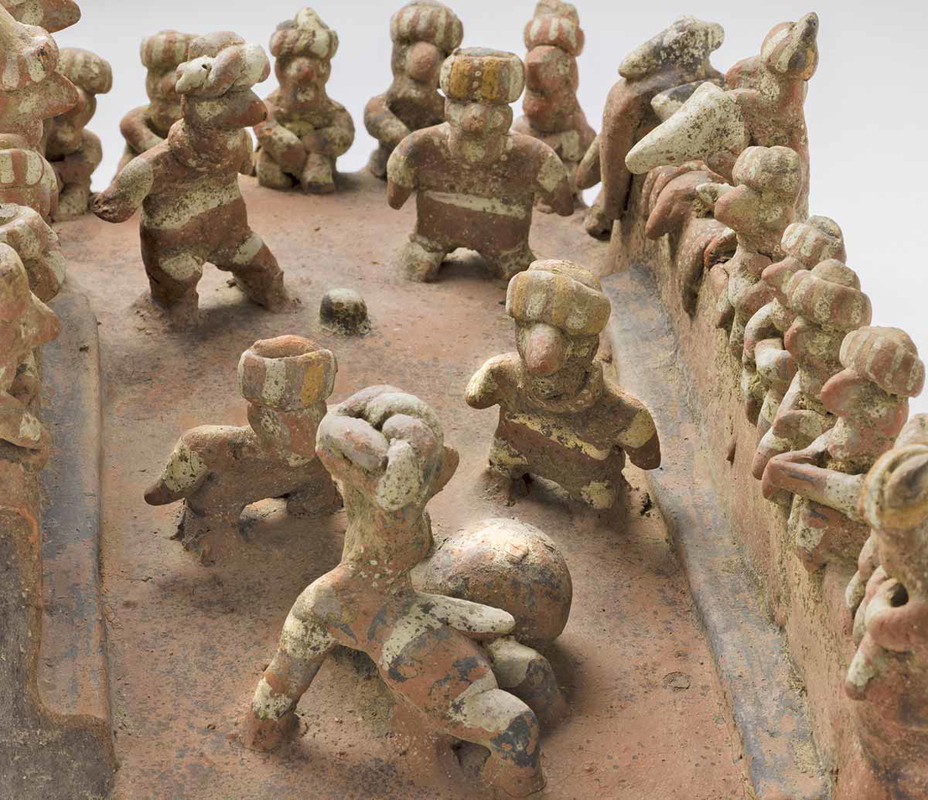
Although many inhabitants were required to perform considerable labor, residents also enjoyed occasional downtime. During times of leisure, Aztec citizens participated in and observed an array of extracurricular endeavors such as pole climbing, gambling, and perhaps the most famous, ōllamalīztli, more widely known today as the Mesoamerican ballgame. Mainly played by the aristocracy, ōllamalīztli was a game in which an athlete’s knees and hips were used to strike a rubber ball (an ōllamaloni) weighing up to 4 kilos (9 lbs), attempting to shoot it through a ring affixed to a stone wall in a ballcourt (a tlachtli).
More than 1,500 ballcourts have been uncovered in Mesoamerica, indicating the prominence of ōllamalīztli. Ōllamalīztli was more than just an athletic event; it was also the scene of disputes, gambling, and conflict resolution between neighboring states. Originally banned by the conquistadors sometime after their arrival, ōllamalīztli has since made a comeback among the people of the Americas to commemorate and honor their heritage. With archaeological evidence of a ballcourt dating back to 1400 BC, ōllamalīztli is often considered the oldest ball game in the world.
While the aristocracy played ōllamalīztli, citizens who preferred to enjoy gentler recreation played patolli, a gambling board game. Although intended to be enjoyable, Aztec games were often associated with a specific deity or celestial event, and players had to thoroughly respect it.
Human Sacrifice: A Misunderstood Sacred Practice
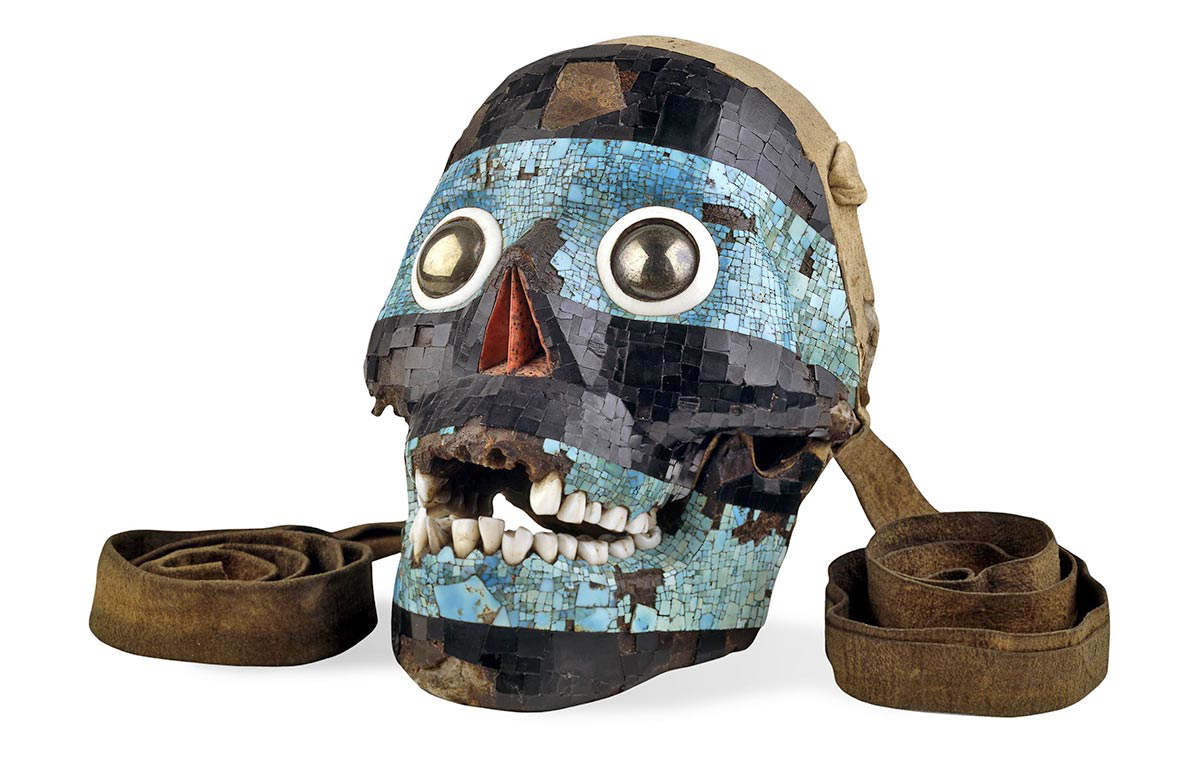
Every civilization has its own set of myths and traditions, and the Aztecs were no exception. Thanks in part to surviving Nahuatl glyphs and 16th-century codices (such as the Florentine Codex and the Borgia Codex), over 200 gods and goddesses have been identified in the Aztec pantheon. These deities possessed immense influence over the Aztec mind, overseeing nearly every element of everyday life and the world.
Several deities were believed to have demanded human sacrifice to stave off famine, ensure fertility, and, ultimately, prevent the end of the world. What has long been vilified as “human sacrifice” and given modern scholars a negative view of the Aztecs was, in fact, an essential and sacred practice. From their perspective, in offering their gods the ultimate gift, the Aztecs were not only safeguarding the cosmos and life on earth, but they were repaying the gods for once sacrificing themselves to create human life.