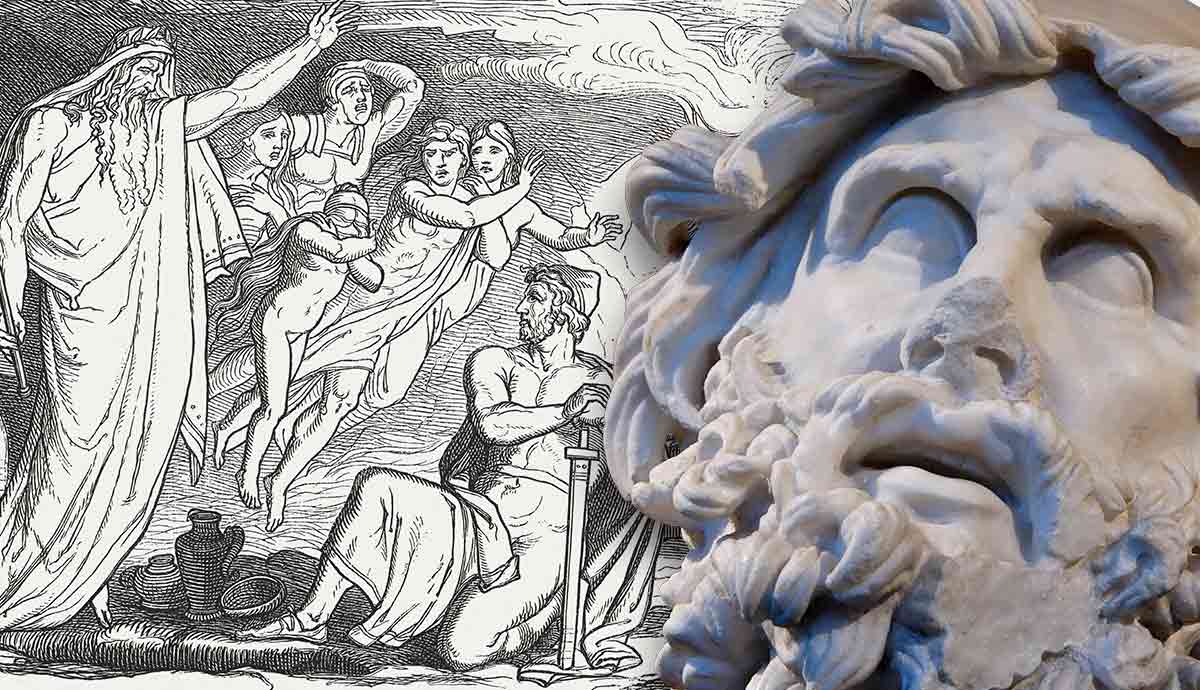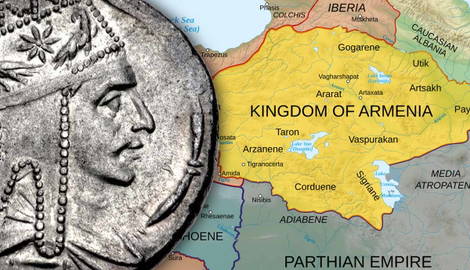

The Roman Empire fought for centuries with powerful Persian dynasties in the east, which prevented it from establishing a fixed eastern frontier. The Parthian Empire and then the Sasanian Empire were among Rome’s greatest and most powerful rivals, and their conflicts often took place in the lands between their territories. One of those lands was Armenia, a kingdom situated between Anatolia, Mesopotamia, and the Caucasus. Control of Armenia provided a key defensive barrier and control of important trade routes. The Kingdom of Armenia became one of the most important buffer states between the two mighty empires.
Armenia’s Geographic Position Between Rome and Persia
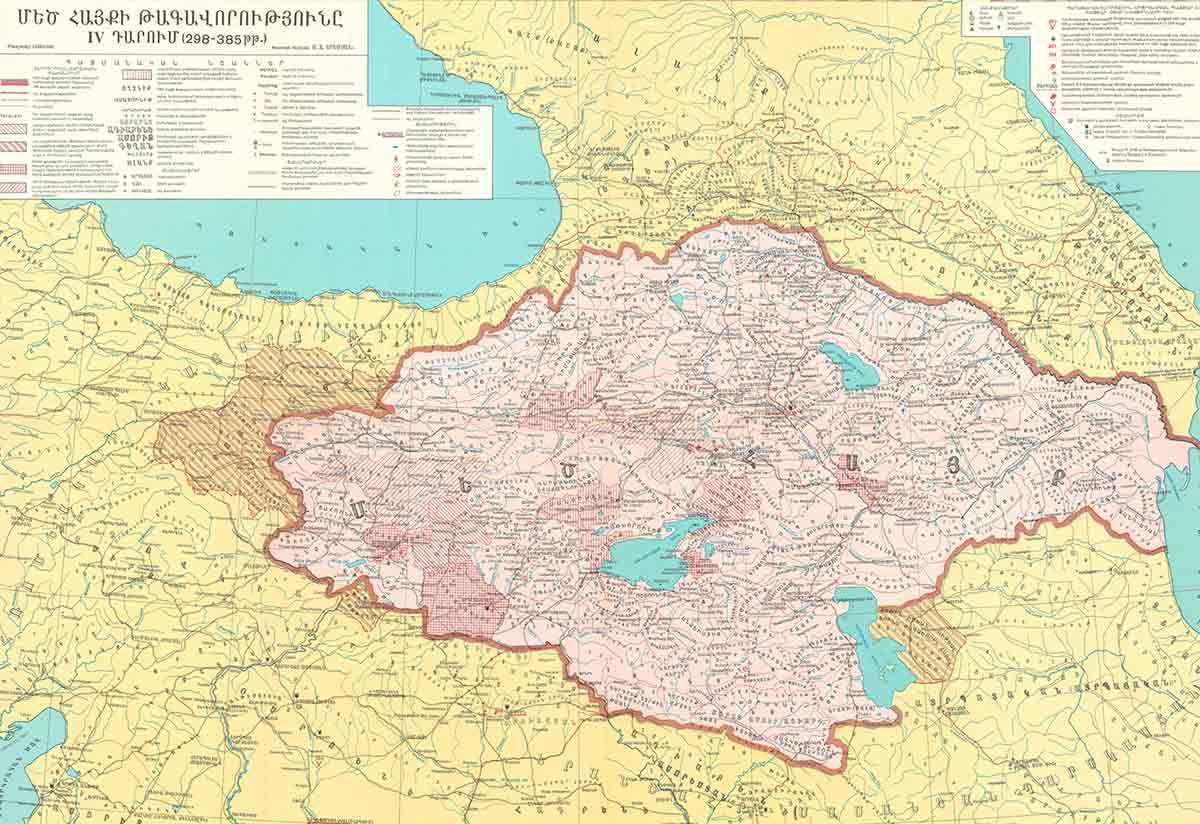
Armenia is located in what has always been a geographically sensitive region. In ancient times, it was located between the eastern Roman provinces and the western territories of the Parthian and, later, the Sasanian Empire. Armenia forms a natural bridge between Anatolia, the Iranian plateau, and Mesopotamia. It is also close to an important transregional route connecting the Black Sea basin to the Near East.
The territory of Armenia is defined by rugged highlands, making the Armenian plateau rich in mountains and deep valleys, with limited passes. These passages were crucial because they directed armies and traders along predictable routes. These vast mountain ranges gave Armenia a great advantage because it was almost unconquerable. Consequently, the major powers like Rome and Persia, instead of conquering, often sought to secure the allegiance and loyalty of the Armenian crown.
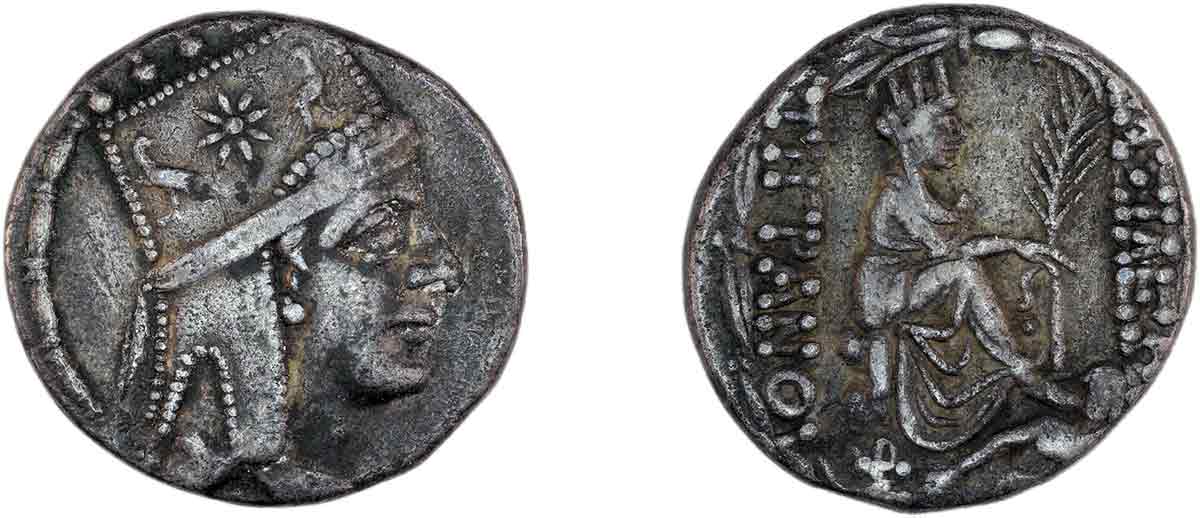
In the 9th century BC, the Urartians established dominion in the highlands. They fell in 590 BC and were replaced by native Armenian dynasties; first the Orontid Dynasty (c. 570-200 BC), and then the Artaxiad Dynasty (189 BC-12 AD), who, under Tigranes the Great, extended their influence from the Caspian Sea to the Mediterranean. They were replaced in AD 52 by the Arsacid Dynasty, a branch of the Persian royal family.
From a military perspective, control of Armenia meant control of access routes into Anatolia and northern Mesopotamia. All armies moving between east and west had to pass through or around Armenia. This made Armenia a potential barrier that could significantly slow down invasions, or it could be a staging ground for rapid penetration into enemy territory. Because of this, neither Rome nor Persia could ignore Armenia.
Roman and Parthian Conflict Over Armenia
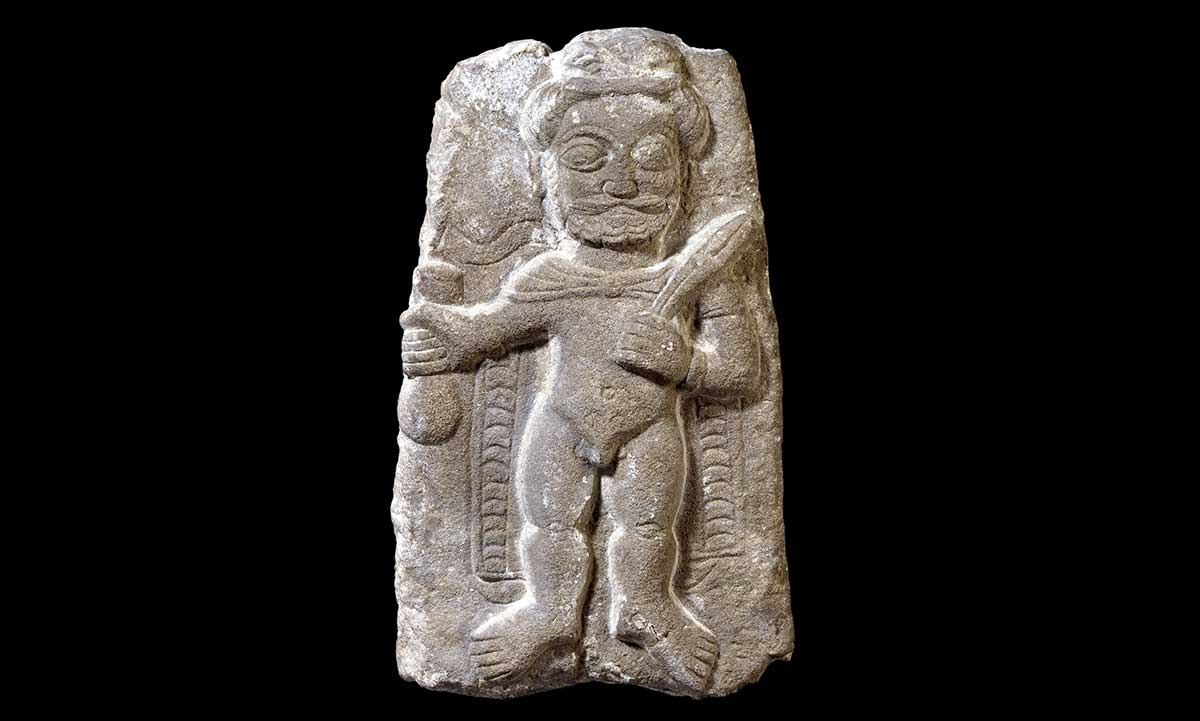
Unlike many conflicts between Rome and Persia that were short-lived, the tension around Armenia lasted for centuries, more precisely from the first century BC to the fifth century AD. Neither side managed to establish complete control over Armenia, which, depending on the period, sometimes leaned towards Rome and sometimes towards Persia.
The first major conflicts began during the late Republic, when Rome extended its influence to Anatolia and Syria. At the same time, the Parthians felt that Armenia naturally fell under their sphere of influence, mainly due to dynastic ties and the presence of the Arsacid royal house in both regions. The Armenian kingdom itself was unstable. The kings were chosen and removed, often as a result of external pressure.
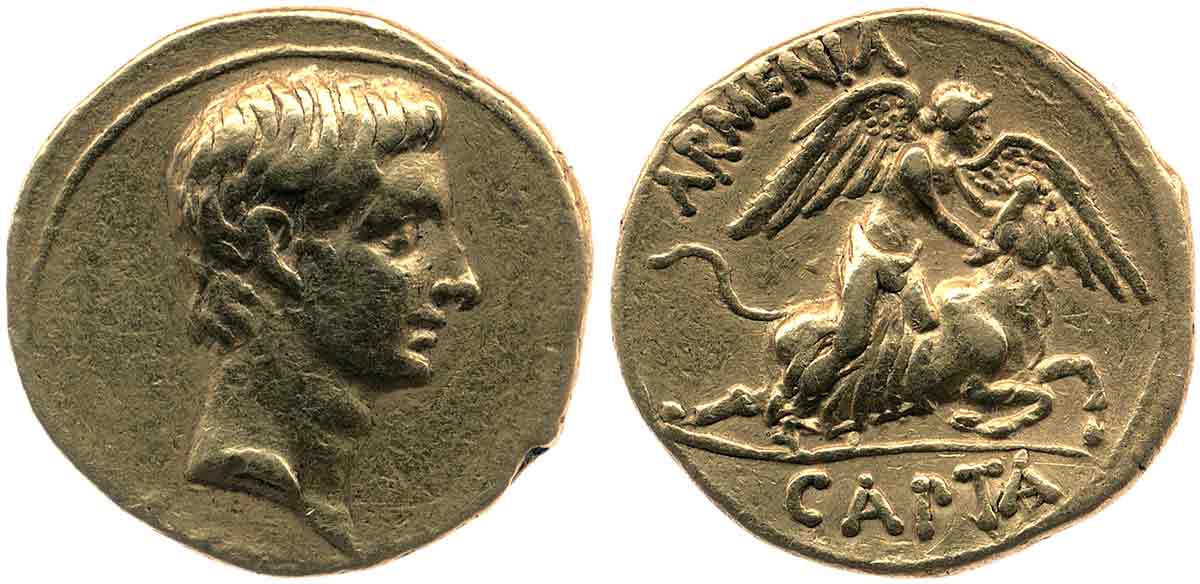
Augustus was able to extend Rome’s “soft power” into Armenia starting in the 20s BC, taking advantage of weakness in the Artaxiad Dynasty. He pressured the Parthian King Phraates IV to return the Roman battle standards lost by Crassus and Mark Antony. As part of the negotiation, he demanded the right to choose Armenia’s next king, Tigranes III, who had been living in Rome as a hostage. He also sent his stepson, Tiberius, there with an army to ensure locals accepted the new arrangement.
Roman-Parthian War of AD 58–63
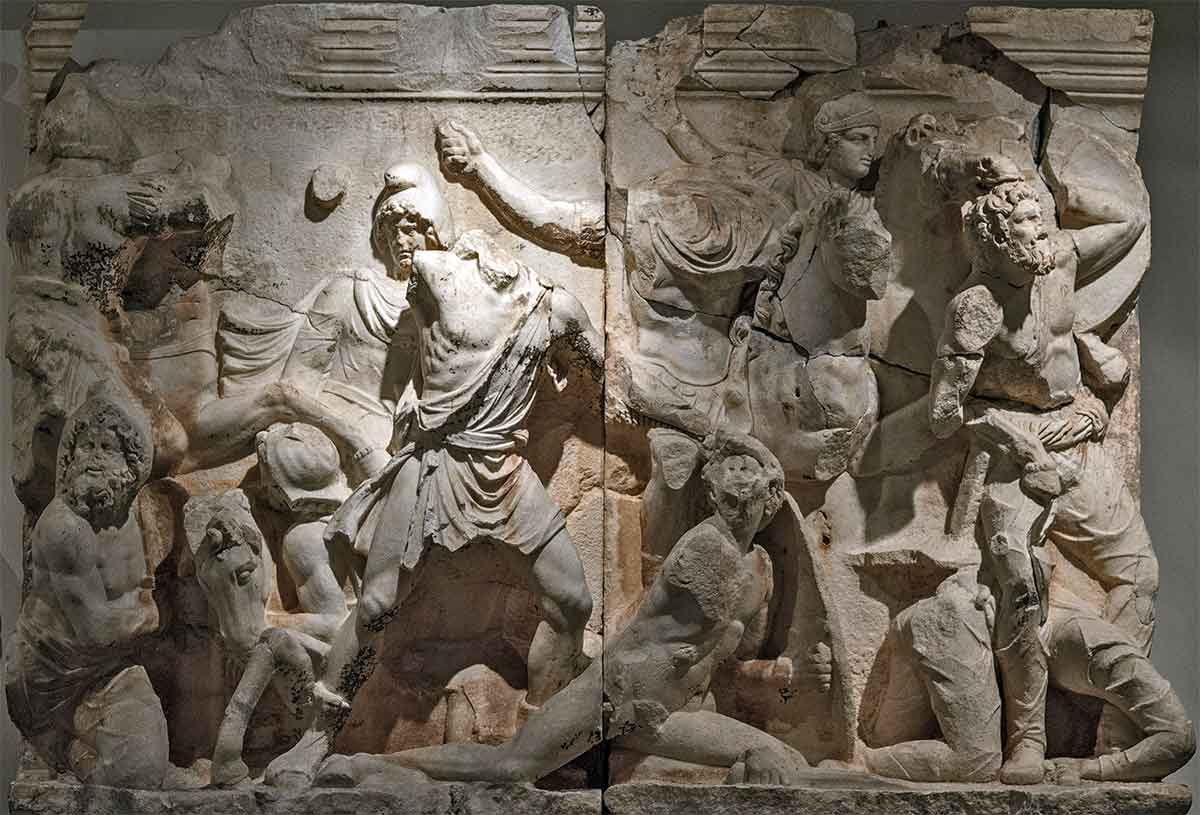
Early conflict over Armenia culminated in the Roman-Parthian War of AD 58–63. The crisis began when the Parthian king Vologases I placed his brother Tiridates on the Armenian throne, which the Romans perceived as a direct threat to their authority in the east. The Roman emperor Nero ordered Gnaeus Domitius Corbulo, the commander of the eastern provinces, to strengthen the front. Corbulo initially tried to avoid direct conflict, wanting first to consolidate positions in Cappadocia and Armenia Minor. However, Corbulo eventually pushed into Armenia, conquering stronghold after stronghold, forcing King Tiridates to retreat.
The Romans then captured Artaxata, the capital of Armenia. But Corbulo did not stop there. He continued with the conquest, and soon the great Armenian city of Tigranocerta also fell. These victories forced the Persians to retreat, and the Romans had a chance to install their king, Tigranes VI. It turned out that they could not fully control the new king, who started new conflicts in neighboring territories under Parthian influence. The Parthian King Vologases I could not forgive these incidents and decided to launch a counterattack.
Vologases I made rapid progress within Armenia. A legion under the command of Caesennius Paetus came to defend the Armenian frontier because Corbulo was in Syria at that time. The decisive battle took place at Rhandeia. In a shameful Roman setback, Paetus was defeated, and the Romans were forced to abandon their positions in Armenia.
The Roman-Parthian Settlement of Armenia
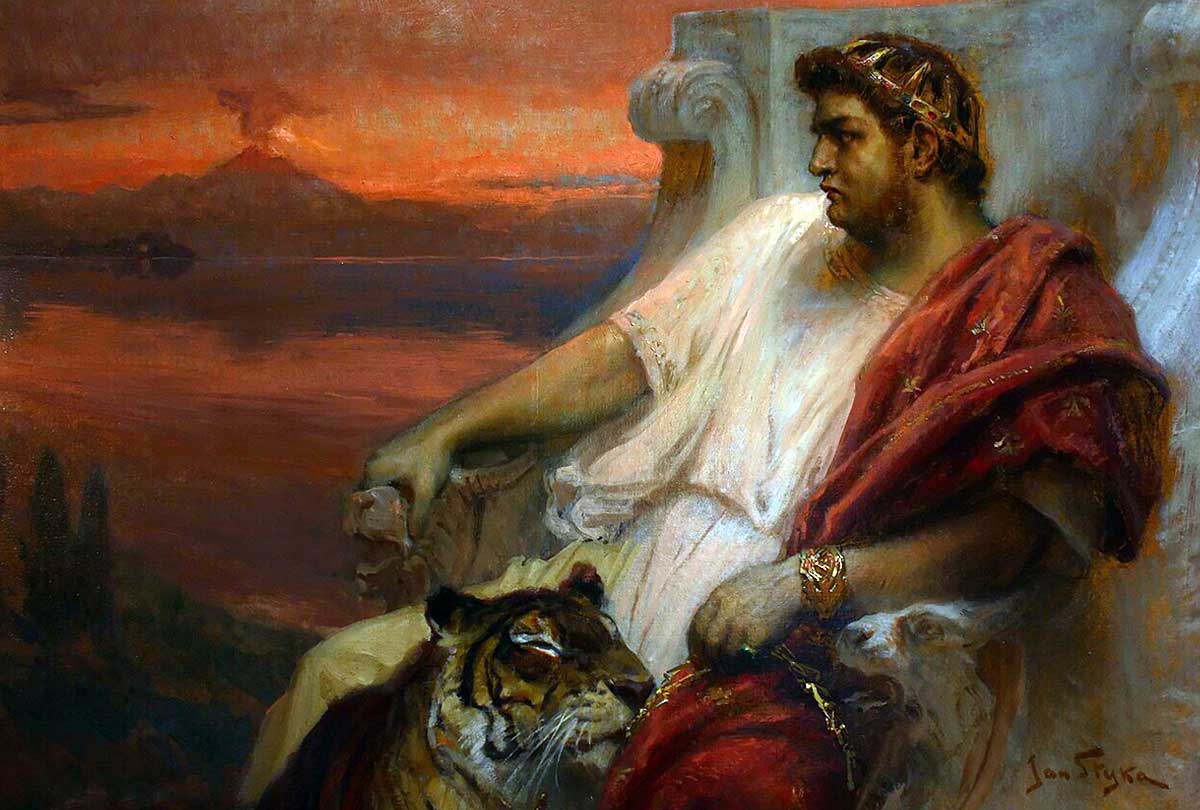
The end of the Roman-Parthian War in Armenia did not bring a decisive winner. The result was a carefully planned political deal between Rome and Persia that would seal Armenia’s fate as a buffer state for the next few centuries. The Romans agreed that the Persians could return their king Tiridates to the throne, but under an important condition. Tiridates had to travel to Rome to be formally crowned by Nero. This was a symbolic attempt by the Roman Empire to portray itself as the victor in this conflict, even though the Persians got the better of the deal. They had their king on the throne again, who maintained close ties with the Parthian court.
Tiridates did indeed travel to Rome, with a huge entourage, most of whom were Parthian nobles. The solemn ceremony took place in the Roman forum, where Tiridates knelt before Nero, who crowned him. According to Cassius Dio, Tiridates even addressed Nero in a way that acknowledged him as a superior ruler, or perhaps even as a god.
Armenia Under the Sasanian Empire
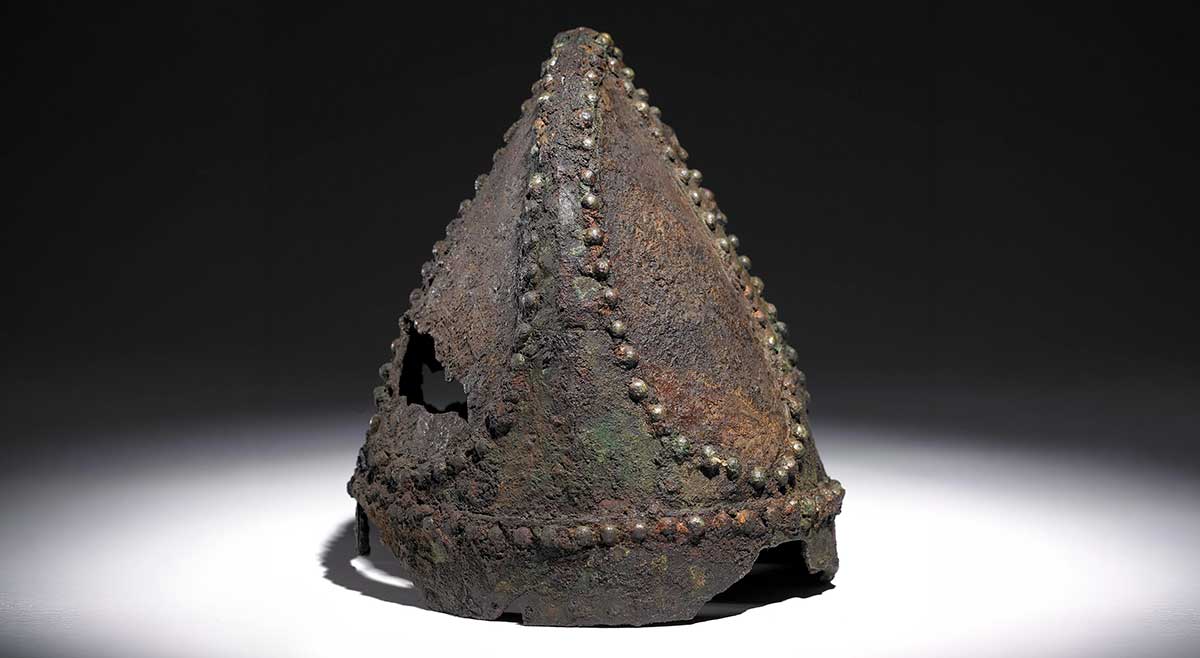
After the Roman-Parthian War, Armenia was effectively recognized as a Parthian-influenced kingdom under Roman symbolic authority. The situation remained unchanged until the 3rd century AD, when great changes took place in Persia. This was the period when the Sasanians defeated the Parthians and established a centralized empire. For the Sasanians, Armenia was no longer an ordinary buffer state, but a key defensive component on their northern border.
Throughout the third and fourth centuries, the loyalties of the Armenian throne fluctuated. The kings sometimes favored Rome and sometimes Persia. Both empires had their own claimants to the throne and tried in different ways to install a king. The rulers chosen by the Sasanians were much more direct and intense in their rule, trying to impose Zoroastrian religious and administrative structures on the territory of Armenia. In addition to political tension, this also created cultural tension.
The Impact of Christianity in Armenia

Major changes occurred in the 4th century AD when Armenia became the first kingdom to recognize Christianity as a state religion. The person most responsible for the acceptance of Christianity was Gregory the Illuminator. According to tradition, Gregory was a Christian who was imprisoned by the Armenian King Tiridates III because he refused to participate in pagan rituals. While he spent years in captivity in the deep pit of Khor Virap, King Tiridates became seriously ill. In the year 301, Gregory managed to come into contact with the king and heal him of his illness. After that, Tiridates decided to be baptized and to proclaim Christianity as the state religion.
The conversion of the king and the declaration of Christianity as the state religion could not pass without major geopolitical consequences. Persian influence was now directly challenged. While Rome leaned toward Christianity, it would take several more decades before it formally recognized it as its state religion. In addition to military and political pressure, Armenia became a center of religious conflict, with Christianity on one side and Zoroastrianism on the other.
After the adoption of Christianity, the Armenian Church emerged as a central institution. It established its own authority and hierarchy separate from the royal crown. The Sasanian Empire tried in every way to promote Zoroastrianism, which led to numerous conflicts and culminated in the Battle of Avarayr in AD 451, considered the first struggle for the defense of the Christian faith. Although the Persians defeated the Armenian army in this battle, it was a Pyrrhic victory. After this event, the Christian faith became even more deeply rooted among the Armenians.
The Partition of Armenia Between Rome and Persia
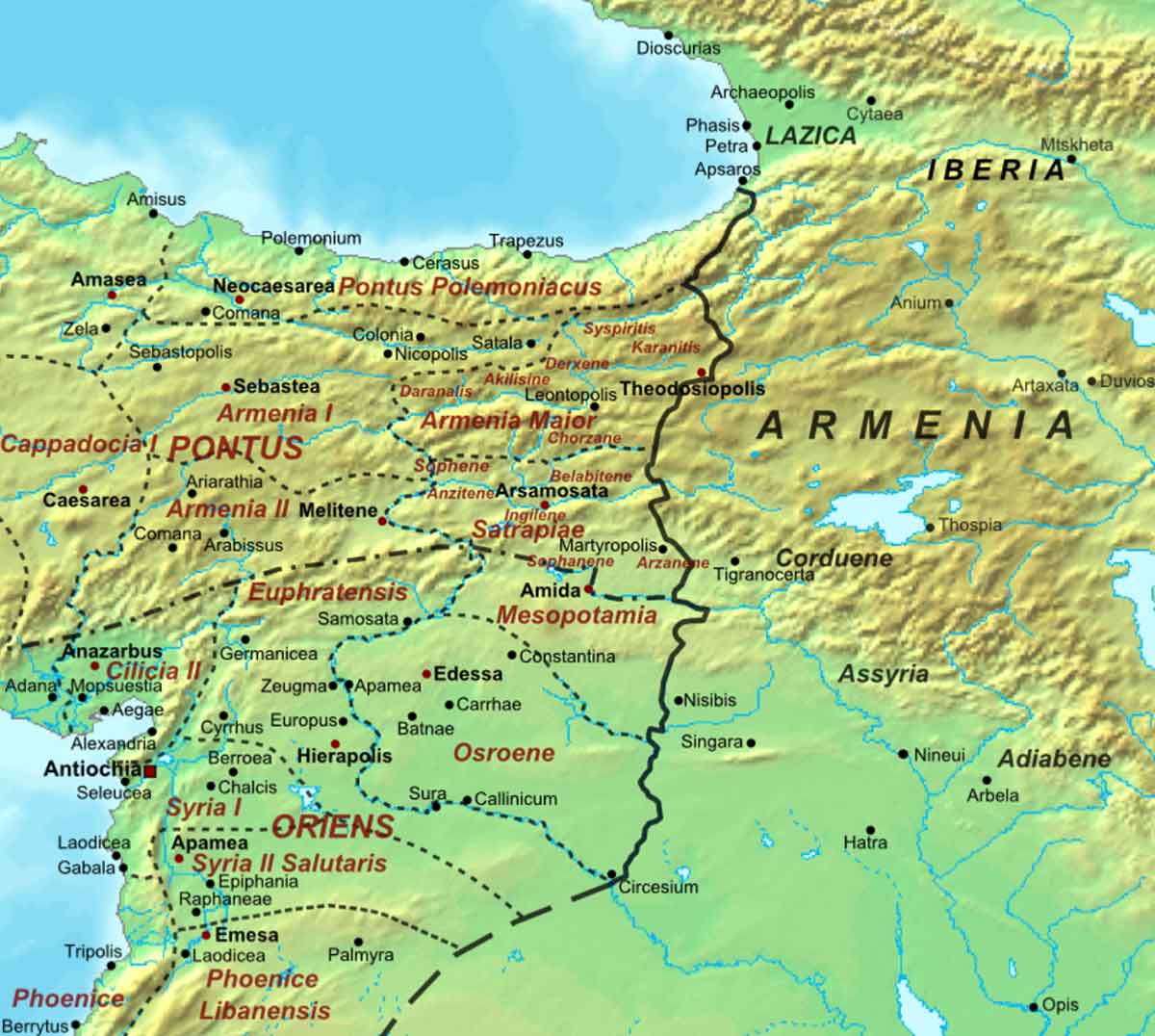
By the end of the 4th century AD, Armenia could no longer function as an independent kingdom, as decades of political turmoil had weakened it beyond recovery. Before the AD 451 battle, Armenia had officially been divided into two parts: Roman and Persian. In the process known as the Partition of Armenia, in AD 387, the larger eastern part of Armenia fell under Sasanian control, while the smaller western part was under Roman authority.
Although the eastern part of Armenia formally retained its monarchy for some time, it was symbolic. The Sasanids officially abolished the Arsacid monarchy in AD 428. The last king, Artaxias IV, was deposed, and the region was placed under the administration of officials known as marzbans.
Political processes in the Roman part of Armenia were somewhat different. Although the territory was under direct imperial influence, Armenia never became a true Roman province. Thus, the western part of Armenia became a semi-autonomous buffer zone within the Roman sphere of influence.
Of course, the fate of Armenia under such conditions could not remain peaceful. The Eastern Roman Empire continued to clash with the Sasanids over the Armenian plateau. Peace finally came under Emperor Maurice and the Persian King Khosrow II in AD 591. With this agreement, the Byzantines gained a much larger territory in Armenia than Rome had ever held, taking areas previously controlled by the Persians. In other words, some Armenian lands were transferred from Sasanian to Byzantine control. Some historians also refer to this agreement as the “second partition of Armenia” due to the major territorial adjustments.
The Future of Armenia
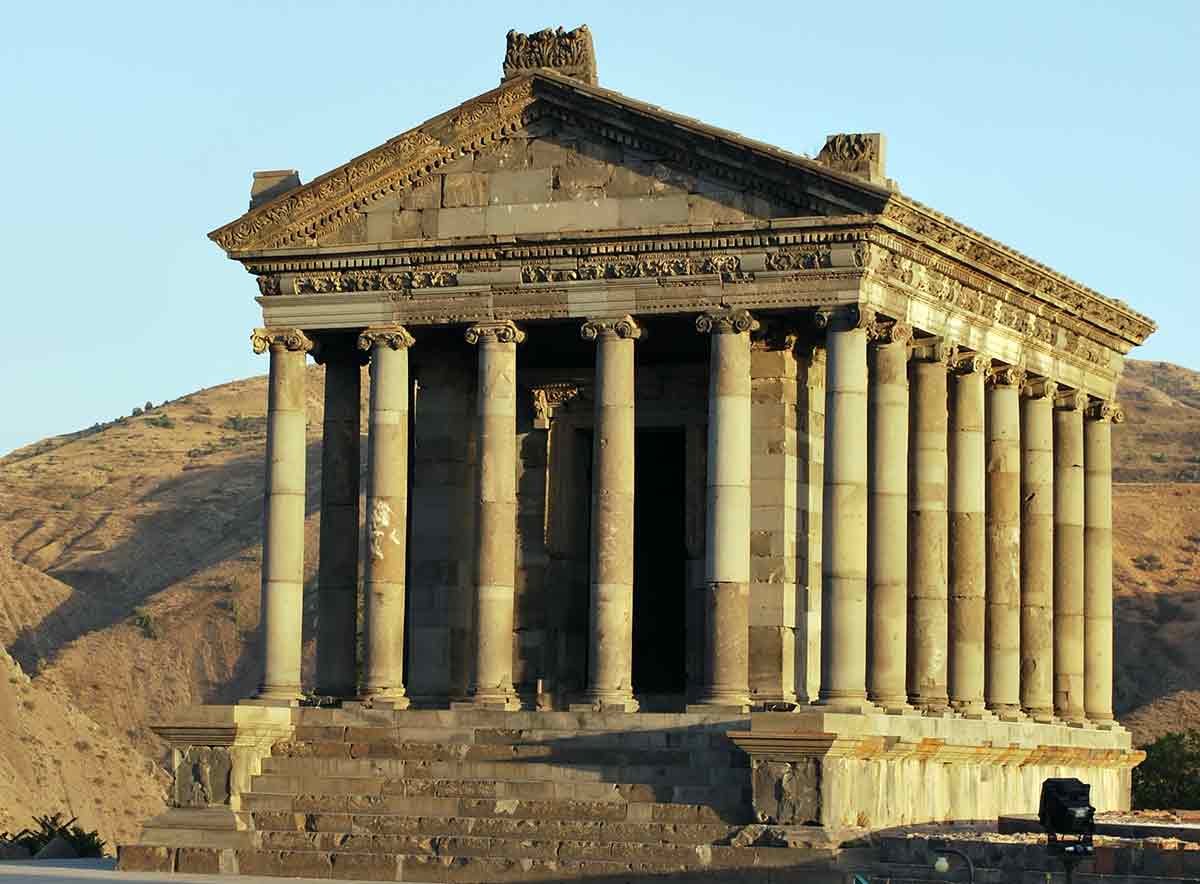
While Rome and Parthia both waned in importance, new powers contested Armenian territory. It was targeted by Arabs in the 7th century, fell under Byzantine control again in the 11th century, and was soon taken by Seljuk Turks, who were driven out in the 12th century. Armenia was invaded by Mongols between the 13th and 15th centuries, after which the Ottomans staked a claim. By the 18th century, Russia had turned its attention to the region, culminating in the Armenian genocide in the early 20th century.
There is no space here to cover Armenia’s long and volatile history, but what is clear is that its strategic location means that Armenia has always attracted the attention of imperial regimes. This is as true today as it was two thousand years ago when Rome and Parthia used Armenia as their battleground.