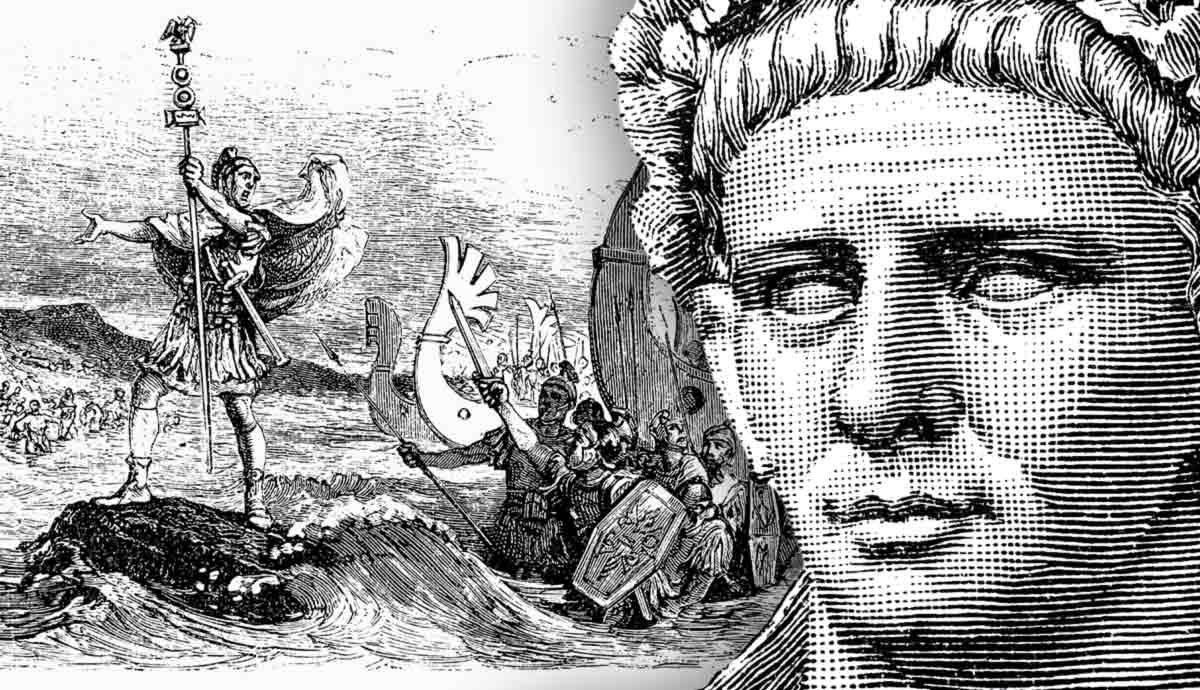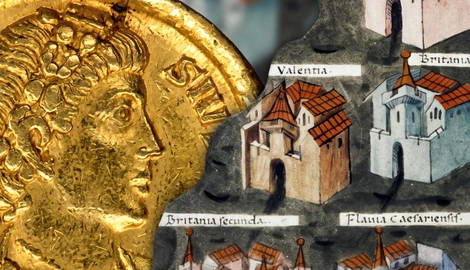

Thanks to the extensive number of surviving contemporary records, inscribed stones, and archaeological remains, we know a great deal about Roman Britain. However, there is evidence that during the last few decades of Roman rule over the island, there was an extra British province, the existence of which is not generally taken into account. In fact, historians remain divided over where exactly this province was. The name of this lost fifth province of Roman Britain was Valentia. What do we know about it from the surviving evidence?
Rome’s Provinces in Britain
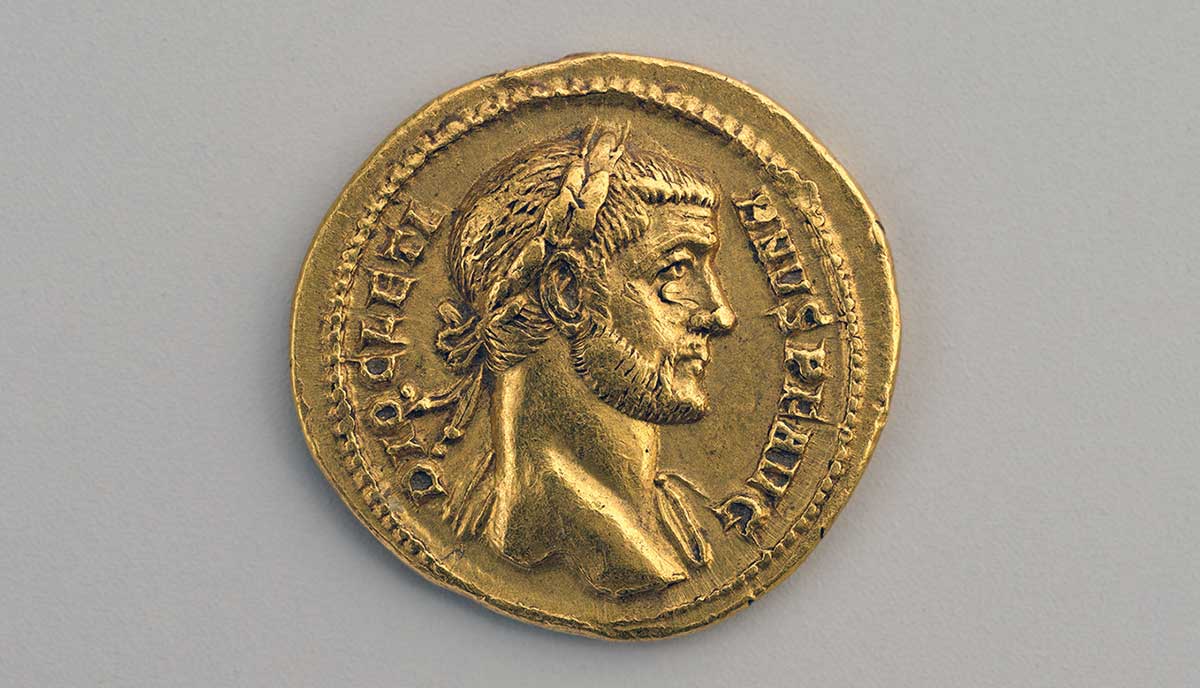
To understand the mystery surrounding the province of Valentia, we first need to understand the widely recognized provinces in Roman Britain. For roughly the first century of Roman rule over Britain, the conquered territory on the island was a single province. Eventually, during the reign of Emperor Septimius Severus, towards the end of the second century AD, Britain was divided into two provinces: Britannia Superior and Britannia Inferior.
The former encompassed the southern part of what is now England, plus Wales. The latter, Britannia Inferior, took in the rest of the country up to Hadrian’s Wall near the border of Scotland, including most of the Midlands and the north of England. About a century later, during the reign of Diocletian, Britain was divided into two more provinces, creating a total of four.
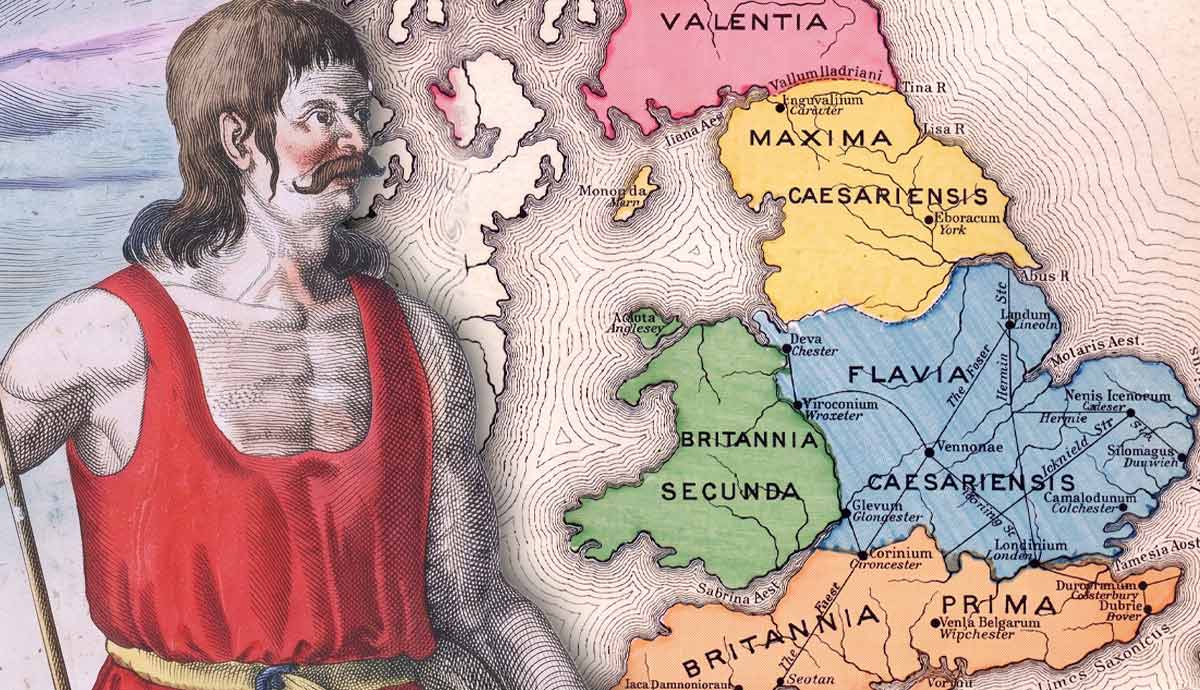
The exact borders and locations of each province are uncertain. However, one common idea is that Britannia Superior was divided into Britannia Prima, which covered southern England, and Britannia Secunda, which encompassed Wales. Meanwhile, Britannia Inferior was divided into Flavia Caesariensis, covering the Midlands, and Maxima Caesariensis, located in northern England. Whatever the exact arrangement of the provinces, we know that Roman rule in Diocletian’s time extended from the southern shore of Britain to Hadrian’s Wall in the north. Therefore, the four provinces of Roman Britain must have encompassed all of that territory in one way or another.
Records About Valentia: The Lost Fifth Province of Britain
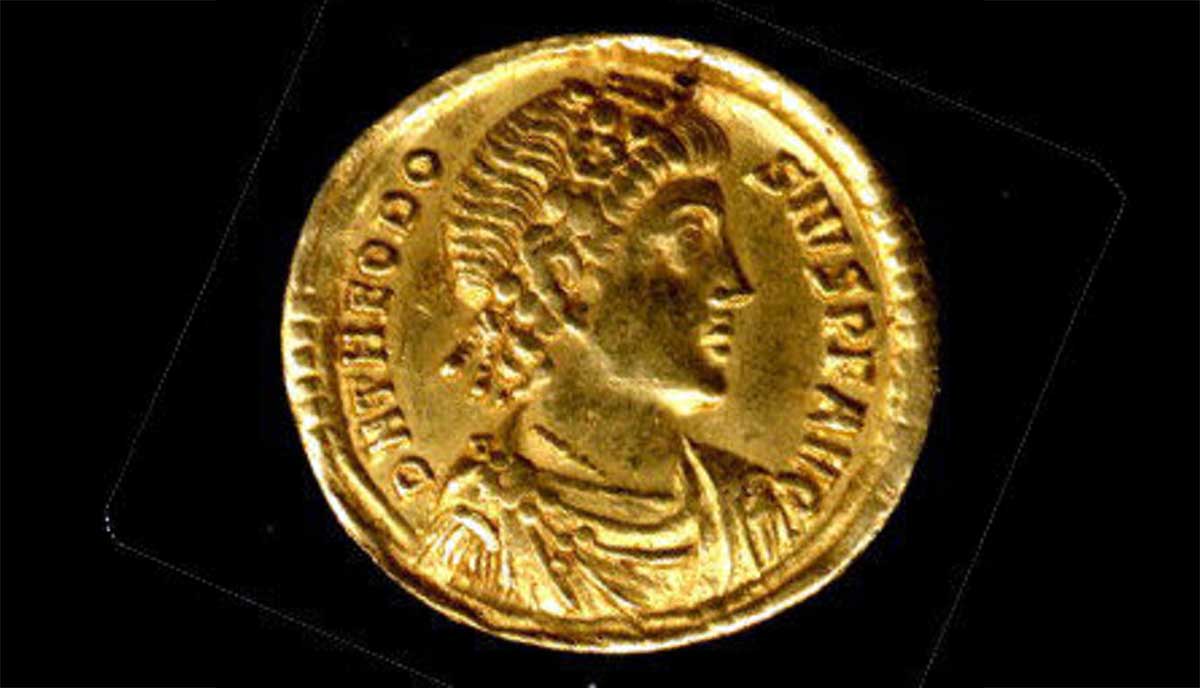
This brings us to the mystery of the province of Valentia, Rome’s lost fifth province in Britain. Three primary sources that provide information about Valentia. The first is a narrative account that describes the activities of Theodosius the Elder, the father of Theodosius the Great, in AD 367. In that year, Theodosius the Elder was sent to put down the so-called Great Conspiracy, a large invasion of Britain by several barbarian groups, such as the Picts and the Scots. They overran northern and western Britain, and even made their presence felt as far south as the southern coast.
The account about Theodosius’ activities in Britain was written by Ammianus Marcellinus, a Roman historian of the 4th century AD. He wrote the following:
“So he restored cities and fortresses, as we have already mentioned, and established stations and outposts on our frontiers; and he so completely recovered the province which had yielded subjection to the enemy, that through his agency it was again brought under the authority of its legitimate ruler, and from that time forth was called Valentia, by desire of the emperor, as a memorial of his success.”
According to this contemporary account, Theodosius secured the frontiers of Roman Britain. In doing so, he “recovered the province” that had fallen to the barbarian tribes, re-establishing Roman rule over it. From then on, it was known as the province of Valentia.
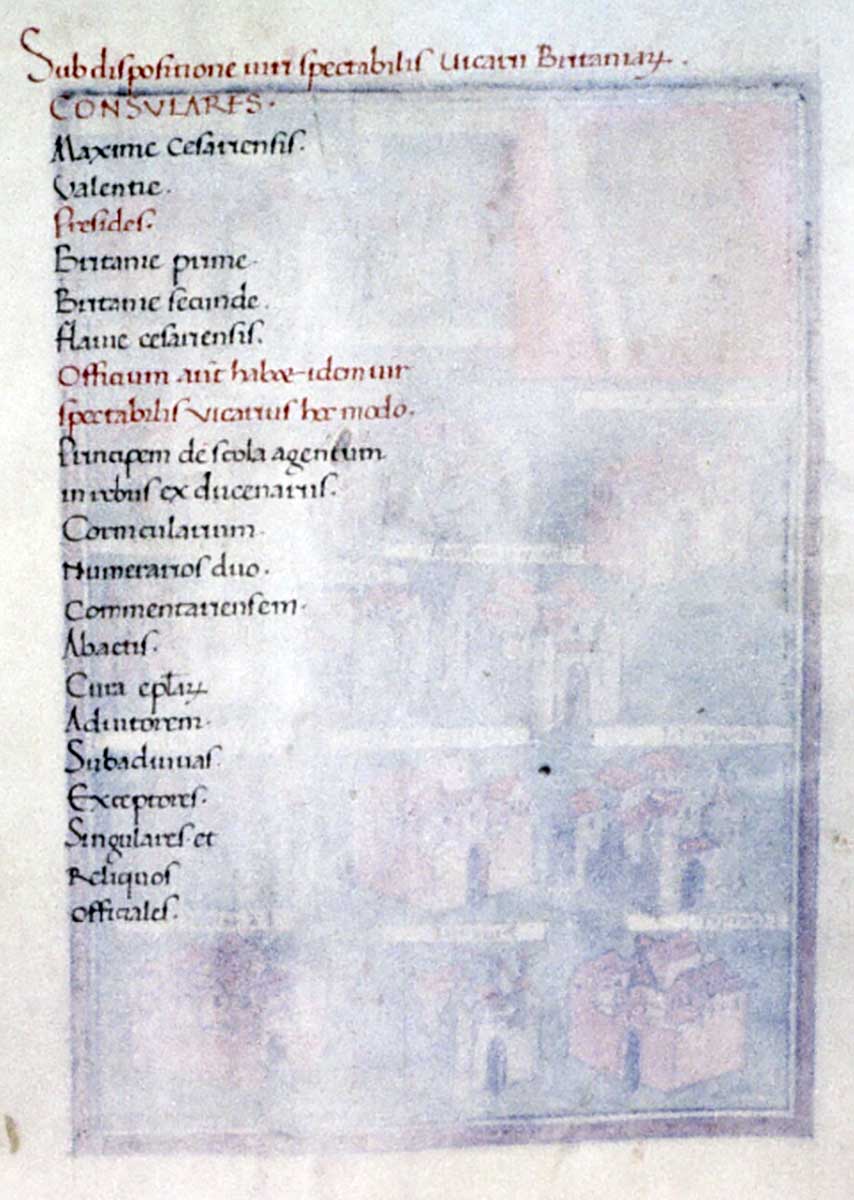
The second primary source that tells us about Valentia is a document called the Notitia Dignitatum. Its exact date is debated, but it is safe to say that it was created in the late 4th or early 5th century AD. It provides a detailed description of various administrative aspects of the Roman Empire, such as the number of provinces in different regions. Regarding Britain, we find the following information:
“Under the control of the worshipful vicar of the Britains:
Consulars:
of Maxima Caesariensis,
of Valentia.
Presidents:
of Britannia prima,
of Britannia secunda,
of Flavia Caesariensis.”
As we can see from this list, there were five provinces in Roman Britain in c. AD 400. Two of them were provinces of consular rank. In line with what Ammianus Marcellinus wrote, it is no surprise that we see Valentia listed here.
The third and final primary source from the Roman era that refers to the province of Valentia comes from the writings of Polemius Silvius. He actually referred to six provinces of Roman Britain, the extra one being a supposed province over the Orcades, or Orkney Islands, in the far north. However, relevant to our current discussion is the reference to the province of “Valentiniana.” This is obviously the Valentia of Ammianus and the Notitia Dignitatum.
The Mystery Surrounding the Missing Province
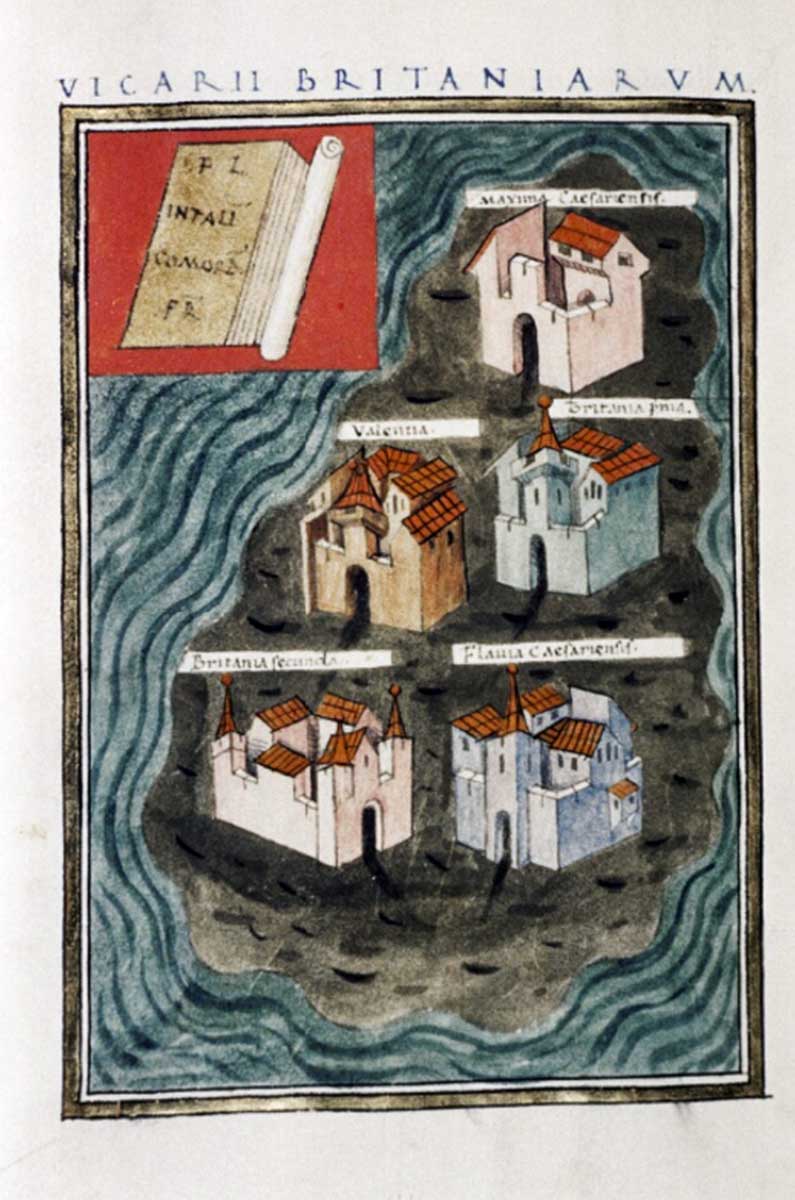
These sources leave us with a fascinating mystery. Where exactly was the province of Valentia? In fact, we could even ask the question a little differently. What was this province? Was it really a newly-conquered part of Britain, or was it an existing province that had its name changed?
There are many different opinions surrounding the true nature of the province of Valentia. One popular theory is that it was the name given to Wales, essentially what had previously been Britannia Secunda. Another theory places it in the north of Britain, in the region south of Hadrian’s Wall.
The key issue is that the Notitia Dignitatum and Polemius Silvius’ list both include Valentia along with the other four widely recognized provinces of Roman Britain. Those four provinces, Britannia Prima, Britannia Secunda, Flavia Caesariensis, and Maxima Caesariensis, already covered the entirety of Roman Britain up to Hadrian’s Wall. With that being so, how can we fit Valentia anywhere within the territory south of that northern border? This argues against it encompassing the territory of Wales or northern England. On the other hand, it is possible that an existing province, such as Maxima Caesariensis, could have been divided, with part of it receiving the new name of Valentia.
The Problem With This Interpretation
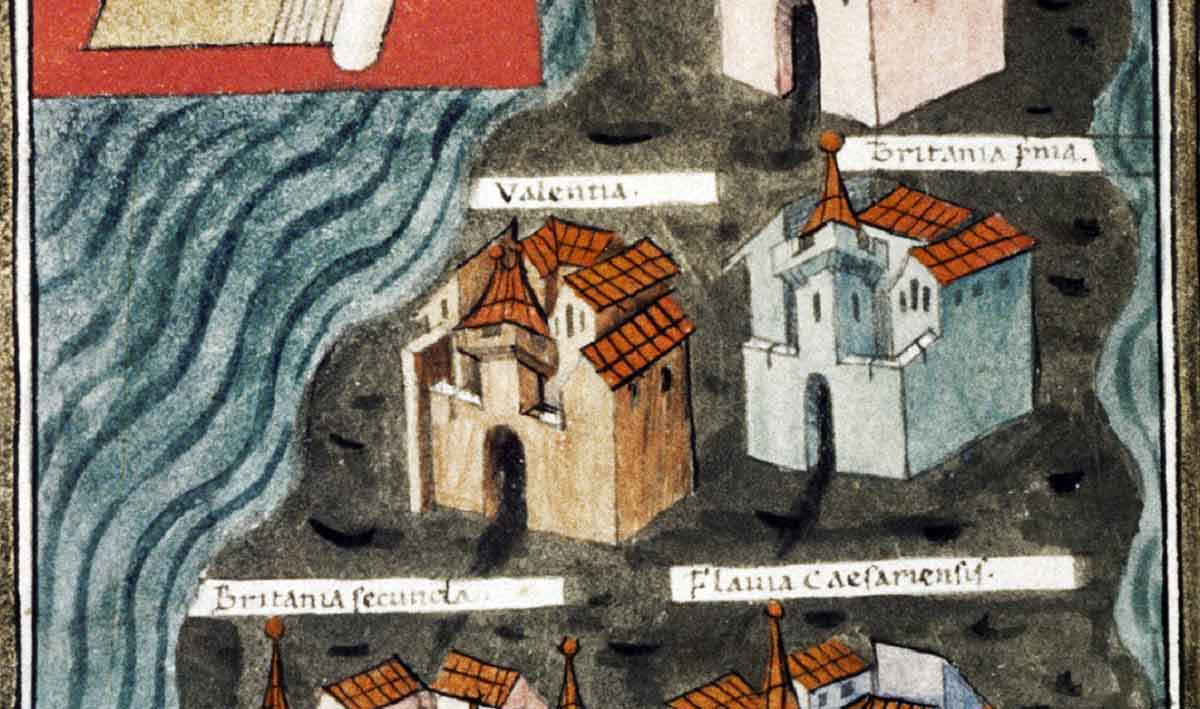
The idea that Valentia was formed from the northern portion of Maxima Caesariensis, the area just south of Hadrian’s Wall, is attractive for several reasons. For one thing, Ammianus Marcellinus’ account strongly indicates that it was somewhere in the north. After all, the creation of the province is explicitly associated with Theodosius driving out the Picts and the Scots and securing the frontier of Roman Britain. Hence, a location in the vicinity of that frontier would be logical. Furthermore, by assuming that Maxima Caesariensis was divided, with the northern portion becoming Valentia, we can stay within the recognized boundaries of Roman Britain in the 4th century AD.
However, there is an alternative possibility that arguably fits the evidence better. Let us consider Ammianus’ wording once again, focusing on the following crucial portion:
“… he so completely recovered the province which had yielded subjection to the enemy, that through his agency it was again brought under the authority of its legitimate ruler, and from that time forth was called Valentia.”
This does not say that Theodosius recovered a province, divided it, and then named half of it “Valentia.” A straightforward reading of this account would lead us to believe that “Valentia” was the name given to the recovered province in its entirety. However, as we have seen, the Notitia Dignitatum shows that Maxima Caesariensis and the other provinces continued to exist alongside Valentia. This suggests that we simply cannot fit Valentia within the boundaries of Roman Britain south of Hadrian’s Wall.
Was Rome’s Lost Fifth Province of Valentia North of Hadrian’s Wall?
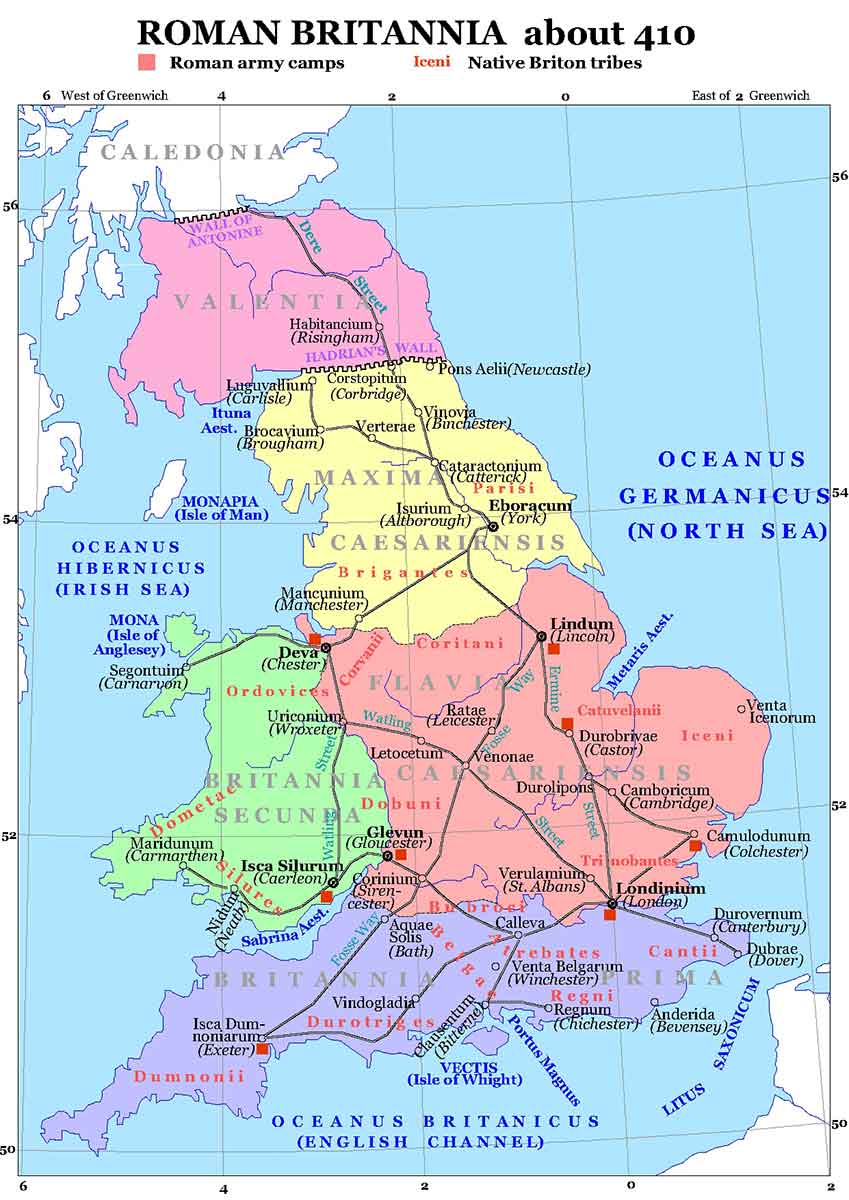
An interpretation that fits both the wording in Ammianus’ account and the listing seen in the Notitia Dignitatum is that Valentia was the area north of Hadrian’s Wall. What is the basis for saying this? For one thing, there was already a discrete area north of that border that had previously been under the control of Rome.
In the 2nd century AD, the Romans had extended their rule as far north as the Firth of Forth. They created a border running across the country called the Antonine Wall. The region between the Antonine Wall and Hadrian’s Wall was full of Roman forts, fortlets, and roads. However, the Romans were not able to maintain their power over this region for long, abandoning it only a few decades after the construction of the Antonine Wall.
When Ammianus referred to the province which “had yielded subjection to the enemy,” we need not necessarily understand this as referring to territory that had recently been overrun, such as during the Great Conspiracy in AD 367. Rather, he may have been referring to territory which had been lost long before; that is, the territory north of Hadrian’s Wall. This interpretation would comfortably accommodate Ammianus’ description of its creation by Theodosius. Yet, at the same time, it would not conflict whatsoever with the Notitia Dignitatum, listing it separately from the four provinces of Britain that covered all the territory as far north as Hadrian’s Wall.
The True Location of the Lost Province of Valentia
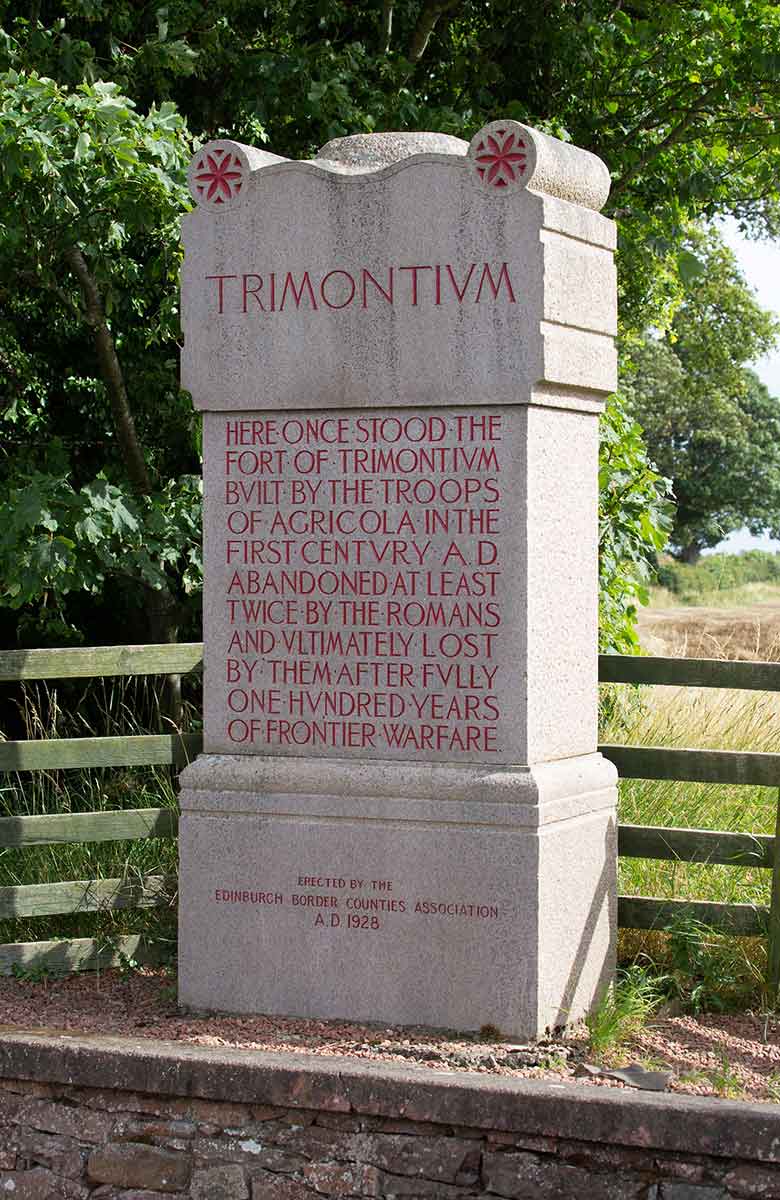
In conclusion, what do we really know about Rome’s lost province of Valentia in Britain? The truth is, we know very little. The only thing that we can really say with certainty is that it was formed in the latter part of the 4th century AD. Furthermore, it was very likely somewhere towards the north, given the context of its creation. However, where precisely it was, we do not know. Nevertheless, a good case can be made that it was the region north of Hadrian’s Wall and south of the Antonine Wall.
Regarding this possibility, the book “The Roman Auxiliary Units of Britain” (Simon Turney) states the following:
“The suggestion that the land retaken consisted of the territory between the Hadrianic and Antonine Walls is an attractive one, and if this was the case, a natural capital for it would be Newstead (Trimontium), which had played a crucial role in all activity north of the Tyne-Solway line for three centuries.”
Whether this interpretation is correct, no one can say for sure. Nevertheless, it is consistent with the available sources. Perhaps, one day, a new inscription will be found that finally settles the matter.