
When the famous Roman Republican orator Cicero prosecuted the former governor of Sicily, Gaius Verres, for corruption, one of his strongest arguments was that Verres had illegally beaten a man who was known to be a Civis Romanus, ignoring his rights as a Roman citizen (Cicero, In Verrem 2.5.162f.). The jury agreed that this was not just a crime against an individual citizen, but also one of the institutions that made Rome great. Roman citizenship was established at the dawn of the Republic when the Romans decided to self-govern. But rather than jealously guard their citizenship, the Romans used it to spread their influence and Romanize the people of their expanding Empire, turning defeated enemies into allies with a stake in the Roman system.
Rome’s Mythic Origins: A Nation of Immigrants
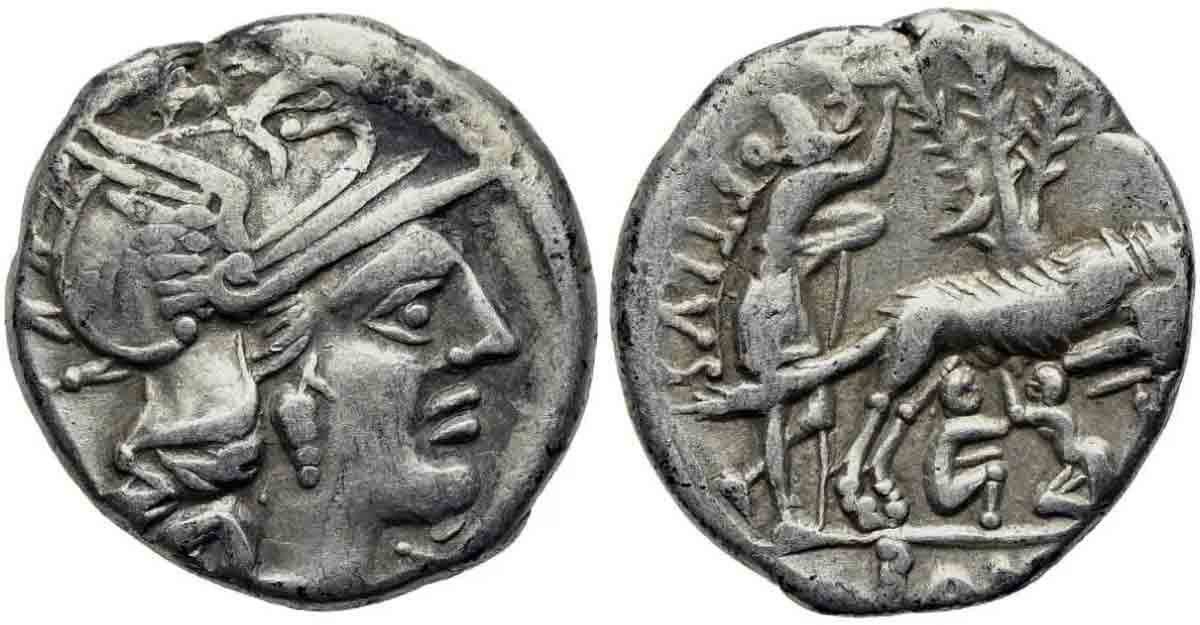
According to Rome’s foundation myth, when Romulus founded Rome in 753 BC, it was an asylum for refugees from across Italy (Livy, Ab Urbe Condita 1.8). When the mostly male population needed wives, they kidnapped Sabine women, leading to conflict with their Sabine neighbors. To resolve the conflict, Romulus’ men, their Sabine wives, and now Sabine brothers and fathers-in-law, decided to come together as “Romans.” Soon, other Italians, including Latins and Etruscans, also chose (or were forced) to join the emerging Roman collective.
Romulus himself was the descendant of immigrants, refugees from the destruction of Troy led by Aeneas 500 years earlier, as described by Virgil in his Aeneid. It is noteworthy that both Livy and Virgil were writing in the Augustan Age, suggesting that the idea that Rome was built by a population of immigrants was alive and well in the 1st century BC. This sentiment was echoed a century later when the emperor Claudius granted elite Gallic Roman citizens membership of the Roman Senate in AD 48. In his preserved speech justifying the action, he noted that Rome’s aristocratic families were also of foreign origins; he was following an ancient precedent (Tacitus, Annals 11.24).
The pride given to the idea of a nation of immigrants is an interesting contrast with how the classical Greeks thought of themselves. For example, the Athenians claimed that they were the most ancient people in Greece and that only they had never migrated. They were essentially a “pure” people born from the soil on which they lived (Herodotus, Histories 7.161). The people of Thebes also rejected the idea that they were migrants. They were born from the teeth of a dragon sown into the earth by their founding father, the hero Cadmus (Ovid, Metamorphoses 3.95f.).
The Republic: Populus Romanus

According to legend, in 509 BC, the Romans expelled their kings and decided that they would be a self-governing people, led by the Senatus Populusque Romanus, abbreviated to SPQR (Senate and People of Rome). But what qualified a person to be a member of the Populus Romanus? Roman citizenship.
Reportedly, just the following year, a Roman youth named Gaius Mucius Scaevola was chosen from the ranks of the Roman army to carry out an assassination attempt on Lars Porsena, the king of Clusium. He was caught in the act. To defend himself, Scaevola proclaimed: “Romanus sum” (“I am Roman”). The youth then talked extensively about the bravery of his people (Livy, Ab Urbe Condita 2.12). The Etruscan king let the youth go, stating that he would be proud of such courage in the defense of his own nation. The story is meant to show us that “being Roman” already meant something.
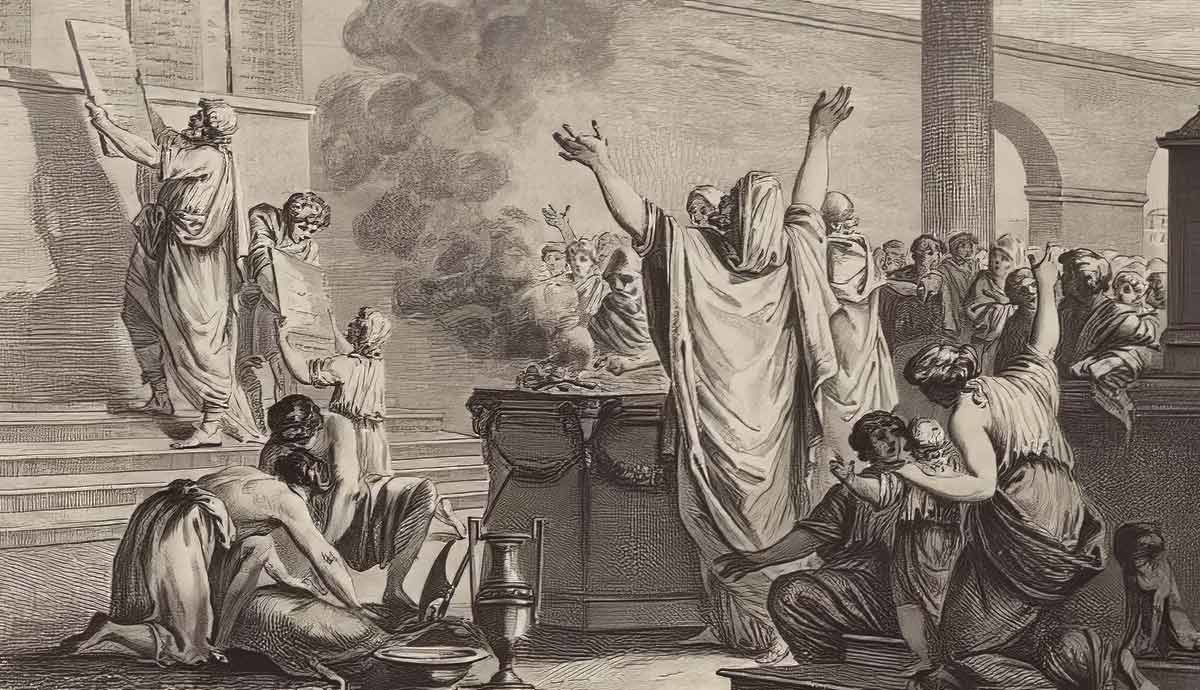
The rights and obligations of Roman citizens were legally outlined in the early years of the Roman Republic. In 449 BC, the Twelve Tablets were published for all to see in the Roman Forum, outlining the rights (iura) and duties (munera) of Roman citizens. They were reportedly published when the Populus Romanus (poorer Roman citizens) felt excluded from many of the rights enjoyed by the Senatus (Rome’s elite classes). They threatened to leave the city if nothing was done.
The new law code reinforced differences between the elite Patricians and the poorer Plebeians. For example, Patricians and Plebeians were forbidden to intermarry, and Plebeians were excluded from various magistracies and priesthoods. Nevertheless, the people of Rome were united as citizens under the same set of laws. Over the centuries, restrictions on the Plebeian class were gradually lifted, and Plebs could serve as consul and even pontifex maximus, Rome’s high priest.
Rights and Responsibilities of Roman Citizens

Roman laws changed “being Roman” from a vague sense of belonging to a set of defined legal rights and duties. Initially outlined in the Twelve Tables, these were regularly expanded and refined by leges (laws) passed through Rome’s governing bodies.
First, Romans had the right to participate in their own government, and therefore influence the laws that affected them, through their right to vote (ius suffragii). The Romans voted in groups, organized in such a way that the wealthy had a greater say, but in theory, all Roman citizens participated in their self-government. As an extension of this, Roman citizens had the right to hold office (ius honorum), in accordance with the rules laid out in the cursus honorum, which included an established ladder of offices, minimum time between offices, and minimum age for some offices.
Because Roman citizens were protected under the law, they also had the right to appeal if they thought that a magistrate was treating them unfairly (ius provocationis). In theory, to exercise this right, a citizen needed only shout Provoco! However, dealing with a more difficult reality, the Tribune of the Plebs was given the responsibility to appeal on behalf of the Plebeians against magistrates.
Roman citizens also had the unique right to own Roman land. They could enter legally binding contracts governed by Roman law, and could therefore pursue justice for broken faith through the Roman courts (ius commercii). Marriage between Roman citizens was also governed by Roman law (ius connubii), as were divorce and inheritance rights.

In return for these rights, Roman citizens also had a variety of responsibilities. Before the emergence of a professional army in the 1st century BC, citizens were required to serve in the military (munus militia). They also had to provide their own armor and weapons based on their financial capacity. Citizens also had to support the state by paying taxes (tributum).
What people owed was determined by a census, conducted every five years. Every Roman citizen had to declare their name, family, and the total value of their property for assessment. Failing to participate in the census could forfeit citizenship.
Income tax for Roman citizens was eliminated in 167 BC after the conquest of Macedon, as massive amounts of war booty made it unnecessary (Pliny the Elder, Natural History 33.17). But citizens continued to pay taxes on other things, such as inheritance and the manumission of slaves.
Hierarchy of Status: Unequal Protection Under the Law
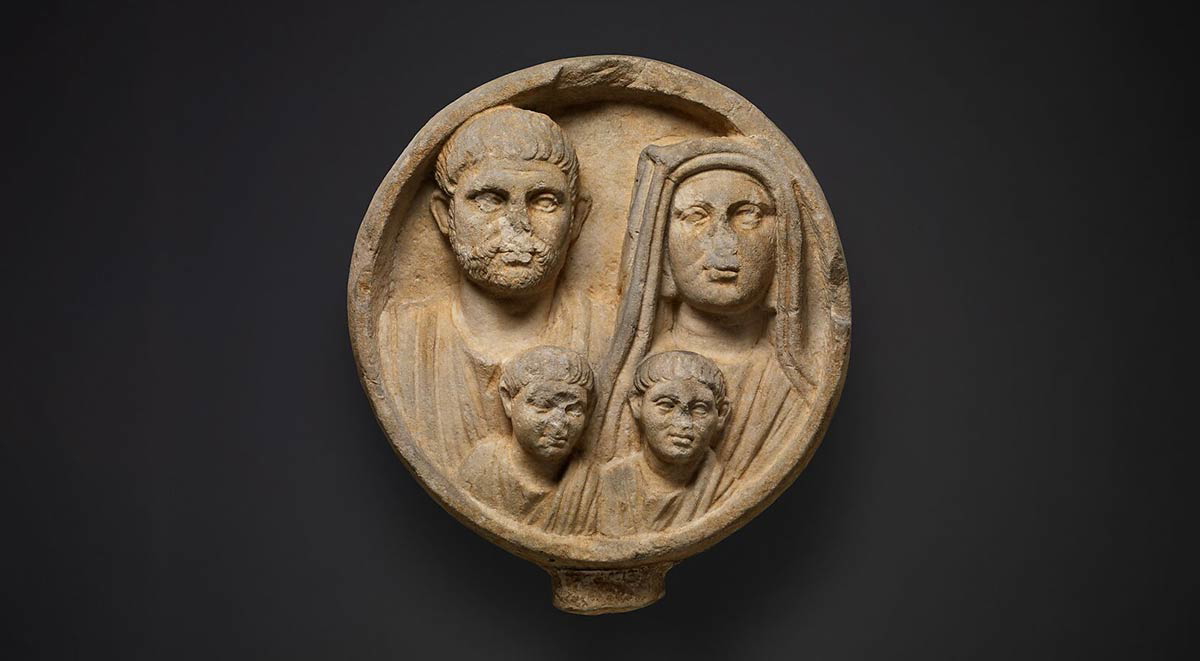
But, as already seen with the distinctions for Patricians and Plebeians, the Romans had no problem marrying the idea of Roman citizenship with inequality under the law. Therefore, not all Roman citizens were equal.
The top tier of Roman citizens, Civis Romani, were full Roman citizens, usually the free-born male sons of two Roman citizens. They enjoyed all the rights outlined above. But to be born of two Roman citizens, Roman women must also have been considered citizens? Yes. However, as women, their rights were limited.
Specifically, women could not vote or hold office. They could own property and participate in business under Roman law, but this was restricted by the fact that most women were under the guardianship of either the eldest male member of their household, the paterfamilias, or their husband. This restricted their rights, as they could not own property independently. Women could gain independence if their paterfamilias died, as a widow, or after serving as a Vestal Virgin. They often still had a male guardian, but they were not needed to approve all business transactions.
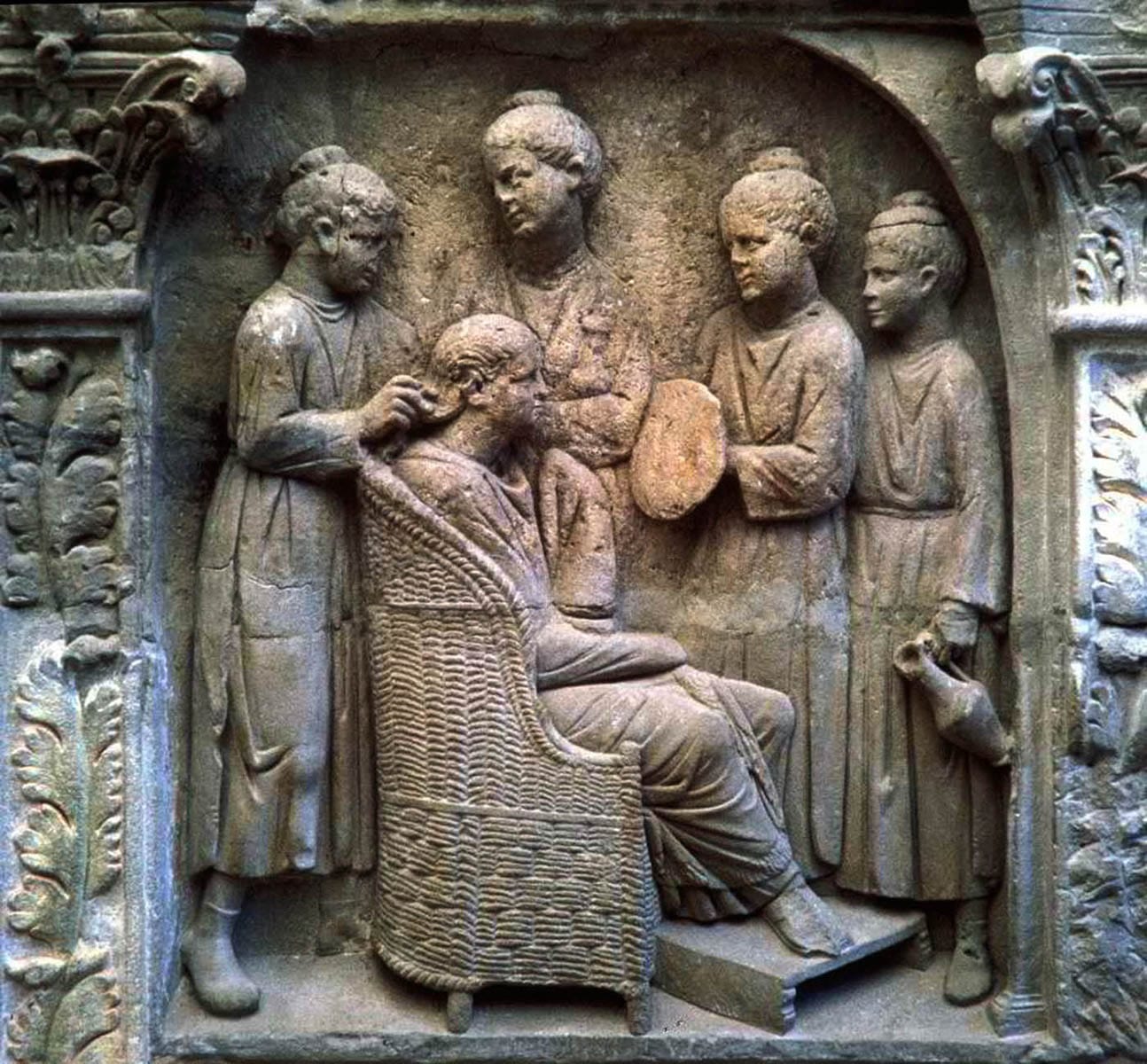
Slaves were not Roman citizens because they lacked legal personhood, though they still had some protection under the law. For example, there were limits on when and how slaves could be tortured or killed. But if a master decided to free their slave through the process of manumission, which could be done as a testamentary provision in the master’s will, they became freedmen (libertini) and had a limited form of citizenship.
Freedmen enjoyed the protection of Roman law but could not vote or run for office. There were also limitations on marriages between Patricians and freedwomen. However, the children of freedmen and women were considered full Roman citizens, though they still faced snobbery and social stigma.
Expanding Citizenship: Ius Latii and the Social War

When Rome started to expand its influence around Italy, it started granting aspects of Roman citizenship to allies to enable things such as intermarriage, legal trade, and movement between cities without losing rights. These ius Latii (Latin Rights) were granted to the region of Latium, of which Rome was a part, at the start of the Republic through the Latin League.
A major revolt saw the league dissolved in 338 BC, and Rome struck individual citizenship deals with different cities. They used it as a negotiating tool to “divide and conquer” the region through soft power, offering some full citizenship with voting rights, and others citizenship without the right to vote (sine suffragio), in other words, “taxation without representation.”
As Rome continued to expand its influence around Italy, it dominated the Samnites, Etruscans, and Greek colonies. They did not offer these new allies the same rights as the Latins, instead making them Socii (allies). While receiving some legal rights and protections, they had no representation. They did not have to pay monetary taxes, but each city had to provide troops to Rome’s army. This created further tiers of “citizenship” and inequality across Italy.
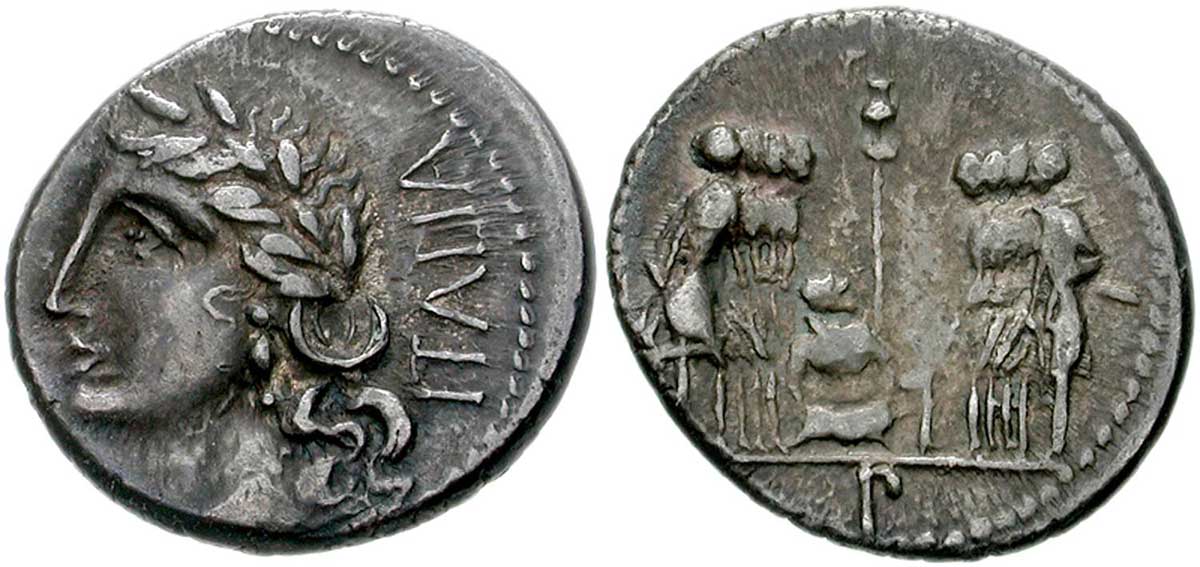
This led to tensions as the Italians were forced to contribute to Rome’s army, and in addition to not necessarily having the right to vote on laws that affected them, they had no claim to the great spoils of war that they were helping the expanding Roman Empire win. This eventually boiled over into the Social War of 91 to 87 BC.
The war was ruthless. For example, at Asculum in 91 BC, the locals rounded up every Roman citizen in the city and put them to death. Pompeius Strabo, the father of Pompey Magnus, retaliated by executing all the magistrates of the city, expelling the rest of the population, and confiscating their property (Appian, Civil Wars 1.38f.). Campaigning against the Samnites, Sulla burned cities to the ground with their entire populations inside (Appian, Civil Wars 1.50f.).
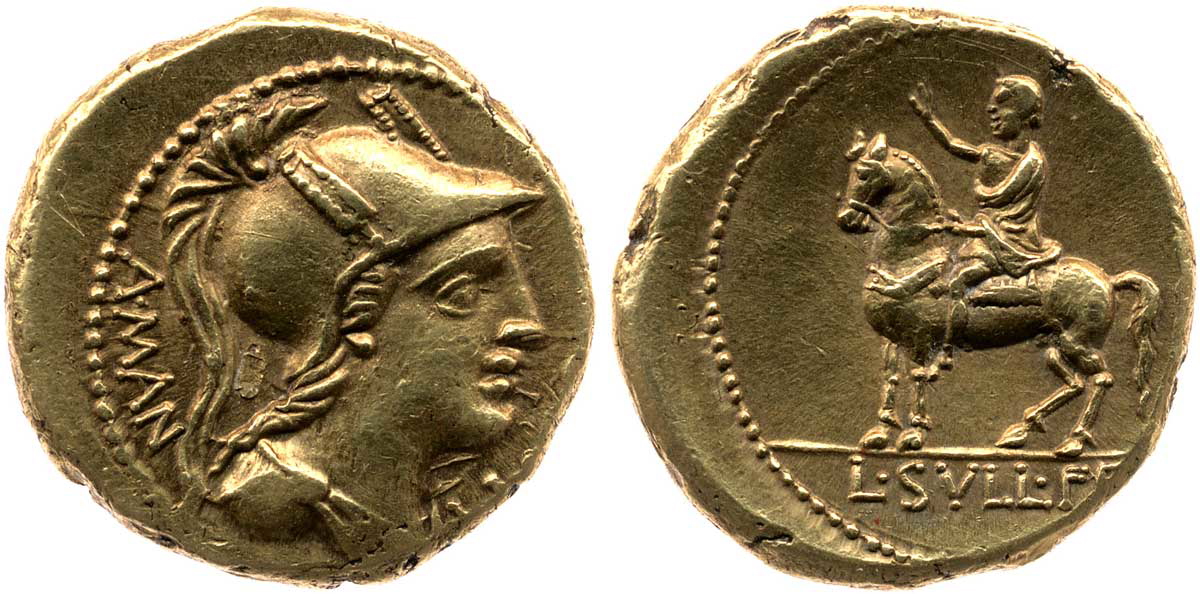
Nevertheless, the conflict was resolved by Rome extending citizenship across Italy. First, the Lex Julia of 90 BC granted full Roman citizenship to any Italian community that had stayed loyal or laid down arms immediately. Then the Lex Plautia Papiria of 89 BC extended citizenship to almost every free man in Italy south of the Po River. Effectively, everyone in Italy was now a Roman citizen.
The exception was the Gauls living in Italy south of the Alps in what the Romans called Cisalpine Gaul. As Celts, they were clearly foreigners, so they only received Latin Rights as a halfway step to satisfy them without recognizing them as full Romans. But it was not long until they too got full citizenship. Julius Caesar had relied on them during his campaigns in Gaul and saw them granted full citizenship in 49 BC (Cassius Dio, 41.36).
Citizenship and the Provinces

Settling the Italian question did not settle the citizenship question for Rome. As its Empire expanded and more people came under its sway, Rome had to determine how to manage the difference between Roman citizens and citizens of Rome’s provinces.
In general, people of the provinces enjoyed their local citizenship but owed loyalty to Rome. Rome then used citizenship as a tool for integration. It was often offered as a “reward” for Romanization. There were three main pathways to citizenship for provincials. They could serve as auxiliaries in the Roman army, and after 25 years of service, they received Roman citizenship for themselves and their children. They could serve as a local magistrate within Roman institutions, which granted them citizenship as agents of Rome. Citizenship could also be granted on an extraordinary basis by generals or emperors, usually as a reward for helping Rome when dealing with local rebellions.
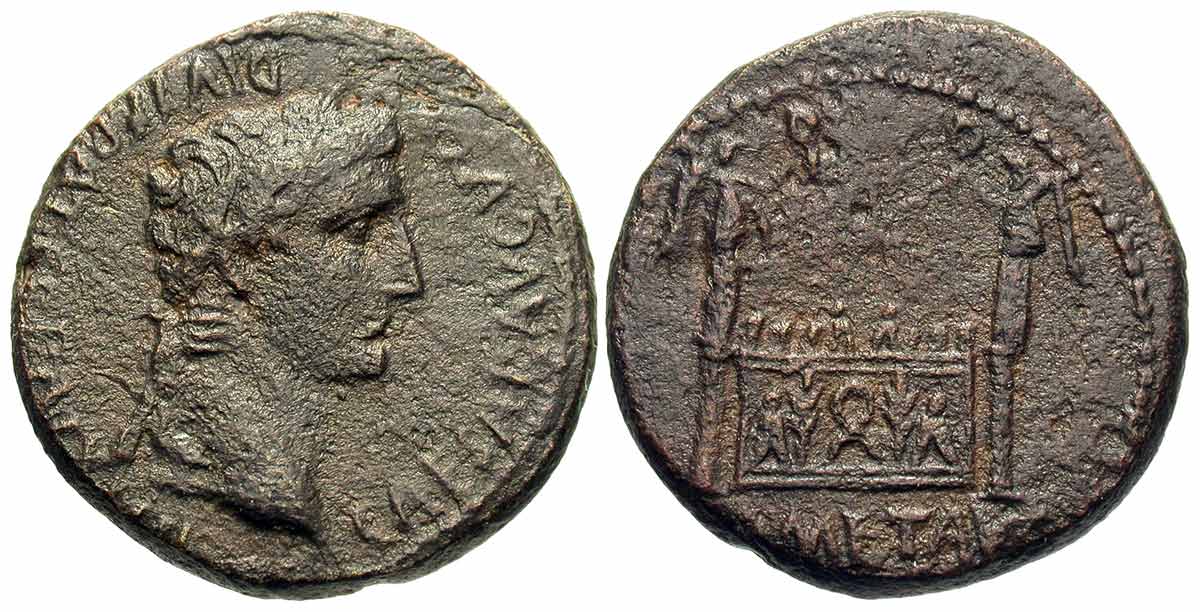
It is no coincidence that Gallia Narbonensis was one of the first provinces to erect an imperial cult altar in 12 BC, and was then granted the right for its citizens to join the Senate in Rome in AD 48. It was a clear reward for Romanization. While there was certainly snobbery against diluting Roman identity, there was no stopping the expansion of Roman rights (Tacitus, Annals 11.23-5; Suetonius, Claudius 24.1; Seneca, Apocolocyntosis 3.3).
This eventually culminated in the Constitutio Antoniniana of AD 212. This was a decree of the emperor Caracalla that granted full Roman citizenship to all free men in the Empire. Rather than being altruistic, this decision was probably made to expand and streamline tax revenues (P. Giss 40; Cassius Dio 78.9; Justinian, Digest 1.5.7).
Caracalla’s decree shifted the value of Roman citizenship from a rare privilege that needed to be earned in the provinces to something universal. This laid the foundation for the Byzantine Empire, as the people of the East increasingly identified as Romans (Augustine, City of God 5.17). This allowed the idea of Rome to thrive even when Rome was no longer the center of the Roman Empire.
Citizenship in the Christian Roman Empire

It was citizen rights that enabled Paul the Apostle to walk across the Roman Empire, spreading the word of Christianity in the 1st century AD. He was born a Roman citizen, probably due to the military services of one of his ancestors. When he was about to be whipped in Jerusalem, he invoked his citizenship, noting that it was illegal to whip a Roman citizen who had not been found guilty (Acts 22.25).
But Roman law was adaptable. Under pagan Rome, Christians were persecuted for atheism. This was because they refused to participate in actions considered fundamental to the security of the state, specifically sacrifices to the Roman gods and for the Roman emperors. But Roman citizens accused of this Christian-style atheism had to be tried. Pliny the Younger, while governor of Bithynia et Pontus, wrote to the emperor Trajan explaining the tests and opportunities he gave Roman citizens to prove their loyalty (Epistulae 10.96).
While Trajan recommended a “don’t ask, don’t tell” policy in the early 2nd century AD (Epistulae 10.97), by the 3rd century AD, citizens were sometimes required to have a libellus, which was a certificate proving that they had sacrificed to the Roman gods (Cyrpian of Carthage, On the Fallen 8-9, 27-28, Epistulae 30, 55, 67). Almost 50 examples of these libelii have been found on Egyptian papyri. In AD 303, Diocletian had Christian citizens stripped of office, their property confiscated, and many of their legal rights removed (Eusebius of Caesarea, Church History 8.2; Lactantius, On the Death of the Persecutors 13).
When Christianity became the official religion of the Roman Empire, this was flipped on its head. Pagans became the targets and were often stripped of their rights as citizens (Theodosian Codex 16.7, 16.10; Justinian Codex 1.11). Thus, citizenship was transformed from one based on participation in the Roman state to one of membership in a divine community.
The Power of Roman Citizenship

For most of the history of Rome and the Roman Empire, Roman citizenship granted legal rights and meaningful protection. In the 2nd century AD, Epictetus (Discourses 3.13) wrote that a Roman citizen could walk from Hadrian’s Wall in Britain to the Euphrates River in Syria without fear. In theory, a Roman citizen’s identity document, usually a small wooden or bronze diptych, was sufficient to exert one’s rights as a citizen.
From its earliest days, Rome was successful in making Roman citizenship a coveted status and used it to turn defeated enemies into allies that had a stake in Rome’s greatness. As it built its Empire, Roman citizenship became a unifying principle that allowed people at the far reaches of Roman influence to feel like part of something greater than themselves.