
Ancient sources contain tantalizing references to ancient architectural treasures, from grand cities to glittering temples, that have been almost completely lost to time. Sadly, a few words and some fragmented artifacts are often all that survive of many of these treasures. Humanity’s greatest achievements have always faced two relentless enemies: time’s slow erosion and war’s sudden violence. Monuments have been buried by sand and palaces shattered by aggression. Discover six of the ancient world’s most famous architectural treasures that have been lost to time and war.
1. Alexander the Great Torched the Royal Palace of Persepolis

Persepolis was the grand ceremonial capital of the Achaemenid Persian Empire, first built by Darius the Great around 518 BC. Sitting atop a grand artificial stone terrace overlooking the Marvdasht plain, it was designed to reflect the might of the Persian Empire.
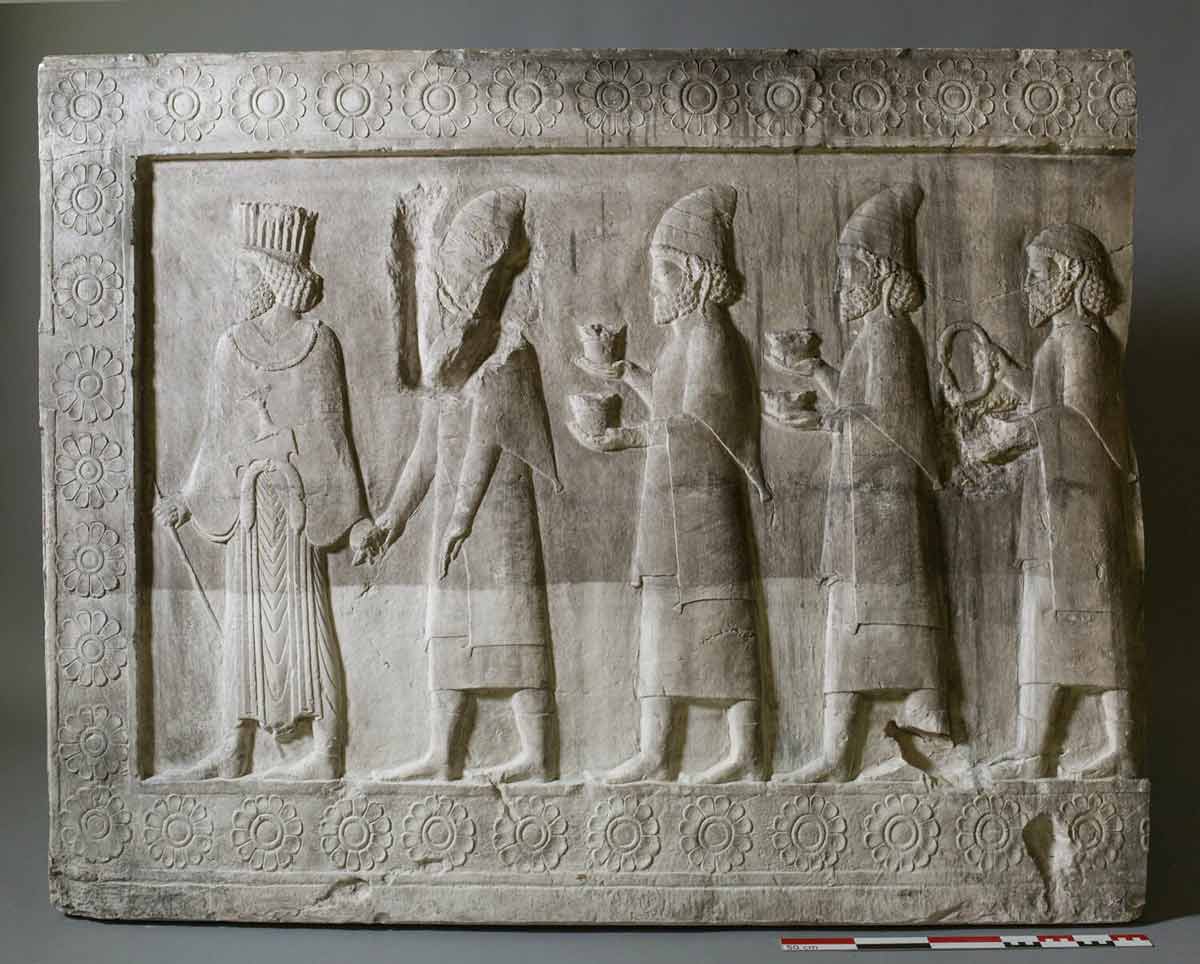
Visitors ascended via a wide double staircase decorated with images of ambassadors and delegates from the 23 subject nations that paid homage to the King of Kings. Visitors entered the city proper through a gate guarded by colossal stone lamassu, which were winged bulls with human heads that often served as guardians in Mesopotamian buildings. They were welcomed in the great audience hall that could hold 10,000 people. It had a ceiling made from expensive cedar held up by 72 stone columns standing 20 meters high, topped by capitals decorated with bulls, lions, and griffins. This was all painted in vibrant blues and reds with gold leaf embellishments.
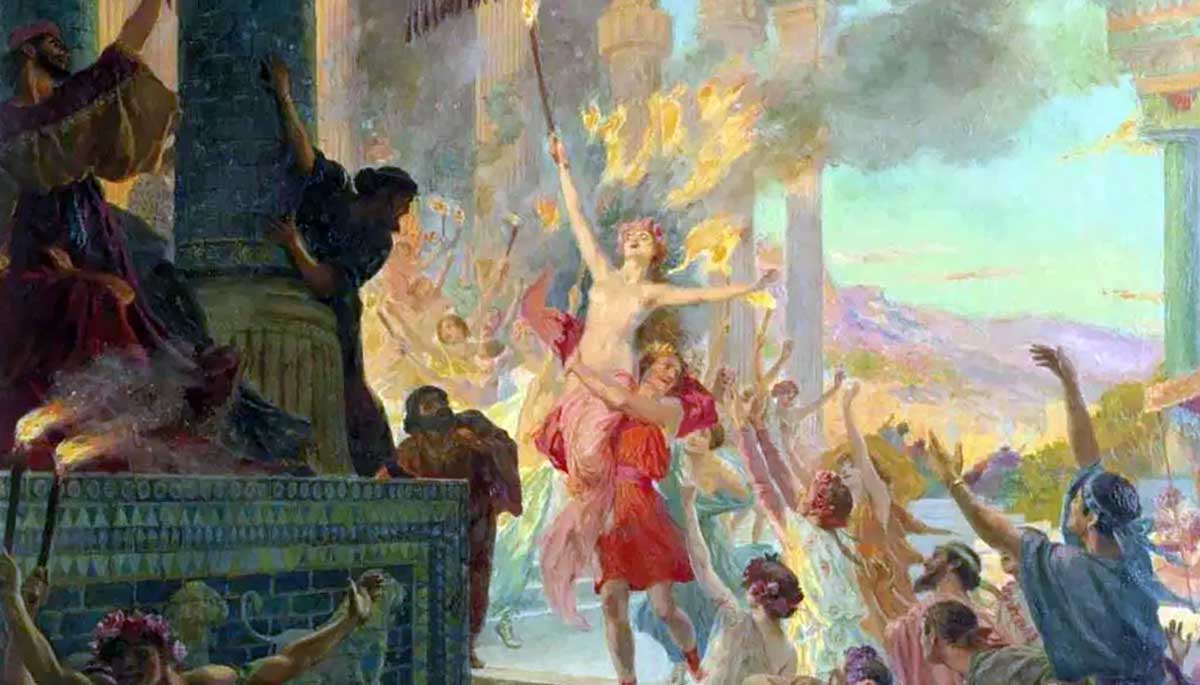
In May 330 BC, while concluding his conquest of the Persian Empire, the Macedonian conqueror Alexander the Great took Persepolis. He allowed his men to plunder the city for several weeks before ordering it put to the torch. According to some stories, an Athenian courtesan present at the banquet to celebrate the conquest urged Alexander to burn the palace in revenge for the Persian destruction of Athens in 480 BC. The drunk Alexander agreed, reportedly later regretting his impulsive actions; after all, the palace now belonged to him.
While the Macedonians thoroughly looted Persepolis of treasure before putting it to the torch, painted frescoes, gold-inlaid statuary, and other architectural artworks were destroyed. Sacred Zoroastrian texts were also destroyed, their knowledge lost to history. Paradoxically, the heat of the fire baked and preserved thousands of unbaked clay tablets and embedded them in the walls. Called the Persepolis Fortification and Treasury Tablets, these have provided modern historians with an archive of the empire’s daily administrative, economic, and logistical operations, which would otherwise have been lost when the tablets were reused.
The city was never rebuilt. The administrative center of the region, under the Seleucid Empire and then the Parthians, was moved five miles north to Istakhr. Persepolis was scavenged for stone, and the ruins were covered by sand. By the time of the Sasanian Empire, starting in the 3rd century AD, the original purpose of the ruins was forgotten. Following the Arab-Muslim conquest of Persia in the 7th century AD, the story was that the great city was built by supernatural Djinn (genie) spirits under the command of the Biblical King Solomon.
In 1778, a trilingual inscription was discovered at Persepolis, written in Old Persian, Elamite, and Babylonian. This allowed for the decipherment of Old Persian cuneiform in the 19th century and reidentification of the site as ancient Persepolis. Proper excavations began in 1931, and today Persepolis is one of the most important archaeological sites in Iran.
2. The Library of Alexandria Was Attacked by Ignorance
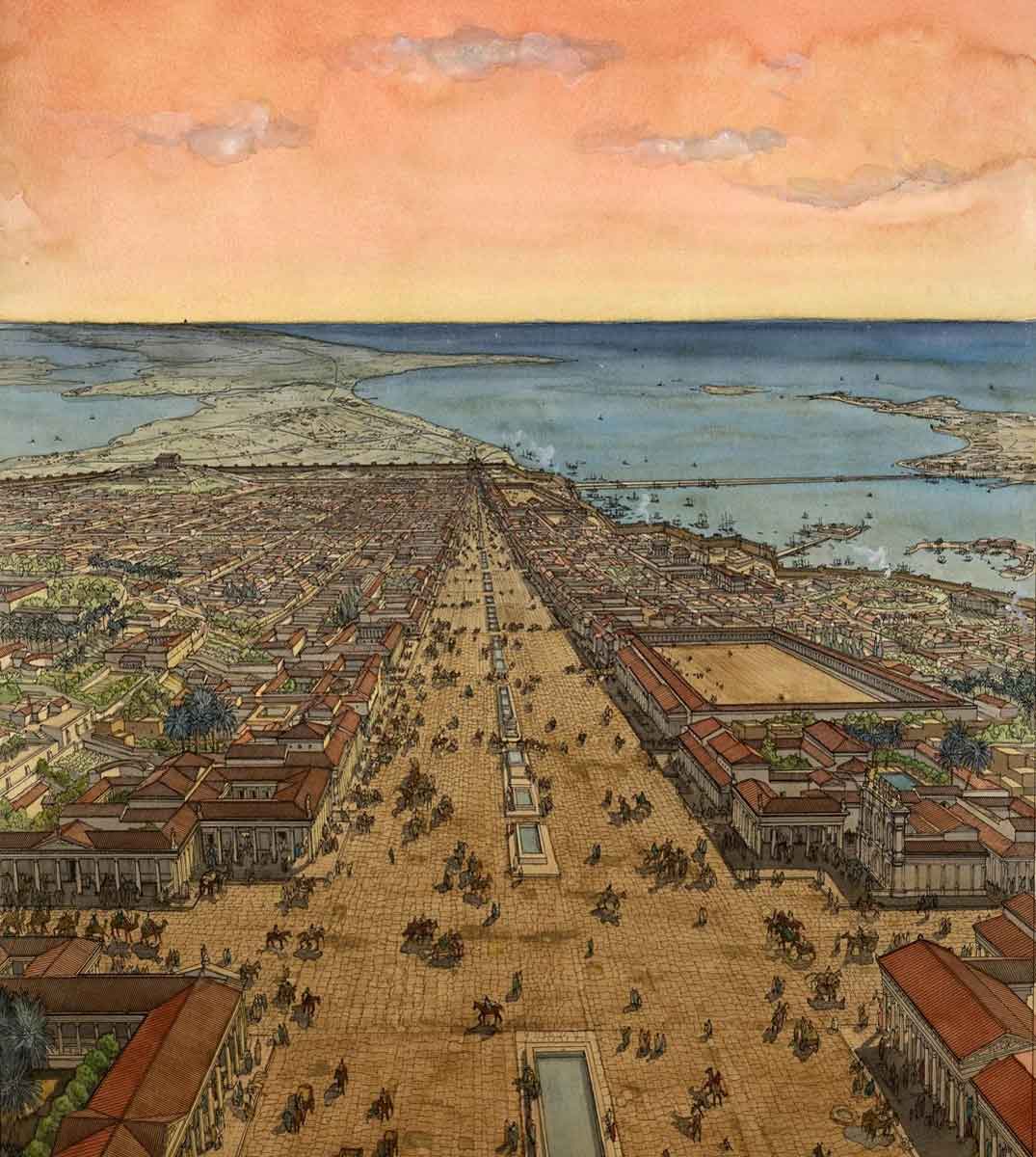
Following the death of Alexander the Great, his generals divided his empire and fought between themselves for dominance. His general Ptolemy I Soter managed to establish himself as the new ruler of Egypt, making the city of Alexandria, established by the conqueror, his capital. He had plans to make Alexandria the greatest Hellenistic city in the Mediterranean, a project continued by his son, Ptolemy II Philadelphus.
The crown jewel of this sparkling new capital was an institution called the Mouseion, the shrine of the Muses, which contained a university and the great Library of Alexandria. Aiming to gather all the world’s knowledge in a single place, all ships entering the port of Alexandria were searched for books or scrolls. They were confiscated, taken to the library for copying, and then the originals kept in the library and the copies returned to the ships.

Collecting continued under his successors, with Ptolemy III reportedly paying Athens 15 talents of silver to borrow the master manuscripts of the great Greek playwrights. Again, he deceitfully kept the originals and sent the copies back to Athens. Agents were sent throughout the ancient world to purchase books, scrolls, and entire private collections for the library. At its peak, the library may have had as many as 400,000 papyrus scrolls.
The library’s location in the center of Alexandria made the city a hub for intellectuals for centuries, but it also made the library collateral damage in conflicts. First, when Julius Caesar was besieged in Alexandria in 48 BC, several warehouses containing library scrolls caught on fire, though the library itself remained intact. Three centuries later, the library building was heavily damaged when the emperor Aurelian laid siege to Alexandria in AD 270 to 275, when he was retaking the city from Queen Zenobia of Palmyra.

Just over a century later, in AD 391, the Roman emperor Theodosius I outlawed paganism. This caused religious conflict in the streets of Alexandria between Christians and pagans, resulting in Patriarch Theophilus of Alexandria leading a mob to destroy pagan temples, including the Serapeum, which served as the daughter library to the main collection, resulting in the loss of important collections. The final destruction reportedly happened after the Arab Conquest of AD 642, with the scrolls burned to fuel public baths.
Because much of ancient Alexandria lies under later construction or underwater, the remains of the original library have never been found. Historical sources suggest that it was part of the ancient royal district, which now lies underwater due to earthquakes, tsunamis, and gradual coastal land subsidence between the 4th and 8th centuries AD.
3. Rain and Desert Winds Dissolved the Great Cities of Mesopotamia
Ancient Mesopotamia is known as the cradle of civilization, and its cities were among the most important in the ancient world. Nineveh was settled around 6000 BC and continued to be important for millennia, including as a capital of the Neo-Assyrian Empire. Ur was founded in 3800 BC and peaked around 2100 BC as an important port city and home to the Great Ziggurat of Ur. Babylon was built around 3200 BC and remained important for almost 2,000 years, giving us, among other things, the world’s oldest legal code.
While these were grand and populous cities, they were not made from stone or even wood, but rather, mostly from unbaked mud brick. This left the cities particularly vulnerable to decay when exposed to the elements. Repeated drenching through rain and then drying in the sun undermined the integrity of unbaked mud bricks, causing them to “melt” in a process called slaking. Combined with wind erosion and rising water levels of the Euphrates, the Mesopotamians were constantly rebuilding.
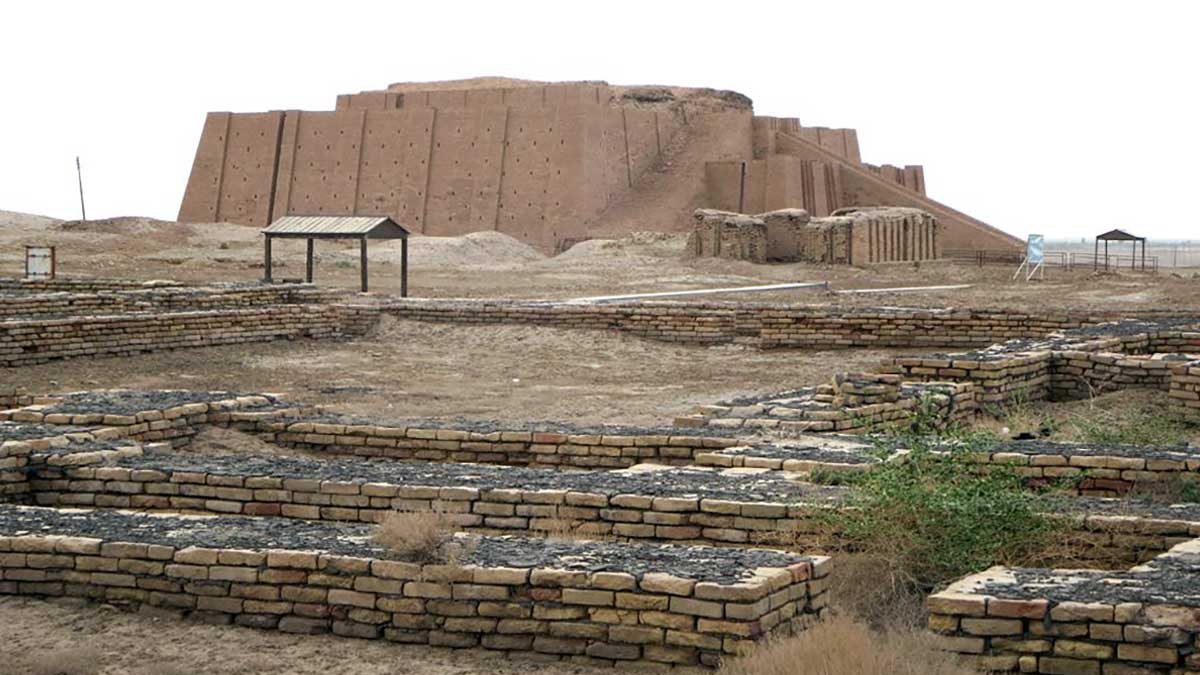
When rebuilding, rather than removing the debris, they leveled the melted clay into a platform and built directly on top of it. Millennia of repeated occupation created a “tell,” an artificial mound composed of stratified layers of melted clay containing more permanent artifacts. But as the importance of these cities waned following the conquest of Alexander the Great, rebuilding stopped.
Archaeological excavations of these ancient cities have proven extremely challenging. Early excavations, for example, those led by Austen Henry Layard at Nineveh in the early 19th century, frequently dug straight through important finds. Excavations remain challenging, as the cycle of decay begins again as soon as the melted mudbrick is exposed to the air.
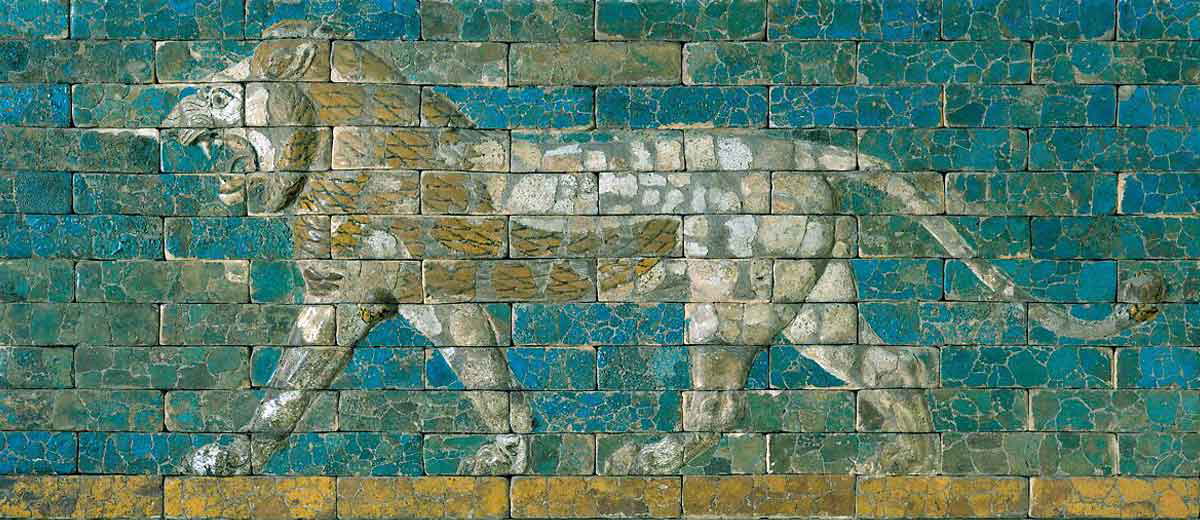
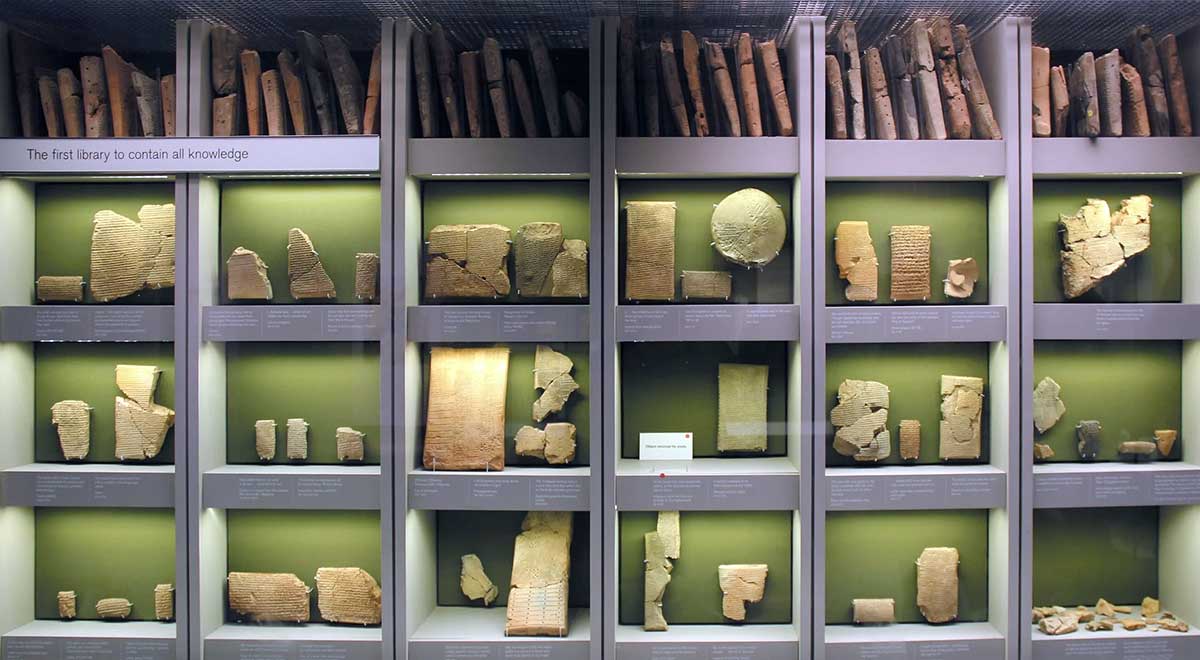
Despite these challenges, important finds have been recovered from these Mesopotamian cities. These include 30,000 cuneiform clay tablets at Nineveh from the Library of Ashurbanipal, an Assyrian king in the 7th century BC, which preserved, among other things, the Epic of Gilgamesh and the Enuma Elish creation myth. Ur has yielded 16 intact royal tombs with lavish grave goods and the Great Ziggurat.
At Babylon, archaeologists have found the great Ishtar Gate of King Nebuchadnezzar II, from the 6th century BC, and the Stele of Hammurabi containing his famous law code. What has never been found is evidence of the Hanging Gardens of Babylon, considered one of the Seven Wonders of the Ancient World. Some scholars now believe that the gardens were never at Babylon, and that this is a mistranslation, and they were actually at Nineveh.
4. Venetian Cannon Fire Shattered the Athenian Parthenon
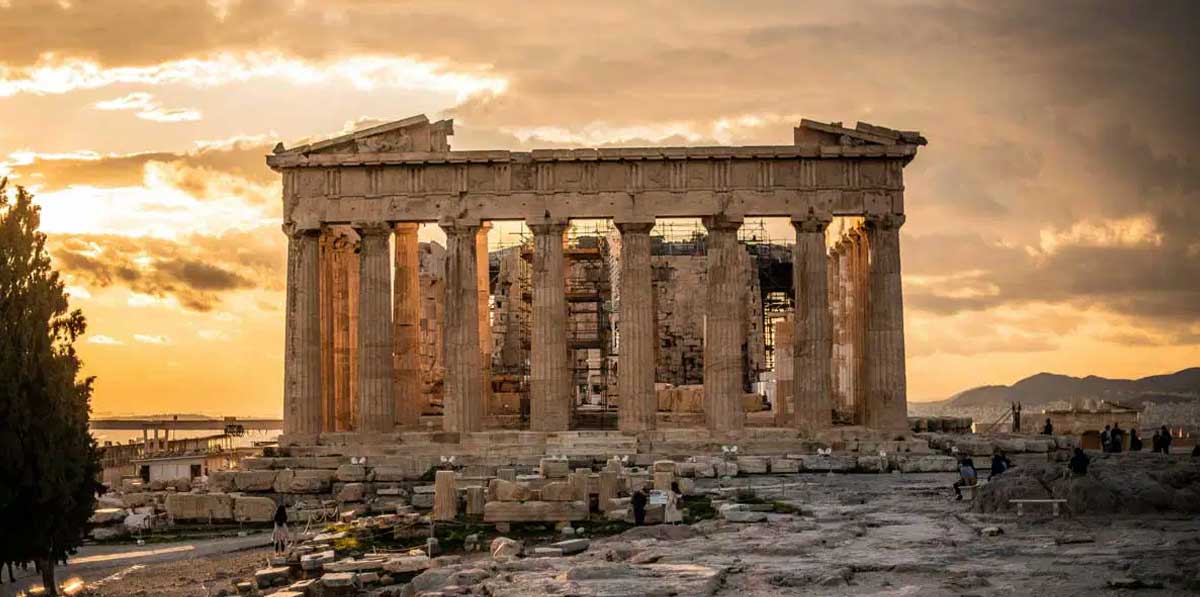
Perhaps Athens’ most famous building was the Parthenon. It was built in the 5th century BC during the Golden Age of Pericles following the destruction of the Greek Acropolis by the Persians in 480 BC. For this reason, it represented victory, rebirth, and the Athenian spirit. The building project was led by the famous sculptor Phidias and included a famous chryselephantine gold and ivory statue of Athena Parthenos, the city’s patron goddess.
Unlike many other structures from the ancient world, the Parthenon survived more or less intact for over 2,000 years, largely because it was continuously repurposed. Under the Byzantine Christian Empire, it was converted into a church dedicated to the Virgin Mary. While the building was kept largely as is, many of its pagan statues were defaced or removed. Following the Fourth Crusade in the early 13th century, it became a Catholic Cathedral. When the Ottoman Empire took Athens in 1456, the Parthenon was converted into a mosque.
But the Parthenon’s long-standing integrity came to an end during the Morean War between the Republic of Venice and the Ottoman Empire, which started in 1684. In September 1687, the Ottomans fortified the Acropolis against advancing Venetian forces. They used the Parthenon to store gunpowder and shelter civilians, assuming the Venetians would not target the ancient monument. But a Venetian mortar ignited the gunpowder inside the building, resulting in the destruction of the central walls, 28 columns, and the roof. Fires raged for days, hollowing out what was left of the temple.

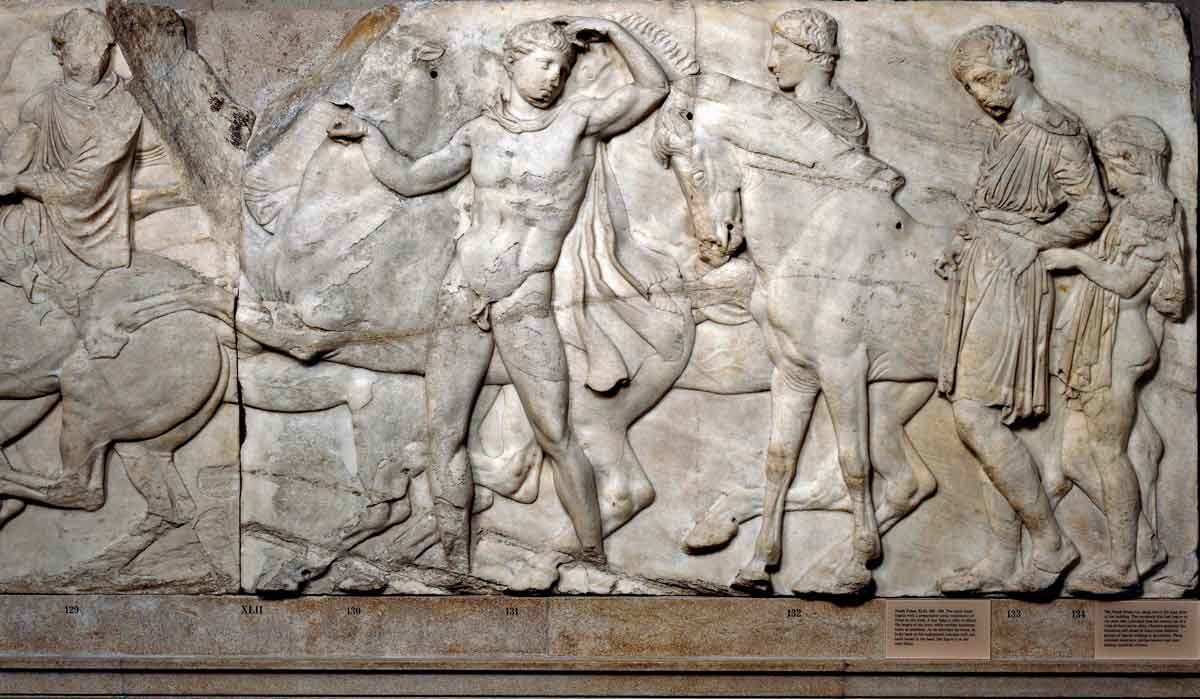
But this was not the end of its destruction. Just over a century later, at the start of the 19th century, Thomas Bruce, the 7th Earl of Elgin and British ambassador to the Ottoman Empire, received permission to survey the remains of the building and take away some pieces of stone with inscriptions or figures for study. Elgin took this as broad permission to take half the architectural sculptures, including 15 metopes, 56 frieze slabs, and 17 figures, sending them back to London and placing them in the British Museum.
Despite repeated requests from the Greek government, which argues that the stones were removed illegally while Greece was under foreign Ottoman military occupation, Britain has refused to return what have become known as the Elgin Marbles to Greece.
5. Earthquakes and Scrappers Dismantled the Colossus of Rhodes
During the wars of Alexander’s successors, in 305 BC, Demetrius the Besieger laid siege to the Greek port city of Rhodes, with the Seleucid prince claiming that Rhodes did not maintain neutrality during the wars. Despite deploying unprecedented military engineering siege weapons, Demetrius was not able to break the city, resulting in a costly stalemate. Demetrius signed a peace treaty in 304 BC and left, abandoning his siege equipment.
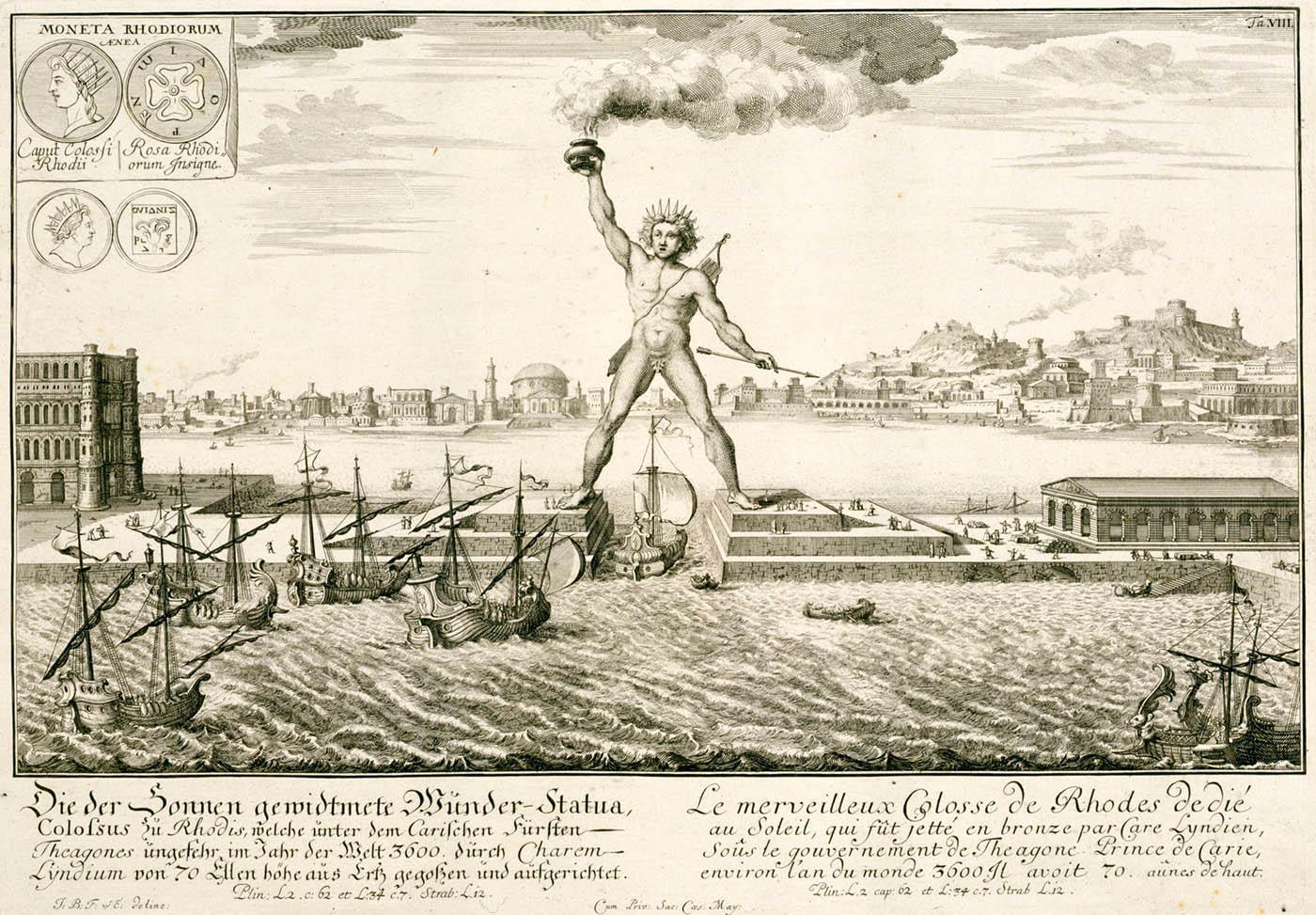
To celebrate their success and survival, Rhodes sold off and melted down the military equipment left behind by Demetrius and used the money to build the Colossus of Rhodes, a 33-meter-tall bronze statue of the god Helios. It was designed by Chares of Lindos and completed over 12 years between 292 and 280 BC. While modern depictions often show the colossal statue straddling the harbor, this is not structurally realistic, and it almost certainly stood on one side of the harbor looking out. It was such a fantastic spectacle that it became one of the Seven Wonders of the Ancient World.

But it was a short-lived wonder. After just 54 years, a severe earthquake struck in 226 BC, causing widespread destruction. The tremor caused the statue to snap at its weakest structural points, the knees, and collapse onto the land. The Rhodian ally Ptolemy III Euergetes of Egypt offered to fund the rebuilding of the statue. But, following an oracle from Delphi, the Rhodians decided not to rebuild and to leave the remains of the statue where they fell.
Even as ruins, the colossus was impressive, and tourists continued to travel to Rhodes to see it. Pliny the Elder reported seeing the remains in the 1st century AD and claimed that few people could even wrap their arms around the statue’s thumb. The statue also inspired the Roman emperor Nero to erect a colossal statue of himself in Rome. Following his downfall and disgrace, the statue was reworked to represent the god Helios, just like the Rhodian statue.
After Arab forces of the Umayyad Caliphate took Rhodes in AD 653, they scavenged the remains of the statue and sold the scrap metal to a merchant from Edessa. Sources suggest he needed a caravan of 900 camels to carry away the pieces. No physical evidence of the statue survives today.
6. Sacking and Gradual Burial Covered the Roman Forum
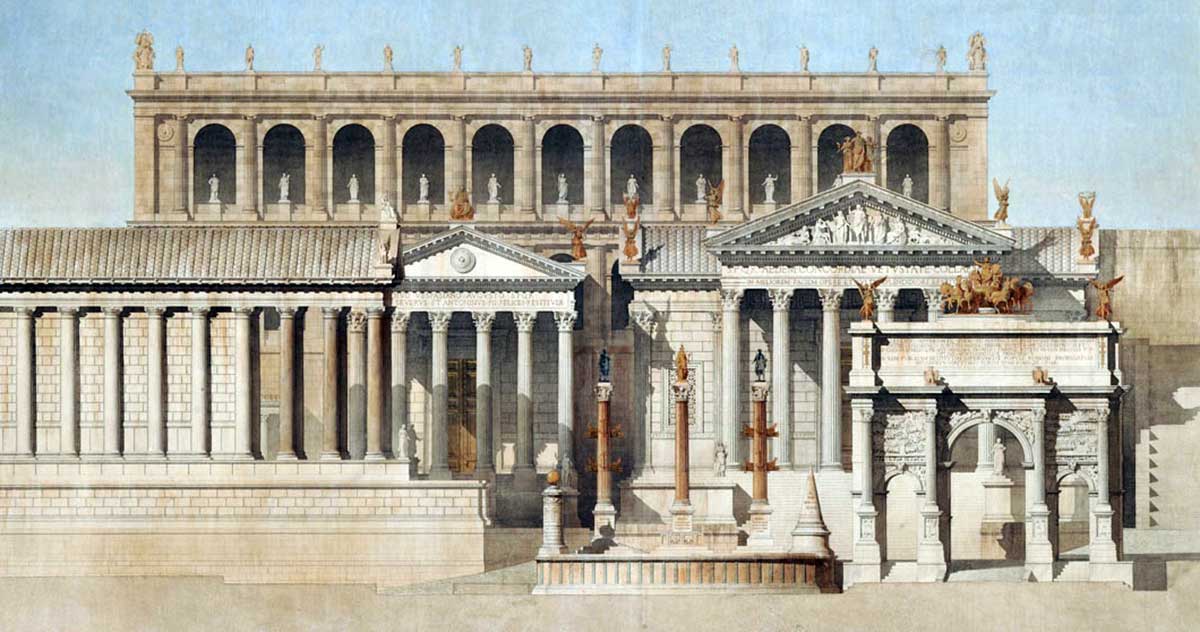
The city of Rome was founded on seven hills in the 8th century BC. Not long after, King Tarquinius Priscus drained the swamp between the Palatine and Capitoline hills by constructing the Cloaca Maxima, the Great Sewer, and created a civic space known as the Forum Romanum, or Roman Forum.
It became the center of Roman politics, housing the Senate House, the public assembly, and the speakers’ Rostra. It also contained some of Rome’s most sacred monuments, including the Temple of Vesta and the Temple of Saturn. The grand triumphal arches celebrating the military victories of Rome’s great generals also stood on the Via Sacra, which ran through the center of the Forum.
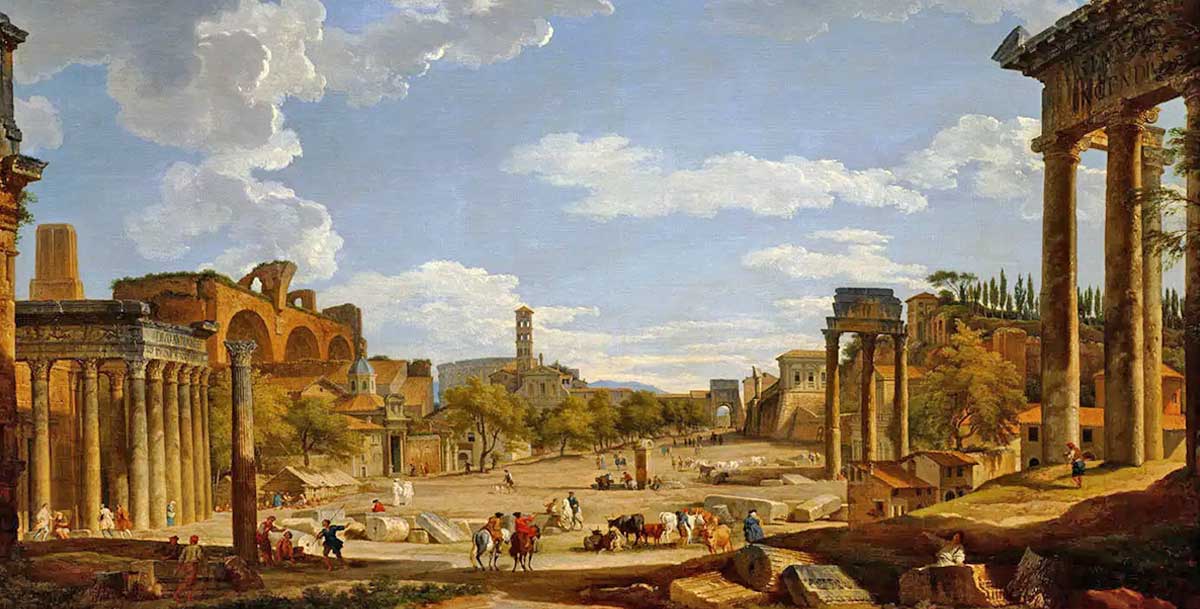
The Forum remained at the center of Roman politics for over a millennium, which made it a target when the city was sacked during the demise of Rome. The Forum was badly damaged when the Visigoths sacked Rome in AD 410, and again when the Vandals sacked the city in AD 455, stripping the Forum’s temples of their precious metals, including their gilded bronze roof tiles. There was further damage during the Gothic Wars of AD 537-554. Notably, Ostrogothic siege forces severed the ancient aqueduct, causing widespread flooding across the Forum. Any surviving structures were destroyed during the Norman Sack of 1084, which saw fire sweep across the Forum.
With the fall of the Roman Empire, Rome’s population dwindled, and its administrative infrastructure became almost non-existent. With no one to maintain it, the Cloaca Maxima stopped functioning, and the Forum turned back into a stagnant swamp. Moreover, periodic flooding of the nearby Tiber River deposited thick layers of river mud. Most of the ancient building remains were covered or scavenged in the Middle Ages, with marble repurposed for new churches. Some statues were even dumped into lime kilns and melted down to make quicklime for building mortar.

By the 15th and 16th centuries, between five and 15 meters of silt overlaid the original level of the Roman remains. The area was now a meadow known as the Campo Vaccino, where local herdsmen grazed cattle and sheep. The tops of some of the ruins could still be seen popping up.
It was only in the 19th century that curious minds started to excavate the Forum. Some of the first monuments found were the Arch of Septimius Severus and the Temple of Vespasian and Titus. At the end of the century, following the Unification of Italy, systematic excavations took place. The Roman Forum is now an archaeological park where you can see the paving of the Via Sacra, the foundations of the Temple of Vesta, and the ruins of the Regia, the ancient residence of Rome’s kings.