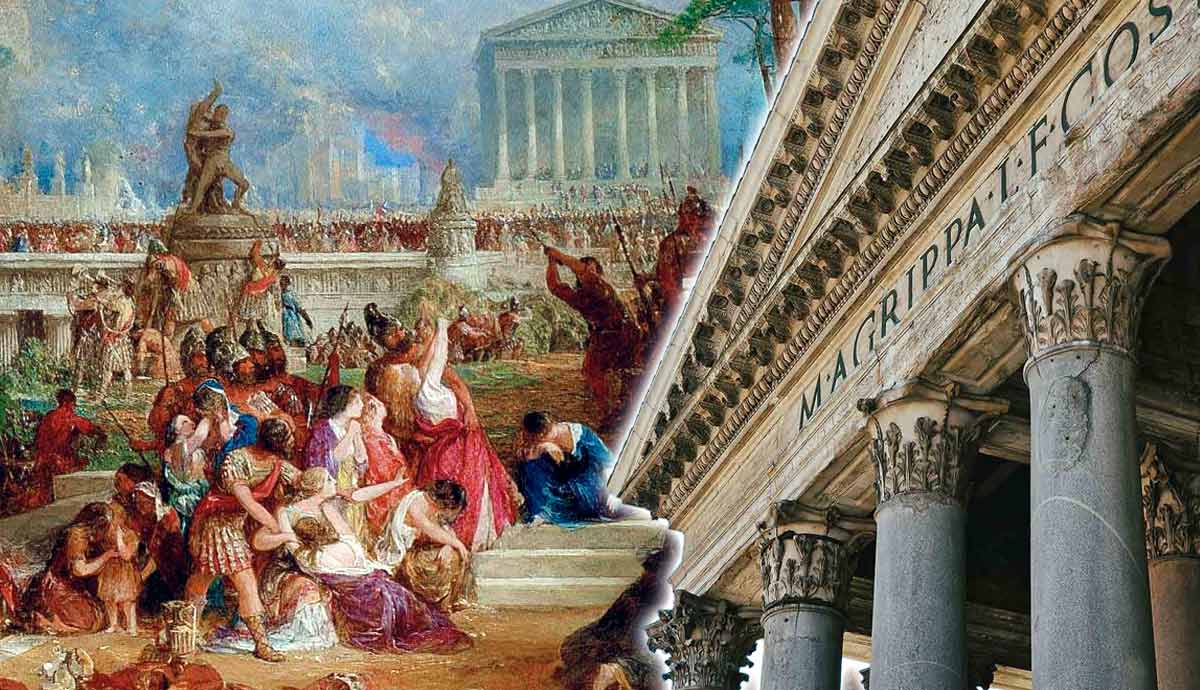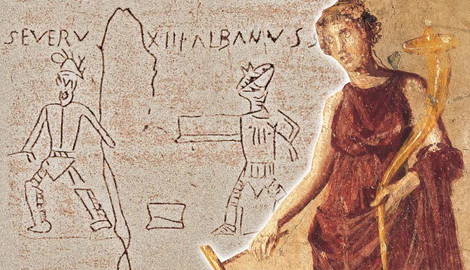

If you walk through the ruins of a Roman city, the grand monuments reflect the history of the elites, the emperors, generals, and senators. But if you look closer at the walls of a bakery or the surface of a modest tombstone, a different Roman world emerges. Here, the language is not the formal Latin of Cicero, but the sermo vulgaris of the street. It is the sound of a gladiator bragging about his victories, a lover complaining about a cold bed, and a merchant tallying his debts. These inscriptions offer a rare direct glimpse into the thoughts and feelings of common people, who wanted to be remembered just as much as the elites.
The Graffiti of Pompeii
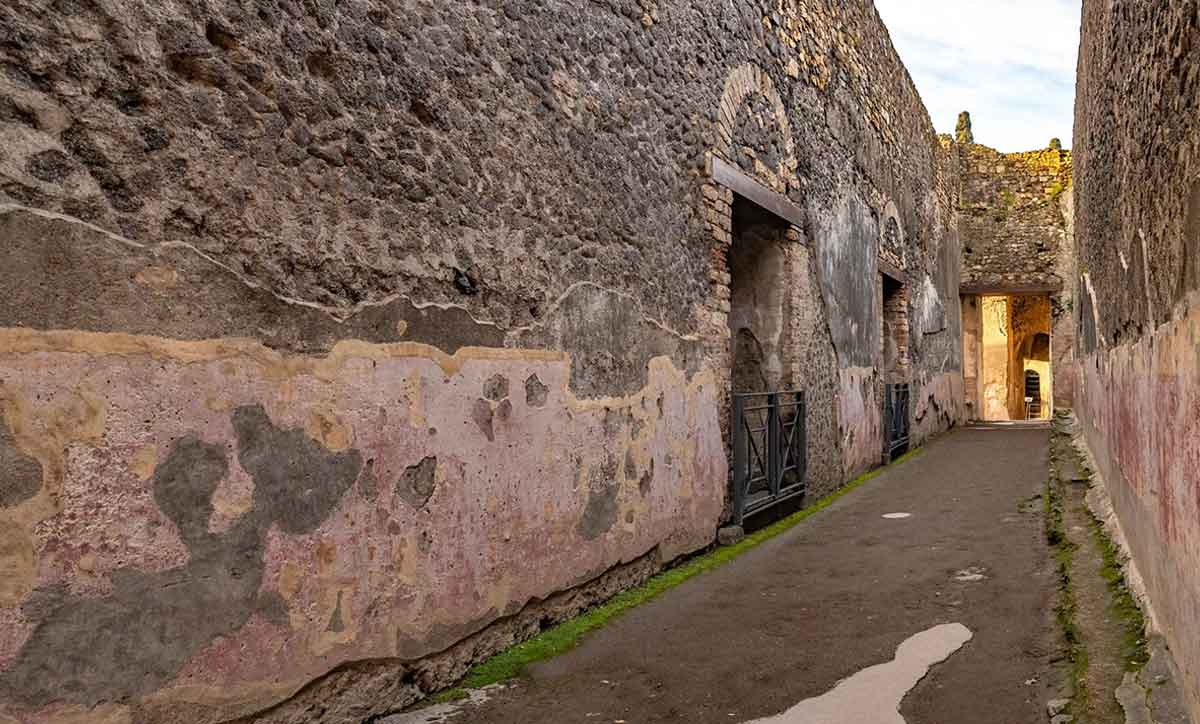
More than 500,000 inscriptions survive from the ancient Roman world. The longest and best-preserved examples record things that were meant to be remembered for centuries, such as the edicts of emperors and the accomplishments of generals. Thought, time, and effort went into composing these grand texts, etched in stone.
In contrast, graffiti, scratched or painted onto walls, were only ever meant to be ephemeral. They were generally composed quickly to influence or entertain immediate neighbors. But the tragic eruption of Vesuvius in AD 79 froze the Roman cities of Pompeii, Herculaneum, and Stabiae at a moment in time, preserving 2,000-year-old graffiti we should never have been able to read.
The Ancient Graffiti Project has recorded over 11,000 graffiti from Pompeii alone, including everything from election promises to market day notices and salacious gossip. The graffiti are often crude and sometimes surprisingly witty, especially considering that only about 30% of the population of Pompeii was likely literate.
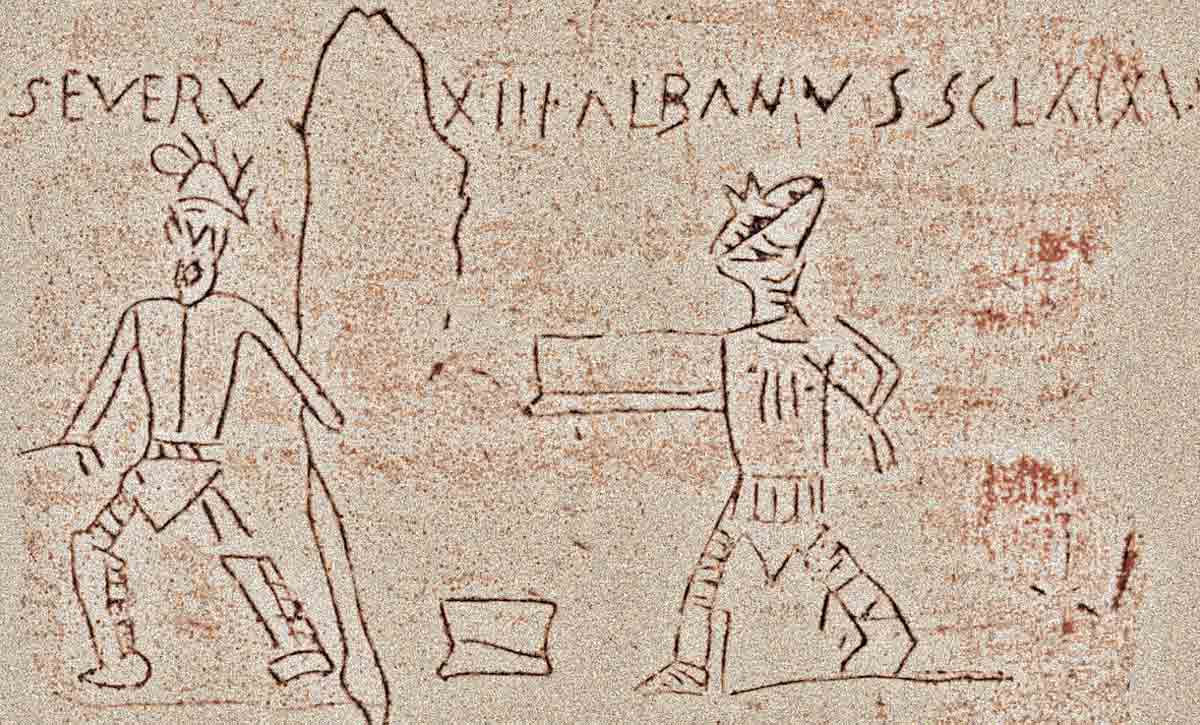
The sheer amount of graffiti that survives from the Campanian cities suggests that wall scribbling was a common practice and not prosecuted as vandalism in the way it is today. A single corridor in Pompeii, which once led to a theater, has hundreds of examples. Even an ancient tagger commented on the amount of graffiti.
“I’m amazed, oh wall, that you haven’t fallen into ruins since you hold the boring scribbles of so many writers.”
The corridor also had many images of gladiators scratched onto the walls, reflecting the popularity of the bloody shows at the time.
Brothels, Baths, and Bars
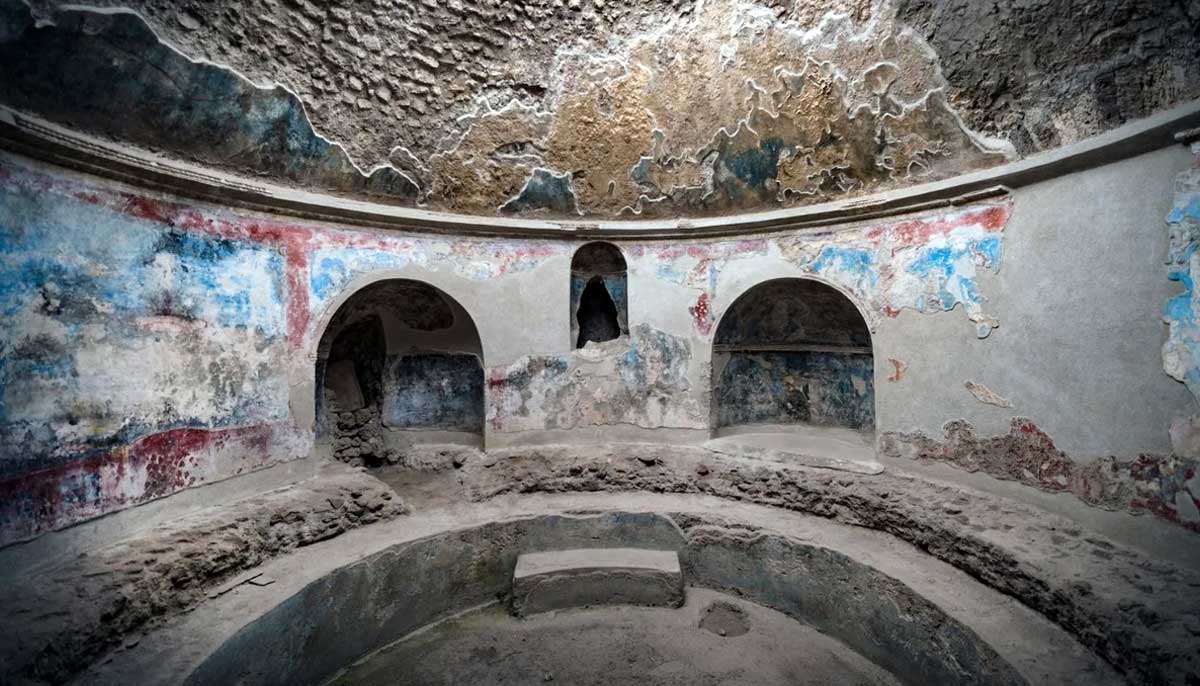
But graffiti is ubiquitous throughout the city. It was very common in brothels and baths, where people spent quite a bit of time socializing. These messages were often on the vulgar side, boasting of sexual conquests. One legionary explained on a brothel wall how his presence in the city had benefited some of its women.
“Floronius, privileged soldier of the seventh legion, was here. The women did not know of his presence. Only six women came to know, too few for such a stallion.”
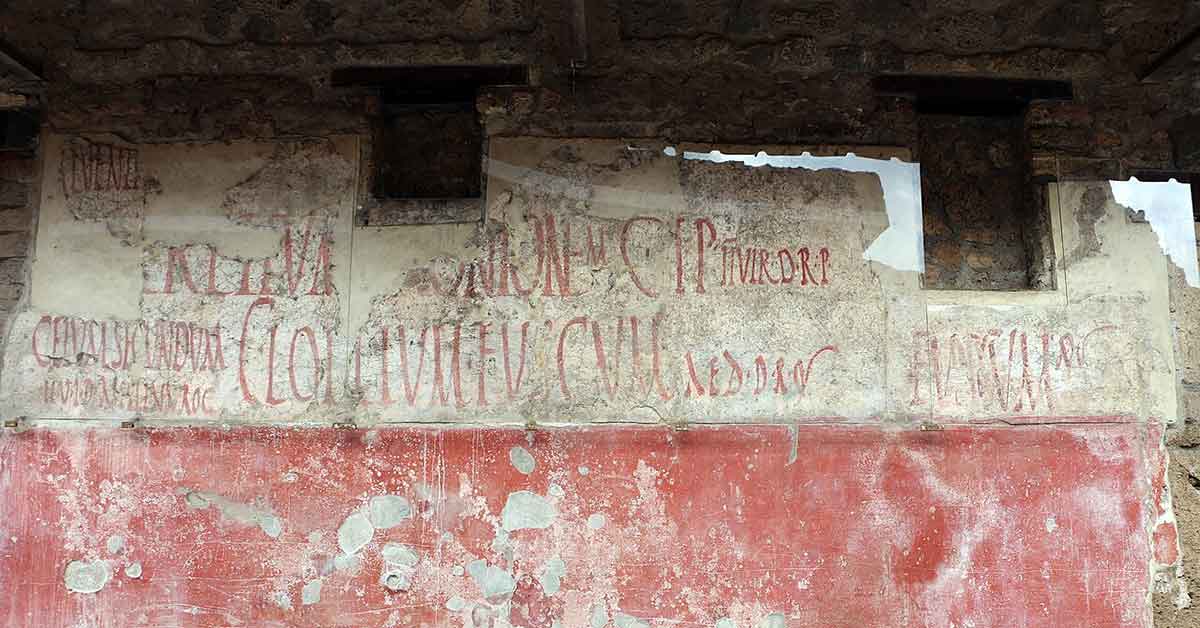
Others left reviews of the service they received at certain establishments, kind of like an ancient Yelp review. Two friends were unimpressed with the service they received at some Baths in Herculaneum.
“Two friends were here. While they were, they had bad service in every way from a guy named Epaphroditus. They threw him out and spent 105 and half sestertii most agreeably on whores.”
While most of Pompeii’s graffiti was written by your “everyday man,” there were also professional signwriters who painted messages, known as dipinto because they were painted instead of scratched. These were usually notes from electoral candidates, including things like promises of free bread and shows. There was also an occasional “attack ad” against an opponent.
Citizens and Slaves
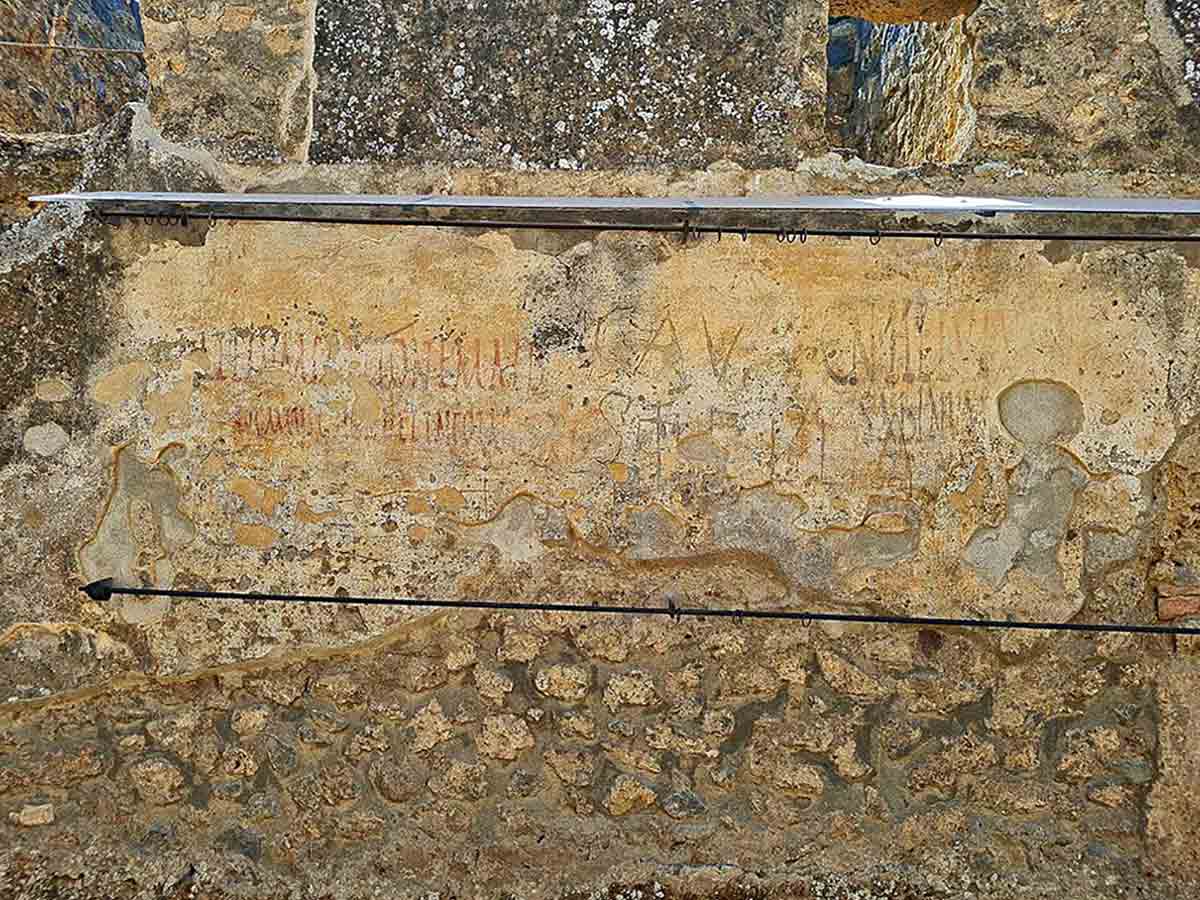
At one bar in Pompeii, two love rivals argued over a slave girl called Iris, who may not have been interested in either of them.
[Severus]: Successus, a weaver, loves the innkeeper’s slave girl named Iris. She, however, does not love him. Still, he begs her to have pity on him. His rival wrote this. Goodbye.
[Successus]: Envious one, why do you get in the way? Submit to a handsomer man and one who is being treated very wrongly and good-looking.
[Severus]: I have spoken. I have written all there is to say. You love Iris, but she does not love you.
But it was not just free men writing about slave girls. One enslaved woman named Methe left behind a prayer of love to the goddess Venus for her lover Chrestus.
“Methe loves Chrestus, may Pompeian Venus be propitious in her heart to each of them and may they both live of one heart.”
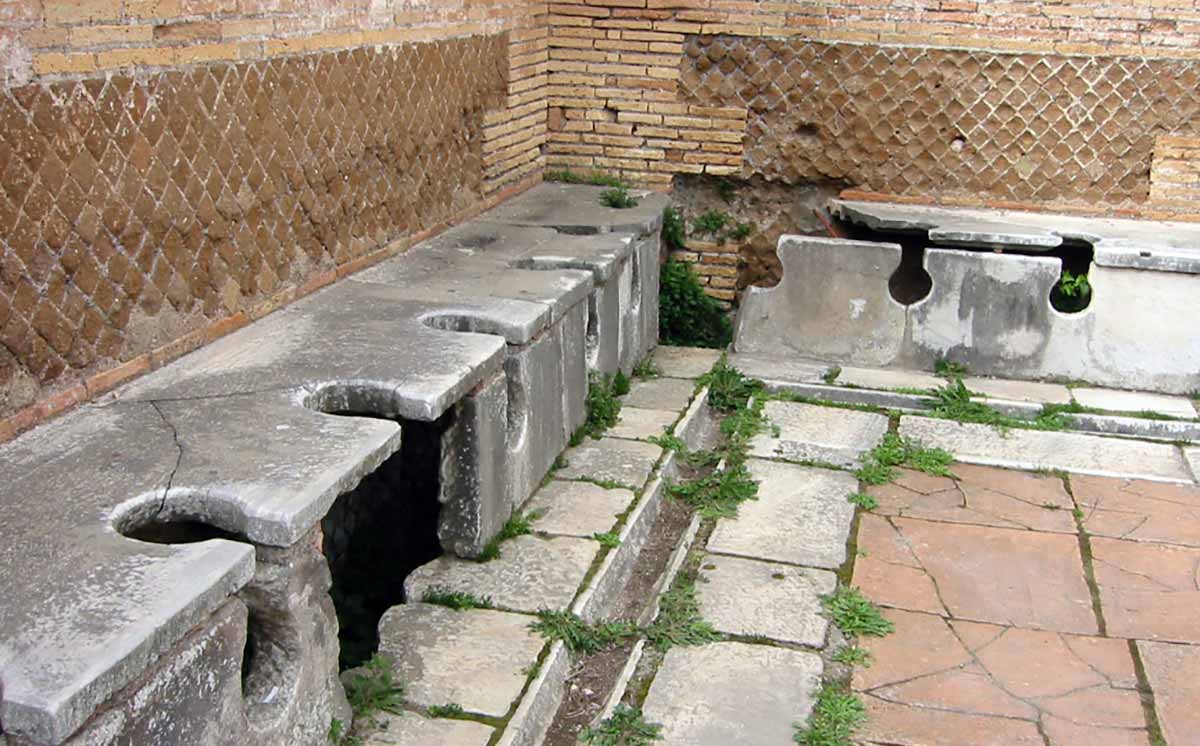
What is surprising about Campanian graffiti is that it could be written by anyone, anywhere, and about anything. For example, an imperial doctor left the following in the House of the Gem in Herculaneum, a wealthy aristocratic home that he may have visited for work.
“Apollinaris, the doctor of the emperor Titus, shat well here.”
Roman culture encouraged people to leave behind a legacy, which is why so many people left behind inscriptions recording their names and detailing their careers and achievements. This same philosophy seems to have extended to graffiti, with people even choosing to put their name on a good trip to the bathroom.
Career Inscriptions
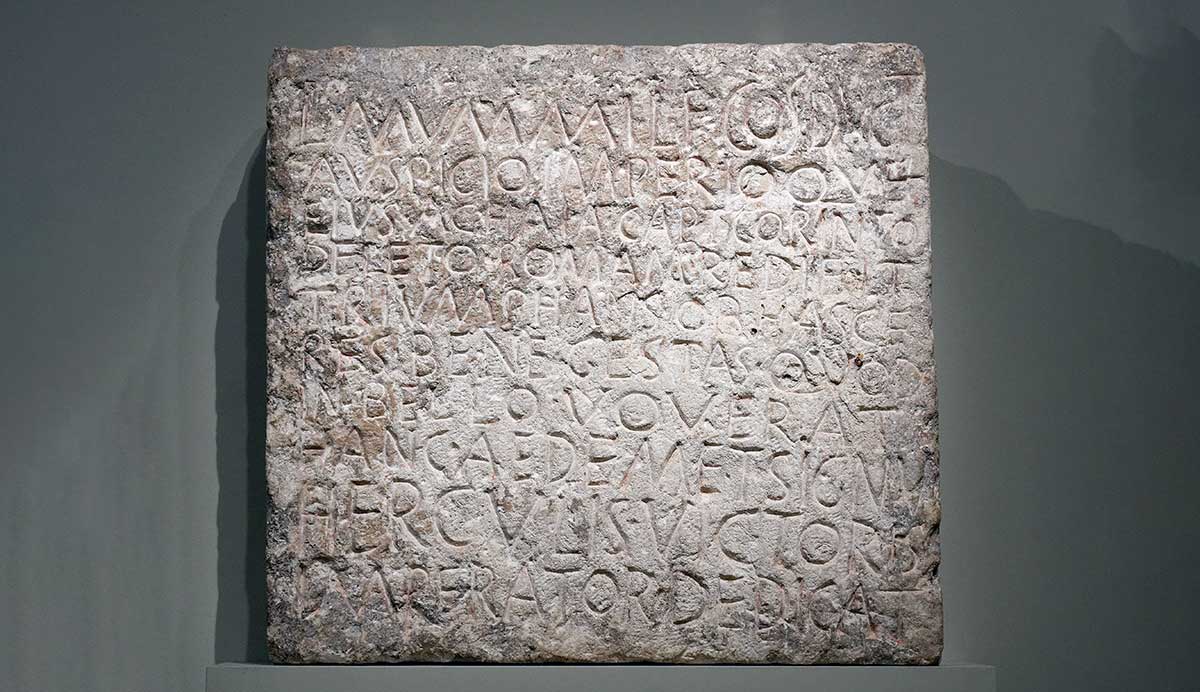
The Romans thought it important to leave behind a record of their achievements. As men climbed the cursus honorum of magistracies, they erected inscriptions publicizing their projects and achievements. The most famous example of this kind of career inscription was Augustus’ Res Gestae, but this was a ubiquitous practice. Take an inscription erected by Lucius Mummius Achaicus, consul in 146 BC, celebrating his role in the destruction of Corinth and the conquest of Greece.
“Lucius Mummius, son of Lucius, Consul. Under his leadership, command, and auspices, Achaia was conquered, and Corinth destroyed. He returned to Rome in triumph… and dedicated this sanctuary and statue to Hercules Victor.”
But it was not just great men who erected these types of inscriptions. An educated imperial freedman named Tiberius Claudius Parthenius also inscribed his career on his funerary monument, celebrating his role as chamberlain to the emperor Domitian, controlling direct access to his private quarters. Notably, Domitian was assassinated in his private bedchamber in AD 96, which Suetonius says Parthenius helped to orchestrate.
Funerary Epitaphs

While career epitaphs were usually set up by the individual themselves, funerary inscriptions were set up by their nearest and dearest. While they also recorded the departed’s great achievements, they often told a more personal story. Some were formal, like the sarcophagus inscription for Lucius Cornelius Scipio, consul in 259 BC.
“This man Lucius Scipio, as most agree, was the very best of all good men at Rome. A son of Barbatus, he was aedile, consul and censor among you; he it was who captured Corsica, Aleria too, a city. To the Goddesses of Weather, he gave a temple deservedly.”
Other funerary inscriptions were significantly more personal and celebrated familial love. Several inscriptions reference the joy of a good marriage and the heartbreak that accompanied the death of a life partner.
“Furia Spes made this for her dearest husband, Lucius Sempronius Firmus. When we met as boy and girl, we were joined in love equally. I lived with him for a short while, and in a time when we should have lived together, we were separated by an evil hand. So I ask you, most sacred spirits, to protect my dear husband entrusted to you, and that you be willing to be most accommodating to him in the nightly hours, so I may have a vision of him, and so he might wish that I persuade fate to allow me to come to him more sweetly and quickly.”
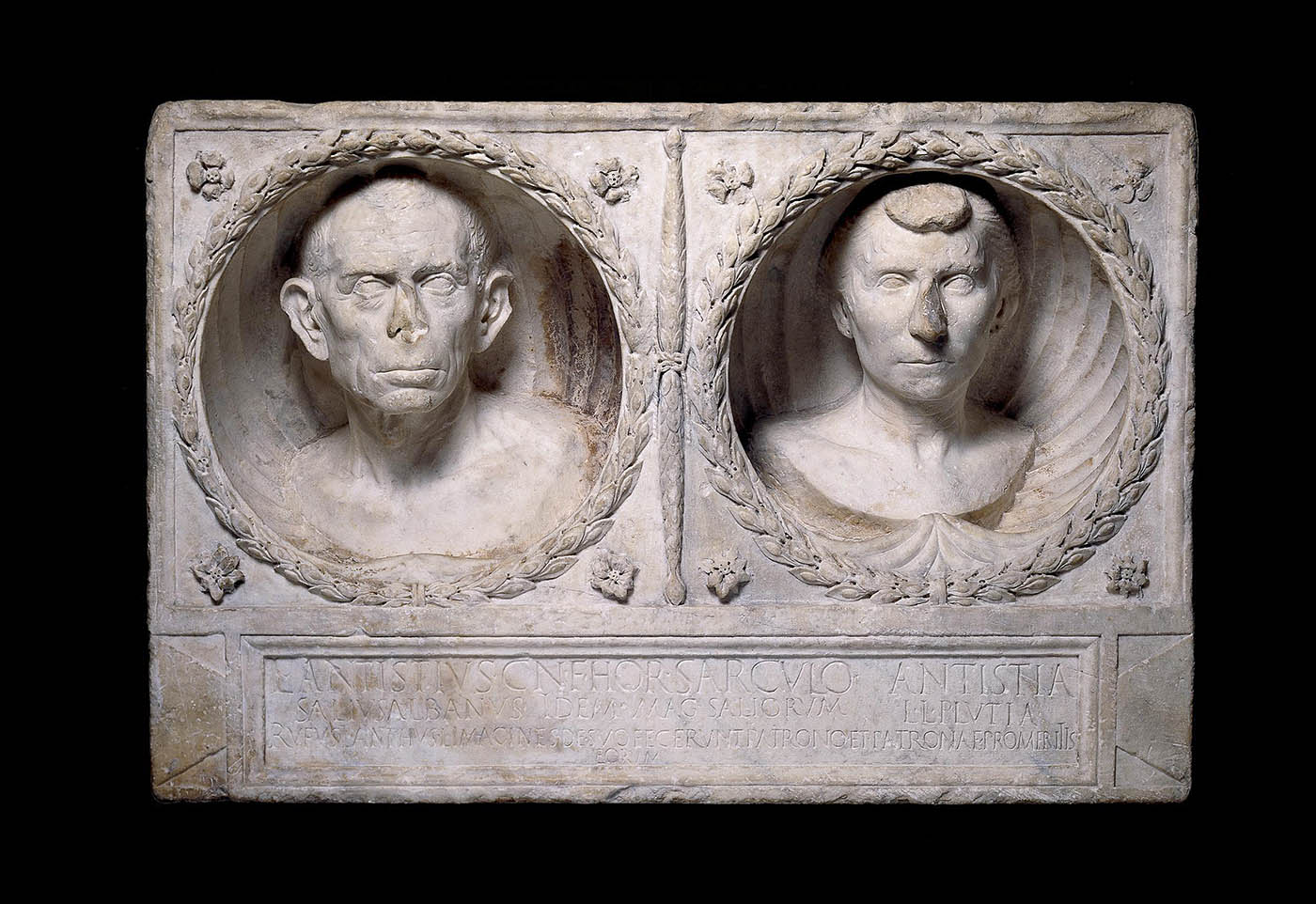
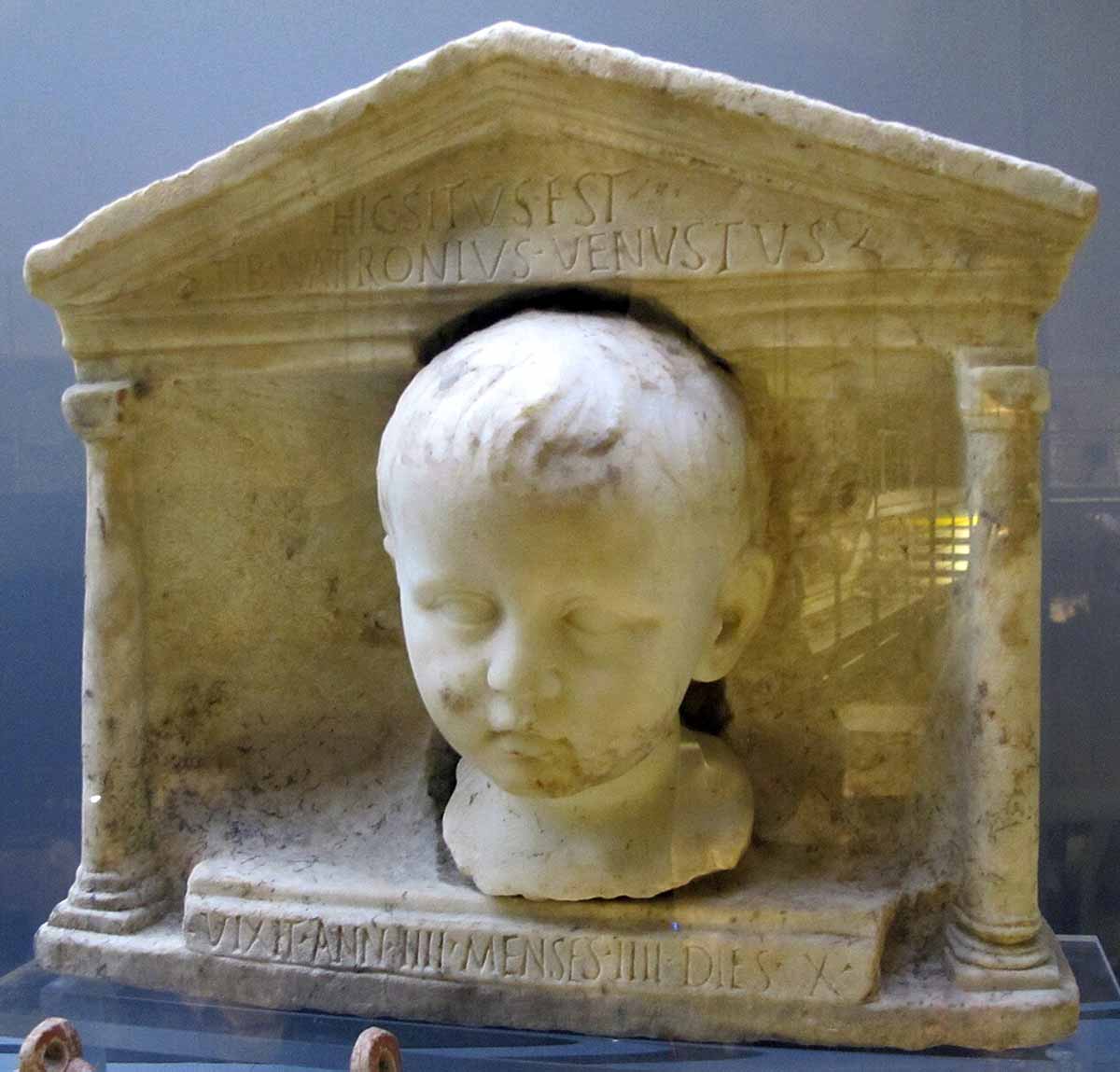
Infant mortality rates were high in ancient Rome, with a third of babies dying in the first year. Due to this harsh reality, the philosopher Seneca warned against excessive mourning of infants of unknown promise (Epistulae 99). But grief for the death of infants was freely expressed in funerary inscriptions.
“My baby, untimely snatched away to live in Hades before she had her fill of the sweet light of life. She was beautiful and charming, a little darling as if from heaven. Her father weeps for her and, because he is her father, asks that the earth may rest lightly on her forever.”
(CIL XIV, 1731)
Even beloved pets sometimes received a loving epitaph from their family.
“Gaul sired me, the shell of the rich sea gave me my name: the honor of that name is becoming to my beauty. Taught to roam unexplored woodlands with courage and to chase hairy game in the hills, unaccustomed ever to be restrained by heavy harnesses or to endure savage beatings with my snow-white body: for I used to lie in my master’s and my mistress’s lap and mastered the art of resting wearily on a spread-out blanket. Even though I used to be able to express more than I was entitled to with my inarticulate mouth, that of a dog, no one feared my barking. But I have already met my fate, stricken down during ill-omened whelping, me, whom earth now covers under this little marble plaque.”
Remembering the dead was integral to the Roman way of life, and inscribing their name and achievements in stone was an essential part of that process.
Curse Tablets
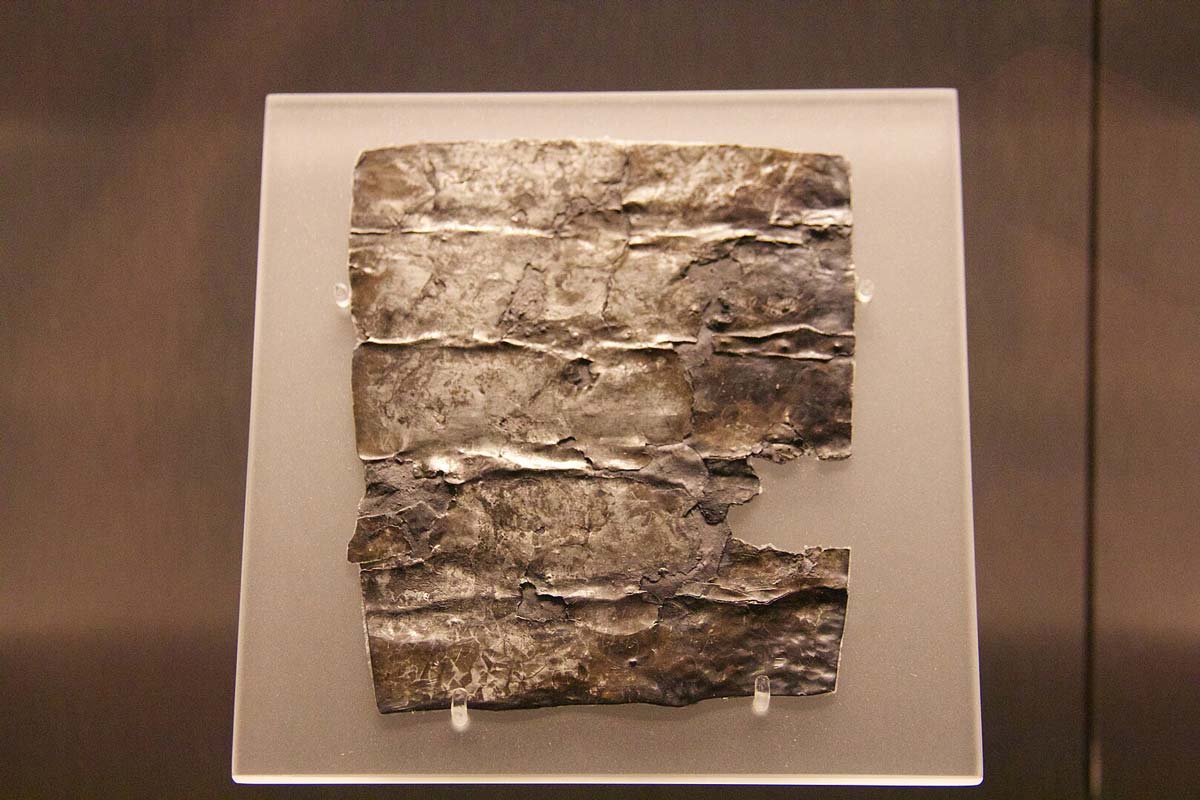
Just as inscriptions could stand as an eternal record of love, they could also record hate. Curse tablets, known as defixiones, were extremely common in the Roman world. They were made by people, using the services of a professional magician, to ask the gods to punish people who had wronged them. Targets were often thieves and unfaithful lovers.
They were usually written on a thin piece of lead about the size of a postcard, which was then folded or rolled up and pierced with an iron nail. The tablets were then deposited in a place associated with the underworld, such as inside a grave, near an execution site, dropped down a sacred well, or hidden inside a sanctuary.
Over 130 curse tablets have been recovered from the sacred spring at Bath in Roman Britain, mostly directed to the local goddess of the spring, Sulis Minerva. Many asked the goddess to punish people who stole from them while they were using the facilities.
“Docimedis has lost two gloves; may he who has stolen them lose his mind and eyes in the temple where you appoint.”
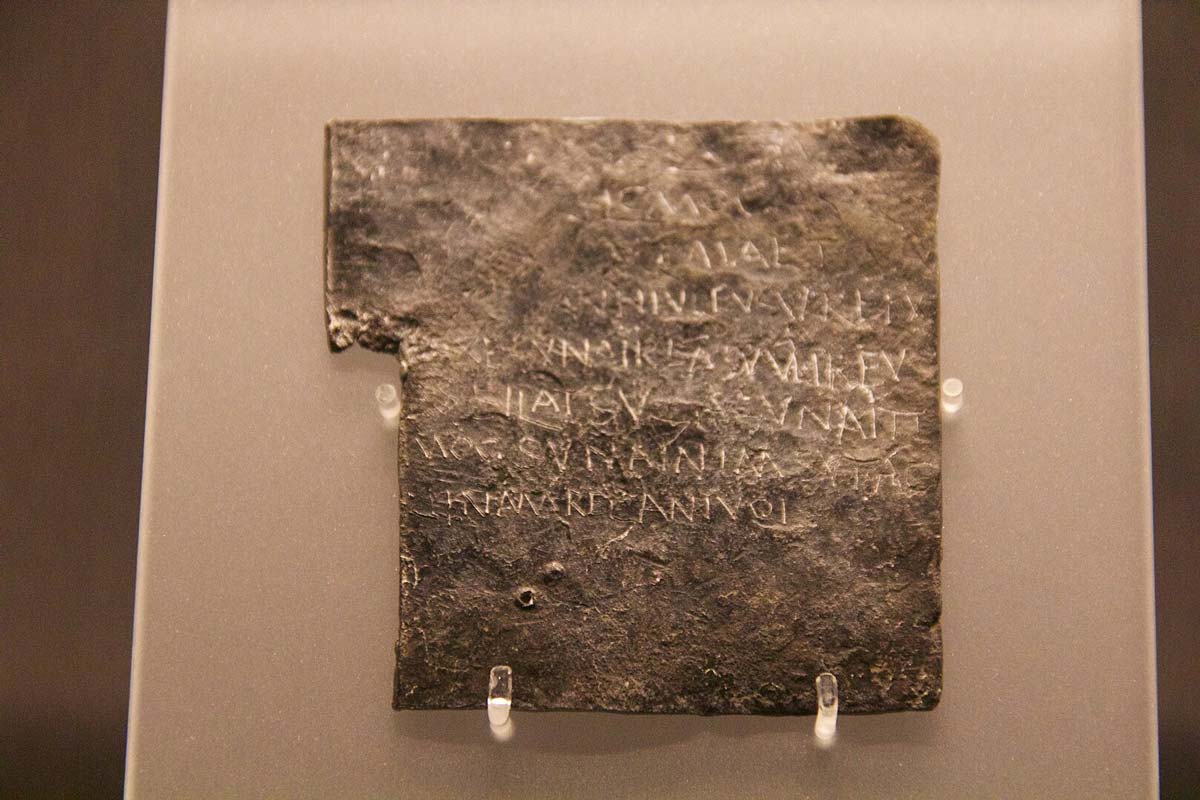
Special tricks were sometimes used to make the spells extra potent, such as writing the words backwards, as Vilbia did when visiting the springs in Roman Bath.
“May he who carried off Vilbia from me become as liquid as water. May she who obscenely devoured her become dumb, whether Velvinna, Exsupereus, Verianus, Severinus, Augustalis, Comitianus, Catus, Minianus, Germanilla, or Jovina.”
(RIB 154)
Curses against lovers were also extremely common. Some were targeted at love rivals and asked the gods to destroy the attraction that existed between the rival and another person. Others were to get revenge on unfaithful lovers. One curse asks the spirits of the underworld to punish a woman named Victoria for betraying her lover.
“Underworld spirits, I entrust to you Victoria. Inflame her mind, burn her blood, and drive her mad. Deprive her of sleep, food, and drink. Let her find no rest, no pleasure, and no peace with any other man until she comes back to me, weeping and begging for forgiveness.”
(DT 271)
Competitive Curses
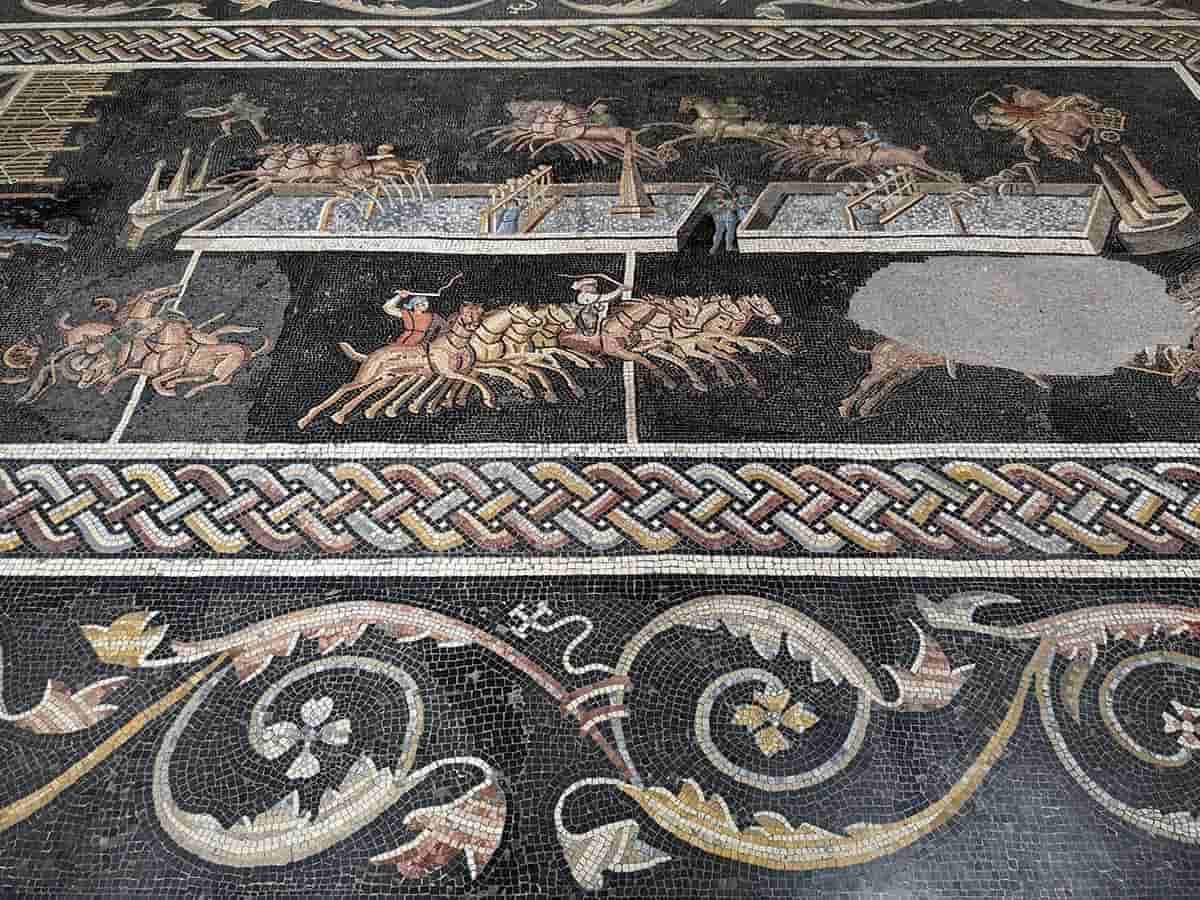
The Romans took chariot racing extremely seriously, and street brawls between the supporters of the different teams were common. It is therefore perhaps unsurprising that some people chose to curse the horses of the opposing team to ensure their team’s victory. The following, buried in a cemetery along the Via Appia, cursed the horses of the Red team.
“Holy spirit of the underworld, take away the strength and power of the horses of the Red Team: Arrogans, Liber, Ferox, and Superbus. Make their legs heavy, make them stumble at the turning post, make them crash into the wall, and let them lose the race so that the Blue Team may win today.”
(CIL VI, 10050)
Divine Devotion
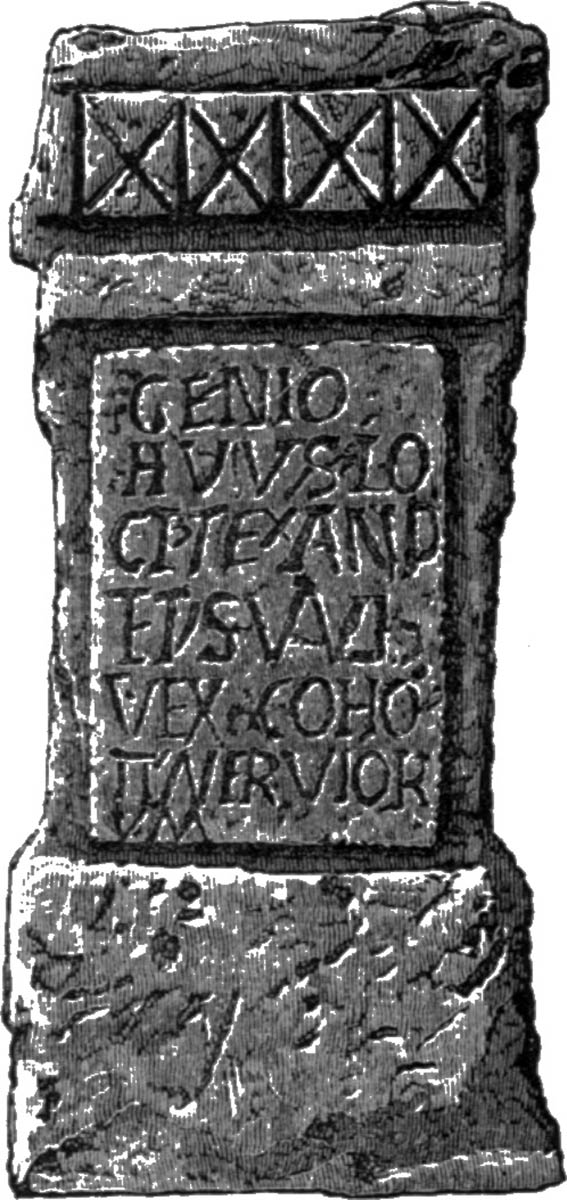
Proper recognition of the gods was integral to Roman religion. They believed that it was extremely important to have the support of the gods in all endeavors, and that securing that support depended on proper worship and recognition of the gods. This was important on a state level, and in the home. But it was also important while on the road. This is why votive offerings set up by soldiers and travelers are found throughout the Roman world.
Soldiers posted on the Roman frontiers have left behind thousands of examples of inscribed votive altars, allowing them to maintain their religious devotions on the front lines. They are almost all inscribed using the same formula: the name of the deity, their own name, the reason for the votive, and a note that it has now been fulfilled.
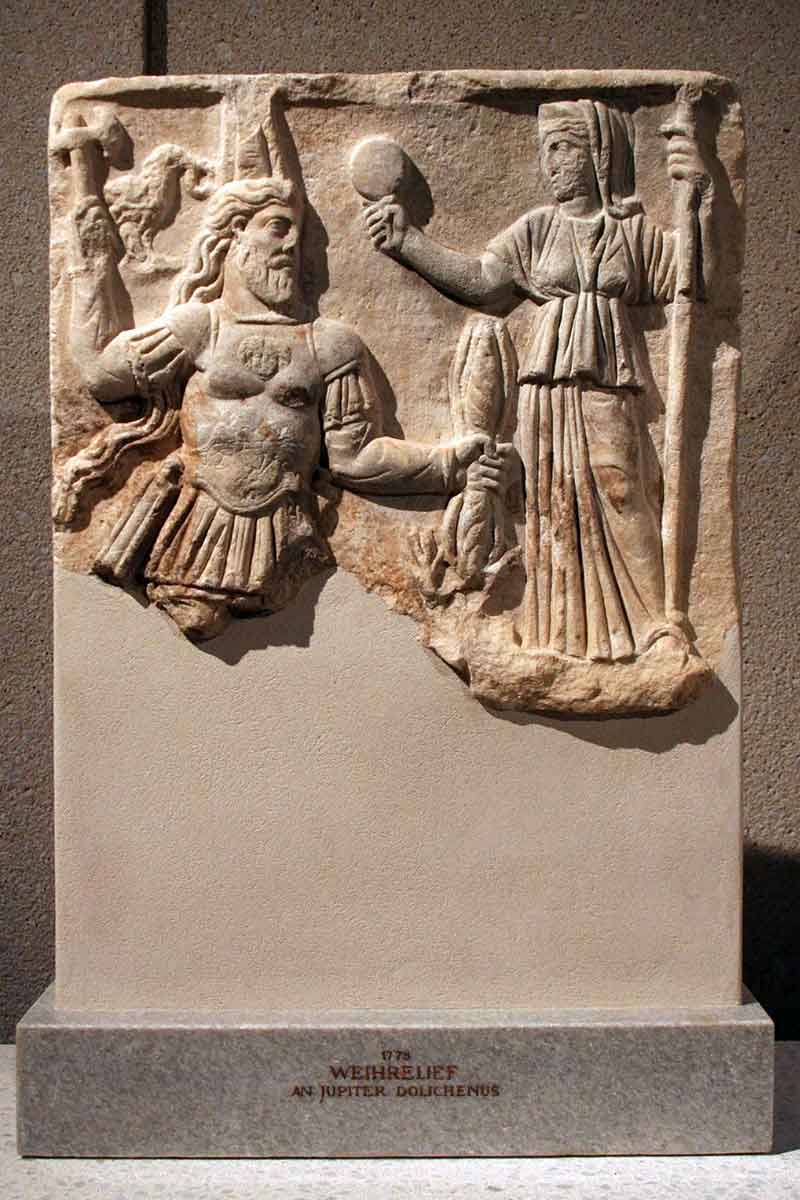
Through syncretism, the altars often associated the Roman god with a local god, naming both, so that the soldier could be sure they were appeasing all the concerned deities. One altar found along Hadrian’s Wall was dedicated to Jupiter Dolichenus, a combination of the Roman god Jupiter and a Syrian god whose cult became widespread across the Roman Empire in the 2nd and 3rd centuries AD.
“To Jupiter Dolichenus Best and Greatest, for the welfare of the detachments of the Sixth Legion Victrix and of the army of each Germany under the charge of Marcus Lollius Venator, centurion of the Second Legion Augusta. They paid their vow willingly, deservedly.”
(RIB 3253)
The Language of the Street
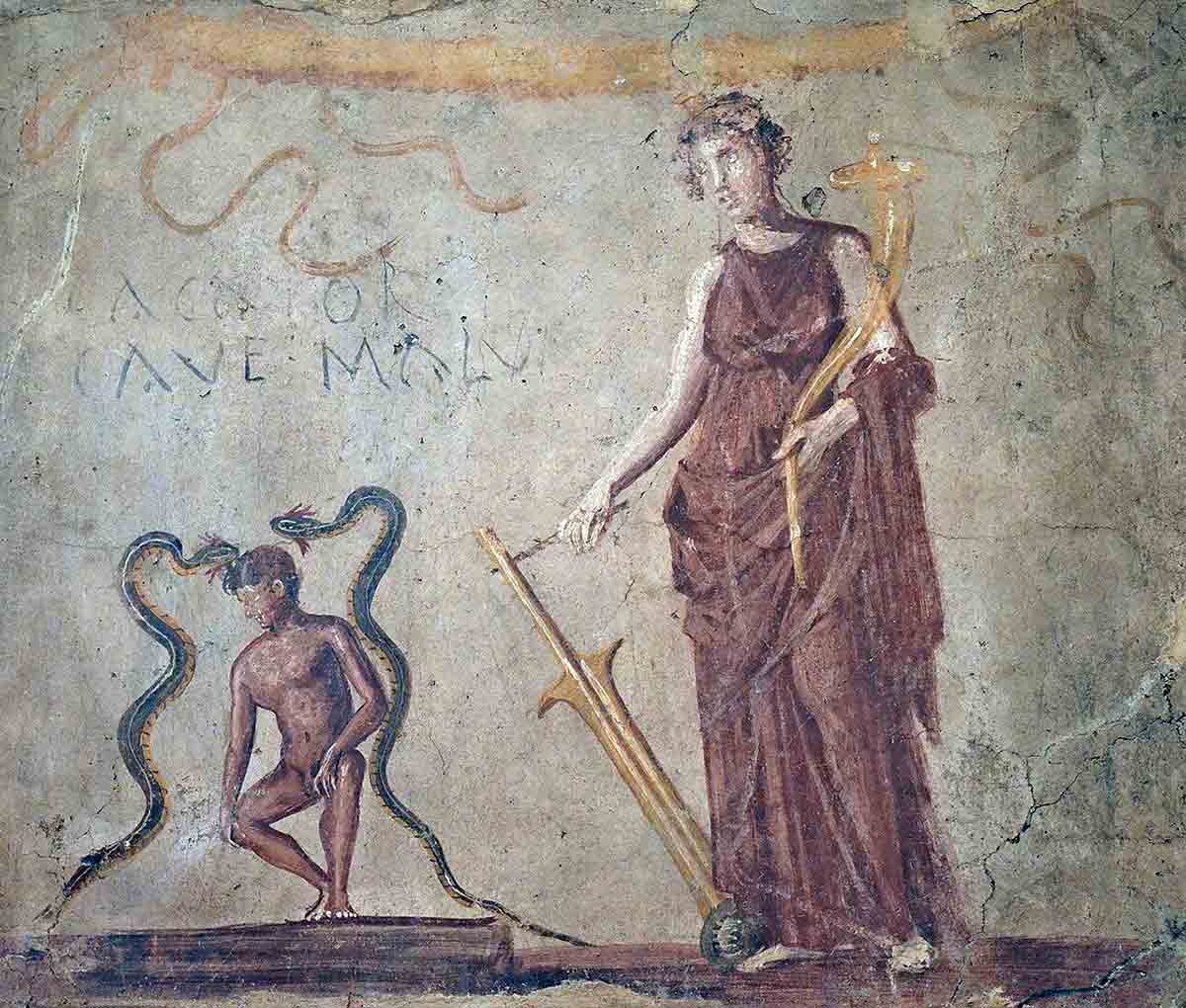
These graffiti and inscriptions made by regular Romans offer a rare glimpse into the lives and minds of many everyday Romans, often hard to discern through the marble columns and the imperial histories. They also reveal what real Latin may have sounded like in the street, rather than the polished Latin of Cicero’s speeches, or the carefully crafted Latin of imperial pronouncements.
We see lots of abbreviations, with the last letter of many words dropped, probably reflecting how the words were pronounced day to day. For example, the final “m” was often dropped from nouns, directly leading to it being dropped in modern Italian. We also see cruder slang words for certain things; for example, a horse was a caballus, not an equus, and a drunk was a pinguis rather than a vinolentus. Many of these day-to-day words survive in modern Romance languages.
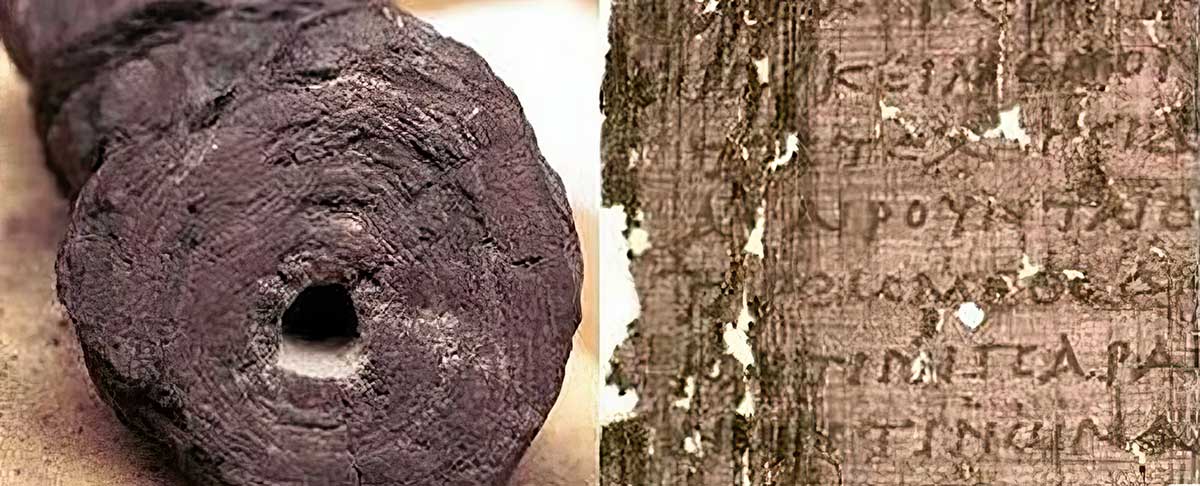
The ubiquity of graffiti and personal inscriptions also suggests that literacy was widespread. Current estimates are at 15% across the Roman Empire, and closer to 35% in cosmopolitan places like Pompeii. This is evidenced not only from the number of inscriptions, but also their content. For example, in Pompeii, a writer quotes Virgil. Where Virgil said, “I sing of arms and a man,” they wrote, “I sing of cleaners and a hoot howl, not arms of a man.” This shows that they not only knew how to write but were well-read.
It is this widespread literacy that allows us to read the personal messages of common people 2,000 years ago. It also reflects the universal human urge to say “I was here.”