
On February 15, 44 BC, during the festival of the Lupercalia, Mark Antony stepped forward to offer Julius Caesar a royal diadem. The crowd booed, forcing the dictator to refuse the ultimate symbol of Hellenistic kingship. This was a calculated political test that failed. Caesar was now the autocratic leader of Rome, but this test showed that the city’s centuries-old hatred of kingship would not allow them to accept this regal framing of his power. His rejection of the diadem did nothing to mollify Rome’s elite; instead, for many, it cemented the idea that Caesar was a man too dangerous to live.
The Man Who Would Be King
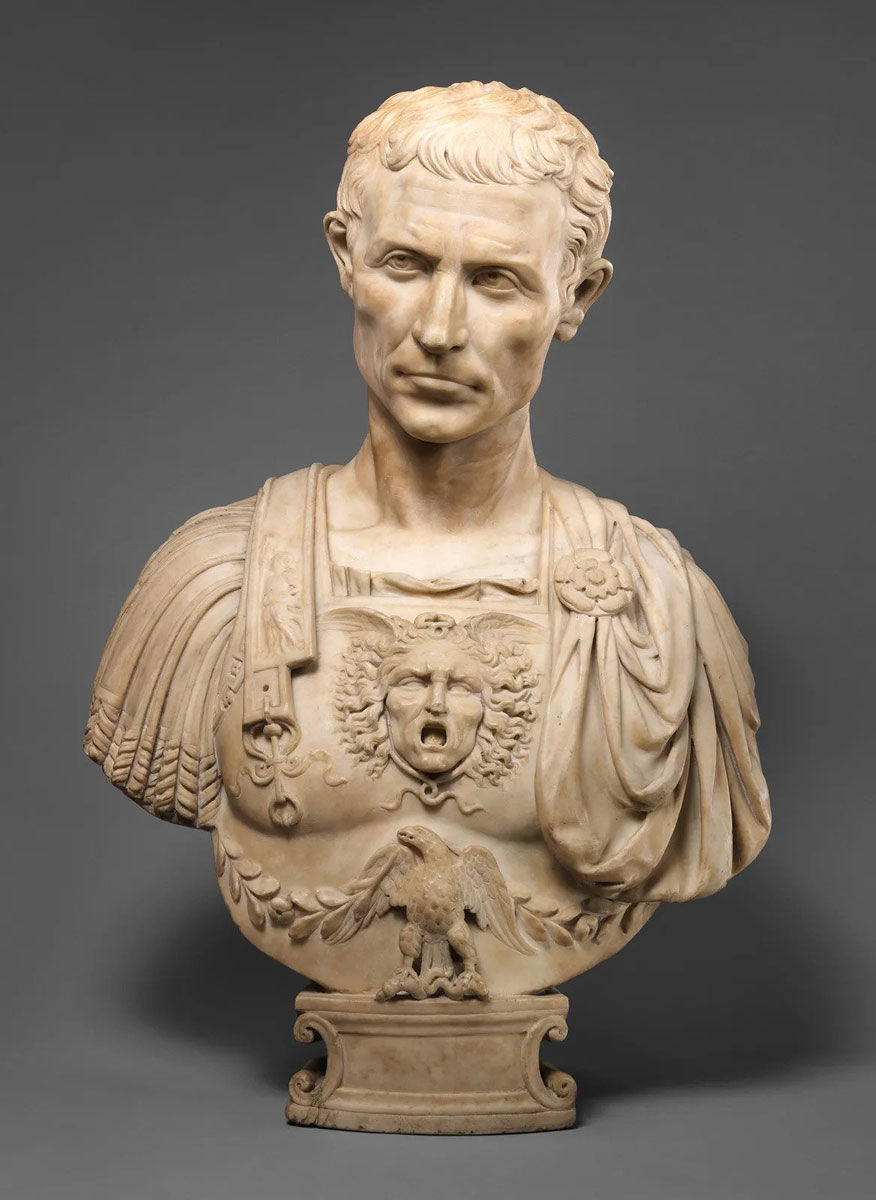
In January 49 BC, Julius Caesar marched his army over the Rubicon into Italy, igniting a civil war from which he would emerge triumphant. When he entered Rome in October 45 BC, he was the unchallenged leader of Rome’s armies and politics. This had been recognized the previous year when he was awarded the office of dictator (sole ruler, superseding Rome’s two consuls) for a period of ten years. In early 44 BC, this was updated to dictator perpetuo (dictator for life), recognizing that he was now Rome’s undisputed ruler.
Rome had not had a sole ruler for almost five centuries. According to Roman legend, the last king of Rome was ejected in 509 BC, and the Republic was established. From this time, the Romans were fiercely anti-monarchical. One of the worst criticisms you could make of a Roman politician was to accuse him of wanting to be a king. This accusation was leveled against both Tiberius and Gaius Gracchus, populist politicians who used the people’s assembly to bypass Senatorial authority. Both men were assassinated. Cato the Younger had been leveling a similar accusation against Caesar for years, but he died at Thapsus in 46 BC.
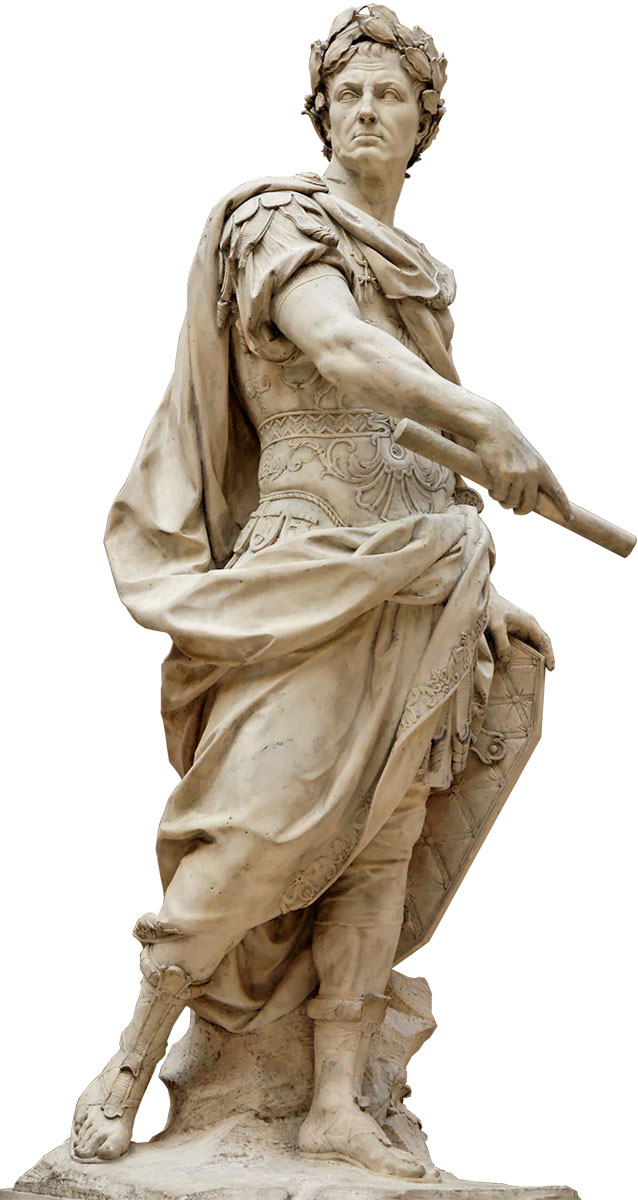
Now Rome was faced with the challenge of understanding and recognizing sole rule after five centuries. This was a struggle on both sides. The Senate offered Caesar increasingly extravagant honors in recognition of his position. This included permission to wear triumphal dress (usually only worn by generals during triumphs) at all public events, the forename imperator (commander) and the surname parens patriae (father or benefactor of his country), and statues in places usually reserved for the gods.
Meanwhile, Caesar had to decide which honors to accept and which to reject. It would be considered insulting and ungrateful to reject all offers, but he could be accused of arrogance and aiming too high if he accepted certain honors, even when offered by others. It was a delicate balancing act to formulate his sole power within Roman tradition without crossing a dangerous line.
The Theater of the Lupercalia Festival
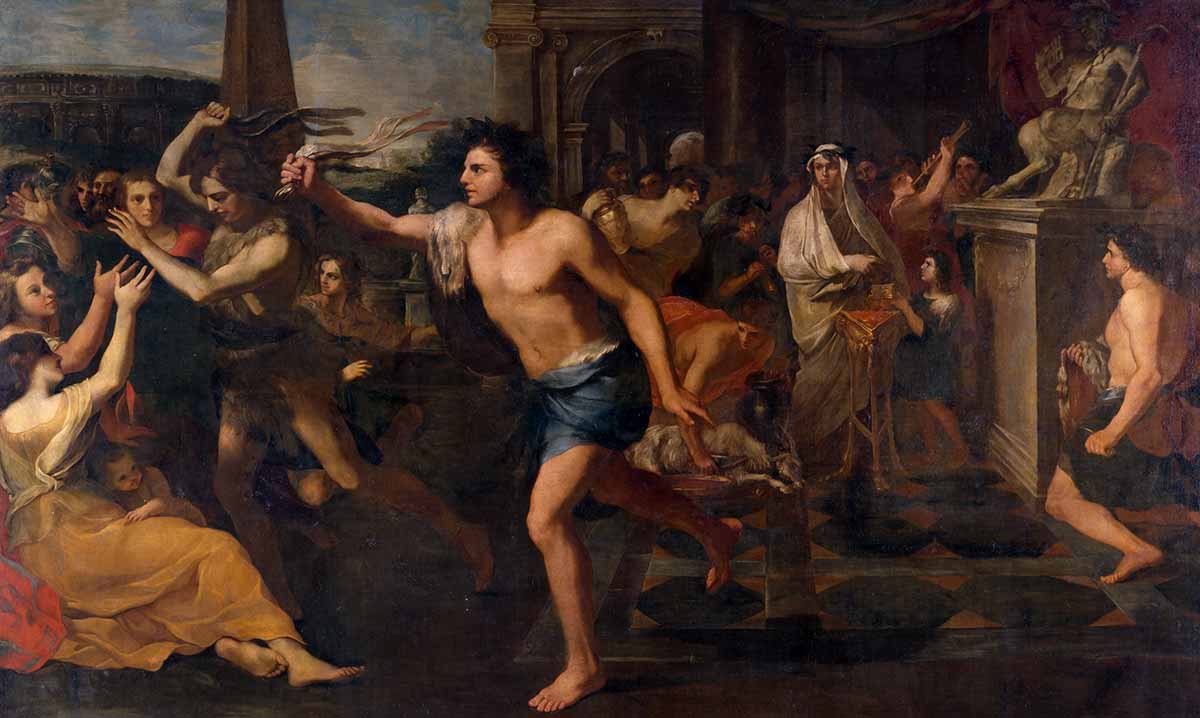
Lupercalia was an ancient Roman pastoral festival held annually on February 15 to purify the city and promote health and fertility. February is named for the festival, as it used a purification instrument called a februa, highlighting just how important it was in the Roman calendar. The “wolf festival” was linked with the foundation of Rome, with sacred images held in the cave where tradition held that Romulus and Remus were suckled by the she-wolf, ensuring they would survive to found the city of Rome.
The festival itself was held in the center of the city on the Palatine Hill and in the Forum. The Lupercalia also had its own priesthood known as the Luperci, or brothers of the wolf. There were traditionally two colleges of Luperci, one chosen from the Quinctia gens or bloodline, and the other from the Fabia gens, each representing one of the legendary founding brothers. But in 44 BC, to honor Caesar’s new position, a third college was established, with priests chosen from Caesar’s Julia gens. Mark Antony, Caesar’s co-consul for that year, was selected as the lead magister of that college. This signaled that Caesar was now considered a new founder of Rome.

At the height of the Lupercalia festival, animals were sacrificed by the Luperci, after which the heads of the Luperci were then anointed with sacrificial blood. They donned only animal skins, and ran between the Palatine Hill and the Lupercal cave.
This meant that aristocratic men, always between the ages of 20 and 40, were running around naked and engaging in subversive behaviors. This included whipping young women in a ritual believed to encourage fertility, ease the pain of childbirth, and prevent miscarriage. The city was in a state of festivity.
The Spectacle of Mark Antony Offering the Crown
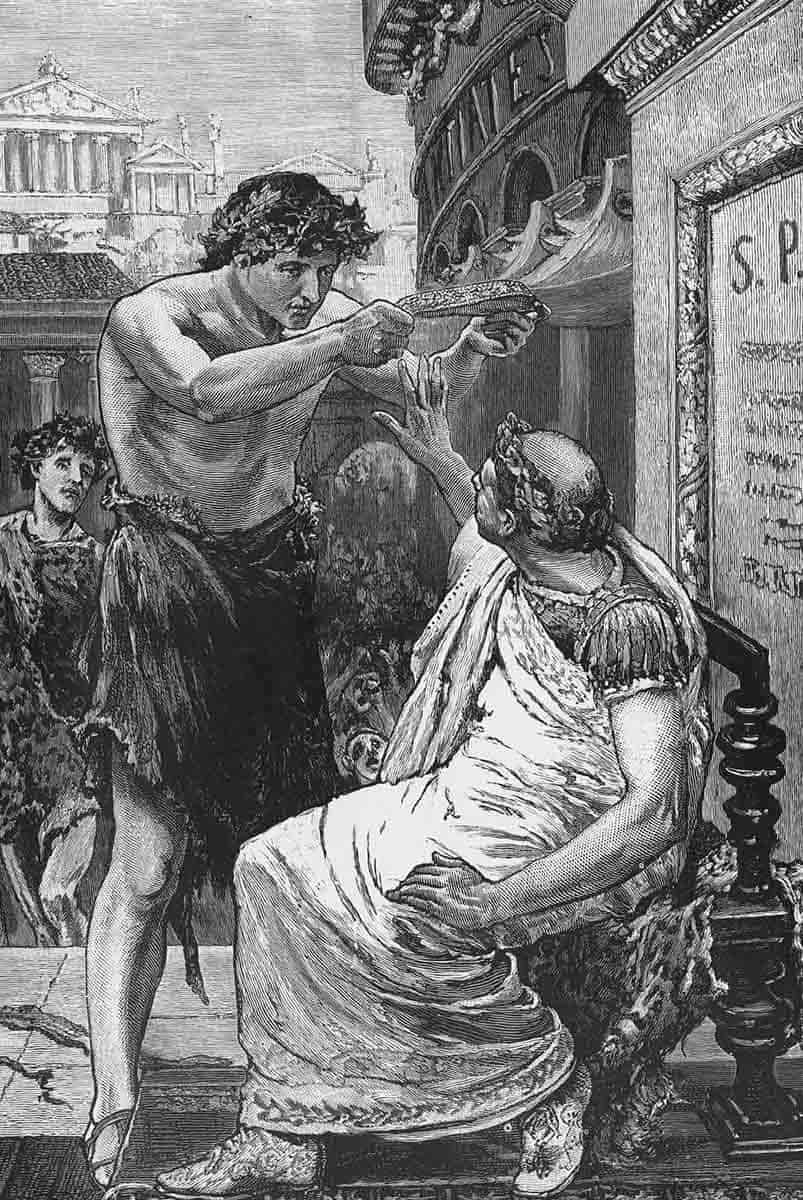
This was the setting for Mark Antony offering Caesar the diadem of a king, recorded by Cicero, who was a contemporary witness, as well as the later biographers Suetonius and Plutarch.
Caesar, as consul, was already on a raised Rostra in the Forum, wearing the triumphal dress that was his right and sitting on a throne that had also been awarded to him as an honor. To all the world he looked like a king, as the Roman kings also wore the garb of a triumphator. This outfit also included a crown made from laurel leaves.
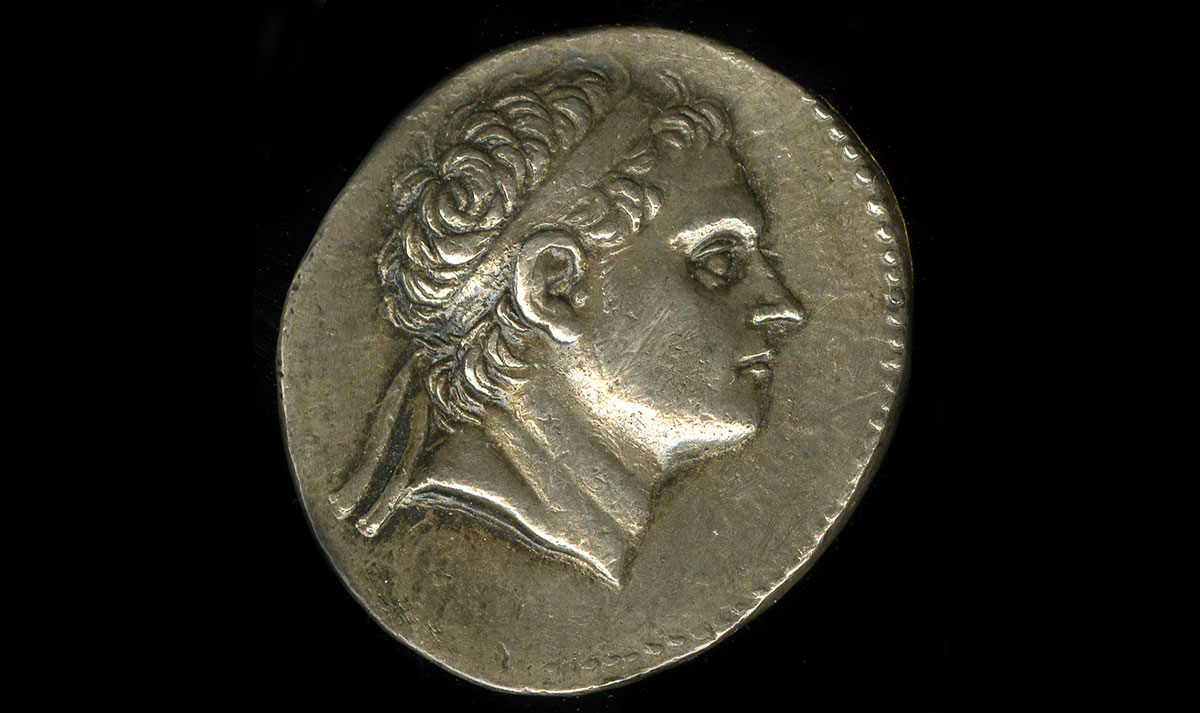
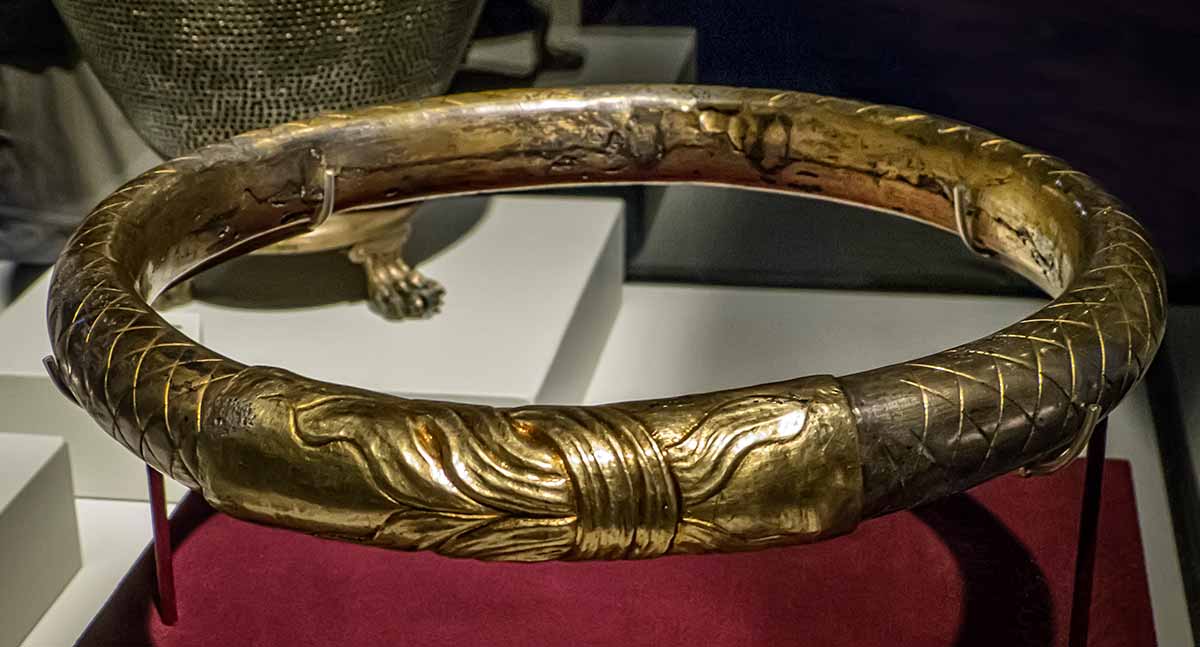
As the Luperci ran around the city, Mark Antony, in his capacity as both consul and chief Lupercus of the Julian gens, approached Caesar with a diadem wrapped in a laurel wreath. This diadem was based on the diadems worn by the kings of the Hellenistic kingdoms in the east. Accepting the diadem would mean that Caesar was claiming the position of king of Rome.
According to Plutarch, when Antony offered the diadem, he said that the people of Rome offered it through him, though there was certainly no vote on such an honor in the public assembly. The crowd cheered at the offer but cheered even louder when Caesar turned it down. Antony tried to offer the diadem again, but this time there were boos from the crowd, indicating their displeasure. This time, Caesar not only rejected the diadem, but reportedly stated that Jupiter was the only king in Rome and sent the diadem to his temple.
When the diadem was taken away, it was placed on one of Caesar’s many statues. It was removed by the two Tribunes of the Plebs, which saw further applause. Caesar was not to become a king on this day. This dramatic scene has made its way into the public consciousness, immortalized by Shakespeare in his play Julius Caesar.
How the Staged Refusal Fueled the Ides of March
The spectacle at the Lupercalia was almost certainly a staged experiment to test whether the Roman people were ready to accept Caesar as king. If they enthusiastically acclaimed him at the festival, there would be little the Senate could do but ratify their actions. But the test failed.
It has been suggested that Mark Antony acted alone in making the offer, either to fast-track Caesar’s timeline for his own reasons, or to secretly work against Caesar by putting him in a difficult position. Cicero specifically accuses Antony of this in his Philippics; speeches delivered against Antony after Caesar’s death. Nevertheless, this scenario seems unlikely.
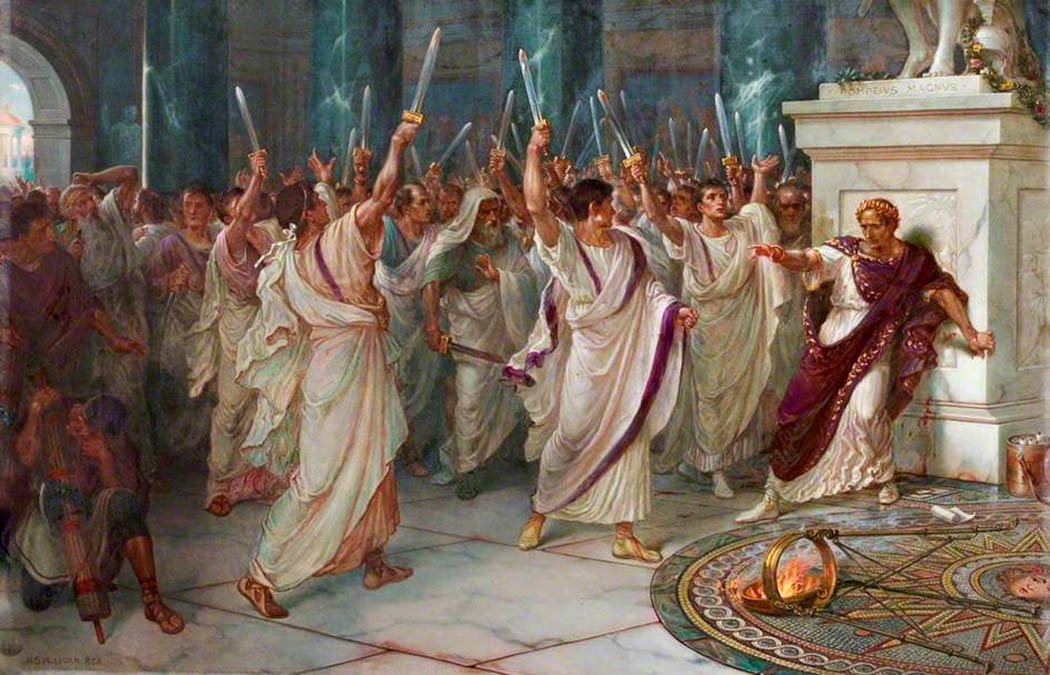
Antony suffered no negative backlash from Caesar after the incident, while Caesar had the two tribunes who removed the diadem from his statue expelled from the Senate. This indicates that Caesar had a vested interest in the success of the diadem scheme.
But Plutarch specifically tells us that this incident had the impact of strengthening support for Brutus and Cassius’ plan to move against Caesar. Men who were unsure of Caesar’s intentions and undecided how great a threat he presented to the Roman state now saw that kingship was his ultimate aim. These men rallied to the cause, and Caesar was assassinated less than a month later on the Ides of March.
The Confusing Contradiction of Divinity
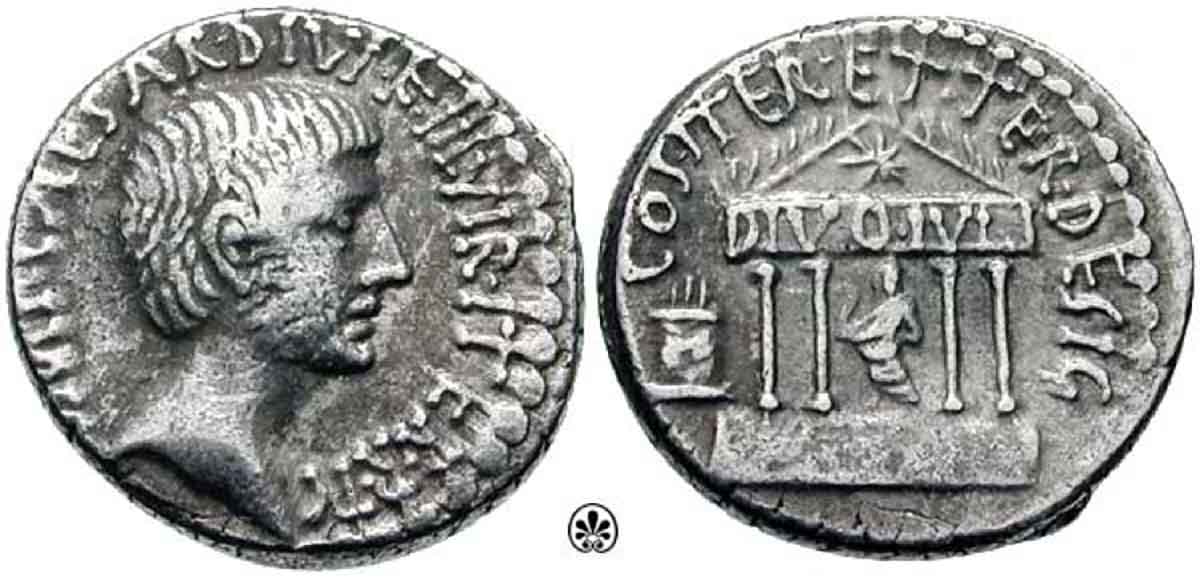
Understanding why this diadem was the final straw can be difficult, considering the honors that Caesar had already been granted. He had already been given real, absolute political power as perpetual dictator. His military supremacy was recognized with the forename imperator. His role as the most important person in the Roman state was reinforced with the title parens patriae. He had also already been given honors previously associated with the kings, such as triumphal dress.
Moreover, the sources suggest that Caesar had even been granted honors previously reserved for the gods. He was given a gold throne in the Senate house; he had a litter that was to be carried in the procession of the gods; his statue was placed alongside those of the gods; his home was to receive a temple pediment; and he was to have a special priest, alongside the college of Luperci who had already acted in the Lupercalia. Cicero, while criticizing these honors, also criticized Mark Antony for not seeing that they were fully realized now that Caesar was dead.
Therefore, in the Roman mindset, while it was acceptable for Caesar to receive honor and recognition on par with the gods, he could not be a king. This is a reflection of five centuries of explicitly rejecting kingship within Roman ideology.
The Rise of the Principate
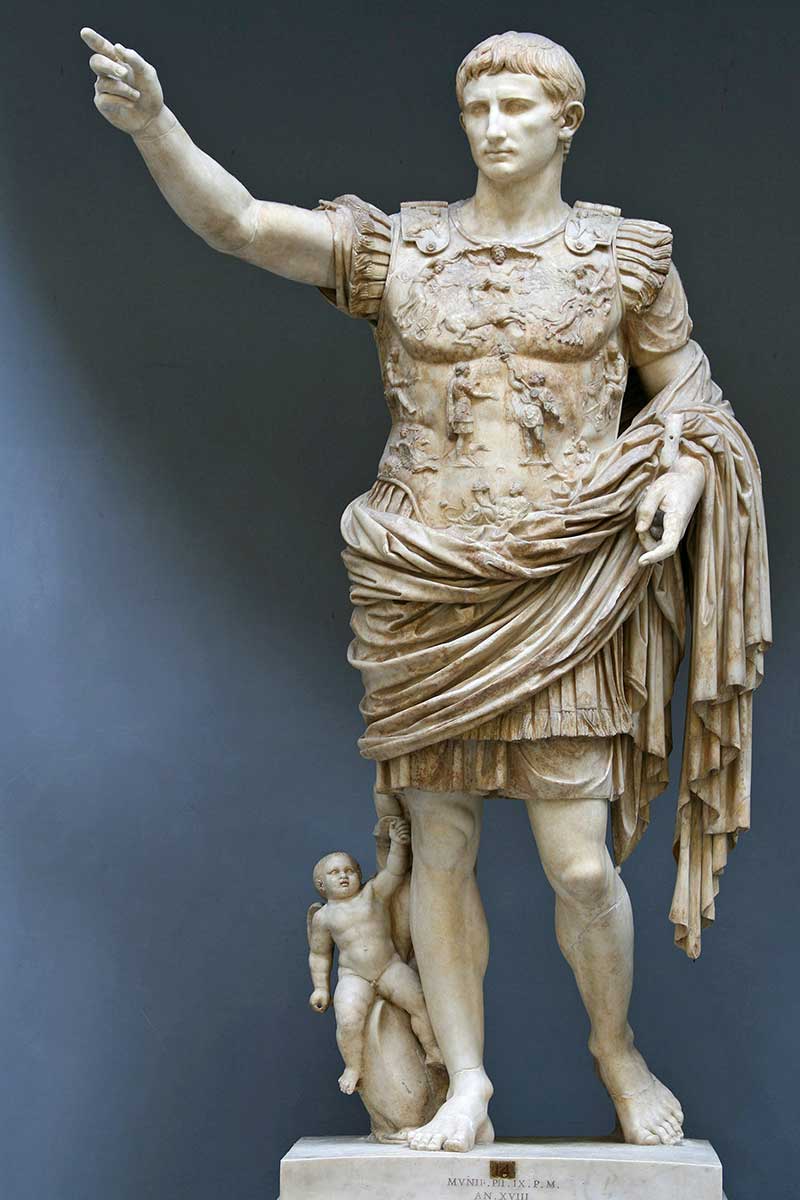
Caesar’s death led to more civil war until Caesar’s heir, grandnephew, and adopted son Octavian emerged supreme in 31 BC. He was now faced with the same challenge of formulating his absolute autocratic power within Roman ideology. He did this by establishing the façade that he was princeps, the first among equals, taking the title Augustus instead of rex (king).
Augustus dispensed with magistracies such as dictator and perpetual consul, “settling” for maius imperium (greater imperium, placing him over other magistrates that held imperium over the armies) and tribunicia potestas (the power of the tribunes to propose and veto laws, plus making his person sacrosanct). He managed to create the illusion that he was working within Republican tradition, while not only gathering autocratic power around himself, but also establishing a dynasty, like a king. He was so successful that every ruler of Rome for the next 500 years would use the titles Caesar and Augustus.

Funnily enough, he also avoided Caesar’s precedent of accepting divine honors in Rome. While he made the emperor central to Roman religion with sacrifices made to the gods for his health and success across the Empire, he established the precedent that emperors could only be deified and receive worship from the Roman state after death. Due to Augustus’ actions, this ideology also became so entrenched that “wanting to be a god” replaced “wanting to be a king” as the greatest criticism that could be leveled against a Roman emperor.