
A universal symbol of disrespect, giving the middle finger dates back over 2000 years to ancient Greece as a symbolic representation of the phallus. It crossed boundaries and cultures; the Romans adopted it and kept it alive through the centuries, and it survived the Middle Ages.
Like many things of this nature, it spawned myths and legends about its origin, but in this case, there is plenty of evidence that debunks these stories.
How Aristophanes and Diogenes Popularized the Gesture in Classical Athens
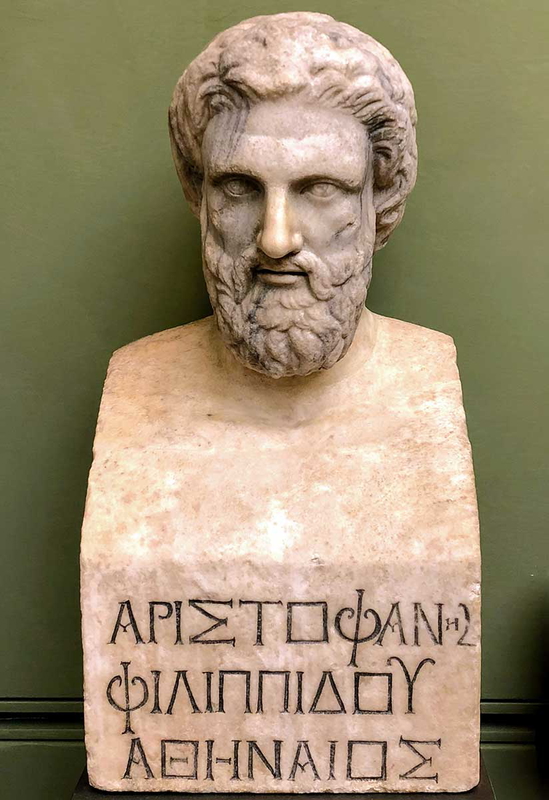
Raising the middle finger as a rude gesture has a distinct history that is well recorded in ancient Greece, quite possibly the birthplace of this insult. The earliest solid evidence comes from 423 BC in Aristophanes‘ “The Clouds,” where the gesture is used, suggesting it could be more than 2500 years old and was widely known (and used) then. Aristophanes used it again in 421 BC in “Peace,” a play which also includes farting in someone’s face.
This isn’t a once-off in the ancient Greek historical record either. Around 330 BC, Diogenes of Sinope used it, as attested to by Diogenes Laërtius several centuries later in his biographical work “Lives of Eminent Philosophers.” Diogenes of Sinope, the Cynic philosopher, extends his middle finger when referring to Demosthenes, and accompanies it with the words, “There goes the demagogue of Athens,” referring to the pompous orator.
Flipping the middle finger in ancient Greece carried similar meanings to today. It was an offensive insult with a sexual reference, and it could sometimes be used humorously.
The Roman Adoption of Digitus Impudicus
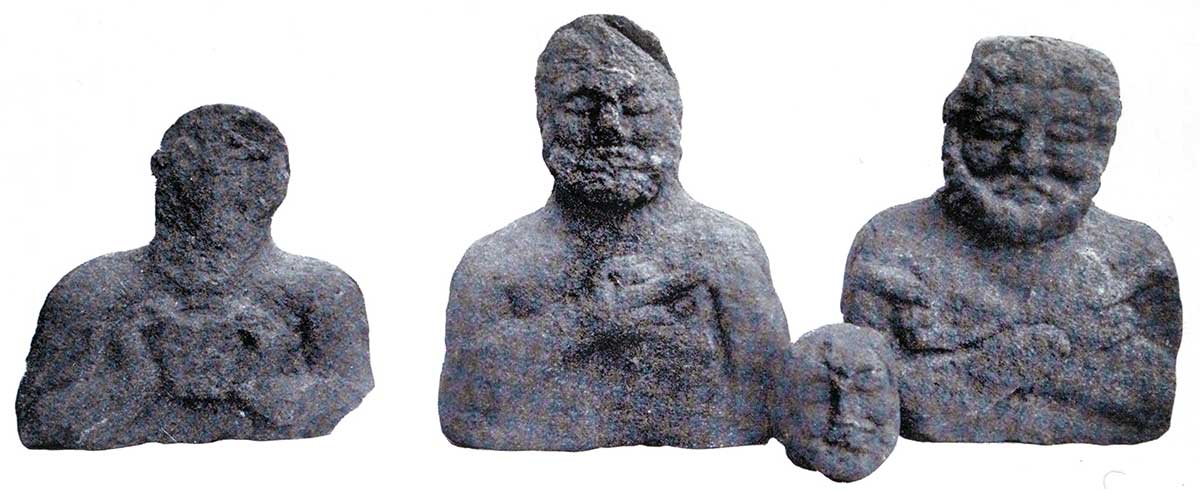
With these examples of crude humor, the middle finger represents the penis, while the curled fingers beside it represent the testicles. So popular was this gesture that it lived on past the ancient Greeks and was adopted into Roman culture. Here, it was referred to as “digitus impudicus”— the indecent finger—and was referenced by many Roman poets.
Caligula even forced people to kiss his middle finger. According to historian Desmond Morris, it was a demeaning gesture representing the emperor’s phallus.
The digitus impudicus outlasted the Roman Empire and survived to the present day with near-universal popularity. Myths of its origin began to surface as people got creative and very liberal with historical accuracy.
Debunking the Medieval Agincourt Longbow Myth

A common misconception is that the middle finger insult stems from the medieval era, and in particular, the Battle of Agincourt, where English longbowmen decimated the French. There are variations of the myth, but a common thread is that the French threatened to cut off the bowfingers of captured longbowmen. This included the middle finger.
After the Battle of Agincourt, when the French had been routed, the longbowmen waved their fingers in the air, shouting “pluck yew” (yew being the wood used for the bows), which then became the well-known phrase as “f” took the place of “pl” and “yew” became “you”.
In the UK, a regional variation of the middle finger is holding up both the middle and the index finger with the back of the hand held towards the subject. While this gesture certainly exists, it is doubtful whether this originated at Agincourt.
Cultural Variations of the Rude Gesture

As mentioned, in the UK, the two-finger salute serves a similar purpose, but its roots are unknown, and it is a much more recent invention. The first recorded usage comes from the 16th century, from François Rabelais in his “Gargantua and Pantagruel,” where a Frenchman uses the sign at an Englishman (ironically). The next recorded instance comes from film footage from 1901.
This sign is incredibly popular in the UK, and has spread to many nations where the British Empire had influence, including Australia, Ireland, New Zealand and South Africa. However, this version exists alongside the middle finger salute and does not replace it.
Naturally, those unfamiliar with the sign should be careful when ordering two of anything in these countries. The front of the hand should be facing the recipient to avoid any unwarranted misunderstandings!

Of course, cultures around the world have their own rude gestures unrelated to the one that evolved from the Greeks. In Vietnam, crossing one’s index and middle fingers is considered a rude gesture, while the “OK” sign of making a circle with one’s thumb and index finger is considered vulgar in Brazil. The fig—presenting one’s thumb through the index and the middle finger is also vulgar in many countries. Meanwhile, the Greeks also use the moutza or mountza, presenting the palm of the hand with the fingers spread open.