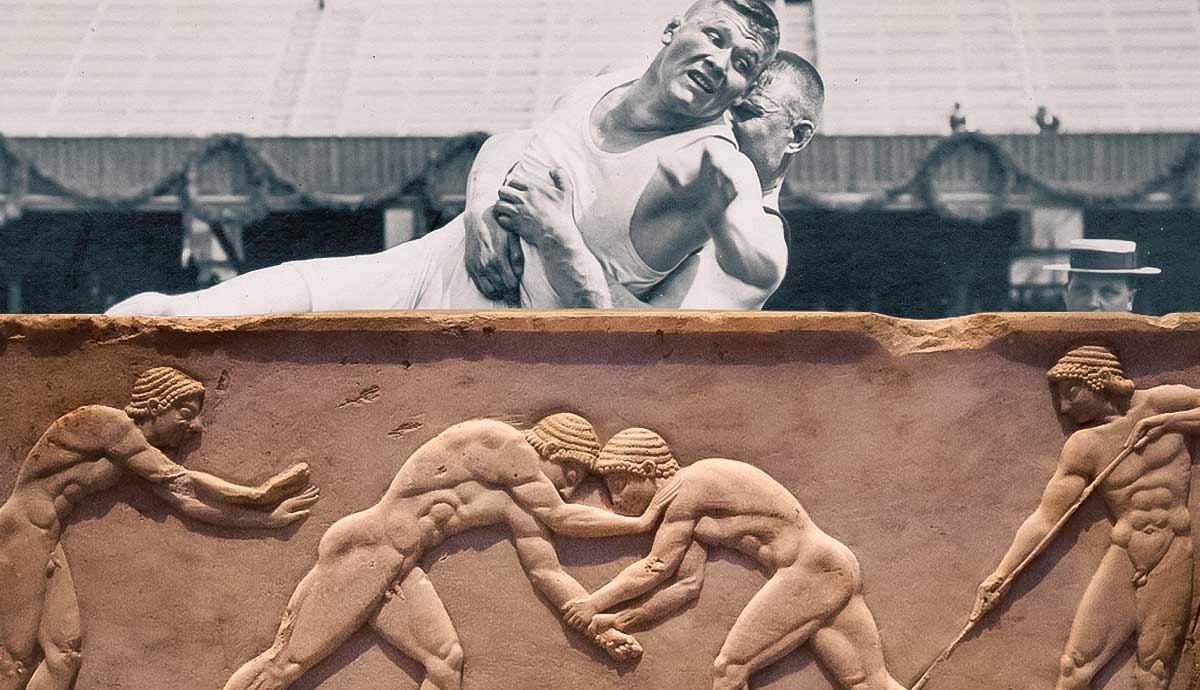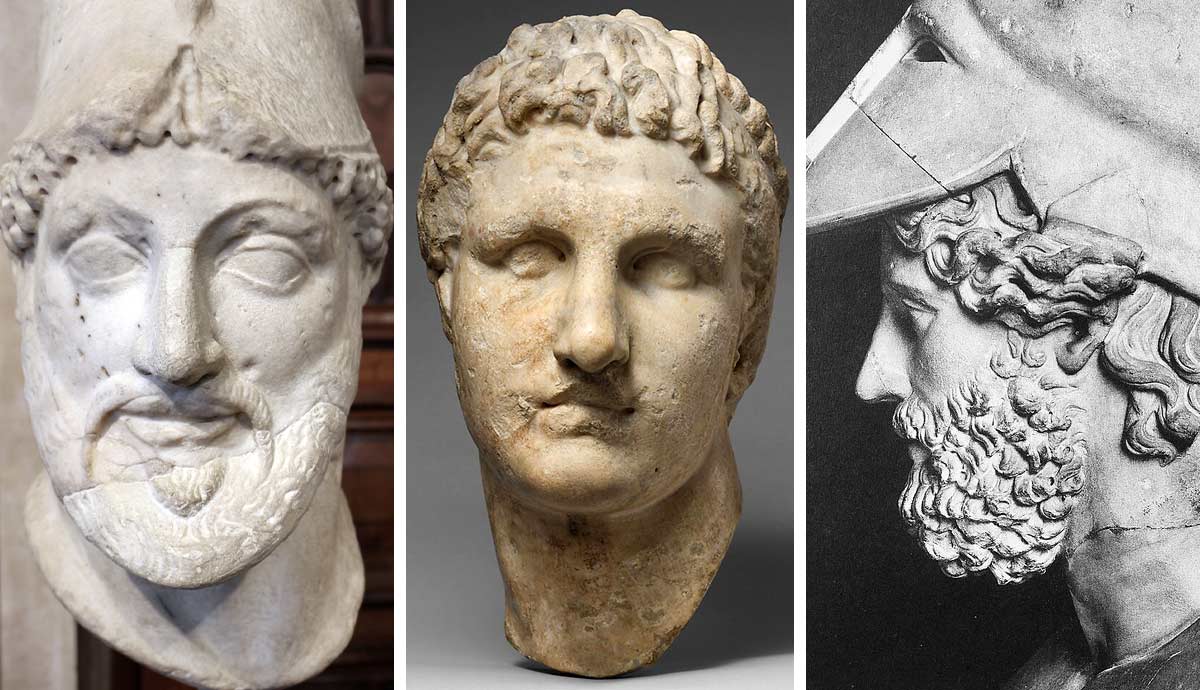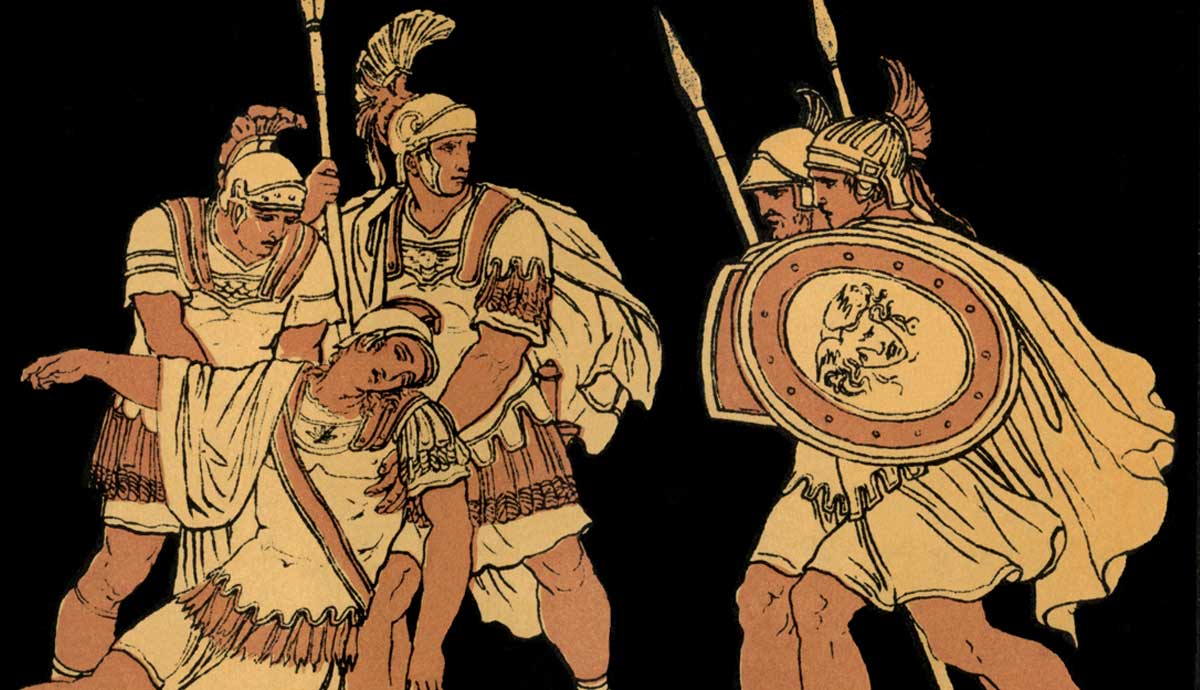

Pygmē was a form of boxing practiced in the ancient Olympic Games for over a thousand years. But its history runs even deeper, dating back to the Minoans and the mythological heroes of the early Mycenaean era. Although pygmē was, indeed, a violent ancient Hellenic combat sport, it was nowhere near as brutal as it is made out to be. In fact, one could argue it was much safer than modern professional boxing, but just as skillful.
The History of Pygmē
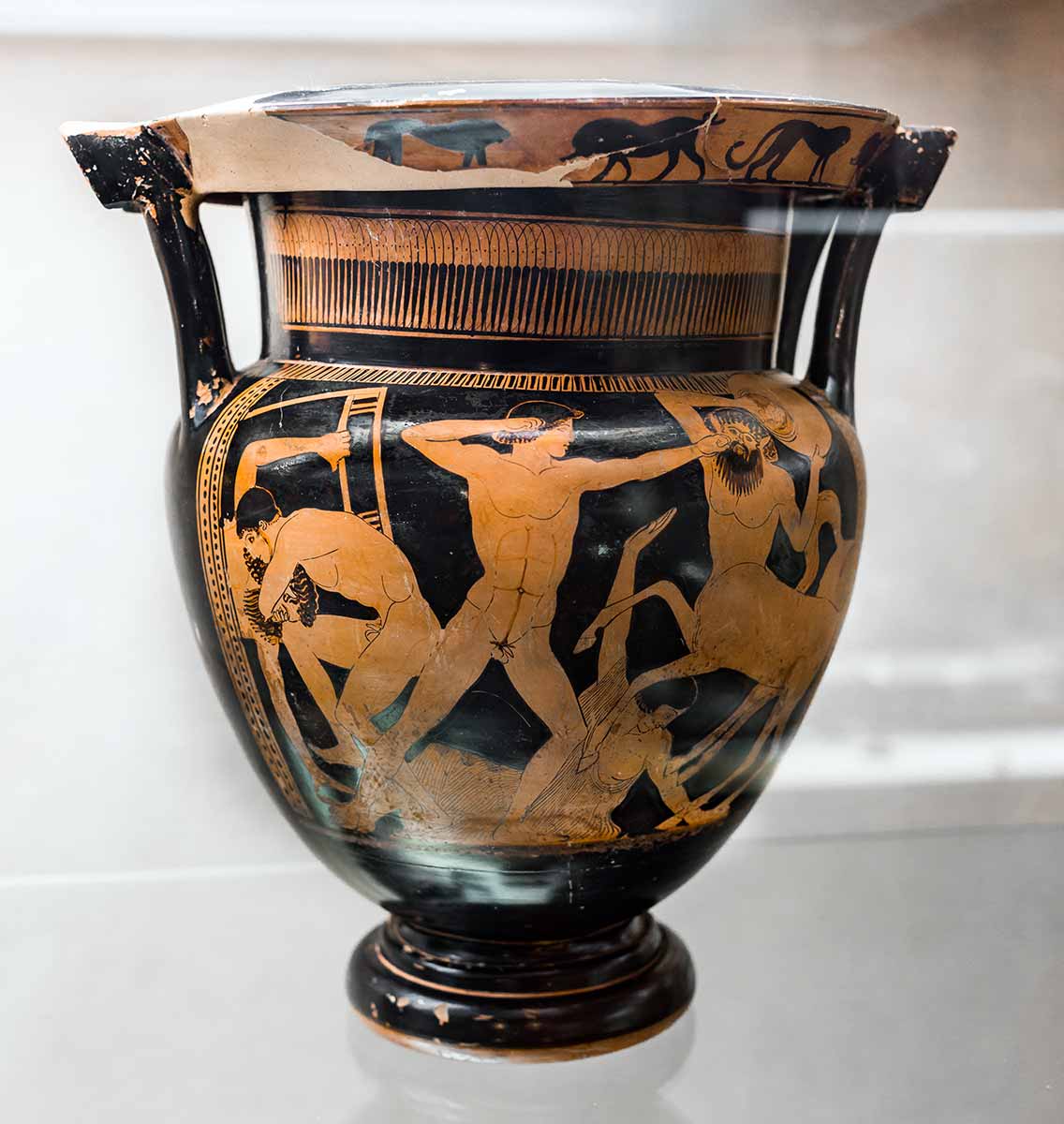
According to legend, the founder of pygmē, also known as pygmachia or pyktikē, was the legendary Theseus, the legendary king of Athens. This means that Theseus not only invented the mullet (true story), but also invented boxing and pankration (an ancient Greek comprehensive combat sport), in his struggle to defeat and slay the Minotaur.
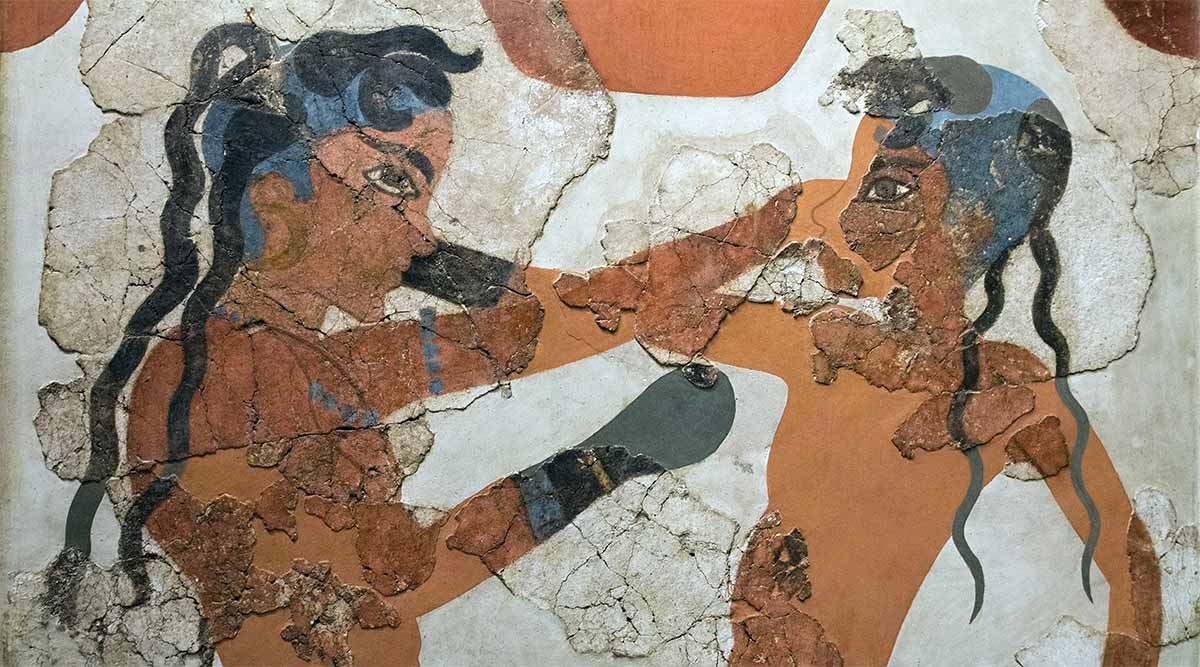
We know that boxing was practiced in ancient Greece when Theseus was supposed to have lived, in the Late Bronze Age, a generation before the Trojan War. A fresco found in Santorini that depicts two fighters boxing dates to the 17th to 16th century BC, well over 3,500 years ago.
Pygmē was introduced into the ancient Hellenic Olympics in 688 BC, and there is a list of recorded Olympic champions down to AD 369, recording more than 1,000 years of continuous competition. There are even examples of athletes who won multiple times in Olympia, like Tissandros from Sicily, who had four consecutive victories.
The Olympics were only one of the Panhellenic games that included pygmē contests. There were also the Pythian, Nemean, and Isthmian Games, while Athens also had its Panathenaics. There were also funerary rituals with athletic contests, perhaps the most famous being the funeral games in honor of Patroclus, Achilles’ battlefield brother, in Book 23 of the Iliad.
What is odd about pygmē in the Iliad is that the two competing fighters of the Achaean army are both relatively unknown. It was a quick fight between Epeius and Euryalus, the former being the victor. Contrast that to palē (wrestling), which was a fight between Ajax and Odysseus, or weapon-fighting, which was Ajax versus Diomedes. But in the classical era, if the prizes of the Panathenaic Games are anything to go by, pygmē may not have been as popular as pankration, but it was just as beloved as palē.
The Myth of Overt Brutality in Greek Sports
There’s a very persistent myth about combat sports in ancient Greece, including pygmē. The myth is of over-the-top violence and death. It is the product of the trope that people in the distant past were “brutes.”
This trope is not new. Roman-era Pausanias and Philostratus were victims of this false mentality as well. They thought that ancient Greeks would literally poke each other’s eyes out and kill their opponents in competition. Modern scholars, who were predisposed to believing that the ancients had no regard for life, have often fallen into the trap of believing these accounts.
Pausanias describes statues and inscriptions that existed during the Roman era, some of which still exist. However, the stories that he comes up with that are supposed to explain these inscriptions are, in most cases, entirely fabricated.

Pausanias tells of a boxing bout that went too long, so both fighters agreed to stand and exchange blows until only one remained standing. But there is no evidence of this rule existing in pre-Roman Greece. Then one fighter, using his “sharp fingernails,” stabbed his opponent with his fingers and ripped out his innards. Pausanias also describes a different boxer who killed his opponent, fled the scene, killed a bunch of schoolchildren, then hid in a chest, and literally disappeared. His stories may not be as accurate as his account of inscriptions.
And these are just a couple of his many tales, some of which scholars of the past took to be true without question when cooking up their theses of brutality in ancient Greek sports. In reality, not only is there no evidence of widespread injuries and deaths; on the contrary, the Eleans took great care to create rulesets that were safe, so as not to spark conflict between rival city states. The Olympic truce guaranteed the safety of all participants, and the Olympic Games were a sacred celebration.
The Rules of Pygmē
So what were the rules? Well, first and foremost, it was against the rules to kill or intentionally foul your opponent, as found in a 6th-century engraving from Olympia. We know that kicks weren’t allowed, thanks to Theocritus, and that clinches weren’t allowed, thanks to Plutarch. Soft leather straps were used to wrap hands in a fist, generally called himantes. Plato tells us that in training sessions, athletes would use padded “gloves” called sphairai (spheres), the same way that boxers use 16 oz gloves to spar today.
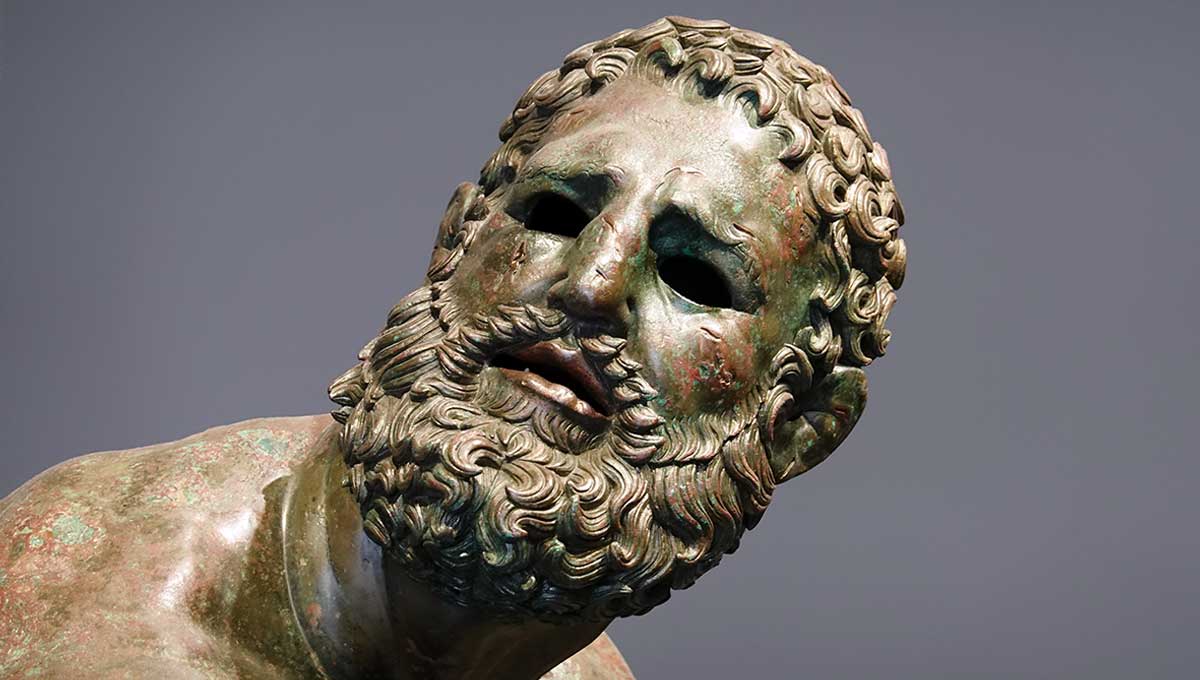
In the later Panathenaic Games of the 4th century BC, which were not part of the Panhellenics, we see the use of a new type of glove. This is when more accounts of injured athletes emerge, like the statue the Boxer at Rest. It comes back to the intuitive notion that adding padding to boxing gloves makes them safer. During competition, having padding in the gloves reduces the fear of injury to the hand, resulting in stronger punches. And this power causes far more damage than what the padding mitigates.
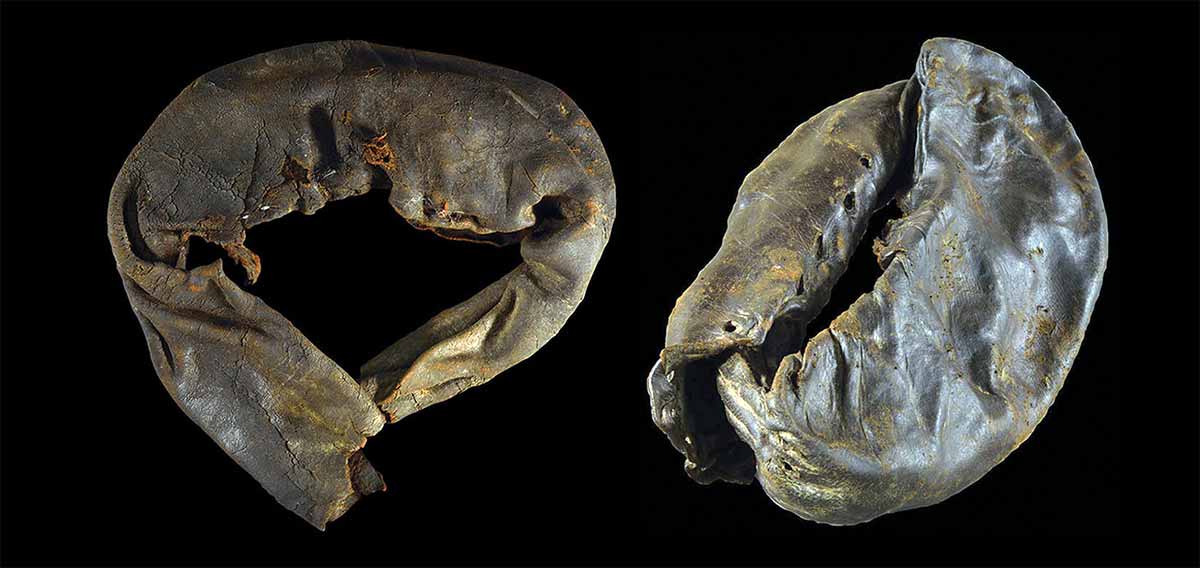
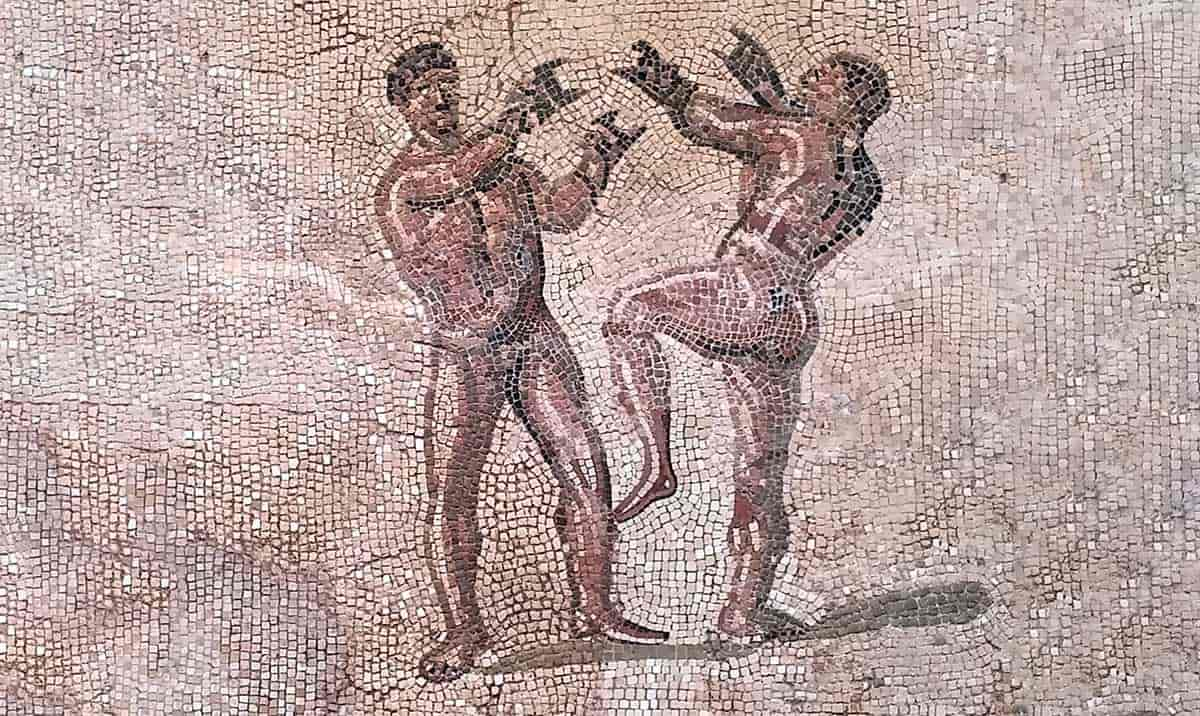
Instead of keeping these gloves out of the Olympics due to their injurious nature, the Romans made them the new standard. However, the Romans did not add metal shrapnel or spikes to their boxing gloves (caestus); that notion is the result of a misinterpretation of Roman-era imagery. As Hugh M. Lee first pointed out, what appear as spikes on their gloves are actually just the boxers’ fingers.
The Techniques of Pygmē
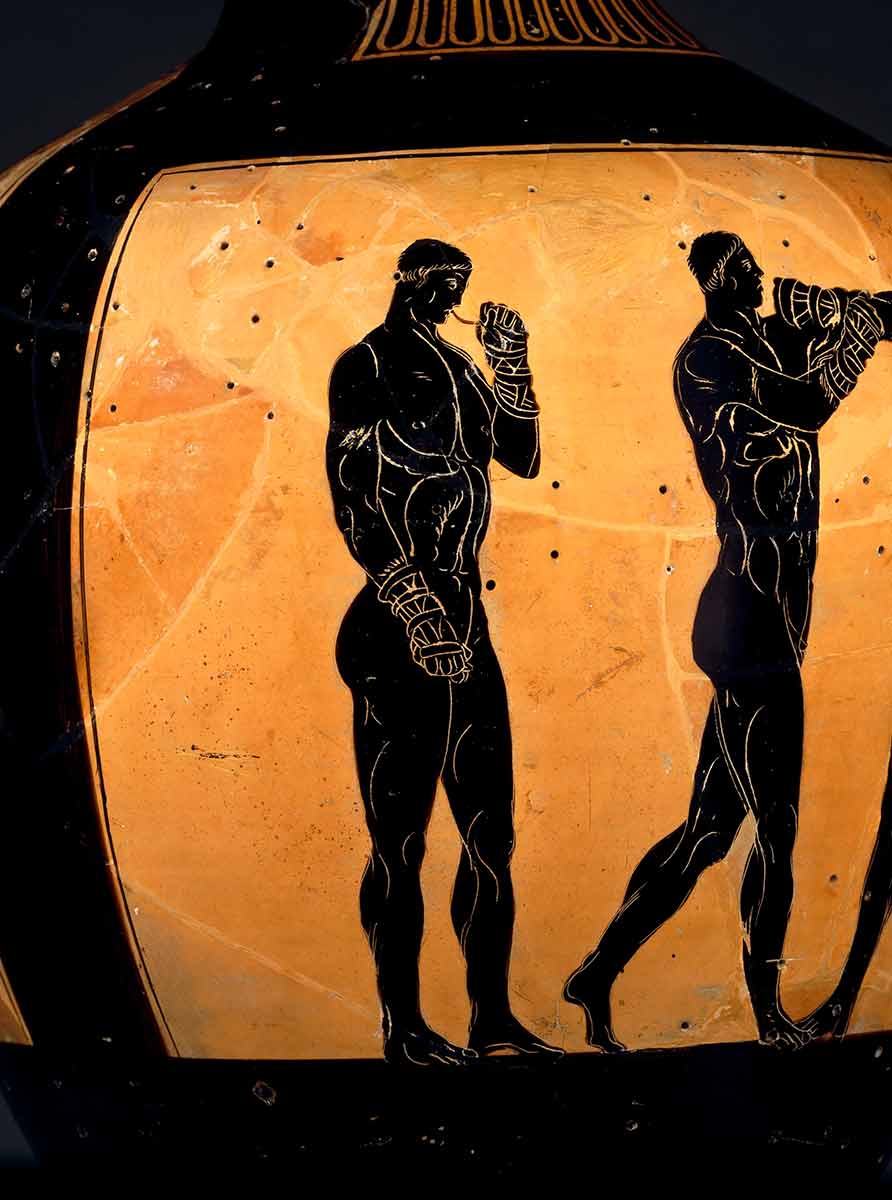
In terms of techniques, pygmē had many techniques familiar today. Jabs and hooks from multiple angles, uppercuts, crosses, and overheads. One technique that pygmē had that is illegal in modern boxing is the hammerfist. The hammerfist was used as a sort of lunging attack; a wild “Hail Mary,” if you will. It is also unclear whether elbow strikes were allowed in boxing, but they are rarely depicted. From existing evidence, elbows appear to have been another exclusive element of pankration.
There were no rounds or weight classes, and the match ended when a fighter raised his hand to the umpire. However, the ancient Greeks had a far different approach to knockouts than we do today. Knockouts appear to have been shunned rather than glorified. Indeed, Dio Chrysostom praises the boxer Melankomas for never knocking out an opponent, yet remaining undefeated through skill and superior stamina. This sentiment appears from as far back as the Archaic era. There is not a single depiction of a boxer knocked out, like Muhammad Ali standing over Sonny Liston.
Famous Boxing Athletes of Antiquity
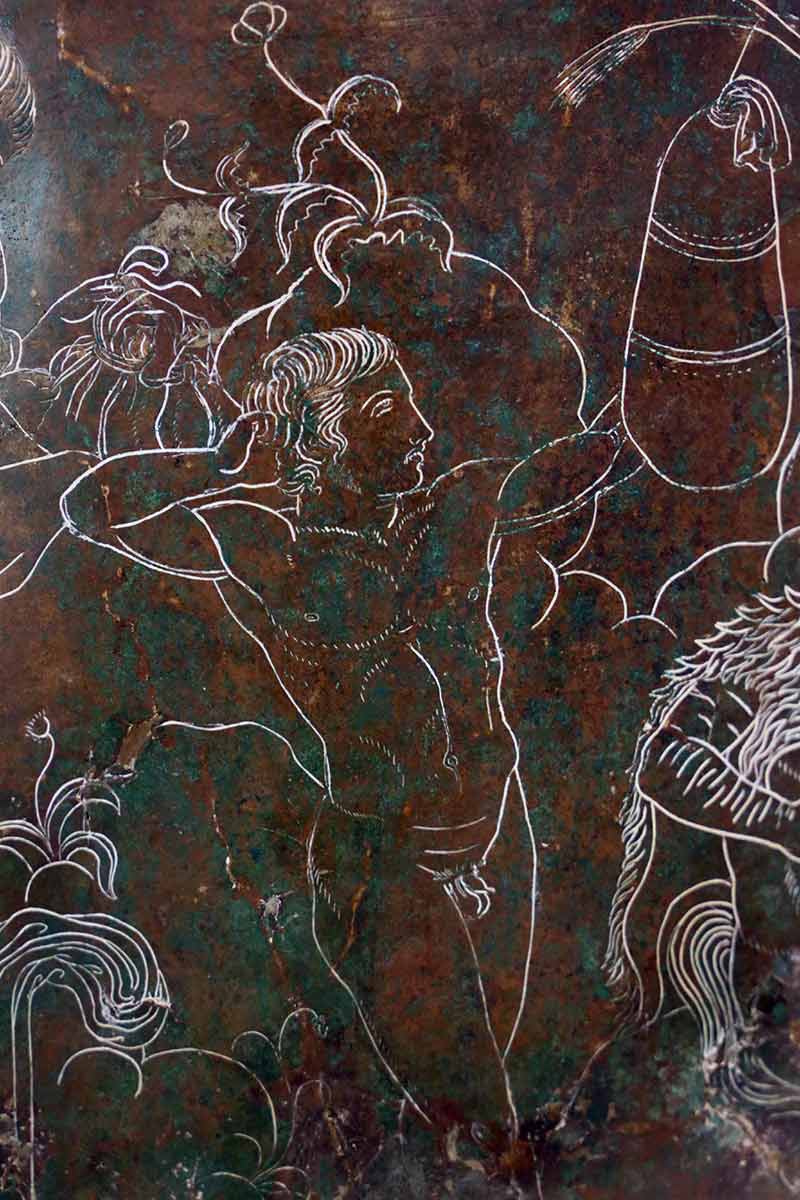
Theseus was not the only famous mythological figure who practiced pygmē. Polydeuces was another. Polydeuces, also known as Pollux, was one of the two twins of the Gemini constellation and reportedly the first champion of boxing in the Isthmian Games. But, in terms of historical athletes who actually competed in the Olympics, Diagoras of Rhodes had his honors sung by one of the greatest poets of all time, Pindar.
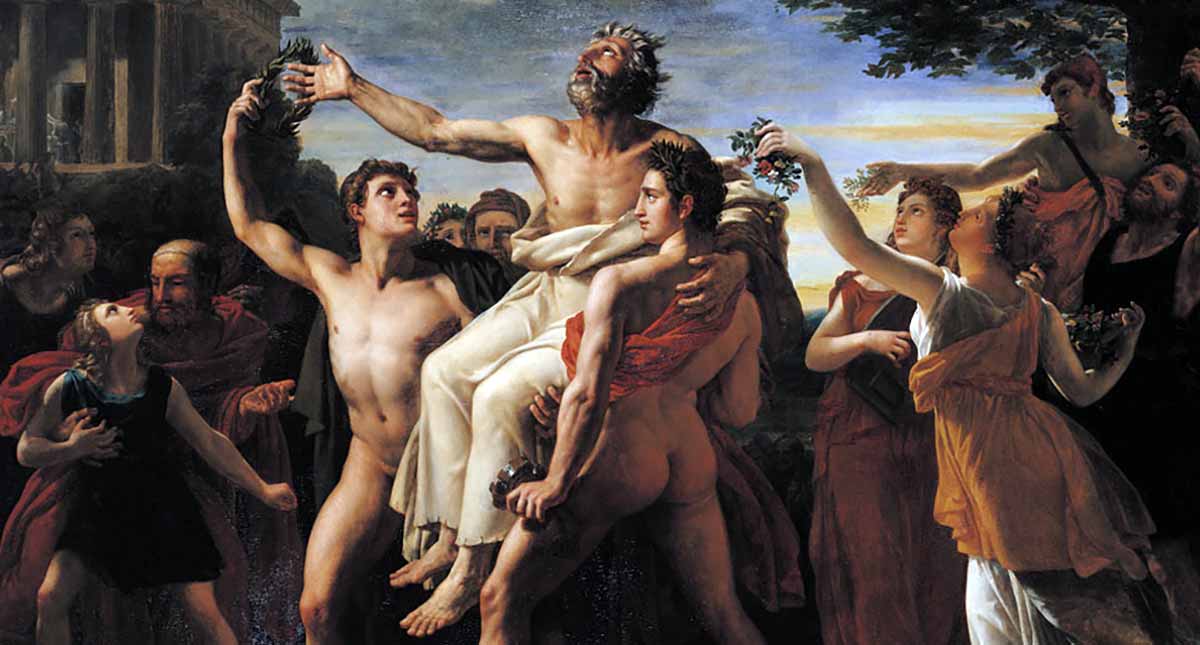
But Diagoras is well known for more than being an Olympic champion in pygmē. He had three sons: Damagetos had two Olympic victories in pankration, and Akousilaos followed in his father’s footsteps, also winning in pygmē. Their victories came in the 448 BC Olympics, and they carried their father Diagoras triumphantly on their shoulders through the crowds. But his third son, Dorieus, would surpass them all, winning three consecutive Olympic championships in Pankration.
Apart from the aforementioned Tissandros, the four-time record holder for pygmē, and Melankomas who “remained as free from marks as any of the runners,” there was an Olympic champion of pygmē who was perhaps the most famous of them all. His name was Glaukos and he only (“only”) won one Olympic championship in pygmē in 520 BC. But it was the method of his victory that made him one of the all-time legends. Glaukos was not part of the elite caste, as many Olympic athletes were. Being wealthy meant having the time to train all day long, as top competitors did at the time. It also meant having the best available nutrition, which was also significant. No, Glaukos was just a farmer. But an incredibly strong farmer who could strike a plow into the earth with nothing but his fist. Legend has it that he used this technique as a Hail Mary attempt to make a comeback victory and, despite all odds, was victorious.
After his victory in 520 BC, there’s a huge spike in hammerfist depictions on vases that lasted almost 70 years, from 520 to 450 BC. Then again, there is also Theagenes of Thasos, who was so successful in both pygmē and pankration that he was worshiped as a hero after his death. One engraving states that he won at Olympia in both boxing and pankration, three times at Pythia, nine times at Isthmia, nine times at Nemea, plus 1,300 private victories. He was reportedly undefeated for 22 years.