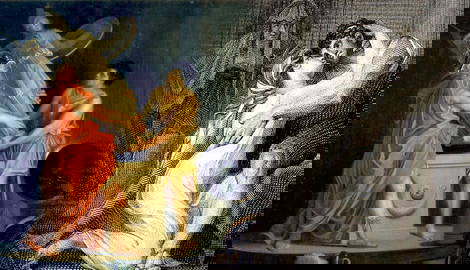

Odysseus, king of Ithaca, made a name for himself for his quick mind, trickiness, and guile. It earned him the nickname metis (wise). During the Trojan War, he was known by both his Greek allies and Trojan foes for his cunning intelligence. Across the Epic Cycle, several stories show off how Odysseus was the smartest guy in the room, helping his friends, tricking his enemies, and even challenging the gods.
1. Odysseus and the Oath of Tyndareus
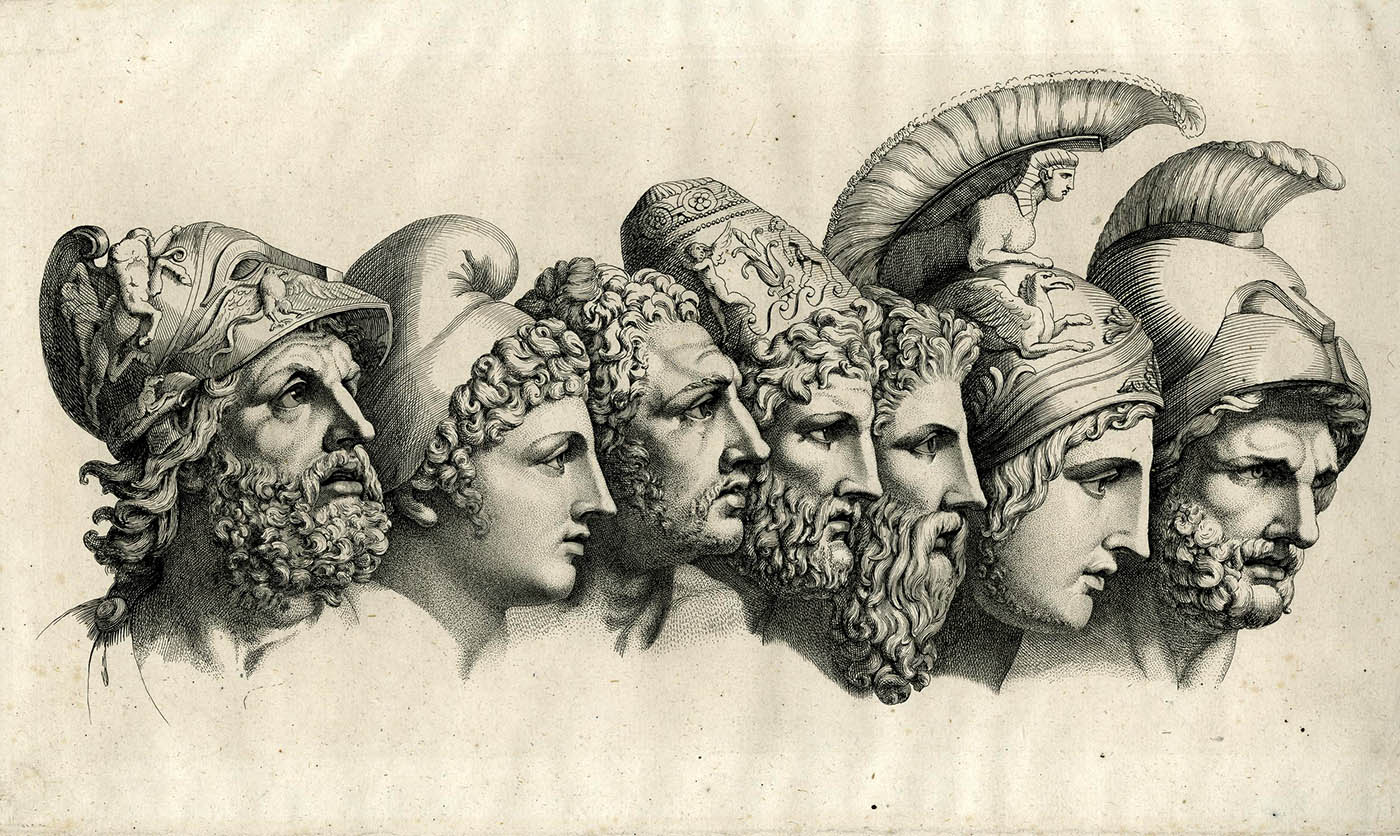
King Tyndareus of Sparta had a beautiful daughter named Helen. When Helen came of age, King Tyndareus needed to find her a husband. If we combine the ancient sources — Hesiod, Hyginus, and Apollodorus — there were at least 45 named suitors all vying for the beautiful Helen’s hand. Odysseus was one of them.
Due to Helen’s popularity, King Tyndareus was worried that whomever he chose, the rest would feel vitriolic anger and develop inflexible grudges, resulting in vengeful bloodshed. Odysseus had an idea that would solve the king’s dilemma, but he wanted something from the king.
While in Tyndareus’ kingdom, Odysseus had fallen in love with Helen’s cousin, Penelope. Odysseus promised Tyndareus a solution to his problem in return for Penelope’s hand in marriage. Tyndareus agreed, and Odysseus recommended a particular oath be exacted from all the suitors, recorded by Apollodorus:
“All the suitors [pledged] that they would defend the favoured bridegroom against any wrong that might be done him in respect of his marriage.”
Apollodorus, Bibliotheca 3.10.9
Thus, all the suitors were bound by their word to defend and protect the chosen husband of Helen against any threat to the marriage. Odysseus married Penelope, Helen married Menelaus, and there was peace among the Greeks.
2. Recruiting Achilles
Despite this oath of protection, war soon came to the Greeks. Whilst on a trip to Sparta, the young Trojan Prince Paris fell deeply in love with Helen. Paris rashly acted on his desire. He either abducted or convinced Helen (depending on the myth) to desert her husband and become his wife in Troy.
To retrieve his wife and get revenge for the insult against his house, Menelaus invoked the Oath of Tyndareus. Greek’s greatest warriors were obliged to help him in a great army led by his brother Agamemnon, king of Mycenae. There was one problem with his summons. Greece’s best warrior, Achilles, had not sworn the oath, as he had been too young at the time. It had been prophesied that the Trojan War could not be won without Achilles, so Menelaus sent Odysseus to recruit him.
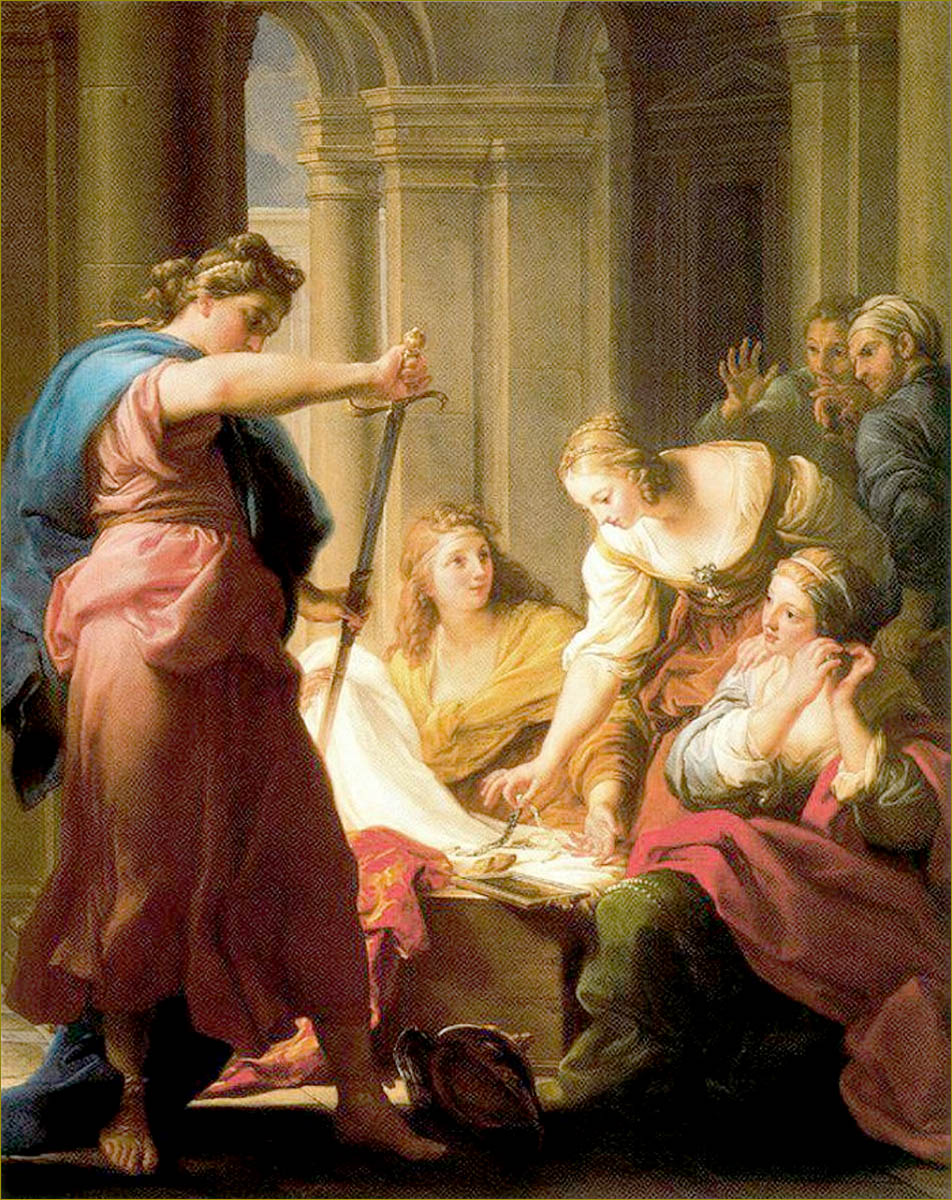
Odysseus soon discovered that the prince was not home. Achilles had been warned that he would not return home from the war alive. Therefore, his mother, the goddess Thetis, had hidden him in the court of Scyros, disguised as a woman. Once Odysseus learned of this, he devised a plan to reveal Achilles’ identity.
In one version of the story, Odysseus feigns an attack on Scyros, and in the ensuing panic, only Achilles does not flee, revealing himself. In another version of the story, Odysseus disguises himself as a salesperson, selling women’s clothes and accessories. When presenting the items to the women of the court, Odysseus hides a sword among the goods. Achilles reveals himself by showing keen interest in the sword alone. Once revealed, Odysseus persuades the young prince to fight in the Trojan War, tantalizing him with the promise of undying fame and glory.
3. Stealing the Palladium
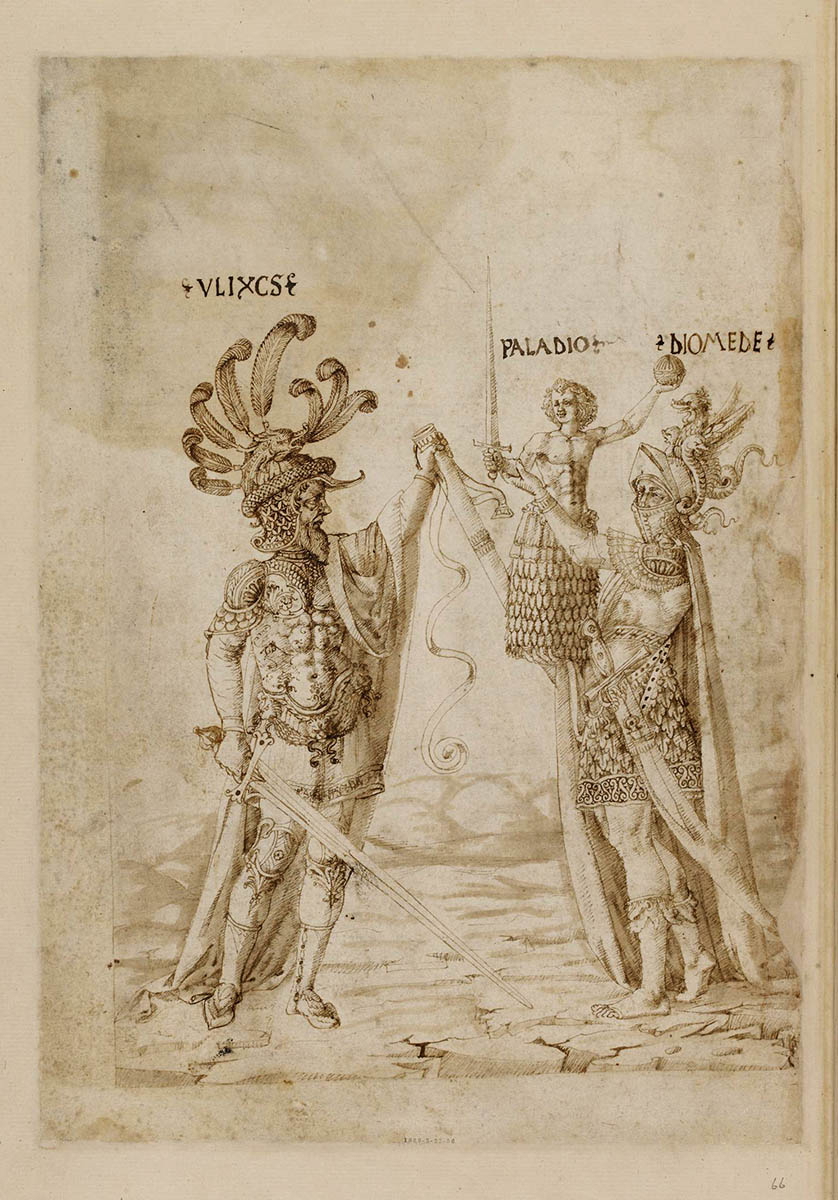
The Trojans had a sacred wooden image called the Palladium, carved in the form of Athena, the goddess of wisdom, war, and craft. This wooden figure was immensely important to the Trojans as a symbol of Athena’s protection of the city and Troy’s heritage.
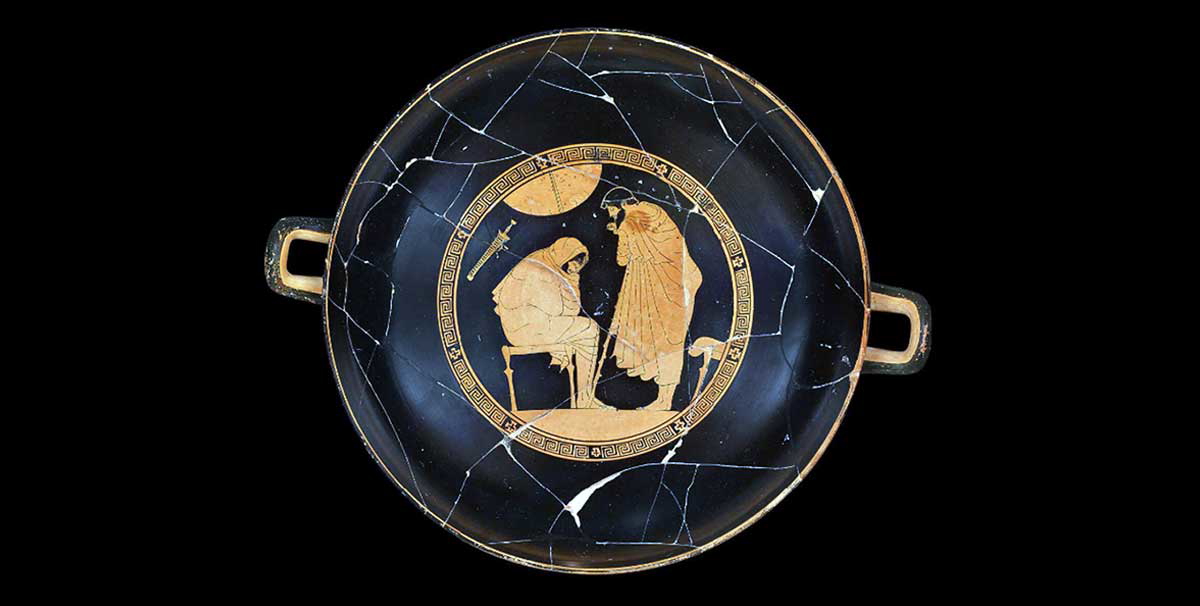
When a Trojan seer named Helenus left the city walls, he was captured by Odysseus. During his interrogation, Helenus reveals to Odysseus the prophecy that Troy would not fall while the Palladium was safely behind its walls.
Odysseus, dressed as a beggar, slipped into Troy through a secret passage. Once inside, he came across Helen, who told Odysseus where to find the Palladium. According to this version of the myth, Helen was not happy about being abducted by Paris and was happy to help Odysseus break into the city. With Helen’s advice, Odysseus was able to return with his companion Diomedes to steal the Palladium.
4. Devising the Trojan Horse
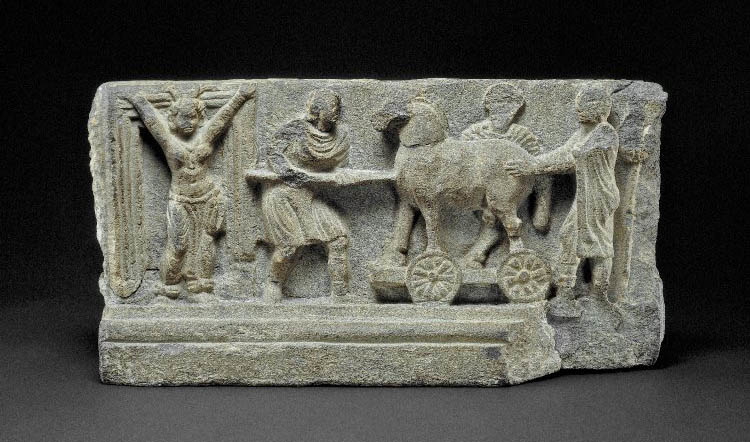
Odysseus’ most famous innovative plan was the Trojan Horse. The Greeks and Trojans were at an impasse. For ten years, their armies had been battling on the plains outside Troy’s walls. Legend had it that the walls of Troy were built by the gods Poseidon and Apollo, and that they were impenetrable. As ever, Odysseus had a plan. He came up with the idea to create a giant wooden horse that could hide soldiers inside.
“[The Greeks] build a horse of mountainous size, through Pallas’s divine art,
and weave planks of fir over its ribs:
they pretend it’s a votive offering: this rumour spreads.
They secretly hide a picked body of men, chosen by lot,
there, in the dark body, filling the belly and the huge
cavernous insides with armed warriors.”
Virgil, Aeneid 2
The Greek army feigned a retreat, harboring their ships at Tenedos, a nearby island. A Greek soldier named Sinon was left behind to sell the ruse. He pretended to have been deserted by the Greeks and told the Trojans that the wooden horse was left as a sacrifice to Athena. When the Trojans saw that the Greeks had retreated, they rejoiced! Just as Odysseus anticipated, the Trojans decided to take the wooden horse into the city.
Once darkness had fallen and the city was sleeping, a group of selected Greek soldiers emerged from the horse. Now inside the city, they could open the gates, allowing the Greek army to enter. A massacre ensued, and the great city of Troy finally fell.
5. “Nobody” and Polyphemus
While traveling home from the Trojan War, Odysseus had many adventures. His journey home, or nostos, became one of the most memorable stories in Greek myth. His adventures are recorded in the Odyssey, composed by Homer.
In one adventure, Odysseus was captured with his crew by the Cyclops Polyphemus, in a cave with an enormous boulder over the entrance. This cave stored the food and produce of the Cyclopes, including cheese, wine, and goats. Right away, Polyphemus ate two of the crew members, but he saved the rest for later.
One night, Odysseus plied the Cyclops with the wine. Once drunk, Odysseus deceptively told the Cyclops that his name was “Outis” which means “Nobody” in ancient Greek. Later, when the Cyclops was heavily inebriated, Odysseus struck. He stabbed Polyphemus in his one eye with a stake, leaving him blinded.
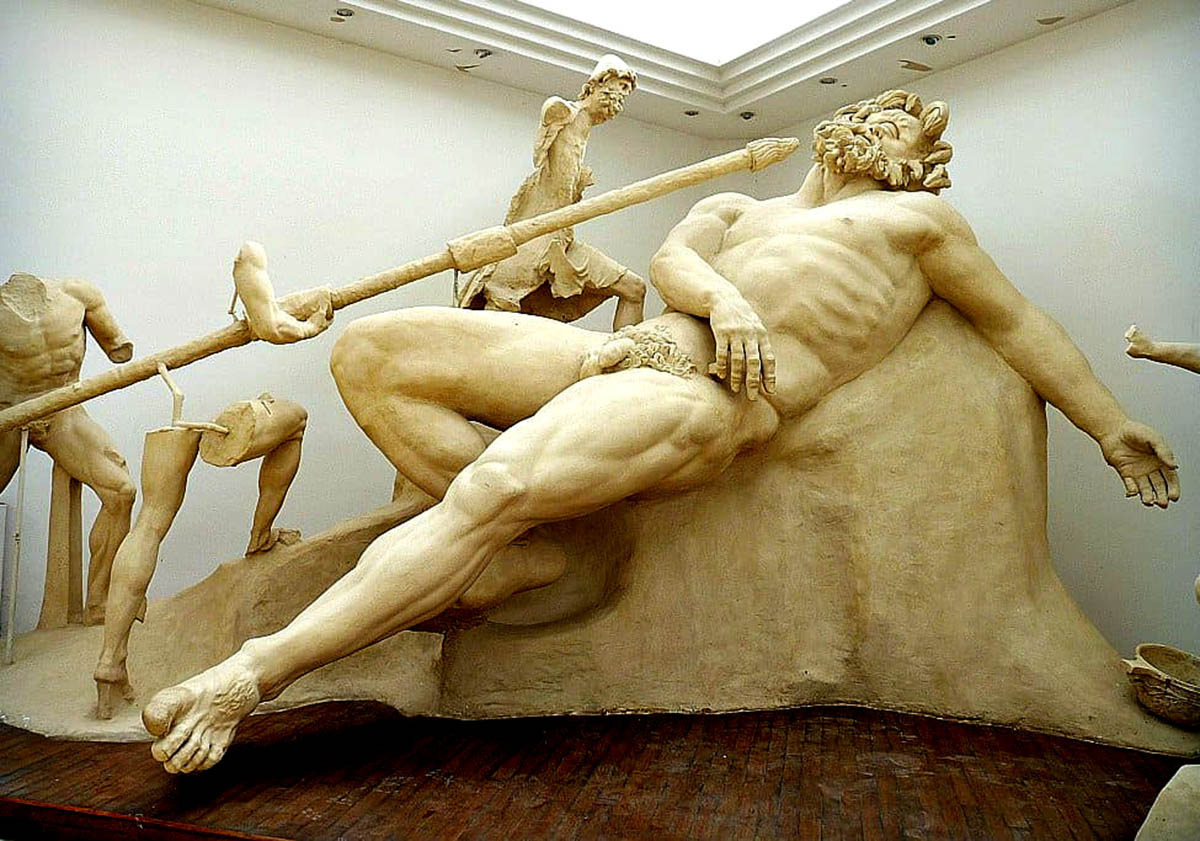
Yelling for help, Polyphemus cried out to the other Cyclopes on the island. When they asked what was wrong, Polyphemus cried that Outis was hurting him. Hearing this, the other Cyclopes left, thinking that nobody was harming Polyphemus.
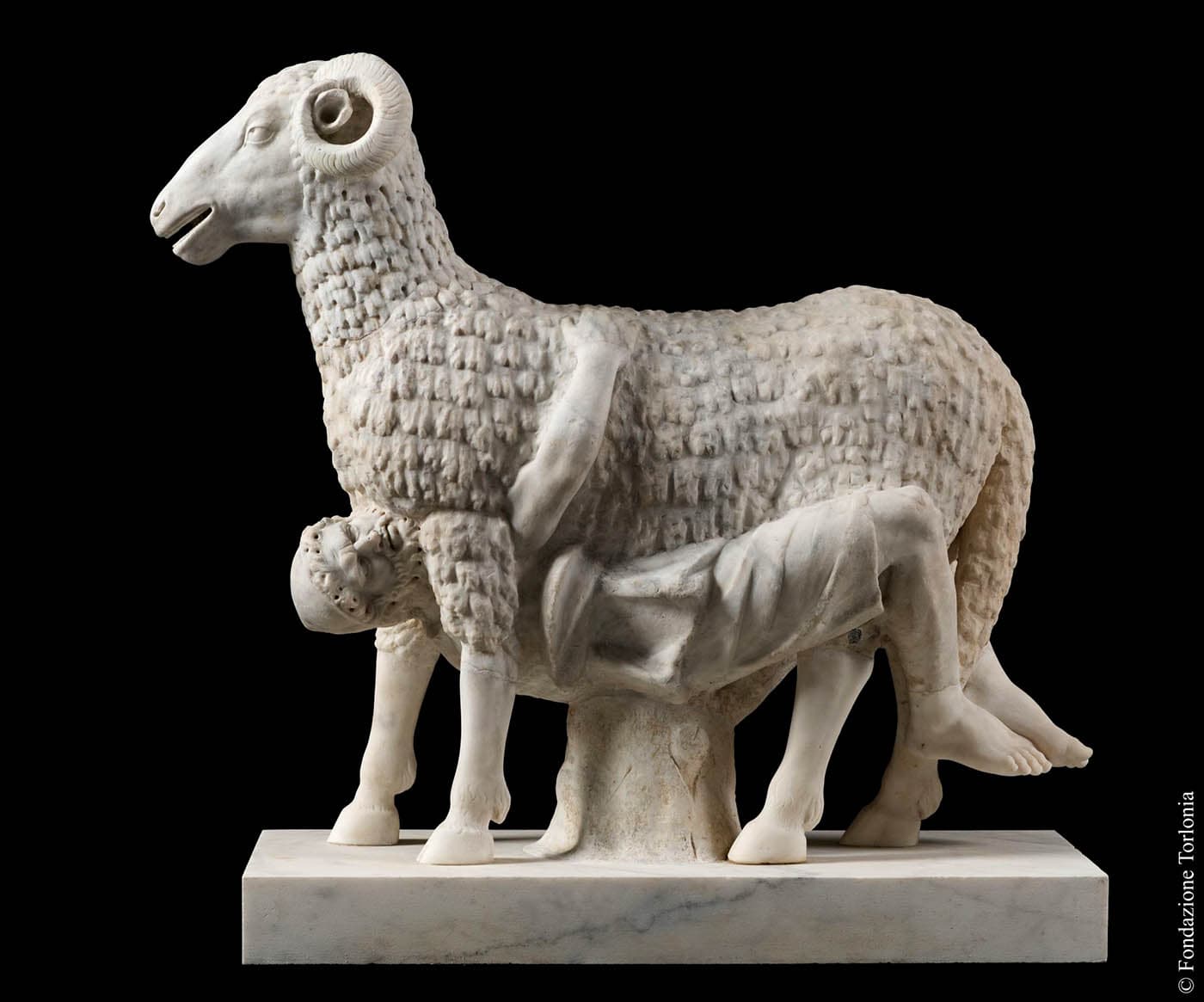
When Polyphemus went to leave the cave, Odysseus and his crew members hung onto the hairy underbellies of the rams stored there, escaping when the sheep were herded out to pasture. Unseen by the other inhabitants of the island, they fled back to their ship.
6. The Siren Song
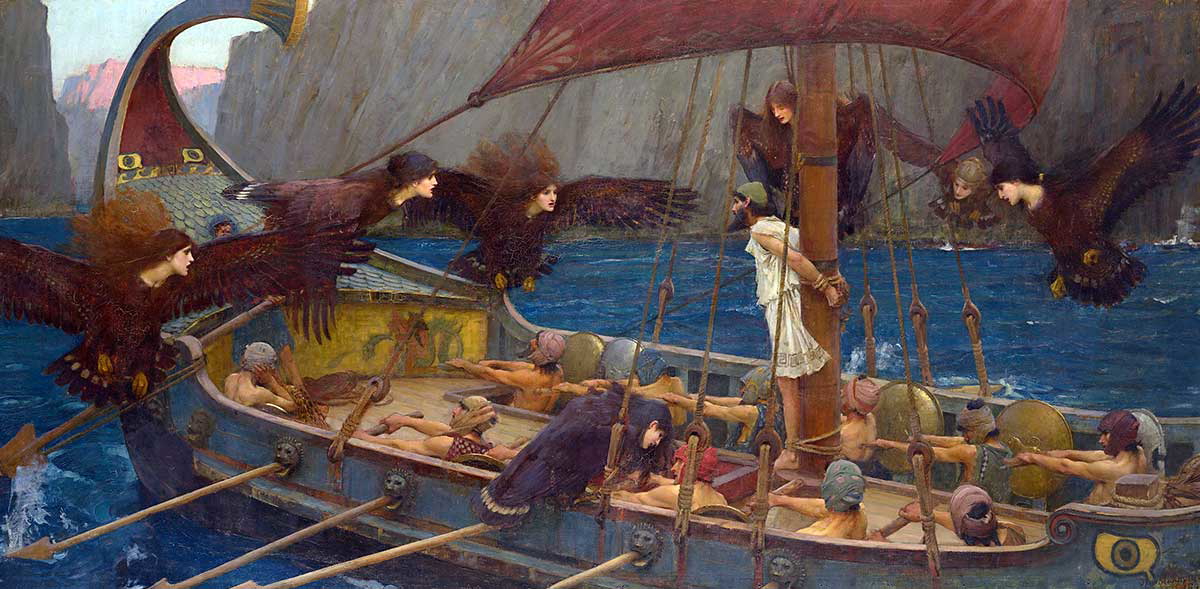
According to legend, any sailor who heard the Sirens’ song would lose all rational thought and be lured to their death, drowned or eaten by the Sirens. However, to hear the Sirens’ song and survive would allegedly give the listener secret knowledge. The Sirens were ancient beasts who had gathered knowledge for eons. For a pursuer of knowledge like Odysseus, the risk was worth it.
Odysseus helped the crew to make wax molds for their ears so that they could not be harmed by the lure of the Sirens’ song. Odysseus himself wore no earplugs but instead commanded his crew to bind him to the mast of the ship. This way, when the ship sailed past the island of the Sirens, he would be able to hear the song without being tempted to jump ship. The following passage from the Odyssey captures the spell of the sirens:
“So [the sirens] spoke, sending forth their beautiful voice, and my heart was fain to listen, and I bade my comrades loose me, nodding to them with my brows; but they fell to their oars and rowed on… But when they had rowed past the Sirens, and we could no more hear their voice or their song, then straightway my trusty comrades took away the wax with which I had anointed their ears and loosed me from my bonds.”
Homer, Odyssey 12.192
Odysseus was able to successfully listen to the song of the Sirens, although the process required enduring temporary madness. The ship safely sailed past the dangerous, enchanted island successfully.
7. Arrival Home: Odysseus’ Disguise
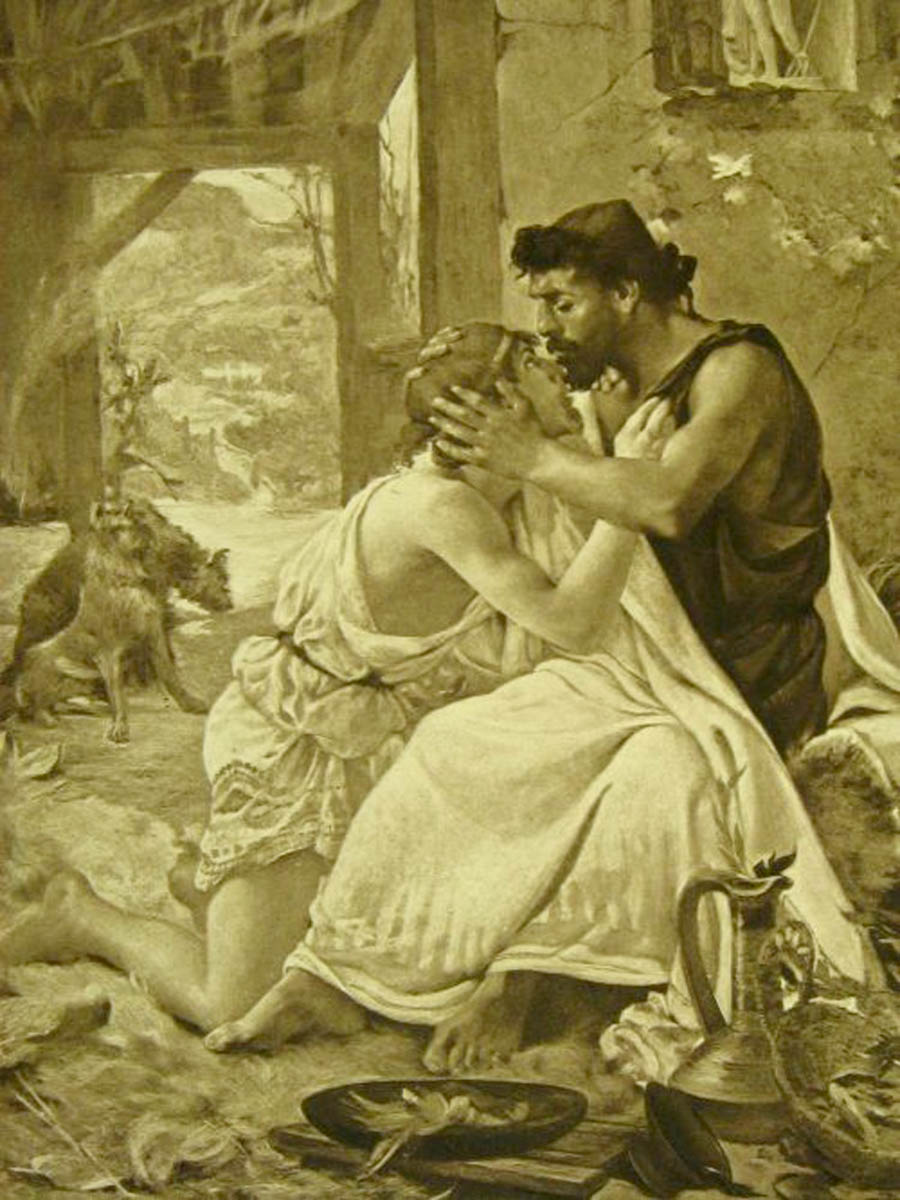
When Odysseus finally reached Ithaca, alone, he had been away from home for twenty long years. Ten years for the Trojan War, and ten years on his return journey. He was unsure what home would be like. Would his family still be loyal to him? Would they have moved on? Presumed he was dead? With such uncertainty, Odysseus disguised himself as an old beggar with the aid of the goddess Athena’s magic to gauge the state of home life.
What Odysseus found on his return was an overrun house. In his absence, his wife Penelope had been swamped with suitors who had taken up residence in and around Odysseus’ home. Before revealing himself, Odysseus happened to meet his now-grown son, Telemachus, in a swineherd’s hut at the edge of the island. In a happy reunion, Odysseus revealed himself to his son, and then together they plotted the overthrow of the suitors.
8. Warnings and Revenge
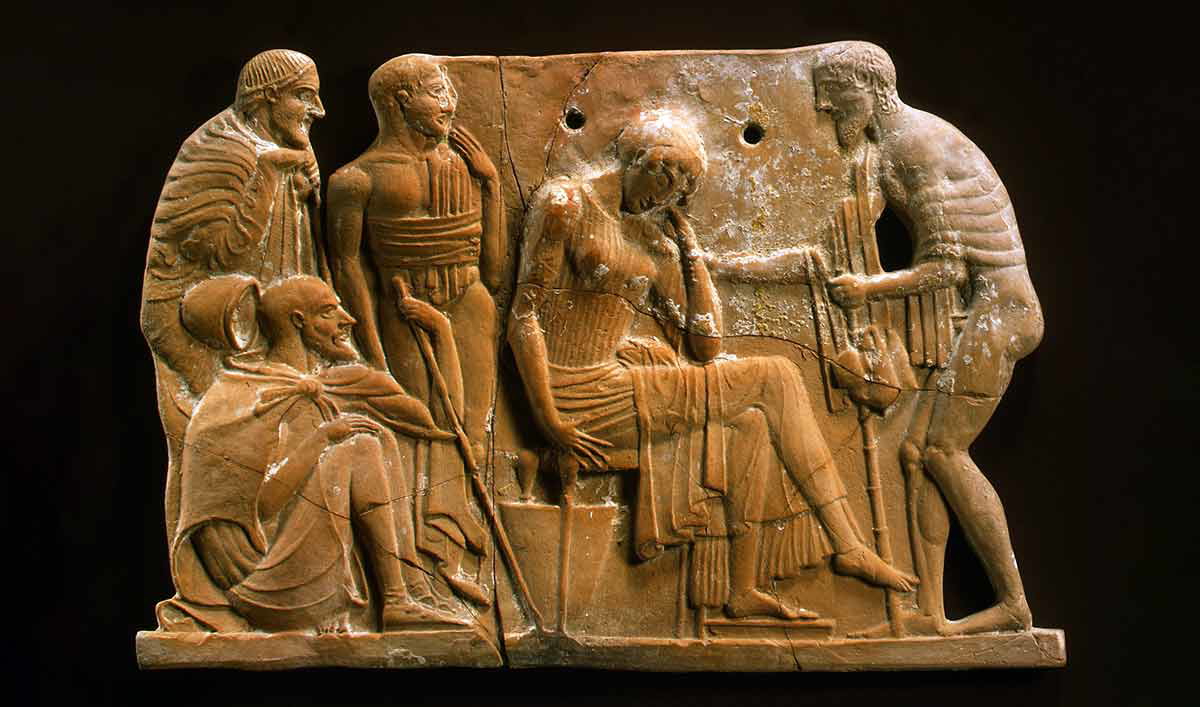
Odysseus resumed his disguise to travel to the palace so as not to arouse suspicion. The suitors were also plotting Telemachus’ death, so it was vital that they evade attention. Telemachus snuck into the palace to retrieve his weapons and then hid them from the suitors.
When meeting the suitors, Odysseus was treated insultingly, ignoring the Greek rules of xenia (hospitality). The suitors reluctantly shared food with the “beggar” and pushed and kicked him around. Odysseus was immensely angered at the rudeness of the suitors, but he maintained his concealment until the time was right. One of the suitors behaved more cordially to Odysseus, and in response, Odysseus gave him a warning to leave, but the suitor did not listen. Odysseus’ foreboding words were, in part, a warning of the suitors’ impending doom, and a humble recognition of his own past mistakes:
“Of all that breathes and crawls across the earth,
our mother earth breeds nothing feebler than a man.
So long as the gods grant him power, spring in his knees,
he thinks he will never suffer affliction down the years.
But then, when the happy gods bring on the long hard times,
bear them he must, against his will, and steel his heart.
Our lives, our mood and mind as we pass across the earth,
turn as the days turn . . .”
Homer, Odyssey 18.150-157
Blessed by the Goddess Athena, Odysseus and Telemachus were close to ridding themselves of the proud and brutish suitors. The final step required Penelope, Odysseus’ wife, to set the elimination of the suitors in motion.
Bonus: Penelope’s Cleverness
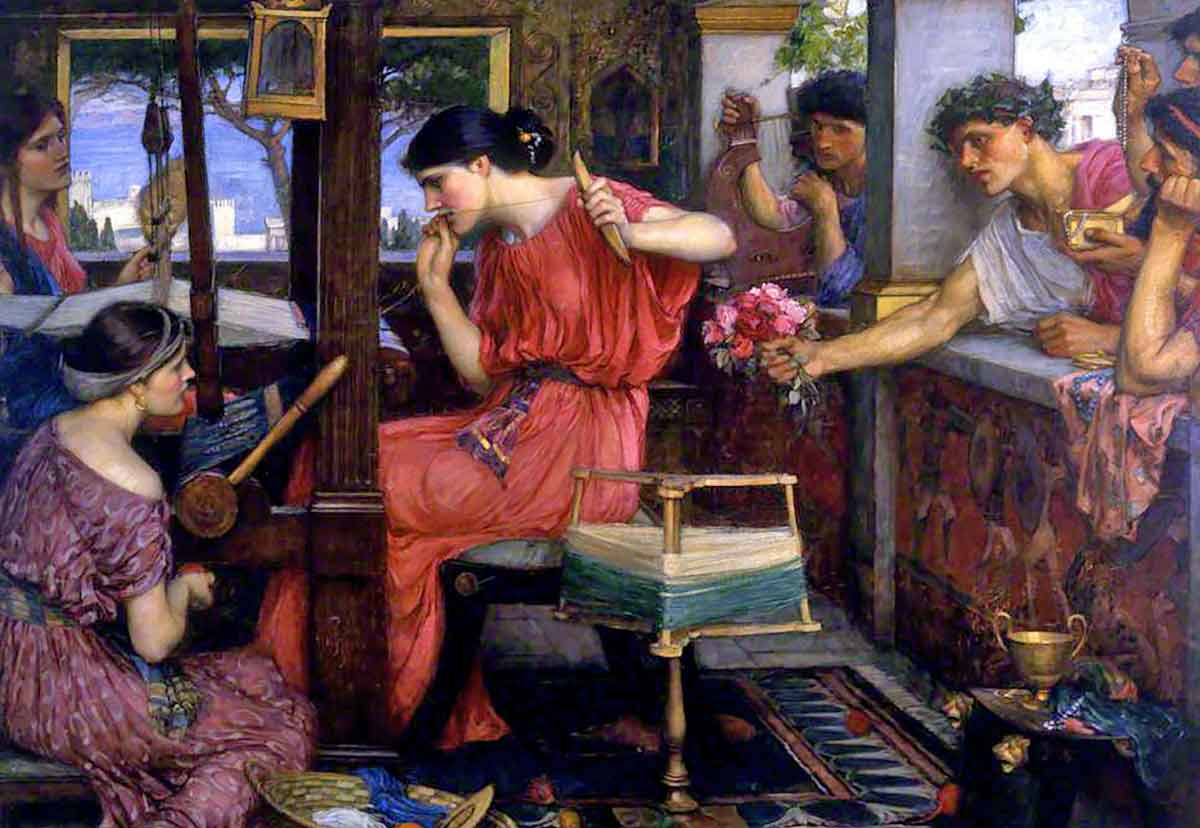
Just like her husband, Penelope was blessed with discerning cleverness and great intelligence. Prior to Odysseus’ return, Penelope had been hounded with offers of marriage from a great host of suitors. However, Penelope was uninterested in their offers, as she was hopeful that Odysseus would return.
Facing increasing harassment from the men, she offered them a deal. She would choose a new husband when she had finished her weaving. She was making a burial shroud for the eventual death of her father-in-law. However, Penelope cleverly delayed the suitors:
“So by day she’d weave at her great and growing web—
by night, by the light of torches set beside her,
she would unravel all she’d done. Three whole years
she deceived [the suitors] blind, seduced us with this scheme.”
Homer, Odyssey 2.116-119
Eventually, Odysseus arrived on the island, disguised as a beggar. At this time, Penelope had another clever idea. She demanded that any decent suitor would give her lots of gifts as a wedding present. In this way, she managed to replenish the depleted stock of the palace, which the suitors had been exploiting for the past twenty years.
In the Odyssey, Odysseus appears to be very impressed by Penelope’s ruse, and Homer implies that their shared intelligence made them a perfect match. Her delaying ploys also proved to Odysseus her loyalty, so he was more confident in his planned surprise.
Penelope and Odysseus: A Clever Match
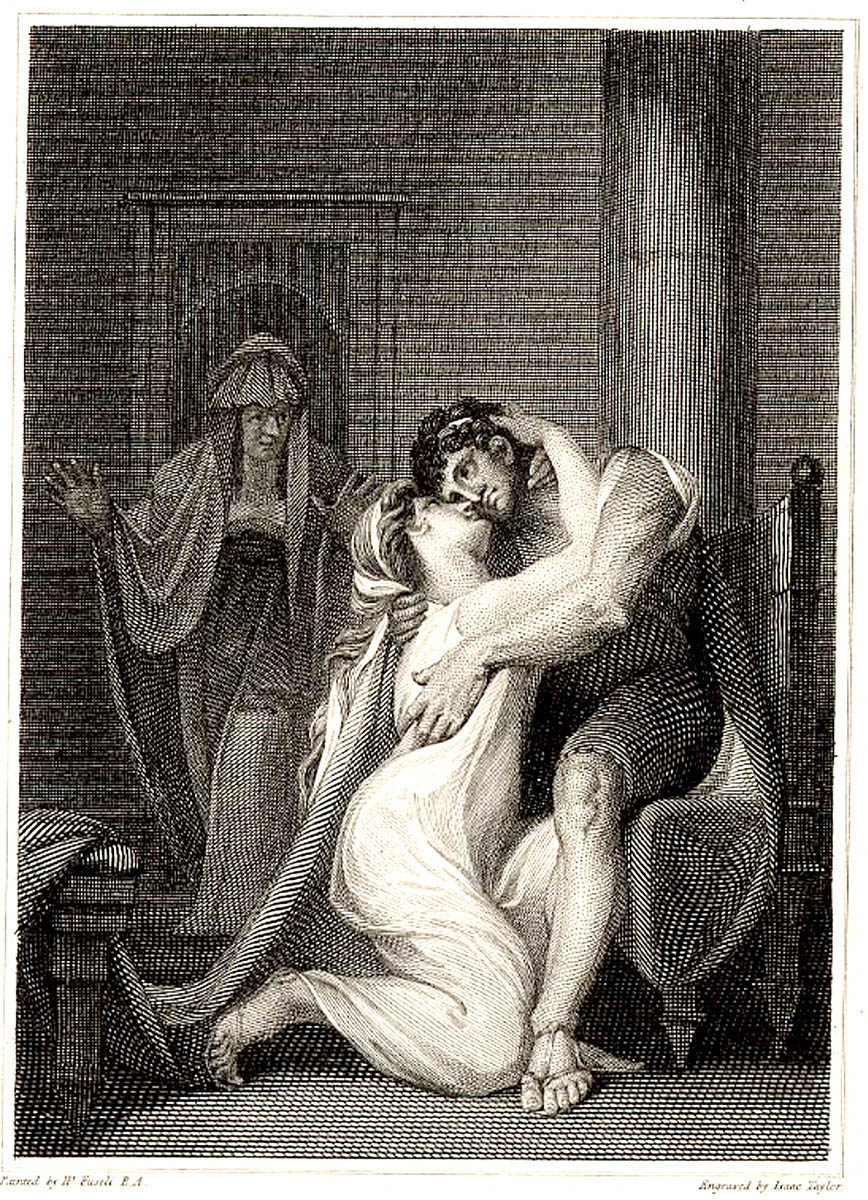
Another of Penelope’s methods for delaying her remarriage was to challenge the suitors to a competition. Whoever could use her husband’s bow to shoot an arrow through twelve ax heads would win her hand. This feat had previously only ever been managed by Odysseus. When the suitors tried, each one of them failed the task. Finally, Odysseus, still in beggar form, stepped up and pulled off the task perfectly, shocking all.
He then proceeded to kill all the suitors with the help of Athena and his son Telemachus. Penelope immediately became suspicious of Odysseus’ true identity, but before getting her hopes up, she had one last test.
When building the palace many years ago, Odysseus had carved their marriage bed out of the olive tree that was central to the house. The bed was, therefore, immovable. This was only known to Odysseus, Penelope, and one servant. Penelope tested Odysseus by commanding her old nurse to move the bed:
“Come, Eurycleia,
move the sturdy bedstead out of our bridal chamber —
that room the master built with his own hands,
Take it out now, sturdy bed that it is.”
Homer, Odyssey 23
Overhearing this, Odysseus became angry and demanded to know why Penelope had replaced his wonderfully carved bed with a movable one. With the truth and his identity revealed, the house of Odysseus was happily reunited after many, many years.