In 29 BC, Rome emerged from decades of devastating civil war under the absolute control of Octavian. Rebranding himself as Augustus, the new emperor faced the challenge of legitimizing and solidifying his position. As part of his broader strategy, Augustus commissioned the poet Virgil to produce the Aeneid, an epic poem that reflected the ideology of the Augustan Age. In many ways, it is the Roman answer to Homer’s Odyssey. Like the famous ancient Greek epic, Virgil’s Aeneid is set in the immediate aftermath of the Trojan War. It tells the story of Aeneas, a prince of Troy, who fled Troy and ultimately settled in Italy, where he became the forefather of the Romans. But Virgil does much more than just tell a compelling story. He rewrote Roman history in the image of the new Augustan Age.
The Purpose of the Aeneid: Augustan Era Propaganda
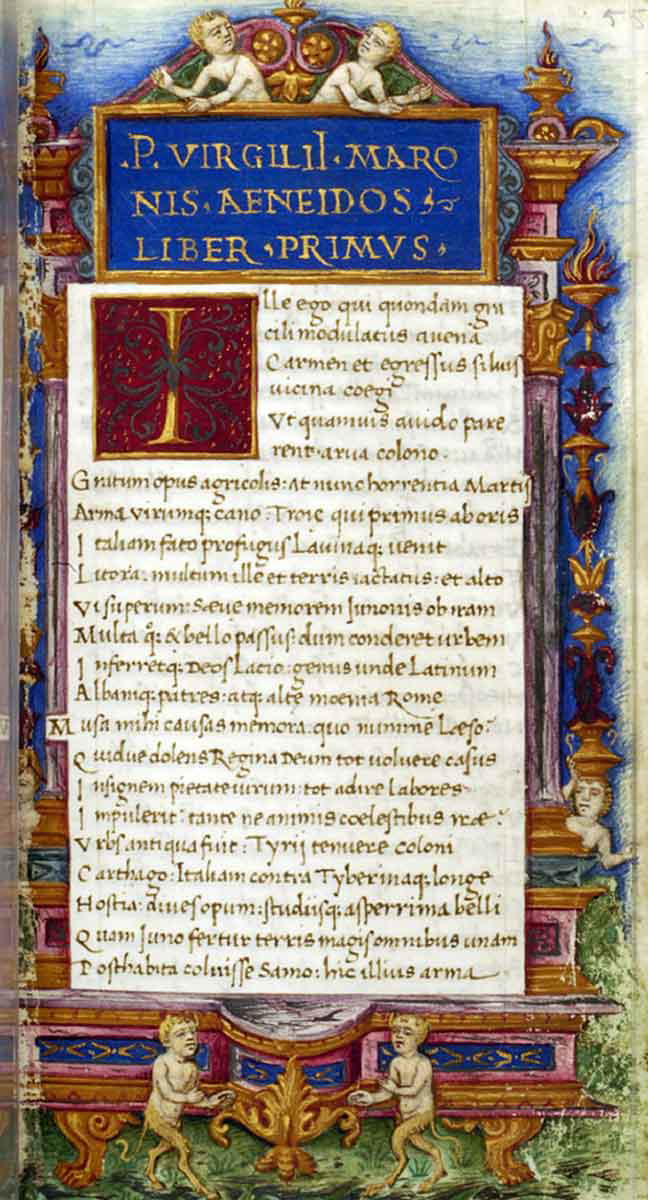
Unlike Homer’s two epic poems, the Iliad and the Odyssey, and most other important works of ancient literature, Virgil’s Aeneid was officially commissioned by an imperial ruler: Rome’s first emperor, Augustus. Hence, in some ways, it was an important literary work by design. It was not simply an expression of Virgil’s own thoughts and feelings on a matter. Rather, Augustus wanted it to be created for a purpose.
The final decades of the 1st century BC saw the fall of the Roman Republic and the emergence of the Roman Empire. Augustus, as the first emperor, was greatly concerned with promoting Rome’s transformation as a glorious step forward, ushering in a new era of peace and prosperity that was Rome’s by right. He also wanted to place himself at the center of that narrative. It is within this context that we should understand the Aeneid. Augustus wanted Virgil to create an epic poem that would promote Rome’s greatness and divine destiny as a superpower.
Central to his approach was establishing the Romans as the descendants of the Trojans, tying them to one of the Greco-Roman world’s most important legends. To be clear, Virgil did not invent this connection. The idea that the Romans were descendants of the Trojans went back at least as far as the 5th century BC. However, there were a few competing traditions, and Virgil chose to popularize this particular origin story.
Key Lessons Found in the Aeneid: Morality and Fate
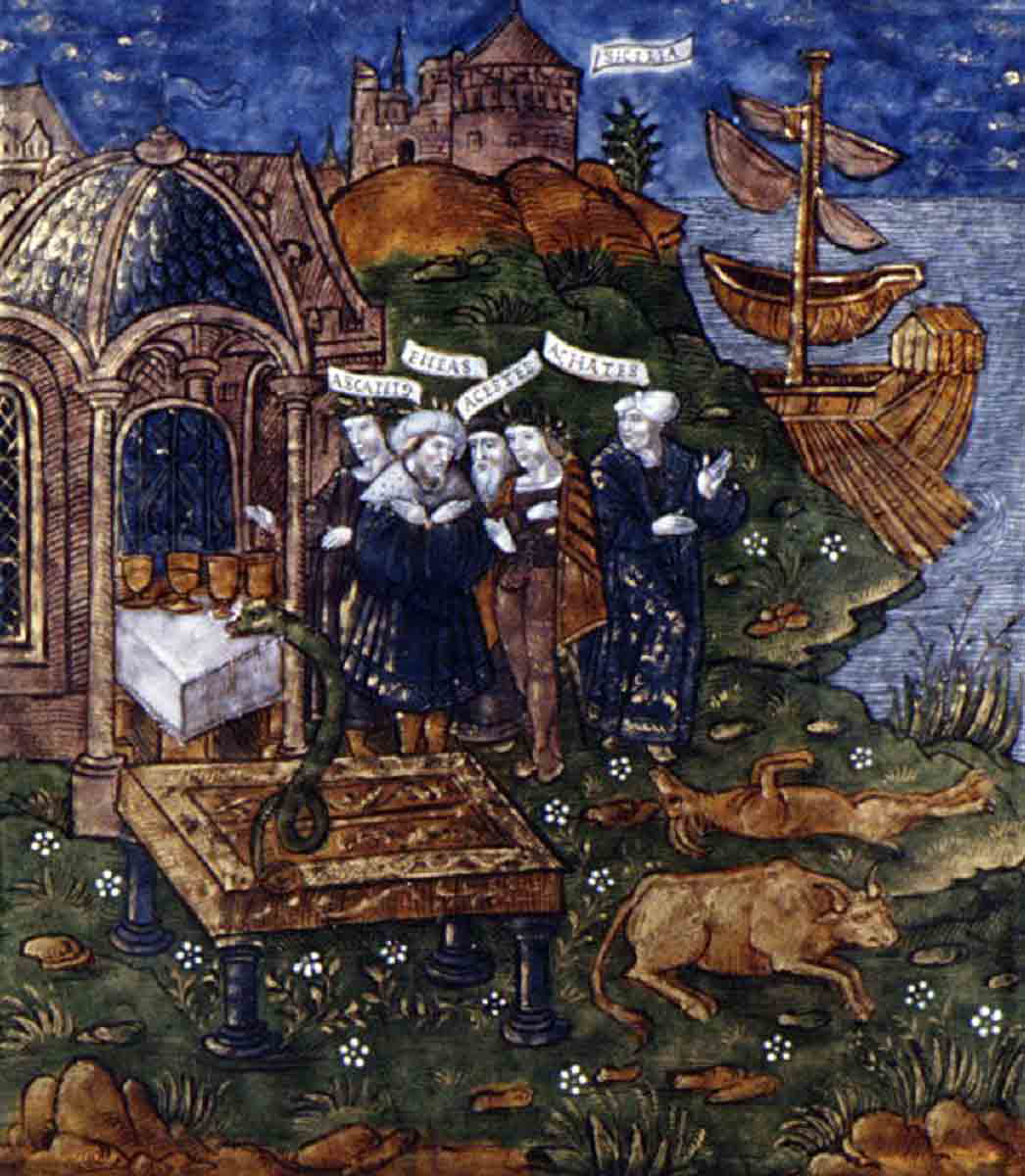
The Aeneid was written to promote certain key lessons to its readers that aligned with the moral code Augustus promoted. The most important virtue it promotes is pietas, the ancient Roman concept of duty to one’s moral, social, religious, and filial obligations. It also promotes the importance of accepting one’s divine destiny over personal desires. Homer’s epics contained similar messages, as heroes who put glory above duty are divinely punished, and the inevitability of fate is highlighted.
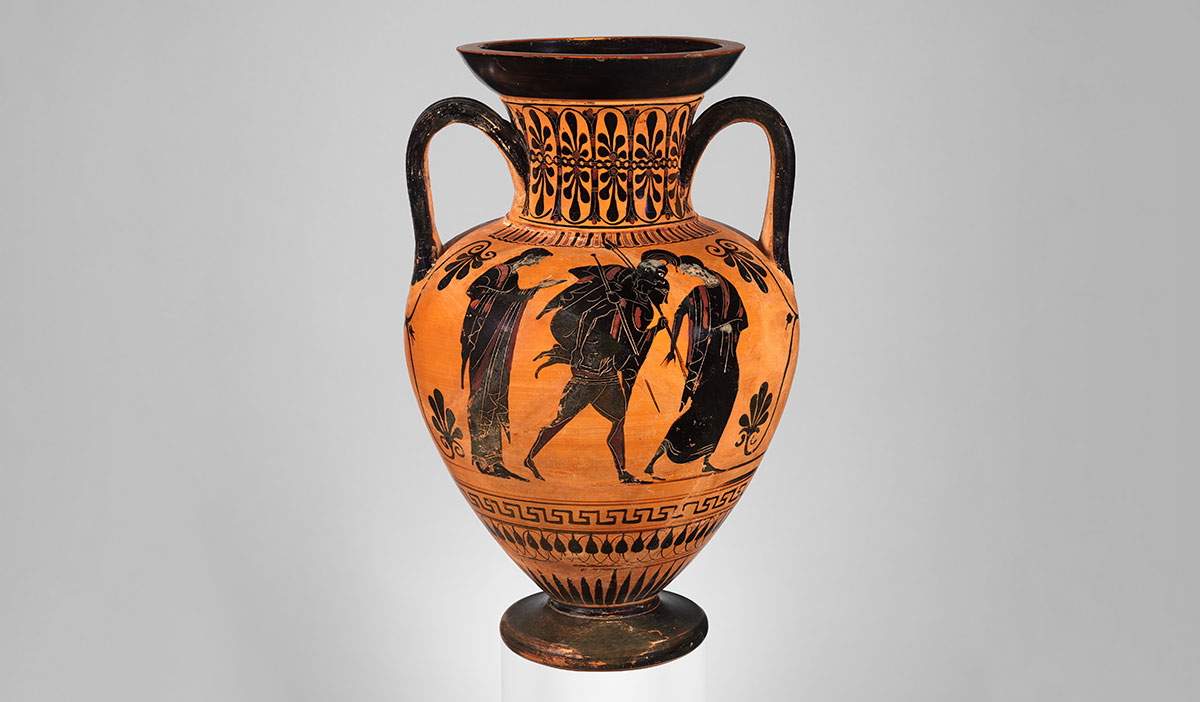
Aeneas earns his hero status not through raw physical might, but through moral discipline: carrying his elderly father out of burning Troy, guarding his ancestral gods, and walking away from his personal happiness with Queen Dido of Carthage to fulfill his duty laid out for him by the gods. This makes him a precursor to Augustus, who was not considered a general and fighter like Julius Caesar and Mark Antony, but rather a strategist and politician. He also portrayed himself as chosen by the gods to lead Rome to greatness; a duty he feigned to accept rather than relish.
As well as encouraging morality and loyalty to the Roman state, the Aeneid contained the idea that Rome’s rise was predestined by the gods. This justified the conquest and wars, both foreign and civil, that had brought Rome to where it was under Augustus, in fulfillment of its great destiny.
Rewriting History: A New Foundation Myth
The Aeneid was particularly successful in rewriting Rome’s core foundation story. As mentioned, as far back as the 5th century BC, there were legends that Rome had been founded by Aeneas himself. Other legends from shortly after that time attributed the founding of Rome to a son or grandson of Aeneas named Rhomus, or Romulus.
However, there was a chronological problem with this ancient tradition. The Trojan War was generally held to have taken place in approximately 1200 BC, while Rome was considered to have been founded in the 8th century BC. In the Aeneid, Virgil “fixed” the tradition to deal with these inconsistencies. Interestingly, he presented the same story as his contemporary Livy, whom Augustus also patronized.
Several early Greek historians attributed Rome’s foundation to Odysseus alongside Aeneas, framing Rome as a joint Greek-Trojan settlement. Other accounts claimed Telemachus, Odysseus’s son, founded the city. Other traditions suggested that King Evander, an exile from Arcadia in Greece, arrived in Italy decades before the Trojan War and established a settlement on the Palatine Hill. Another common legend tied Rome’s birth to Hercules passing through Italy while completing his Tenth Labor: stealing the cattle of Geryon. After slaying the local fire-breathing giant Cacus on the Aventine Hill, Heracles fathered children with local noblewomen, establishing lineages that eventually produced the founders of Rome. Some local traditions ignored both Troy and Greece, claiming Rome was founded directly by indigenous Latin rulers. In these versions, Romulus was simply a son or grandson of King Latinus or a local Latin priestess, fathered by Mars.
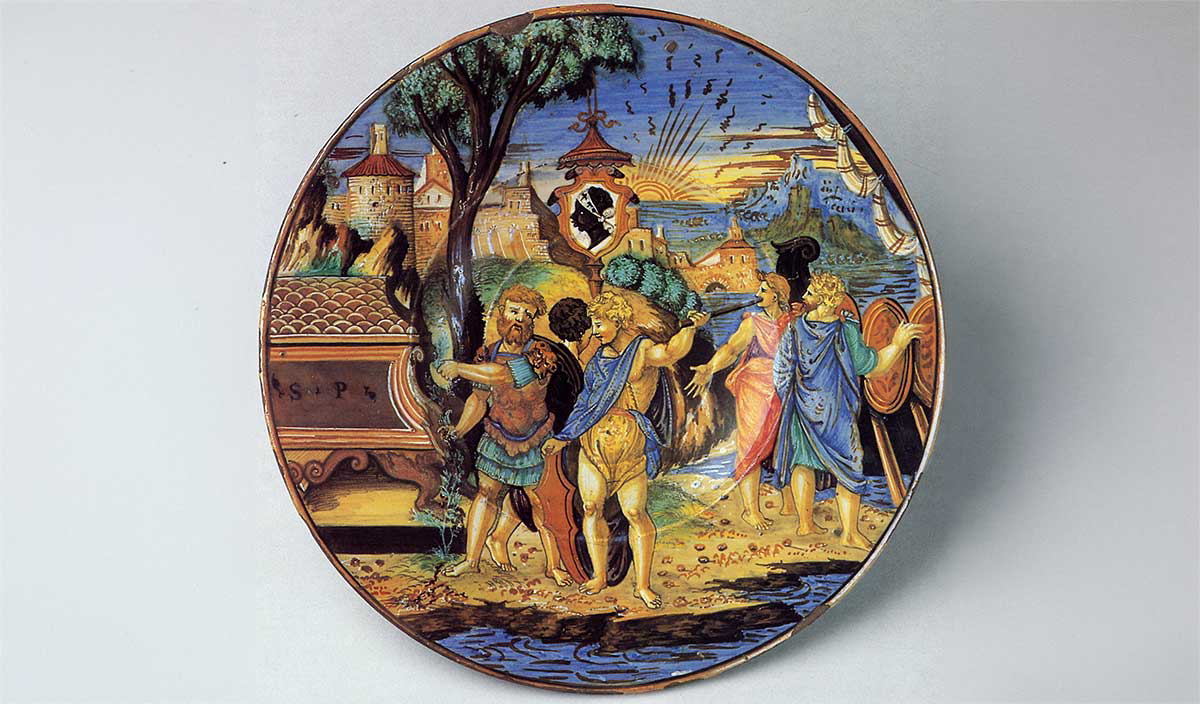
In Virgil an Livy’s accounts, Aeneas was not the direct founder of Rome, since this did not make sense with the timeline. But Aeneas led the Trojans to Italy and settled there. It was then Romulus, a much later descendant who lived at the right time, who founded Rome. Conveniently, as Virgil tells us in his poem, Augustus, as a member of the Julian gens, was a descendant of both Aeneas and Romulus, and through them the goddess Venus.
Many of Rome’s great families claimed descent from the gods, and the connection between the Julian gens and Venus long predated Virgil. The story was that Aphrodite, the Greek version of Venus, conceived a child with Anchises, making Aeneas a demi-god. Aeneas married the Trojan princes Creusa before the sack of Troy and had a child, Ascanius, who traveled to Italy with his father. At some point, Ascanius acquired the alternative name Iulus, and it was through him that the Julian gens descended and from whom they took their name.
Due to the Aeneid’s popularity and possibly other efforts to promote this version of the story, older traditions about the foundation of Rome were, effectively, completely forgotten.
A National Epic
That the Aeneid was highly influential is clear in the fact that it quickly came to be considered one of the greatest pieces of ancient literature. Within just two centuries of being written, it became an essential piece of literature for anyone desiring a complete education. It was studied by students across the empire. Even after the fall of Rome in the 5th century AD, people still held it in high regard.
The influence of the Aeneid was even felt as far afield as Dark Age Britain, among both the Britons and the Anglo-Saxons. For example, the Aeneid was quoted by Gildas, a British monk of the 6th century. The Oxford History of Classical Reception in English Literature notes that it is “the only poetic text that we can be absolutely certain that he knew.” Among the Anglo-Saxons, we can see the influence of Virgil in Beowulf, the earliest surviving piece of English literature, dating perhaps to the 8th century.
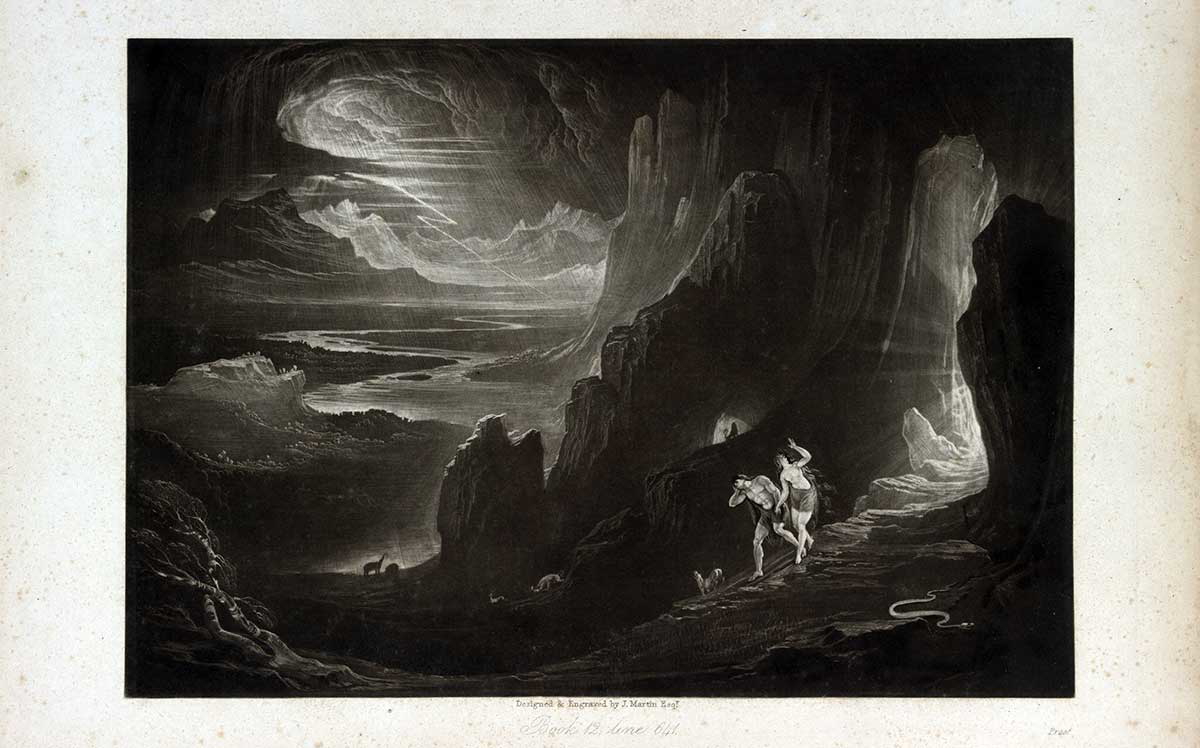
Many of the most famous subsequent works of literature within Western civilisation, such as the Historia Regum Britanniae, The Divine Comedy, and Paradise Lost, were likewise strongly influenced by the Aeneid. Without doubt, its impact continues to be felt even today.
The Aeneid and the Story of Rome
Augustus was faced with the task of reconstructing the Roman world. Rather than bulldozing over tradition, an approach that arguably got his adopted father Julius Caesar killed, he decided to adapt tradition and use it to establish his new position as sole ruler of the Roman state. This went beyond political moves, such as serving as pontifex maximus (chief priest) and wielding tribunica potestas (the power of the Tribune of the Plebs to both propose and veto laws).
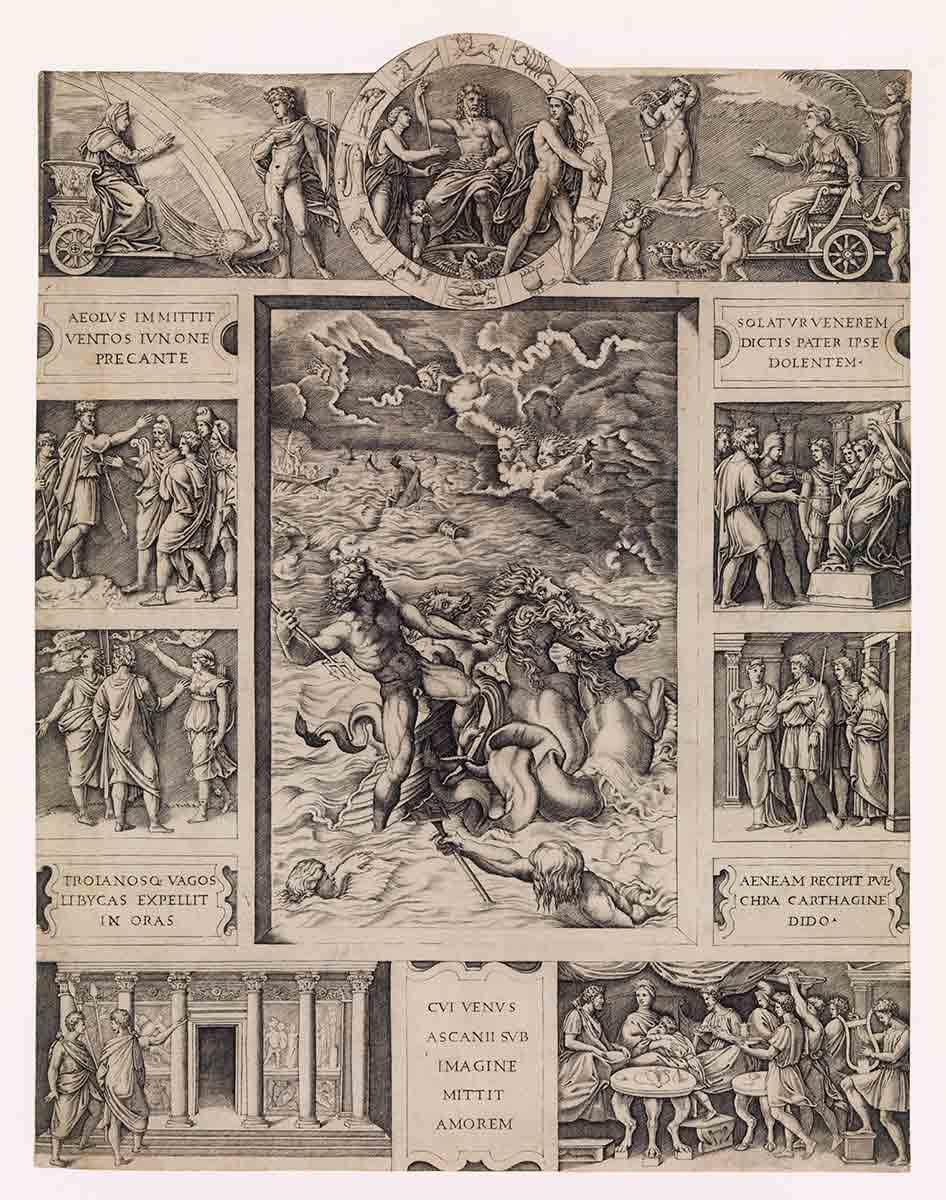
Augustus promoted the idea that Rome was chosen by the gods to be a civilizing superpower and that its conquests were Rome fulfilling that divine destiny. He also positioned himself as divinely favored by the gods and chosen to lead Rome to that destiny, something which made sense within Roman religion and culture. The story in the Aeneid sews this idea into the story of Rome from its foundation, with Aeneas chosen by the gods to lead the surviving Trojans to Italy, where they would establish Rome to fulfil that destiny. Conveniently, Augustus could position himself as a direct descendant of Aeneas, fulfilling that destiny given by the gods before Rome was even founded.
It is unclear how much Augustus directed what Virgil wrote, or if the author was just responding to propaganda that was being heavily circulated at the time of writing. But the result was a new version of the history of Rome that set the foundations for the Augustan Age and changed the narrative of Roman history for millennia to come. Virgil would probably have been gratified to know that we are still reading his words today.