
Got a question about present-day happenings? You might be tempted to look to the past for answers.
Few ancient writers have been used this way more often than Thucydides, whose History of the Peloponnesian War has shaped how generations of thinkers understand politics, power, and human behavior. But can an account of a war fought over 2,000 years ago really explain the modern world?
We sat down with Dr. Neville Morley, Professor of Classics and Ancient History at the University of Exeter, to discuss how Thucydides has been interpreted over the centuries, what readers sometimes get wrong about him, and what his work can tell us about today.
Things are messy and complicated. We make sense of them through a whole range of different ways of trying to simplify and looking to the past is part of that. We look for analogies to make sense of our present.
Why Thucydides Still Shapes Political Thought
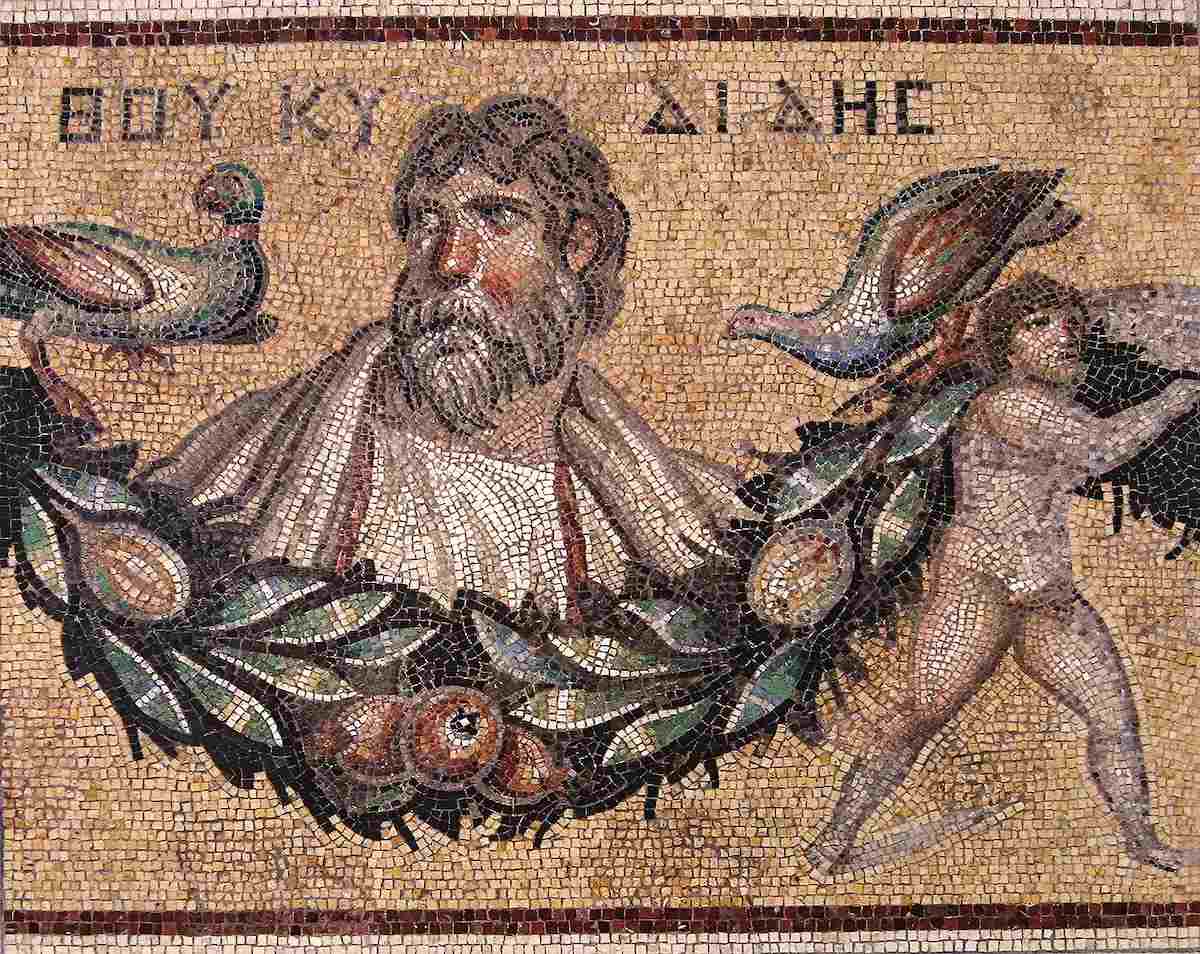
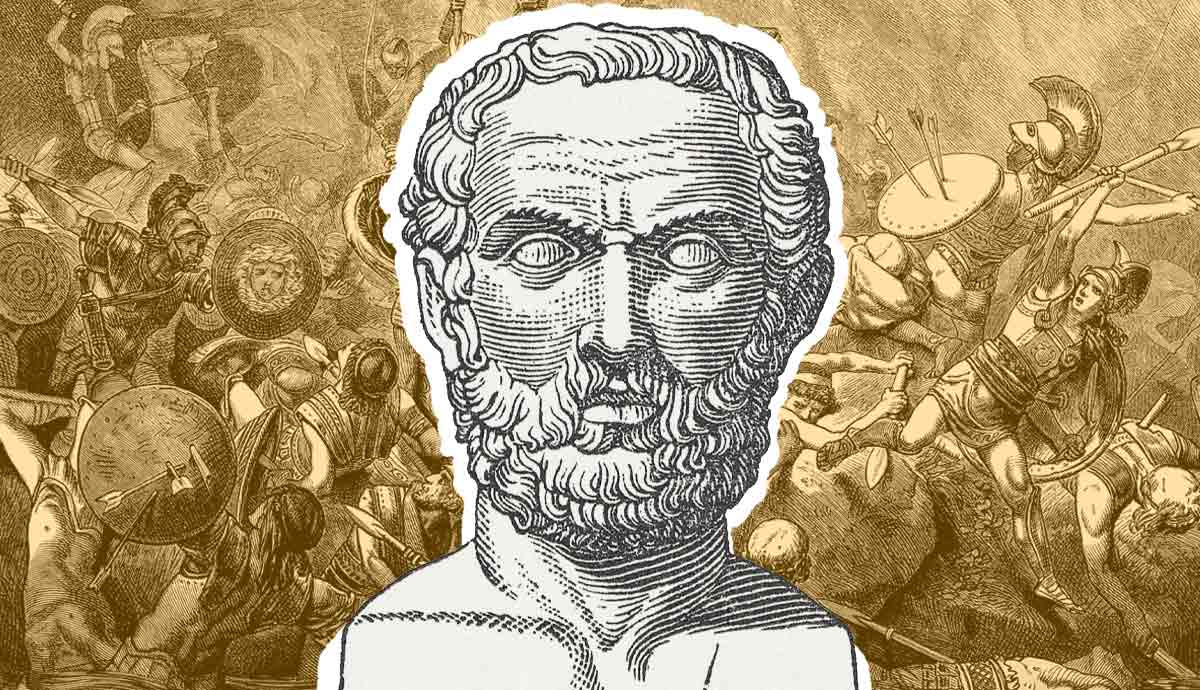
Thucydides was an Athenian statesman and general in the 5th century BC. He lived through and famously wrote about the Peloponnesian War between Athens and Sparta. While his History of the Peloponnesian War is technically unfinished, it takes a first-of-its-kind critical approach to understanding the conflict rather than simply recounting events.
Thucydides intended his work to remain useful long after the war itself had ended. That concept has helped make him an enduring influence, but his reputation has changed considerably over time. After largely disappearing from the Western tradition during the Middle Ages, the English philosopher Thomas Hobbes translated his work in the 17th century, and 19th-century historians later embraced it as a model of historical research.
Thucydides’ questions about power, politics, and human behavior continue to resonate today. They especially tend to pop up in discussions about international relations. One example is the “Thucydides Trap,” a modern term for the idea that a rising power and an established power can be drawn into conflict as the balance of power shifts. The concept comes from Thucydides’s account of the Peloponnesian War, in which he argued that Athens’s rise and the fear it caused in Sparta made war hard to avoid.
What Can Thucydides Really Tell Us About the Present?

How much of what we see in Thucydides comes from him, and how much comes from later readers? Dr. Morley warns against reducing Thucydides’s work to simple political rules. The famous line that “the strong do what they can, and the weak suffer what they must,” for example, can obscure the complexity of the events when taken out of context. For Dr. Morley, this complexity is what makes ancient history valuable. The past may not directly answer today’s questions, but it can give us new ways to think about them and reveal assumptions we might otherwise overlook.
To explore Dr. Morley’s writings on ancient history and historiography, visit his blog.