
The ancient Greek sport of wrestling, called palē, does not pale in comparison to its modern equivalents, despite its advanced age. The sport boasts deep cultural significance, but also an incredibly practical, advanced, and skill-oriented ruleset. Its history is narrated through myth, philosophical texts, and masterfully drawn vase depictions. But despite the name, modern Greco-Roman wrestling has little in common with the palē, which was characterized by practical simplicity. Modern Greco-Roman wrestling is really French and was deliberately chosen as one of the nine sports in the first modern Olympics over palē.
The History of Palē
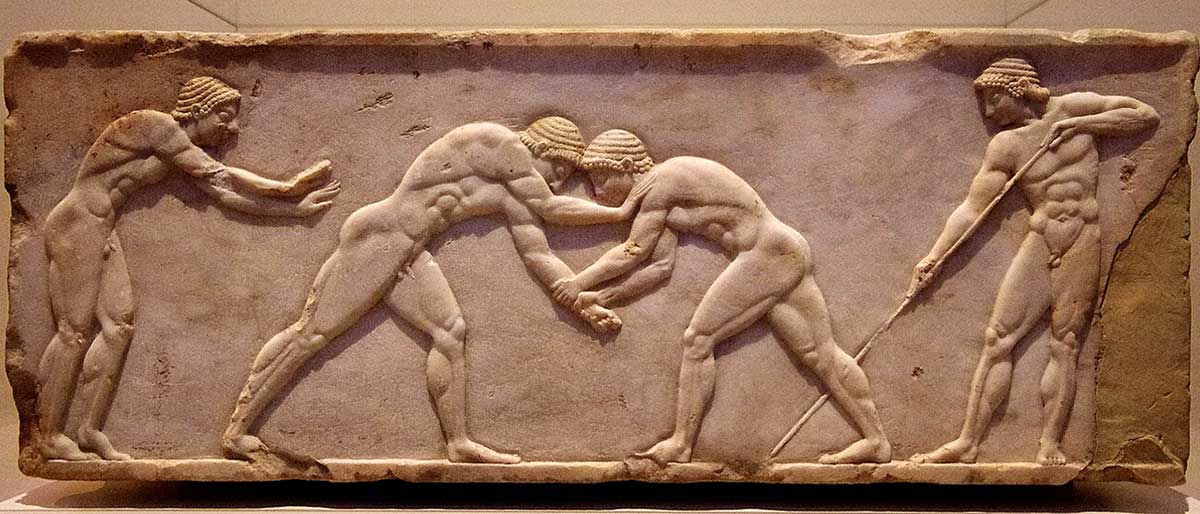
There’s nothing “Greco” about modern Greco-Roman wrestling, and little that’s Hellenic in freestyle either. In fact, Greco-Roman wrestling developed from “flat hand wrestling” and other European folk styles. It is French in origin and dates to the mid-19th century. It was only given the name Greco-Roman to solidify it as the successor to the Olympic wrestling contest of antiquity.
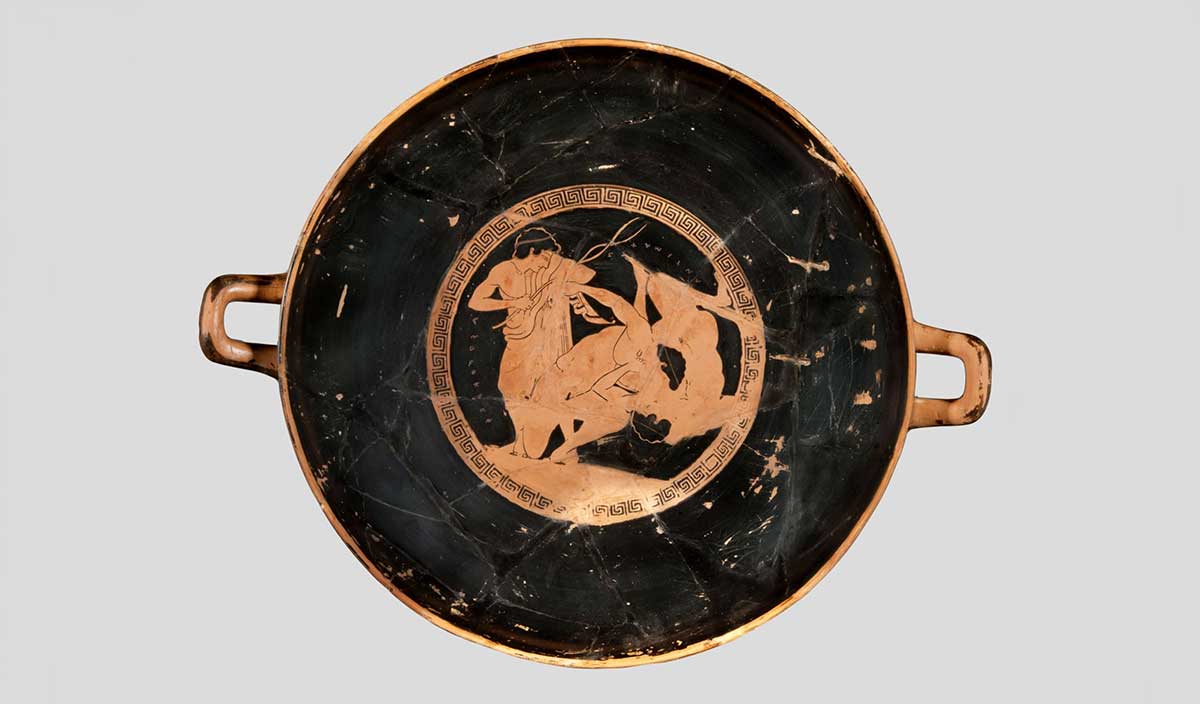
In ancient Greece, wrestling was called palē (PAH-lee). It was a sport of immense cultural value and one of the most popular contests of the Panhellenic Games. It was introduced into the Olympics in 708 BC as the very first combat sport, but its history reaches far beyond the Archaic period.
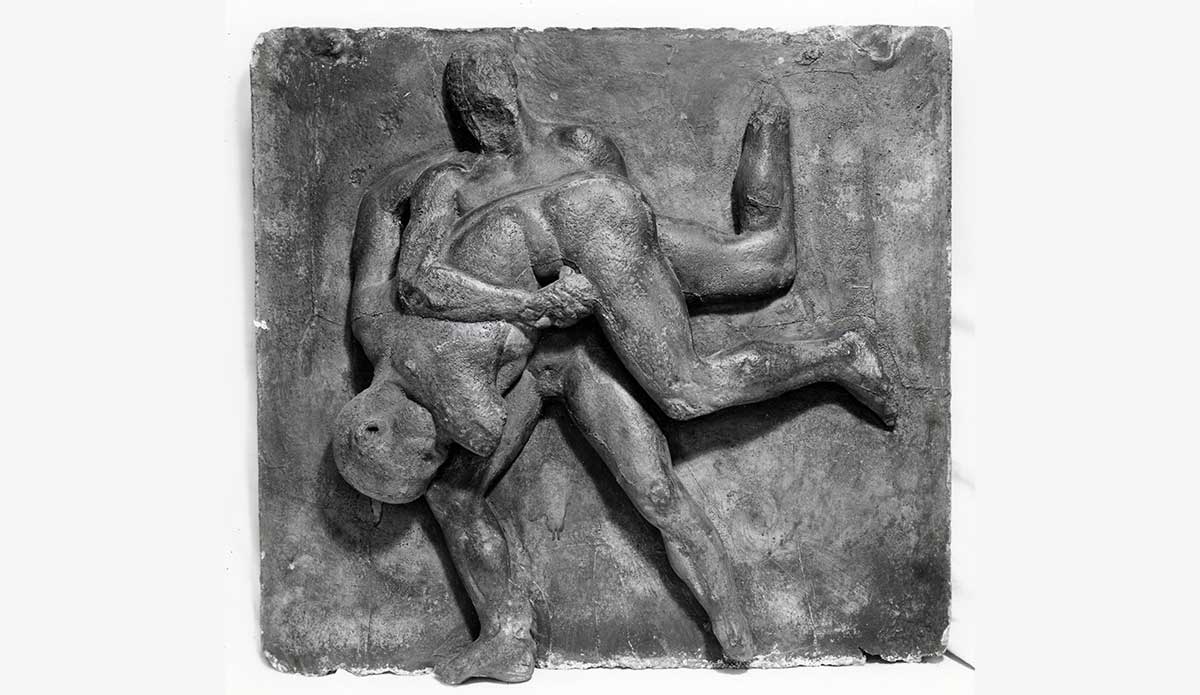
Its origins can be traced back to mythology, with conflicting accounts of who founded the sport. Some claimed it was Theseus, others Heracles, but perhaps the most interesting account is that it was Hermes who invented palē. Why Hermes? In addition to being a messenger and guide, Hermes was a god associated with cunning. He was given the epithet “Dolios,” meaning crafty, tricky, scheming, all the qualities necessary to be successful in palē.
Indeed, Plutarch traced the etymology of the word palē to the term “paleúein,” which means “to deceive and throw down through trickery.” That is also why the craftiest of the Homeric heroes, Odysseus, was able to hold his ground against a much larger and stronger opponent, the hero Ajax, in a wrestling contest during the Funeral Games for Patroclus. Ultimately, palē was a sport of skill rather than raw strength.
But how does palē differ from modern-day wrestling?
The Ancient Palē Ruleset
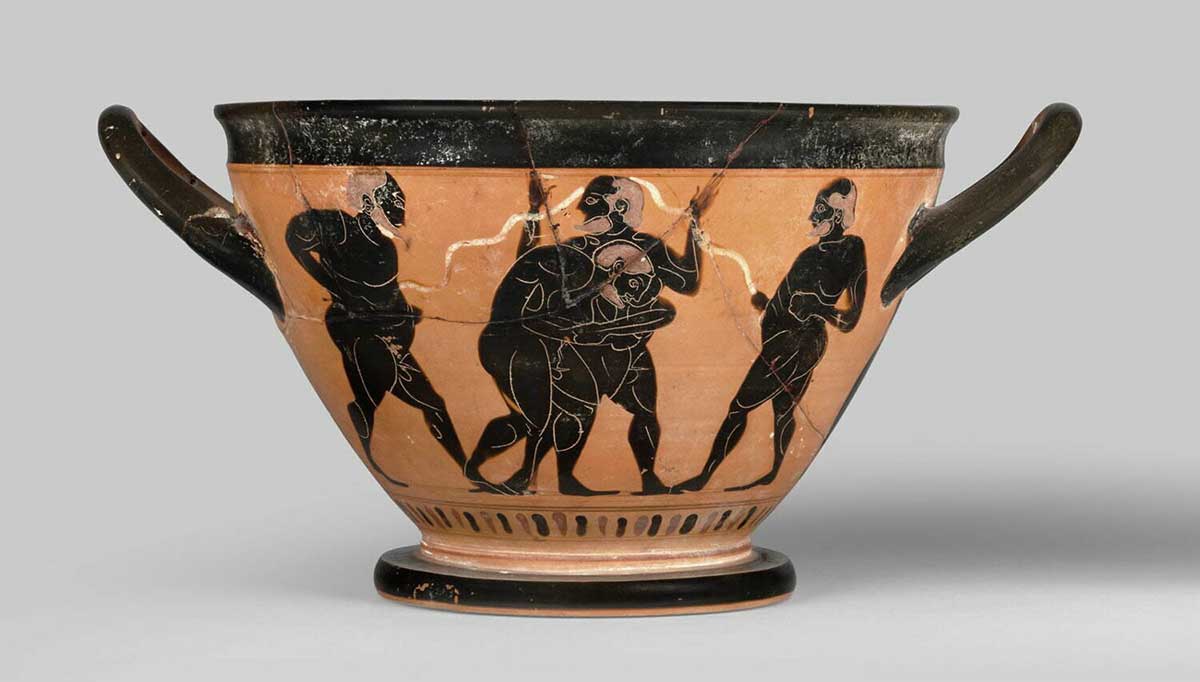
First, the arena. Palē took place in a huge, pick-worked patch of earth called the “skamma.” The soil was leveled, loosened, softened, and raked to break the fall of the combatants. The skamma was also used for the long jump, so it served a dual purpose. It was square or rectangular in shape, often as large as 15 meters (approximately 50 feet) per side.
Once in the skamma, the rules were incredibly simple. To score a fall, one would have to bring their opponent to a position where they lay unsupported by hands or knees (prone, supine, or side; it did not seem to matter). This could be achieved with a throw or with groundwork (wrestling on the floor to achieve the fall).
Similarly to modern Judo, a successful trip from a standing position would be counted as a fall, meaning that they did not have to follow their opponent to the ground. But, unlike Judo, one would have to score not one, but three falls to win a match.
Of course, no striking, finger bending, chokes, or joint manipulations were allowed in ancient Greek palē, though the latter two did become legal during the Roman era. When fouls occurred, the referee (rabdoukos) would immediately penalize the transgressor by striking them with a wooden rod.
In summary: three falls to win (a fall being forcing an opponent on their back or stomach) and any violations meant being placed into the referee’s position. That’s it. Simple. Straightforward. Three strikes and you’re out.
Palē vs. Greco-Roman and Freestyle Wrestling
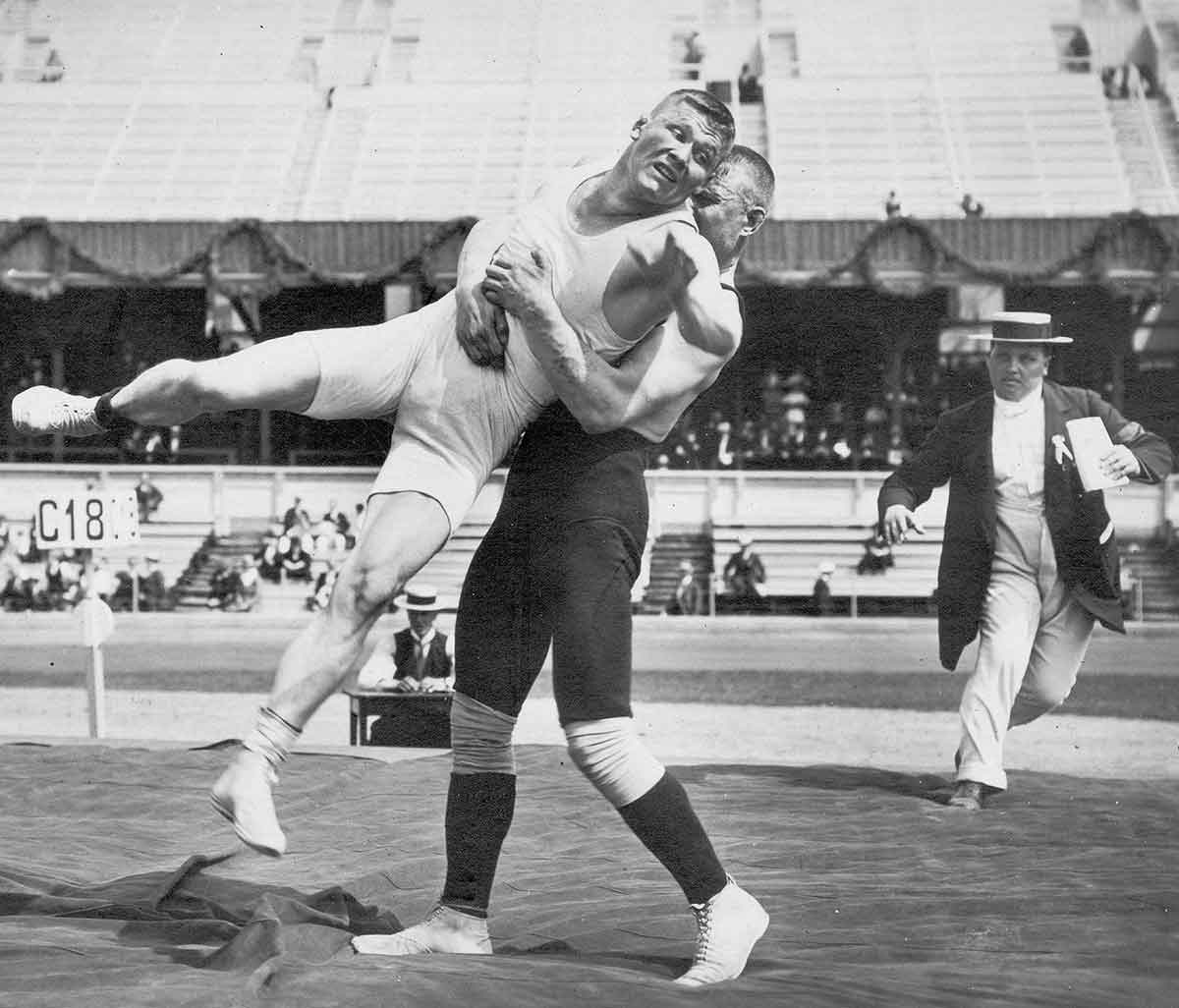
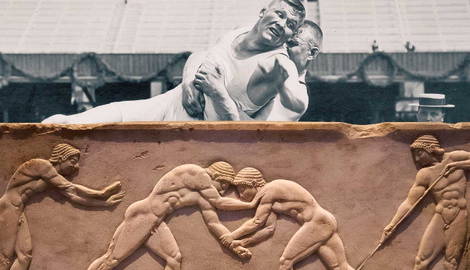
Now, let’s compare palē with its modern “successors”: Greco-Roman and Freestyle wrestling. They differ from each other; for example, Greco-Roman does not allow leg attacks. But they share a common win condition: pinning the opponent by having both their shoulders touch the floor for about a second, which immediately ends a match.
The problem is… It’s not very easy to do. Wrestlers, to avoid having their shoulders on the ground long enough for a referee to notice and declare a winner, will do what is called “bridging.” They roll onto their head and support their bodyweight by arching their back, shoulders, and neck.
Bridging and other tactics make it so difficult to execute the pin that there were cases in the 1912 Olympics of Greco-Roman contests, for example, Klein versus Asikainen, that lasted for over eleven hours before Klein secured the victory!
But instead of simplifying the win condition, the rulemakers opted for additional complexity with a torturous point system. A takedown can score two to five points, depending on different factors. Lifting someone from the ground can score two, four, or five points. “Exposure” another two or three points. Out of bounds, one point, and the list goes on. If you’ve ever watched a wrestling match and had no idea what was going on, this is likely the reason.
Someone can lift an opponent into the air, slam them on the ground, and still continue the throw to attempt a pin or gain more points. There’s no pause for the audience to process the spectacular throw. Instead, they have to do math in their head to check how many points the fighter has and how many more he needs to win.
An eight-point lead for Greco-Roman and a ten-point lead for Freestyle are what an athlete needs to be victorious, and the number of points scored is really up to the referee’s discretion.
Pierre de Coubertin and the “Modern Olympics”
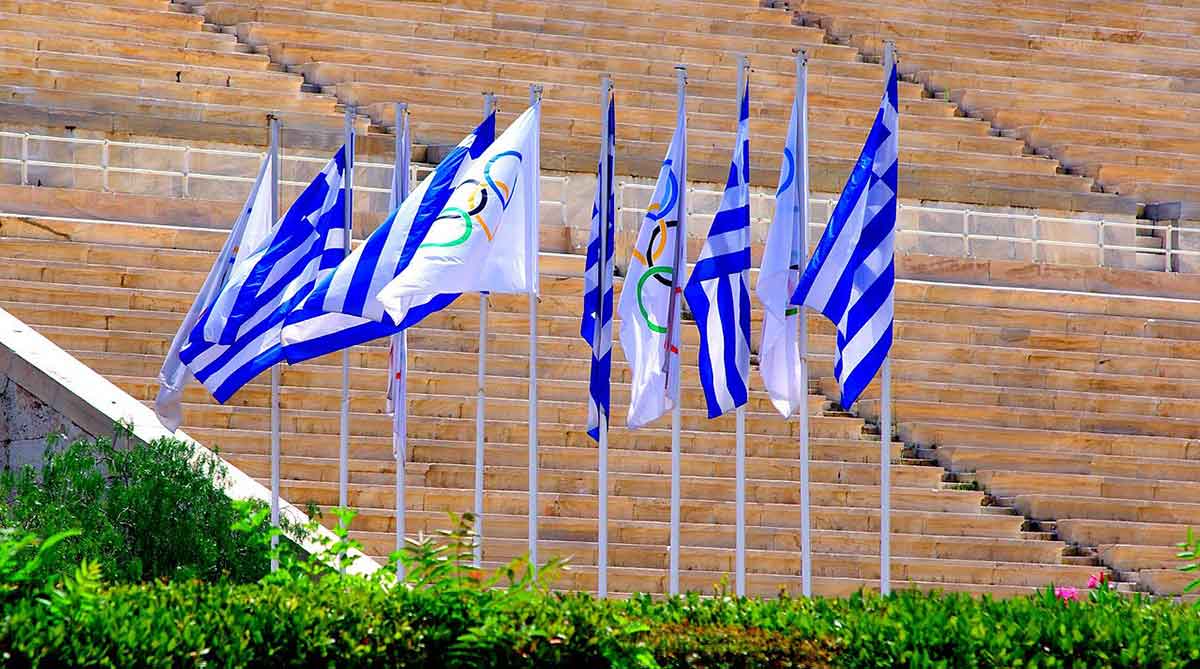
So, how did we end up with Greco-Roman and Freestyle instead of palē? The answer is the “Modern Olympics.”
Many people don’t know that before the first modern Olympics in 1896, there was a movement within Greece for the return of the Games, led by Panagiotis Soutsos and Evangelos Zappas. These Games were held in 1859, 1870, 1875, and 1889. They included events like running, javelin throwing, wrestling, and jumping. In 1870, the sport of palē was reintroduced with its original ruleset, and successfully so, continuing unchanged until 1896.
But after Zappas’ death, French aristocrat Pierre de Coubertin made great efforts to take over the Olympics with his own vision. The Greek government was opposed, but the crown prince of Greece, Constantine I (of Danish descent, imposed by Britain, France, and Russia), set up a new committee with himself as president and approved the new 1896 Olympics.
The commission, run by D. Vikelas, a wealthy Greek expat living in Paris, Pierre de Coubertin, C. Herbert of the British AAA (Amateur Athletic Association), and W.M. Sloane (American Historian), made a concerted effort not to imitate the ancient Games or adopt ancient rulesets of existing contests, preferring modern approaches.
Hence, the first Olympics included events like cycling, gymnastics, shooting, swimming, and tennis. The only surviving events from the ancient Olympics were a few of the track & field sports and wrestling. Greco-Roman wrestling, not palē.
The reality is that Greece was not ready for these “Olympics.” The country had gained its independence only 70 years earlier and was still fighting to liberate territories under occupation. Greek Macedonia, sections of Epirus, Crete, and several Aegean islands were liberated 17 years after the first modern Olympics. The country was in no position to fight for its intangible cultural heritage. The result was the appropriation of the Games by Pierre de Coubertin and the International Olympic Committee (IOC).
Could Palē Make a Return?
Despite its dubious foundation and the many instances of scandals and corruption that followed, the modern Olympics aren’t all bad. The Games exploded in popularity; everyone can participate regardless of gender or ethnicity, they are recognized by almost every country in the world, and are considered the standard of athletic competition across many sports.
But the disconnect between the modern “Olympics” and their founding culture remains an issue. The deliberate effort to separate the Olympics from their civilizational roots has practical ramifications too. Their exclusion of pankration, mainly due to ahistorical misconceptions about it being “brutal” and “no-holds barred,” has given rise to the almost monopolistic grip of the Ultimate Fighting Championship (UFC) as the most comprehensive combat sport.
And palē, a sport simple to start yet difficult to master, made to be enjoyable for athletes and spectators alike, has been sidelined for a much more convoluted evolution.
A grassroots movement of athletes and academic researchers, the IPA (International Palē Association), is attempting to reintroduce the sport to athletic commissions and the general public. For too long, Greece has been excluded from control of its own cultural heritage. It’s time for that to change.