
Modern depictions of ancient parties tend to lean towards ideas of unrestrained vice with displays of heavy drinking, sexual acts, and other intemperance, but the reality was actually quite different.
While the scandalous episodes did exist, most parties were structured, hierarchical affairs that served serious social purposes.
Separation of Hollywood Myths From Ancient Feasting Realities
Modern concepts of ancient feasts are rife with misconceptions that lean towards entertainment in pop culture rather than historical accuracy. One such misconception is the idea of Romans sticking feathers down their throats in the vomitorium so that they can vomit and empty their full stomachs in order to continue feasting. Vomitoria were, in fact, exit points in stadiums like the Colosseum, not dedicated rooms for people to regurgitate their last meal!
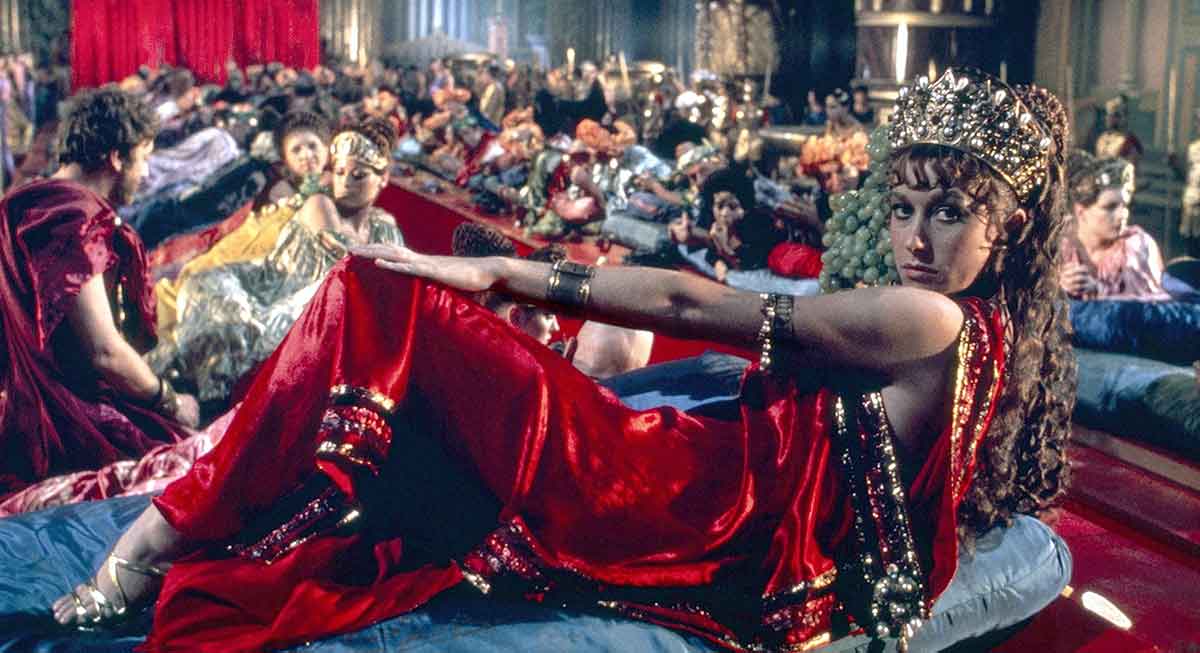
Meanwhile, films like Caligula (1979) paint Roman parties in a very unflattering (and very graphic) light. While orgies certainly happened in ancient times, they weren’t the norm across the ancient world.
Far from being events of gluttony and debauchery, most events were functions with strict etiquette. In fact, the occurrence of unrestricted depravity drew criticism at the time and was considered scandalous. Just as it does today.
And when it did happen, it generally served specific social, political, and religious functions.
Sacred Frenzy and State Terror in the Roman Bacchanalia
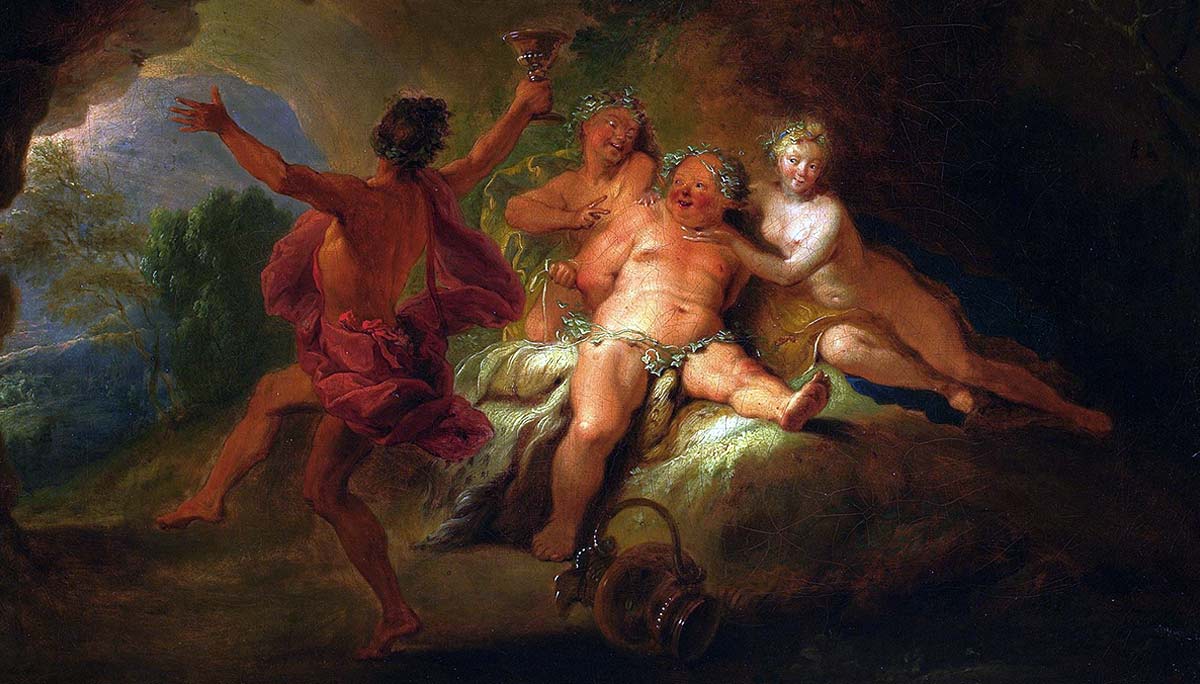
Receiving widespread infamy was the Bacchanalian cult of ancient Rome. Not many facts are known about the proceedings in their wild parties, and what is known comes from the Roman historian Livy. In his Ab Urbe Condita (“From the Founding of the City”), he pulled no punches, describing the wild parties as drunken escapades with the “nightly commingling of men and women, those of tender age with their seniors…” Adding to this, he accused the worshipers of conspiratorial activities of fraud and murder. While the debauchery was taking place, drums and cymbals drowned out the screams of victims.
Livy’s accounts, however, were in opposition to the Bacchanalians and were most definitely works of propaganda. Livy was a political and social conservative who opposed the intermingling of class and gender. His motivation was to highlight moral decay.
The nuance here is that depraved activities, whether they happened or not, were seen as scandalous rather than something accepted as the norm. 200 years before Livy, the Bacchanalian cult was in full swing, and in 186 BC, fearing the rise of such a secret power, the Roman Senate reformed the worship of Bacchus, controlling the size, organization, and priesthood, threatening execution to those who did not conform. Here the government took an active role in suppressing something it deemed depraved.
Intellect and Intoxication in the Greek Symposium
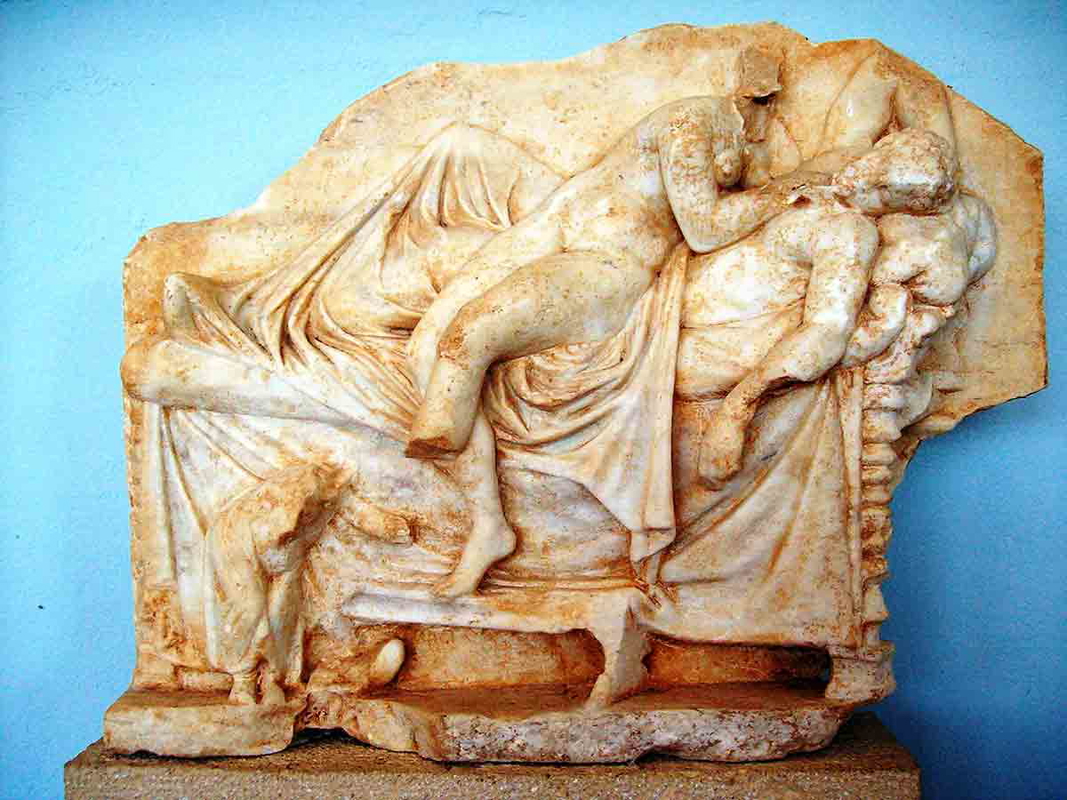
In ancient Greece, both sex and intoxication were seen through a cautious and restrained lens. Sexual desire was something to be controlled as part of self-mastery. As such, carnal depravity was heavily frowned upon. Plato denigrated it, while Xenophon quotes Socrates as warning against carnal desire. It is worth noting, however, that this can hardly be classified as being universal in Greek culture. Excessive drinking and lustful pastimes certainly happened behind the scenes.
The upper-class symposiums did often include activities of a raunchier nature, although they weren’t the main focus of the gathering (allegedly). The symposiarch, as the host, controlled the flow of wine and the level of entertainment, and wine was generally watered down. These affairs could be boring, but could also be quite excessive!
The symposium, and the Roman equivalent of the convivium, were social gatherings that often focused on high culture, with poetry readings and dancing taking place. Women’s roles were different in each culture. In Etruscan society, they seemed to have had equal status at such parties; in Greece, they were forbidden except as entertainment, while in the ancient Roman Republic, women at these parties could not drink wine— this changed in later years.
Imperial Extravagance Under the Reign of Emperor Nero
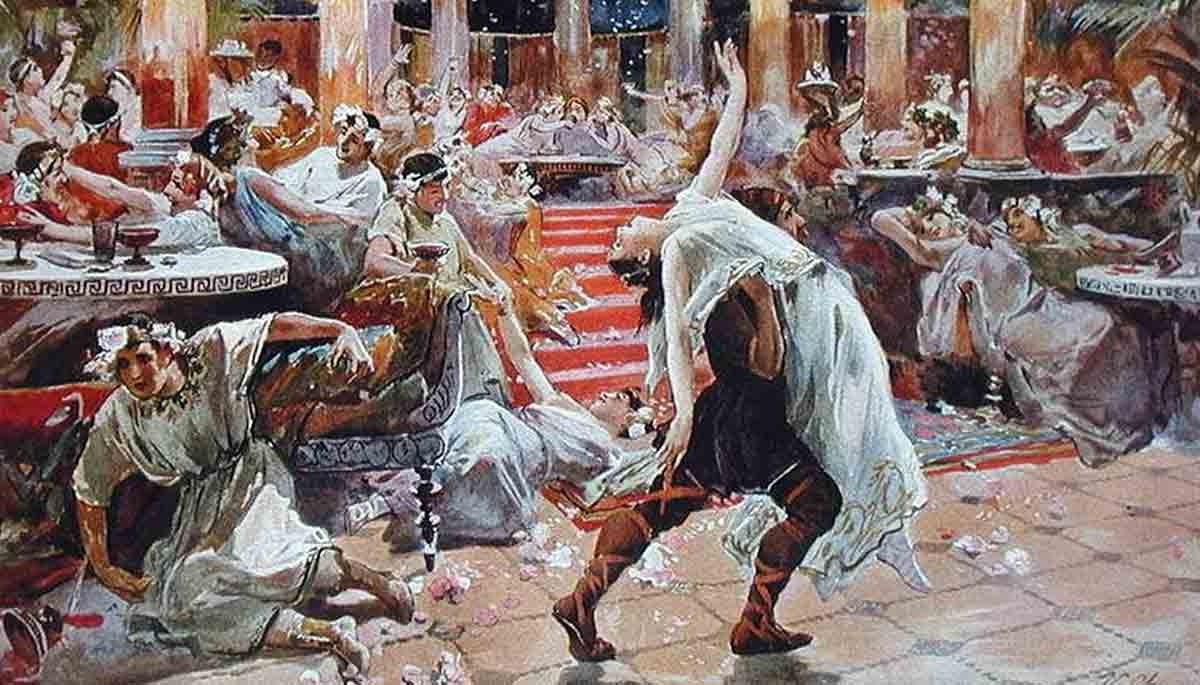
Tame parties are hardly remembered in historical writings, and as such, it’s easy for the more extreme examples to be the ones that end up directing modern stereotypes. Of particular note were the parties of Nero, which were known for their extravagance.
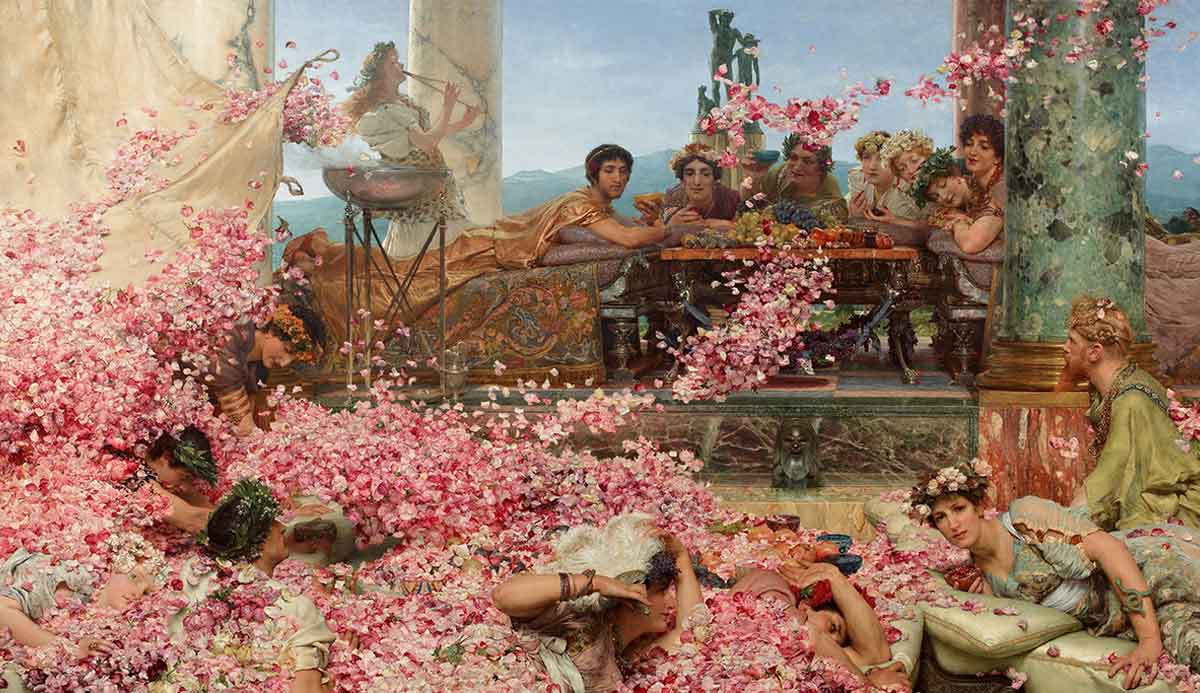
In Nero’s palace, the Domus Aurea, a dining room (discovered by archaeologists in 2009) of 50 feet across rested on a pillar more than 13 feet in diameter. According to the ancient historian Suetonius, this hall rotated day and night and had a ceiling lined with ivory, with pipes that showered flowers and perfume onto guests.
In Tacitus’ Annals, the Roman historian notes how Nero’s prefect Tigellinus organized a banquet on a massive raft in the Pool of Agrippa. There were exotic animals, as well as all manner of obscure foods. Brothels lined the quays, and harlots strutted about and danced with abandon. Tacitus writes:
“Nero himself, defiled by every natural and unnatural lust, had left no abomination in reserve with which to crown his vicious existence.“
Again, while the parties certainly took place, and Nero is known to have been wildly extravagant, the level of excess cannot be verified, and Tacitus was obviously not a fan of Nero.
Neither was Suetonius, who mentions how Nero compelled 400 senators and 600 knights, many of whom were completely innocent, to fight in gladiatorial games for his amusement.
Mortality and Merriment in Ancient Egyptian Festivals
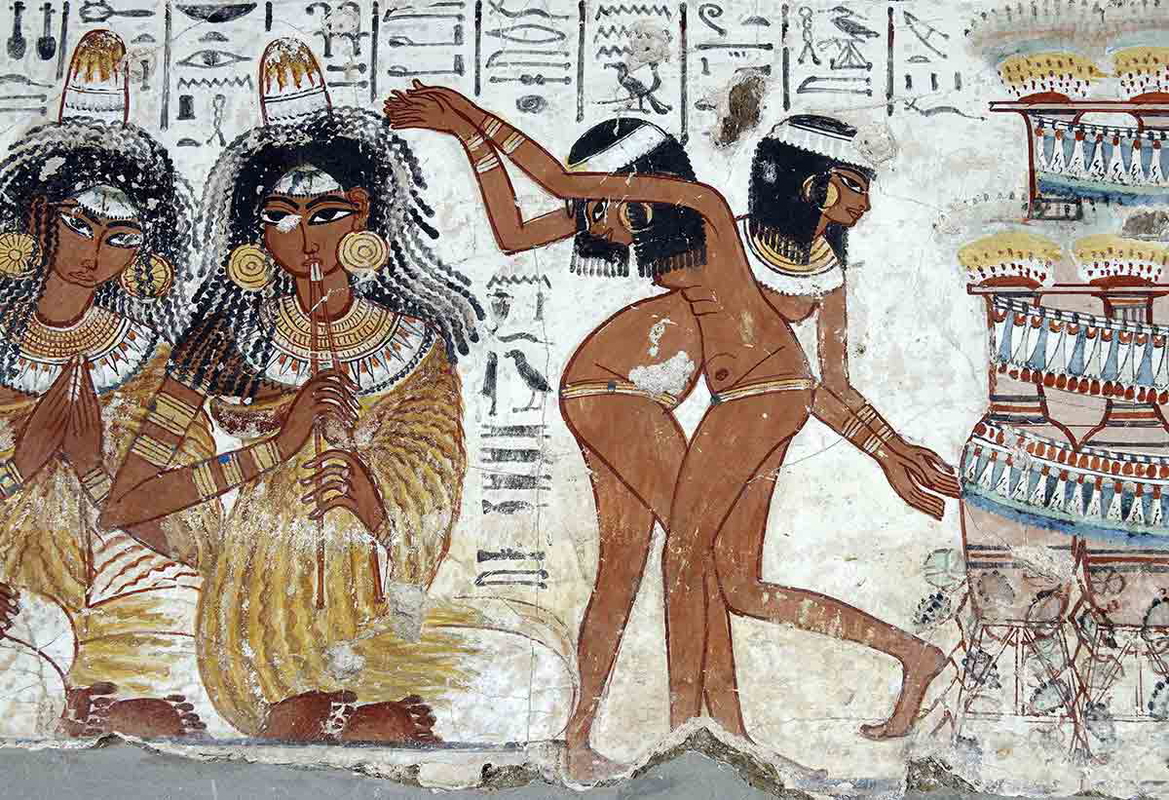
Of course, Europe wasn’t the only place to enjoy partying. Across the entire ancient world, people got together, drank, and danced while music played in merriment.
In ancient Egypt, the goddess Hathor was considered the deity of dancing, merriment, joy, love, beauty, and sexuality. Unsurprisingly, the Tekh Festival was a festival of drunkenness that included dancing, exotic animals, and bouquets of flowers as Hathor made her way to her temple, where she waited for her consort Montu, with whom she would bear a son.
While this existed, it is also fair to say these activities were acceptable only in certain contexts. In ancient Egypt, caution was advised with alcohol. The attitude to sex was generally liberal, but the punishment for adultery could be death!
Alcohol played a major part in the ancient world. From China to the Near East, Africa, and Europe, the social dynamic existed much as it does today. While alcohol flowed in religious festivals and ceremonies, and public drinking was generally acceptable, societies around the world frowned on excess and lack of control, just as they do today.
It is fair to say that parties in ancient times mirrored the same scope as they do today, from innocent book club meetings and whatever equivalent of Tupperware parties existed, to debaucherous nights of drunken vices and sexual experimentation, complete with illicit substances and scandalous immorality.