
Human beings have always competed for resources, and as a result, warring tribes and kingdoms have been incorporated into nations and empires governing vast and disparate territories. But ruling the ancient world required more than just land; it demanded the logistical capacity to control millions without modern communication methods. The largest ancient empires were terrifying war machines that swallowed entire civilizations and reshaped human history. From the Achaemenid Persian Empire, which governed nearly half the global population, to the Roman war engine that dominated the Mediterranean, these super-states relied on brutal military suppression, vast road networks, pervasive propaganda, and absolute authority to maintain order. Here are the seven largest empires of the ancient era (3500 BC-AD 476).
| Ancient Empire | Peak Era | Estimated Peak Landmass (Sq Km) |
Estimated Peak Population
|
| Xiongnu Empire | 176 BC | 9.0 Million | 3 Million |
| Han Dynasty | 50 BC | 6.5 Million | 58 Million |
| Achaemenid Empire | 480 BC | 5.5 Million | 50 Million |
| Macedonian Empire | 323 BC | 5.2 Million | 20 Million |
| Roman Empire | AD 117 | 5.0 Million | 70 Million |
| Maurya Empire | 250 BC | 5.0 Million | 50 Million |
| Hunnic Empire | AD 453 | 4 Million | 3 Million |
1. The Xiongnu Empire Dominated the Northern Steppes
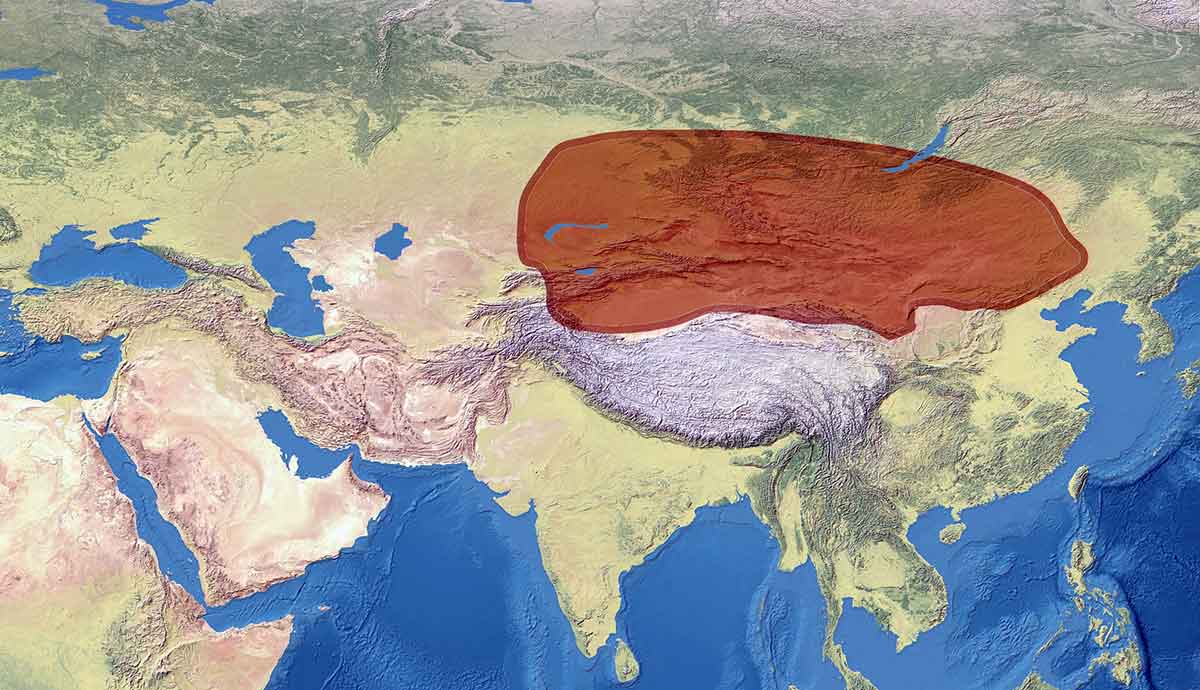
A confederation of nomadic peoples, the Xiongnu ruled over vast parts of Asia, dominating the East Eurasian Steppe from around the 3rd century BC to the late 1st century AD. Covering around 3.47 million square miles (9 million square kilometers), the Xiongnu Empire stretched across the Mongolian Steppe, parts of Siberia, and parts of what are now the Gansu and Xinjiang provinces in China. The exact size, however, is a subject of scholarly debate, and some estimates place the area closer to 3 million square miles.
The Xiongnu were the political and cultural precursors to the Mongols. Whether they were the direct ancestors is a topic of debate, especially as the Xiongnu were a multicultural mix of nomadic peoples rather than a single monocultural nation. Like the Mongols, the Xiongnu were a culture of horse riders, and their horses fulfilled many purposes, from battle mounts to transportation and food. They were also symbols of prestige and power. The Xiongnu also structured their armed forces into decimal units (groups of 10, 100, 1,000, and 10,000), an organizational model later adopted by Genghis Khan.
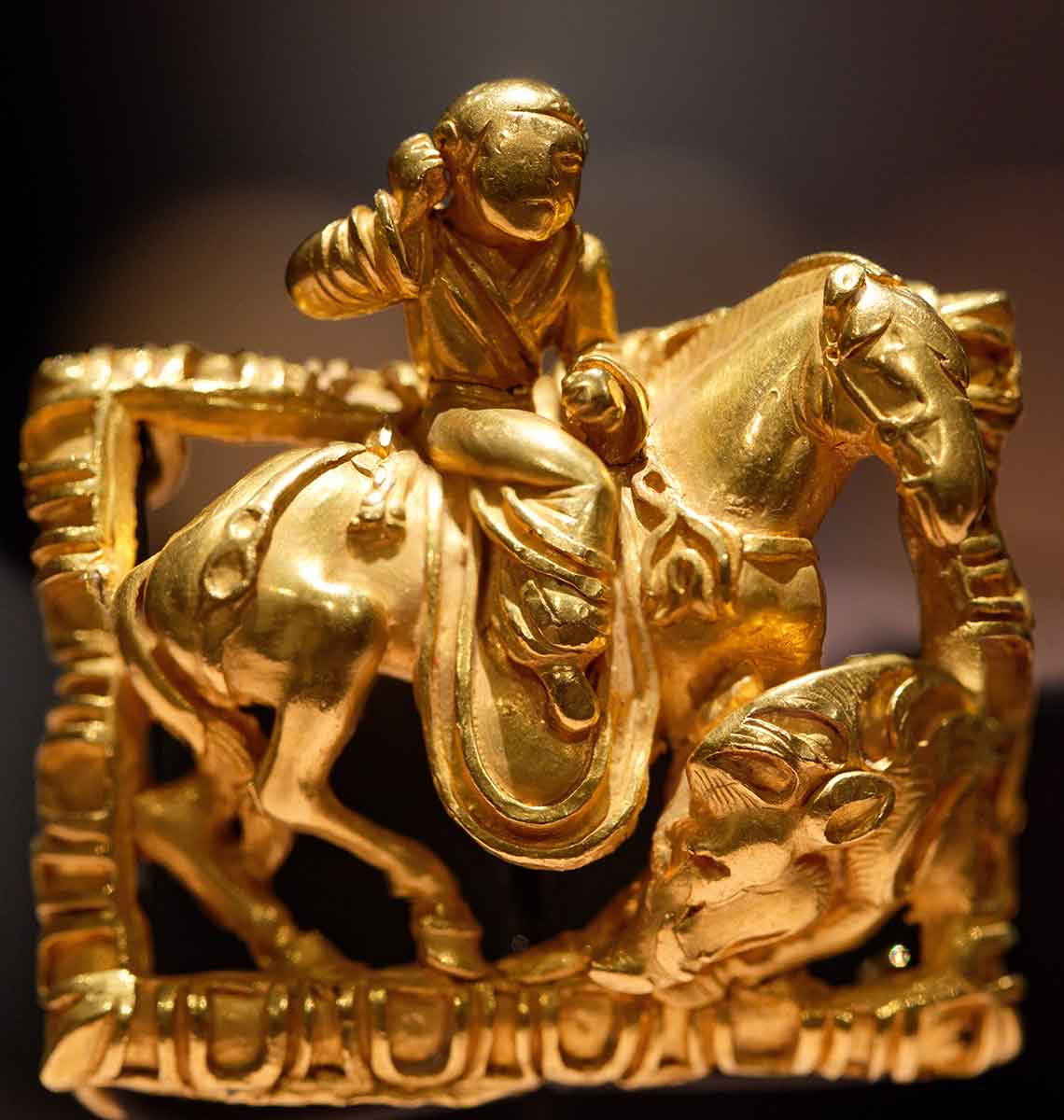
The Xiongnu had a complex history with the Chinese dynasties to the south, and this dynamic finally saw an end to the Xiongnu Empire when the Han dynasty proved victorious. This led to the confederation splitting in two, and many Xiongnu being forcibly relocated to China.
In the wake of the Xiongnu was a confederation of tribes called the Xianbei, who controlled an area of 1.71 million square miles (4.5 million square kilometers). Including it in a list of the largest empires is problematic, as it was a loose confederation with no centralized government.
2. The Han Dynasty Forged the Imperial East
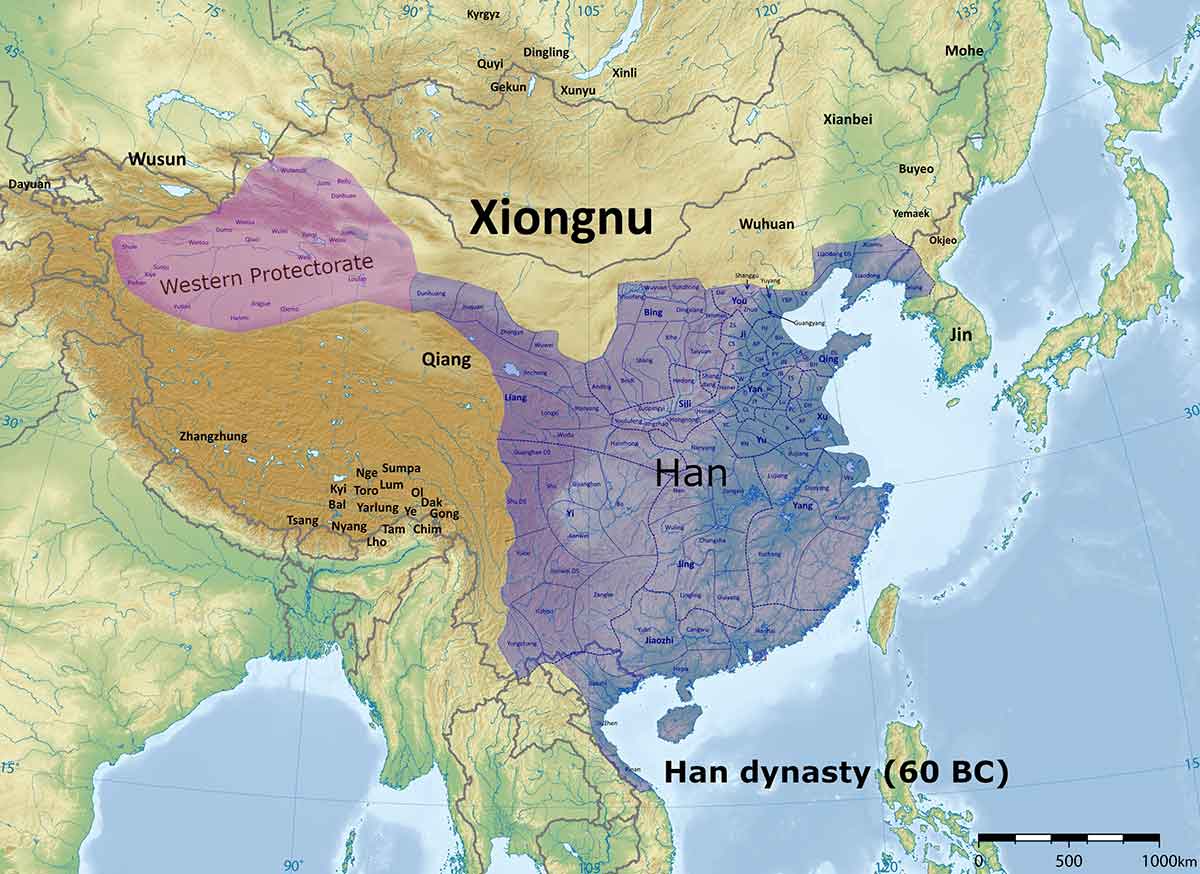
The Han Dynasty is separated into the Western and Eastern Dynasties. The Western Han Dynasty lasted from 202 BC to AD 9, after which it was interrupted by the usurper Wang Mang, who established the brief Xin Dynasty.
Established by Emperor Guangwu (Liu Xiu), the Eastern Han Dynasty represented the reestablishment of Han control and lasted from AD 25 to 220. The naming convention refers to the site of the capital. The earlier Western Han had its capital at Chang’an (modern-day Xi’an), and the Eastern Han had their capital at Luoyang, which was roughly 230 miles east of Chang’an.
At its peak around 50 BC, the Western Han covered 2.3 million square miles (6 million square kilometers), while the Eastern Han, at its peak, covered around 2.5 million square miles (6.5 million square kilometers), making it the second largest empire of the ancient era.
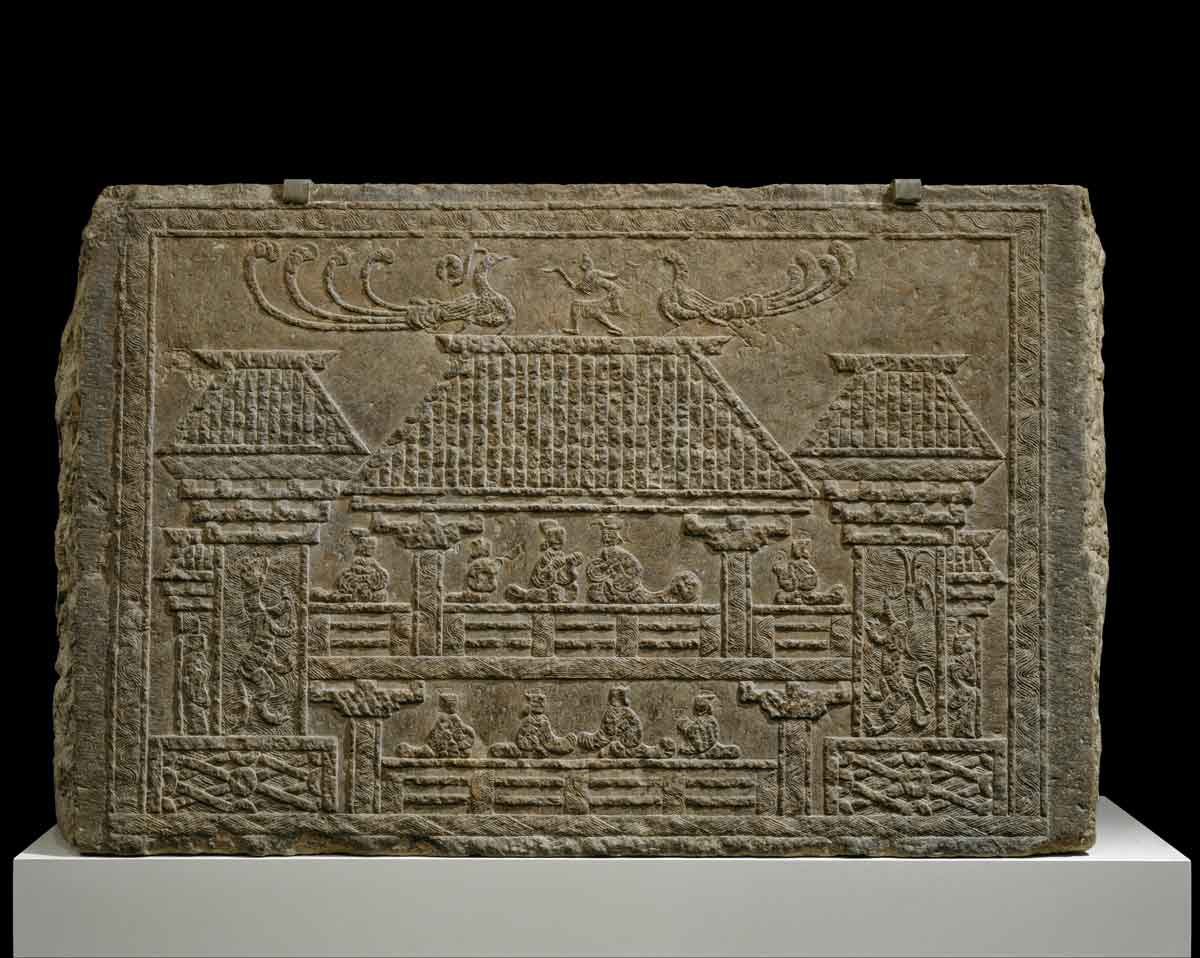
The Han Dynasty was a golden age for China. Trade flourished with the establishment of the Silk Road, and the invention of paper brought about new and effective forms of record-keeping and communication. There was also political stability and social order, as well as cultural and artistic progression. It was a Confucian Empire, with Emperor Wu elevating Confucianism to the official state philosophy, creating the Imperial Academy to train civil servants, laying the foundation for China’s civil service system.
The Han Dynasty eventually came to an end in AD 220 when the powerful Cao Pi forced the Han emperor to abdicate, thus beginning the Wei Dynasty.
3. The Achaemenid Empire Governed Half the World
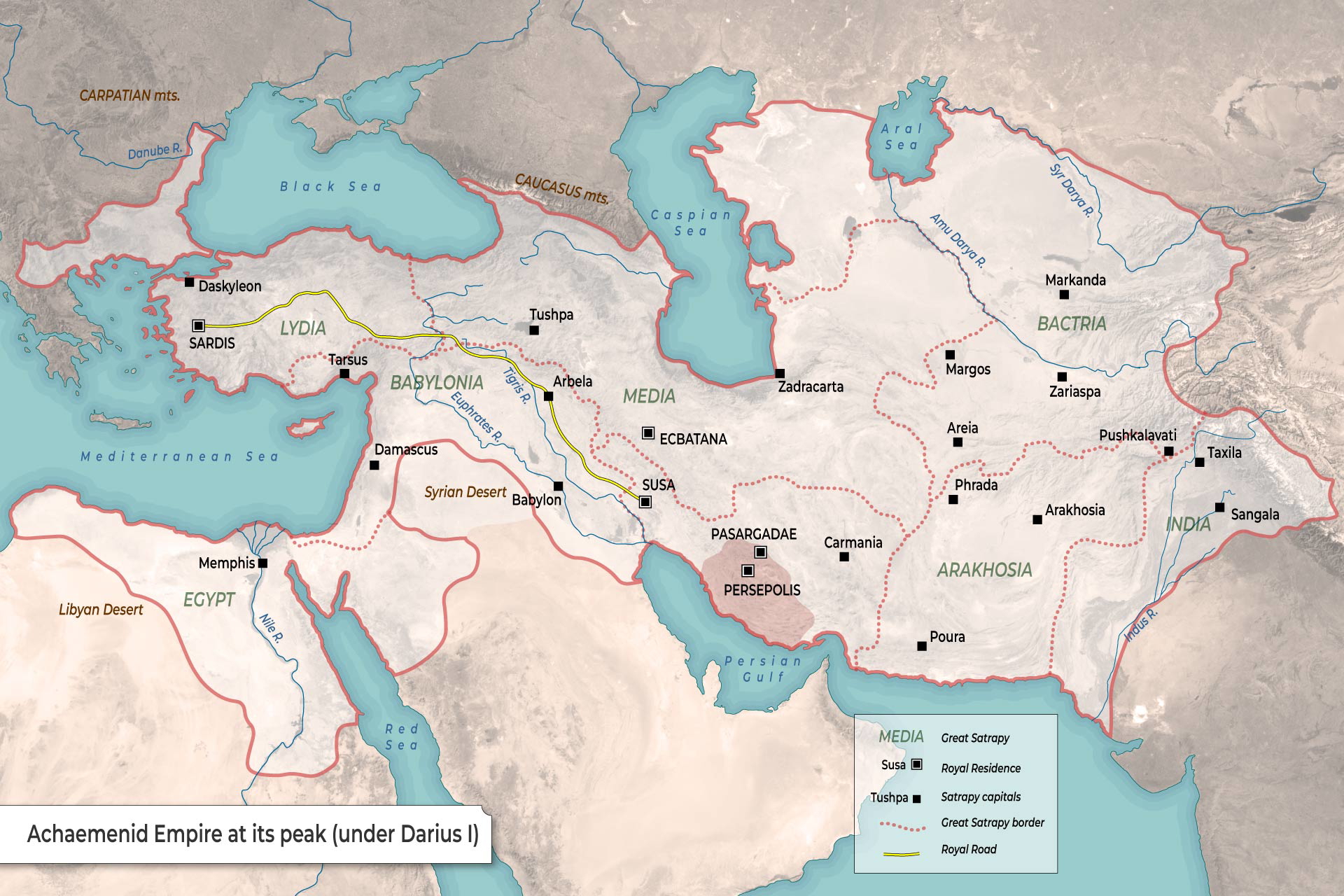
Also known as the Persian Empire, the Achaemenid Empire was the superpower of its day, founded by Cyrus the Great in 550 BC in what is present-day Iran. It was the largest empire in history up until that point and stretched from the Balkans in the west to the Indus Valley in the east, and covered 2.12 million square miles (5.5 million square kilometers).
The empire reached its peak under Darius I, who expanded into Europe and extended the borders to the north, west, and south. His efforts to conquer Greece, however, were dashed at the Battle of Marathon in 490 BC when the Greeks inflicted a crushing defeat on the Persians and forced them to abandon their campaign. Ten years later, Darius’s son, Xerxes, attempted to subdue Greece, and again the Greeks forced them back, slowing them down at Thermopylae and defeating them at sea at Salamis and on land at Plataea.
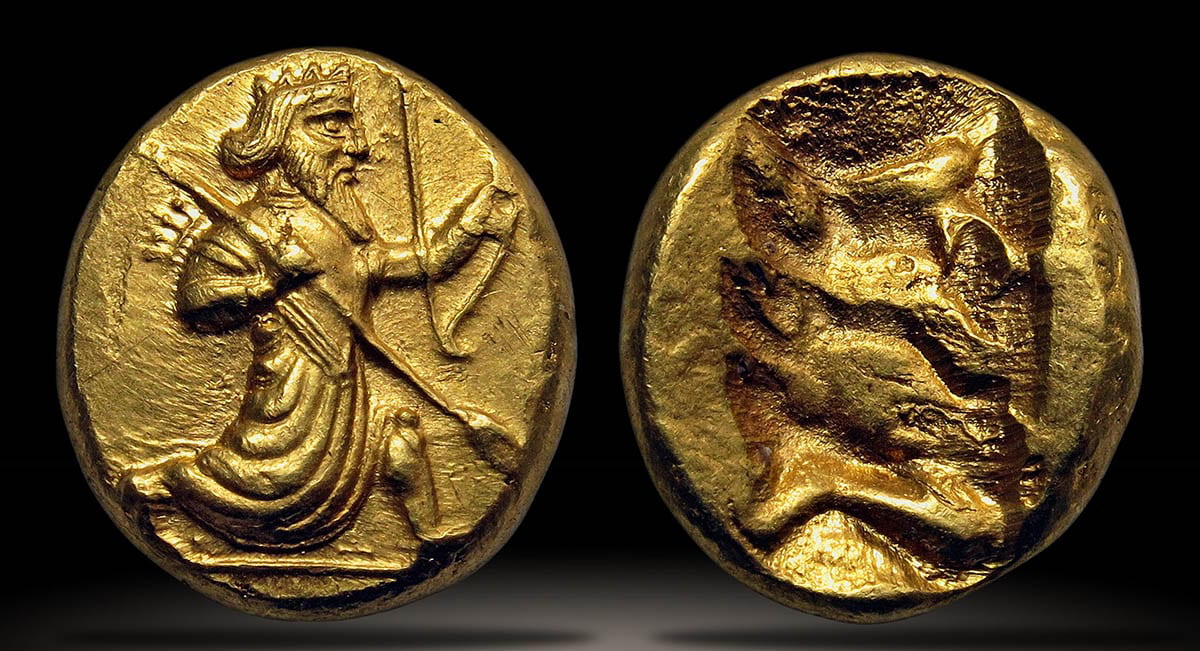
The Achaemenid Empire consisted of many ethnicities and languages, and the rule over conquered people was surprisingly liberal and progressive for its day. Regional rulers, called satraps, were largely independent but subject to frequent inspections, and the empire had a well-run bureaucracy including a group of ancient “spies” known as the King’s Eyes. Communication was handled by an advanced road and postal system that cut communication time from Susa to Sardis from three months to just nine days. Darius I also introduced the gold daric and silver siglos, creating one of the earliest standardized imperial coinages in history to streamline taxation and international trade.
By 330 BC, the Achaemenid Empire had been conquered by Alexander the Great, and after his death, much of what had been the Achaemenid Empire fell under the rule of the Ptolemaic Kingdom and the Seleucid Empire, successors to Alexander’s empire.
4. The Macedonian Empire Was Driven by Constant Conquest
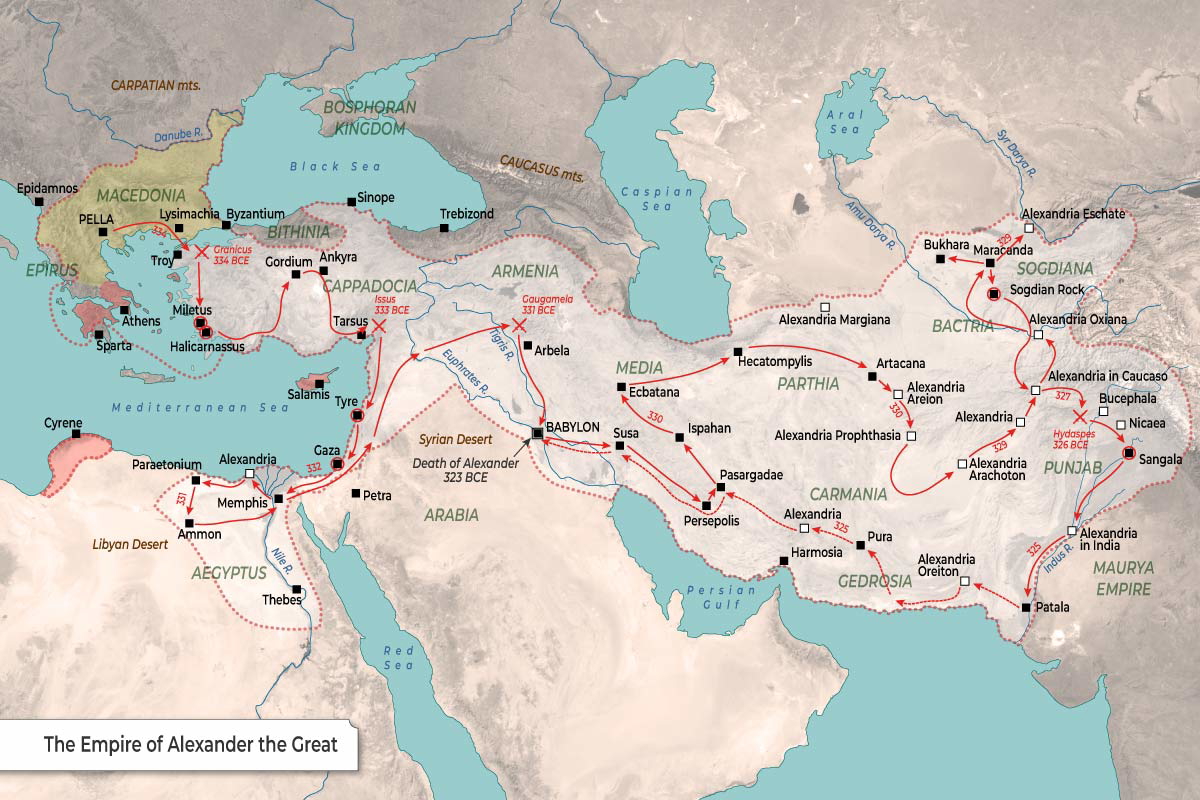
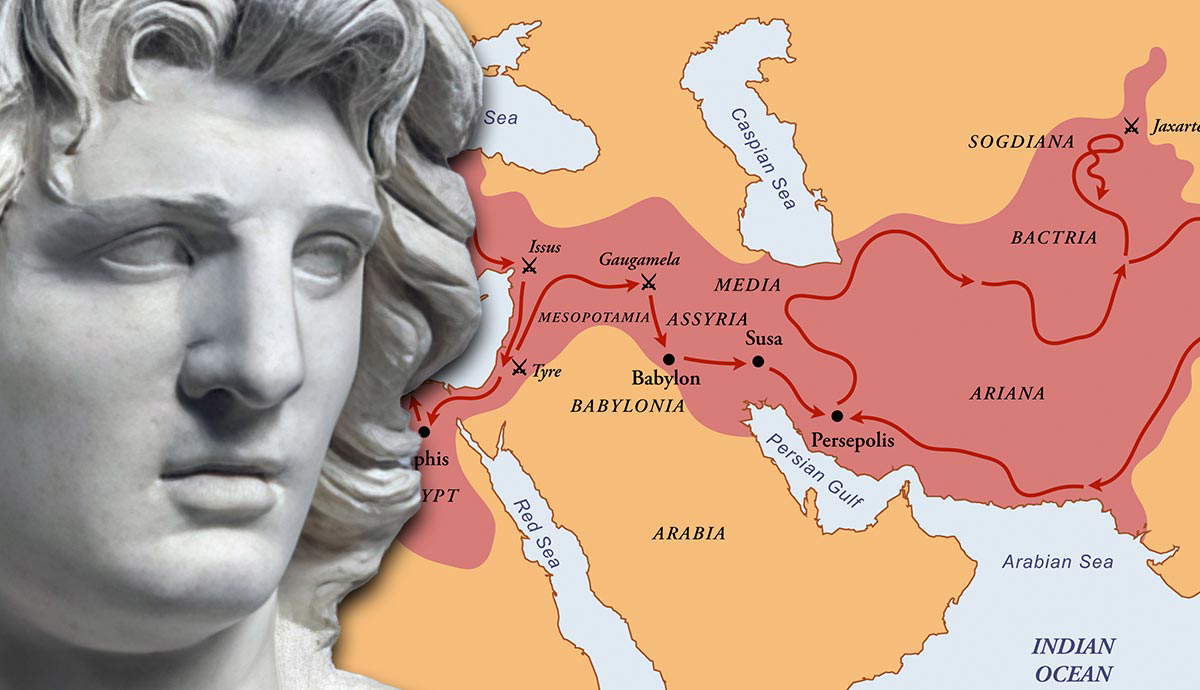
A result of Alexander the Great’s conquests, the Macedonian Empire spread from Greece to the Indus Valley, supplanting the Achaemenid Empire, which had fallen to Alexander’s forces. By the time of Alexander’s death in 323 BC, the Macedonian Empire covered 2.01 million square miles (5.2 million square kilometers).
In 336 BC, Alexander became King of Macedonia after his father, Philip II, died. In the space of just over a decade, he changed the entire known world, defeating the world’s superpower and establishing a legacy that would echo through the centuries and inspire legendary tales. He died at the age of 32, before he could fully realize his dream of reaching the “ends of the world and the Great Outer Sea” (according to Arrian of Nicomedia, 2nd century AD). Everywhere he traveled, the conqueror planted cities that he named after himself, leaving behind at least 70 cities called Alexandria.
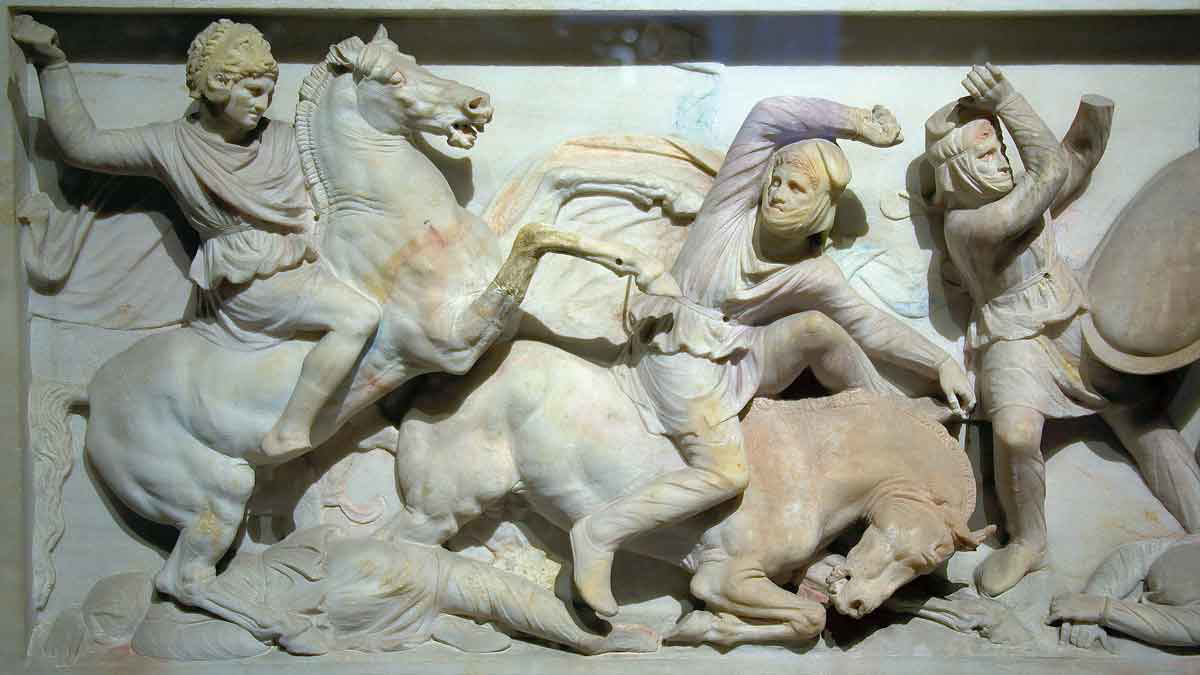
Alexander’s conquest of Persia was framed as a war of revenge, and it is likely this was the stated justification for the war launched under Philip, given the attempted invasions of Greece by the Persians. However, Alexander’s actions betrayed a certain respect for the Persian people. He promoted Persian culture and encouraged his soldiers to marry Persian women in a bid to fuse Greek and Persian customs.
After Alexander died, his empire fractured as his generals fought for control. However, one of the most salient effects of Alexander’s campaigns was the spread of Hellenic thought and culture, which found fertile ground as far as Bactria (Afghanistan) and India. As such, the empire’s existence, while brief, shaped the course of history.
5. The Roman Empire Controlled the Mediterranean Sea
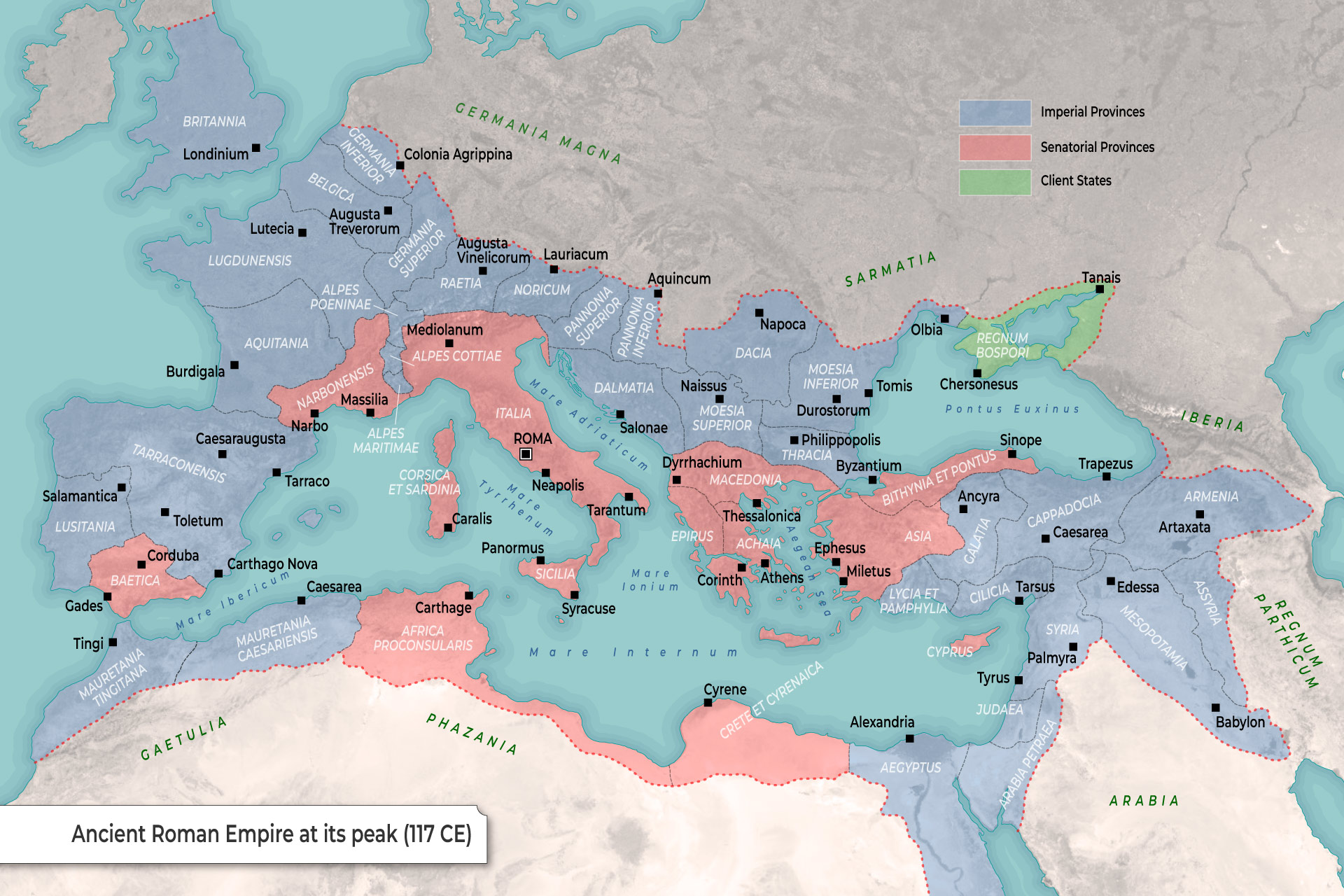
Perhaps the most well-known empire from ancient history, the Roman Empire served as a foundation for European civilization. Even to this day, its legacy is felt in many aspects of modern civilization, from lawmaking to bureaucracy to the languages that evolved from Latin.
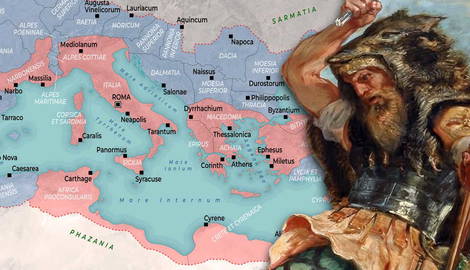
First as a kingdom, then as a republic, and finally as an empire, the Roman state reached its territorial peak in AD 117 under the leadership of Emperor Trajan, and spanned three continents. Much of Europe was under Roman control, as well as parts of the Middle East and Africa. It stretched from Iberia and Morocco in the west and almost to the Persian Gulf in the east (very briefly), and from England in the north to Upper Egypt in the south. It covered 1.93 million square miles (5 million square kilometers).
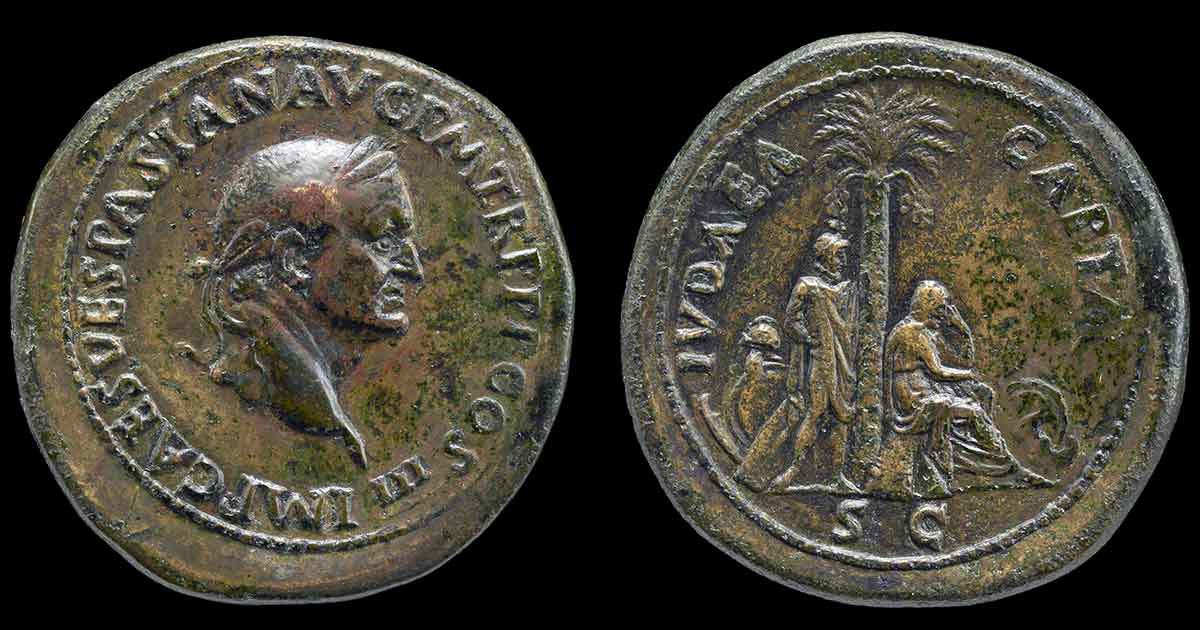
According to Rome’s own account of its history, its expansion was almost “accidental.” They were drawn into overseas wars by foreign threats, gaining territories they then had to manage and grow rich off through plunder and taxation. This started with their ongoing conflict with Carthage, through which they gained Sicily, Spain, and North Africa. But the Romans had a highly military culture with “great men” always seeking to prove themselves, which usually meant acquiring territories, such as Julius Caesar’s conquest of Gaul.
The Romans took their culture with them, spreading their gods, language, and customs; that is why Roman baths can be found in distant territories including Britain and Armenia. While Roman culture was elitist, it was also open, and conquered people could become Roman citizens. Romans in Gaul were allowed to join the Roman Senate as early as the 1st century AD, and citizenship was granted to all free men within the Roman Empire in AD 212 by Caracalla.
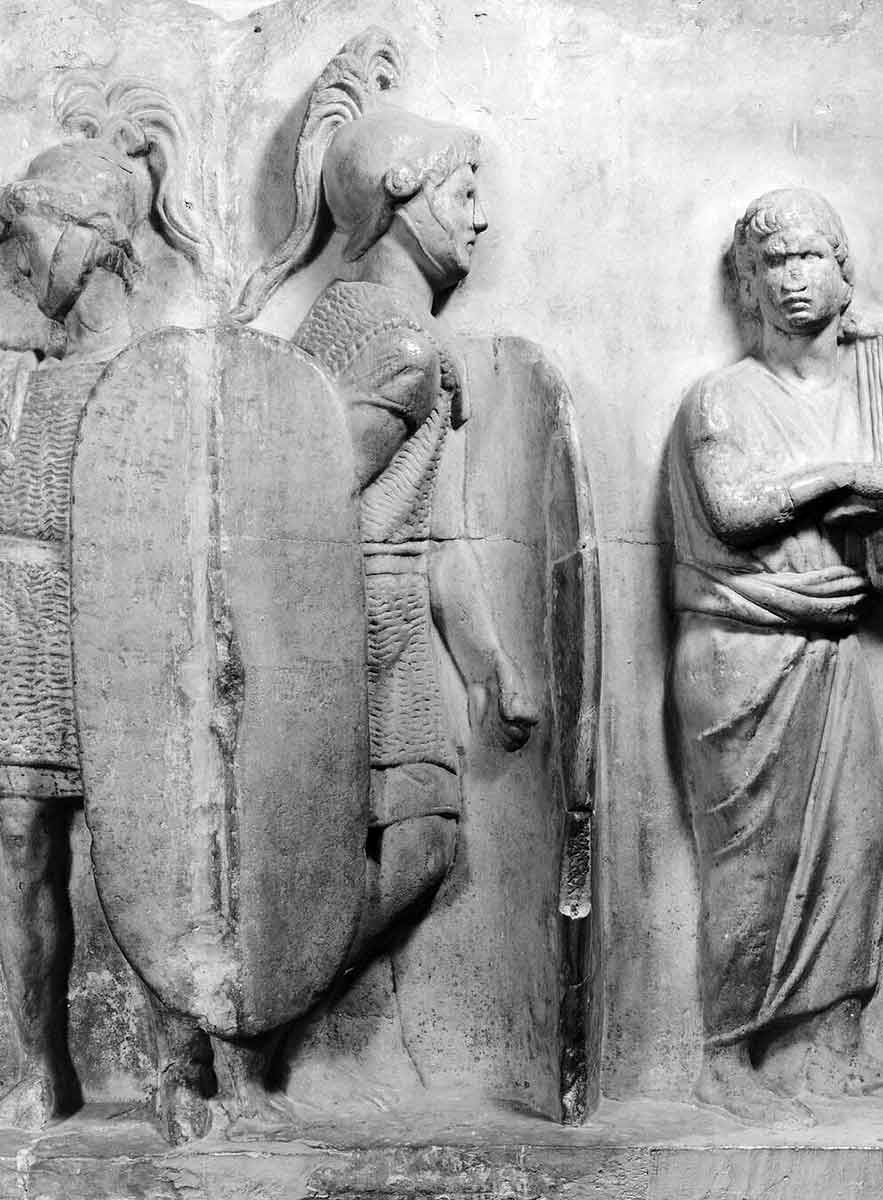
The backbone of the Roman Empire was the army, which not only conquered new territories and policed volatile borders, but also built vital infrastructure, most notably roads. At its peak, the Roman Army numbered more than half a million men. This was necessary as Rome was almost constantly at war, with volatile neighbors or internally as powerful men vied for imperial position.
Rome’s immense size proved difficult to control, and there were multiple militant pressures on its borders, contributing to the empire’s decline and final collapse. In AD 395, the empire was split into the Western Roman Empire and the Eastern Roman Empire and ruled as separate empires, each with its own emperor. While the Western Roman Empire (as a political entity) came to an abrupt end in AD 476, the Eastern Roman Empire lived on as the Byzantine Empire and lasted for another thousand years, finally succumbing to the Ottomans in 1453 after the fall of Constantinople.
6. The Maurya Empire and the Unification of India
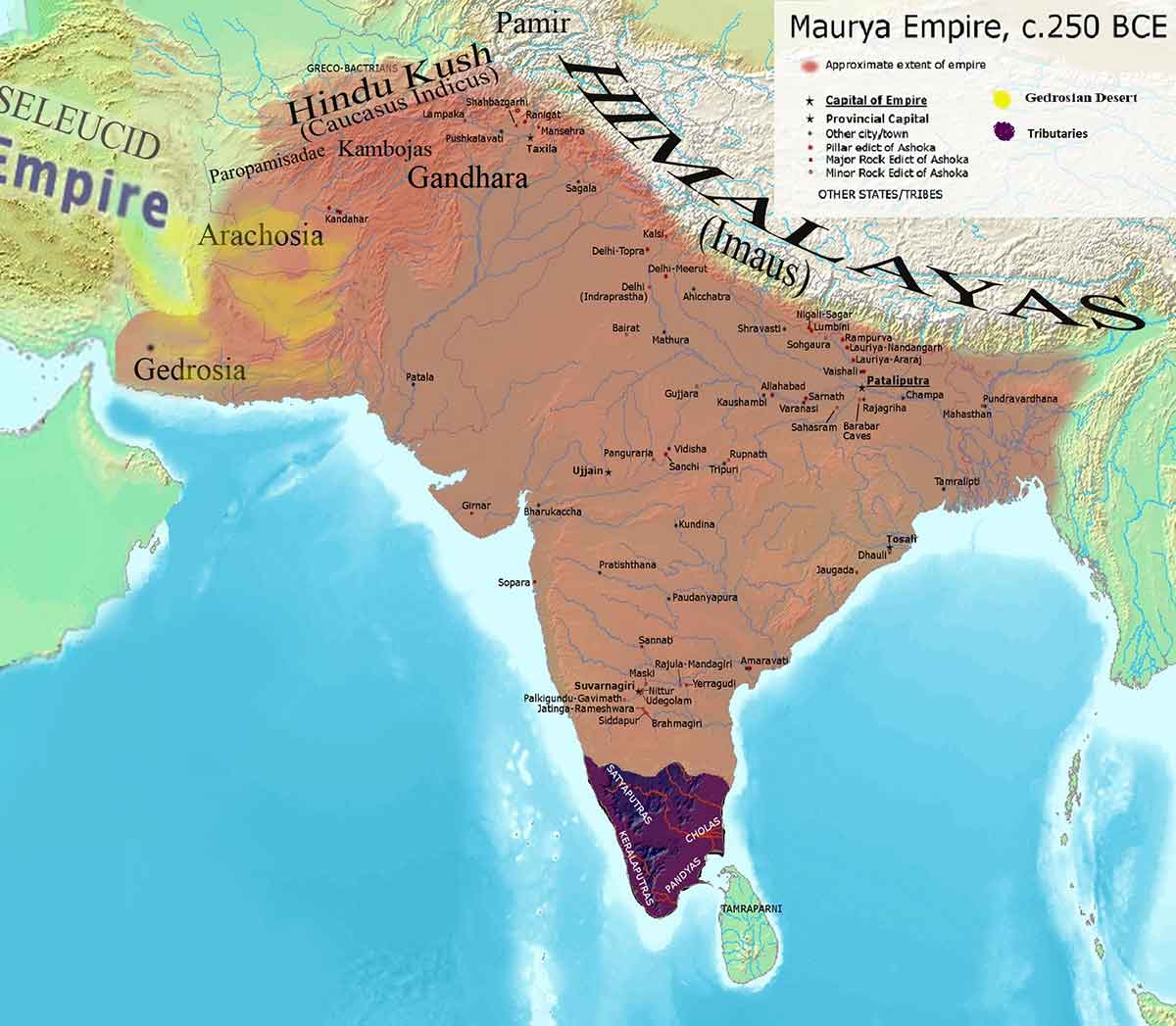
Uniting much of the Indian subcontinent, the Maurya Empire was a powerful Iron Age state founded by Chandragupta Maurya in 320 BC. Due to the lack of solid evidence, it is difficult to determine the exact size of the empire at its peak, but estimates fall between 1.3 and 1.9 million square miles (3.4 to 5 million square kilometers).
Under the rule of Ashoka (ca. 268–232 BC), Chandragupta’s grandson, the empire controlled all the main urban hubs and arteries of the subcontinent except for the deep south. After Ashoka converted to Buddhism, he sponsored the spread of the religion within the empire as well as beyond its borders, and is seen today as a transformative force. He promoted respect for wild animals and the preservation of forests, and is thus a respected icon from an ecological perspective.
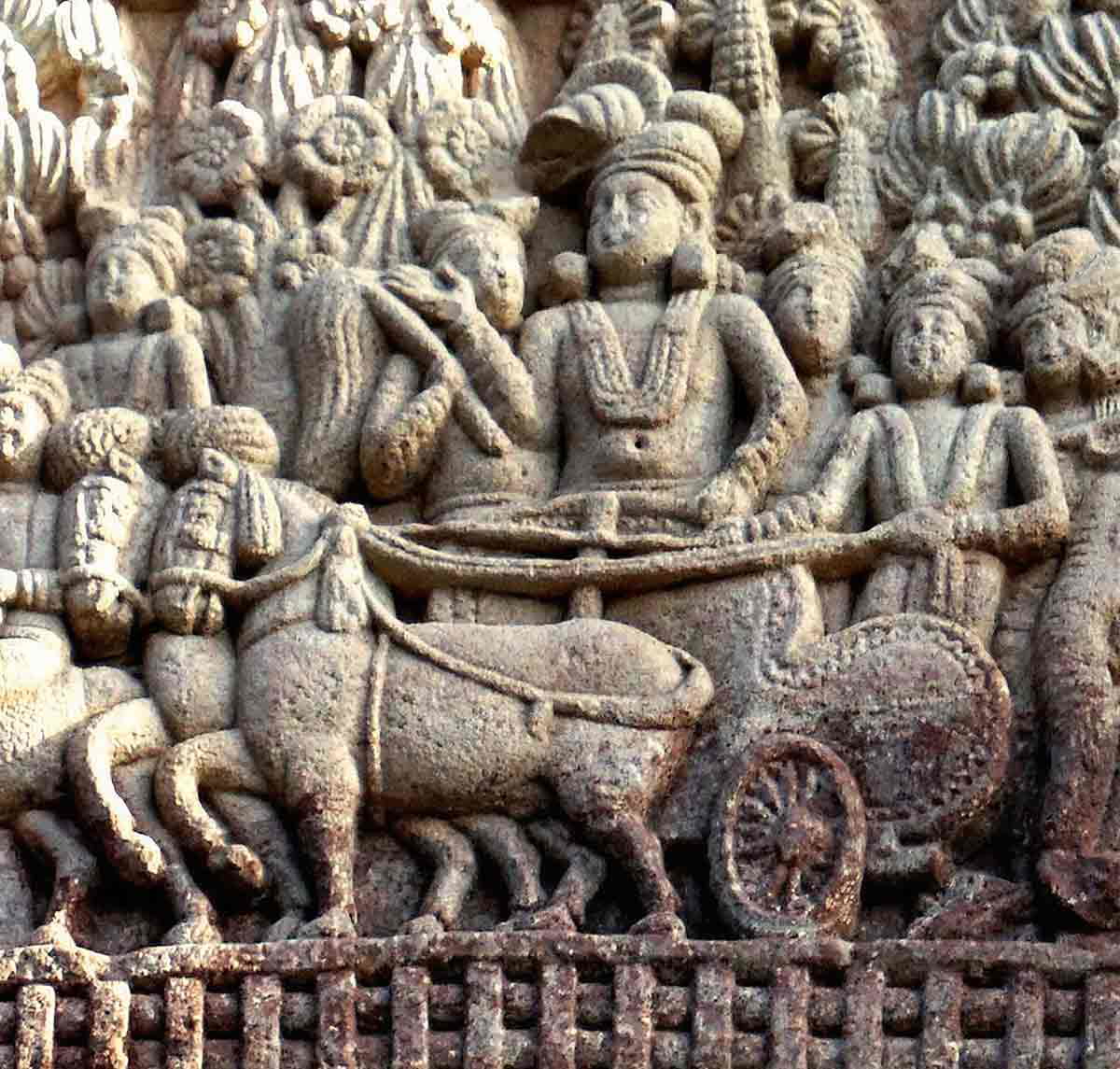
After Ashoka, a series of weak rulers took the reins of an empire that went into steep decline. Financial and military strains played heavily into the equation, and in 185 BC, the last ruler, Brihadratha, was assassinated, bringing an end to the Mauryan Empire, which fragmented into several successor states.
7. The Hunnic Empire Terrorized Late Antiquity
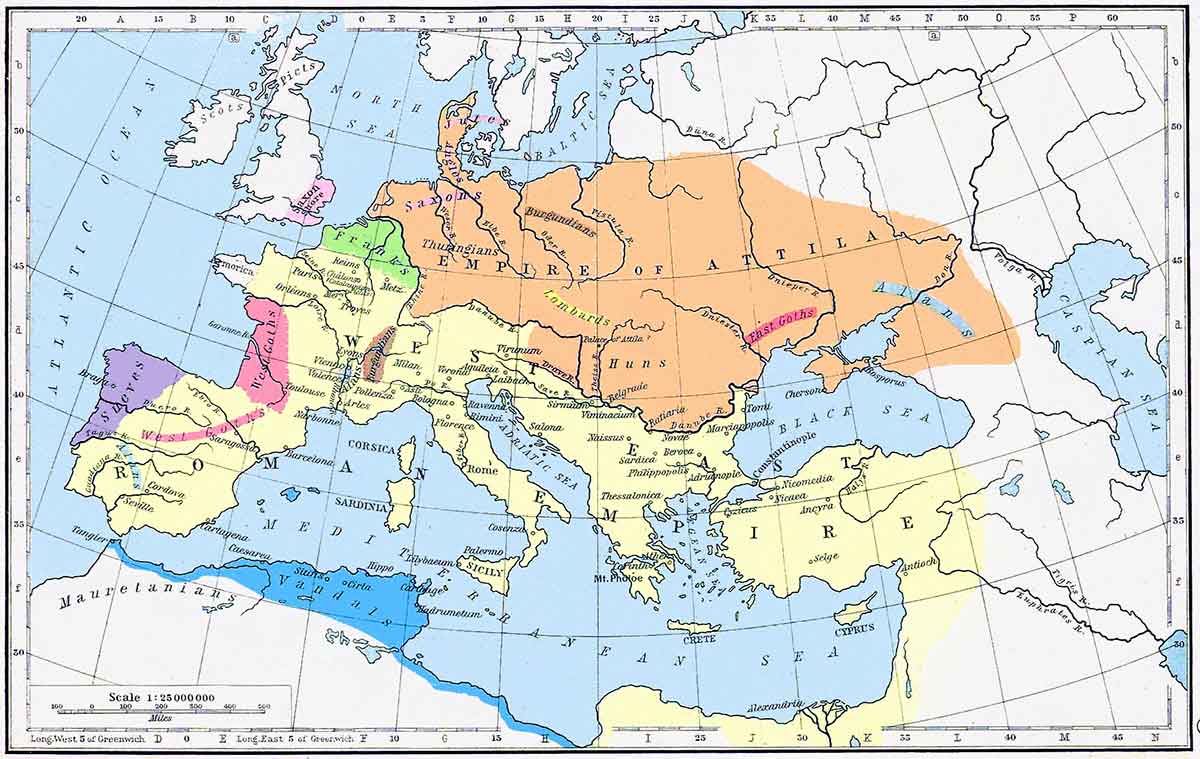
A scourge across Europe, the Huns were a powerful force that shaped the course of history, contributing to the weakening of the Roman Empire, leading to its final collapse. The Huns were a nomadic people who came from Scythia and moved westwards with a penchant for violence.
This disruption caused immigration crises in the Roman Empire as nations were forced to deal with the new threat that reshaped the continent’s political borders. The infamous Attila assumed leadership of the Huns with his elder brother, Bleda, in AD 435. Attila became the sole ruler in AD 445 after his brother’s death and led the Huns on campaigns of conquest against the Romans. In AD 451, he invaded Roman Gaul and was defeated at the Battle of the Catalaunian Plains, but was still able to invade Italy.
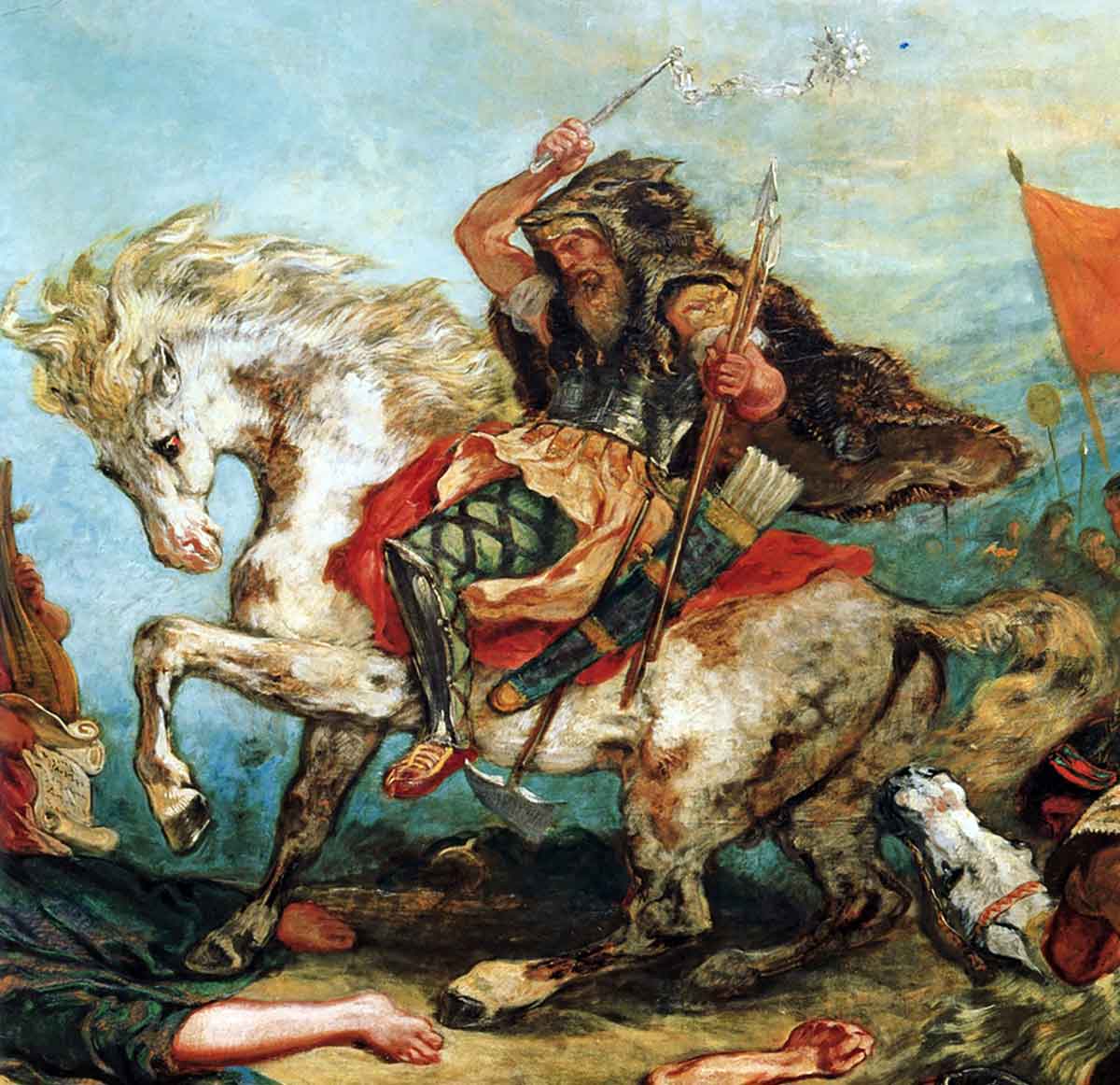
At its height in the AD 440s, the Hunnic Empire covered 1.54 million square miles (4 million square kilometers), although these figures are rather fluid, given the empire’s shifting spheres of influence rather than having solid borders.
Attila died in AD 453, and in the following year, the Huns were defeated by a coalition of Germanic peoples at the Battle of Nedao, which broke Hunnic control of Eastern Europe. Within a few years, the entire empire had crumbled. Modern research and DNA evidence suggest the Huns had Mongolian roots, and the premise that they originated from the Xiongnu is a popular, though debated, theory.