
At its height in 281 BC, the Seleucid Empire spanned from the western coast of modern-day Turkey to the borders of the Mauryan Empire in India. While their armies would have been led by Macedonian kings and generals, the Seleucids, more so than their contemporaries, utilized native contingents and military traditions to bolster the Greco-Macedonian phalanx core. Detailed accounts of the Seleucid army and its tactics are found in accounts of several ancient battles. They emphasize the use of non-Macedonian elements, including mercenaries from the eastern provinces, elephants, chariots, cataphracts, and even soldiers armed “in the Roman style.”
The Greco-Macedonian Core of the Seleucid Army
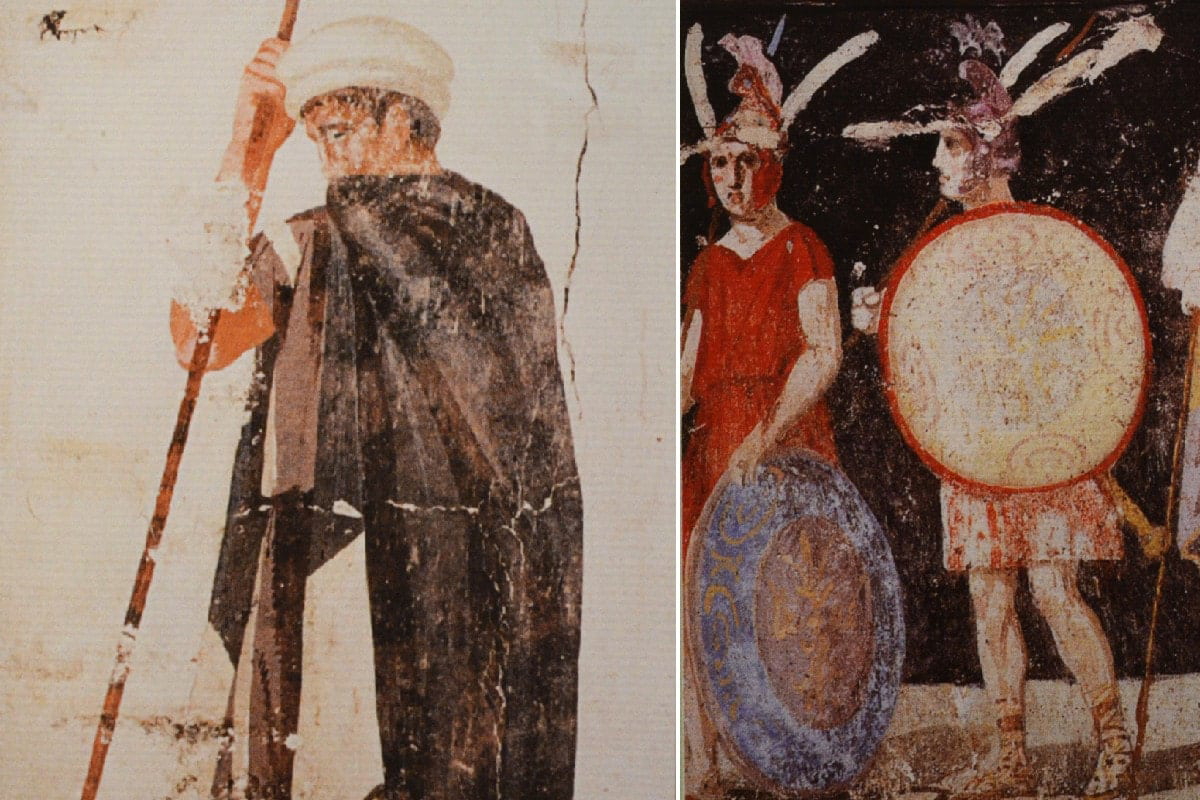
The Greco-Macedonian phalanx was the core of the Seleucid army. The Seleucid monarchs considered themselves successors of Alexander the Great and wished to emulate him. Therefore, like the great conqueror, the king led from the front, often resulting in a violent end for the monarch. Seleucus VII Sidetes died in 129 BC while leading his army at Ecbatana, ambushed by the Parthians.
To further the connection with Alexander, the Seleucid monarchs maintained or revitalized regiments from Alexander’s conquests. Polybius (31.3) details that among the regiments present at Antiochus IV’s military procession at Daphne were the elite Macedonian “companion cavalry,” as well as “Macedonians,” meaning units equipped and trained to fight in the Macedonian phalanx formation. Another group mentioned by Polybius that emulated Alexander’s army was the men “armed with silver shields,” probably an “infantry guard” equivalent to the Argyraspides or Silver Shields. Alexander’s Argyraspides were disbanded during the Wars of the Diadochi, with Plutarch stating:
“Antigonus himself, detesting the Argyraspides as impious and savage wretches, ordered Sibyrtius, governor of Arachosia, under whose direction he put them, to use every method to destroy them; so that not one of them might return to Macedonia, or set his eyes upon the Greek sea.”
(Plutarch, Life of Eumenes, 19.2)
The fact that these previously discarded regiments of Alexander the Great’s army had been revived by the time of Antigonus IV indicates that the Seleucid rulers actively promoted the idea of their army as a continuation of Alexander’s.
Maintaining the Macedonian Phalanx Template
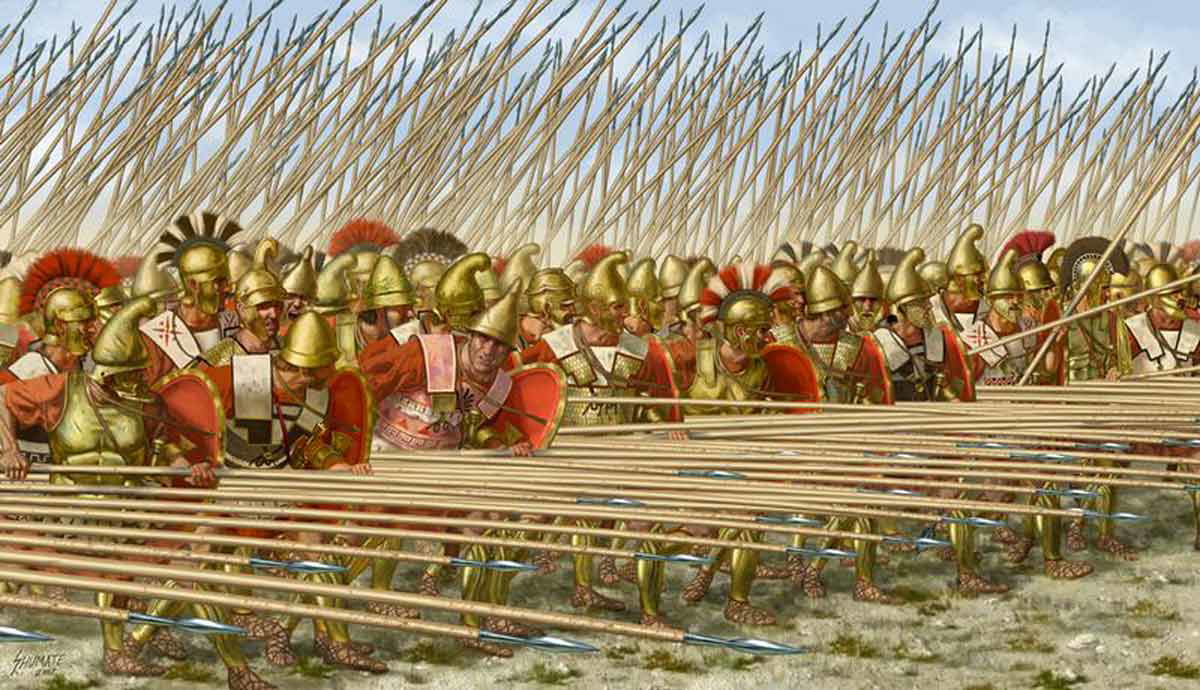
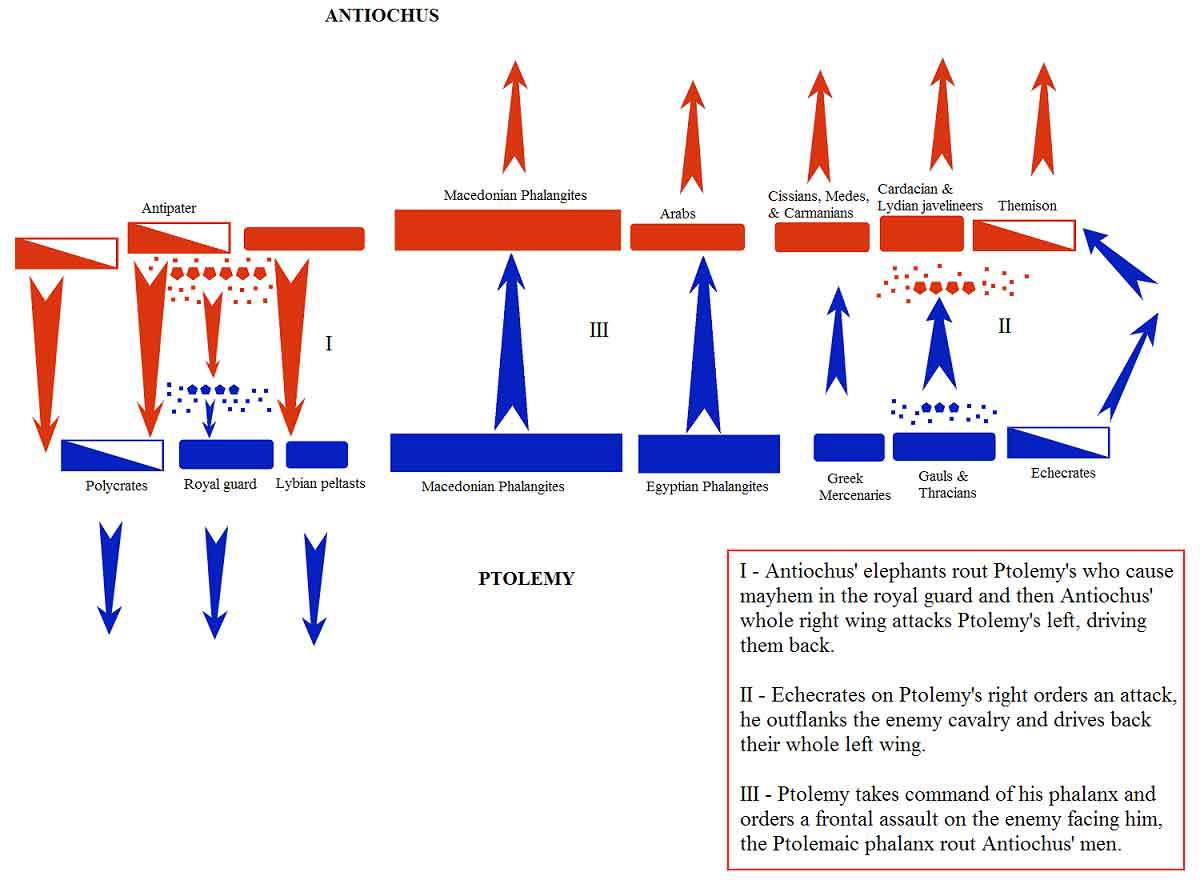
The Seleucid army was built around Macedonian “Phalangite” infantry, each wielding a 15ft sarissa pike, with cavalry on either flank acting as a guard and maneuvering around enemy formations to attack them from behind. Polybius describes how this worked at the Battle of Raphia:
“The two sides formed up in very similar formations, with the phalanx in the center flanked by the lighter troops and cavalry. Ptolemy took up position on his left flank, Antiochus opposite him on the Seleucid right.”
(Polybius V.65)
It should be noted that the right flank was often seen as a place of honor in the Hellenistic period, because Alexander often rode on the right flank, but this formation sometimes hindered Seleucid success. This can be seen in battles between the Seleucids (or any other Hellenistic Kingdom) and the Romans, during which the rigidity of the Macedonian Phalanx was exploited by the much more maneuverable Roman maniple.
The maintenance of this tactic throughout the Hellenistic period must therefore be seen as a cultural decision on the part of the Greco-Macedonian elite. The reason is that even though more flexible tactics were developed in the Seleucid Empire, the phalanx-based tactics remained. For phalanx soldiers, a series of settlements were constructed across the Seleucid Empire. These settlements (some of which developed into cities) were populated by Greeks and Macedonians, known as the Katoikoi, who received land and settled status in return for their military service.
The importance of Greco-Macedonian culture within the Seleucid Empire can therefore not be overstated. From the overall structure of the battle line to the mindset of the monarchs that led these armies, Alexander the Great’s legacy remained imprinted upon the Seleucid army and military culture.
Terrifying Shock Tactics of the Iranian Cataphracts
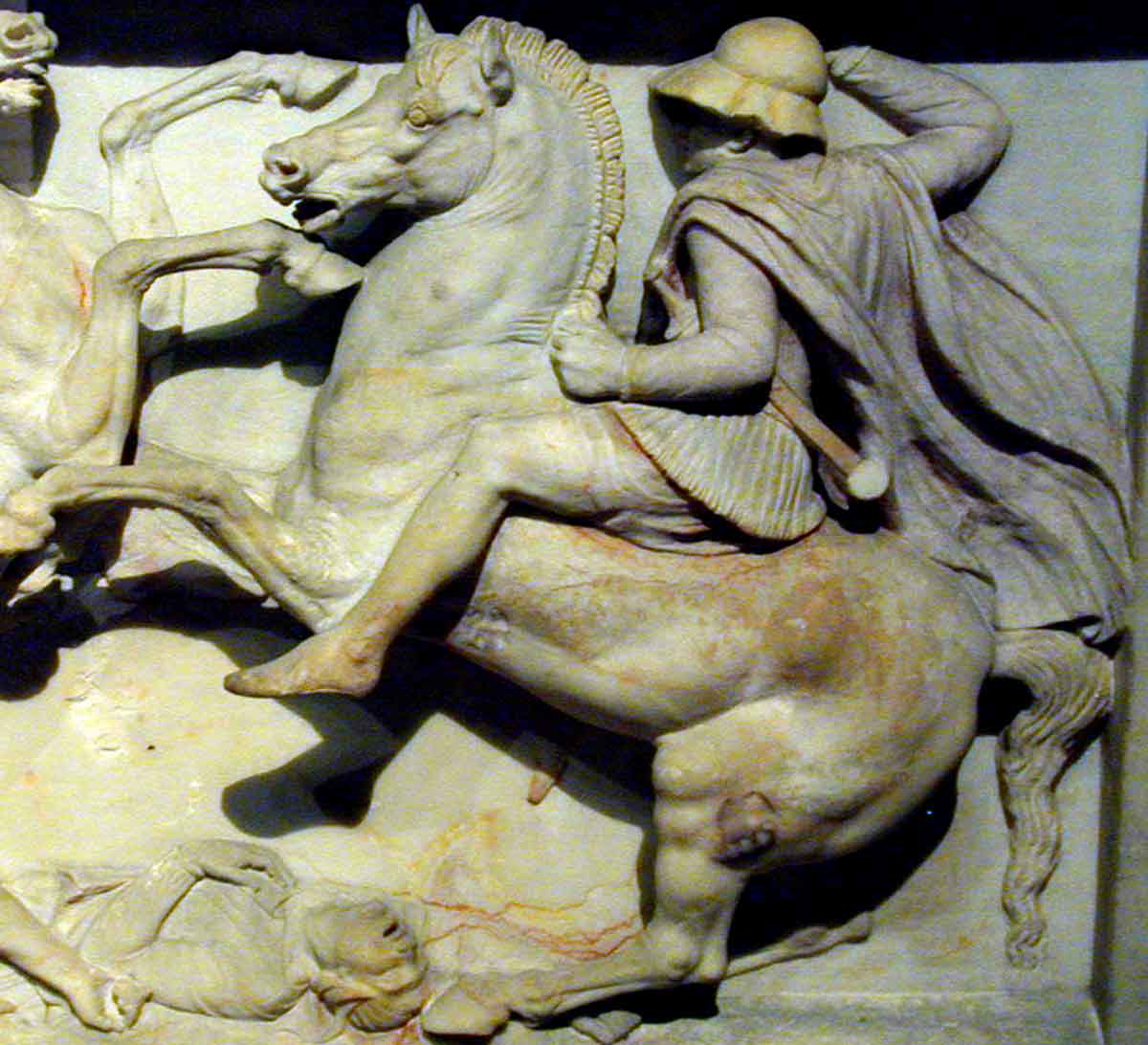
While the Seleucids carefully maintained Macedonian military tradition, they also incorporated local, non-Greek elements. Like all the Hellenistic Kingdoms, the Seleucids made use of mercenaries fighting in their own traditional styles, used to increase the effectiveness of the phalanx.
One example is the Cataphracts, a type of cavalry that had both horse and rider covered in heavy armor. These were effectively human-and-horse iron dreadnoughts designed to shatter enemy battlelines through sheer kinetic force. This style of cavalry, which may have developed by Iranian peoples hundreds of years before the Hellenistic Period, was widely used by the Seleucid army in battles such as Magnesia, where the Seleucid king Antiochus III battled against the Roman Republic:
“and with them were linked up 3000 cavalry, clad in mail armor and known as cataphracti.”
(Livy 37.40)
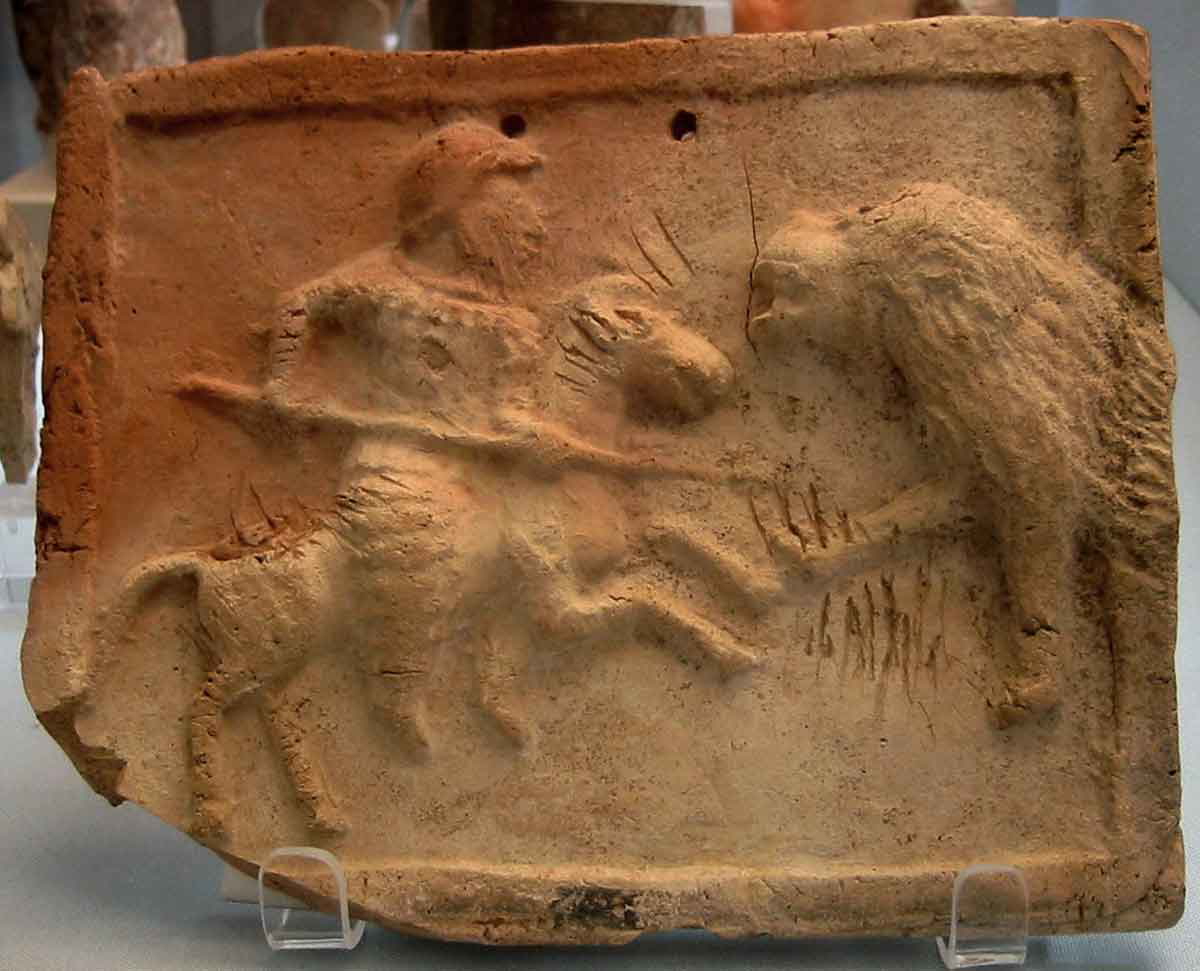
These cataphracts were largely ineffectual during this battle; the entire Seleucid line had already been disrupted by the abysmal performance of Antiochus’ scythed chariots. However, they had a devastating impact at the Battle of Panium (200 BC) against Ptolemaic Egypt. Commanded by Antiochus III’s son, the heavy cavalry smashed the Egyptian horsemen, swept around the main line, and struck the enemy phalanx from behind, permanently handing Judea and Coele-Syria over to Seleucid rule.
Their primary weapon was the kontos, a massive four-meter-long thrusting lance. Because stirrups had not yet been invented, cataphracts relied on four-horned saddles and tight leg grips to absorb the immense recoil of a full-gallop impact without being knocked backward off their steeds.
The Median Agema Cavalry
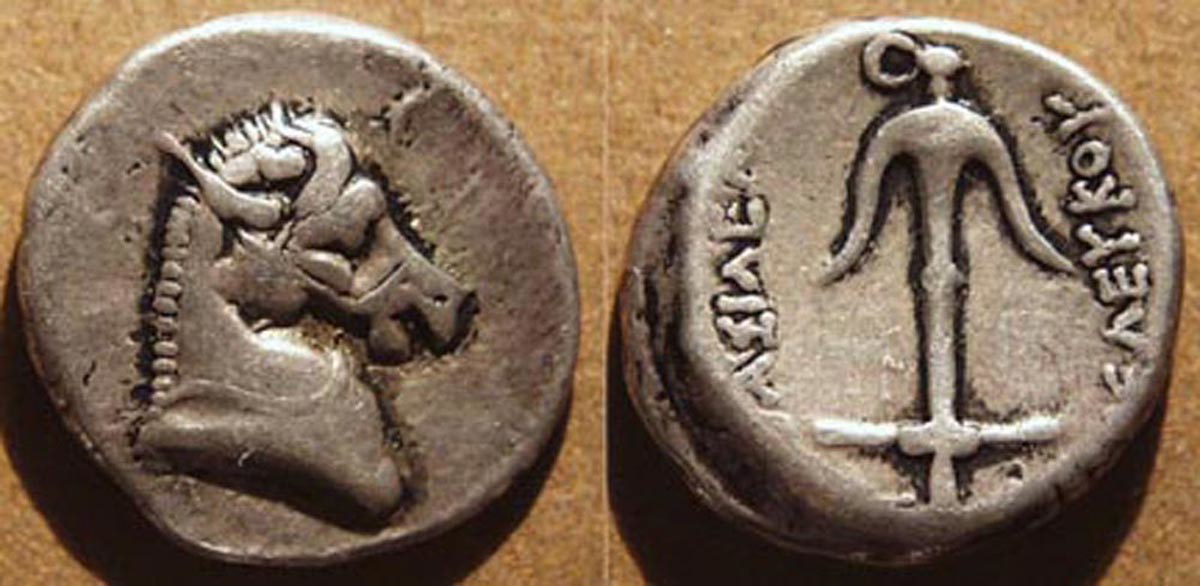
Cavalry was often used as the “hammer” to the phalanx’s “anvil,” charging into the rear of the enemy while they were being held back by the phalanx.
According to Livy, the Agema cavalry were picked men who specifically originated from Media, a region of Iran. The Median Cavalry was utilized by the Seleucids since the very beginning of the Hellenistic Period. They served as the king’s personal escort on the battlefield. Where the Seleucid monarch commanded, the Agema rode alongside him to deliver the final tactical blow. Diodorus Siculus details that Seleucus I brought 12,000 cavalry from the eastern satrapies to the Battle of Ipsus (20, 113).
Scholars believe that a certain type of Seleucid coinage from a hoard at Bactria, depicting eastern symbols such as the star, crescent, and horse, was used specifically to pay Median horsemen. Once again, the skill of these horsemen would have been used to guard the phalanx’s sides and maneuver around the enemy for an efficient “hammer and anvil” tactic.
War Elephants of the Eastern Satrapies
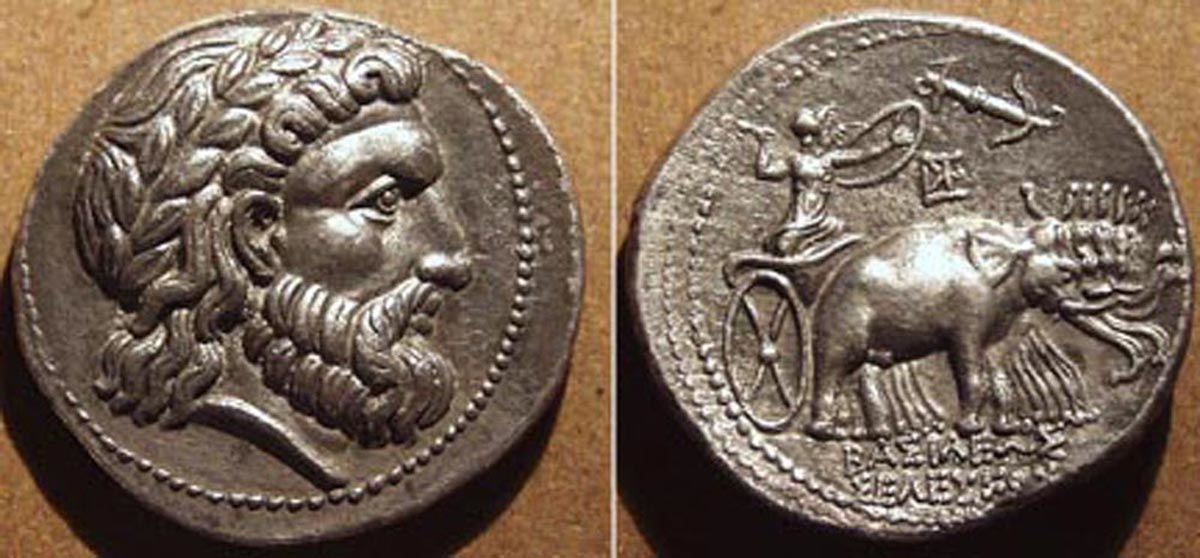
Elephants were used extensively by Hellenistic monarchs, especially by the Seleucids. After his failed invasion of India, Seleucus I was gifted 500 war elephants by the Mauryan king Chandragupta. This earned Seleucus the nickname “Elephantarkos” or “Elephant Lord.” These elephants were used at the Battle of Ipsus to block Demetrius’ cavalry from returning to the battlefield and attacking the rear of his own phalanx. After this, the Seleucids made heavy use of elephants to break the spirit of their enemies who were faced with the gigantic animals’ thunderous charge.
Unlike their Ptolemaic Egyptian rivals, who fielded smaller, now-extinct North African forest elephants, the Seleucids deployed larger Asian elephants (Elephas maximus). At the Battle of Raphia (217 BC), the sheer size and aggression of the Seleucid beasts caused the Ptolemaic elephants to turn tail and panic.
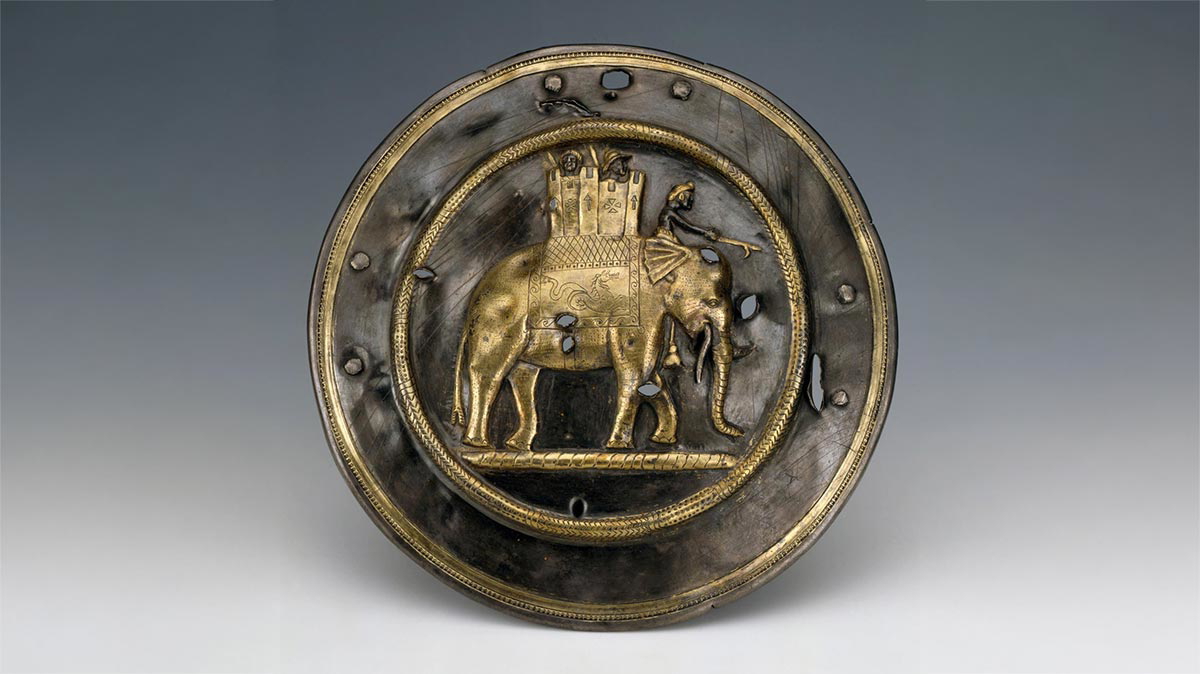
Elephants were equipped with heavy front armor and carried wooden towers (howdahs) housing three to four archers and spear-throwers. To steel them against the noise and carnage of the battlefield, mahouts (drivers) routinely fed the beasts fermented wine or grape juice before combat.
Even after the Treaty of Apamea in 188 BC, where the Romans forced Antiochus III to kill all of his elephants and never make use of them again, it only took twenty years for Antiochus IV to break this clause of the treaty, as seen in the Daphne procession:
“a chariot drawn by four elephants and another by two; and then thirty-six elephants in single file with all their furniture on”
(Polybius 31.3)
Adaptation and Roman-Style Infantry
King Antiochus IV Epiphanes staged the Grand Procession at Daphne in 166 BC. It was a lavish military parade and festival designed as a massive display of imperial wealth and martial power. Held at the sacred grove of Daphne, the 30-day festival was Antiochus IV’s direct counter-flex to Rome’s victory games at Amphipolis in 167 BC. Just two years prior, Rome had humiliated Antiochus during the “Day of Eleusis,” ordering him out of Egypt.
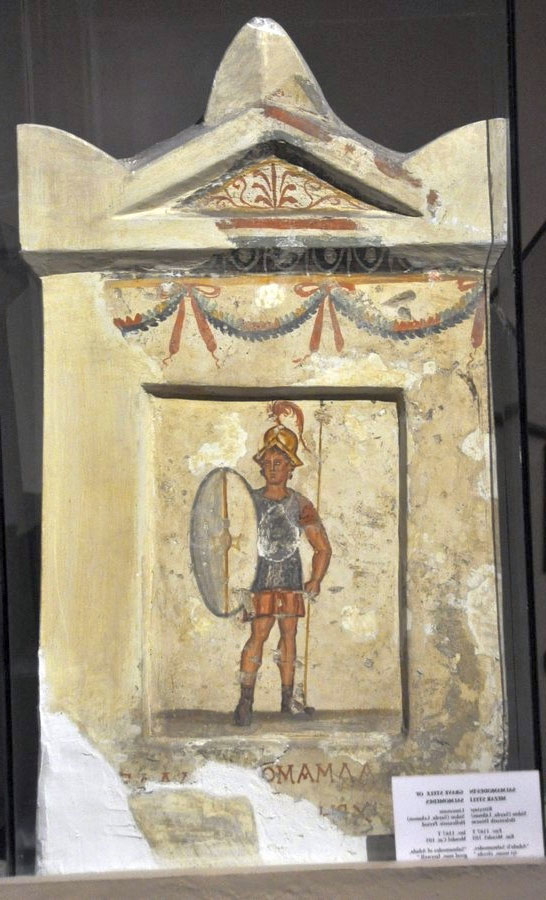
As well as trying to outdo the Romans in spectacle, it seems that the Seleucids looked at the strengths of the Roman army and attempted to adapt. According to Polybius’ description of the Daphne procession, among the soldiers present there were some “armed in the Roman fashion.” Archaeological evidence supports this claim, as a funerary stele from Sidon depicts two Seleucid soldiers (Salmamodes and Dioskourides) wielding weapons like their Roman contemporaries (short swords, oval shields, short spears, etc.). It has been suggested that these men were members of the Argyraspides.
The Failure of the Seleucid Army
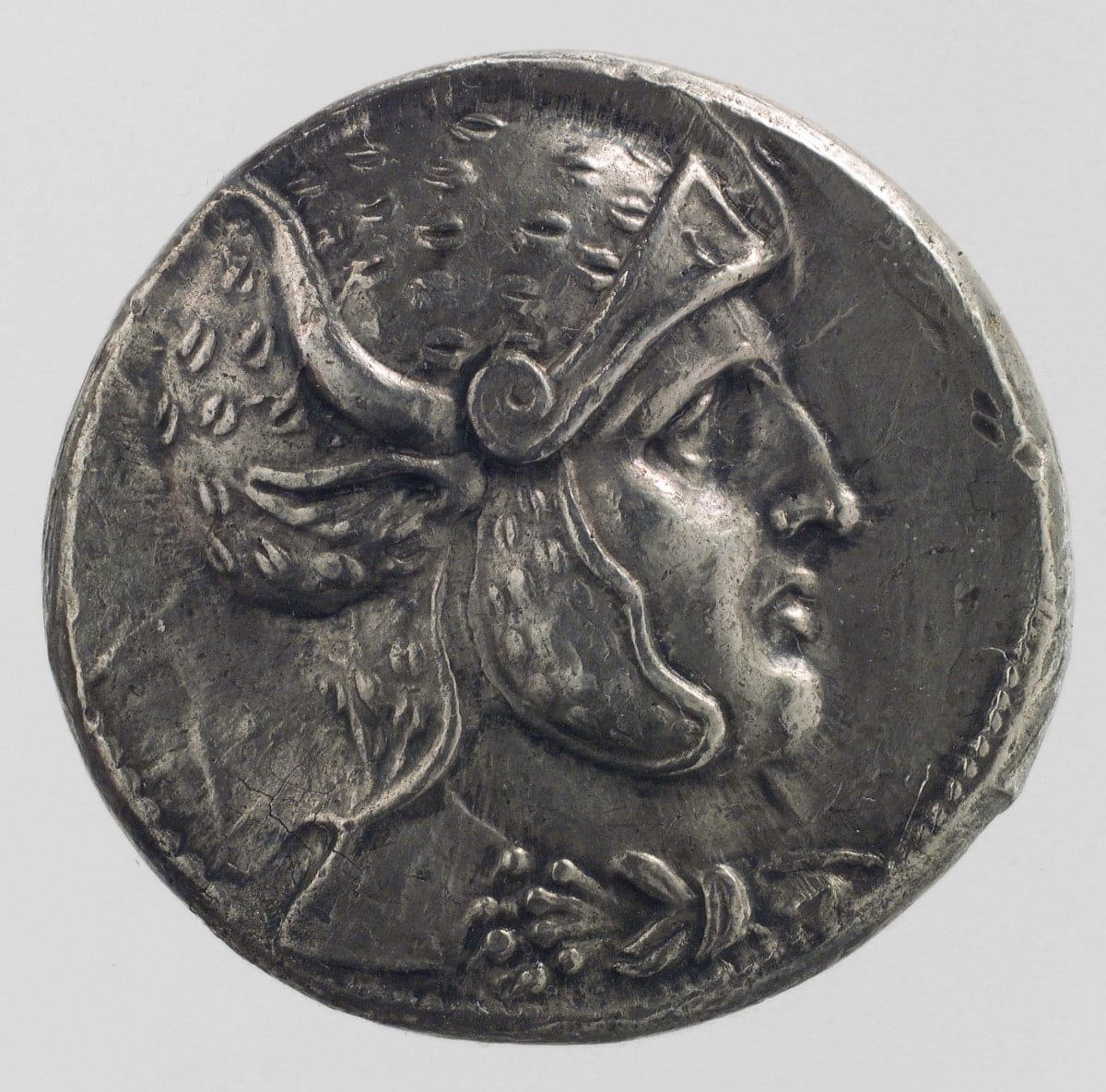
Calling on the resources of their vast empire, in the 3rd and 2nd centuries BC, the Seleucids could field armies numbering between 60,000 and 80,000 men for major campaigns. While the army was ideologically built around the Macedonian precedent of Alexander the Great, the Seleucids also made use of the unique military traditions of the native cultures within their empire. Nevertheless, the lack of flexibility in the Hellenistic approach to warfare meant that they could not compete against the rising forces of Rome.
Following the Treaty of Apamea (188 BC) with Rome and the loss of the wealthy eastern satrapies to the Parthians, the Seleucid Empire’s recruitment base plummeted. By the late 2nd century BC, Seleucid field forces rarely exceeded 10,000 to 20,000 troops.