
When imperial legions marched across the Mediterranean, the patriarchal and militaristic Romans expected total submission. But much to the surprise of Roman sensibilities, on several occasions legions met their match in formidable women who refused to surrender. From distant Britannia to the arid deserts of Syria, female military commanders disrupted imperial expansion, routed veteran cohorts, and brought emperors to their knees. The Romans told haunting tales of these unexpected women who defied their beliefs around patriarchy and Roman supremacy.
1. Queen Teuta of Illyria (Ruled c. 231-227 BC)
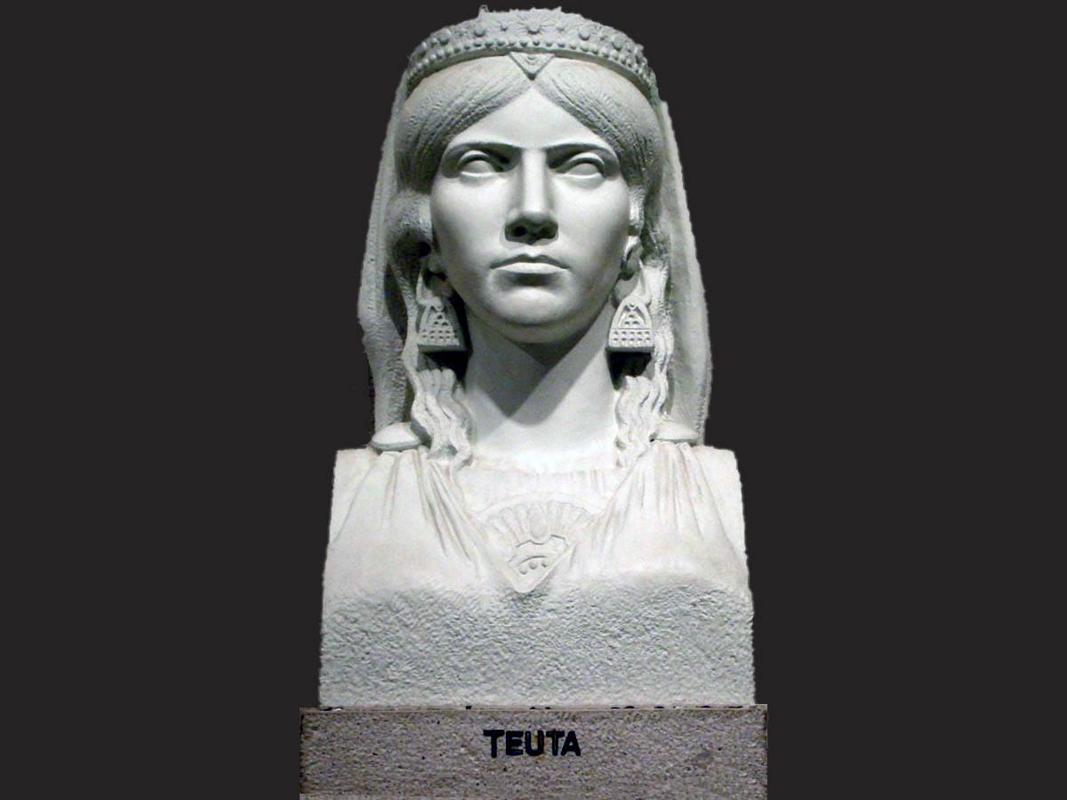
Teuta was a queen of the fierce Illyrian tribes that dominated the Adriatic and Balkan coastlines. In the 3rd century BC, she ruled as regent on behalf of her stepson, Pinneus. After her husband Argon’s death, Teuta stepped in as a capable and formidable ruler. She knew exactly what she wanted to do with her kingdom, and she took an aggressive stance. She initiated war-driven expansion in the Balkans and sponsored piracy, raiding around the Adriatic and Ionian seas.
“Her first measure was to grant license to privateers, authorizing them to plunder all whom they fell in with; and she next collected a fleet and military force as large as the former one, and dispatched them with general instructions to the leaders to regard every land as belonging to an enemy.”
[Polybius, History of Rome, 2.4]
Disrupting Roman and Greek shipping, Rome initially tolerated piracy while focused on other major conflicts. But soon the pirates occupied their attention. In 230 BC, Rome dispatched two envoys, Gaius and Lucius Coruncanius, to deal with the Illyrian queen. This was certainly not welcomed by Teuta, who had been making war on several cities in the region, and the delegation did not go well.

“… Teuta listened with an insolent and disdainful air; and when they [the Roman ambassadors] had finished their speech, she replied that she would endeavor to take care that no injury should be inflicted on Roman citizens by Illyrian officials; but that it was not the custom for the sovereigns of Illyria to bind private persons from taking booty at sea. Angered by these words, the younger of the two ambassadors used the plainest of speech which, though thoroughly to the point, was rather ill-timed. “The Romans,” he said, “O Teuta, have a most excellent custom of using the State for the punishment of private wrongs and the redress of private grievances: and we will endeavor, God willing, before long to compel you to improve the relations between the sovereign and the subjects in Illyria.” The queen received this plain-speaking with womanish passion and unreasoning anger.”
[Polybius, History of Rome, 2.4]
Polybius’ account reflects Roman misogyny. Both Polybius and Arrian make it clear that, in their eyes, Teuta’s main weakness is that she is a woman in the man’s world of power politics. Polybius blames Teuta’s insatiable feminine appetite for plunder for driving her sponsorship of piracy and suggests that she is blind to the broader geopolitical scenario.
The Roman ambassador who had insulted Teuta was subsequently murdered in cold blood. This act contravened all the established norms of ancient international law. To the Romans, it was an act of egregious barbarity. War would undoubtedly follow.
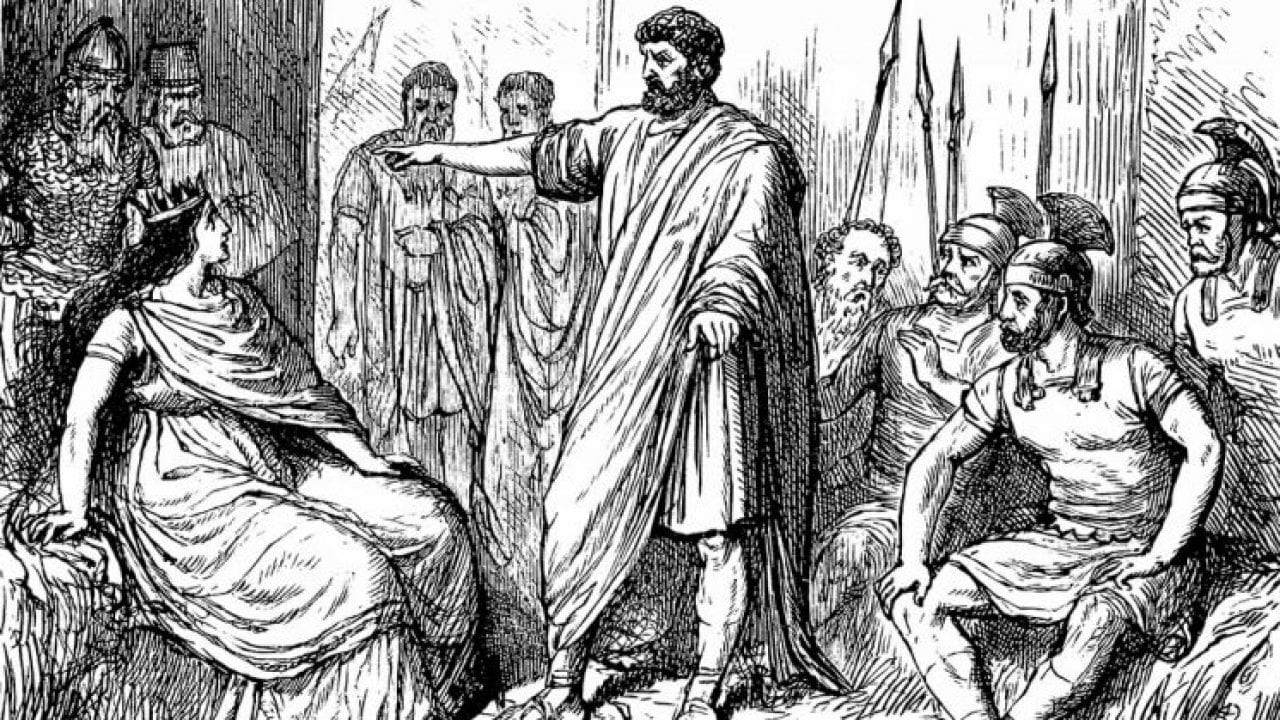
The Romans sent in a massive expeditionary force in 229 BC. This included 200 ships and two consular armies totaling 20,000 men and 2,000 cavalry. In the ensuing conflict, Teuta was hamstrung early by the betrayal of her governor, Demetrius, who defected to the Romans.
“Yet woman-like, such was her vain and fickle disposition that when the consuls had crossed over to the island [Corcyra], she became emboldened again, and sent out an army to Epidamnus and Apollonia. After the Romans had rescued these cities, seized ships of hers which were sailing home from the Peloponnesus laden with treasure, and devastated the coast regions, and after Demetrius as a result of her caprice had transferred his allegiance to the Romans and also persuaded some others to desert, she became utterly terrified and abdicated her power.”
[Cassius Dio, Histories, Fragments 12.19]
The Roman account is harsh, but it remains true that the queen could not hope to resist the might of Rome. Teuta quite sensibly sued for peace. She accepted for her stepson Pinneus a diminished kingdom as a minor ally of Rome. She also agreed that her Illyrian subjects would diminish their fleets and never again harass the seas. History doesn’t tell us what happened to Teuta following this agreement.
Folklore and modern pop culture have invented several romanticized versions of Teuta, portraying her as a resistance-fighting national hero of the Balkans or a kick-ass femme fatale, sinking ships and breaking hearts. While there is no evidence that Teuta fought in the field herself, she was a determined leader who embraced an aggressive foreign policy and was not afraid to stand up to Rome.
2. Queen Cleopatra of Egypt (69-30 BC)
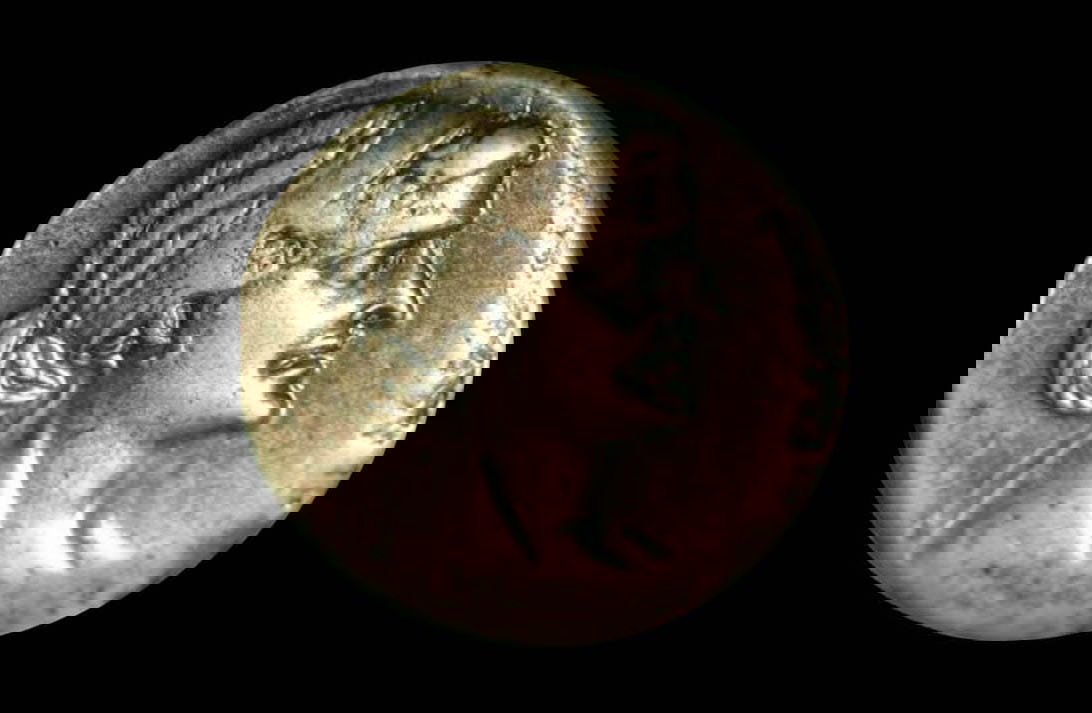
The independent kingdom of Egypt was a significant player during the civil wars of the late Roman Republic. Cleopatra VII battled with her siblings for control of Ptolemaic Egypt. Much has been made of Cleopatra’s romantic relationships with first Julius Caesar and then his lieutenant, Marc Antony, and there is no doubt that she employed great charm and charisma.
“For her beauty, as we are told, was in itself not altogether incomparable, nor such as to strike those who saw her; but converse with her had an irresistible charm, and her presence, combined with the persuasiveness of her discourse and the character, which was somehow diffused about her behavior towards others, had something stimulating about it. There was sweetness also in the tones of her voice.”
[Plutarch, Life of Antony, 27]
But this focus on male relationships is a reflection of the Romano-centric and male-oriented Roman accounts of events. The evidence suggests that Cleopatra was a capable, independent ruler seeking to secure the integrity of her kingdom through an equal alliance with the Roman world’s most powerful politicians and generals. However, it was not an equal game. She employed her charm as a strategy to get what she wanted from Julius Caesar. Following Caesar’s assassination in44 BC, the pragmatic operator aligned herself with one of Caesar’s heirs, Antony. The might of Rome supported by the resources of Egypt represented a powerful prospect. As the Roman Republic was driven by civil conflict, Cleopatra had a strong and potentially war-winning hand to play.
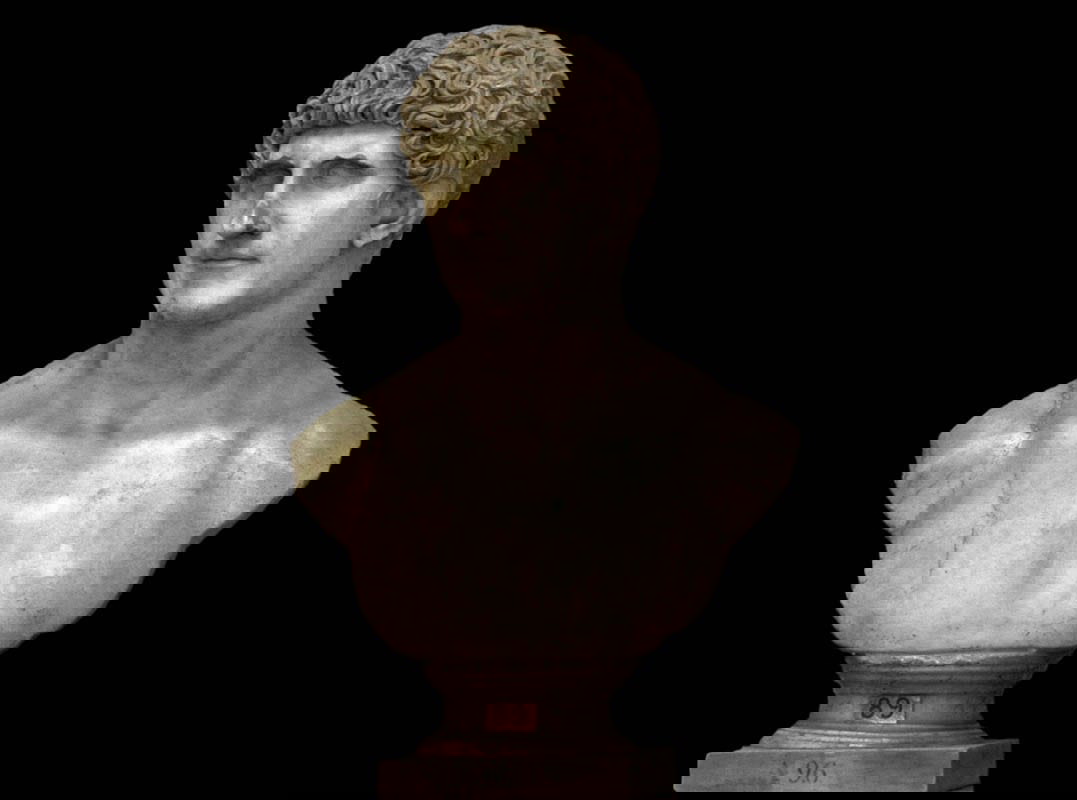
Cleopatra had borne Caesar a child, a blood heir, Caesarion. Within the context of Caesar’s legacy, this granted her a potential stake in Rome’s future, despite being a foreigner. Augmenting that position, a powerful union with Caesar’s ambitious, right-hand man granted the Egyptian Queen great power. However, it equally courted great danger.
Unfortunately for Cleopatra, Caesar seems to have had a Romano-centric vision for Rome. Rather than name his son, he adopted his great-nephew Octavian, later known as Augustus Caesar, as his heir. Credited as being perhaps the most formidable, clever, and relentlessly determined leader of the entire Roman era, Octavian was deadly. Though not a military man like Caesar or Antony, he has been acknowledged as a master of politics, a user of sophisticated propaganda, and a ruthless operator. For him, as an ally of Antony and the mother of Caesarion, Cleopatra was a clear threat.
Marc Antony is acknowledged as making one of the great blunders of history when he abandoned Rome for command in the East, leaving Octavian full control of Italy. In aligning himself with Cleopatra, with whom he had three children, Antony not only gifted Octavian the perfect reason to make war but also priceless political capital. Octavian could now portray Antony and Cleopatra as hostile foreign threats: a shameless Eastern queen and a man who had surrendered his heritage, his dignity, and his masculinity.
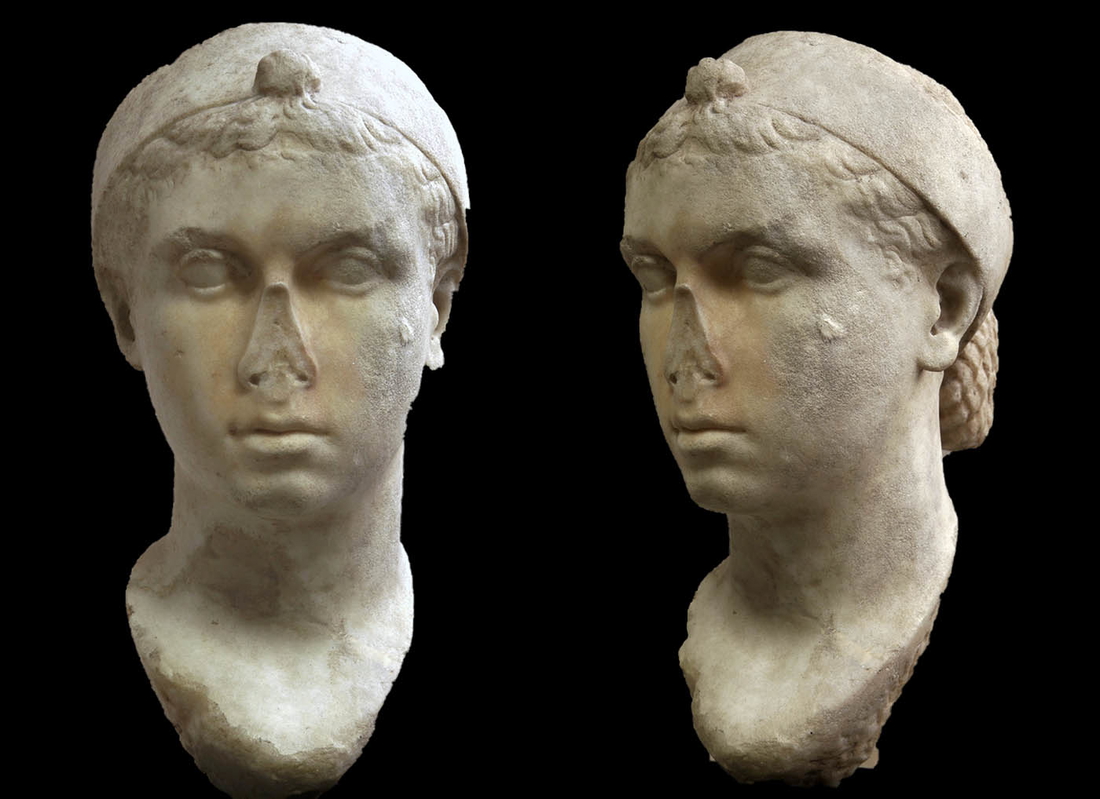
It was all too easy for Augustan propaganda to paint Cleopatra as the calculating foreign temptress who had lured Antony away from his traditional Roman values.
“We Romans are the rulers of the greatest and best parts of the world, and yet we find ourselves spurned and trampled upon by a woman of Egypt. This disgraces our fathers … It disgraces our own generation, who have conquered the Gauls, subdued the Pannonians, marched as far as the Danube and beyond the Rhine, and crossed the sea to Britain. The men who achieved these feats of arms would be wounded to the heart to know that we have been overcome by the pestilence of a woman.”
[Cassius Dio, Roman Histories, 50,24.]
Octavian lost no opportunity in vilifying Antony. He had followed a foreign woman to the oriental East and had clearly “gone native.” No Roman could tolerate the rule of a woman, and certainly not a foreign woman!
“Would we not utterly dishonor ourselves, if after surpassing all other nations in valor we then meekly endured the insults of this scum, the natives of Alexandria and of Egypt, for what more ignoble or more exact name could one give them? They worship reptiles and beasts as gods, they embalm their bodies to make them appear immortal, they are most forward in effrontery, but most backward in courage. Worst of all, they are not ruled by a man, but are the slaves of a woman, and yet they have dared to claim our possessions, and to employ our fellow countrymen to lay hands on them as if we would ever consent to surrender the prosperity which belongs to us.”
[Cassius Dio, Roman Histories, 50,25]
The attack on Antony as a man who had become “un-Roman,” following the worst temptations of an Eastern temptress, spoke directly to Roman xenophobia.
“… [Antony] has abandoned his whole ancestral way of life, has embraced alien and barbaric customs, has ceased to honor us, his fellow countrymen, or our laws, or his father’s gods.”
[Cassius Dio, Histories, 50,25.1]
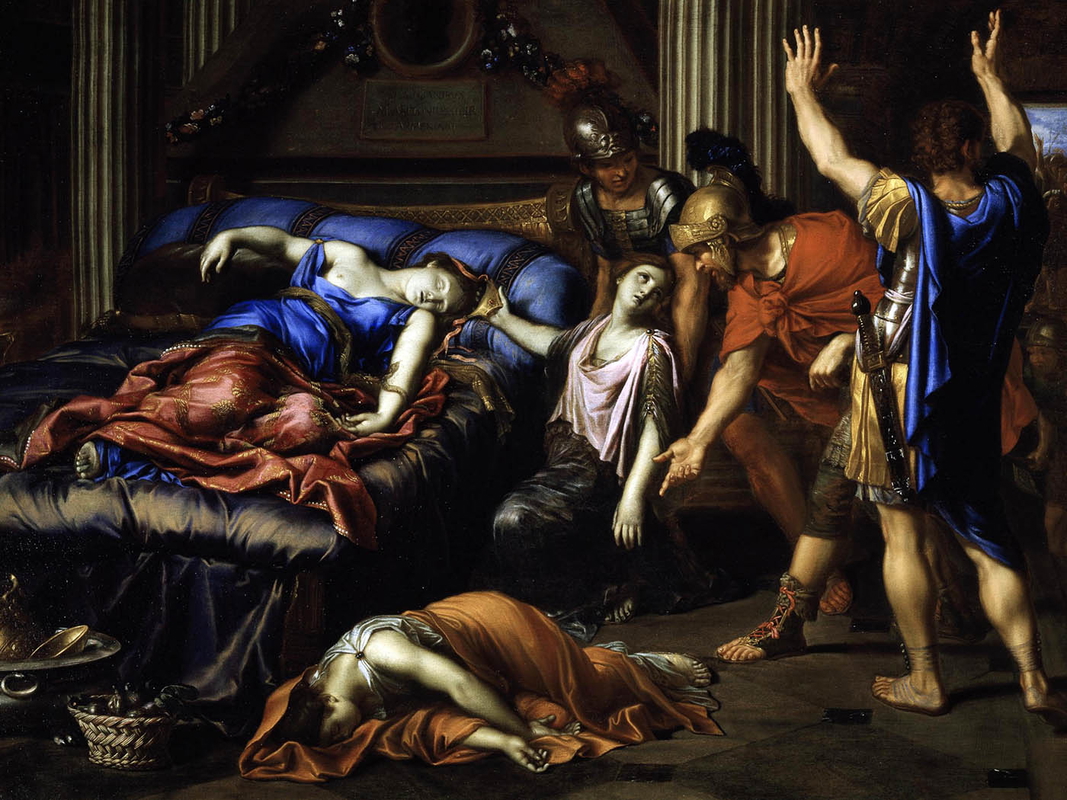
At the Battle of Actium in 31 BC, Octavian’s forces roundly defeated Antony and Cleopatra’s combined forces. As was the Roman custom, Antony committed suicide after his loss at Actium. Cue one of history’s most iconic death scenes. Using the poison of a deadly snake, Cleopatra, with defiance and dignity, coolly robbed Octavian in his moment of victory by taking her own life. No queen of Egypt would be dragged in humiliation through the streets of Rome as the defeated object in the grand triumph Octavian celebrated in 29 BC for capturing Egypt for the Roman people.
Cleopatra had played for the highest stakes possible in the deadly male game of Roman politics. While she did not win, she more than left her mark.
3. Candace Amanirenas of Kush (Ruled c. 40-10 BC)
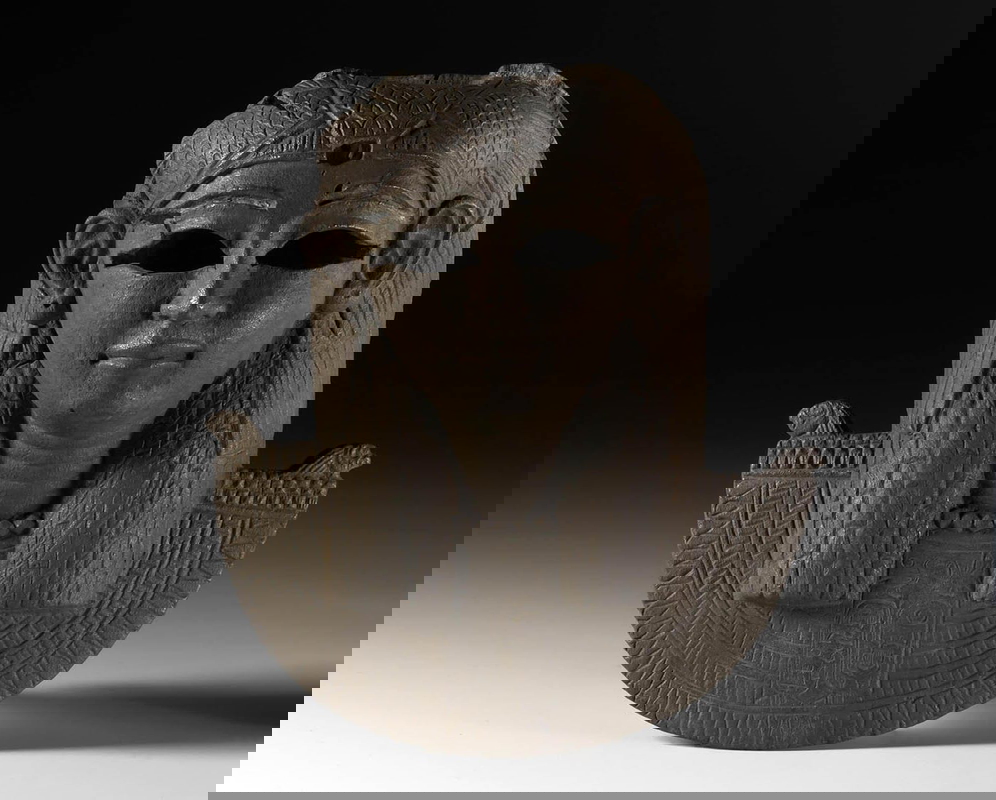
Ironically, Octavian’s conquest of Egypt brought him into direct conflict with another female warrior queen, Candace Amanirenas of Kush. This formidable female warrior was an enigmatic and fascinating queen from a little-understood part of the ancient world. Cited under differing Greek and Romanized names by our sources as Candace or Kandake (meaning “great woman”), Amanirenas was the queen of the remote kingdom of Kush and is thought to have ruled from c. 40 to 10 BC.
Kush was an African kingdom that bordered Egypt and was vaguely known by the ancient Greeks, Persians, and Romans. Occupying roughly the modern area of Southern Egypt and Sudan, Kush was enigmatic due to its remoteness. It appears to have been ruled by a long line that included many venerable queens, several of whom are depicted as warriors. The fact that ancient sources refer to the land under several names, including Kush, Nubia, Aethiopia, and Meroe (the capital), reflects the patchy knowledge our ancient Mediterranean-focused sources had for the distant kingdom. Octavian’s domination of Egypt brought Kush firmly within the Roman sphere of influence. The independent and war-like Kushites resisted becoming a Roman satellite state.
The Kushites started a war by invading Roman Egypt in 24 BC while its governor, Aelius Gallus, was campaigning in Arabia. The writer Strabo leaves much untold, but he tells of a fierce, one-eyed warrior queen who both directed the war through generals and later led in battle herself. She enjoyed some clear success over Roman forces. Advancing deep into the new Roman province, the Kushites initially attacked Thebaïs and Syenê, overrunning garrisons and pillaging the three Roman cities of Syenê, Elephantinê, and Philae.
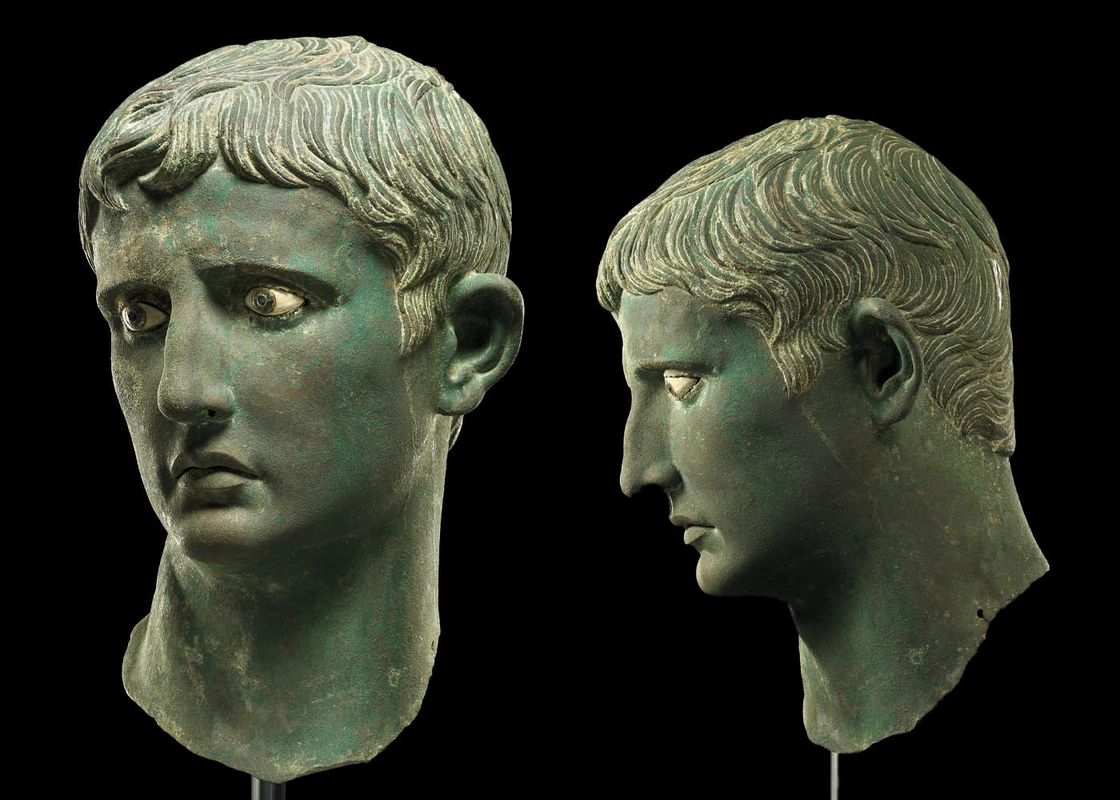
Strabo mentions the theft of Augustan statues and the carrying away of plunder of considerable value. Archaeology backs this up with the discovery of the famous Meroe Head: an Augustan statue-head discovered in 1910 that was buried within the entrance to the temple of victory in Kushite Meroe. This, in tandem with temple depictions showing Roman captives taken in war, points towards a Kushite victory over Roman armies.
The Kushite incursion, however, could not be sustained. In 25 BC, under the new Roman prefect of Egypt, Gaius Petronius, the empire struck back.
“But Petronius, setting out with less than ten thousand infantry and eight hundred cavalry against thirty thousand men, first forced them to flee back to Pselchis, … he made an attack and forced them to come forth to battle; and he quickly turned them to flight, since they were badly marshaled and badly armed; for they had large oblong shields, and those too made of raw ox-hide, and as weapons, some had only axes, others pikes, and others swords. Now some were driven together into the city, others fled into the desert, and others found refuge on a neighboring island, having waded into the channel, for on account of the current the crocodiles were not numerous there. Among these fugitives were the generals of Queen Candacê, who was ruler of the Aethiopians in my time — a masculine sort of woman, and blind in one eye.”
[Strabo, Geography, 17.54]
Petronius eventually took the royal town of Nabata, forcing Amanirenas to seek terms through negotiation.
“After this, he set out for Nabata. This was the royal residence of Candacê, and her son was there, and she herself was residing at a place nearby. But though she sent ambassadors to treat for friendship and offered to give back the captives and the statues brought from Syenê, Petronius attacked and captured Nabata too, from which her son had fled, and razed it to the ground; and having enslaved its inhabitants, he turned back again with the booty, having decided that the regions farther on would be hard to traverse.”
[Strabo, Geography, XVII.54]

The Romans stabilized their provincial border, but were a long way off from winning a war in such a remote, uncharted, and inhospitable kingdom. It is not clear if this was a war that Rome even wanted to win. Always pragmatic in its imperial calculations, ancient Rome most often operated a cool “profit vs loss” attitude to expansion. It’s likely in this context that a relatively generous peace treaty was agreed with the Kushites in 21/20 BC, allowing them to retain their kingdom and avoid paying tribute to Rome.
This was an exceptionally rare result and must afford Candace Amanirenas a rare place in history. A female warrior queen who fought Rome and emerged with the integrity of her kingdom undiminished.
4. Boudicca of the Iceni (Led Rebellion AD 60/61)
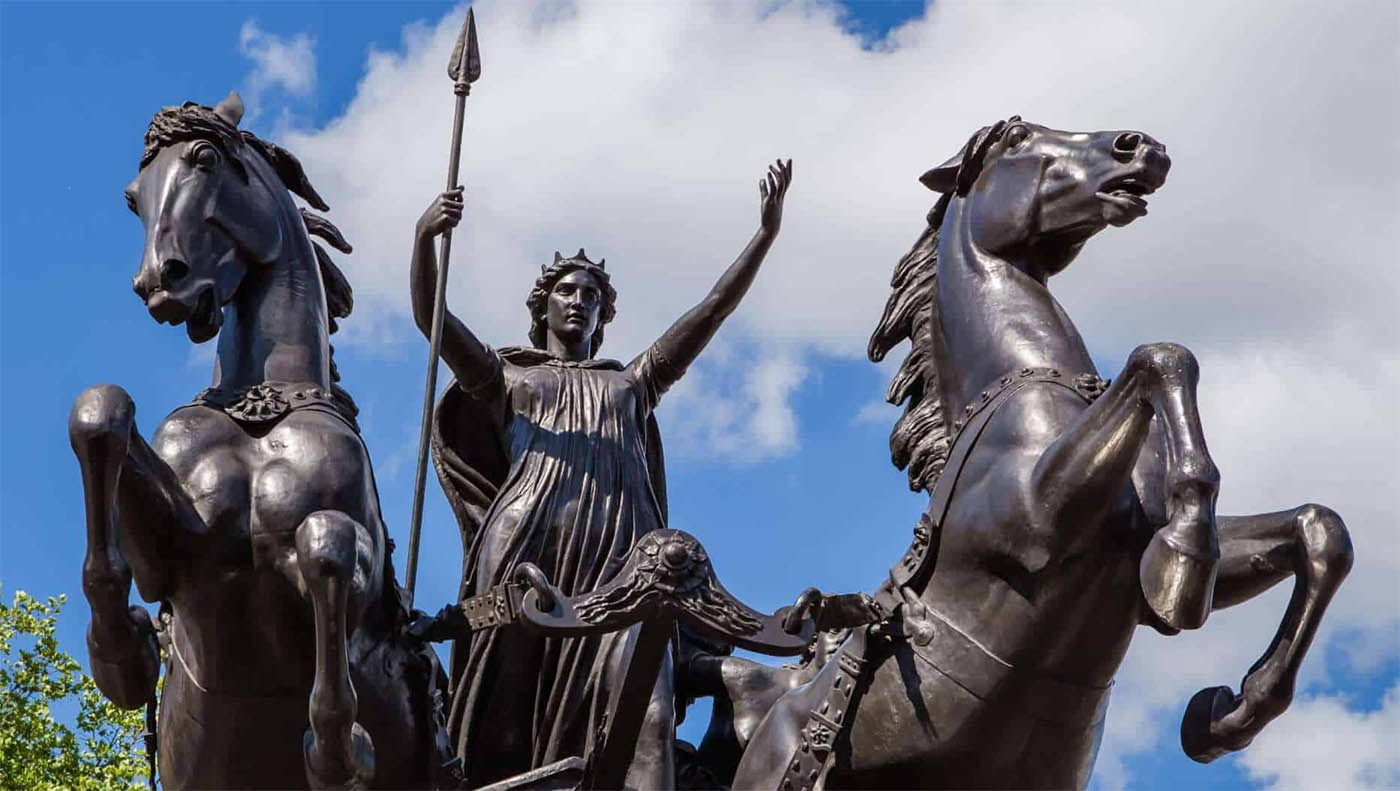
“We British are used to women commanders in war; I am descended from mighty men! But I am not fighting for my kingdom and wealth now. I am fighting as an ordinary person for my lost freedom, my bruised body, and my outraged daughters…
[Tacitus, Annals of Imperial Rome, 14.35 ]
An ancient Briton and a queen of the Iceni tribe, Boudicca hailed from a northern Celtic tradition, far removed from the classical Greco-Roman and Egyptian cultures of the Mediterranean. Like the kingdom of Kush, Celtic society accepted inheritance through the female lineage and was more open to women playing a political role.
We know very little of Boudicca herself, and as expected, our Roman sources denigrate and over-sensationalize in their tabloid-style coverage of the queen.
“In stature, she was very tall, in appearance most terrifying, in the glance of her eye most fierce, and her voice was harsh; a great mass of the tawniest hair fell to her hips; around her neck was a large golden necklace; and she wore a tunic of diverse colors over which a thick mantle was fastened with a brooch. This was her invariable attire.”
[Cassius Dio, Roman History 62.1]
At the time of Boudicca’s rebellion in AD 61, during the reign of the notorious emperor Nero, Britain was still undergoing a major military conquest. They had been invaded less than 20 years before by Emperor Claudius in AD 43. At the time of Boudicca’s revolt, Roman forces were continuing a long process of subjugation, both north and westward. Slow colonization was underway in the island province.
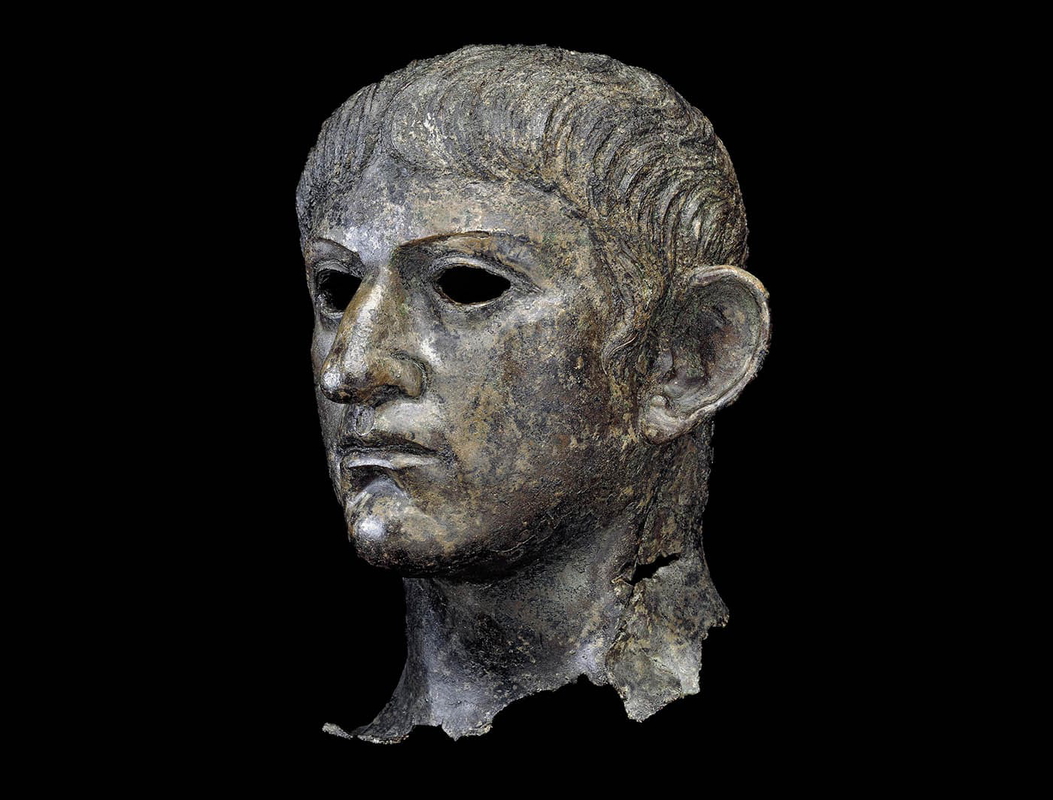
The catalyst for revolt followed the death of King Prasutagus, king of the Iceni. A Roman ally, he divided his estate between his daughters and the emperor of Rome, but the Romans decided to seize what they wanted.
“Prasutagus, king of the Iceni, famed for his long prosperity, had made the emperor his heir along with his two daughters, under the impression that this token of submission would put his kingdom and his house out of the reach of wrong. But the reverse was the result, so much so that his kingdom was plundered by centurions, his house by slaves, as if they were the spoils of war. First, his wife Boudicea was whipped, and his daughters raped. All the chief men of the Iceni, as if Rome had received the whole country as spoils, were stripped of their ancestral possessions, and the king’s relatives were made slaves.”
[Tacitus, Annals 14.31]
With the Roman governor, Gaius Suetonius Paulinus, engaged far away on a campaign in North Wales, it was the perfect time for the Iceni to revolt in the East. Push people too far, and you give them little to lose:
“Nothing is now safe from [Roman] avarice, nothing from their lust. In war it is the strong who plunders; now, it is for the most part by cowards that our homes are rifled, our children torn from us, the conscription enforced, as though it were for our own country alone that we could not die”
[Tacitus, Agricola, 15]
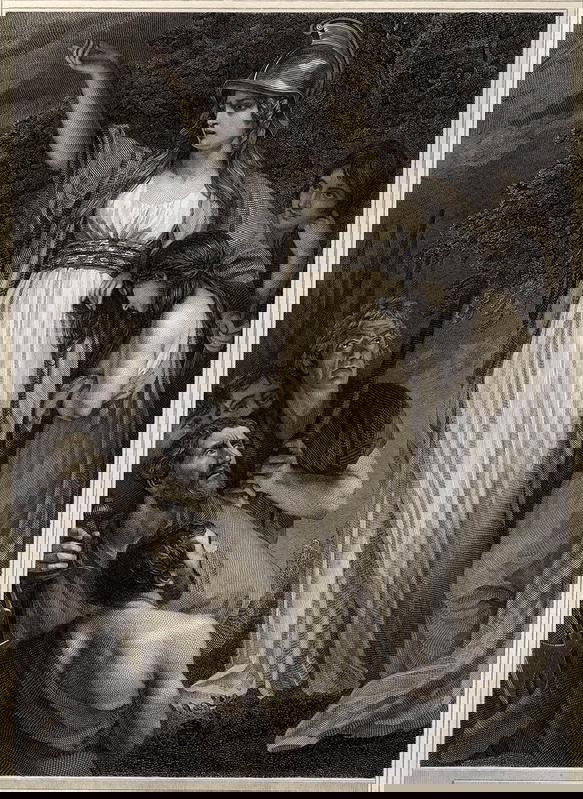
Under the leadership of Boudicca, the vengeful female warrior, the Britons’ rebellion soon spread to other tribes. A whole catalog of Roman villainy fired up the Britons, centered on taxation, corruption, and loss of status. The revolt spread quickly, raging over the Southern province and spreading to many tribes. The revolt led by the female warrior queen fast became a popular insurrection.
“Roused by these insults and the dread of worse, reduced as they now were into the condition of a province, they flew to arms and stirred to revolt the Trinobantes and others who, not yet cowed by slavery, had agreed in conspiracy to reclaim their freedom. It was against the veterans that their hatred was most intense. For these new settlers in the colony of Camulodunum drove people out of their houses, ejected them from their farms, called them captives and slaves, and the lawlessness of the veterans was encouraged by the soldiers, who lived a similar life and hoped for similar license.”
[Tacitus, Annals, 14.31]
The rebels obliterated the hated Roman colony of Camulodunum (Colchester) and the young city of Londinium (London). Sources tell us that up to 80,000 Romans and provincial citizens were massacred. The archaeological record corroborates the destruction with major stratified carbon deposits, signifying a great fire appearing at both sites. The viability of Rome’s province was hanging in the balance.
This critical situation was only countered when the governor Suetonius Paulinus hastily marched East, gathering Roman troops to make a critical stand. The entire future of Rome’s province would be settled in one desperate, all-or-nothing battle.
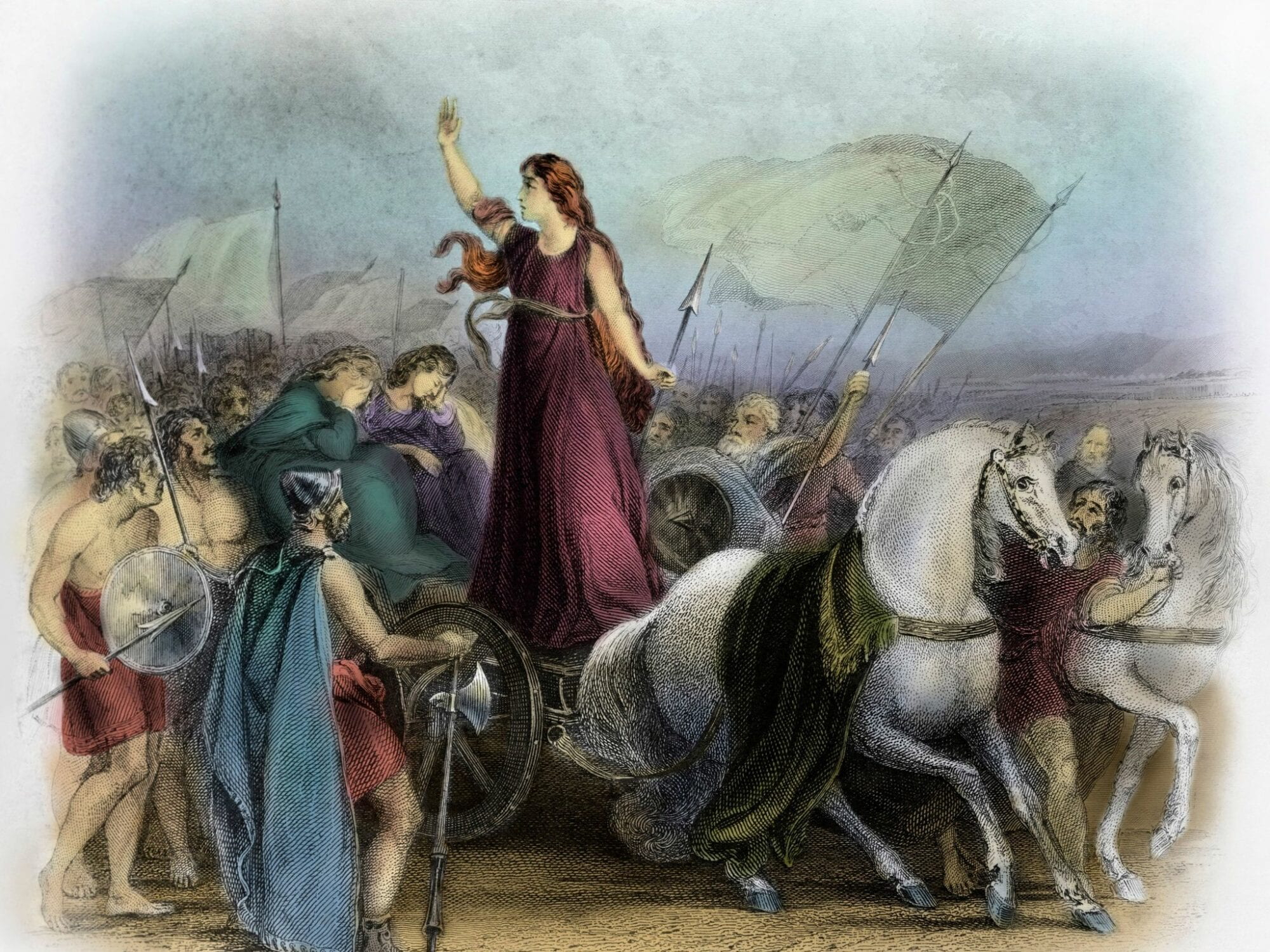
Taking place somewhere off Watling Street, a major Roman military road, the battle was held where the Britons heavily outnumbered Roman forces.
“Boudicca, in a chariot with her two daughters before her, drove through the ranks. She harangued the different tribes in their turn. “This is not the first time that we Britons have been led to battle by a woman.” But now she did not come to boost the pride of a long line of ancestry, nor even to recover her Kingdom and the plundered wealth of her family. She took the field, like the lowliest among them, to assert the cause of public liberty, and to seek revenge for her body polluted with indignity, and her two daughters infamously ravaged. “From the pride and arrogance of the Romans nothing is sacred; all are subject to violation; the old endure the lash, and the virgins are deflowered.”
[Tacitus, Annals, 14.35]
Of the battle itself, the Romans would ultimately withstand the British numbers. Using the topography of the land to funnel the Britons into a narrow front, thus nullifying their numbers and their fury. The Romans used the mechanical efficiency of three legionary bodies to hold their center, stabbing away with ruthless efficiency. After long and savage fighting, the Romans broke the will of the Britons, forcing them back with great slaughter onto their camp of wagons where their woman and children waited.
Of Boudicca herself, we hear that although she got away from the battle, she took sick and died, perhaps even taking poison to avoid capture and the terrible revenge that Rome would exact on her. All sources agree that she did not survive long, and thus, with very little detail, Boudicca passes from history. While she had failed to expel the hated Romans from her homeland, Boudicca has lived on as a symbol of national identity.
5. Zenobia of Palmyra (c. AD 250-275)
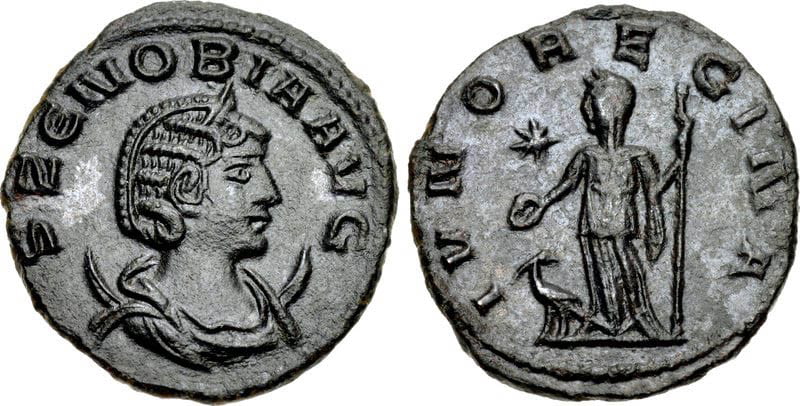
Hailing from the Eastern Roman province of Palmyra, modern-day Syria, Zenobia was a ruler who sought to break free from a failing Empire. She was educated, intelligent, sophisticated, and athletic. Sources note that Zenobia was an incredibly gifted figure who rode, hunted, and marched with her troops. This female warrior queen is described to us with considerable admiration, even by the very sources who disdained her feminine condition.
“Now all shame is exhausted, for in the weakened state of the commonwealth things came to such a pass that, while Gallienus conducted himself in the evilest fashion, even women ruled most excellently. For, in fact, even a foreigner, Zenobia by name, … boasting herself to be of the family of the Cleopatras and the Ptolemies, proceeded upon the death of her husband Odaenathus to cast about her shoulders the imperial mantle; and arrayed in the robes of Dido and even assuming the diadem, she held the imperial power in the name of her sons Herennianus and Timolaus, ruling longer than could be endured from one of the female sex.”
[Historia Augusta, Life of Zenobia, 30]
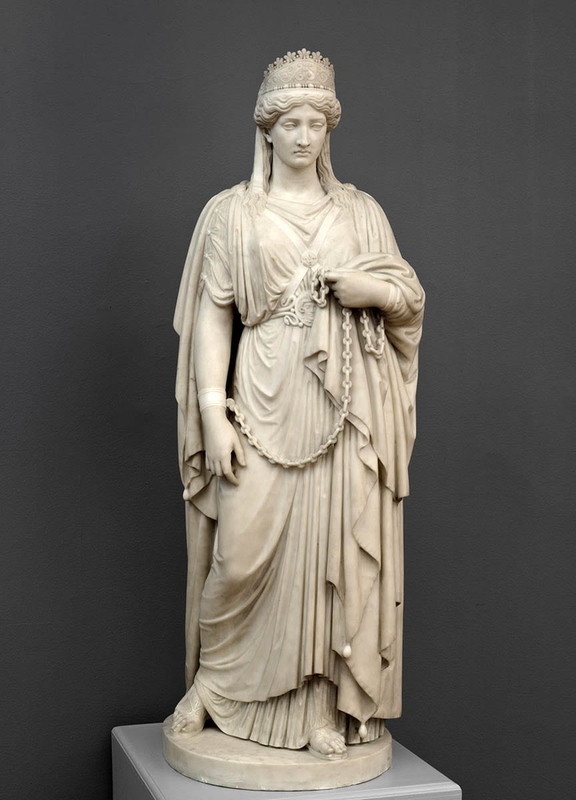
In the 3rd century AD, Palmyra was a semi-autonomous Roman province that had grown rich from the silk and spice routes that went through the strategically placed oasis city. Feeding the Roman Empire with luxury goods from the East, the province was a massive money generator for the Palmyrenes, who protected and taxed the trade caravans. Culturally, Zenobia and her people were subject to a fusion of Roman, Hellenic, Aramaic, and Arabic influences.
The steady growth of Palmyrene power also came when Rome was struggling to control its declining empire: battling with a financial crisis, successive coups, provincial revolts, endless imperial usurpers, and aggressive incursions on its northern and western frontiers. The Roman Empire was in a real crisis.
To the east, Rome’s traditional enemy, the Parthians, were also in relative decline. This created an opportunity for the prosperous, well-positioned buffer state of Palmyra to become a regional power. When the Roman emperor Valerian was captured by the Persian King Saphur I in AD 260, the Palmyrenes seized the opportunity.
“Had not Odaenathus, prince of the Palmyrenes, seized the imperial power after the capture of Valerian, with the strength of the Roman state was exhausted, all would have been lost in the East. He assumed, therefore, as the first of his line, the title of King, and after gathering together an army he set out against the Persians … .”
[Historia Augusta, 15, Life of Odaenathus]
Historians argue whether Zenobia’s husband, Odaenathus, sought to rule as an independent king or remained a loyal and allied partner to Rome. What cannot be doubted is that his military successes in the East put him and Palmyra in a powerful place. Rome was simply not in a position to hold its Eastern provinces, and Palmyra emerged as a new force.
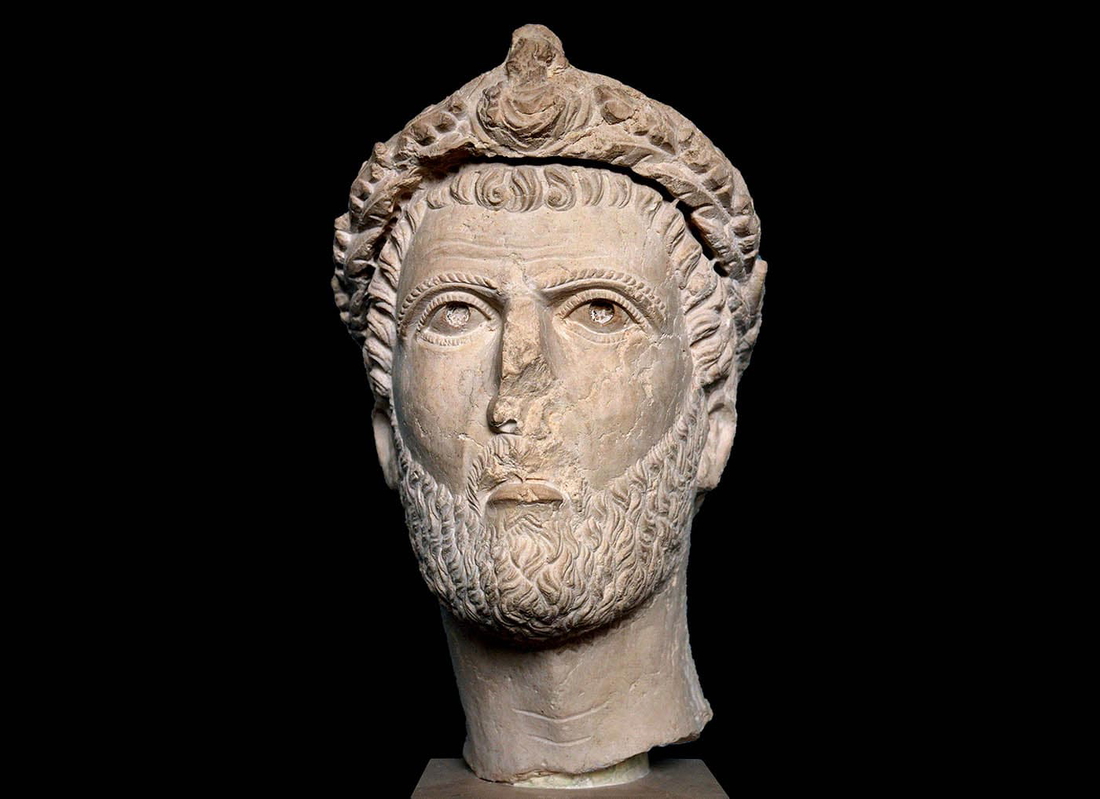
Zanobia was no trophy-wife now that she had access to real power through her husband Odaenathus; in her own right, she drew much admiration:
“his wife, too, [Zenobia] was inured to hardship and in the opinion of many was held to be braver than her husband, being, indeed, the noblest of all the women of the East, and, as Cornelius Capitolinus declares, the most beautiful.”
[Historia Augusta, Life of Odaenathus,15]
However, everything changed with the sudden assassination of Odaenathus and his son Herodes in AD 267. Historians do not agree as to whether Zenobia played a part in this, but it left the queen and her biological son Vaballathus holding all the cards. Zenobia now emerged as a real regent in her own right, adopting the title of Augusta, with her infant son Vaballathus awarded that of Augustus. A new and unmistakable dynasty had emerged, led by this competent queen, an educated and politically ambitious woman.
Consolidating power in the East, Zenobia’s forces took control of swathes of Asia Minor and Arabia, eventually annexing Egypt in AD 269. This extended the queen’s control into a significant Eastern bloc and a geographically viable empire. The female warrior queen now had a strong regional domain which was a serious affront to the power and prestige of imperial Rome. Zenobia drew many of the most learned philosophers and scholars of her age to her court.
“She lived in regal pomp. It was rather in the manner of the Persians that she received worship and in the manner of the Persian kings that she banqueted; but it was in the manner of a Roman emperor that she came forth to public assemblies, wearing a helmet and girt with a purple fillet, which had gems hanging from the lower edge, while its centre was fastened with the jewel called cochlis, used instead of the brooch worn by women, and her arms were frequently bare. Her face was dark and of a swarthy hue, her eyes were black and powerful beyond the usual wont, her spirit divinely great, and her beauty incredible. So white were her teeth that many thought that she had pearls in place of teeth. Her voice was clear and like that of a man. Her sternness, when necessity demanded, was that of a tyrant, her clemency, when her sense of right called for it, that of a good emperor. Generous with prudence, she conserved her treasures beyond the want of women.”
[Historia Augusta, Zenobia, 30.13]
Coinage of the era initially referenced the rule of Vaballathus alongside the Roman emperor Aurelian, but it very soon progressed to represent only the queen and her son. This reflected a distinct pulling away from the overlordship of Rome. This signified a clear break, and it would only be a matter of time until the Romans sought to counter it.
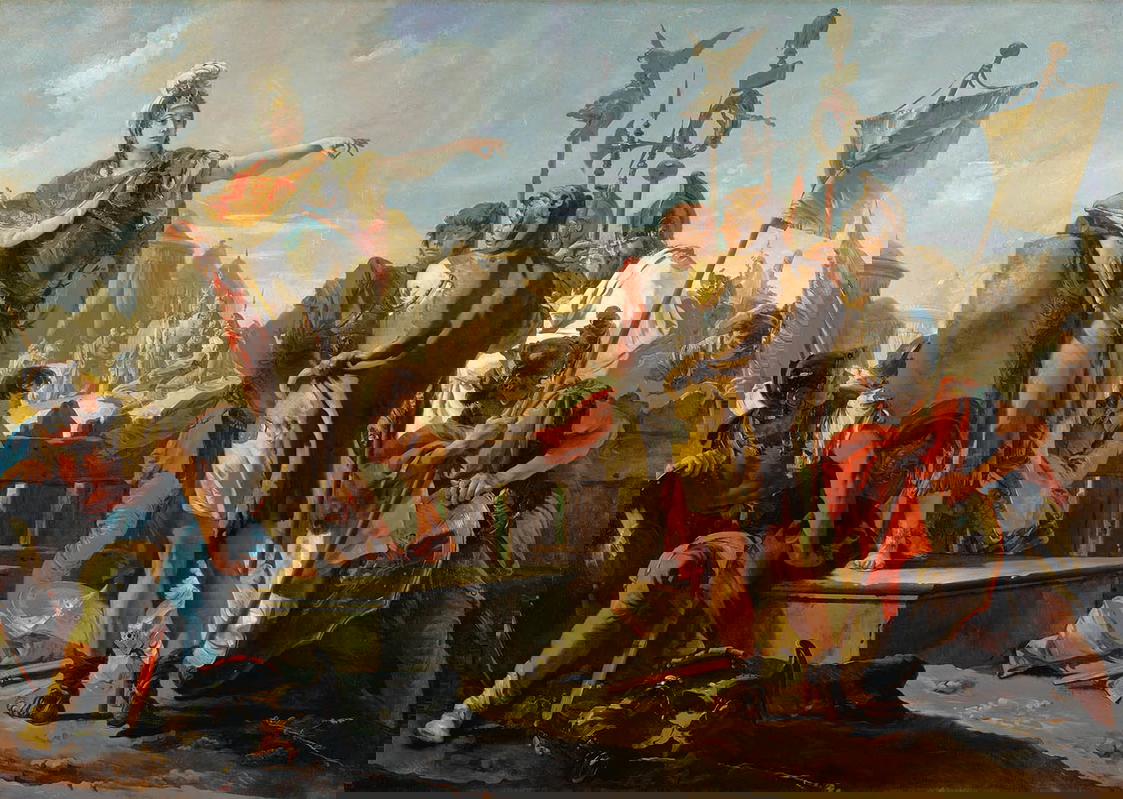
Roman re-assertion came in the form of the emperor Aurelian, the iron-man of the period, who had greatly re-established stability in the Western empire. Coming to power in AD 270, Aurelian did much to stabilize the failing Roman empire. By AD 272, Rome’s new emperor was ready to re-establish control over the secessionist kingdom of Zenobia.
Fighting two significant battles at Antioch and Emesa, Zenobia’s forces came close but could not resist the weight of Aurelian’s legions. Eventually falling back on Palmyra itself, a siege followed and ultimately defeat. With the rich desert city destined to be sacked, Zenobia and her son fled east, seeking asylum over the border with the Persians. All sources agree that Zenobia was captured by Aurelian troops. The war against Rome had brought the reign of this female warrior queen to a firm end.
The end of the Palmyran queen is contradicted within histories and renders her fate highly uncertain. Some suggest that the Palmyrene ruler committed suicide, like Cleopatra, or starved herself, rather than being captured. Other accounts say she was dragged through the great eastern cities, sickened and dying. Others again relate that she was taken back to Rome, though she may have died during the journey. Another tradition has Zenobia being paraded in formal triumph in AD 274 through Rome itself, led in golden chains and on foot, to the feet of an all-conquering Aurelian. The “Roman triumph” version has it that Zenobia so charmed Aurelian that she was granted a villa in the city and lived out her days as a noblewoman of high renown and distinction.
The Female Warriors Who Rained Fury On Ancient Rome
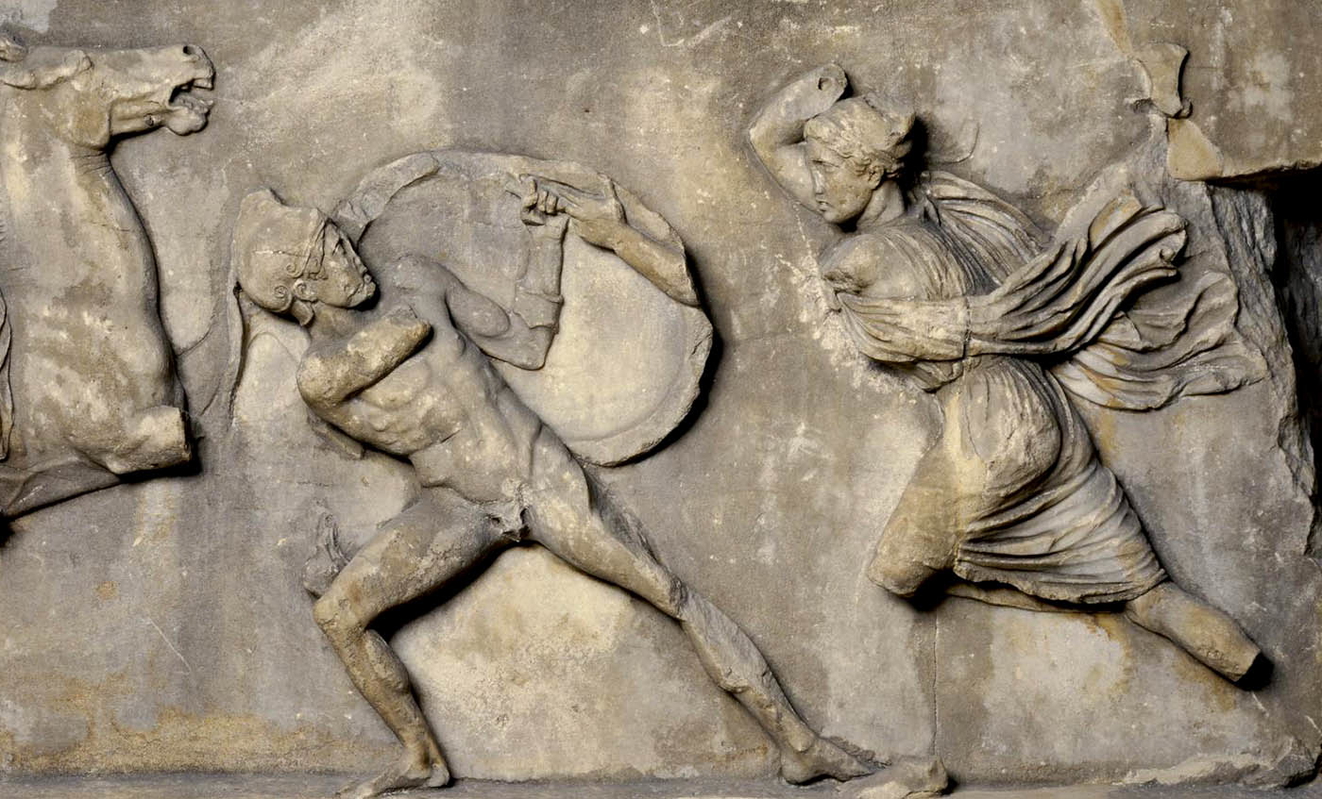
How Rome dealt with its female warrior enemies reflects the very nature of Rome itself. Rome’s deep misogyny, its pathological war-making, its overt racism, its use of propaganda, its imperial pragmatism, and even its warped fascination with the female warriors whom it both castigated and occasionally romanticized.
Though each woman came from a different culture, all of our female warriors are exceptional for their leadership, tenacity, and bravery in the face of overwhelming Roman power. Though several of our female warriors came from societies that accepted limited female leadership, we must remember that even within their own cultures, these powerful women still operated under heavily male-dominated constraints: as wives, daughters, mothers, and regents.
We can see that Roman-centric sources often vilify and diminish them. Some figures like Cleopatra were the victims of highly negative propaganda, while those like Zenobia were romanticized, giving birth to myths about their lives and fates. Despite this, what each woman really shows us is a life of courage, dignity, bravery, resolve, and tenacity.