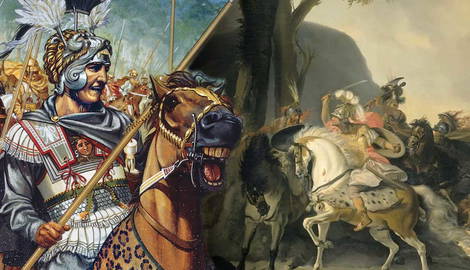

It was Alexander the Great’s father, Philip II of Macedon, who declared a pan-Hellenic war on the Persians in revenge for their invasion of Greece 150 years earlier. Philip’s assassination in 336 BC put those plans on hold, but his 20-year-old son and successor eagerly took up his mantle. Alexander’s great Persian campaign lasted from 334 BC to 330 BC, when Alexander’s victories meant that he could call himself the new leader of the ancient Persian Empire. While Alexander and his Macedonian troops engaged in many battles and skirmishes over the course of the four years, these four battles defined the Persian campaign and made Alexander “the Great.”
Timeline of Alexander’s Persian Campaign
| Date | Event |
Details
|
| 334 BC (Spring) | Crossing the Hellespont |
Alexander leads roughly 37,000 troops from Europe into Asia Minor, officially launching the pan-Hellenic war of revenge planned by his father, Philip II.
|
| 334 BC (May) | Battle of the Granicus |
Alexander’s first major victory against regional Persian satraps. He is nearly killed in a cavalry duel but secures a crucial beachhead in Asia Minor.
|
| 333 BC (Winter) | The Gordian Knot |
While wintering in Gordium, Alexander cuts or dismantles the legendary knot, fulfilling a prophecy that he would rule all of Asia.
|
| 333 BC (Nov) | Battle of Issus |
The first direct clash between Alexander and King Darius III. Darius panics and flees, leaving his royal family behind. The victory opens up the Mediterranean coast.
|
| 332 BC (Jan–July) | Siege of Tyre |
A masterclass in ancient engineering. Alexander spends seven months building a massive stone causeway to conquer the island-fortress, successfully crippling the Persian navy.
|
| 332/331 BC | Annexation of Egypt |
Egypt surrenders without a fight. Alexander is crowned Pharaoh and visits the Siwa Oasis, where the Oracle declares him the literal “Son of Ammon” (Zeus).
|
| 331 BC (Oct) | Battle of Gaugamela |
The decisive, apocalyptic showdown of the campaign. On a wide-open plain, Alexander executes a brilliant diagonal march, breaks Darius’s line, and routes the main imperial army.
|
| 331 BC (Late) | The Fall of Babylon & Susa |
The administrative hearts of the empire open their gates. Alexander captures the vast royal Persian treasuries, funding the rest of his conquests.
|
| 330 BC (Jan) | Battle of the Persian Gate |
The Persian general Ariobarzanes mounts a fierce, desperate last stand in a narrow mountain pass, briefly delaying Alexander before being outflanked.
|
| 330 BC (May) | Burning of Persepolis |
The ceremonial and spiritual capital of Persia is captured. Following a wild, drunken victory banquet, the magnificent Palace of Xerxes is burned to the ground.
|
| 330 BC (Summer) | The Death of Darius III |
Darius is betrayed and assassinated by his own eastern satrap, Bessus. Alexander finds his body, provides a full royal burial, and claims the legitimate title of King of Asia.
|
1. Battle of the Granicus (334 BC): Alexander the Great’s Persian Gamble
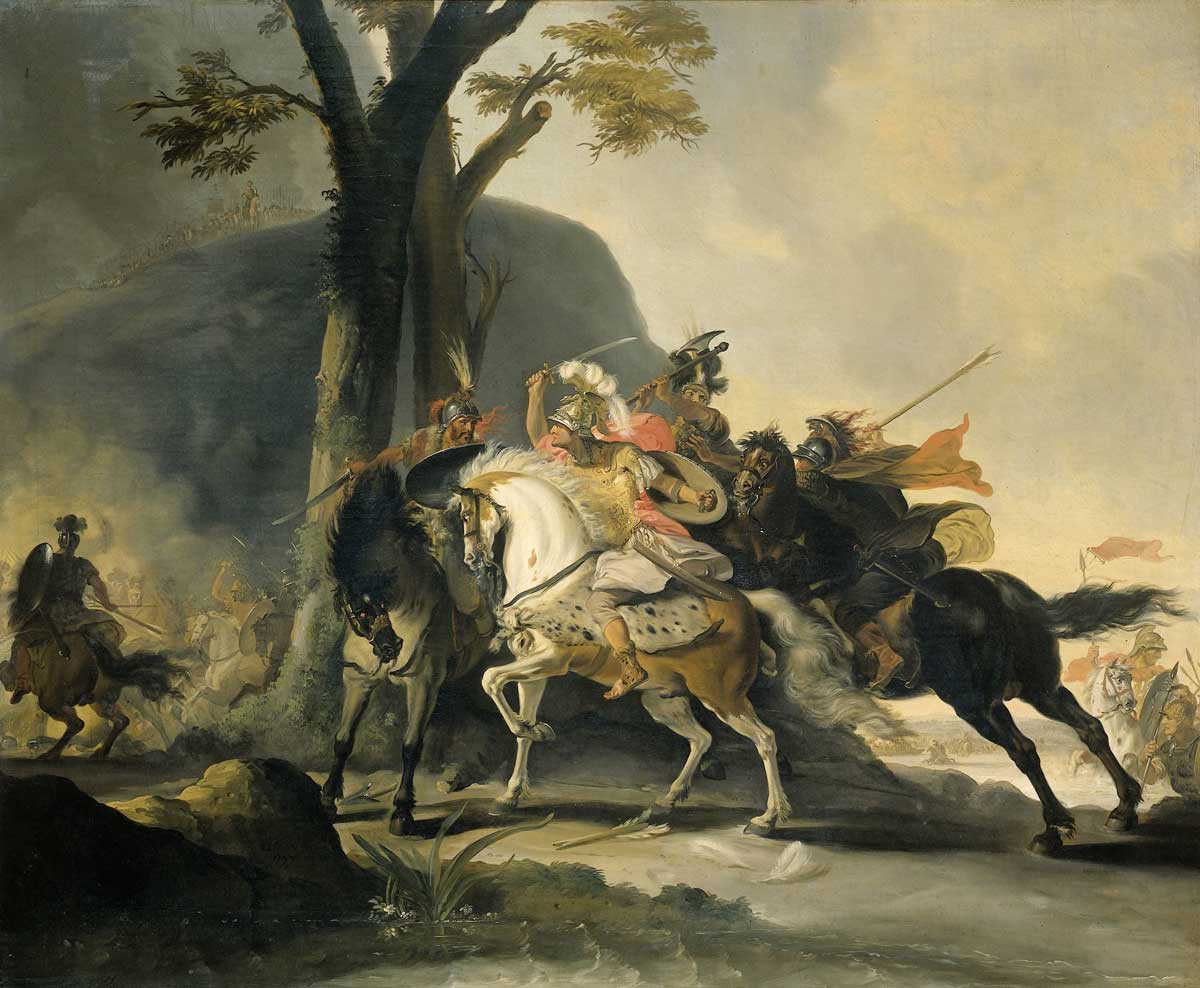
The Battle of the Granicus was the first major battle of the Persian campaign and the one in which Alexander the Great came closest to defeat and death. After suppressing rebellions in the Balkans and Greece, young Alexander was ready to invade Persia. In 334 BC, the 40,000-strong Macedonian army crossed the Hellespont and advanced into Persian-held Asia Minor.
The Achaemenid “King of Kings” Darius III apparently did not feel threatened by the young challenger and allowed Alexander to enter legendary Troy without a fight. The king left the task of stopping his adversary to his satraps (governors), who assembled their army on the eastern bank of the Granicus River. The plan was to strike first, at first light.
Instead of waiting until morning to attack, Alexander made the first move, ordering his men to fight on the very afternoon they reached the river. We are not sure of the exact numbers of soldiers, but it appears that the armies were evenly matched, with 18,000 to 30,000 men on each side. Yet, it would not be numbers that won the day but discipline, cohesion, and leadership.
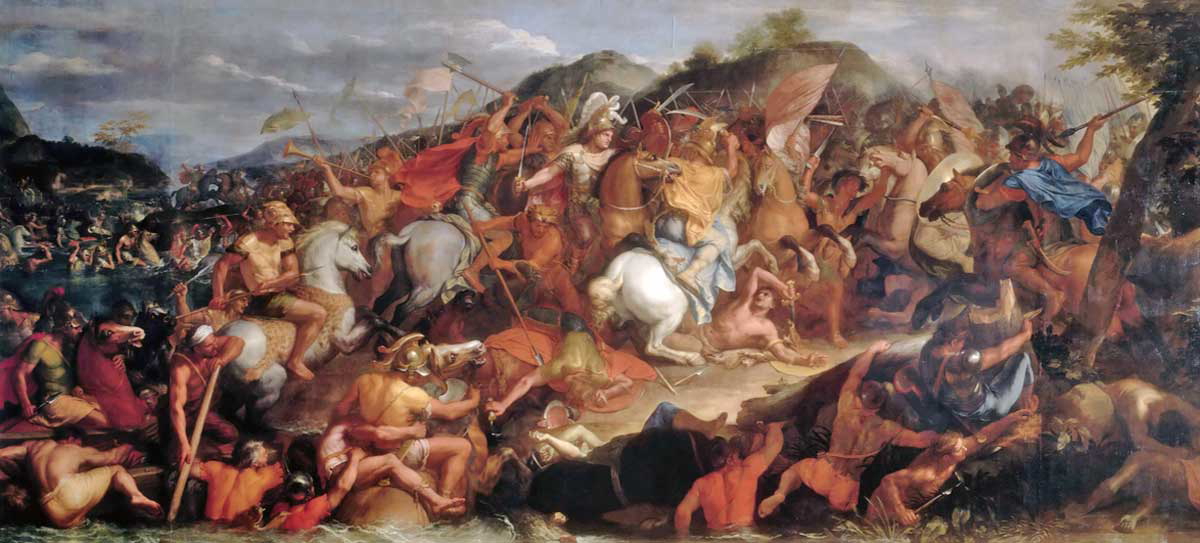
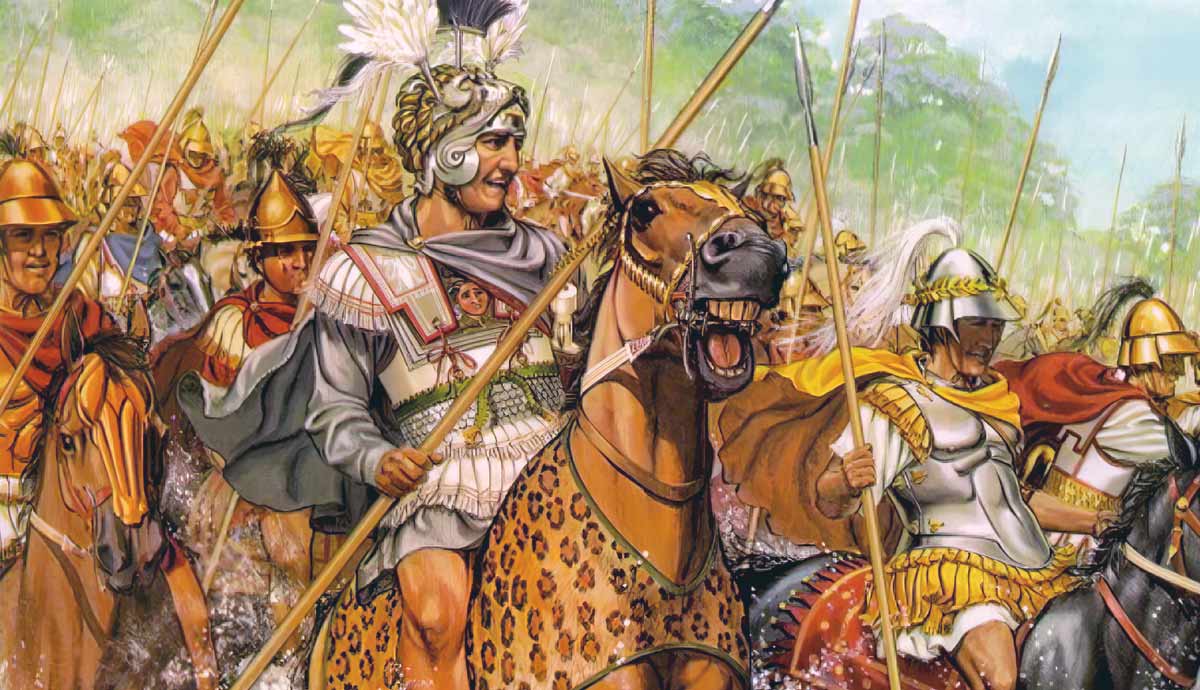
The Persians made an initial blunder when they placed their Greek mercenary cavalry on the banks of the river, limiting its mobility once the battle began. In addition, the muddy ground hampered the effectiveness of the fearsome Persian chariots. In contrast, the Macedonians were a well-disciplined and organized fighting unit led by a capable young commander. Alexander made his presence on the front lines clear by wearing brightly colored clothes and a white plume on his helmet while riding an imposing stallion named Bucephalus. The plan worked. Instead of fighting the Macedonian army, the Persians focused on Alexander.
However, while the Macedonian phalanx was pushing the enemy back, Alexander noticed Mithridates, Darius’ son-in-law, who was detached from the main Persian army. He immediately launched a fierce, single-handed cavalry charge at him. According to the historian Arrian, this bold move almost led to disaster after a Persian satrap called Rhoesaces struck the king’s helmet with his sword. Thankfully, one of Alexander’s companions, Cleitus the Black, saved Alexander, changing the course of history in the process.
During Alexander’s brush with death, the Persian resistance collapsed after losing several commanders. However, instead of pursuing the fleeing enemy, Alexander ordered his army to a halt. After slaughtering the Greek mercenaries who fought for the Persians, the Macedonian army marched eastwards, encountering little resistance on the way to Issus.
2. The Battle of Issus (333 BC): Alexander Becomes a Conqueror
The defeat of the Persian army at Granicus rang alarm bells within the Achaemenid high command. Realizing that he had underestimated young Alexander, king Darius III decided not to make a similar mistake again. By the middle of July 333 BC, the Achaemenid king assembled an enormous force near the port town of Issus in southern Anatolia. By doing so, he cut the Hellenic League’s soldiers off from the Macedonian main force. The latter had just passed through Gordium (where Alexander managed to undo a particularly perplexing knot). Realizing his communications had been cut, Alexander forced his men to march, crossing over 100 km in just two days. Eventually, he arrived at Issus, only to discover that he was vastly outnumbered.
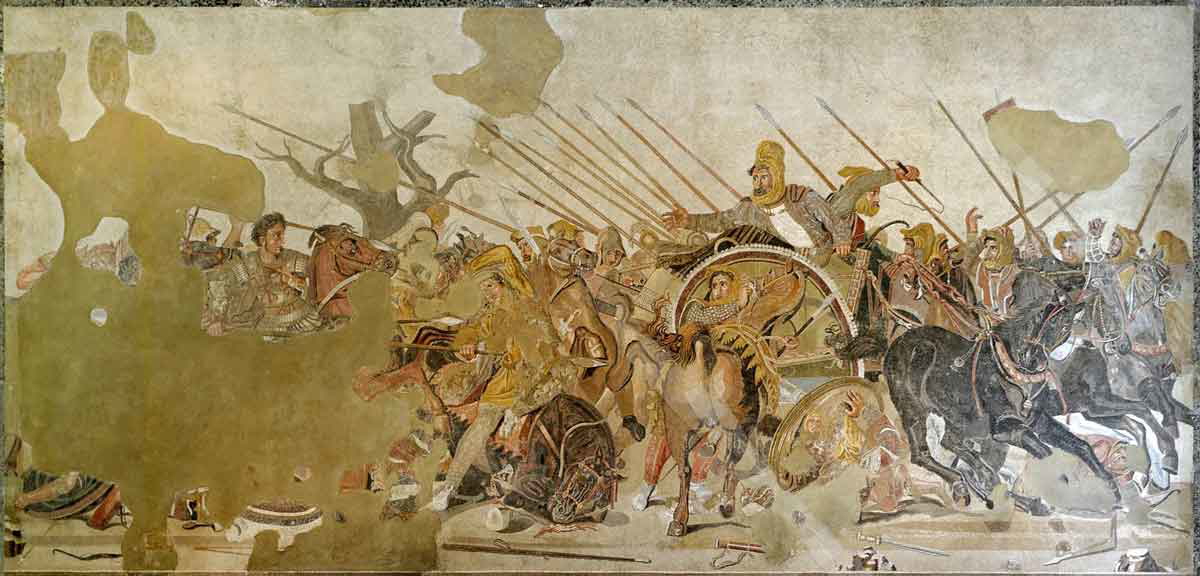
Estimates vary, but it appears that Alexander had around 40,000 men. In contrast, the Persians had at least 100,000 soldiers. Undaunted, the young general ordered his army to deploy near the Pinarus River. The Persians assumed that Alexander would place his cavalry at the wings, planning to use his famed infantry phalanxes armed with 6-meter-long sarissa pikes to overwhelm the Greek mercenary hoplites. Instead, Alexander’s elite Companion cavalry shattered the Persian left and began to encircle the Greek mercenaries, and threaten Darius directly.
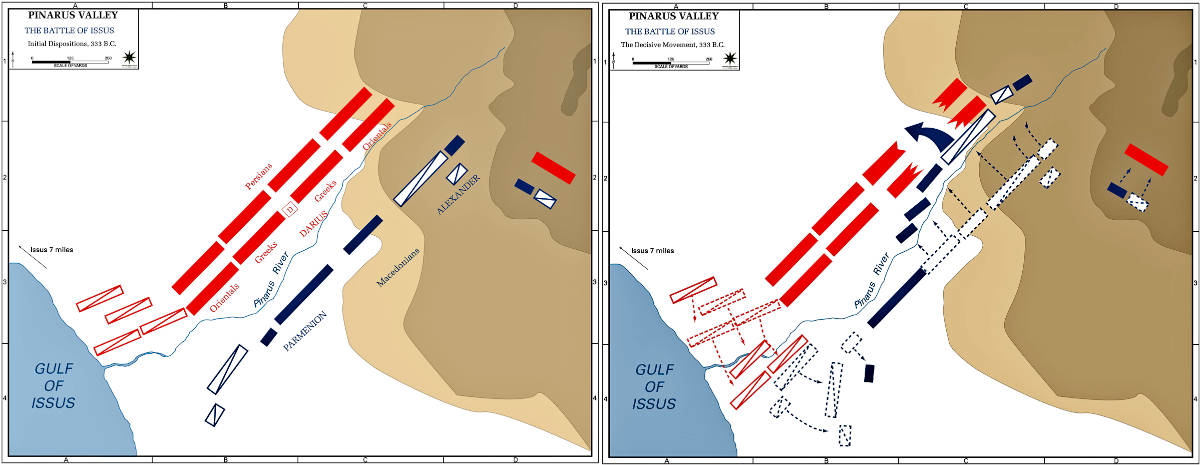
Upon sight of the hostile cavalry approaching, the king panicked and fled the battlefield in his chariot. The Persian army panicked and was routed, resulting in hundreds being trampled to death. However, a force of 10,000 Greek mercenaries made a fighting withdrawal and escaped to form the core of the new Persian army.
Yet, Darius’ humiliation was total. The Macedonians captured not only the gold and silver left by the Persians, they also found the king’s wife, mother, and two of his daughters in the royal tent. By now aware that he was facing a dangerous opponent, Darius offered Alexander generous terms, including much of Asia Minor. Alexander, however, declined the offer. After Issus, Alexander the Great realized that the mighty Persian Empire was not so mighty after all.
3. Siege of Tyre (332 BC): A Stunning Achievement
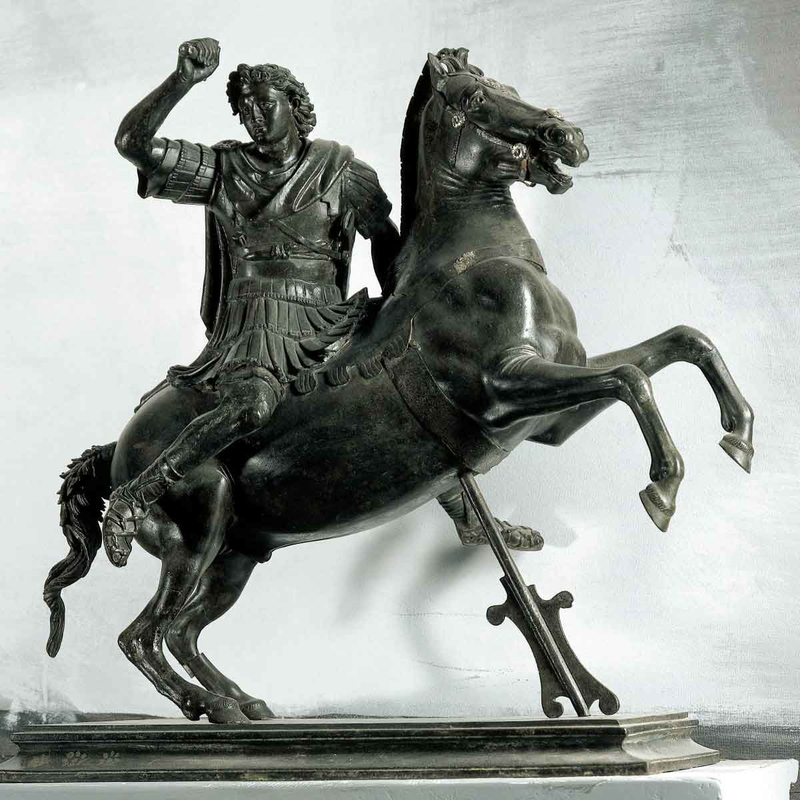
Alexander’s final reckoning with the Persian king had to wait. After founding the first of many cities bearing his name — Alexandria ad Issum — the young conqueror marched south along the Mediterranean coast. He took the Phoenician port towns of Sidon and Byblos without resistance. While in the area, Alexander wanted to make a sacrifice to Heracles at Tyre, which happened to host the main Persian naval base. Recognizing the ploy to take the city, the Tyrians refused, proposing a sacrifice at Old Tyre, a place of no strategic importance. This was tantamount to a declaration of war, and the Tyrians were well aware of it. However, they were sure that their city would be able to withstand any attack.
The Tyrians were confident, and they had every reason to be. They were roughly 0.8 km away from the coast and had a powerful navy to protect them from a naval attack. They were also far out of range of artillery, and their formidable landward walls, towering an impressive 46 m (150 feet) in height, had never been breached. Furthermore, the evacuation of most of the women and children to their colony at Carthage freed the town’s supplies, allowing the Tyrian 40,000-strong defenders to withstand a long siege. Alexander was well aware of all this but could not leave the Persian naval base at his rear.
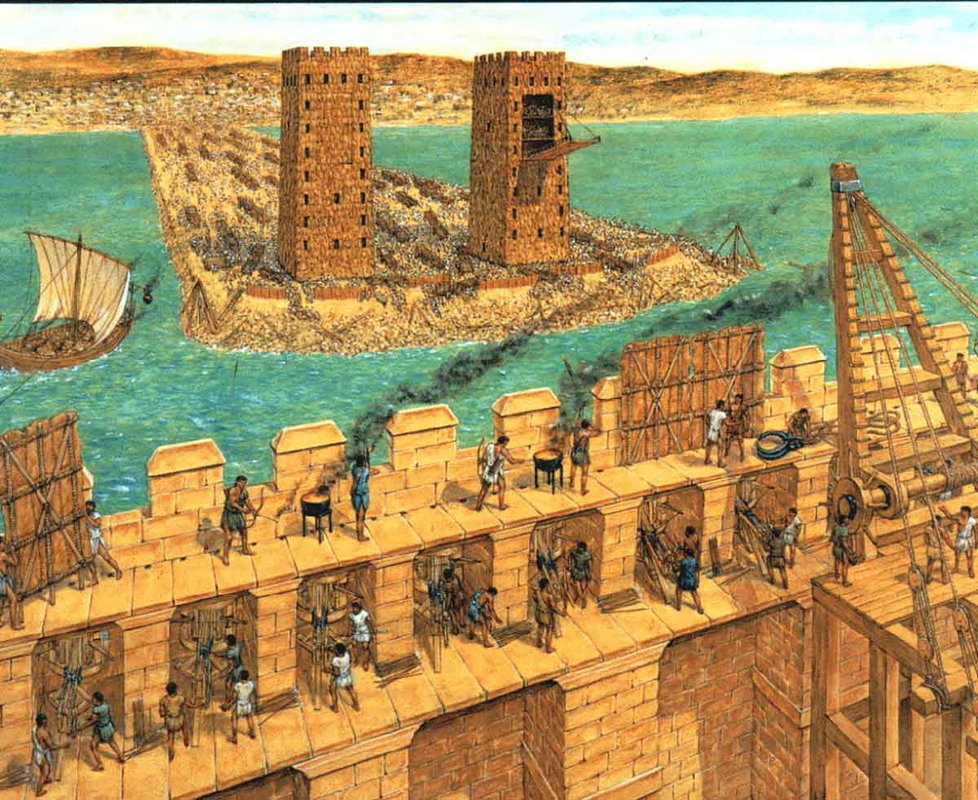
Thus, in January 332 BC, the Siege of Tyre began with the construction of a giant causeway across the channel to transport siege equipment right to the city’s walls. However, the work did not go smoothly, partly due to the 6-meter-deep (20 feet) ocean, and partly due to the constant bombardment by Tyrian missiles. The Macedonians built two massive towers, 50-meters-high (164 feet), to protect the engineers and placed the artillery on top. However, the Tyrians managed to destroy both towers, setting them ablaze. Determined to take the city, Alexander ordered more towers to be built and even enlarged the causeway, allowing the army to approach the city walls.
Alexander also used ships offered to him by the Phoenician town of Sidon, Cyprus, and Rhodes. He was now in possession of a formidable navy. After defeating the Tyrian fleet, the attackers completely surrounded the city. Finally, in July 332, the Macedonian army took Tyre. The soldiers, frustrated by the length of the siege, avenged themselves on the populace. 8,000 Tyrians were slaughtered, while 30,000 more were sold into slavery. After making his sacrifice to Heracles, Alexander the Great led his army to Egypt, which fell the same year. Alexander was now in complete control of the Eastern Mediterranean.
4. The Battle of Gaugamela (331 BC): Alexander the Great’s Triumph Over Persia
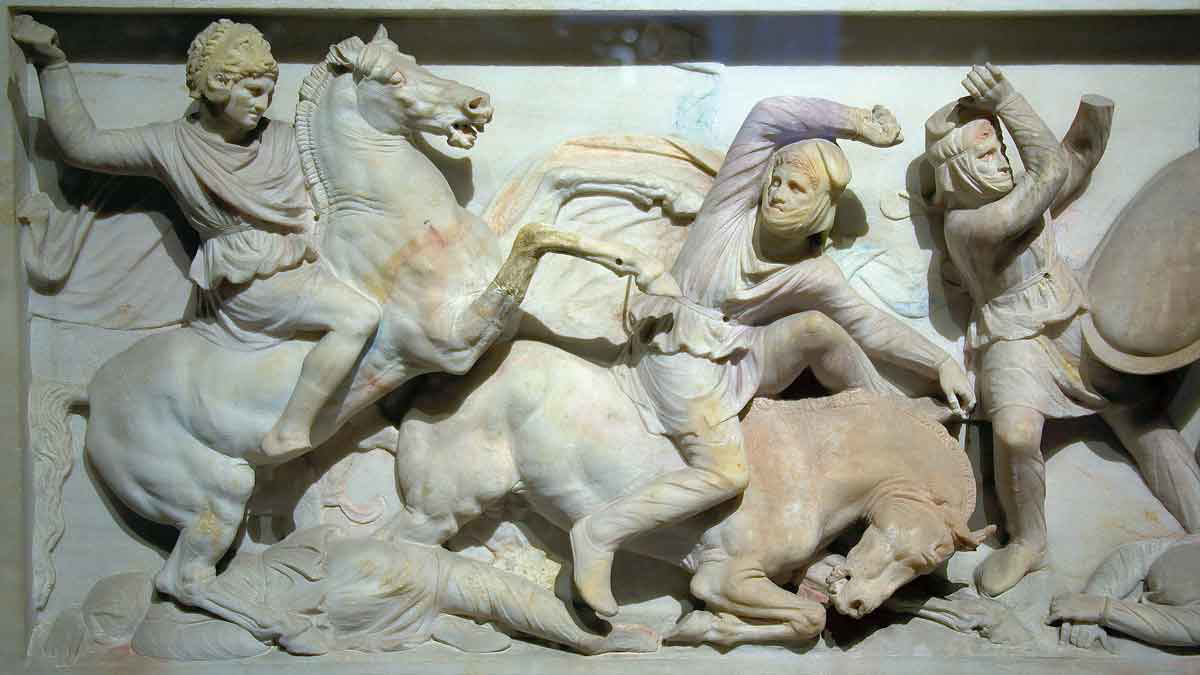
After taking Tyre, Alexander moved south to Egypt. At the Oracle at Siwa, priests proclaimed Alexander the Great a son of Amun-Ra, and Pharaoh of Egypt. Alexander also founded the most famous of his cities — Alexandria ad Aegyptum — which would later become the capital of the mighty Ptolemaic Kingdom. Leaving Egypt in 331 BC, Alexander continued his Persian campaign, advancing deep into Mesopotamia, towards a place called Gaugamela. There, the young conqueror would fight a decisive battle, immortalizing him as Alexander the Great.
By now, it had become painfully clear to Darius III that another defeat would cost him his crown. Thus, he made preparations not to repeat the mistake from Issus. Gaugamela was a wide open plain, ideal for scythe-wheeled chariots. To make the conditions even more favorable, Darius ordered his men to plow and level the terrain to make it as flat as possible. In addition, the Persian army, once again, outnumbered that of Alexander; over 100,000 men against no more than 47,000 Macedonians.
Despite being at a disadvantage, Alexander remained confident. Before the battle, his scouts captured an advance party sent by Darius, enabling them to learn the size and positions of the Persian army. Instead of a night attack, which was advised by his commanders, Alexander decided to wait for dawn, seeing the moon’s eclipse as a sign of certain victory. While his men were well-fed and rested, the Persians were exhausted as they had stayed up the entire night waiting for the attack that never came.
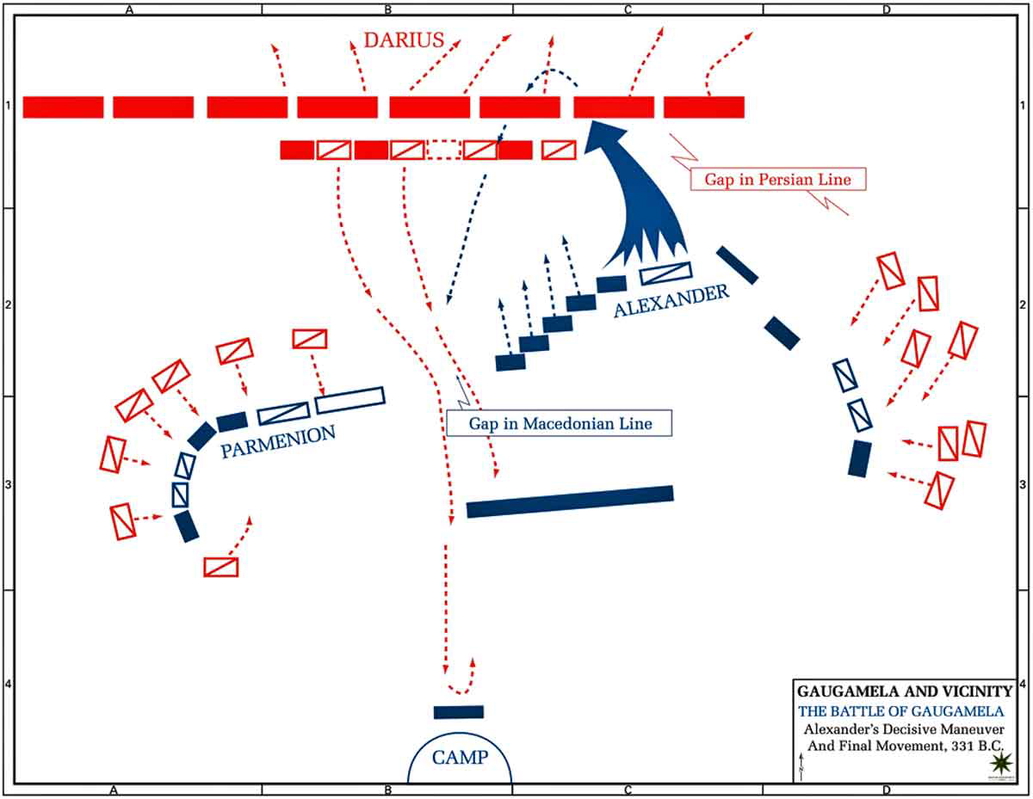
When the battle finally commenced, Alexander executed an unusual strategy. With his best troops, his Companion cavalry, the young commander rode to the edge of his right flank, drawing the Persian cavalry out from the center of Darius’ line to counter him. In doing so, the Persians ended up on less suitable terrain, and an opening was created through which the Macedonian cavalry charged. Meanwhile, Darius’ plan to attack the center, held by heavy infantry under Parmenion’s command, ended in disaster. The phalanx simply moved aside and allowed the chariots through. This was the moment Alexander had been waiting for, and following the infantry attack, the enemy’s battle line shattered. Reportedly, Alexander threw a spear at Darius, narrowly missing the Persian king in his battle chariot.
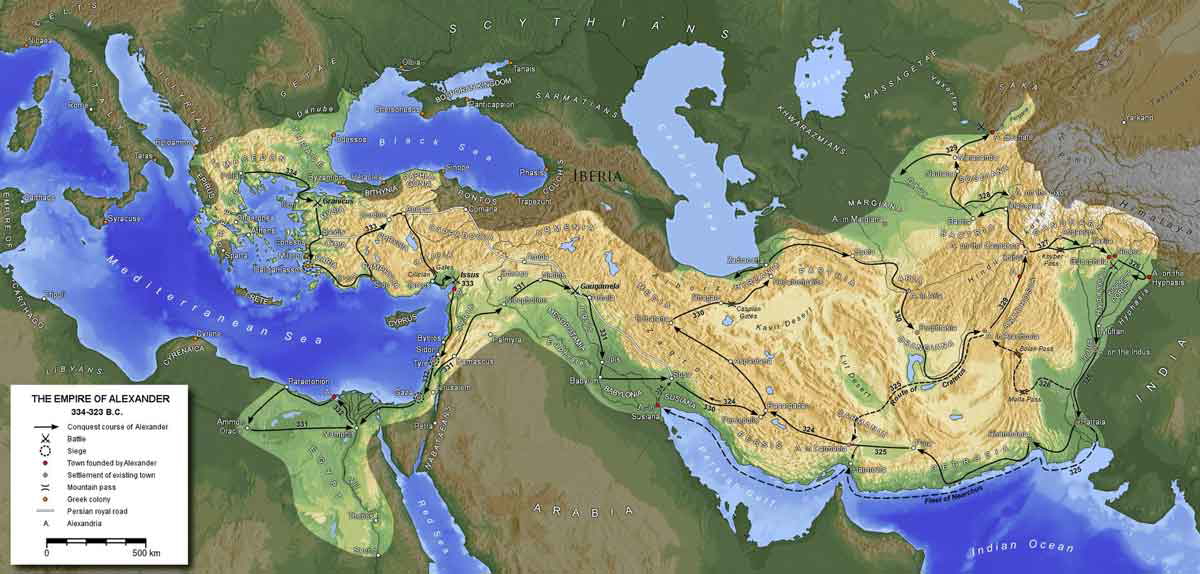
Seeing his army crumbling, Darius panicked and fled the battlefield. The Persian army was no more, and Alexander’s army triumphantly marched into Persepolis, the ancient Persian ceremonial capital, which was then burned following a drunken argument. Finally, in July 330 BC, Darius was murdered on the orders of Bassus, one of his commanders. Although resistance continued in the northeast, most of Darius’ governors surrendered. Alexander was now the master of the Persian Empire. The victory at Gaugamela and the destruction of the Persian army brought an end to the Achaemenid Empire and opened up territory all the way to India for Greek invasion and conquest, resulting in the creation of the Hellenistic Kingdoms.