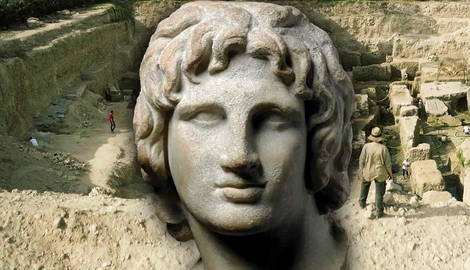
Alexander the Great, one of the world’s most famous historical figures, was initially buried in Memphis, one of the capitals of ancient Egypt. Later, his body was transferred to the new capital of Hellenistic Egypt, Alexandria, where it was reburied in a grand mausoleum. This became a revered pilgrimage site, attracting several Roman emperors. However, like most of the ancient metropolis, Alexander’s tomb’s location is now lost, submerged beneath the sea, buried under modern-day Alexandria, or hidden in the countryside. But to add to the mystery, his body may have been removed from Egypt centuries ago.
Why Was Alexander the Great Buried in Egypt and Not Macedon?
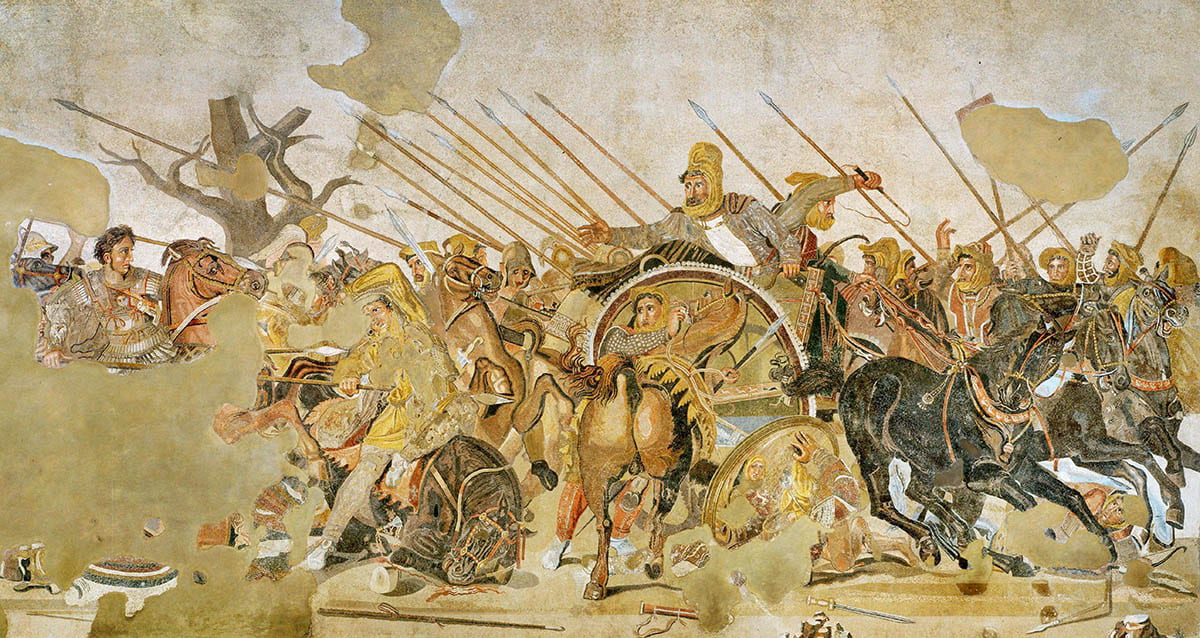
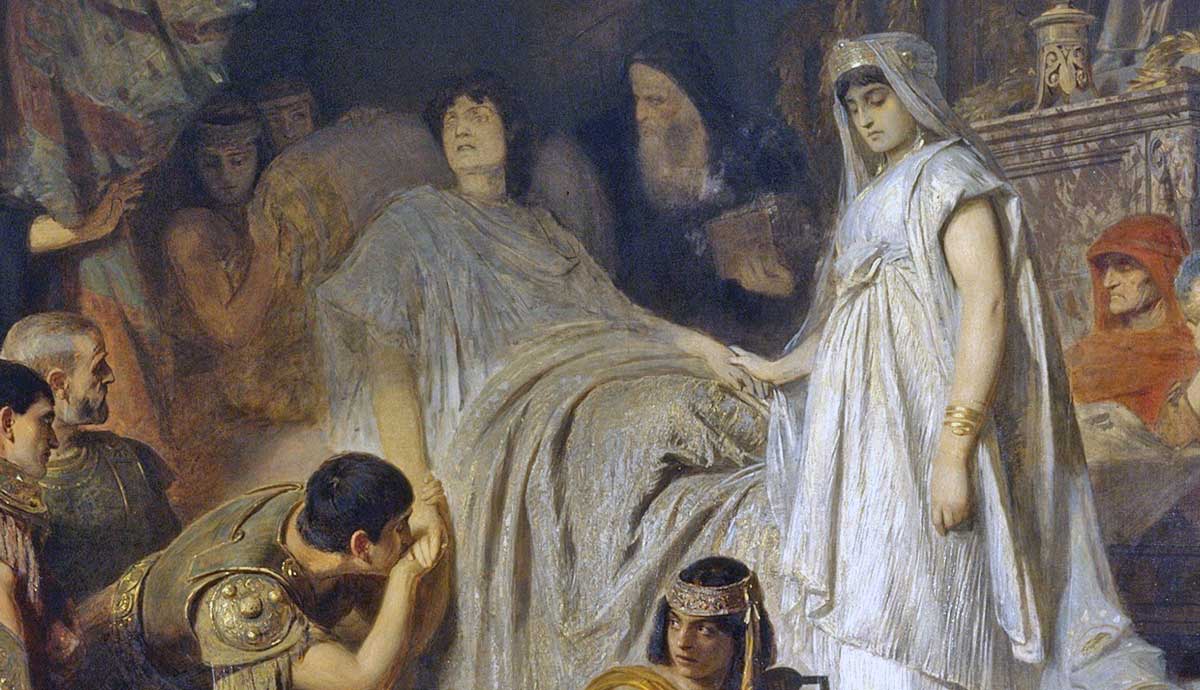
By the age of 32, Alexander the Great had conquered a large portion of the known world, toppling Achaemenid Persia and creating an empire that stretched from Greece and Egypt in the west all the way to India in the east. Alexander would probably have expanded his Empire further if not for his sudden death in Babylon in 323 BC. Following his demise, Alexander’s generals and successors – the diadochi – fought for control of portions of Alexander’s empire.
In the initial settlement following Alexander’s death, Ptolemy was made satrap (governor) of Egypt, but he had bigger ambitions. Looking to expand his influence, he leveraged Alexander’s memory, spreading the rumor that he was the conqueror’s illegitimate half-brother. Then, when Alexander’s body was finally ready for transport from Babylon to Macedon for burial, Ptolemy intercepted the body and took it to Egypt. While Perdiccas, the regent of the Macedonian empire, tried to reclaim it, he failed.
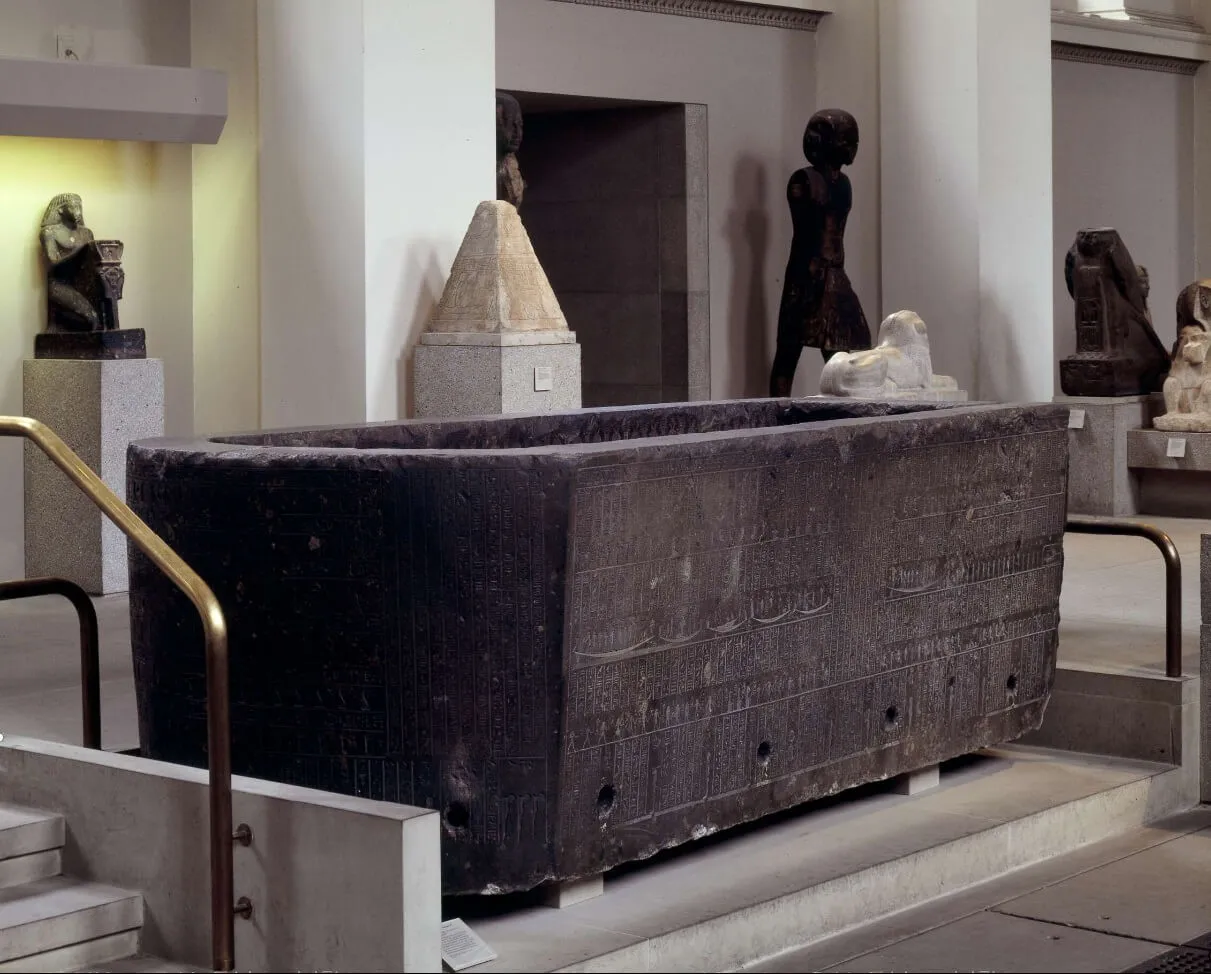
Alexander’s body was initially interred in Memphis, Egypt’s then capital. This was probably meant to be temporary, as rather than start to build a new structure, the body was placed in the Temple of Nectanebo II, the last native pharaoh. This was within the Serapeum of Saqqara, the massive necropolis of Memphis. The structure was only a few decades old, and the sarcophagus that had been prepared for the pharaoh was empty, because he had fled Egypt. One story even claimed that he had fled to Macedon and was Alexander’s true father, but Alexander was already born by the time Nectanebo II fled Egypt. The story probably emerged from Alexander’s time in his tomb.
In Memphis, Alexander’s body acted as a relic that served to legitimize Ptolemy as Alexander’s successor in Egypt.
Alexander’s Body Was Moved to a Grand Royal Complex in Alexandria
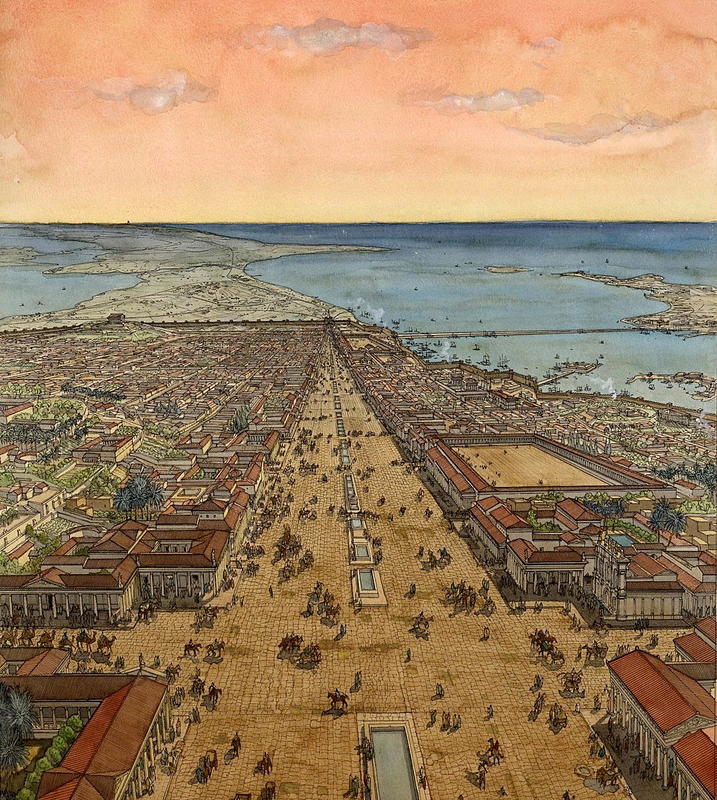
Shortly before his death, Alexander the Great expressed his wish to be buried in the Siwa Oasis, in the temple of Zeus Ammon, whom he considered his divine father. Alexander may have considered this a final expression of his divinity, but Ptolemy could not leave his body in the wilderness. Instead they started to construct a monumental mausoleum for Alexander in the new Hellenistic capital of Egypt, Alexandria, which would also function as a temple.
Construction took place in two phases. The first started around 280 BC under Ptolemy II Philadelphus, and was a grand Macedonian-style vaulted tomb within the Basileia, the royal palace quarter. Alexander’s body was transferred there in 274 BC.
This was then replaced by a spectacular, communal mausoleum that was started much later, around 215 BC. It was called the Soma (from the Greek σῶμα, which means “body”) or Sema (from the Greek σῆμα meaning “grave sign or marker”). More than just a tomb for Alexander, it was surrounded by the tombs and shrines of the entire Ptolemaic dynasty. For nearly 300 years, the Ptolemaic kings and queens of Egypt were laid to rest in the shadow of Alexander. It became the central focal point for Egypt’s royal cult. Grand festivals, athletic games, and poetry competitions were held in the surrounding district, blending Greek civic celebration with mystical Egyptian funerary reverence.
The exact location of Alexander’s mausoleum within Alexandria remains a mystery, as today the old royal quarter of Alexandria lies underwater.
Alexander’s Tomb Became a Pilgrimage Site
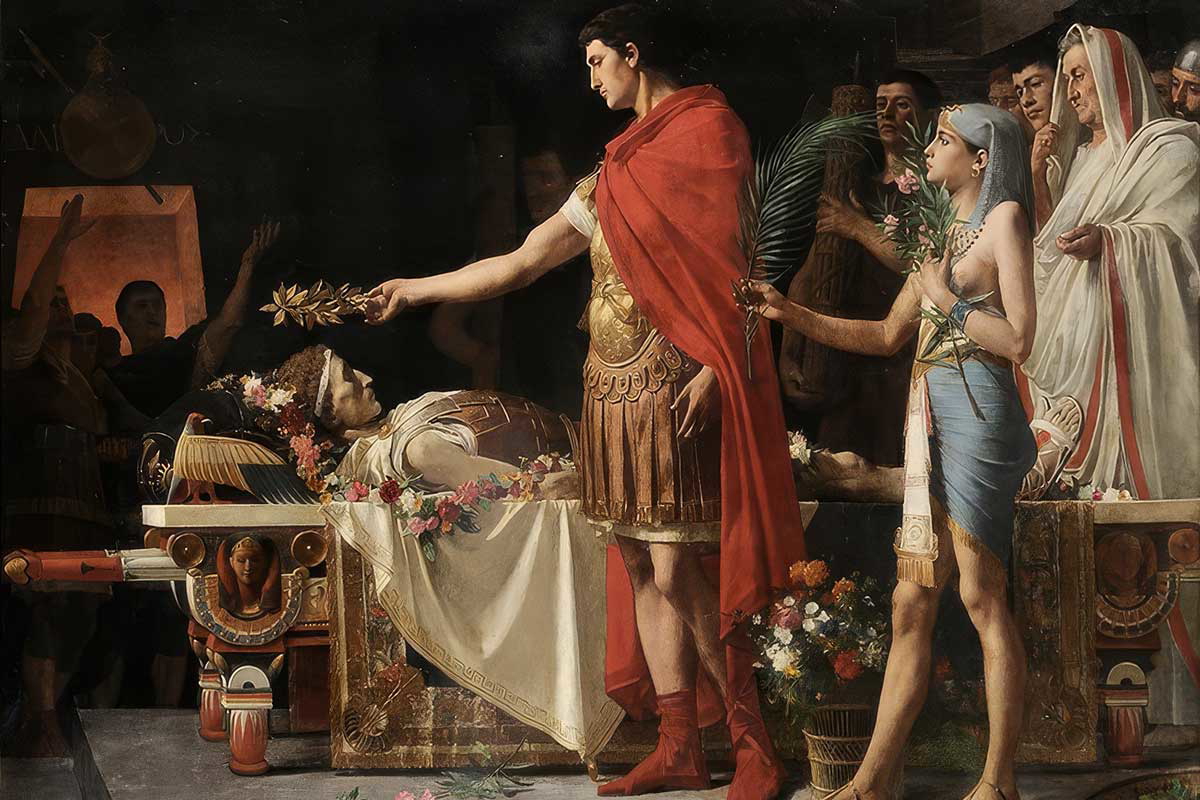
Over the following centuries, many famous figures visited the final resting place of the legendary conqueror. Julius Caesar paid his respects when he arrived in Alexandria following Pompey the Great’s death. The first Roman emperor – Augustus – also visited Alexander’s mausoleum following his victory at Actium, which made him the sole master of the Roman world. He made Egypt a Roman province that was the personal possession of the Roman emperor.
These visits were not merely acts of respect but powerful political statements as the emperors sought to draw parallels with their idol, Alexander the Great. Emperor Caligula is said to have taken the conqueror’s breastplate, while Caracalla reportedly placed his own tunic, ring, belt, and some other precious items on the coffin, symbolizing a transfer of martial virtue from the ancient conqueror to himself.
Alexander the Great’s Tomb is Now Lost
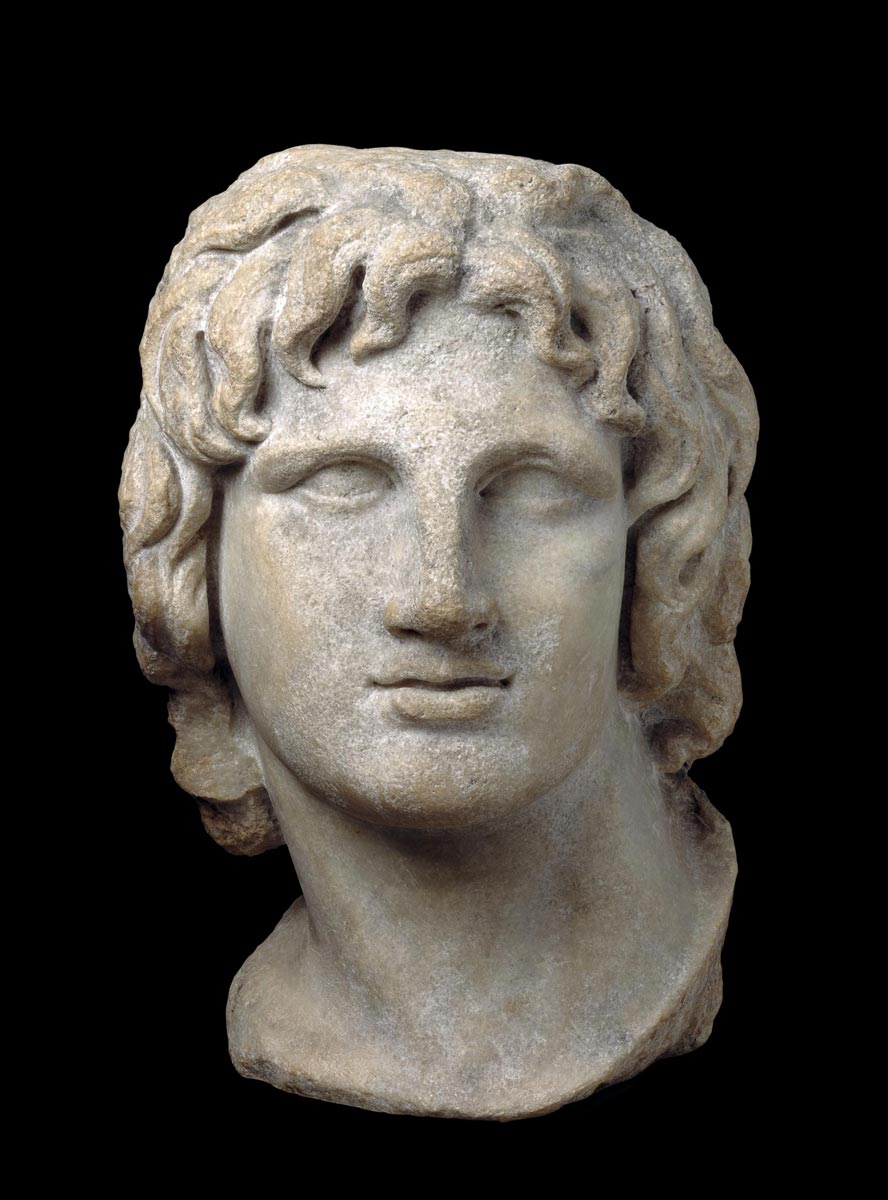
While the Soma was one of Alexandria’s most famous landmarks, it mysteriously disappeared when Egypt was still under Roman rule. The last verified visit to the tomb was by Caracalla in AD 215. The writer Libanius also mentions Alexander’s mummy still being on display just before AD 390.
This timeline suggests that Alexander’s tomb, which was also a cult center for the dead king, fell foul of the Theodosian Decrees of 389 and 391, in which the Emperor Theodosius ordered the closure of pagan temples across the empire. Saint Cyril of Alexandria mentions that the cult centers of Alexander were stripped of their treasures on Theodosius’ orders, but without mentioning the tomb specifically.
By the early 400s AD, Saint John Chrysostom wrote a famous sermon mocking the pagans, asking: “Where is the tomb of Alexander? Show it to me!”
However, even after the Arabs took control of Alexandria in the 7th century following the Battle of Yarmuk, the historians and visitors to the city reported having seen the conqueror’s tomb. The last mention dates back to the 16th century, when the once-proud metropolis had been reduced to a coastal village.
But What Happened to Alexander’s Body?
But when Alexander’s tomb lost its importance, was Alexander’s body left there and forgotten about? This is a topic of significant debate. While many argue that his body remained in Alexandria, some argue that his body was removed to another location.
One school of thought suggests that his body was moved to the Siwa Oasis, with Alexander finally getting his wish. However, none of the surviving sources suggest a Siwa tomb, and there is no compelling archaeological evidence. Another suggests that his body was finally sent back to Macedon, but again, there is no textual or archaeological evidence to support this claim.
One of the most intriguing new theories to emerge, led by archaeologist Andrew Chugg, is that Alexander is in Venice, erroneously identified as St Mark the Evangelist. St Mark was martyred in Alexandria in the 60s AD. For the first 350 years after his death, Christian sources maintained that his body had been burned and destroyed. However, in 392, the writings of St Jerome state that the body of St Mark was in Alexandria.
This suggests that Mark’s body somehow miraculously reappeared in Alexandria in 392, the year after the Theodosian decrees, and just after Alexander’s body disappeared in 390. This is when pagan sites were forced to close or rebrand themselves as Christian. The site of St Mark’s supposed tomb in Alexandria is close to where researchers think Alexander’s tomb was located.
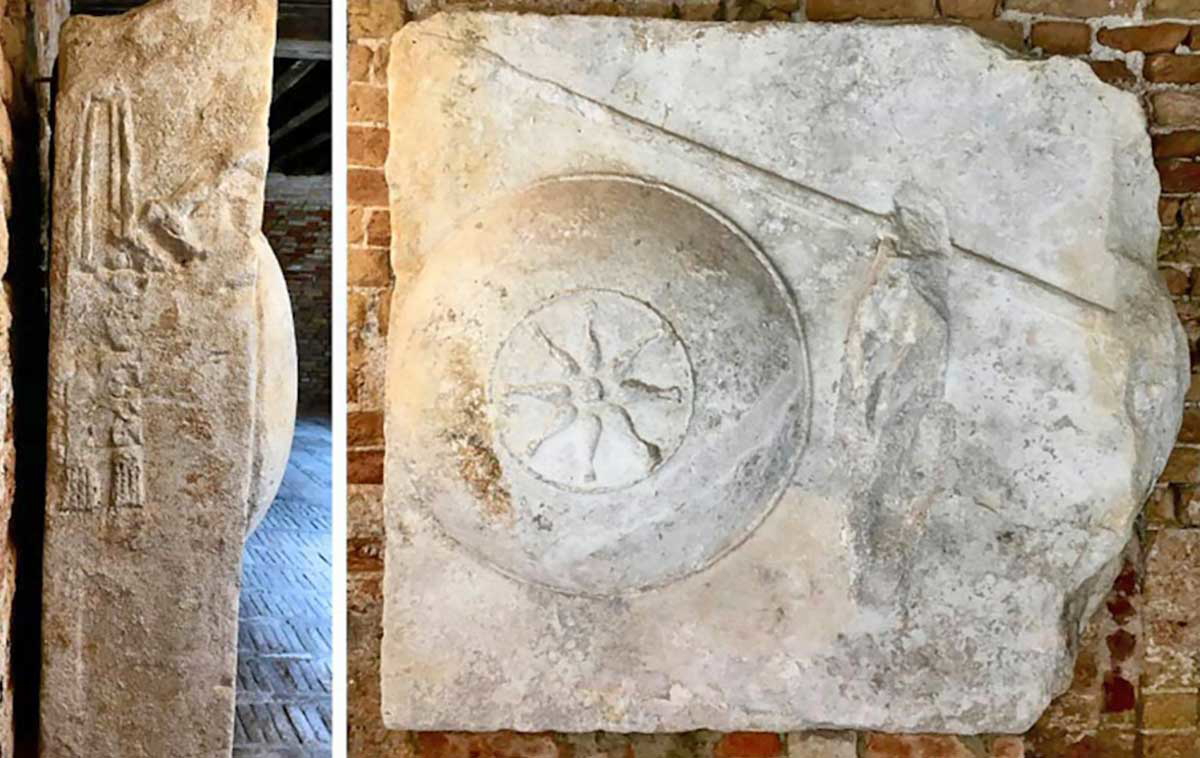
Venetian merchants stole the remains of St Mark in 892, taking them back to Venice, where they are now held in the Basilica di San Marco. According to Chugg, this was actually the body of Alexander, rebranded. His theory is potentially supported by a stone relief discovered in the Venetian Basilica that bears Macedonian-style art, depicting a shield with the star of Alexander’s royal house and a distinctive sarissa spear wielded by Alexander’s armies.
This is a mystery that may be solvable if permission is given to forensically examine the body. So far, it has not been forthcoming.