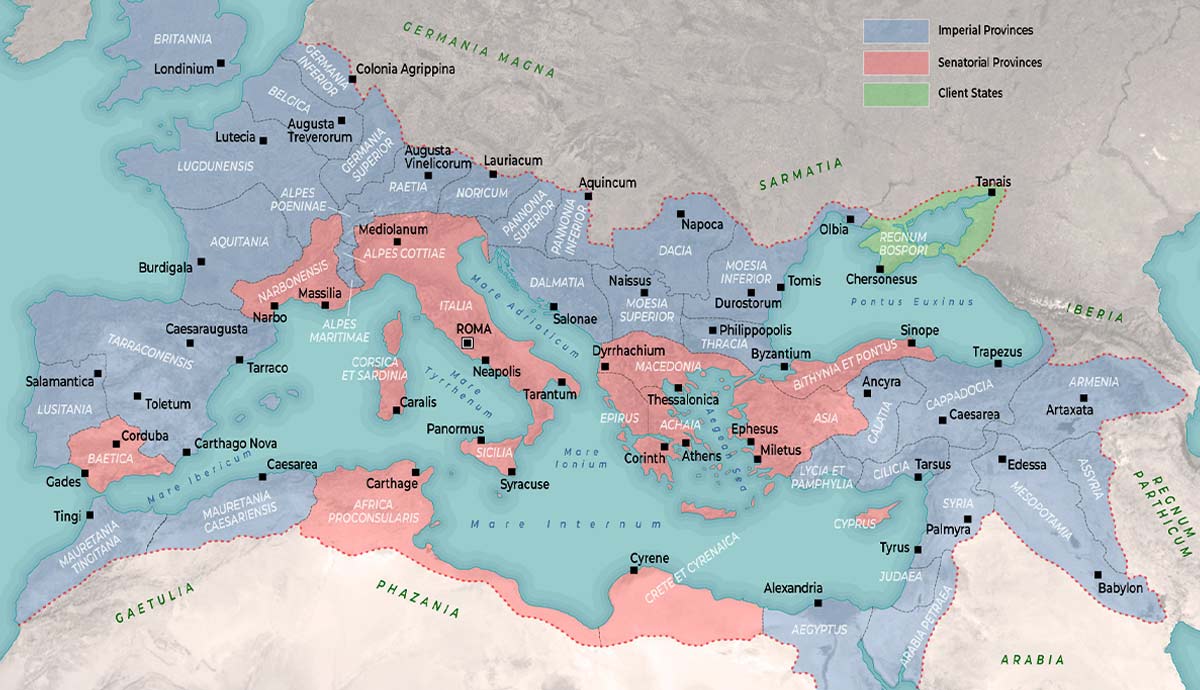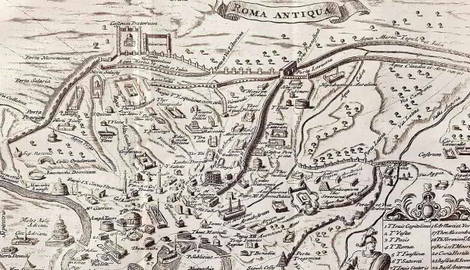

Rome was famously constructed around seven hills. The hills initially hosted separate settlements, but as they gradually came together, the Romans drained and occupied the marshy valleys between the hills to create the sprawling city that grew to dominate the ancient world. In the 4th century BC, the Servian Walls were built to enclose the hills, officially delineating the city, even as its growing population spilled beyond. Each hill had a different character, with different histories, monuments, and neighborhoods, which contributed to life in the city of ancient Rome.
| Hill Name | Ancient Character & Identity | Famous Ancient Monuments | What to See Today |
| Palatine Hill | The Imperial Cradle: Where Romulus founded Rome; later became the exclusive, wealthy home of Roman Emperors. | * Imperial Palaces (Domus Augustana)
* Temple of Apollo | Palatine Archaeological Park and museum ruins. |
| Capitoline Hill | The Religious Citadel: The smallest hill; served as Rome’s defensive fortress and the sacred heart of the state. | * Temple of the Capitoline Triad
* Tarpeian Rock (execution site) | Piazza del Campidoglio (by Michelangelo) & Capitoline Museum. |
| Esquiline Hill | The Gentrified Giant: The largest hill; evolved from a poor burial ground into an elite district of grand gardens. | * Nero’s Domus Aurea (Golden House)
* Baths of Trajan & Diocletian | The Colosseum (built over Nero’s private lake) & Santa Maria Maggiore. |
| Aventine Hill | The Plebeian Stronghold: Remus’s preferred site; long associated with the working class and foreign religious cults. | * Temple of Diana
* Temples to foreign gods | The Orange Garden and the famous Aventine Keyhole view. |
| Quirinal Hill | The Elite Suburb: Originally settled by the Sabines; grew into a highly fashionable, upper-class residential neighborhood. | * Gardens of Sallust
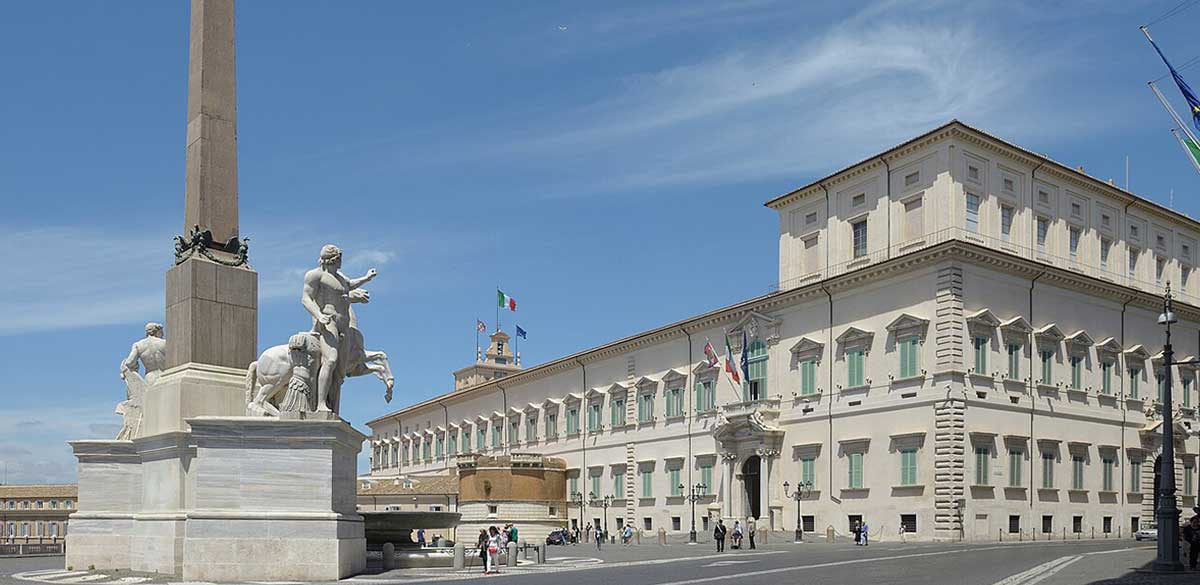
* Constantine’s Public Baths | The Quirinal Palace (official residence of the Italian President). |
| Viminal Hill | The Working-Class Hub: A bustling, middle-class neighborhood dominated by trade, artisan shops, and residential apartments. | * Baths of Diocletian
* Castra Praetoria (Praetorian Guard barracks) | Termini Station area and the Basilica of St. Mary of the Angels. |
| Caelian Hill | The Wealthy Military District: First settled by refugees of Alba Longa; later home to lavish mansions and military barracks. | * Temple of Divus Claudius
* Castra Peregrina (Secret Service HQ) | Historic medieval churches, including San Clemente and Santo Stefano Rotondo. |
The Seven Hills
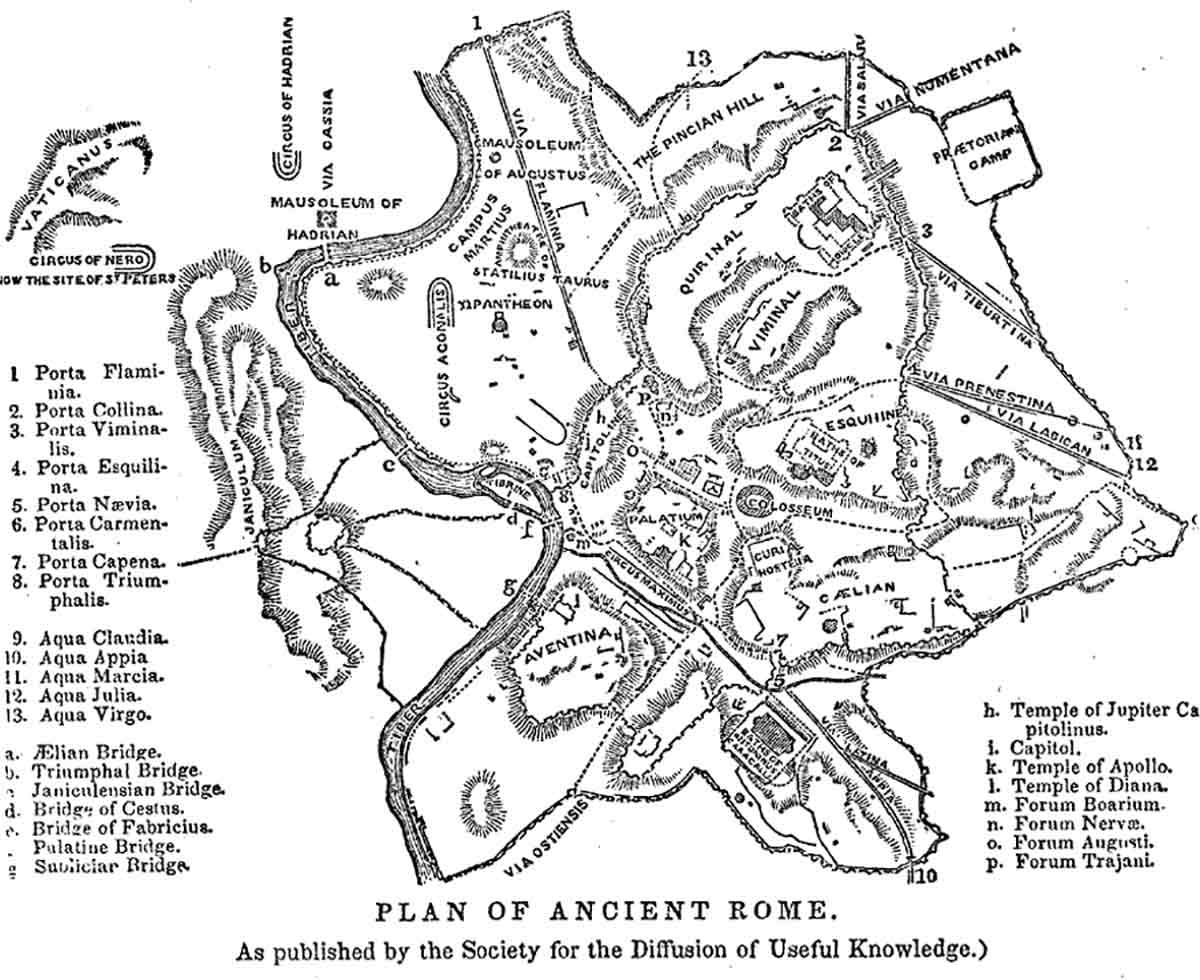
The modern city of Rome covers more than seven hills, but the seven hills enclosed by the Servian Walls include the Palatine, Capitoline, Esquiline, Aventine, Quirinal, Viminal, and Caelian hills. The first to be occupied was the Palatine, where Romulus set the foundation for the city. As the population expanded, sometimes by forced migrations, they occupied nearby hills. As the inhabitants of the various hills became more integrated, they drained the marshlands between the hills to create a more connected city.
The number seven was significant to the Romans, as it represented wholeness and completeness. It is no coincidence that they also reportedly had seven kings. According to Varro (De Lingua Latina 6.24), in ancient times, the Romans celebrated their seven hills during the festival of the Septimontium. Later authors such as Cicero (Ad Atticum 6.5.2), Virgil (Aeneid 6.783; Georgics 2.534), and Tibullus (2.5.55) often refer to Rome as the Septem Montes, suggesting that this was a common pseudonym for the city. However, nowhere is a definitive list of the names of the seven hills listed.
Some sources list alternative hills, such as the Velia, which was a ridge that connected the Palatine and Esquiline hills. Others include different regions of the same hill under different names, such as the Cermalus and Oppius, which are both part of the Esquiline Hill (Festus 348). These probably reflect the names of separate villages before the city became more integrated. Later, Rome was expanded to include the Janiculum Hill under Augustus, and later the Pincian and Vatican hills. Nevertheless, most agree on the list of seven hills given above.
Palatine Hill
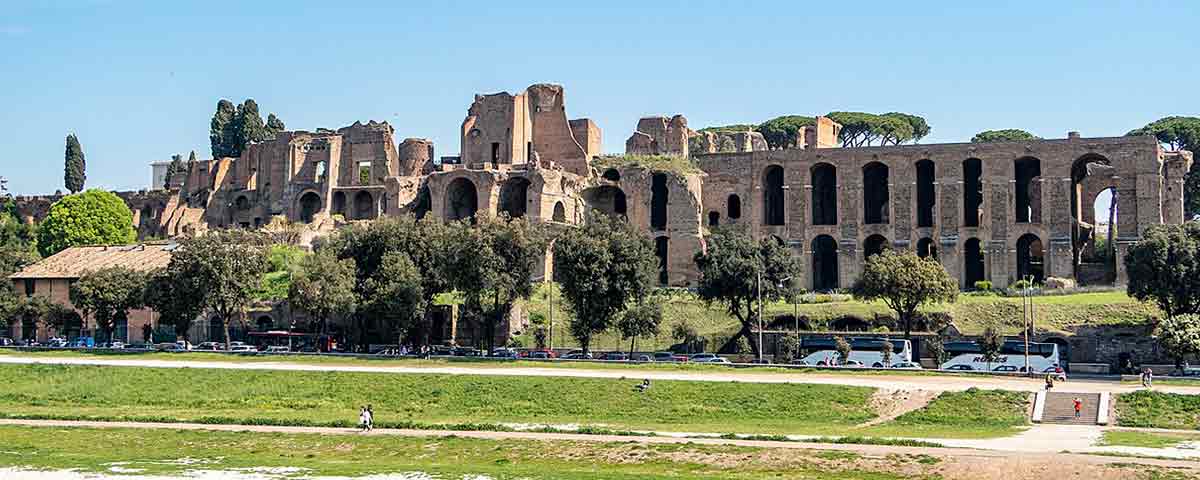
According to legend, the Palatine Hill was the first hill of Rome, a suggestion supported by archaeology, which shows it was inhabited from the 9th or 8th century BC.
The story goes that, in 753 BC, the brothers Romulus and Remus decided to establish a new settlement on the banks of the Tiber, where they had been exposed as babies by their uncle, only to be saved and suckled by a she-wolf. However, they could not agree on exactly where to build their new settlement. Romulus argued that the Palatine Hill was the best location, while Remus preferred the Aventine Hill.
The brothers decided to look to the skies for a sign in the form of an augury, which is a divinely inspired flight of birds. Remus first saw six vultures, claiming it as confirmation of his choice. Romulus then saw twelve vultures and argued that the greater number outweighed the earlier appearance. The details are unclear, but in the confusion that ensued, Remus was killed, and Romulus established the city of Rome on the Palatine.
By the time of the Roman Republic, the Palatine had become a wealthy area occupied by noble patrician families. This makes sense within the context of the Roman foundation myth, as the earliest settlers and allies of Romulus would have established their homes on the Palatine. This included the Julian gens, which claimed descent from the Trojan hero Aeneas through his descendant Romulus.
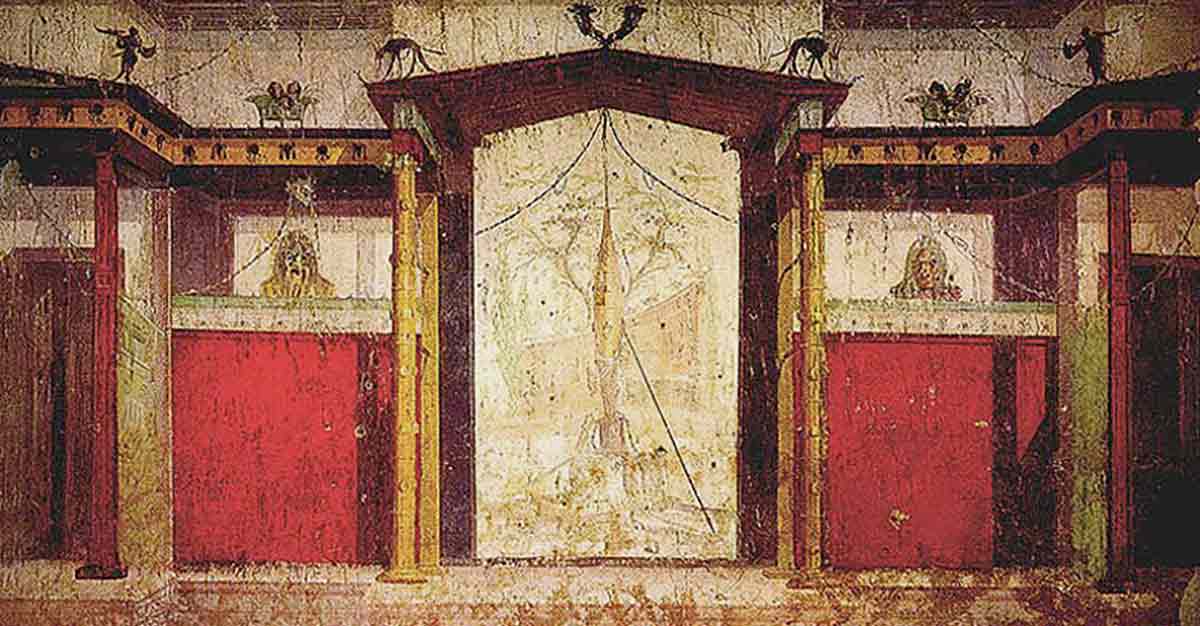
Octavian Caesar purchased a property on the Palatine Hill to be his home in 40/41 BC. He then promised to build a temple to Apollo on the Palatine next to his home following his success against Sextus Pompey at the Battle of Naulochus. He called on the patronage of the god again against Mark Antony at the Battle of Actium in 31 BC. He finally dedicated the completed temple on October 9, 28 BC. He treated it as a kind of antechamber to his relatively modest home, greeting people on the steps of the temple. This would have reinforced the idea that he was the god’s chosen savior of Rome.
Augustus’ decisions also made the Palatine the focal point for imperial residency. The emperor Domitian built a vast palace residence known as the Domus Augustana on the hill in 92 AD. The Antonine emperors continued to use the palace despite vilifying Domitian and even subjecting him to damnatio memoriae. The word palace comes from the name of the hill.
With the decline and fall of imperial Rome, the hill was largely abandoned, with many of its monuments mined for building materials and much of the area converted into gardens.
Capitoline Hill
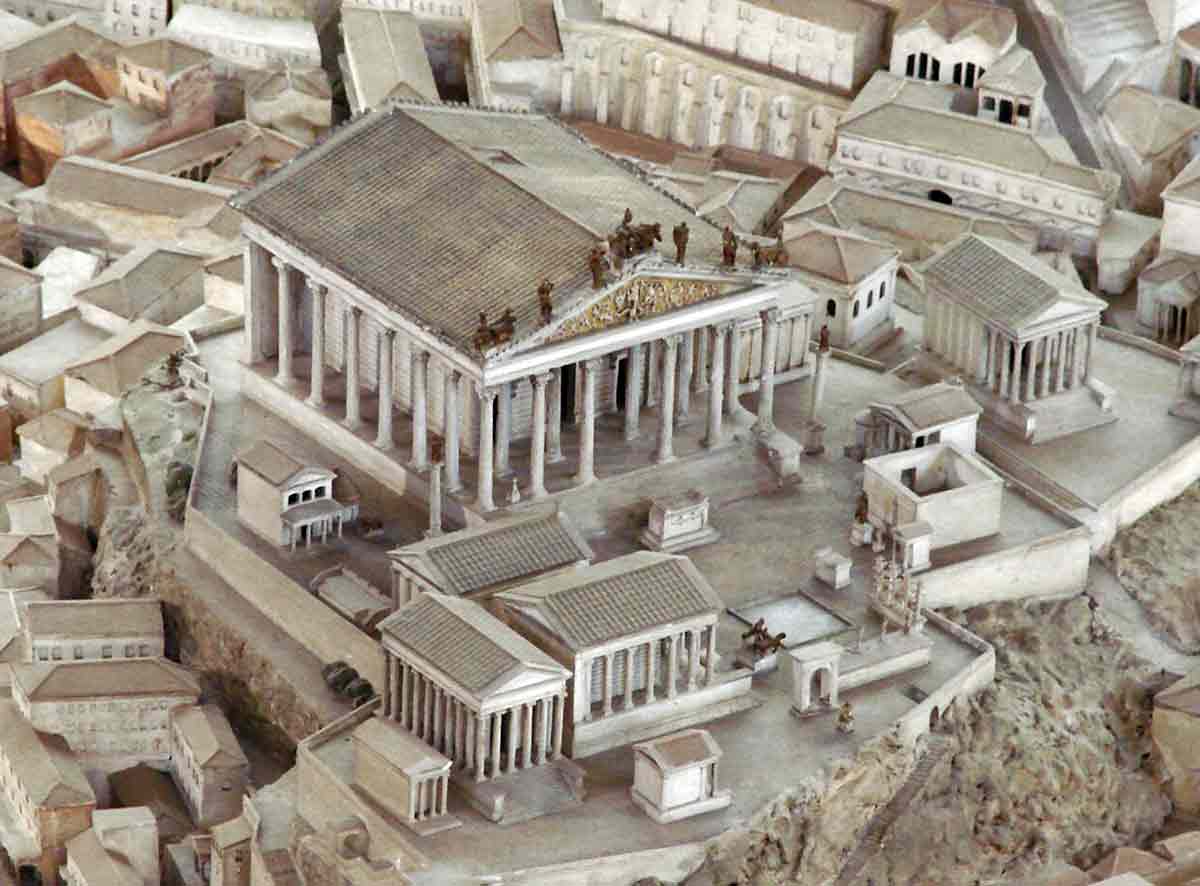
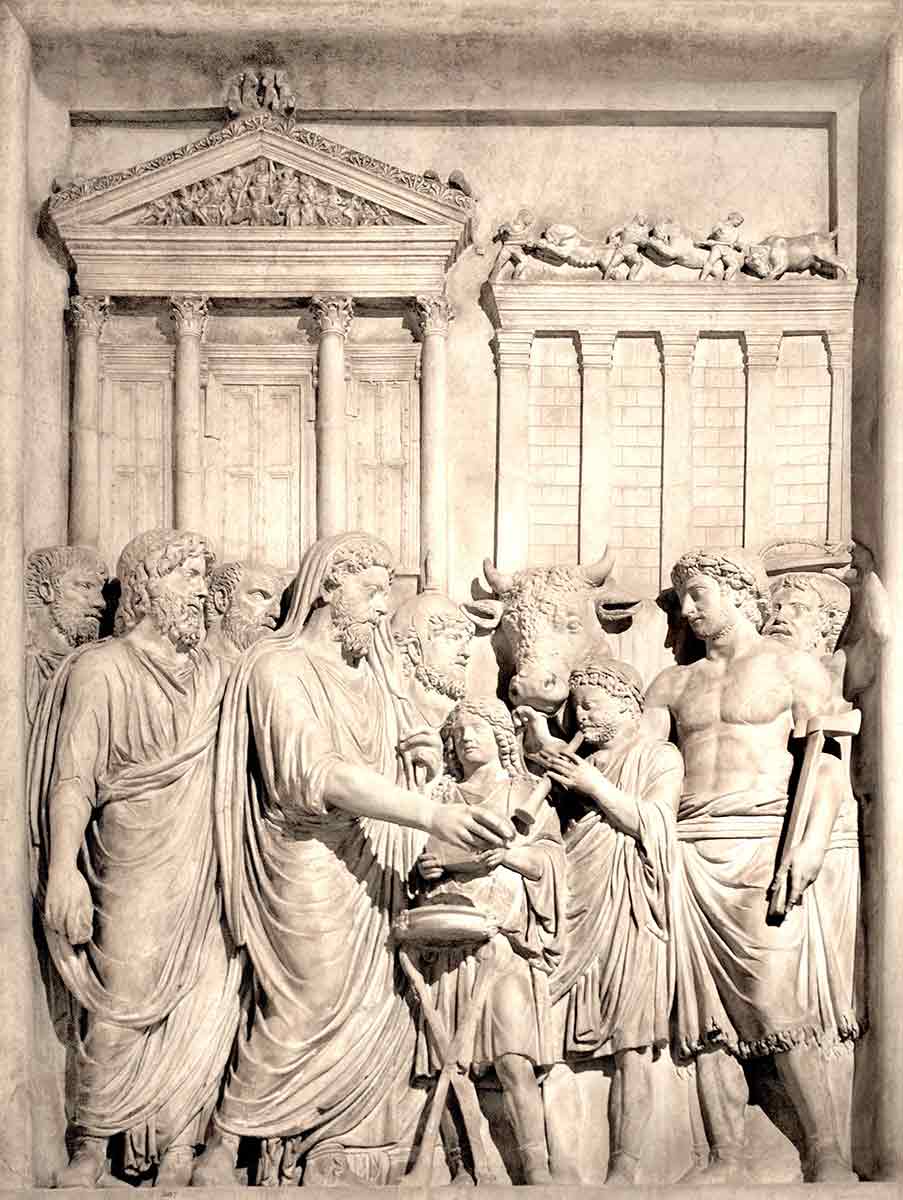
Despite being the smallest of Rome’s hills, the Capitoline Hill may be its most famous, as it was the religious hub of the city and the focal point for state religious ceremonies. For example, Roman triumphal processions ended with sacrifices and dedications of the spoils of war on the Capitoline Hill.
It was also the city’s defensive citadel. When the Gauls attacked the city in 390 BC, most of the inhabitants who remained behind occupied and defended the Capitoline. Reportedly, when the Gauls tried to attack under the cover of night, the sacred geese of the goddess Juno alerted the defenders and enabled them to deflect the attack. The temple of Juno Moneta and the Roman mint were also on the Capitoline.
According to legend, following Romulus’ organization of the Rape of the Sabine Women, the Sabine king Titus Tatius besieged Rome. He was let into the city by a Vestal Virgin called Tarpeia, who was the daughter of the commander Spurius Tarpeius on the citadel hill. She offered them entry in exchange for what they wore on their left arms, wanting their gold bracelets. Instead, the Sabines threw their shields, which they carried on their left arms, at her, crushing her to death. She was then thrown from a cliff that became known as the Tarpeian Rock, which became a frequent execution site.
The Sabines did not take the city, but the women, now happily married, convinced their men to join the new Roman settlement. Titus Tatius became co-ruler of Rome with Romulus. The Capitoline Hill was also often called the Tarpeian Hill.
The hill was originally known as Mons Saturnius due to a temple of Saturn at the foot of the hill. It became known as the Capitoline Hill after the dedication of a temple to the Capitoline Triad on the hill under the Roman king Tarquinius Priscus in the early 6th century BC. This is what made the Capitoline the center point for Roman religious life, with rites to the Capitoline Triad, Jupiter Optimus Maximus, Juno Regina, and Minerva, forming the focus of important rituals.
Esquiline Hill
The Esquiline Hill is the largest of the Roman hills. Nevertheless, in early times, it was used as a dumping ground for rubbish and a burial pit for the poor. This was because burials were not allowed inside the pomerium, the sacred boundary of Rome established by Romulus, and the Esquiline Hill sat just outside that perimeter, with the city later expanding around it.
The burial pits were later covered over, and reportedly, the king Servius Tullius decided to live there to improve the reputation of the region. This is unlikely. Each Roman king is credited with certain types of reforms, and Servius Tullius is mainly associated with championing the lower classes, making this an appropriate fable to tell about the king centuries later.
Nevertheless, the region was later gentrified, with the Gardens of Maecenas established there under Augustus, which also contained libraries and museums. Later, when land was made available by the Great Fire of Rome in 64 AD, Nero built an enormous palace known as the Domus Aurea at the base of the hill, which was known for its grandeur and decadence.
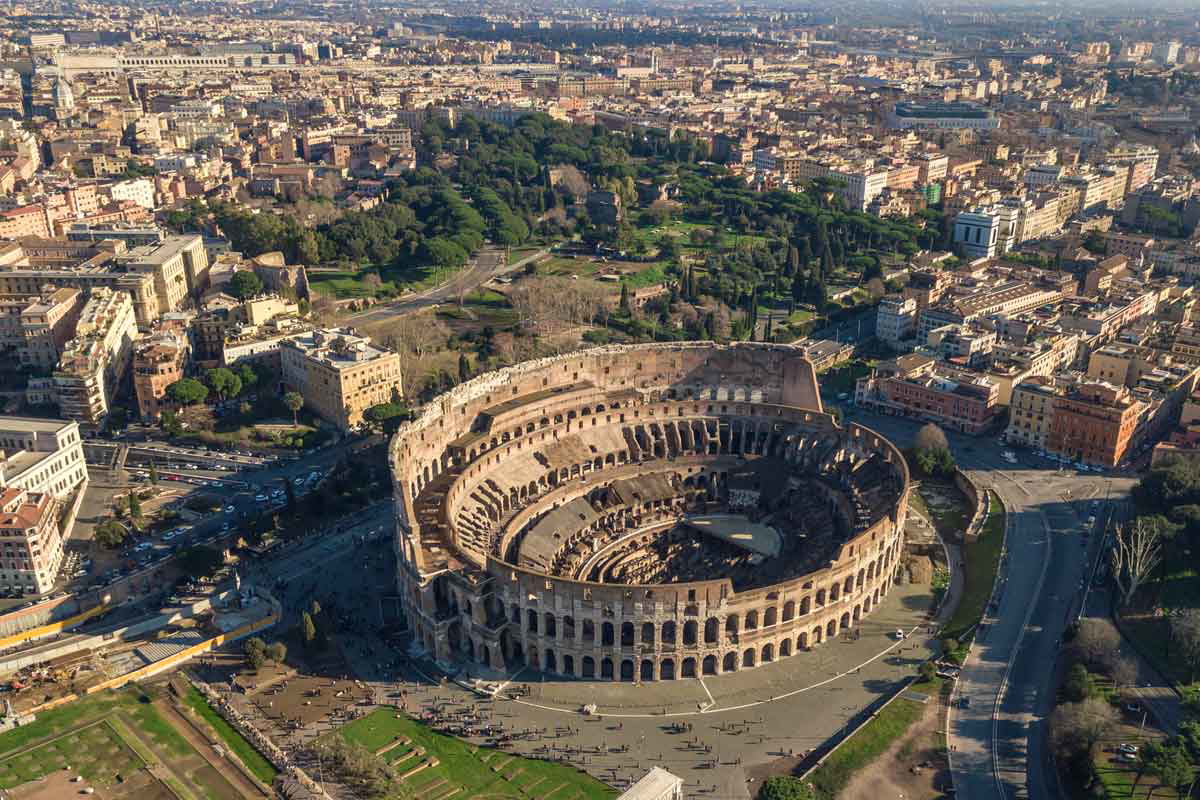
Following the death of Nero, the fall of the Julio-Claudian dynasty, and the rise of the Flavians, Vespasian reclaimed that land and built the Flavian Amphitheatre, repurposing that private imperial land for public spectacles. The stadium was finally dedicated during the reign of his son Titus in 80 AD, with 100 days of spectacular games. The enormous stadium that could hold 50-80,000 people was quickly dubbed the Colosseum because a colossal statue, initially of Nero and later reworked as the god Sol, stood next to it.
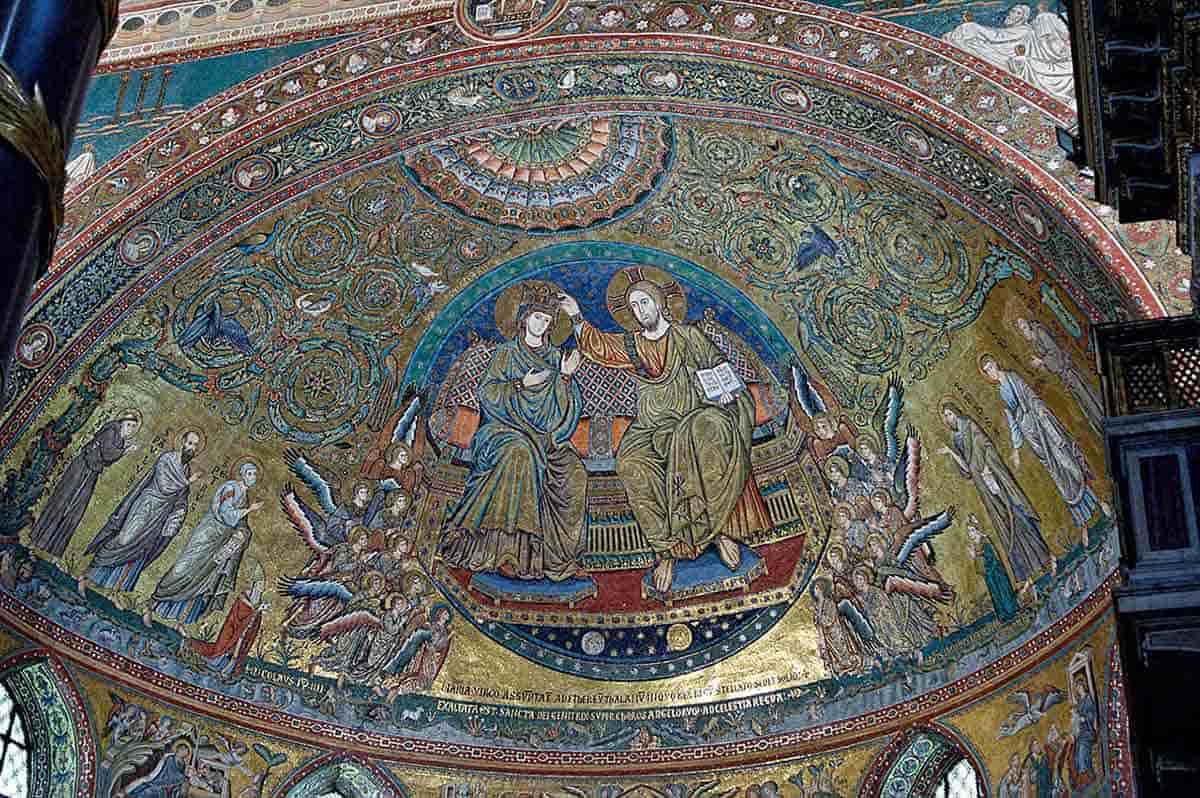
The Esquiline had other important monuments, such as the Baths of Trajan and Baths of Diocletian, some of the city’s largest public baths, and a Nymphaeum. In the 5th century, possibly the first basilica dedicated to the Virgin Mary was established on the Esquiline, the Basilica Santa Maria Maggiore, famous for its 5th-century mosaics.
Aventine Hill
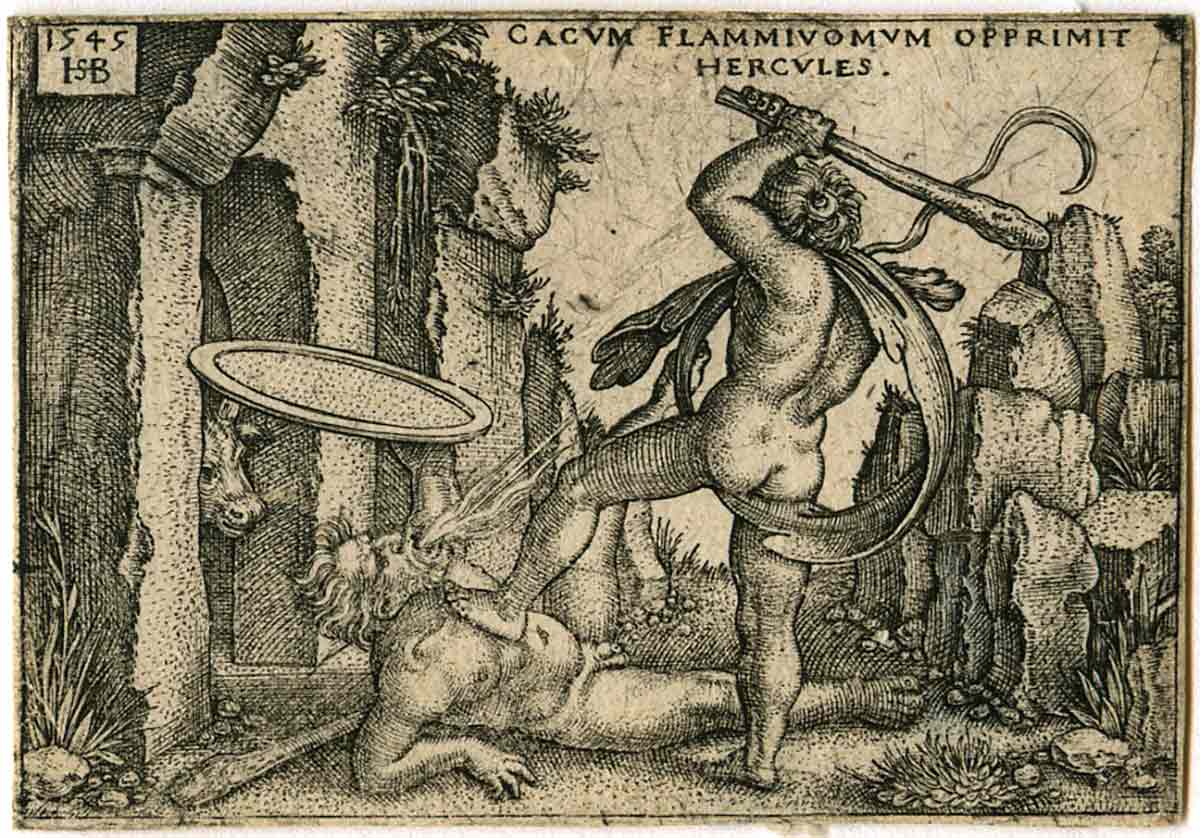
As already mentioned, the Aventine Hill was Remus’ preferred site to create the new settlement with his brother, but he was overruled by Romulus in favor of the Palatine. According to Virgil, before this, Hercules killed the monster Cacus in a cave on the Aventine while stealing Geryon’s cattle as one of his labors.
The most southerly hill, the Aventine lay outside Rome’s original pomerium. For this reason, it was considered an appropriate place for foreign cults, as the pomerium was not extended to include the hill until the reign of Claudius. These included the cults of Ceres, Liber, and Liberia, Italic gods, Vortumnus and Summanus, Etruscan gods, and the mysterious Bona Dea.
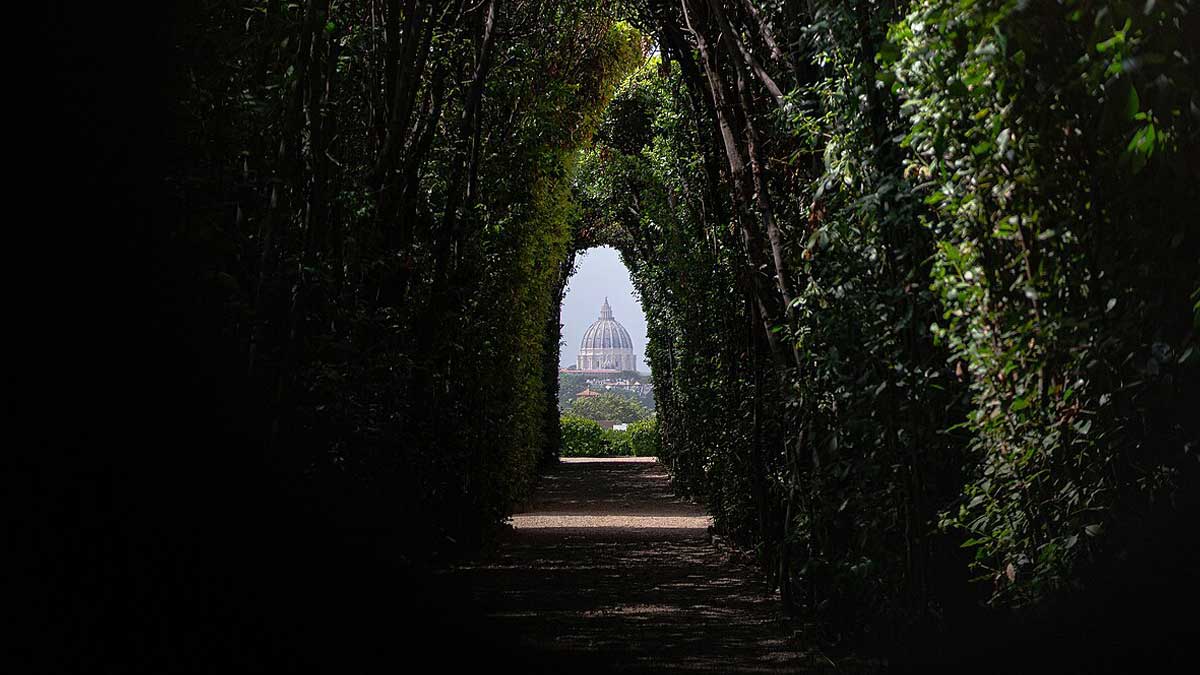
According to Livy, Rome’s fourth king, Ancus Marcius, defeated the Latins of Politorium and settled them on the Aventine. King Servius Tullius reportedly established the Temple of Diana on the hill as a focus for the newly founded Latin League, a confederation of 30 villages in Latium. This made the hill marginal, which allowed it to become a focal point for the plebeian class. It seems likely that the Aventine was considered public land, owned by the state on behalf of the people. Then, in the 5th century BC, laws granted plebeians property rights there.
Under the empire, the hill underwent gentrification, with many aristocrats building homes there. For example, both Trajan and Hadrian had homes there before becoming emperors. This pushed the poorer population off the hill and into the plain below.
Quirinal Hill
The Quirinal Hill was occupied by the Sabines after they made peace with the Romans and erected a temple to their god Quirinus, giving the hill its name. A Sabine presence is verified by Sabine-style tombs dating to the 8th century BC. Some scholars think that the Capitoline Triad was worshiped here until it was moved to the Capitoline Hill.
For most of Rome’s history, it was a well-to-do suburban neighborhood, with people like Cicero’s friend Atticus having a house there. A luxury villa known as the Gardens of Sallust was established there in the 1st century BC. Later emperors built extensively on the hill. Caracalla dedicated a massive temple to the Greco-Egyptian god Serapis in the 3rd century AD. In the 4th century, Constantine built enormous public baths.
The Quirinal Palace was built on the hill in the 16th century as the summer residence of the Pope. It was even used as the location for papal conclaves several times in the 17th century. When Rome became the capital of the new Italian Kingdom in 1870, the Quirinal Palace became the official residence of the King of Italy. It then became the home of the president when the monarchy was abolished in 1946.
Viminal Hill
The Viminal Hill became part of the city of Rome in the 6th century BC and was mostly a middle-class residential area with many artisan workshops. It was named either for willow groves that grew on the hill or for a temple of Jupiter Viminus located there.
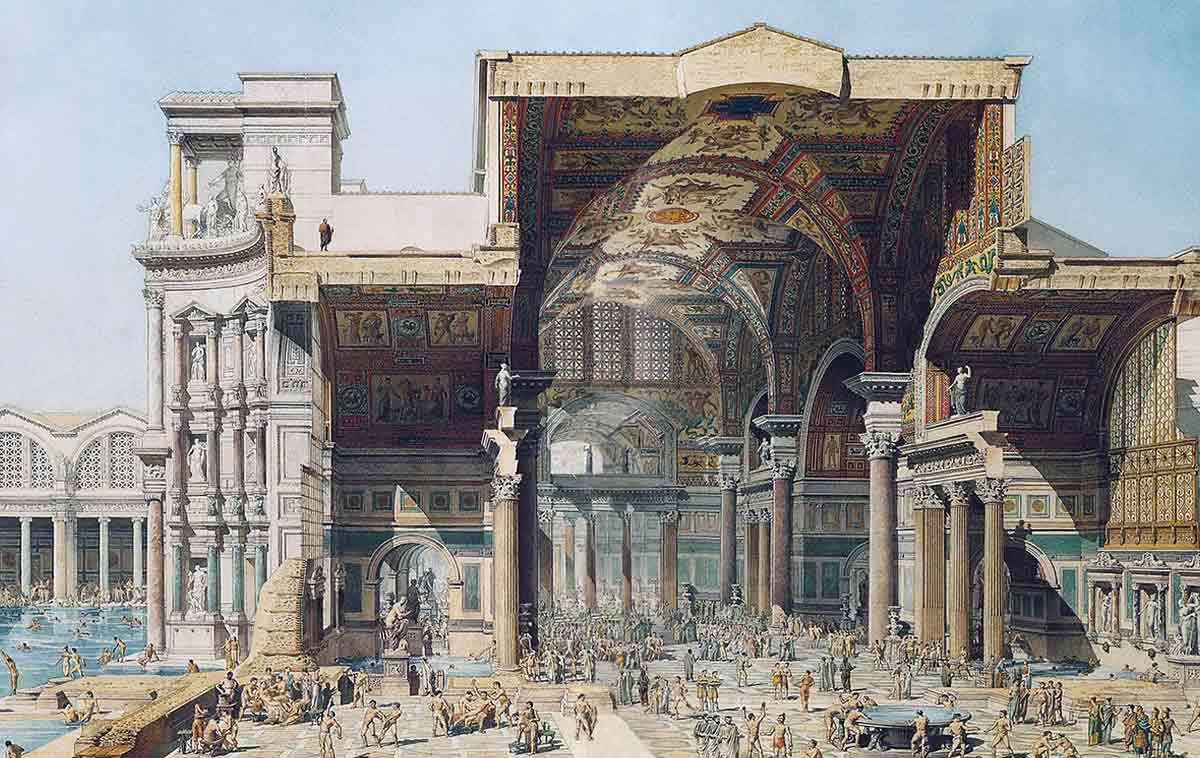
The most famous structure on the hill was the Baths of Diocletian, built in the 4th century AD. These were later incorporated into Michelangelo’s Basilica of Saint Mary of the Angels and the Martyrs. The Castra Praetoria of the Praetorian Guard was also located here.
Caelian Hill
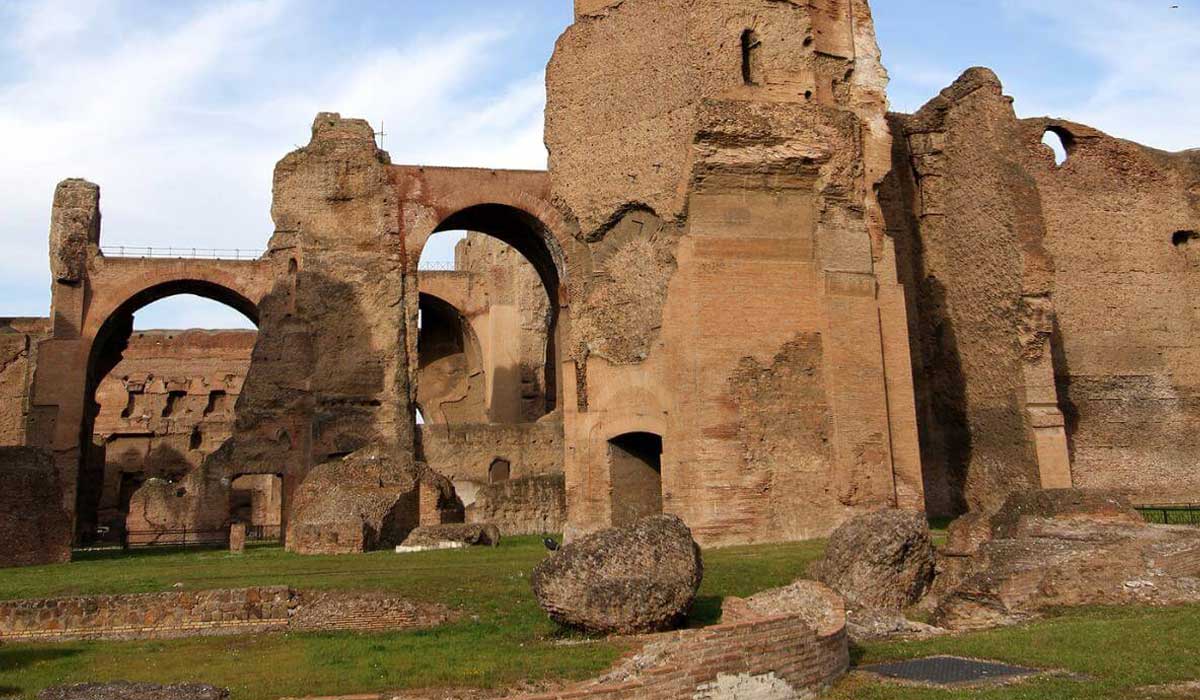
According to Rome’s legendary history, the Roman king Tullus Hostilius forcibly settled the population of Alba Longa on the Caelian Hill, incorporating them into the Roman population.
It later became a fashionable residential area for the wealthy. Pliny the Elder said that Julius Caesar’s corrupt soldier Mamurra built the first house there encrusted with marble. Under the empire, the Temple of Divus Claudius, one of many posthumously deified Roman emperors, was constructed there. The Caelian Hill clearly continued to be affluent, with the emperor Marcus Aurelius born there in 121 AD.
The Caelian Hill also became a military hub, with several barracks built there for capital troops, including the Castra Peregrina under Trajan, which was the headquarters of the Roman secret service. When Constantine disbanded them in the 4th century, the barracks were replaced by a new basilica dedicated to the Messiah.