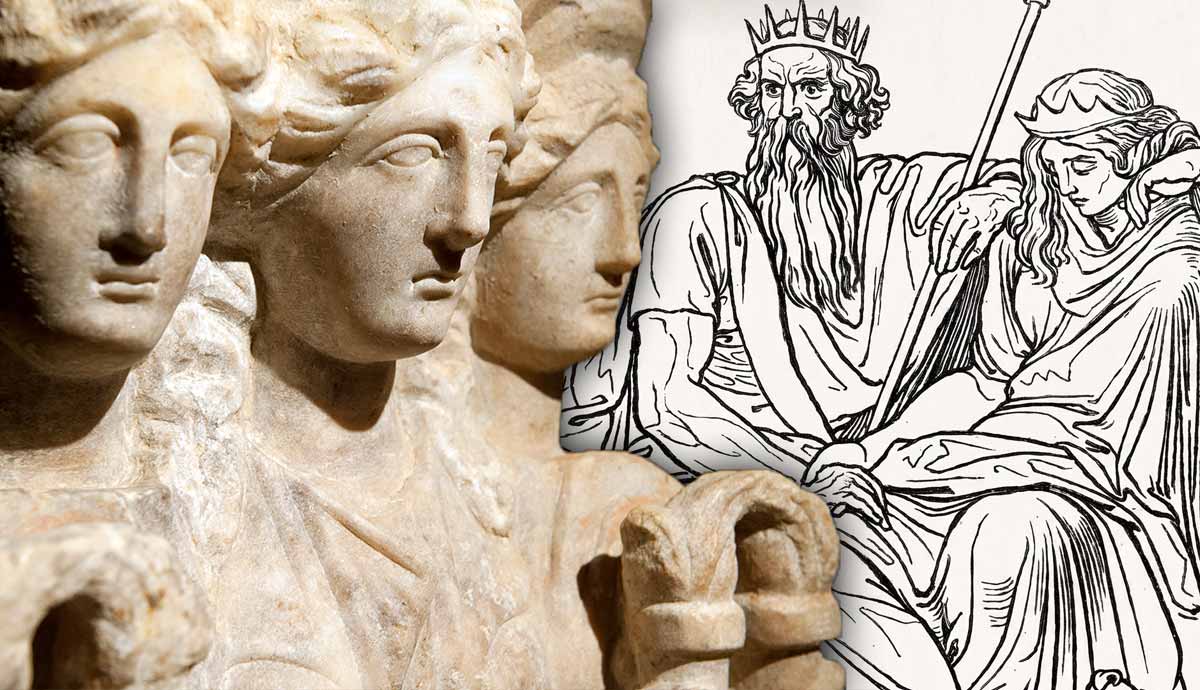

The culinary traditions of ancient Greece are windows into society and culture. Of course, from the Bronze Age through the Archaic Period, to Classical Greece, and beyond, the culture and its cuisine were not static, nor were they monolithic, with various traditions reflected in the multiple cultures of the time that existed throughout the hub of the Greek world.
Variations also existed within cultures, from the opulence of the wealthy to the simplicity of the poor. Nevertheless, there were common ideas, and regions are defined in part by what they have access to. This was critical in shaping the culinary landscape of ancient Greece.
What Was Available to the Ancient Greeks?

The basis for most Greek cuisine in ancient times was the Mediterranean “triad” of grains, grapes, and olives, which were vital to the Greek economy. Other cultivated foods, however, were also incredibly important for keeping the people fed in a place defined by frugality. Legumes were of particular importance, and evidence suggests that ancient Greek society was heavily reliant on them. Many other vegetables, such as cabbage, leeks, radishes, and a host of other greens, were often available too. Onions were welcome ingredients in a variety of dishes and were particularly associated with military life.
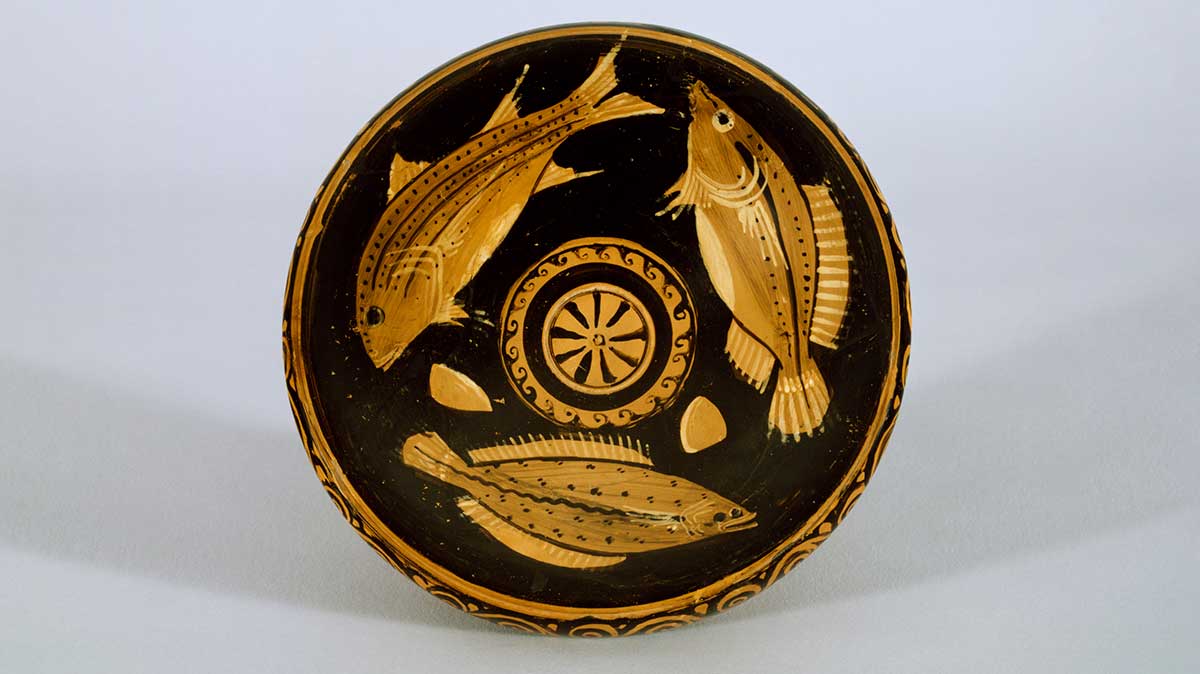
Of course, Greece has a lot of coastline and numerous populated islands, and as such, a wide range of seafood was on the menu for many communities. Sardines and anchovies were common fish among the people of Athens. Fish was often salted and preserved, enabling its transport inland. A late 3rd to early 2nd-century BC stele from the Boeotian city of Akraiphia, on Lake Copais, lists a number of fish along with their prices, indicating that there was a wide variety available. Parrotfish, tuna, red mullet, eels, rays, swordfish, carp, pike, and even catfish were eaten. Octopus was another well-documented favorite.
Dairy was also on the menu, and one of the first literary mentions of cheese comes from Homer’s Odyssey, where he describes cheeses in the cave of the cyclops, Polyphemus. It is heavily implied that these were refined from the milk of goats and sheep.
For feasts, festivals, religious ceremonies, and other very special occasions, meat was consumed. The value of red meat (including pork) was extremely high and reserved only for when it was justified. As such, meat was far more common on the plates of the wealthy elite than it was for the majority of the population. Fresh meat was also the result of hunting, which was generally an aristocratic pursuit.
Mealtimes
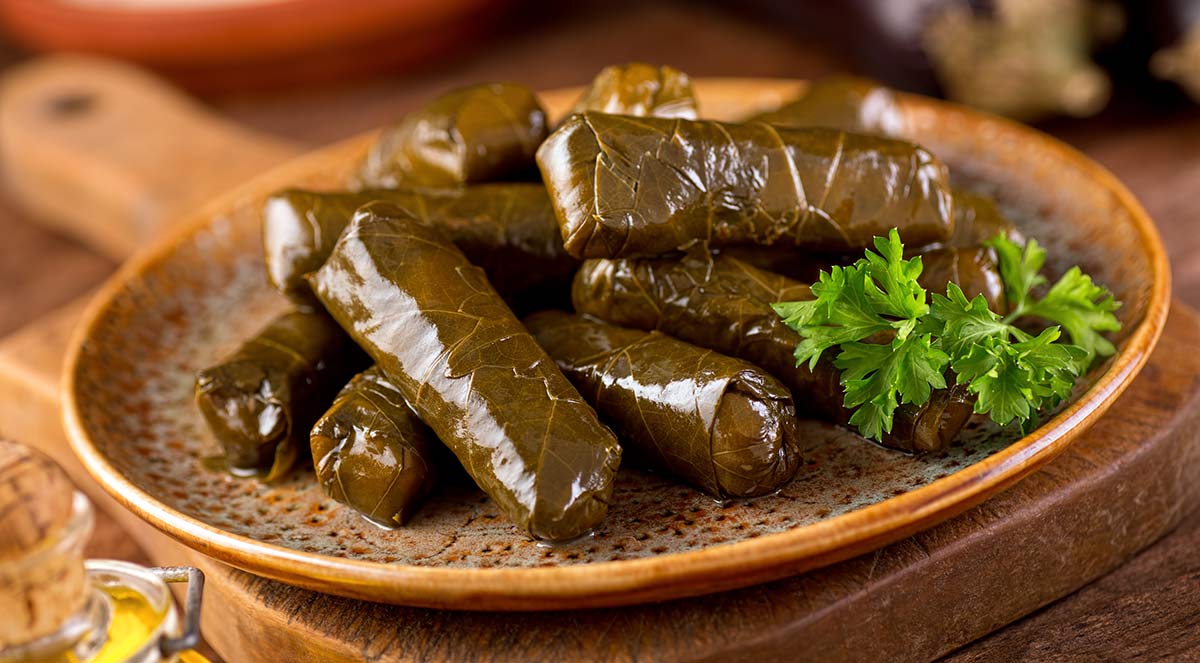
At the time of Homer, there were three meals a day, and this gradually developed into four. The naming conventions for these meals were fluid and inconsistent. Athenaeus reports that distinctions were not solid, and there was great confusion as to when meals were taken and what they were called. By the end of the Classical Period, the confusion seems to have been resolved.
Akratisma was breakfast, usually a piece of bread taken with a small helping of undiluted wine, into which the bread was dipped. The name is derived from the word for unmixed wine, akratos. Wealthier people might accompany this breakfast with olives or fruit such as figs. Ariston was lunch. It usually involved cooked foods and was eaten outside the house. A late afternoon snack (hesperisma) preceded the main meal of the day.
Supper was known as deipnon. Usually split into sitos (grains) and opson (sides), it involved observing customs. In formal settings, women and men ate separately, and in wealthy homes, people ate in a reclining position, leaving only one hand available to handle the food.
What dinner actually looked like varied depending on the means of family. Porridges and soups were staples in poorer communities. Barley cakes called “maza” were stored and made into porridge, to which a variety of other foods and seasoning could be added. Long-shelf-life versions were valuable to armies on campaign.
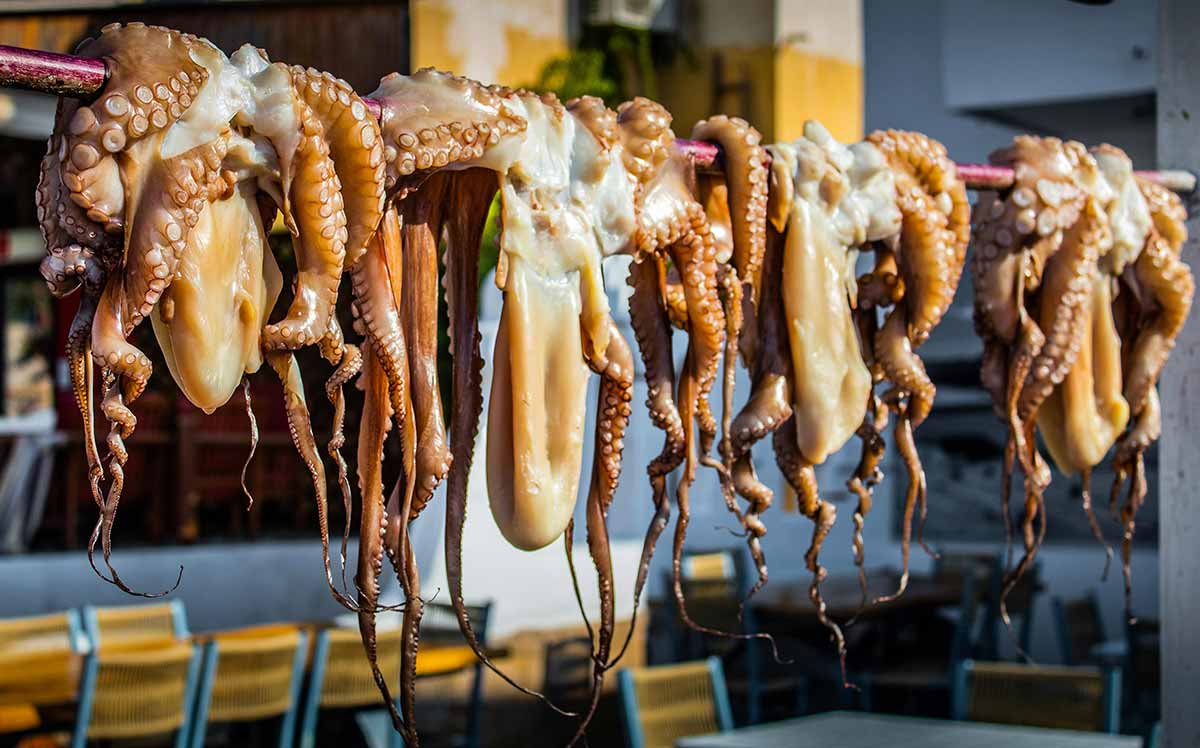
Dried fish was also an option in poor communities, although fresh fish was much easier to obtain in coastal settlements and on islands. Fruit and vegetables were expensive in the cities, and poor urban communities often had dried vegetables, while the rich could afford fresh produce.
Wealthier people naturally had a far greater variety of options; however, the main difference isn’t what they ate, but the quality. The bread was more refined. The produce was fresher, and more expensive fish ended up on the wealthy person’s dinner table.
All these things could be seasoned simply with salt and olive oil, or a sauce called garos, made from fish, similar to the Roman garum.
Drinking in Ancient Greece
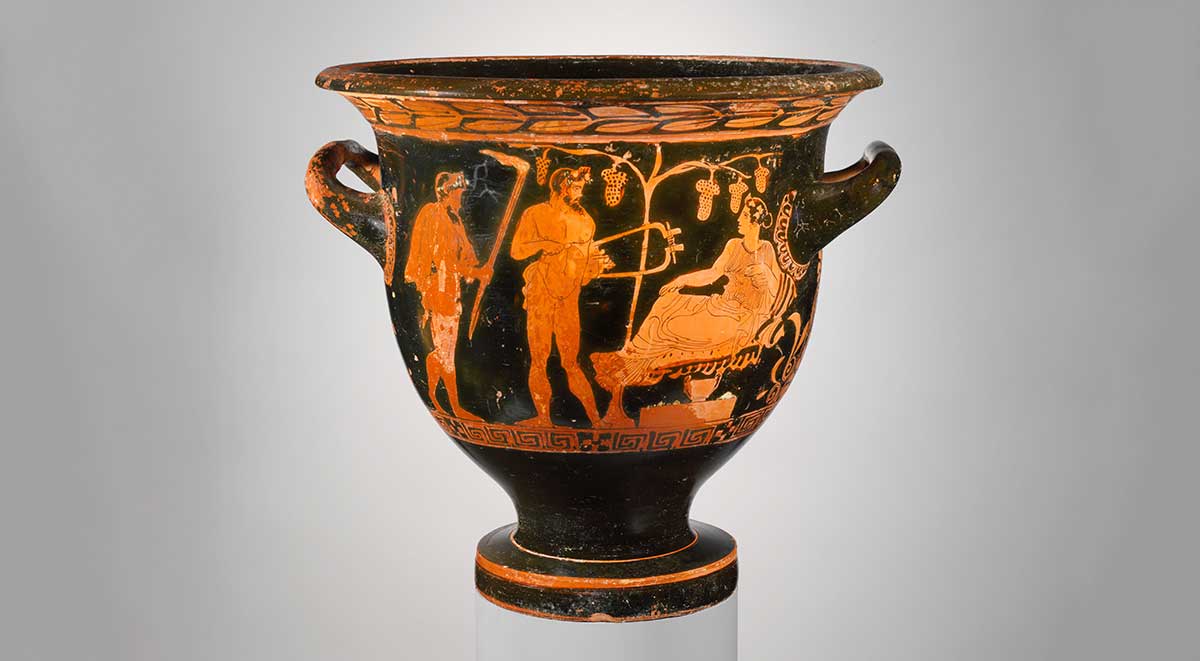
By far the most important drink in ancient Greek culture was wine. So important was wine that it had its own god, Dionysus. Wine was usually mixed with water before it was consumed. Apart from being a dip for bread in akratisma, undiluted wine was usually seen as a medicament or for use in religious ceremonies. Drinking wine neat for pleasure was viewed as barbaric and excessive, and also had its own deity; Akratos was the demi-god of unmixed wine, and an attendant of Dionysus.
Wine wasn’t the only alcoholic beverage available. As it was in many other places around the world, predating the dawn of civilization, mead or hydromel was commonly drunk. A fermented mixture of honey and water, this ancient drink was said to be a favorite of the Greeks during the Golden Age, the first of the mythical eras of Greece, characterized by peace and abundance.
The ancient Greeks also had a drink called “kykeon.” Homer mentions it in the Iliad as being made from wine, barley, and grated goat’s cheese, and in the Odyssey, Circe adds honey. It is the drink she pours her potion into, which turns Odysseus’ men into pigs. There is also mention of kykeon in the Homeric Hymn to Demeter, where the goddess refuses wine and asks for kykeon made with water, barley, and pennyroyal, which has a strong fragrance similar to spearmint.
The Symposium
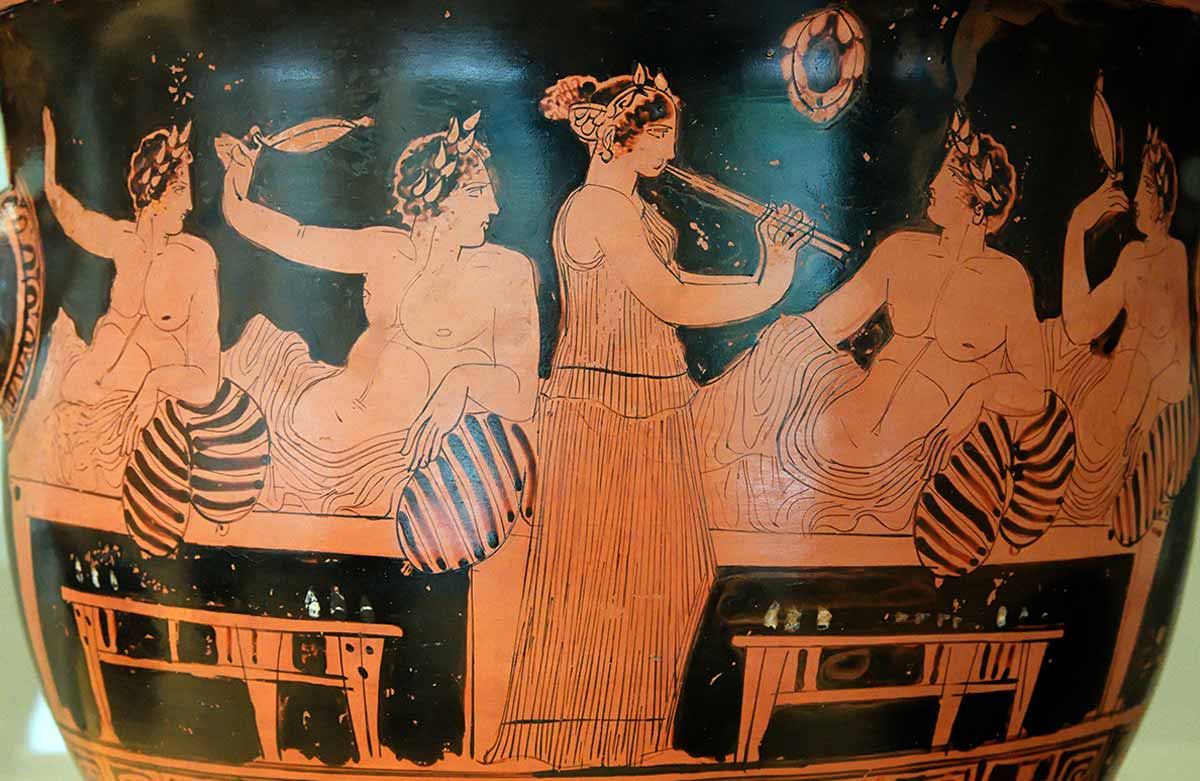
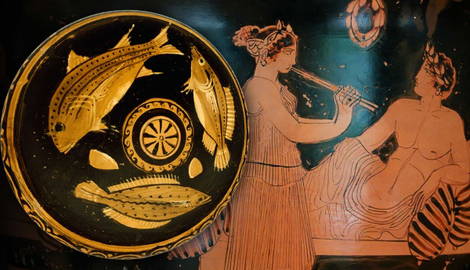
Although drinking to excess was not considered particularly acceptable, drinking for pleasure was still a vibrant part of Greek culinary tradition. Central to this in elite society was the “symposium,” a time of relaxation, which often took place after meals and in a dedicated room called the “andron.” It was especially prominent after important feasts and banquets for guests.
During the symposium, people reclined on couches, and drinking could be accompanied by music, dancing, and recitals. The event was presided over by a “symposiarch” who decided how strong the wine would be, thereby controlling the level of indulgence. Given the patriarchal nature of this society, the only women who were allowed to attend were the entertainers, and this could include courtesans (hetairai). The symposium acted not just as entertainment, but as a forum for men to discuss a wide range of topics from politics and academia to social developments, philosophy, and family life.
While these events were a part of high society, poorer people had the same impulse for drinking and entertainment, and such revelry took place in informal settings such as taverns, and was probably the closest a poor Greek could get to the symposium experience. Religious festivals also occurred in ancient Greek society, and depending on the occasion, could include all manner of dancing, music, performances, and feasting. These festivals also represented the very few occasions where poorer Greeks got to eat meat.
Spartan Culinary Culture

While regional variations were common, none were as uniquely different from the norm throughout Greece as in Sparta, where life was governed by a strict code of militarism and social conditioning that championed tight-knit groups of boys and men, specifically for effectiveness on the battlefield. As such, meals were a communal affair known as “phiditia.”
Males that had proven themselves became part of a group of 15, and as a unit, ate and slept in the same place. Aristotle notes that those who could not contribute to the provision of food risked losing their citizenship. When they reached the age of 30, men were allowed to live outside the group, in their own houses. However, they still had to dine in their communal groups.
While the ingredients available to the Spartans were the same as the rest of Greece, the Spartans were known for their simplicity, and this likely extended to the way they prepared their food. Of note was “melas zomos” (black broth), a dish attested to widely throughout the Greek world as being a staple of Spartan culture. While there is no mention of the actual recipe in ancient sources, common consensus concludes that the dish contained nothing more than pork and pork blood with only salt and vinegar to season, and with the occasional bay leaf thrown in. Whether this meal was common fare or reserved for special occasions is still a subject of debate, as ancient literary sources offer contradictory evidence.
Nevertheless, barley was the most common food, and was the staple for the Spartan diet, just as it was in many other places in ancient Greece.

Greek cuisine was a reflection of cultural values wherein moderation was highly valued, and excess was frowned upon. It was also a reflection of geographical factors and access to certain foods, illustrating the Greek people’s close relation to the land and the sea.
With its unique flavors, ancient Greek food, and the culture it promoted have had an enduring legacy, adding a rich layer of complexity to the Mediterranean culinary landscape that endures to this day.